
As an Amazon Associate, I earn from qualifying purchases.
The Best fungicide for red thread depends on the product label, grass type, and disease severity; azoxystrobin may help when labeled.
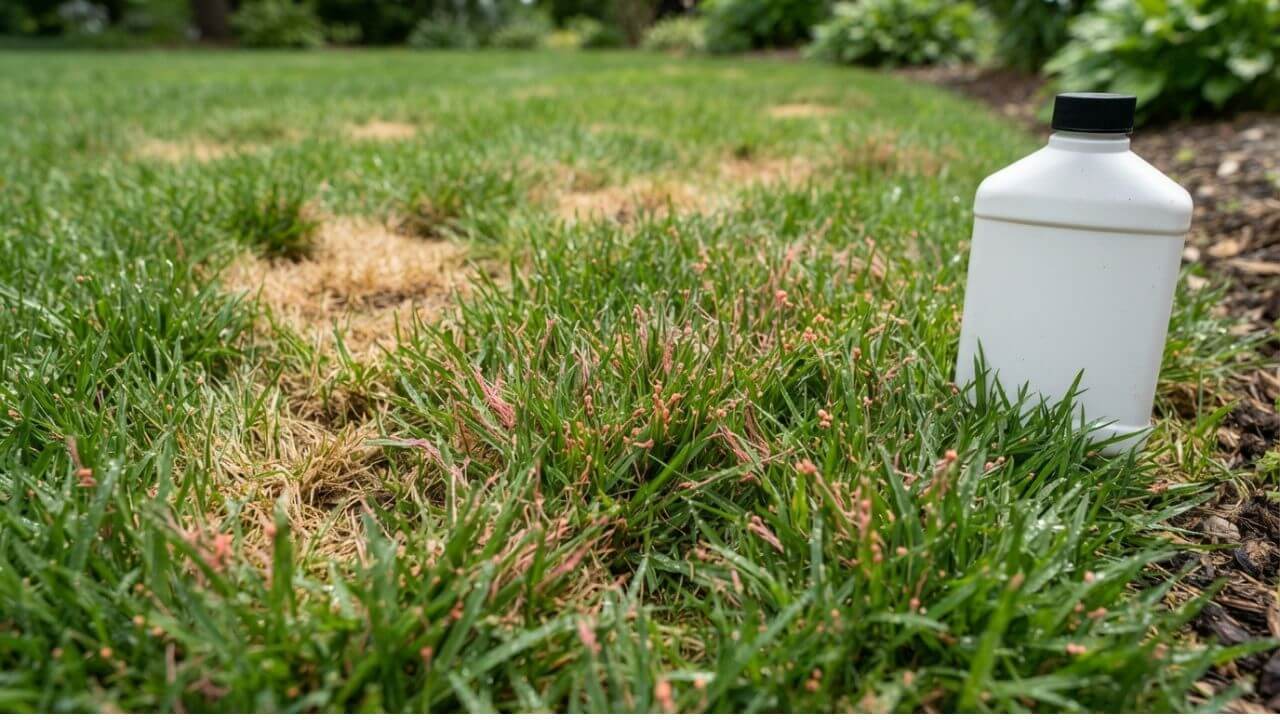
You spend your Saturday mowing, edging, and watering your American lawn. Then you spot pink threads and pale brown patches across the grass. Your yard looks tired, even after careful care. Red thread may be the cause, and it can spoil the look of an otherwise healthy lawn. Before you buy a fungicide, I recommend checking the grass type, recent weather, and product label. Some fungicides may control red thread, but many lawns recover with better nitrogen care alone. In this guide, I compare five products, explain their limits, and help you choose a sensible treatment for your yard.
Page Contents
Toggle🏆 Top 3 Products

Atticus Artavia 2 SC Azoxystrobin Fungicide 16 oz
Its azoxystrobin active ingredient makes it a product worth checking when the current label lists red thread on the intended turf.

Scotts Healthy Turf Builder Fungicide and Lawn Food 13.7 lbs
Its combined lawn food and fungicide format may suit homeowners who want to address lawn nutrition and disease with one product, subject to label directions.

Atticus Artavia 2 SC Azoxystrobin Fungicide 1 Gallon
The larger container may offer better value for large turf areas or repeat jobs when the label supports the intended use.
Atticus Artavia 2 SC Azoxystrobin 16 oz
Atticus Artavia 2 SC is a liquid fungicide that contains azoxystrobin. This active ingredient helps control certain fungal diseases when the product label lists the disease and intended site. I would put this product on my shortlist for red thread only after confirming that the current US label permits that use on my grass type. The 16-ounce size may appeal to homeowners, small property managers, and people who do not need a large container.
Red thread often appears when grass grows slowly and lacks enough nitrogen. A fungicide may help control an active infection, but it will not fix poor lawn nutrition by itself. Before buying Artavia, read its label for the target disease, turf species, application rate, and required safety steps. If the label does not list red thread for your intended use, choose another labeled option or focus on correcting the lawn conditions.
✅ Pros
- ✔ Contains azoxystrobin, an active ingredient used against several fungal turf diseases.
- ✔ Liquid concentrate can suit planned applications over suitable turf areas.
- ✔ The smaller container may be easier to store than a gallon jug.
- ✔ May serve homeowners who need a targeted treatment rather than a large commercial supply.
- ✔ Can fit into a broader disease management plan when the label supports the use.
- ✔ May be useful for certain labeled turf diseases beyond red thread.
- ✔ Makes it possible to compare concentrated liquid treatment with granular lawn products.
⚠️ Cons
- ✖ Do not assume red thread is a labeled target; confirm the current product label before purchase or use.
- ✖ Liquid concentrate requires accurate measuring and mixing when directed by the label.
- ✖ The small bottle may not be economical for repeated treatment of large lawns.
- ✖ A fungicide will not correct low nitrogen, poor drainage, or other causes of weak turf.
- ✖ Incorrect use can raise safety risks and contribute to fungicide resistance.
My Recommendation
I would consider the 16-ounce Artavia bottle for a small lawn or a limited turf treatment if its current label specifically allows the intended disease control. Its active ingredient gives it potential value in turf disease management, but that does not prove that this exact formulation is approved for red thread in every setting. Check the label before deciding. If your lawn has mild red thread and no major turf loss, first review nitrogen levels, mowing habits, and drainage. A suitable fertilizer and better care may solve the problem without a fungicide.
| Best For | Why |
|---|---|
| Small turf areas | The smaller package may suit limited work when the label permits the planned use. |
| Homeowners comparing liquid products | It offers a concentrated liquid format rather than ready-to-spread granules. |
| Labeled turf disease control | Azoxystrobin may help with listed fungal diseases when applied as directed. |
Atticus Artavia 2 SC Azoxystrobin 1 Gallon
The one-gallon version of Atticus Artavia 2 SC contains the same stated active ingredient as the smaller bottle: azoxystrobin. Its main difference is package size. A larger container may make sense for lawn care teams, groundskeepers, and owners of large turf areas who already have a suitable application plan. Before treating red thread, I would check the exact label and make sure the product is approved for that disease and site.
Buying a large container does not make a treatment more effective. Correct diagnosis, dose, timing, and coverage matter more than package size. Red thread can fade as the grass gets enough nitrogen and growing conditions improve. I would buy this size only if I had enough labeled work to justify it, suitable storage, and a clear plan to use the product safely.
✅ Pros
- ✔ Provides a larger quantity of azoxystrobin concentrate than the 16-ounce version.
- ✔ May suit large lawns, sports turf, or other permitted turf areas.
- ✔ Can reduce the need to buy small containers for multiple planned jobs.
- ✔ Offers a liquid format for users with the equipment and skills needed for label-compliant application.
- ✔ May support a broader disease management plan for diseases listed on the label.
- ✔ Can be practical for professional grounds teams that track treatment records.
- ✔ Allows bulk purchasing when total cost and expected use justify the larger size.
⚠️ Cons
- ✖ The larger purchase may cost more upfront than a small bottle.
- ✖ A gallon may be excessive for a typical residential lawn.
- ✖ The exact label must permit red thread control on the intended turf and at the intended site.
- ✖ Concentrate needs safe handling and label-compliant storage.
- ✖ Repeated use of the same fungicide mode of action can increase resistance risk.
My Recommendation
I would reserve the gallon size for people who manage a large area of turf or have several planned applications for labeled diseases. For a small home lawn, it may be more product than needed. Compare the total price per labeled treatment, not just the container price. Most importantly, confirm that the current US label lists red thread for your intended use. If it does not, do not apply it for that purpose. For mild red thread, correcting low nitrogen and reducing prolonged leaf wetness may be the better first step.
| Best For | Why |
|---|---|
| Large turf areas | A gallon can provide more concentrate for appropriately sized, label-compliant jobs. |
| Professional grounds teams | Bulk packaging may suit planned work when staff can follow the label and keep records. |
| Frequent turf disease management | It may be useful for listed diseases when a sound rotation plan supports its use. |
Fluazinam 40SC Select Fungicide 1 Gallon

Fluazinam 40SC Select Fungicide is marketed as a broad-spectrum product for turf disease control. Its stated active ingredient is fluazinam at 40 percent, and its listing refers to diseases such as dollar spot, brown patch, and snow mold. Those claims do not establish that this product controls red thread. I would check the current US label and permitted sites before considering it for a home lawn or other turf area.
This gallon package appears aimed at users who need a larger quantity for turf management. That can make sense for some golf course or grounds operations, but the intended use and application rules still govern every treatment. Red thread often responds to improved lawn nutrition, so I would not choose a fungicide based only on a broad-spectrum claim. Confirm the target disease, turf type, application rate, and any limits on use before buying.
✅ Pros
- ✔ States a fluazinam concentration of 40 percent in the product listing.
- ✔ Is marketed for several named turf diseases, including dollar spot, brown patch, and snow mold.
- ✔ The gallon format may suit some larger turf operations.
- ✔ May be worth evaluating for a disease specifically listed on its current label.
- ✔ Adds another active ingredient to consider when building a properly planned disease management program.
- ✔ Can be compared with other turf products by labeled disease, site, and treatment cost.
- ✔ May be suitable for certain professional applications if the current label allows them.
⚠️ Cons
- ✖ The provided product information does not establish that it controls red thread.
- ✖ A gallon may be too much for a small residential lawn.
- ✖ Professional turf marketing does not mean the product is approved for every home lawn use.
- ✖ The correct rate, protective equipment, and site restrictions must come from the current label.
- ✖ It should not replace sound diagnosis or correction of low nitrogen.
My Recommendation
I would not make Fluazinam 40SC Select my first choice for red thread based on the supplied product description alone. The listing names other turf diseases, but I cannot confirm red thread as an approved target from that information. This product may be worth comparing for the diseases it actually lists. If red thread is your main concern, choose only a product whose current US label clearly supports that use. For an ordinary home lawn, start with diagnosis and proper nutrition before investing in a large container.
| Best For | Why |
|---|---|
| Turf managers treating listed diseases | The product listing names several turf diseases, but the label must confirm each intended use. |
| Larger permitted turf sites | The gallon package may suit operations that need larger quantities. |
| Buyers comparing active ingredients | Fluazinam offers a different active ingredient to evaluate for labeled disease targets. |
Scotts Healthy Turf Builder Fungicide 27.4 lbs

Scotts Healthy Turf Builder Fungicide and Lawn Food combines a fungicide product with lawn nutrition in one package. This type of format may appeal to American homeowners who prefer a spreader over a mixing tank. The 27.4-pound bag may suit a larger area than a smaller bag, but actual coverage depends on the directions and application rate printed on the package. I would check the active ingredient and disease list before using it against red thread.
The lawn food part may be relevant because red thread often becomes more noticeable when grass lacks enough nitrogen. Still, fertilizer alone does not prove that the product will control every fungal disease. A combined product can also add nutrients when the lawn does not need them. Read the label, check the lawn’s nutrient needs, and apply only the amount it calls for. Avoid adding extra fertilizer simply because the grass looks pale or damaged.
✅ Pros
- ✔ Combines lawn food and a fungicide in one product format.
- ✔ Granules may be easier for homeowners who already use a lawn spreader.
- ✔ The larger bag may suit a lawn that needs more product than a small package provides.
- ✔ Can support lawn care when the fertilizer analysis matches the lawn’s needs.
- ✔ May reduce the need to buy separate products when both uses are appropriate.
- ✔ Offers a practical alternative to liquid concentrate for users who prefer granular products.
- ✔ Can fit a seasonal lawn plan when timing, disease targets, and nutrient needs align.
⚠️ Cons
- ✖ The supplied information does not confirm red thread as a labeled disease target.
- ✖ A large bag can be awkward to store and handle.
- ✖ Combined fertilizer may add nitrogen or other nutrients the lawn does not need.
- ✖ Spreader settings and application rates must match the current label.
- ✖ Granular products may need specific watering or weather conditions stated on the package.
My Recommendation
I would consider this 27.4-pound bag if I had a larger lawn, preferred granular application, and needed both lawn food and a fungicide for a disease listed on the label. I would not buy it for red thread without checking the current disease claims first. If your soil and grass need nitrogen, a suitable feeding plan may help the lawn grow past mild red thread damage. However, avoid extra nutrients if the lawn does not need them. Match the product to the lawn, not the other way around.
| Best For | Why |
|---|---|
| Larger residential lawns | The larger bag may fit areas that need more product at the labeled rate. |
| Homeowners who prefer granules | A suitable spreader can make application easier than mixing liquid concentrate. |
| Lawns that need feeding and labeled disease control | The combined format may suit both needs when the label and nutrient plan support it. |
Scotts Healthy Turf Builder Fungicide 13.7 lbs
The 13.7-pound Scotts Healthy Turf Builder Fungicide and Lawn Food offers the same general product format as the larger bag in a smaller package. It may suit homeowners who want a granular product but do not need as much material. Its combined lawn food and fungicide format can be convenient, provided both parts fit the lawn’s needs. Before treating red thread, I would confirm the current label’s active ingredient, listed diseases, and instructions.
Red thread can leave grass looking thin or discolored, but those signs can have other causes. If the lawn needs nitrogen, balanced feeding and sound mowing can help it recover. If the disease is severe or keeps returning, a proper diagnosis may be worth the time. I would compare this smaller bag with the larger option by labeled coverage and total cost. The lower package weight alone does not tell me which bag offers better value.
✅ Pros
- ✔ A smaller bag may be easier to carry and store.
- ✔ Granular application can suit homeowners who use a broadcast or drop spreader.
- ✔ Combines lawn food and a fungicide in one package.
- ✔ May be a practical size for modest lawn areas when the label’s coverage matches.
- ✔ Can fit into a routine lawn care plan when nutrients and disease treatment are both needed.
- ✔ Avoids the need to handle a larger bag when a smaller quantity is enough.
- ✔ Allows a direct size comparison with the 27.4-pound version.
⚠️ Cons
- ✖ The product listing alone does not confirm that red thread is a labeled target.
- ✖ A smaller bag may cost more per treated area than a larger package.
- ✖ The lawn food may be unnecessary if the lawn already has enough nutrients.
- ✖ Correct spreader settings and label directions remain essential.
- ✖ It may not suit a large property that needs a greater quantity.
My Recommendation
I would choose the smaller Scotts bag over the larger one only if its labeled coverage matches the area I need to treat and the product fits my lawn’s nutrient needs. It may be convenient for a modest yard and for people who prefer granules. However, I would not call it the Best fungicide for red thread unless the current label specifically supports that use. If the lawn has mild red thread, check its nitrogen needs and improve basic care before spending money on a combined treatment.
| Best For | Why |
|---|---|
| Small to medium lawns | A smaller package may reduce leftover product when its stated coverage matches the area. |
| Granular lawn care | The product format may suit homeowners who prefer spreader application. |
| Combined lawn feeding and disease management | It may meet both needs if the disease is listed and the lawn needs the nutrients. |
Final Verdict: Which Should You Buy?
My top product to investigate is Atticus Artavia 2 SC Azoxystrobin in the 16-ounce size, because it offers a concentrated active ingredient used against several turf diseases and may be practical for smaller jobs. The one-gallon version may suit larger operations. Still, I would buy neither specifically for red thread until the current US label confirms that use. The Scotts products may suit lawns that need both feeding and labeled disease control, while Fluazinam 40SC should be considered only for its approved targets.
The Best fungicide for red thread is not always a fungicide. Check the diagnosis, address low nitrogen, and improve lawn care first. If the disease persists, select a product labeled for your turf and follow every direction. This approach can protect your grass, limit wasted money, and help your lawn recover.
FAQs Of Best fungicide for red thread
Q What is the Best fungicide for red thread?
Q Can red thread go away without fungicide?
Q Does azoxystrobin work on red thread in lawns?
Q Should I use fertilizer or fungicide for red thread?
Q When should I treat red thread in an American lawn?
Last Updated on October 27, 2026 by Saad Abdullah

I enjoy sharing simple gardening ideas, lawn care tips, and honest product reviews that help make outdoor work easier. From home gardening guides to helpful tools and lawn care advice, I write easy-to-follow content to help readers create a healthier and better-looking outdoor space without wasting time or money.