
As an Amazon Associate, I earn from qualifying purchases.
The first time I found aphids on a houseplant, I assumed they had appeared overnight. They had not. After looking more closely, I realized they had been building up for weeks under leaves and around new growth. By the time I noticed them, they had already spread to nearby plants.
Learning how to prevent aphids on indoor plants is far easier than dealing with a large infestation later. A few simple habits can stop most problems before they start.
Why Aphids Target Indoor Plants?
Healthy plants can attract aphids, but stressed plants attract far more of them.
Aphids prefer soft new growth because it contains more sap and nutrients. Indoor conditions can create ideal breeding environments because there is little rain, few predators, and stable temperatures throughout the year.
Common reasons aphids appear include:
- Bringing home infected plants
- Overfertilizing with nitrogen
- Weak airflow
- Crowded plants
- Stressed houseplants
Understanding these triggers makes indoor aphid prevention much easier.
The Early Signs of Aphid Infestation
Most homeowners discover aphids too late.
The first signs are usually small and easy to miss. Catching them early prevents larger problems.
Watch for these signs of aphid infestation:
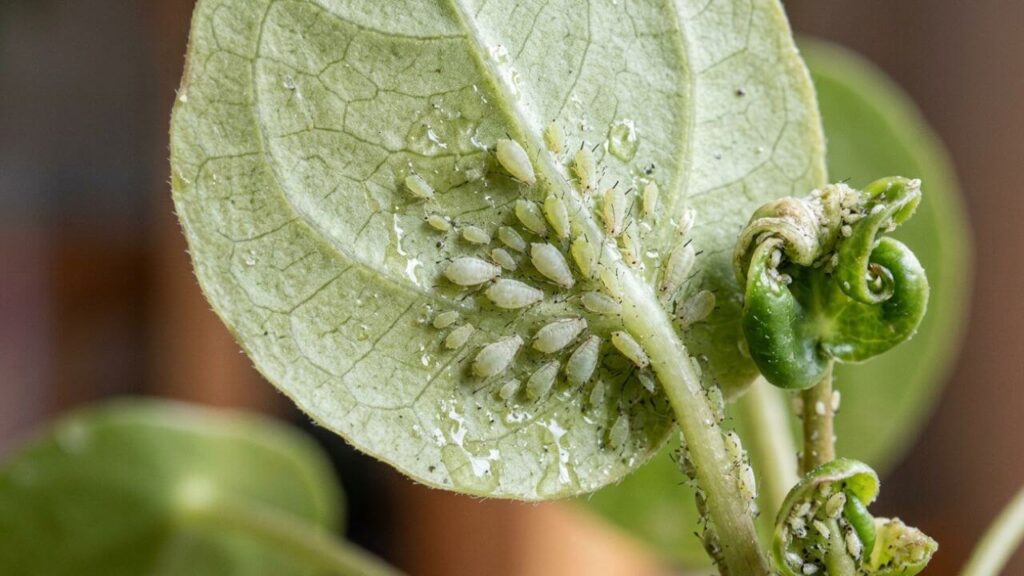
- Tiny green, black, brown, or white insects
- Sticky residue on leaves
- Curled new growth
- Distorted leaves
- Slow growth
- Ant activity near plants
Aphid damage on plants becomes more severe as populations grow.
| Symptom | Possible Cause |
| Sticky leaves | Aphid honeydew |
| Curled growth | Feeding damage |
| Yellow leaves | Heavy infestation |
| Black mold | Honeydew buildup |
Checking plants once a week prevents many surprises.
Inspect New Plants Before Bringing Them Inside
Most aphids on indoor plants arrive with new purchases.
Garden centers, grocery stores, and even reputable nurseries occasionally sell plants carrying pests.
Before bringing a new plant indoors:
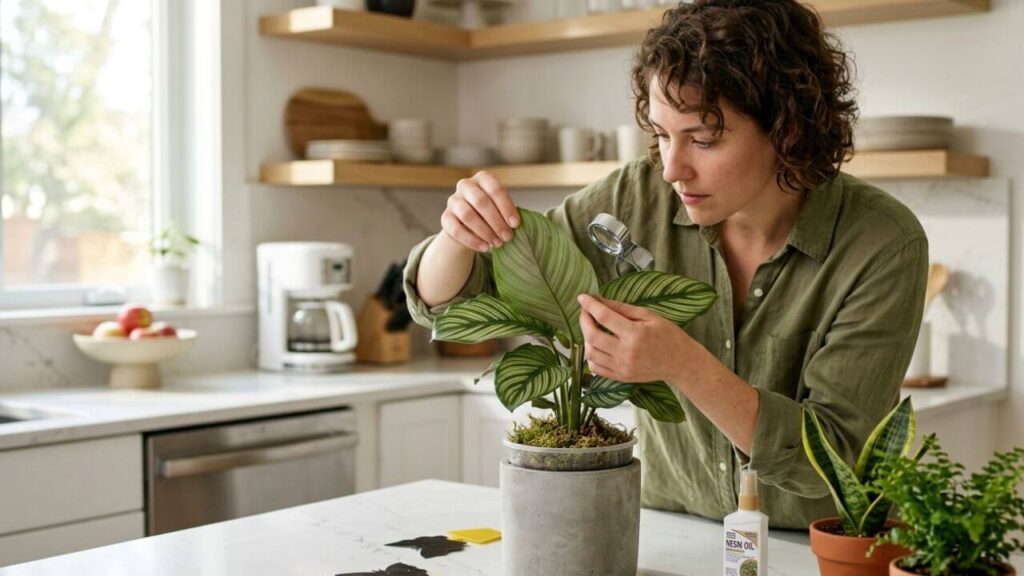
- Inspect leaf undersides.
- Check stems and growing tips.
- Look near leaf joints.
- Examine the soil surface.
- Isolate the plant for two weeks.
Learning how to inspect plants for aphids is one of the best long-term prevention habits.
I now quarantine every new plant regardless of where I buy it.
That simple habit has saved me countless headaches.
Keep Plants Clean and Dust Free
Dusty leaves attract more problems than many gardeners realize.
Dust reduces photosynthesis and makes inspections more difficult. Clean plants stay healthier and make pests easier to spot.
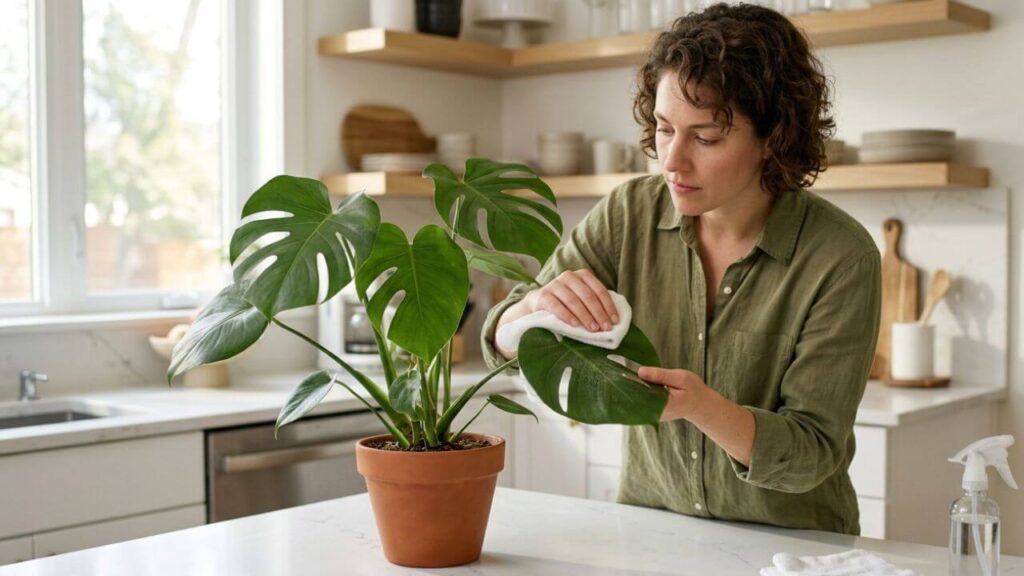
Cleaning indoor plants to prevent pests only takes a few minutes.
For most plants:
- Wipe leaves with a damp cloth.
- Rinse foliage occasionally.
- Remove dead leaves quickly.
- Clean plant trays regularly.
I try to inspect every leaf while cleaning.
Many infestations are discovered during routine maintenance rather than dedicated pest checks.
Avoid Overfeeding Your Plants
Too much fertilizer can increase aphid problems.
Heavy nitrogen feeding creates soft, tender growth that aphids love.
This surprises many beginners because the plant initially looks healthy and vibrant.
For better houseplant pest prevention:
- Feed lightly during active growth.
- Reduce fertilizer during winter.
- Follow label directions carefully.
- Avoid doubling doses.
Healthy growth helps plants resist pests better than rapid growth.
Improve Airflow Around Your Plants
Crowded plants create hiding places for pests.
Good airflow dries excess moisture and makes plants less attractive to insects.
Simple improvements include:
- Spacing plants apart
- Rotating pots occasionally
- Opening windows when weather allows
- Running a small fan nearby
Indoor plant pests thrive in stagnant conditions.
Even small changes can reduce pressure significantly.
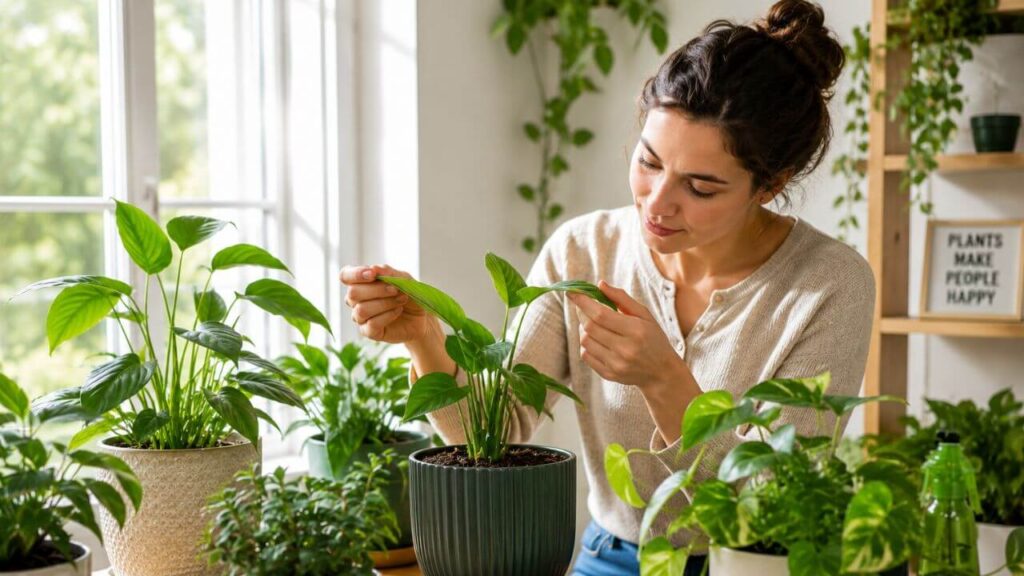
Check Vulnerable Areas Every Week
Aphids rarely spread evenly across the plant.
They gather where growth is softest.
Pay special attention to:
- New leaves
- Flower buds
- Stem tips
- Leaf undersides
- Growth nodes
This inspection takes less than a minute per plant.
Weekly checks remain one of the strongest forms of indoor plant aphid control.
Water Correctly to Reduce Plant Stress
Stressed plants struggle to defend themselves.
Both underwatering and overwatering weaken plant health and increase vulnerability.
Good watering habits include:
- Checking soil before watering
- Emptying saucers after watering
- Using pots with drainage holes
- Matching watering to the season
Preventing pests on indoor plants starts with keeping plants healthy.
Strong plants tolerate minor pest pressure much better than stressed plants.
Natural Aphid Control for Houseplants
Even with good prevention, occasional aphids appear.
The goal is stopping them before they spread to nearby plants and become harder to manage.
The good news is that most indoor infestations respond well to simple, low-risk treatments. In my experience, early action matters far more than using stronger products later.
Several natural solutions work well indoors and are safe for most houseplants when used correctly.
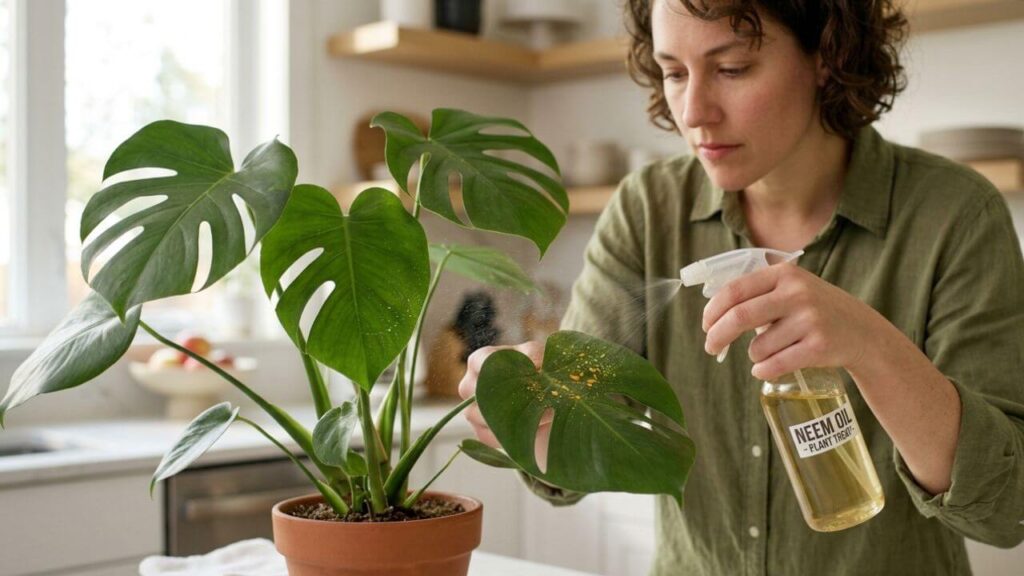
Neem Oil for Aphids
Neem oil remains one of the most popular options for indoor plant aphid control.
Rather than killing instantly, neem oil disrupts feeding and reproduction. This slows population growth and gradually reduces the infestation.
Spray:
- Leaf tops
- Leaf undersides
- Stems
- Growing tips
- Stem joints
Coverage matters because aphids hide in protected areas where sprays can easily miss them.
Apply neem oil in the evening or away from strong sunlight to reduce the risk of leaf burn. Repeat treatments every seven days if needed until no new aphids appear.
Neem oil for aphids works best on small populations and as part of a regular prevention routine.
Insecticidal Soap for Aphids
Insecticidal soap kills aphids through direct contact with their soft bodies.
Unlike neem oil, insecticidal soap works quickly but leaves little residual protection behind. For that reason, thorough coverage becomes more important than the amount you spray.
Pay close attention to:
- Leaf undersides
- Stem joints
- New growth
- Flower buds
- Hidden crevices
Missing just a few insects can allow the population to recover surprisingly fast.
Insecticidal soap for aphids leaves little residue and works well indoors, making it one of the easiest treatments for homeowners.
Water Spray Treatment
A strong stream of water removes surprising numbers of aphids without using any products at all.
Take the plant to a sink, shower, or outdoor area and rinse the leaves carefully. Focus on the undersides of leaves where aphids gather most heavily.
Small infestations sometimes disappear after two or three treatments spaced a few days apart.
This method works especially well for sturdy plants such as pothos, spider plants, philodendrons, and many tropical houseplants.
Delicate plants such as maidenhair ferns may need gentler treatment.
Manual Removal for Small Infestations
When only a few aphids are present, manual removal can solve the problem quickly.
You can:
- Wipe leaves with a damp cloth
- Remove heavily infested leaves
- Crush visible aphids by hand
- Use cotton swabs for tight spaces
This approach sounds simple, but it works surprisingly well when infestations are caught early.
For many homeowners, combining manual removal with neem oil or insecticidal soap provides the best results.
The biggest mistake is waiting too long to act. A handful of aphids today can become hundreds within a few weeks inside a warm home.
How to Stop Aphids From Spreading
Once aphids appear, speed matters.
A few insects can become hundreds within weeks.
If you find aphids:
- Isolate the plant immediately.
- Inspect nearby plants.
- Remove heavily infested leaves.
- Begin treatment quickly.
- Continue monitoring for several weeks.
Learning how to stop aphids from spreading can prevent an entire collection from becoming infected.
Should You Use Beneficial Insects Indoors?
Beneficial insects for aphid control work extremely well outdoors.
Indoors, the situation changes.
Ladybugs and lacewings often struggle to remain where you need them.
For most homeowners, neem oil, insecticidal soap, and regular inspections provide more practical indoor solutions.
Beneficial insects make more sense in greenhouses, sunrooms, or enclosed growing spaces.
Common Mistakes That Make Aphid Problems Worse
Several mistakes appear repeatedly.
| Mistake | Better Approach |
| Ignoring one or two aphids | Treat immediately |
| Spraying only leaf tops | Treat undersides too |
| Returning plants too early | Continue monitoring |
| Overfertilizing | Feed lightly |
| Skipping inspections | Check weekly |
The biggest mistake is assuming the problem disappeared after one treatment.
Aphid eggs and hidden insects frequently restart infestations.
Build a Simple Weekly Prevention Routine
The best indoor aphid prevention strategy is consistency.
My own routine takes less than ten minutes each week:
- Inspect new growth.
- Wipe dusty leaves.
- Check under leaves.
- Remove damaged foliage.
- Rotate plants for even growth.
- Monitor watering needs.
These small habits prevent most common houseplant pest problems before they become serious.
Frequently Asked Questions
What attracts aphids to indoor plants?
Soft new growth, excess fertilizer, and stressed plants attract aphids most strongly.
Can aphids spread from one plant to another?
Yes. Aphids move quickly between nearby plants, especially when leaves touch.
Does neem oil prevent aphids?
Neem oil helps prevent and control small infestations when used correctly.
How often should I inspect houseplants for aphids?
Weekly inspections catch problems before they become serious.
Are aphids dangerous to humans or pets?
Aphids do not bite people or pets, but they can weaken plants.
Can I wash aphids off with water?
Yes. Water sprays work well for light infestations on sturdy plants.
Should I throw away an infected plant?
Rarely. Most plants recover with early treatment and isolation.
Conclusion
Learning how to prevent aphids on indoor plants comes down to observation, cleanliness, and consistency.
Inspect plants regularly, avoid overfeeding, and treat small problems immediately. Prevention takes only a few minutes each week, but it can save months of frustration later.
The best time to fight aphids is before they arrive.
Last Updated on July 31, 2026 by Saad Abdullah

I enjoy sharing simple gardening ideas, lawn care tips, and honest product reviews that help make outdoor work easier. From home gardening guides to helpful tools and lawn care advice, I write easy-to-follow content to help readers create a healthier and better-looking outdoor space without wasting time or money.