

As an Amazon Associate, I earn from qualifying purchases.
Scotts DiseaseEx is my top pick for easy lawn care, while propiconazole products suit label-approved brown patch treatment plans.
You spend your weekend mowing, watering, and edging your lawn. Then, after a hot, wet week, brown rings and dull patches appear across the grass. This is a common problem for homeowners across the United States, especially during warm, humid weather. Brown patch can spread fast when grass stays wet for long periods. The right fungicide may help stop the disease, but the right choice depends on your grass type, the product label, and the stage of the infection. In this guide, I compare five lawn fungicides and explain how to choose the best fungicide for brown patch.
Page Contents
Toggle🏆 Top 3 Products
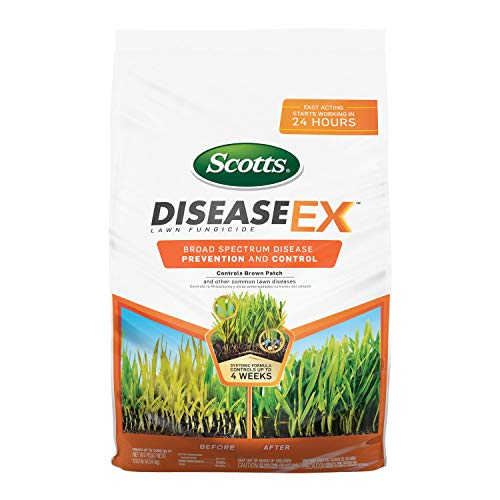
Scotts DiseaseEx Lawn Fungicide, 10 lbs.
Its granular format makes lawn treatment simple for homeowners who prefer spreading a dry product over spraying a liquid.

BioAdvanced Fungus Control for Lawns – 32 fl oz Bottle
Its liquid format is a practical choice for homeowners who prefer applying lawn disease control with a hose or sprayer as directed.

BioAdvanced Fungus Control for Lawns, Granules, 10 lb
The 10-pound granular format may suit homeowners who want a dry treatment for routine lawn care.
Scotts DiseaseEx Lawn Fungicide Review
Scotts DiseaseEx Lawn Fungicide is a granular product for lawn disease control. Its dry form can make application simple for people who already use a lawn spreader. You do not need to mix a liquid concentrate in a separate tank. Always check the package to confirm that brown patch is listed for your lawn and that your grass type is approved.
I like this format for homeowners who want a clear, simple treatment routine. Granules can be useful when you need to cover a lawn without carrying a liquid sprayer. Still, the right spreader setting and application rate matter. Follow the label for watering, timing, repeat treatments, and safety steps.
✅ Pros
- ✔Granular form is easy to handle.
- ✔Works with a suitable lawn spreader.
- ✔Avoids mixing liquid concentrate.
- ✔Can suit broad lawn areas when the label permits.
- ✔Practical for homeowners who prefer dry products.
- ✔The 10-pound package may cover a useful area, depending on the labeled rate.
- ✔Can fit into a planned lawn disease care routine.
⚠️ Cons
- ✖Requires a suitable spreader for even coverage.
- ✖The package weight does not tell you the actual coverage without checking the label.
- ✖Granules may be less convenient for small, isolated spots.
- ✖Brown patch control depends on correct timing and the labeled disease claims.
My Recommendation
I would start with Scotts DiseaseEx when I want a straightforward granular treatment and the current label confirms use against brown patch on my grass. It earns my top spot for convenience, not because every lawn needs the same fungicide. Before buying, check the active ingredient, disease list, treatment rate, and local use rules. The best fungicide for brown patch must match the disease and the grass, not just the product name.
| Best For | Why |
|---|---|
| Homeowners with a lawn spreader | The granular form works with suitable spreading equipment. |
| People who avoid liquid mixing | The dry format removes the need to prepare a liquid tank mix. |
| Routine lawn care | It may fit a planned treatment schedule when the label permits use. |
BioAdvanced Liquid Fungus Control Review
BioAdvanced Fungus Control for Lawns comes in a 32-fluid-ounce liquid bottle. A liquid product may appeal to homeowners who prefer a spray-based approach over spreading granules. The exact application method depends on the bottle design and label directions. Before using it for brown patch, confirm the current label lists that disease and allows use on your lawn grass.
I would consider this product when I want a liquid format that fits my equipment and lawn care routine. Liquid treatments can be useful for targeted coverage when the label allows it. You still need to measure and apply the product with care. Avoid guessing the dose, and do not assume that more product will give better results.
✅ Pros
- ✔Liquid format offers an alternative to dry granules.
- ✔The 32-fluid-ounce bottle is easy to store compared with large containers.
- ✔May fit a spray-based lawn care routine.
- ✔Can be convenient for treating approved lawn areas.
- ✔Does not require spreading dry granules.
- ✔The liquid format may help users who already own suitable application equipment.
- ✔Offers another option when comparing products for lawn disease control.
⚠️ Cons
- ✖Application may require accurate measuring or suitable spray equipment.
- ✖Liquid handling can lead to spills if care is not taken.
- ✖The bottle size alone does not show how much lawn it will treat.
- ✖Brown patch use and repeat treatment rules must be checked on the current label.
My Recommendation
I recommend considering this BioAdvanced liquid product if you prefer liquid lawn treatments and can follow its exact instructions. Confirm the active ingredient and approved disease claims before purchase. Compare the labeled coverage and total cost with granular options. For anyone seeking the best fungicide for brown patch, label approval and correct application matter more than whether the product is liquid or dry.
| Best For | Why |
|---|---|
| Liquid treatment users | The bottle offers a liquid alternative to granular products. |
| Homeowners with suitable spray equipment | It may fit their existing application routine when the label allows it. |
| People comparing application methods | It provides a way to compare liquid handling with granular spreading. |
BioAdvanced Granular Fungus Control Review
BioAdvanced Fungus Control for Lawns in granules comes in a 10-pound package. It is an option for people who want a dry lawn treatment rather than a liquid product. A granular formula can be easy to spread over a suitable lawn with the right equipment. Check the package label to confirm the product’s active ingredient, approved grass types, and brown patch claims.
I would compare this product with other granular options based on coverage, price, and label directions. The weight of the bag does not show the number of treatments or the area covered by itself. Application rate and lawn size determine how much product you need. Use the correct spreader settings, and follow all instructions about watering and repeat use.
✅ Pros
- ✔Granular format can be simple to spread.
- ✔The 10-pound package offers a dry treatment option.
- ✔Suitable for users who already own a lawn spreader.
- ✔Avoids the need to mix a liquid concentrate.
- ✔Can be compared with other granular fungicides by cost per treated area.
- ✔May suit lawn care plans that include other dry products, if their labels allow compatible use.
- ✔Offers an alternative to liquid disease control products.
⚠️ Cons
- ✖Needs even spreading for consistent application.
- ✖A spreader may be needed for best results.
- ✖The package size does not guarantee lower cost per treatment.
- ✖Use against brown patch depends on the current label and the type of grass.
My Recommendation
This BioAdvanced granular product is worth comparing if you want a dry treatment and prefer a 10-pound package. I would review its labeled coverage and cost per application before choosing it over Scotts DiseaseEx. Do not assume that two granular products have the same active ingredient or disease claims. The best fungicide for brown patch is the one that is approved for your lawn and used at the proper rate.
| Best For | Why |
|---|---|
| Granular product users | The dry format may be easy to use with a suitable spreader. |
| Homeowners treating larger lawn areas | A 10-pound package may suit a larger job if its labeled coverage matches the lawn. |
| Budget-minded shoppers | They can compare the package price with its labeled coverage and treatment rate. |
Atticus Gunner Propiconazole 32 oz Review

Atticus Gunner 14.3 MEC is a liquid fungicide containing propiconazole, as indicated by the product name. Propiconazole is a fungicide active ingredient used in some turf disease control programs. The 32-ounce size may appeal to homeowners or lawn care users who need more product than a small bottle provides. Before applying it, read the full label and confirm that the product is approved for your site, grass type, and target disease.
I would give this product close attention when comparing fungicides for brown patch. However, a product name alone cannot confirm that every lawn use is allowed. The label sets the correct rate, protective gear, application timing, and any limits on repeat use. Never use a concentrated product as if it were ready to spray, and never estimate a dose.
✅ Pros
- ✔Contains propiconazole, according to the product name.
- ✔Liquid concentrate offers flexibility where the label allows the intended use.
- ✔The 32-ounce size may suit users who need a larger package.
- ✔Can be compared with other propiconazole products by labeled coverage.
- ✔May fit a planned turf disease control program.
- ✔Provides an alternative to ready-to-use or granular lawn products.
- ✔The active ingredient makes it useful to consider when discussing fungicide rotation.
⚠️ Cons
- ✖Concentrate requires careful measuring and label-compliant dilution.
- ✖Personal protective equipment may be required by the label.
- ✖The larger bottle may be more than a small lawn needs.
- ✖Brown patch approval, application sites, and rates must be verified on the current label.
My Recommendation
I would consider Atticus Gunner 14.3 MEC if its current label permits brown patch control on my specific turf and I am comfortable measuring a concentrate. The larger size may be practical for repeated, label-approved lawn treatments. Do not select it based on the active ingredient alone. For the best fungicide for brown patch, check the disease list, application rate, and local restrictions first.
| Best For | Why |
|---|---|
| Users who need a larger bottle | The 32-ounce size may suit a larger approved treatment area. |
| Experienced lawn care users | They may be familiar with measuring and applying concentrates safely. |
| People comparing active ingredients | The product provides a propiconazole option for label-based evaluation. |
Atticus Gunner Propiconazole 16 oz Review

Atticus Gunner 14.3 MEC in the 16-ounce size is a smaller package of propiconazole fungicide. It may be worth comparing if you do not need a larger bottle. A smaller package can also take up less storage space. Check the product label to confirm the approved uses, including whether it can treat brown patch on your particular lawn grass.
I would compare this bottle with the 32-ounce version by looking at price per labeled treatment rather than bottle price alone. A lower upfront price does not always mean a lower cost per use. Since this is a concentrate, careful measuring is important. Keep it in its original container and follow the label for storage, handling, and disposal.
✅ Pros
- ✔Smaller package may suit limited treatment needs.
- ✔Contains propiconazole, according to the product name.
- ✔May require less storage space than a larger bottle.
- ✔Offers a liquid concentrate option for approved lawn uses.
- ✔Can be compared with the 32-ounce version by cost per treatment.
- ✔May reduce the amount of unused product left after a small job.
- ✔Can be considered as part of a label-compliant turf disease plan.
⚠️ Cons
- ✖The smaller bottle may cost more per treated area.
- ✖Concentrate still requires accurate measuring and dilution as directed.
- ✖May not be enough for a large lawn or repeated treatment schedule.
- ✖The current label must confirm brown patch use and the correct application rate.
My Recommendation
I would consider the 16-ounce Atticus Gunner bottle for a smaller approved treatment area or when I want to limit the amount of concentrate I store. Compare its price and labeled coverage with the larger bottle before buying. Confirm that brown patch is listed for your grass and site. The best fungicide for brown patch is not always the biggest bottle; it is the suitable product you can apply correctly and safely.
| Best For | Why |
|---|---|
| Small lawn areas | A smaller bottle may better match limited treatment needs. |
| Homeowners with limited storage | The package takes up less room than the larger version. |
| Shoppers comparing package sizes | They can compare cost per labeled treatment before deciding. |
Final Verdict: Which Should You Buy?
My top pick is Scotts DiseaseEx for homeowners who want a simple granular application, provided its current label approves use against brown patch on their grass. BioAdvanced liquid and granular products offer other application formats, while Atticus Gunner propiconazole products may suit users who need an approved concentrate. Compare labeled coverage, active ingredients, and cost per treatment before choosing the best fungicide for brown patch.
For lasting brown patch control, pair the right fungicide with smart watering, proper mowing, and balanced feeding. Confirm the label before every use, protect people and pets as directed, and avoid treating grass without a clear reason. A good product and steady lawn care can help you build a thicker, healthier lawn.
FAQs Of best fungicide for brown patch
Q What is the best fungicide for brown patch?
Q Can fungicide cure brown patch after the grass turns brown?
Q When should I apply a fungicide for brown patch?
Q How can I prevent brown patch from returning?
Q Can I use the same fungicide every time brown patch appears?
Last Updated on October 9, 2026 by Saad Abdullah

I enjoy sharing simple gardening ideas, lawn care tips, and honest product reviews that help make outdoor work easier. From home gardening guides to helpful tools and lawn care advice, I write easy-to-follow content to help readers create a healthier and better-looking outdoor space without wasting time or money.