As an Amazon Associate, I earn from qualifying purchases.
To fix a leaning fence with metal posts, identify why it is leaning, check the post anchors and connections, straighten the fence, and reinforce or reset the posts as needed. Use compatible brackets for loose connections, repair damaged concrete footings, and replace severely bent or corroded posts.
Across the United States, residential fences help define property boundaries, provide privacy, contain pets, and protect yards. Seasonal rain, freeze-thaw cycles, wind, soil movement, and accidental impacts can cause a once-straight fence to lean. Metal posts are often used to support wood privacy panels, chain-link fencing, and other fence systems, but even steel posts can shift or bend when their foundations or connections fail.
The right repair depends on where the movement occurs. A metal post that remains firmly anchored while a wood rail pulls away needs a different fix from a post that rocks in loose soil or has a cracked concrete footing. Start with a careful inspection before buying hardware or digging. This guide explains how to diagnose the problem, choose a repair method, and restore the fence without creating a new structural weakness.
The procedures below are intended for typical residential fences. Fence height, soil conditions, wind exposure, post dimensions, footing design, and local building requirements can change the appropriate repair. For tall privacy fences, retaining-wall installations, severe storm damage, or unstable posts near occupied areas, obtain qualified professional advice.
A leaning fence usually indicates movement in the post foundation, a weakened post, a failed connection, or excessive pressure on the fence panels. Identifying the source matters because straightening the visible panel without fixing the underlying problem can lead to another failure.
Walk along both sides of the fence and look for changes in alignment, gaps at the base, loose hardware, bent steel, and damaged rails. Compare the leaning section with nearby sections that remain straight. This helps establish whether the problem affects one post or the entire fence line.
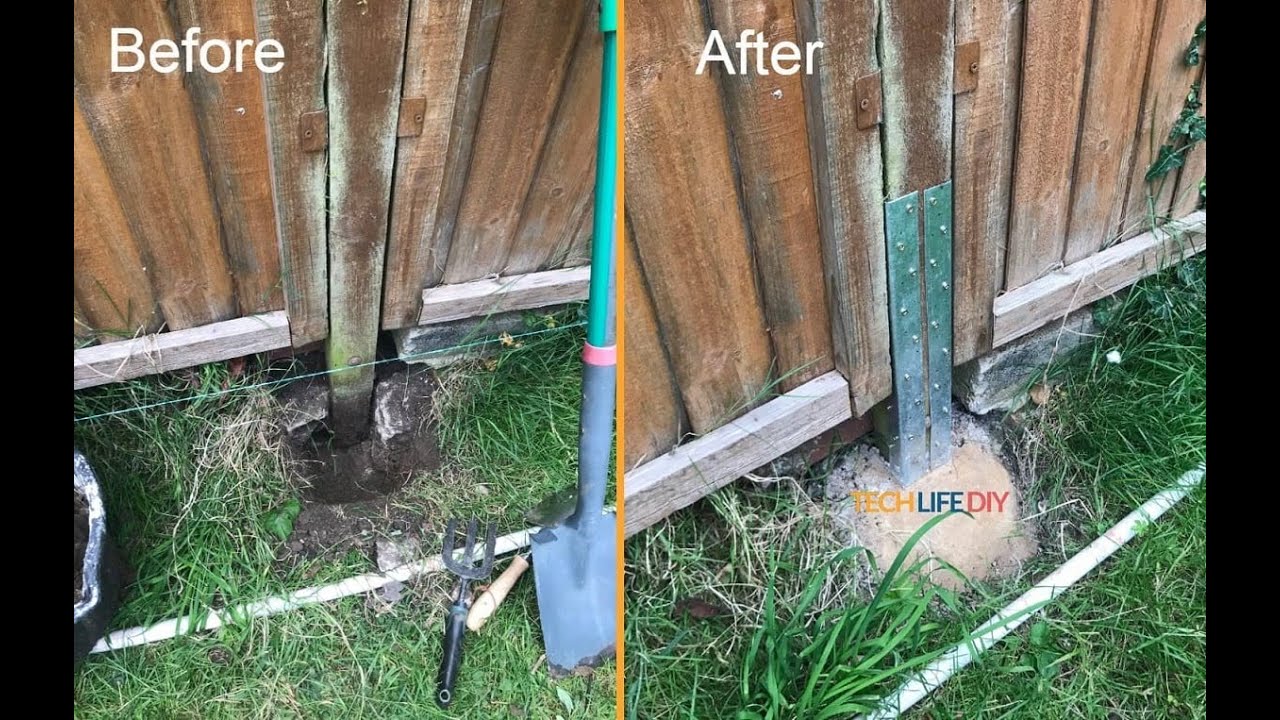
Source: YouTube, Tech Life Diy
Loose or inadequate footing
A post may tilt when soil around it becomes saturated, erodes, settles, or no longer provides sufficient support. A shallow, undersized, or damaged concrete footing may also allow movement.
Loose panel or rail connections
Wood rails, brackets, clamps, or fasteners can loosen while the metal post remains vertical. This is often a connection problem rather than a foundation problem.
Bent or corroded metal
Vehicle impacts, falling branches, repeated loading, or corrosion can weaken a post. A visibly bent post may remain crooked even when its base is secure.
Wind pressure and fence weight
Solid privacy panels catch wind, while heavy gates place additional loads on their supporting posts. A weak foundation or damaged connection may become apparent after a storm or repeated use.
Determine Whether the Post or the Fence Panel Is Leaning
Use a level to check the post independently from the fence panel. If the metal post is plumb but the wood rails or panels angle away from it, inspect the brackets and fasteners. If the post itself is tilted, examine the ground, footing, and surrounding connections.
Gently check for movement without pushing hard against an unstable fence. A post that rocks at ground level suggests a foundation or anchoring problem. A post that remains rigid but is visibly curved may be bent. Stop testing if the fence looks likely to collapse.
Post is vertical, panel is crooked
Inspect rail brackets, panel clips, fasteners, and damaged wood. Repair the connections before considering foundation work.
Post and panel lean together
Check for soil movement, a failed footing, loose anchors, and post deformation.
Several posts lean in the same direction
Look for a broader problem, such as soil erosion, drainage changes, inadequate foundations, or strong wind loading.
Tools and Materials Needed for the Repair
Gather the tools and materials that match the diagnosed problem. A loose bracket repair requires far less equipment than resetting a post in concrete. Avoid purchasing generic hardware before identifying the post profile, metal thickness, panel system, and existing anchor arrangement.
For a basic inspection and connection repair, you may need a tape measure, a level, a wrench or socket set, a drill with suitable bits, compatible exterior-rated fasteners, and replacement brackets. More substantial work may require digging tools, temporary supports, concrete repair materials, or a replacement post.
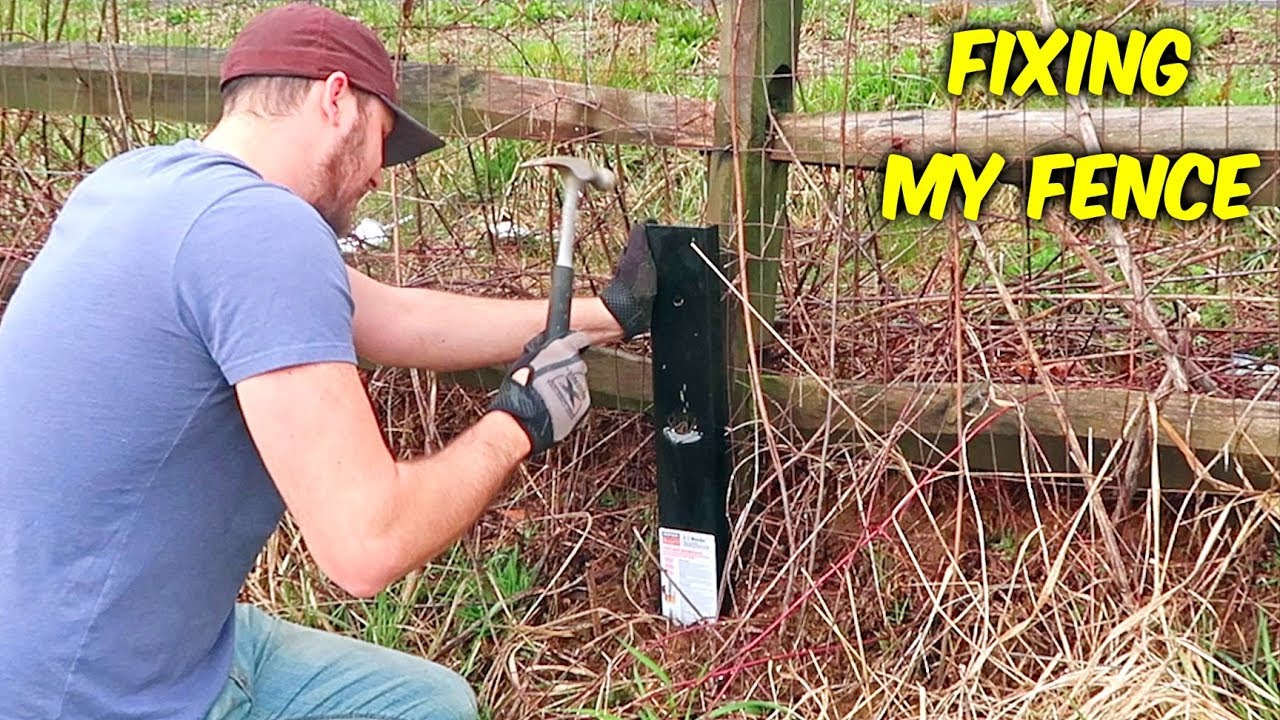
Source: YouTube, Taras Kul
Measuring and alignment tools
Use a tape measure, a spirit level, a straightedge, and a string line to assess post alignment and establish the intended fence line.
Fastening equipment
Use the correct wrench, socket, or drill bit for the existing hardware. Select bolts, washers, clamps, and brackets rated for the fence system and outdoor exposure.
Foundation repair supplies
Depending on the installation, you may need a post-hole digger, shovel, gravel, compatible concrete materials, or an approved anchoring system.
Personal protective equipment
Wear safety glasses, work gloves, sturdy footwear, and hearing protection when the task requires powered equipment. Use respiratory protection appropriate to the material and work conditions when necessary.
Check Underground Utilities Before Digging
In the United States, contact 811 or use your state’s designated 811 service before digging for a replacement footing or anchor. The process helps arrange marking of participating underground utility lines, but private facilities may not be covered. Confirm how to identify private electrical, irrigation, lighting, or other buried services on your property.
Do not assume that a fence line is clear of cables or pipes. Wait for the required utility markings and follow the instructions provided before excavation.
Inspect the work area
Look for utility markers, irrigation lines, nearby electrical equipment, tree roots, and other obstructions.
Confirm private utilities
Arrange additional locating services when needed for lines that the standard utility-marking process does not cover.
How to Fix a Leaning Fence With Metal Posts Step by Step
The repair sequence should move from inspection to stabilization, alignment, and verification. Do not force a leaning post upright until you understand what is holding it in place and whether its foundation or metal structure is still sound.
Choose the appropriate repair path as you work. Tightening a loose bracket, reinforcing a sound post, resetting a shifted post, and replacing damaged steel are different repairs. Combining methods unnecessarily can add cost without correcting the actual failure.
Source: fencemakeovers.com
Step 1: Secure the work area
Keep children and pets away from the repair zone. If the fence is unstable, install suitable temporary support before loosening hardware or disturbing the ground. Do not work beneath an unsupported panel.
Step 2: Inspect the entire affected section
Check the post, footing, brackets, rails, panel fasteners, and adjacent posts. Photograph the damage and identify any bent steel, corrosion, cracked concrete, or displaced soil.
Step 3: Determine the repair method
If the post is plumb and sound, repair the connections. If the post has shifted but remains structurally sound, evaluate the footing and anchoring system. If the post is badly bent or corroded, plan a replacement.
Step 4: Establish the correct alignment
Use a level and string line to identify the desired position. Check neighboring posts so the repaired section follows the existing fence line without introducing an abrupt change in height or direction.
Step 5: Complete the selected repair
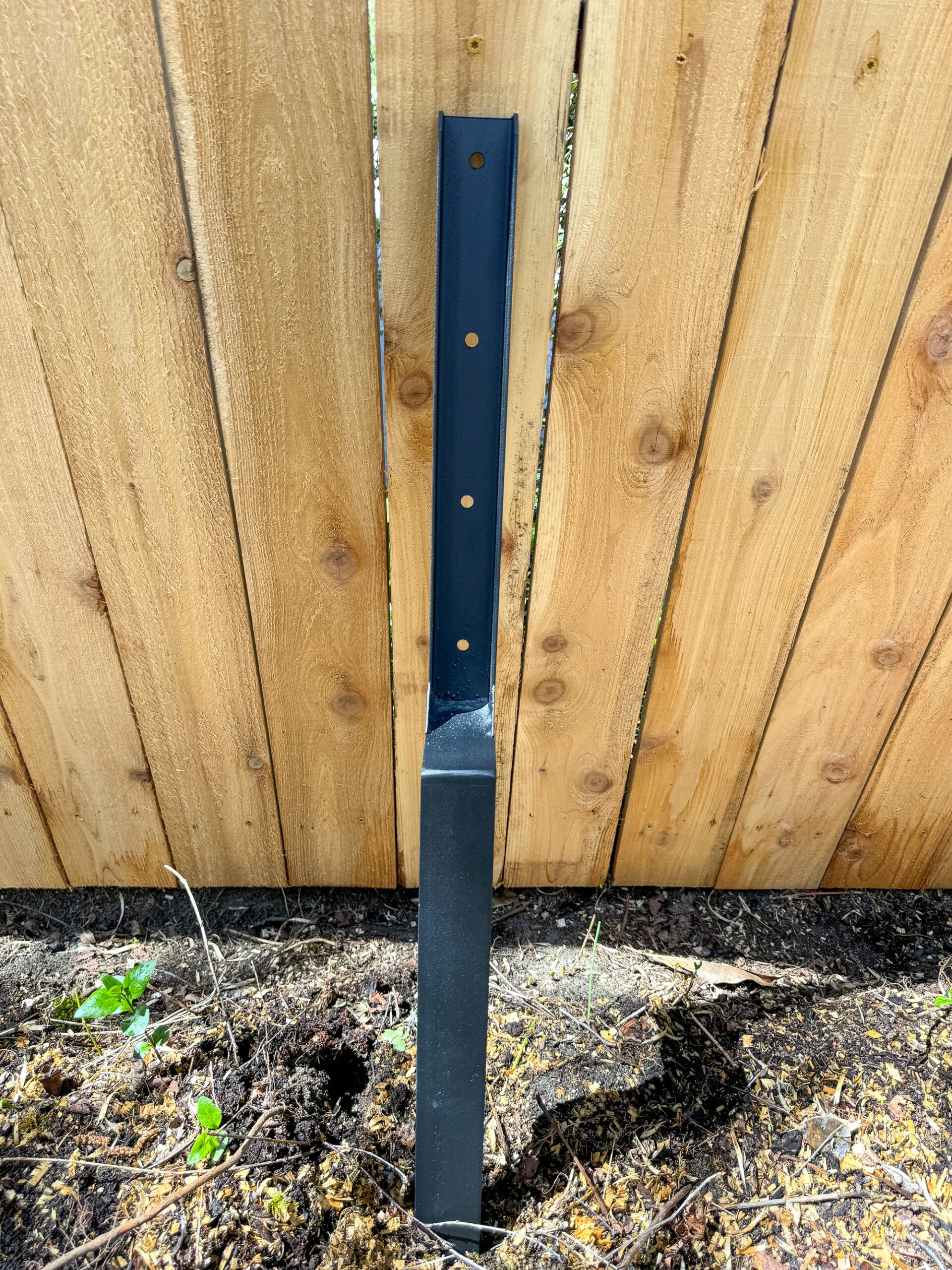
Install compatible brackets, reinforce an approved anchoring system, reset the post, or replace damaged components according to the specific installation requirements.
Step 6: Reconnect and secure the fence
Reattach rails, panels, or mesh using suitable fasteners. Tighten hardware according to its specifications and ensure that the fence components are supported without excessive stress.
Step 7: Verify stability
Recheck vertical alignment, connection tightness, and footing condition. Confirm that gates operate correctly and that the repaired fence does not show renewed movement.
Method 1: Tighten Loose Brackets and Fasteners
Use this method when the metal post is straight, its base is secure, and the fence panel or rail has separated from the post. Loose connections can allow a panel to sag or angle even though the foundation remains intact.
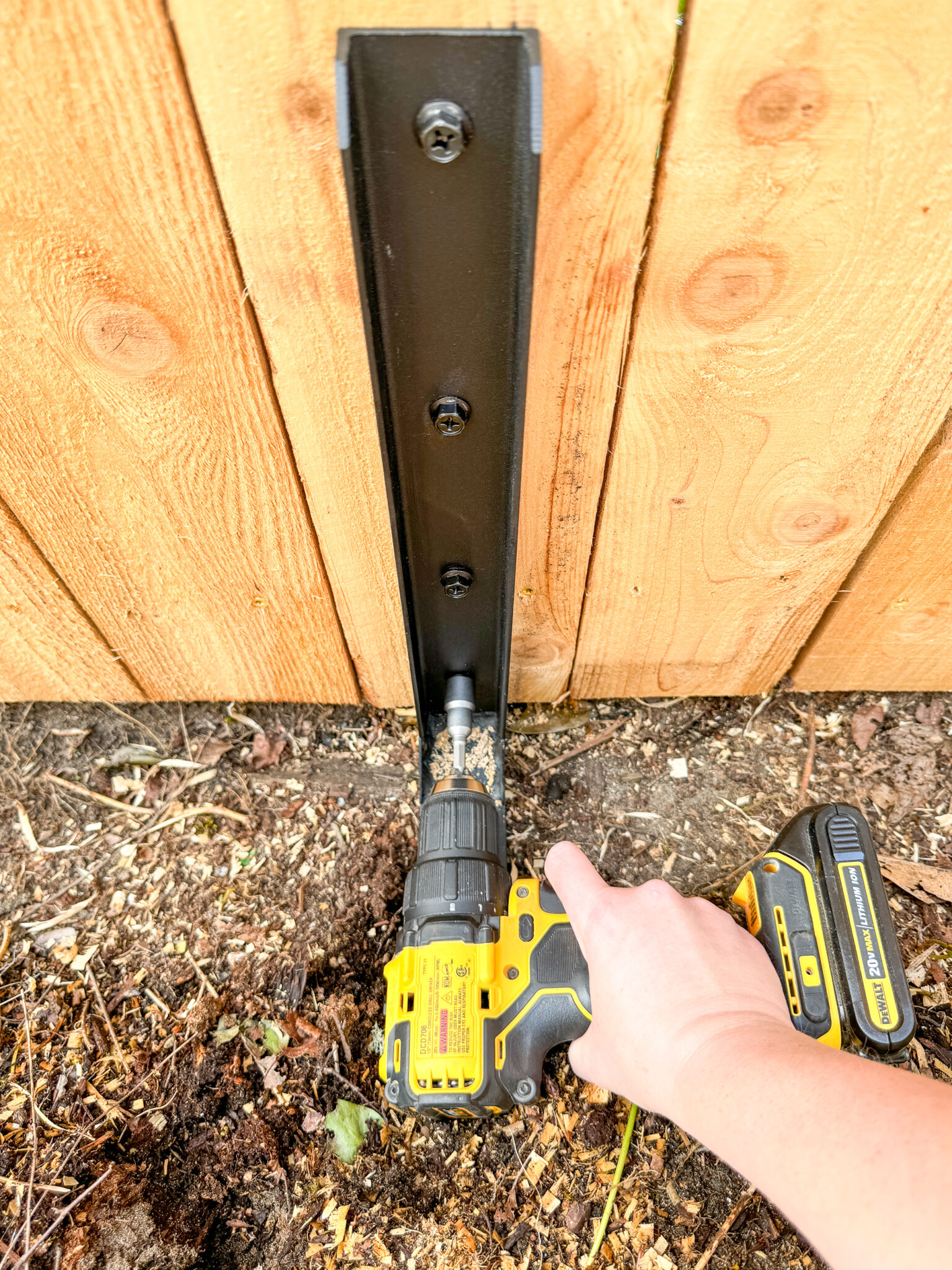
Support the affected panel before removing any fasteners. Examine the bracket for cracks, deformation, corrosion, or elongated bolt holes. Replace damaged hardware rather than tightening it repeatedly. Install a compatible replacement bracket and the specified exterior-rated fasteners, then recheck the panel alignment.
For wood rails attached to metal posts, verify that the bracket matches the post profile and rail dimensions. Avoid driving random screws into thin steel without confirming that the attachment is designed for the material and expected loads.
Use compatible hardware
Match the bracket to the post shape, panel type, and required load capacity.
Inspect the wood as well
Replace split rails, crushed mounting areas, or decayed wood that cannot hold fasteners reliably.
Avoid overtightening
Excessive tightening can strip threads, deform thin metal, or crush wood around the attachment.
Method 2: Reinforce a Sound Metal Post
Reinforcement may be appropriate when a post is structurally sound but its existing anchoring arrangement needs additional support. The correct system depends on whether the post is embedded in concrete, mounted to a concrete surface, or attached to another structural member.
A purpose-made post brace, compatible steel angle, or engineered anchoring bracket may help when its design and installation suit the post and expected loads. Follow the manufacturer’s instructions for fastener type, embedment, spacing, and installation. Reinforcement must transfer loads into a sound foundation rather than simply hide a weak connection.
Do not assume that attaching a steel angle to the side of a post will correct a failed footing. A brace can move the stress elsewhere, and an improvised attachment may damage thin-walled steel. If the post is bent, cracked, or heavily corroded, replacement is generally more appropriate than adding an external brace.
Check the substrate
Verify that the concrete, masonry, or other support is sound enough for the selected anchor system.
Use suitable corrosion protection
Choose compatible outdoor hardware and avoid combinations of metals that can accelerate galvanic corrosion.
Recheck load paths
Confirm that the repair supports the fence through the post and its foundation, not merely through an adjacent panel.
Method 3: Straighten and Reset a Shifted Post
A post that has tilted because its footing has moved may need to be excavated and reset. This is a more involved repair than tightening a bracket. It is appropriate only when the post remains sound and can be removed or repositioned without damaging connected structures or buried utilities.
First, support the fence panel and disconnect it where necessary. After utility clearance, expose the footing and determine whether the post is embedded in concrete, anchored with bolts, or set directly into the ground. Remove unstable material carefully and assess the post and surrounding foundation.
If the existing footing is cracked, undersized, displaced, or otherwise unsuitable, resetting the post may require removing the failed footing and installing a correctly designed replacement. Set the post to the required alignment, brace it temporarily, and install the specified foundation material. Follow the concrete manufacturer’s directions for mixing, placement, curing, and the time before the fence can be reloaded.
Do not use a universal footing depth or diameter for every fence. Appropriate dimensions depend on fence height, soil conditions, frost exposure, wind loads, post size, and applicable requirements. A qualified fence contractor can determine suitable dimensions where the original foundation has failed or local conditions are challenging.
Keep the post aligned during curing
Use temporary bracing and check alignment before the foundation material sets.
Allow sufficient curing time
Do not reattach or load the fence until the specified material has reached the required strength for the intended work.
Manage water around the footing
Correct drainage problems that contribute to erosion, saturation, or repeated movement.
Method 4: Replace a Bent or Severely Corroded Post
Replace the post when deformation, cracking, or corrosion has substantially reduced its structural capacity. Straightening visibly damaged steel can leave a weakened section that bends again under wind or panel loads.
Choose a replacement compatible with the existing fence system. Compare post dimensions, steel thickness, coating, mounting details, and required support. A replacement post must also have an adequate foundation or approved anchoring arrangement.
Support the fence before disconnecting the damaged post. Remove or release the affected panel and hardware, extract the post where practical, and repair or replace the footing as necessary. Install the replacement in the required position, reconnect the fence, and inspect the complete section before removing temporary supports.
For a gate post, tall privacy fence, or fence damaged by a vehicle, have the installation assessed if the loads or extent of damage are uncertain.
Match the original system
Check the required post profile, dimensions, coating, connectors, and foundation details.
Inspect adjacent components
Look for damaged rails, loose panels, cracked footings, and neighboring posts that may also have been affected.
Choosing the Right Repair Method
The most effective repair is the least extensive method that fully addresses the cause of the lean. Use the following comparison to choose a starting point. If several conditions are present, such as a loose bracket and a moving footing, address each underlying defect.
Source: fencemakeovers.com
Loose panel with a straight post
Repair or replace the bracket and fasteners, then inspect the rail and panel for damage.
Post moves at ground level
Investigate the footing, soil, drainage, and anchoring method. Reset or replace the foundation when required.
Post is bent above the ground
Assess the steel for permanent deformation. Replace it if its strength or alignment has been compromised.
Concrete footing is cracked or displaced
Determine the extent of foundation damage and repair or replace the footing instead of relying on surface-level bracing.
Multiple posts lean after a storm
Inspect the full fence line and its foundations. Seek professional assessment when the damage is extensive or the fence is unstable.
Can You Fix a Leaning Fence Without Removing the Post?
Yes, if the metal post remains straight and firmly anchored, and the problem is limited to a loose connection or a suitable reinforcement opportunity. Compatible brackets or an approved anchor repair may restore alignment without removing the post.
If the post is leaning because its footing has shifted, surface reinforcement alone may not provide a durable repair. A damaged footing or weakened post generally requires more substantial work. Base the decision on the condition of the foundation and post rather than on how quickly the fence can be pushed upright.
Usually possible without removal
Loose rail brackets, replaceable panel fasteners, and certain approved anchor repairs.
Often requires excavation or replacement
Failed embedded footings, severely displaced posts, extensive corrosion, and permanently bent structural steel.
Common Mistakes That Can Make the Problem Worse
A repair can look straight initially but fail if the underlying cause remains. Avoid shortcuts that conceal damage, place new stress on thin steel, or leave the foundation unable to resist the fence’s loads.
Source: thehandymansdaughter.com
Forcing the post upright without inspecting its base
A shifted footing may move again, while a bent post can retain permanent damage. Identify the cause before applying force.
Using any available screws or bolts
Fasteners that are too short, incompatible with the post material, or unsuitable for outdoor exposure may loosen or corrode.
Adding a brace to a failed foundation
A brace attached to an unsound footing may not stabilize the post. Repair the load-bearing foundation when needed.
Ignoring drainage and erosion
Water flowing around a post can wash out soil and contribute to repeated movement. Correct the source of the water where practical.
Loading fresh concrete too soon
Concrete needs adequate curing time. Follow the material specifications instead of assuming that a firm surface means the footing is ready.
Digging before utility clearance
Buried electrical lines, gas pipes, communications cables, and irrigation systems may run near a fence. Arrange utility locating before excavation.
When to Call a Fence Contractor
Get professional help when a fence is unstable, several posts have failed, a gate post has shifted, a footing is extensively damaged, or the repair requires substantial excavation or specialized anchoring. A contractor can evaluate the existing design and determine whether reinforcing, resetting, or replacement is appropriate.
Do not attempt to stabilize a tall, heavy, or partially collapsed fence by standing in its fall zone. Keep people clear of the affected area until it can be safely supported or repaired. Check local rules and property-boundary requirements before changing fence height, location, or foundation design.
Severe structural damage
Cracked steel, extensive rust loss, displaced concrete, or several leaning posts warrant a careful assessment.
Uncertain foundation design
Professional guidance is appropriate when soil, frost, slope, or wind conditions make a simple repair unsuitable.
Complex site conditions
Buried utilities, retaining walls, shared fences, and nearby structures can make excavation or replacement more complicated.
How to Check Whether the Repair Worked
A successful repair restores the intended alignment and gives the post, foundation, and panel connections a stable load path. Visual straightness alone is not enough if the footing still moves or the fasteners cannot hold securely.
After completing the work and allowing any foundation material to cure as directed, inspect the fence from several angles. Use a level to check the repaired post, compare it with the string line, and examine the joints for gaps or deformation.
Source: educationsurvey.steelcase.com
Alignment is consistent
The repaired post is plumb where required, and the fence follows the intended line without a sudden change in direction.
Connections are secure
Brackets, bolts, clamps, and panel fasteners are correctly installed, with no stripped threads or cracked mounting points.
The base is stable
There is no visible new movement, soil washout, or cracking that suggests the footing remains defective.
The fence functions normally
Panels sit properly, rails remain supported, and gates open and close without binding or dragging.
What to Do If the Fence Starts Leaning Again
Recurring movement usually indicates that the original cause was not fully corrected or that another component has failed. Reinspect the footing, fasteners, drainage, post condition, and nearby fence sections rather than repeatedly tightening the same hardware.
If the post moves again after a footing repair, stop adding loads or improvised braces. Have the foundation design and surrounding soil assessed, particularly where water erosion, frost movement, or heavy wind exposure is involved.
Movement returns at the base
Reassess the footing, soil support, and drainage.
The panel separates again
Check whether the bracket, fastener, wood rail, or post wall has been damaged or incorrectly matched.
A replacement post bends
Review the post specification, foundation, fence loading, and installation details.
How to Prevent Metal Fence Posts From Leaning Again
Preventive maintenance helps identify small connection problems before they affect the entire fence. Check the fence periodically and after significant storms, impacts, flooding, or other events that could shift posts or damage panels.
Pay particular attention to drainage, corrosion, and fence sections that carry additional loads. A properly maintained fence still needs foundations and posts suitable for its actual height, soil, and exposure conditions.
Source: YouTube, Taras Kul
Inspect posts and hardware
Look for loose fasteners, cracked brackets, bent steel, damaged coatings, and corrosion around ground level or mounting points.
Keep water moving away from the fence
Address runoff and erosion that remove supporting soil or repeatedly saturate the footing area.
Maintain vegetation
Keep plants from trapping persistent moisture against metal and wood components, and inspect roots that may disturb the fence line.
Check gates and heavy panels
Look for sagging hinges, binding gates, and loose supports that can transfer additional loads to a post.
Use compatible replacement parts
When hardware or posts need replacement, match the original system’s dimensions, coating, fastening method, and structural requirements.
Does Weather Affect Metal Fence Posts?
Yes. Heavy rain can soften soil and contribute to erosion, while freeze-thaw cycles can move poorly supported foundations in susceptible soils. Strong winds place pressure on solid panels, and persistent moisture can accelerate corrosion where protective coatings have failed.
The appropriate prevention method depends on the local conditions. Good drainage, sound foundations, suitable corrosion protection, and periodic inspections reduce avoidable damage, but they cannot compensate for a post or footing that is undersized for the fence’s loads.
Wet or poorly drained soil
Inspect for pooling water, erosion channels, and settlement around post bases.
Cold climates
Account for local frost conditions when installing or replacing foundations.
Wind-exposed properties
Ensure that posts, panels, and foundations are appropriate for the fence height and exposure.
Frequently Asked Questions
Q
Can I fix a leaning metal fence post without replacing it?
Yes, if the post is structurally sound and the problem is limited to a loose connection, a repairable anchor, or a footing that can be correctly restored. A post that is badly bent, cracked, or substantially corroded should generally be replaced. Check the foundation before deciding that a brace alone will solve the problem.
Q
What is the easiest way to fix a leaning fence with metal posts?
If the metal post remains vertical and stable, tightening or replacing a compatible bracket is often the simplest repair. If the post itself leans, the footing or anchoring system needs inspection first. The easiest safe repair is the one that corrects the actual cause without adding unnecessary hardware.
Q
Can I use a steel angle to straighten a leaning fence?
A steel angle may help reinforce a suitable, structurally sound post when the connection and foundation are designed for that purpose. It is not a universal solution for bent steel or a failed footing. Confirm the angle, fasteners, corrosion compatibility, and load capacity before installation.
Q
Should I use concrete to fix a leaning fence post?
Concrete may be appropriate when an embedded post has a failed or inadequate footing, but it is not necessary for every repair. A loose panel bracket or a post mounted to an existing concrete slab may need a different solution. Foundation dimensions and materials should account for the fence design, soil, drainage, frost exposure, and local requirements.
Q
How can I fix a leaning fence without digging?
You may be able to correct a leaning panel without digging if the post remains sound and the issue is a loose bracket or fastener. Some approved surface-mounted anchor repairs are also possible when the existing substrate is suitable. If the post has shifted because its buried footing or soil support has failed, avoiding excavation may leave the underlying problem unresolved.
Q
How do I know when a metal fence post needs replacing?
Replacement is generally appropriate when the post has permanent structural deformation, cracks, substantial corrosion, damaged mounting points, or insufficient strength to support the fence. If several posts are leaning or the fence has suffered a major impact, inspect the surrounding foundations and connected components before installing a replacement.
✦ Wrapping Up
Conclusion
Fixing a leaning fence with metal posts starts with identifying whether the problem comes from loose panel connections, a shifted footing, damaged steel, or inadequate support. Repair loose brackets when the post and foundation are sound, reinforce only with compatible hardware, and reset or replace posts when the foundation or metal has failed.
A durable repair must restore the entire support system rather than simply make the fence look straight. Inspect the completed work, allow foundation materials to cure according to their specifications, and monitor the fence for renewed movement. For unstable structures, extensive damage, or uncertain foundation requirements, consult a qualified fence professional.
💡 Key Takeaway
Before purchasing repair materials, check whether the metal post itself is leaning, inspect its base and connections, and identify the cause. Then choose the least extensive repair that restores stable support, arrange utility locating before digging, and verify alignment and stability before returning the fence to normal use.
I enjoy sharing simple gardening ideas, lawn care tips, and honest product reviews that help make outdoor work easier. From home gardening guides to helpful tools and lawn care advice, I write easy-to-follow content to help readers create a healthier and better-looking outdoor space without wasting time or money.