

As an Amazon Associate, I earn from qualifying purchases.
The best pergola plants depend on your USDA hardiness zone, sunlight, desired shade, and maintenance preferences. Popular choices include climbing roses, clematis, honeysuckle, grapevines, climbing hydrangeas, and star jasmine in suitable climates.
Across the United States, pergolas provide an opportunity to create a greener outdoor living space without sacrificing valuable garden floor area. Whether you have a sunny backyard in Texas, a coastal patio in California, a small New England garden, or a shaded outdoor dining area in the Pacific Northwest, climbing plants can soften a pergola’s structure and add flowers, fragrance, foliage, or edible harvests.
Choosing the right pergola plants involves more than selecting attractive flowers. Regional temperatures, summer humidity, winter freezes, soil drainage, sunlight, and the pergola’s construction all influence which vines will thrive. A vigorous woody climber that works on a substantial freestanding structure may overwhelm a lightweight patio cover, while a heat-sensitive flowering vine may struggle in a southern exposure.
Start by deciding whether you want seasonal shade, year-round greenery, colorful blooms, privacy, or fruit. Then match plants to your local growing conditions and available support. With appropriate spacing, training, watering, and pruning, a pergola can develop into a comfortable garden feature that complements your home and remains manageable over time.
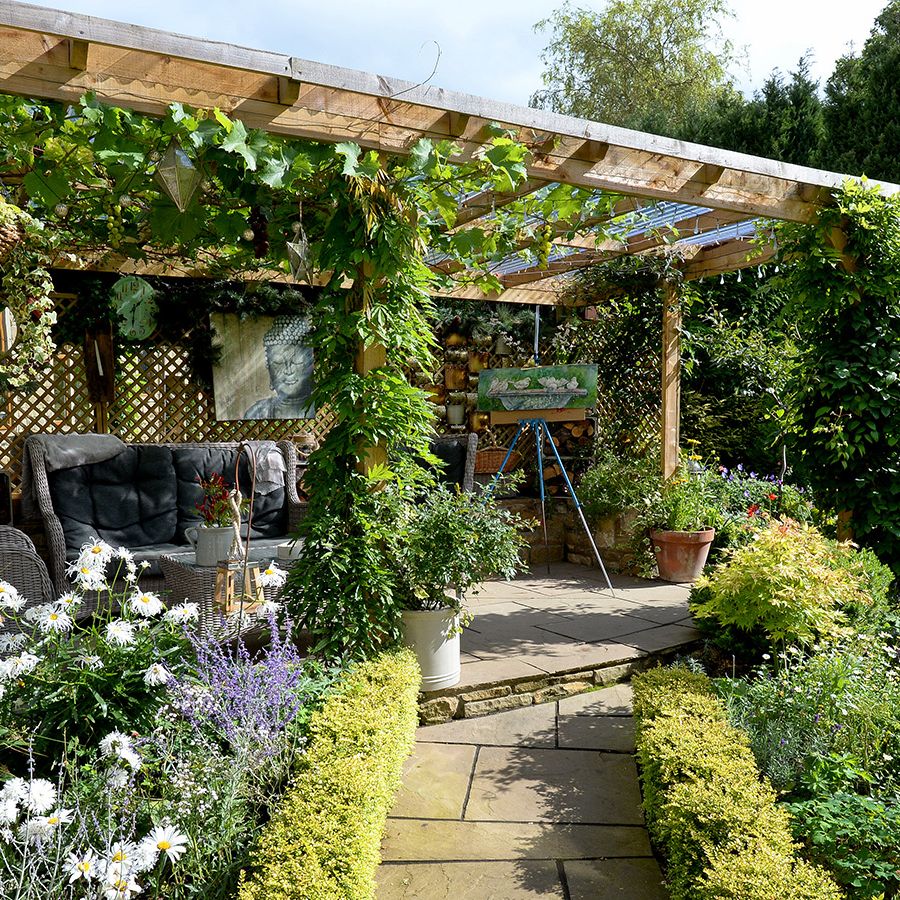
Page Contents
Toggle15 Best Pergola Plants for Different Garden Needs
The best pergola plants combine the appearance you want with growth habits that suit your structure and climate. Some provide dense summer foliage, others produce fragrant flowers, and a few offer edible fruit. No single vine is ideal for every American garden, so compare mature size, winter hardiness, maintenance, and support requirements before choosing.
The following options cover a range of garden styles and growing conditions. Check the exact species and cultivar before purchasing because flower color, mature size, hardiness, and growth rate can differ considerably between varieties.
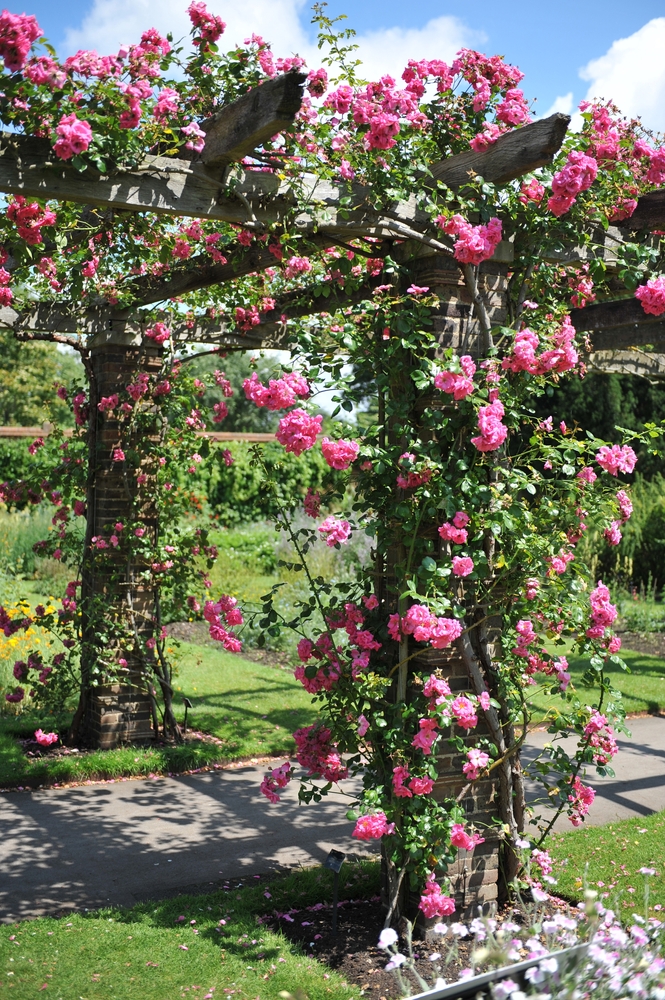
- Best for seasonal shade
Grapevines and vigorous deciduous climbers can develop broad summer canopies while allowing more sunlight through after their leaves fall.
- Best for fragrant flowers
Star jasmine in suitable warm climates and appropriately selected honeysuckles can bring noticeable fragrance to outdoor seating areas.
- Best for colorful blooms
Climbing roses and clematis offer a range of flower colors, sizes, and flowering seasons.
- Best for a leafy green appearance
Climbing hydrangea and suitable evergreen vines can soften posts and overhead beams, depending on local climate and light.
- Best for edible harvests
Grapevines can combine shade with fruit production when the variety, sunlight, and pruning system suit the site.
1. Climbing Roses
Climbing roses are a strong choice for gardeners who want classic flowers along pergola posts and beams. Depending on the variety, they produce single or repeat flushes of blooms in shades such as white, pink, red, yellow, and apricot. Many also provide fragrance and can attract pollinators.
Most climbing roses flower best with several hours of direct sunlight, fertile soil, and good air circulation. They are not self-supporting in the way twining vines are, so attach their canes to a suitable trellis or structural support with soft ties. Train flexible canes horizontally or at an angle when practical to encourage flowering shoots along their length.
Choose varieties suited to your region and account for thorny growth around seating areas. Pruning requirements vary, so identify whether the rose flowers mainly on old wood or new growth before making major cuts.
- Best for
Romantic garden designs, colorful flowers, and fragrant seating areas.
- Sunlight
Generally full sun, with variety-specific differences.
- Maintenance
Regular training, seasonal pruning, watering during dry weather, and monitoring for common rose diseases.
2. Clematis
Clematis is a versatile flowering vine with varieties that produce large star-shaped flowers, smaller nodding blooms, or masses of delicate blossoms. It is particularly useful when you want dramatic flowers without relying on a massive woody vine.
Many clematis varieties prefer sunny foliage and cooler, shaded root zones, although the ideal conditions vary by species. A thin trellis, wire grid, or closely spaced support elements help their leaf stalks grasp the structure. Thick, smooth pergola posts alone may not provide enough grip.
Pruning depends on flowering habit. Some varieties bloom primarily on previous-season growth, while others flower on new growth or both. Check the plant label before pruning so you do not remove the next season’s flowers.
- Best for
Large flowers, mixed climbing displays, and relatively controlled vertical growth.
- Sunlight
Often full sun to partial shade, depending on species and cultivar.
- Maintenance
Provide a fine support network, protect the root zone where appropriate, and follow the correct pruning group.
3. Honeysuckle
Honeysuckle can bring tubular flowers, a sweet scent, and a relaxed cottage-garden appearance to a pergola. Depending on the species, flowers may be white, cream, yellow, pink, or red. Many attract hummingbirds and other pollinators.
Select a well-behaved species or cultivar suited to your region rather than assuming all honeysuckles are suitable for home gardens. Japanese honeysuckle, for example, is invasive in many parts of the United States. Consult your state extension service or local invasive-species list before planting.
Most twining types need a post, trellis, or other narrow support to wind around. Regular pruning can prevent the vine from becoming tangled or encroaching on nearby plants.
- Best for
Fragrant flowers and wildlife-friendly garden planting when a suitable noninvasive variety is selected.
- Sunlight
Full sun to partial shade for many garden varieties.
- Maintenance
Check local invasive-species guidance, train young shoots, and control excess growth.
4. Star Jasmine
Star jasmine, also called Confederate jasmine, is valued for glossy evergreen foliage and clusters of fragrant white flowers. It can cover a pergola with a lush appearance in mild climates, particularly in parts of the Southeast and warmer coastal regions.
Star jasmine is not reliably winter-hardy everywhere in the United States. Cold winters can damage or kill exposed plants, so check the exact cultivar’s hardiness guidance and consider container growing where winter protection is needed. A container also makes it easier to move the plant to a sheltered location.
The vine can be trained along a sturdy trellis or pergola framework, with young stems tied into position as they grow. Although evergreen foliage offers extended seasonal coverage, it does not guarantee complete shade or privacy.
- Best for
Fragrant white flowers and evergreen foliage in suitable climates.
- Sunlight
Full sun to partial shade, with protection from harsh conditions where needed.
- Maintenance
Train shoots, prune after flowering as appropriate, and protect plants from unsuitable winter temperatures.
5. Grapevines
Grapevines are among the most practical pergola plants when your priorities include summer shade and edible fruit. Their broad leaves create a leafy overhead canopy, and established vines can produce table grapes or other fruit depending on the variety and growing conditions.
Grapes generally need abundant sunlight for fruit production and good air circulation to reduce disease pressure. Select a variety suited to your climate, including local winter temperatures, summer humidity, and disease challenges. The vine also needs a strong support system because mature woody growth and fruit can add substantial weight.
Annual pruning is essential. Grapevines produce fruit on shoots that grow from the previous season’s canes or spurs, depending on the training system. Without appropriate pruning, the canopy can become crowded, fruit production may decline, and the structure can become harder to maintain.
- Best for
Seasonal shade, edible harvests, and traditional courtyard or backyard designs.
- Sunlight
Generally full sun for reliable fruit production.
- Maintenance
Annual dormant-season pruning, canopy management, appropriate irrigation, and monitoring for regional grape diseases.
6. Climbing Hydrangea
Climbing hydrangea is a woody vine known for its dark green leaves and broad clusters of white flowers. It is especially useful for shaded or partly shaded gardens where many flowering vines struggle to bloom well.
This plant attaches itself using aerial rootlets, allowing it to cling to suitable surfaces. However, it becomes a substantial woody climber as it matures, and it can take time to establish. Use it only where the support can accommodate its long-term size and attachment method.
Climbing hydrangea is generally more suitable for cooler or temperate regions than for hot, exposed sites. Keep its root zone adequately moist while avoiding waterlogged soil, and provide room for the mature vine to spread.
- Best for
Partly shaded gardens, white summer flowers, and a leafy architectural effect.
- Sunlight
Partial shade is often suitable, though light requirements depend on climate.
- Maintenance
Allow for mature size, monitor attachment points, and prune only as needed.
7. Wisteria
Wisteria is known for cascading flower clusters and a dramatic, established-vine appearance. Its twisting woody stems can transform a substantial pergola into a striking garden feature, particularly when flowering plants receive sufficient sunlight.
Wisteria can become extremely heavy and vigorous. Plant it only on a robust structure designed to support its mature growth, and be prepared for repeated pruning and control of spreading shoots. Avoid planting it near fragile fencing, lightweight patio covers, or structures that cannot tolerate woody stems.
Species selection is especially important. Japanese and Chinese wisteria are invasive in parts of the United States, and American wisteria or suitable noninvasive cultivars may be preferable where available. All parts of wisteria can be poisonous if eaten, especially the seeds and pods, so keep them away from children and pets that may chew plant material.
- Best for
Large, sturdy pergolas and dramatic cascading flowers.
- Sunlight
Generally full sun for abundant flowering.
- Maintenance
Frequent training and pruning, invasive-species screening, and a strong supporting structure.
8. Bougainvillea
Bougainvillea delivers vivid displays of colorful bracts, often in magenta, purple, red, orange, or white. It is especially effective in warm-climate landscapes, including frost-free or nearly frost-free areas of the southern United States and suitable parts of the Southwest.
The plant needs abundant sunlight for strong flowering and generally performs best in well-drained soil. It is sensitive to freezing temperatures, so gardeners in colder regions may grow it in containers and protect it during winter.
Bougainvillea has thorny stems, so keep it away from narrow walkways and areas where people frequently brush against the plant. Tie suitable shoots to the support and prune carefully while wearing protective gloves.
- Best for
Bright color in warm-climate gardens and sunny courtyards.
- Sunlight
Full sun.
- Maintenance
Cold protection where necessary, careful training, and management of thorny growth.
9. Passionflower
Passionflower vines produce intricate flowers that add an unusual tropical appearance to a pergola. Some species also produce edible passion fruit, but fruit production depends on the species, pollination, climate, and growing season.
Many passionflowers grow vigorously and use tendrils to grip nearby supports. They need a suitable trellis or wire system, and some species require winter protection in colder regions. Check local guidance because certain passionflower species can spread aggressively in favorable climates.
Choose a species suited to your intended purpose. An ornamental passionflower is not automatically a dependable fruit producer, and fruit should be identified as edible before consumption.
- Best for
Distinctive flowers, wildlife interest, and possible edible fruit with the right species.
- Sunlight
Generally full sun to partial shade, depending on the species.
- Maintenance
Provide tendril support, monitor spread, and protect less-hardy species during cold weather.
10. Carolina Jessamine
Carolina jessamine, also spelled jasmine in some common references, is an evergreen or semi-evergreen twining vine in warmer regions. Its bright yellow, trumpet-shaped flowers provide an early seasonal display and can bring color to a pergola before many summer vines reach full growth.
It is best suited to climates where winter temperatures remain within its tolerance. The vine can be trained along a trellis or pergola framework and generally performs well in sun or partial shade.
Safety matters with this plant: all parts of Carolina jessamine are poisonous if ingested. Choose another vine if children or pets are likely to chew leaves, flowers, or stems, and avoid placing it near edible crops where accidental harvesting could occur.
- Best for
Yellow flowers and extended foliage in suitable warm regions.
- Sunlight
Full sun to partial shade.
- Maintenance
Provide a suitable support, manage growth after flowering, and keep the poisonous plant away from accidental ingestion.
11. Climbing Nasturtium
Climbing nasturtiums are useful for gardeners who want colorful flowers without committing to a large, permanent woody vine. Depending on the variety, they produce orange, red, yellow, or cream flowers and can grow over light trellises or around pergola posts.
These plants are often grown as annuals in much of the United States, although local growing conditions can affect their season. They are useful for filling gaps while slower-growing perennial climbers establish themselves.
Nasturtiums prefer well-drained soil and usually do not need excessive fertilizer. Their growth can be less vigorous in intense summer heat, and their stems may require guidance to reach the desired support.
- Best for
Seasonal color, temporary coverage, and smaller garden structures.
- Sunlight
Full sun to partial shade, depending on climate.
- Maintenance
Seasonal replanting in colder regions and occasional training.
12. Scarlet Runner Bean
Scarlet runner bean is an edible annual vine that produces bright red flowers and climbing foliage. It can cover a trellis or selected sections of a pergola during the growing season while providing bean pods when conditions are suitable.
The plant needs a secure framework for its twining stems and generally performs best in sunlight with fertile, well-drained soil. It is particularly useful when you want a productive seasonal garden rather than a permanent woody canopy.
Harvest and prepare the beans according to reliable food-safety guidance for the species. Do not assume that every ornamental climbing bean is suitable for eating, and identify the plant correctly before consuming its pods or seeds.
- Best for
Seasonal foliage, bright flowers, and edible garden production.
- Sunlight
Generally full sun.
- Maintenance
Regular watering during establishment, support for twining stems, and timely harvesting.
13. English Ivy
English ivy is an evergreen climber known for dense foliage and its ability to grow in shade. Although it can create a green appearance, it is not a default recommendation for every pergola because it can spread aggressively and become difficult to control.
In many parts of the United States, English ivy is invasive. Its attachment structures can also complicate maintenance around buildings and other surfaces. Consult local invasive-species guidance before planting it, and consider a suitable noninvasive alternative if you want evergreen coverage.
If ivy is already growing on a property, prevent it from spreading into natural areas and manage it according to local recommendations. Keep its berries and leaves away from children and pets because ingestion can cause illness.
- Best for
Evergreen foliage only where local guidance confirms the selected species is appropriate and its spread can be controlled.
- Sunlight
Shade to partial sun for many ivy varieties.
- Maintenance
Careful spread management and consideration of invasive-plant risks.
14. Climbing Fig
Climbing fig is a small-leaved evergreen vine used for a dense green effect in mild climates. It can adhere to suitable surfaces, creating a smooth covering that differs from the loose, twining growth of many flowering vines.
Because climbing fig attaches with aerial rootlets, use caution around painted walls, woodwork, masonry joints, and surfaces where removal or moisture retention could cause problems. It may also require protection from cold in regions with freezing winters.
For a freestanding pergola, a separate trellis or removable support may provide more control than allowing the plant to attach directly to a building. Keep growth within the intended area and assess its mature behavior before planting.
- Best for
Dense evergreen coverage in appropriate mild climates.
- Sunlight
Partial shade to bright indirect or filtered light, depending on the site.
- Maintenance
Control spreading growth, monitor attachment surfaces, and protect from damaging cold.
15. Black-Eyed Susan Vine
Black-eyed Susan vine is a flowering climber that often produces orange, yellow, or cream-colored blooms with dark centers. It can provide a quick seasonal display on a lightweight trellis and is useful for filling open areas on a pergola without creating a permanent woody framework.
In much of the United States, it is grown as an annual or protected container plant. It prefers warm conditions and a support system that its twining stems can readily climb.
This vine works well when you want flowers within a single growing season, especially while a slower perennial climber develops. Its mature coverage depends on the variety, growing season, and local conditions.
- Best for
Seasonal flowers and fast decorative coverage.
- Sunlight
Full sun to partial shade, depending on heat and climate.
- Maintenance
Provide a climbing support, water consistently while establishing, and replant when the growing season ends.
How to Choose Pergola Plants for Your Climate
Your local climate should guide the plant selection before flower color or growth speed. The USDA Plant Hardiness Zone Map helps gardeners compare average annual extreme minimum winter temperatures, but it does not account for every factor that affects plant performance. Summer heat, humidity, wind, soil moisture, and exposure can all change the outcome.
For the most reliable decision, compare the hardiness information on the plant label with guidance from your state cooperative extension service. A vine that survives winter may still struggle with extreme summer heat or humid conditions.
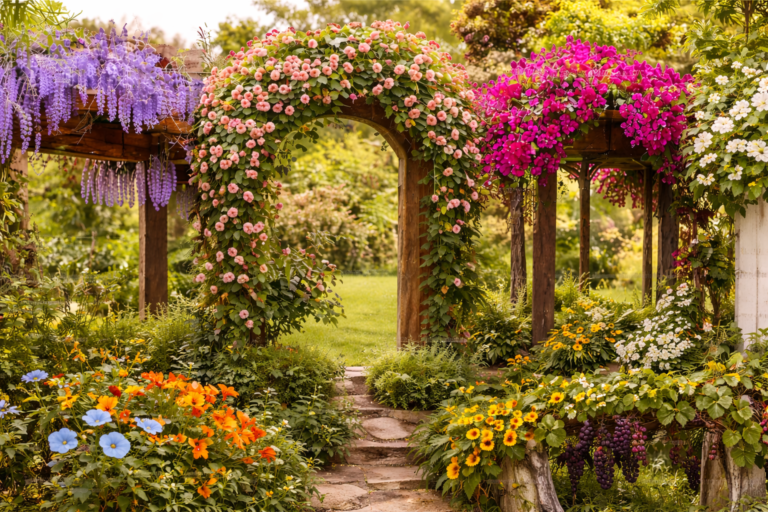
- Cold-winter regions
In much of the Northeast, Upper Midwest, and colder interior regions, consider locally hardy clematis, suitable climbing roses, grape varieties, and other perennials rated for the site.
- Hot and humid regions
In the Southeast and Gulf Coast, choose heat-adapted vines and prioritize airflow, appropriate watering, and disease-resistant varieties.
- Warm, dry regions
In parts of the Southwest and inland California, select plants suited to local water availability and heat exposure. Establish roots carefully and avoid assuming that a plant described as drought-tolerant needs no irrigation.
- Mild coastal regions
Some evergreen flowering vines may thrive where winter freezes are limited, but coastal wind, salt exposure, and cool summer temperatures can affect their performance.
- Shaded or woodland-edge gardens
Look for vines that tolerate partial shade, such as suitable climbing hydrangeas or clematis varieties, rather than forcing a full-sun plant into a dim location.
Check Sunlight Before Buying
Observe the pergola throughout the day rather than judging its exposure from one visit. A roofed or tree-shaded pergola may receive direct sunlight only in the morning or late afternoon, while an open structure in a southern exposure may experience intense summer sun.
Full sun generally means at least six hours of direct sunlight per day, although individual plants and hot climates can change the ideal exposure. Partial shade often means fewer hours of direct sun or a mixture of sun and shade. Use the plant’s specific growing guidance when the distinction matters.
- Sunny pergolas
Consider climbing roses, grapevines, many clematis varieties, and other sun-loving climbers suited to the region.
- Partly shaded pergolas
Consider climbing hydrangea, selected clematis varieties, and suitable honeysuckles.
- Deep shade
Expect fewer flowers from many flowering vines. Evaluate foliage plants suited to the actual light level and consider whether pruning nearby vegetation or changing the planting location is more practical.
Match the Plant to Your USDA Hardiness Zone
The USDA hardiness zone is a useful starting point for choosing perennial vines, but it should not be the only selection criterion. Two yards in the same zone can have different results because of soil drainage, frost pockets, reflected heat, wind exposure, and local disease pressure.
Before purchasing, confirm the exact plant name, cultivar, expected mature size, and regional growing recommendations. When a vine is borderline hardy, a sheltered microclimate or container may help, but neither guarantees survival through severe cold.
- Use local extension resources
State university extension services can provide regional advice about suitable species, pruning times, invasive plants, and common pests.
- Read the full plant label
Check hardiness, mature spread, flowering time, light needs, and whether the plant is evergreen, deciduous, or commonly grown as an annual.
Compare Pergola Plants by Shade, Privacy, Flowers, and Maintenance
The right pergola vine depends on how you use the space. A dining area may benefit from seasonal overhead shade, while a small patio beside a neighbor’s yard may need foliage along the sides. A garden entrance might prioritize flowers and fragrance instead.
Use the following comparison to narrow your options. The descriptions are general tendencies rather than guarantees because cultivar, climate, maturity, and growing conditions affect actual performance.

- For overhead shade
Consider grapevines or a suitable deciduous climber trained across a strong framework. Leaf density depends on maturity, pruning, and the growing season.
- For flowers
Choose climbing roses, clematis, honeysuckle, bougainvillea, or another flowering vine that matches your climate.
- For fragrance
Star jasmine in mild climates, suitable honeysuckles, and fragrant climbing roses are useful options.
- For evergreen coverage
Consider regionally appropriate evergreen vines, while checking cold tolerance, spread, and whether the plant attaches directly to surfaces.
- For edible harvests
Grapevines or appropriate climbing beans can provide food as well as decorative growth.
- For seasonal planting
Climbing nasturtiums, black-eyed Susan vines, and scarlet runner beans can add color without creating a permanent woody framework.
Which Pergola Plants Provide the Most Shade?
For meaningful overhead shade, look for a vine that develops a broad, reasonably dense canopy and can be trained across the top of the pergola. Grapevines are a traditional option because their leaves spread across horizontal supports and can be managed through pruning.
Shade is not immediate. A newly planted vine may take several growing seasons to cover a large structure, and actual coverage depends on plant vigor, spacing, water availability, and pruning. Deciduous plants also lose their leaves during their dormant season, allowing more winter sunlight through.
Living canopies filter sunlight rather than necessarily blocking all of it. If the pergola needs dependable rain protection or a specific level of shade, do not rely on plant foliage alone.
- For summer shade
Choose a suitable deciduous vine and train it across horizontal beams.
- For shade earlier in the season
Select a locally vigorous species and provide enough support for lateral growth without overcrowding.
- For predictable shade
Consider a purpose-designed overhead shade system alongside plants rather than waiting for foliage to develop.
Which Plants Are Best for Pergola Privacy?
For privacy, focus on side coverage rather than assuming an overhead canopy will screen neighboring windows or yards. Train suitable vines along vertical trellises attached to the pergola, or install freestanding trellis panels beside the seating area.
Evergreen foliage can offer a longer screening season in suitable climates, while deciduous vines may provide effective summer privacy but become sparse during winter. Flowering plants can create an attractive screen, although gaps may remain between stems.
Avoid choosing an invasive vine simply because it grows quickly. A slower, manageable plant combined with a properly positioned screen often gives more predictable privacy with less long-term maintenance.
- Best strategy
Combine a suitable climber with vertical trellis panels for privacy at the height and angle where it is needed.
- Important limitation
A pergola vine cannot guarantee complete visual screening, particularly during dormancy or before the plant matures.
How to Plant Climbing Vines Around a Pergola
Successful pergola planting starts with a suitable location, healthy plants, and a support system that matches the vine’s growth habit. Before digging, confirm that the structure is stable and that planting will not interfere with footings, buried utilities, drainage, or access around posts.
The ideal planting distance varies with mature size, root conditions, and the location of the pergola’s foundations. Do not automatically plant every vine directly against a post. Leaving space for air circulation and maintenance may produce a healthier, easier-to-manage planting.

- Prepare the site
Remove competing weeds, assess drainage, identify buried utilities, and determine whether the soil needs improvement based on a soil test or local guidance.
- Choose the correct support
Provide trellis mesh, wires, or suitable narrow members for plants that twine or cling with leaf stalks. Ensure the support is appropriate for the mature plant.
- Plant at the correct depth
Follow the nursery label and species-specific guidance. Avoid burying the crown or stem too deeply unless the plant’s instructions call for it.
- Water thoroughly
Water the root zone after planting and maintain consistent moisture during establishment without keeping the soil waterlogged.
- Train early growth
Guide young stems toward the intended support and use soft ties when needed. Do not tightly bind growing stems to posts or wires.
- Monitor growth
Check regularly for loose ties, dry soil, pests, crowded growth, and shoots heading into gutters, walkways, or neighboring plants.
Step 1: Measure the Planting Space
Measure the length of the pergola and identify the positions available for planting. Then compare the expected mature spread of each vine with the distance between posts and the amount of overhead coverage you want.
Plant spacing is not universal. A vigorous grapevine, a compact clematis, and a seasonal annual require different amounts of room. Use the specific plant label and regional growing advice rather than relying on a single spacing measurement for all vines.
Account for access to posts, fasteners, lighting, and any shade or roof components. Plants should not prevent inspection or repair of the structure.
- Avoid overcrowding
Too many plants competing for a small root zone can increase maintenance and make airflow more difficult.
- Allow for maturity
Plan for the plant’s eventual size rather than the dimensions of the nursery container.
Step 2: Prepare Healthy Soil
Most pergola vines perform best when the soil drains appropriately for the species and contains enough organic matter to support root growth. Very heavy, poorly drained soil can cause problems for plants that need aeration around their roots, while sandy soil may dry quickly during hot weather.
Use a soil test when you are unsure about pH or nutrient levels. Add compost or other amendments when they address a real soil need, and avoid excessive fertilizer that encourages leafy growth at the expense of flowers or fruit.
- Poor drainage
Correct the site conditions or choose a suitable alternative planting location instead of repeatedly adding water-loving plants to unsuitable soil.
- Dry soil
Use an appropriate watering routine and consider mulch to reduce moisture loss without piling it against plant stems.
Step 3: Install Suitable Training Supports
Different vines climb in different ways. Twining stems wind around narrow supports, tendrils grasp small wires or mesh, and leaf-stalk climbers such as many clematis varieties need relatively fine supports. Self-clinging vines use specialized attachment structures that can adhere to surfaces.
A pergola’s beams may be too thick or smooth for certain climbers to grip. Add a compatible trellis or wire system where necessary, using suitable fittings and allowing enough room to inspect and maintain the structure.
Avoid attaching a heavy, mature vine to an unsupported decorative panel. Fasteners, posts, and beams must be appropriate for the loads involved, including the additional weight of wet foliage and wind exposure.
- Twining vines
Provide posts, wires, or other narrow supports around which stems can wind.
- Tendril climbers
Use wire grids, mesh, or similar supports that the tendrils can grip.
- Self-clinging vines
Assess the surface and long-term maintenance implications before allowing attachment to a building or finished structure.
Step 4: Water and Mulch Correctly
Newly planted vines need enough water to establish roots, but watering frequency depends on rainfall, soil type, temperature, container size, and plant species. Check soil moisture near the root zone instead of following a rigid calendar regardless of conditions.
Apply organic mulch where suitable to reduce evaporation and moderate soil temperature. Keep mulch away from direct contact with stems and the pergola’s wooden posts to reduce moisture-related problems.
Once established, some plants tolerate short dry periods better than others. Grapevines and drought-tolerant ornamental vines still need appropriate moisture during establishment and may require additional water during prolonged heat.
- Signs of insufficient water
Wilting, dry root-zone soil, leaf-edge browning, or poor new growth may indicate water stress, although pests and root problems can cause similar symptoms.
- Signs of excessive water
Persistently wet soil, yellowing foliage, and declining growth can indicate poor drainage or overwatering.
Step 5: Train Growth Without Damaging Stems
Guide young stems toward the intended direction while they are flexible. Use soft plant ties and leave room for stems to thicken. Inspect ties as the plant grows, especially where stems cross metal wires or rub against wooden beams.
Spread suitable shoots across the overhead framework to create an even canopy. Remove unwanted shoots that obstruct access or grow into gutters and nearby plants, but avoid aggressive pruning until you understand the vine’s flowering habit.
For heavy woody climbers, do not assume that pruning alone makes an undersized pergola safe. The supporting structure must be suitable for the mature plant and local weather conditions.
- Good training
Shoots follow the intended route, ties remain loose enough for growth, and maintenance access remains clear.
- Poor training
Stems become constricted, tangled shoots pull against supports, and foliage blocks access to structural connections.
Pergola Plant Care: Watering, Feeding, and Pruning
Regular care helps pergola vines maintain healthy foliage, produce flowers or fruit, and stay within the available space. The exact schedule depends on the species, local weather, soil, and stage of growth, so observe the plant rather than relying on a universal maintenance calendar.
A useful routine combines root-zone moisture checks, periodic inspection of training ties, removal of damaged or unwanted growth, and pruning at the correct time for the plant. Overfertilizing or cutting every vine at the same time can reduce flowering and create unnecessary growth.
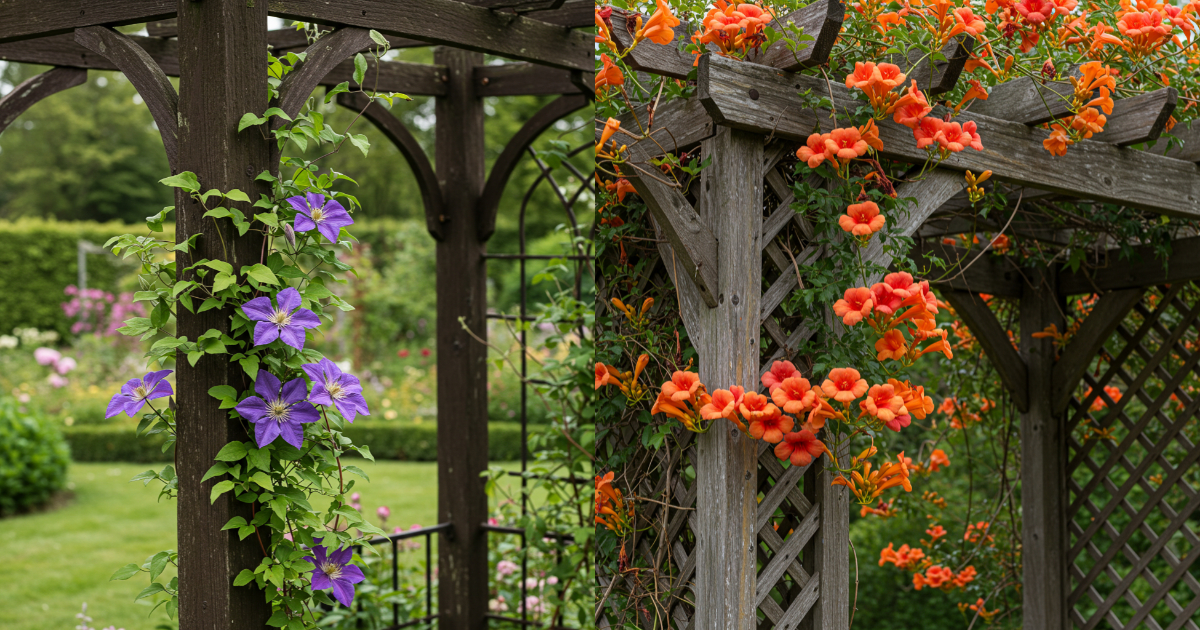
- Watering
Check soil moisture and water deeply when the root zone needs it, accounting for rainfall and drainage.
- Feeding
Use a soil test and plant-specific guidance to decide whether fertilizer is needed. Avoid excessive nitrogen when flower or fruit production is the priority.
- Pruning
Identify whether the vine flowers on old wood, new wood, or both before removing substantial growth.
- Inspection
Check leaves, stems, ties, and structural connections for disease symptoms, pests, abrasion, and excessive weight.
When Should You Prune Pergola Plants?
Pruning time depends on the species and its flowering cycle. Some spring-flowering climbers form flower buds on the previous season’s growth, while many summer-flowering vines produce flowers on new shoots. Pruning at the wrong time can remove flower buds and reduce the next display.
Grapevines usually require substantial dormant-season pruning, while climbing roses need pruning suited to their flowering habit. Clematis must be pruned according to its group, and wisteria often needs repeated training and pruning to control vigorous growth and encourage flowering.
Remove dead, diseased, damaged, or hazardous growth when appropriate, using clean, sharp tools and following regional recommendations for disease management. For major cuts on a large, established vine, seek professional help if access or the weight of the growth creates a risk.
- Spring-flowering vines
Check whether flower buds form on older wood before carrying out major pruning.
- Summer-flowering vines
Many benefit from pruning during dormancy or before their active growth period, but species-specific guidance takes priority.
- Fruit-producing vines
Follow the correct training and pruning system to balance fruit production, canopy size, and airflow.
How to Keep Pergola Vines Healthy
Healthy vines generally show steady growth during their active season, foliage consistent with the species, and stems that remain attached to their intended supports. Flowering and fruit production vary with plant maturity, climate, light, and pruning, so a lack of blooms does not always indicate disease.
Inspect the undersides of leaves and new shoots when growth becomes distorted or discolored. Aphids, mites, fungal diseases, root problems, and environmental stress can produce overlapping symptoms. Identify the likely cause before applying a pesticide or fertilizer.
Water the soil rather than repeatedly wetting foliage when practical, provide appropriate spacing, and remove diseased material according to local extension guidance. Use pesticides only when needed and only according to their labels, including any restrictions around flowering plants and pollinators.
- Yellowing leaves
Check watering, drainage, light, and nutrient conditions before assuming the plant needs fertilizer.
- Few flowers
Review sunlight, plant maturity, pruning timing, and excess nitrogen.
- Weak or tangled growth
Improve training, check root-zone conditions, and consider whether the vine is receiving the light and support it needs.
- Spots or distorted leaves
Inspect for pests and disease, identify the cause, and consult local extension resources before treatment.
Pergola Planting Mistakes to Avoid
Many pergola planting problems begin with choosing a vine for appearance alone. A plant may have attractive flowers but require more sunlight than the site provides, spread farther than expected, or become too heavy for the support.
Avoidable mistakes can also create long-term maintenance and safety problems. Consider the mature plant, local environmental conditions, and pergola construction before planting, and reassess the arrangement as the canopy develops.
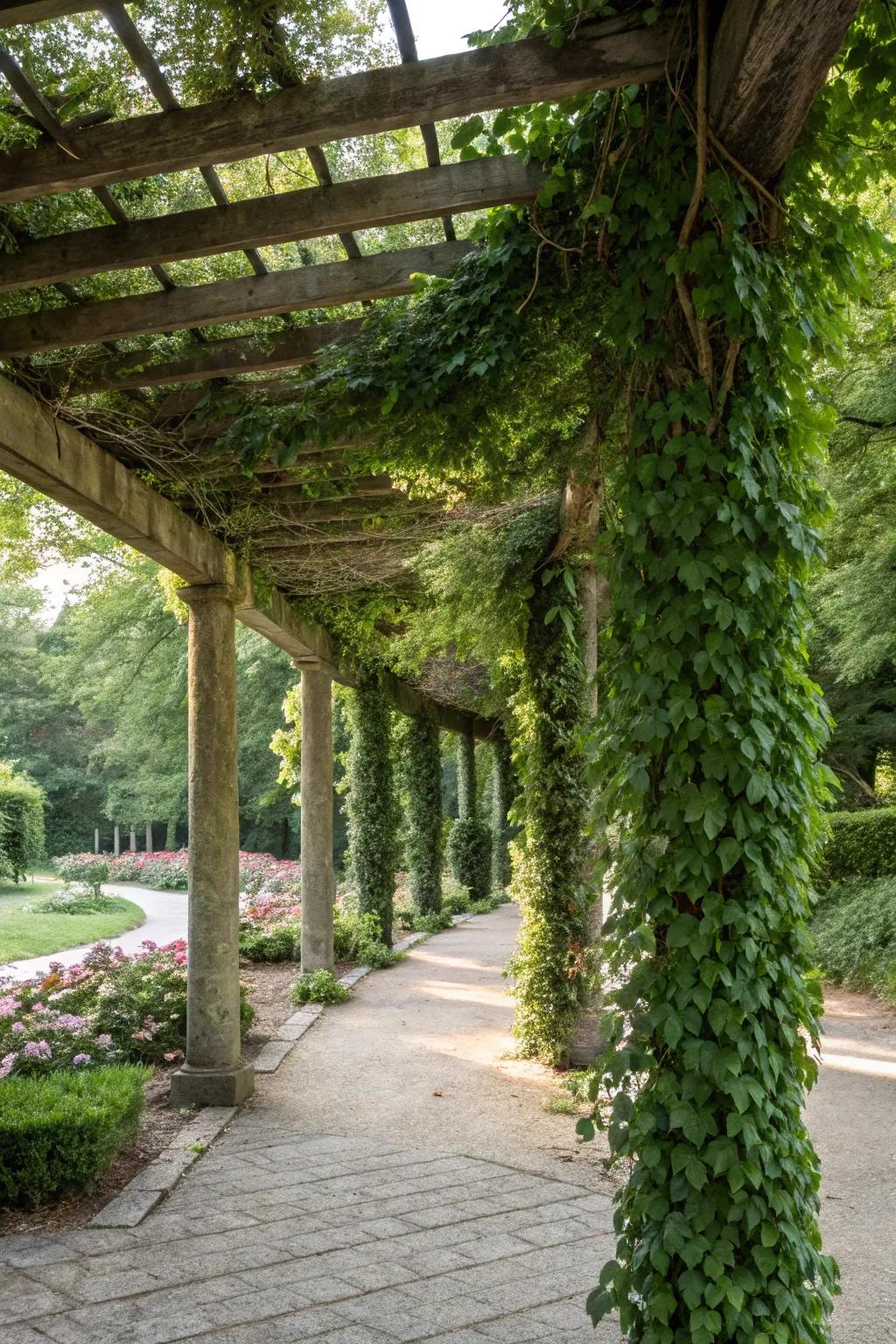
- Choosing an invasive species
Fast-growing vines can escape into natural areas or become difficult to remove. Check state and local invasive-plant guidance before buying.
- Overloading a lightweight pergola
Mature woody stems and wet foliage can add substantial weight and increase wind resistance. Use a structure appropriate for the intended vine.
- Planting too close to buildings
Clinging vines can complicate inspection and maintenance of walls, siding, masonry, gutters, and roof edges.
- Ignoring plant toxicity
Some ornamental vines are poisonous if eaten. Verify plant identity and consider children and pets when choosing a planting location.
- Expecting instant coverage
Most perennial vines need time to establish. Select seasonal annuals for temporary color rather than overplanting permanent vines to force immediate density.
- Pruning at the wrong time
Cutting at the wrong point in a flowering cycle may remove developing flower buds or reduce fruit production.
- Neglecting airflow
An excessively dense canopy can make inspection difficult and increase disease pressure in susceptible plants, particularly in humid conditions.
- Blocking access or utilities
Keep growth clear of electrical wires, fixtures, walkways, drains, and areas that need regular inspection.
Can Climbing Plants Damage a Pergola?
Yes, some climbing plants can contribute to damage or maintenance problems if they become too heavy, trap moisture against unsuitable surfaces, obstruct drainage, or grow into joints and fixtures. The degree of risk depends on the vine, the material, the construction, and the local environment.
Self-clinging plants such as ivy and climbing fig require particular care around buildings and finished surfaces. Vigorous woody vines such as wisteria can also become difficult to control and place substantial demands on a support system.
Before planting, check the pergola’s condition, material, fastening system, and suitability for mature vegetation. If the structure shows rot, loose connections, movement, or other signs of deterioration, address those issues before adding a climbing plant. A qualified contractor or structural professional can assess a questionable structure.
- Wooden pergolas
Inspect for decay, persistent moisture, loose fasteners, and stems that interfere with maintenance.
- Metal pergolas
Check coatings, fasteners, corrosion, and whether the framework can accommodate the vine’s eventual weight and wind exposure.
- Pergolas attached to homes
Keep plants clear of gutters, roof drainage, vents, electrical equipment, and areas where building-envelope inspections are necessary.
Are Pergola Plants Safe Around Children and Pets?
Plant safety depends on the exact species and how children or animals interact with it. Wisteria, Carolina jessamine, English ivy, and several other ornamental plants contain substances that can cause illness if eaten. Thorny vines may also create injury risks near play areas or narrow paths.
Identify every plant by its correct botanical name before planting, and consult a reputable poison-control or veterinary resource when toxicity is uncertain. Do not assume that attractive flowers, familiar common names, or edible-looking fruit mean a plant is safe to consume.
If ingestion occurs or a person or animal develops symptoms after contact with a plant, seek appropriate poison-control, medical, or veterinary advice promptly. Keep plant labels or photographs available to help identify the species.
- For family spaces
Prefer clearly identified plants appropriate for the household and position thorny or toxic species away from play and seating areas.
- For pet-friendly gardens
Check the exact species with a reputable veterinary poison resource and prevent chewing on unidentified plant material.
Pergola Plant Design Ideas for American Backyards
A successful pergola planting plan should relate to the surrounding landscape and the way the outdoor area is used. You can create a cottage-garden entrance, a productive grape canopy, a fragrant patio, or a green privacy screen without planting every available vine.
Choose one main climbing plant for the desired effect and add compatible companion plants only when their light, water, and space requirements align. A limited, well-planned planting scheme is often easier to maintain than a dense mix of unrelated climbers.

- Classic flowering pergola
Train suitable climbing roses along the main beams and use clematis on separate supports for additional flowers.
- Edible garden pergola
Use a locally suitable grape variety and provide enough room for pruning, harvesting, and inspecting the support.
- Fragrant seating area
Plant a suitable honeysuckle or star jasmine where its fragrance can be enjoyed without creating a maintenance problem.
- Warm-climate color
Use bougainvillea or another climate-appropriate flowering vine where frost exposure and thorn management can be accommodated.
- Shaded garden retreat
Consider a shade-tolerant climber suited to the site and combine it with compatible groundcover or container plants.
- Temporary summer display
Grow climbing nasturtiums, black-eyed Susan vines, or scarlet runner beans on accessible supports for seasonal coverage.
Create a Layered Planting Scheme
Layered planting combines the pergola’s vertical vines with lower plants that complement the space. Low-growing perennials, compact shrubs, and containers can soften the base of the posts while leaving enough room for maintenance and airflow.
Match companion plants to the actual light conditions beneath the pergola. As the overhead canopy becomes denser, the amount of sunlight reaching the ground may change, so reassess the lower planting rather than assuming its original conditions will remain the same.
Keep the area around posts and footings accessible. Plants should not conceal deterioration, obstruct drainage, or make it difficult to inspect fasteners and other structural connections.
- At the base
Use compatible perennials or containers with appropriate mature sizes and water needs.
- Along the sides
Add trellis panels for a defined privacy zone or use flowering vines to soften the structure.
- Across the top
Train the main vine over the intended framework and maintain a canopy that can be inspected and pruned.
Use Containers for Small Patios
Containers can make pergola gardening possible when a paved patio has no planting bed. They also allow greater control over soil composition and may make it easier to protect less-hardy plants in winter.
Choose a container large enough for the selected plant’s root system, with effective drainage and a stable base. Container-grown vines usually need closer moisture monitoring than plants in the ground because potting mix can dry quickly in hot weather.
A container does not eliminate the need for suitable support. Secure the trellis independently where appropriate, account for the mature plant’s weight and wind resistance, and prevent containers from obstructing walkways.
- Good container choices
Compact clematis varieties, suitable annual climbers, and selected tender flowering vines where their light and temperature needs can be met.
- Ongoing care
Monitor moisture, provide appropriate nutrients, check root crowding, and protect plants from unsuitable temperatures.
Frequently Asked Questions
What are the best plants to grow over a pergola?
Grapevines, climbing roses, clematis, honeysuckle, climbing hydrangea, and star jasmine are useful options, depending on the climate and the desired effect. Grapevines can provide seasonal shade and fruit, climbing roses offer flowers, clematis provides varied blooms, and suitable evergreen vines can retain foliage for more of the year. Choose the plant according to local hardiness, sunlight, mature size, and the pergola’s structural capacity.
Which pergola plants grow quickly?
Growth speed depends on species, cultivar, temperature, soil moisture, sunlight, and plant maturity. Suitable honeysuckles, some annual climbers, passionflowers, and vigorous grapevines can develop substantial growth under favorable conditions. Fast growth also means more frequent training and pruning, and some vigorous vines can become invasive or unsuitable for lightweight structures. Check regional recommendations before selecting a plant mainly for speed.
What is the best evergreen plant for a pergola?
Star jasmine is a popular evergreen flowering vine in climates where it can tolerate winter conditions. Other evergreen climbers may be suitable depending on the region, but their attachment habits and spread need to be considered. In colder areas, a tender evergreen may need to be grown in a container and protected during winter. Confirm the plant’s exact hardiness and mature behavior before planting.
How long does it take for plants to cover a pergola?
Coverage time varies widely with the plant, the size of the pergola, the number and spacing of vines, and growing conditions. Seasonal annuals can provide visible growth during one growing season, while perennial vines may need several seasons to develop a substantial overhead canopy. There is no reliable universal timeline. Start with healthy plants, provide suitable supports, and train new growth regularly instead of overcrowding the structure.
Can I grow pergola plants in pots?
Yes. Containers are useful for paved patios, balconies with suitable structural capacity, and tender vines that need winter protection. Choose a container with drainage, enough root space, and a stable position, then provide a support appropriate for the plant. Container vines often need more frequent watering and periodic nutrient management than plants growing in the ground.
Do pergola plants attract bees and other pollinators?
Many flowering pergola vines can attract bees, butterflies, hummingbirds, and other wildlife, depending on the plant species and local conditions. Select flowers suited to your region and favor a variety of bloom times when practical. Avoid unnecessary pesticide use, especially when plants are flowering, and follow product-label directions and local pollinator-protection guidance if treatment is necessary.
Can I mix two climbing plants on one pergola?
Yes, if the plants have compatible light, water, climate, and support requirements and enough space for their mature growth. For example, a suitable clematis may be trained near a climbing rose, but the rose’s eventual size and the clematis pruning group should guide placement and care. Avoid combining multiple vigorous woody vines simply to obtain faster coverage. Separate supports can make training, pruning, and maintenance easier.
Are wisteria and ivy good choices for pergolas?
They can be appropriate in selected situations, but neither should be an automatic choice. Wisteria can become a massive woody vine that requires a robust structure, regular pruning, and careful species selection because some types are invasive. English ivy can spread aggressively in many parts of the United States and may create maintenance problems around buildings. Check local invasive-plant guidance, toxicity information, and structural suitability before planting either vine.
✦ Wrapping Up
Conclusion
The best pergola plants are those that match your climate, sunlight, preferred appearance, and available maintenance time. Climbing roses and clematis provide colorful flowers, suitable honeysuckles and star jasmine offer fragrance, grapevines combine foliage with potential harvests, and seasonal annuals provide flexible options for smaller spaces.
Before planting, check the vine’s mature size, local hardiness, invasive status, toxicity, and climbing method. Make sure the pergola can support the intended growth, provide suitable training supports, and leave room to inspect the structure. Regular watering during establishment and species-specific pruning will help maintain healthy growth without allowing the canopy to become unmanageable.
💡 Key Takeaway
Start by measuring your pergola and observing its daily sunlight. Select one primary vine suited to your USDA hardiness zone, confirm its mature size and support needs, and prepare a planting and pruning plan before buying. For local recommendations, consult your state cooperative extension service and invasive-species guidance.

I enjoy sharing simple gardening ideas, lawn care tips, and honest product reviews that help make outdoor work easier. From home gardening guides to helpful tools and lawn care advice, I write easy-to-follow content to help readers create a healthier and better-looking outdoor space without wasting time or money.