As an Amazon Associate, I earn from qualifying purchases.
The secret to a lush green lawn is using well-composted manure in the right amount, at the right time, and with proper watering. Manure can add nutrients and organic matter, but too much can burn grass, pollute water, or create other lawn problems.
Across the United States, lawns face very different growing conditions. A yard in Florida may deal with heat and heavy rain, while a lawn in Colorado may face dry soil and cold winters. In the Northeast, spring growth can be strong, but wet soil may make lawn work difficult. These differences affect when and how you should add manure.
Manure can improve lawn soil by adding organic matter and nutrients such as nitrogen, phosphorus, and potassium. Its value depends on the animal source, bedding, composting process, and soil conditions. Well-composted manure is generally a better choice for an established lawn than fresh manure, which can contain excess salts, weed seeds, harmful microbes, and forms of nitrogen that may damage grass.
A green lawn does not need the largest possible dose of fertilizer. It needs balanced nutrition, suitable soil conditions, enough water, and regular mowing. Before adding manure, check the lawn’s condition and, when possible, obtain a soil test through a local university extension service. This simple step helps you avoid adding nutrients your soil does not need.
Manure can help grass grow by supplying nutrients and adding organic matter to the soil. However, it works best as part of a complete lawn care plan, not as a quick fix for every brown or thin patch. The results depend on the quality of the manure, the condition of the soil, and the needs of the grass.
Grass uses nitrogen to make chlorophyll, the green pigment that helps plants capture sunlight. Nitrogen also supports leaf growth. Phosphorus helps with root development and energy transfer, while potassium supports water regulation and other plant functions. Manure can supply these nutrients in different amounts, so its nutrient balance should not be assumed.
Organic matter can improve soil structure and help support soil organisms. In suitable soils, this can improve water movement and moisture retention over time. Still, manure does not replace every soil amendment, and it cannot fix compacted soil, poor drainage, or a badly mismatched grass variety on its own.
Source: designswan.com
Better nutrient supply
Manure can provide nitrogen and other nutrients that grass needs for steady growth. The amount available to plants varies with the manure source and maturity.
More organic matter
Composted manure adds decomposed material that can support soil structure and biological activity.
Support for root growth
When soil conditions and nutrient levels are suitable, healthy grass can develop a stronger root system and recover better from ordinary stress.
Potentially less reliance on synthetic fertilizer
Manure may supply some of a lawn’s nutrient needs, but its nutrient content must be considered before reducing or replacing other fertilizer inputs.
Does Manure Make Grass Green Faster?
Manure may improve grass color when the lawn lacks nutrients that manure can supply. The response is not immediate because much of the nitrogen in composted manure must become available through soil processes. Temperature, moisture, microbial activity, and the composting stage affect how quickly that happens.
If your lawn is yellow because of poor drainage, compacted soil, drought, disease, or an unsuitable soil pH, adding manure may not solve the problem. Identify the cause before applying more nutrients. A soil test and a close look at the roots, watering pattern, and affected areas can help you choose the right fix.
For pale grass
Check soil fertility and watering before deciding whether manure is needed.
For thin grass
Look for shade, foot traffic, pests, and compaction. Overseeding or correcting the growing conditions may matter more than adding manure.
Choose the Right Manure for Your Lawn
The safest starting point for an established home lawn is a finished, screened compost made from a known manure source. Different animal manures vary in nutrient strength, moisture, salt content, and bedding material. These differences affect how well a product suits grass and how much you should apply.
Do not judge manure by color or smell alone. Dark material is not always fully composted, and a mild smell does not prove that a product is free of pathogens or weed seeds. Look for a reputable supplier who can explain the composting process and provide nutrient information when available.
Manure mixed with straw, wood shavings, or other bedding may contain more carbon and can release nutrients more slowly. Some products also contain substantial amounts of phosphorus. Repeated use without soil testing can build up phosphorus even if the lawn still appears to need more nitrogen.
Source: farmingthing.com
Cow manure
Composted cow manure is commonly used as a soil amendment. Its nutrient levels vary, so avoid assuming that every bag or pile has the same strength.
Horse manure
Horse manure often contains bedding material. Use only mature compost from a reliable source, especially if the original material included hay or straw that could carry persistent herbicide residues.
Poultry manure
Chicken manure can be relatively nutrient-rich. Use a properly processed product and follow its nutrient analysis and label because excessive application can damage grass.
Sheep and goat manure
These materials can be useful when fully composted, but their nutrient content and salt levels still depend on handling and storage.
Commercial composted manure
A screened, labeled product is often easier for homeowners to spread evenly. Check the ingredients, nutrient analysis, application directions, and any warnings before use.
Why Fresh Manure Is a Poor Choice for Established Grass
Fresh manure can contain high levels of readily available nutrients and salts that may injure grass. It may also carry harmful microorganisms and viable weed seeds. Its moisture and texture can make it difficult to spread in a thin, even layer.
Composting allows heat and microbial activity to break down organic materials. Properly managed composting reduces many biological risks and helps stabilize the material, although poor handling or later contamination can reintroduce hazards. Use manure compost that has been produced and handled appropriately rather than relying on a backyard pile that has not reached suitable composting conditions.
Avoid raw manure
Do not spread fresh animal waste directly over an established lawn, particularly where children and pets play.
Check compost maturity
Finished compost is generally stable and earthy-smelling, with few recognizable original materials. These signs help but do not replace a documented process or product testing.
Watch for persistent herbicides
Some pasture and hay herbicides can survive digestion and composting. Ask about the source and use a small, controlled plant test if the material’s history is uncertain.
How to Add Manure to Your Lawn Step by Step
The best method is to apply a thin, even layer of mature composted manure over suitable, actively growing grass. Prepare the lawn first, check the product’s nutrient information, and spread only the amount that fits the soil’s needs. Thick piles of manure can smother grass, reduce light, and leave uneven patches.
For a routine lawn treatment, choose screened compost with a fine texture that can pass between grass blades. If the product is coarse or full of large bedding pieces, it may be better suited to garden beds than to an established lawn. Follow any product-specific directions that call for a different use.
Source: greenstreetmedia.eu
Step 1: Test the soil
Collect a representative soil sample and send it to a university extension soil-testing laboratory or another reputable testing service. Review the recommendations for pH, phosphorus, potassium, and other measured factors.
Step 2: Identify your grass type
Determine whether the lawn contains cool-season grass, such as Kentucky bluegrass, tall fescue, or perennial ryegrass, or warm-season grass, such as bermudagrass, zoysiagrass, or St. Augustinegrass. This affects the best application window.
Step 3: Prepare the lawn
Mow at the normal height for your grass type and remove heavy debris. Apply when the ground is firm and moist but not saturated. Delay work if rain is likely to wash material away.
Step 4: Measure the area
Estimate the square footage of the lawn section. Use this measurement to calculate the amount of compost needed and to avoid treating the same strip twice.
Step 5: Spread a thin layer
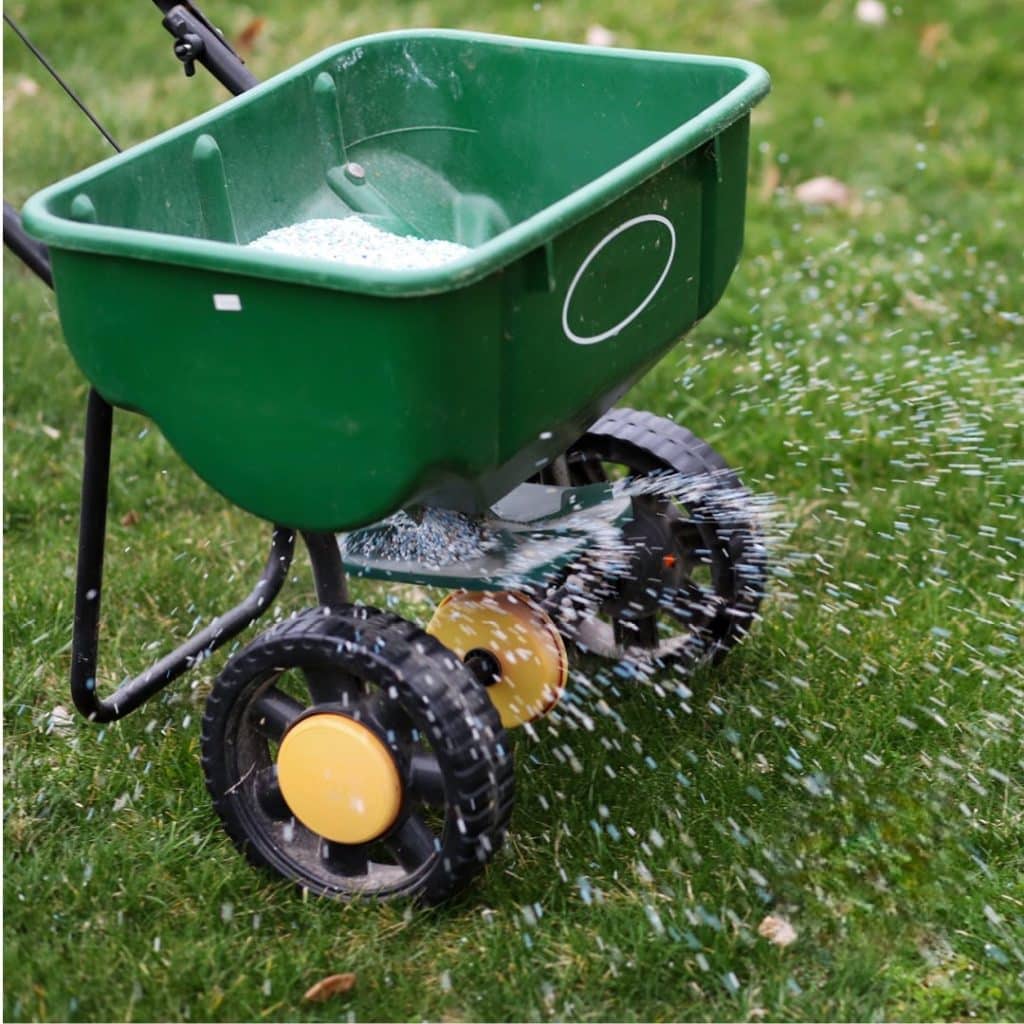
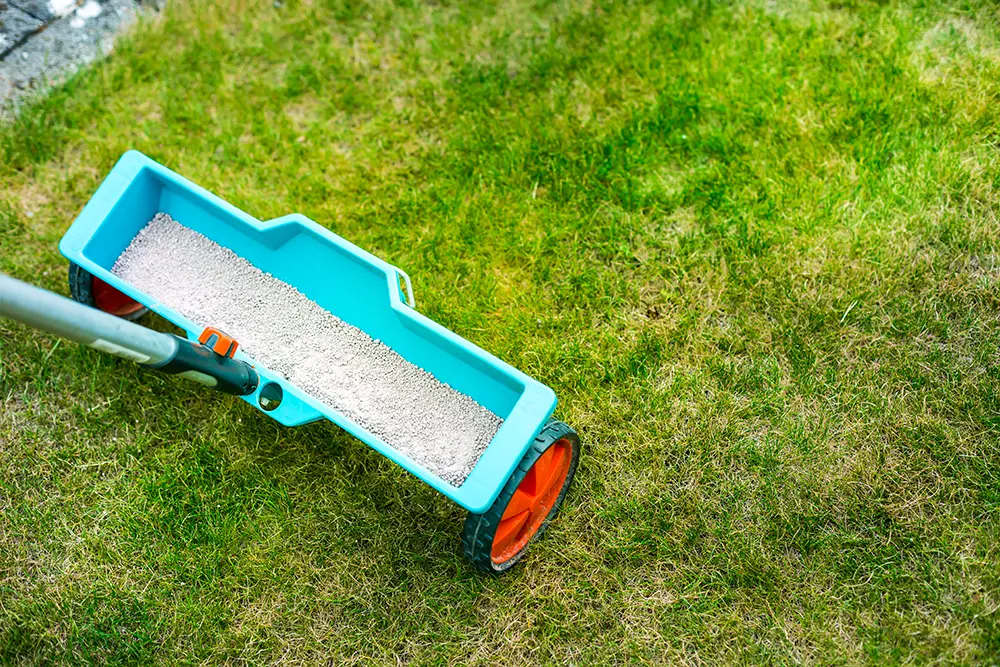
Use a compost spreader, shovel, or wheelbarrow to distribute the material in small amounts. Rake it gently so it settles between grass blades without covering the lawn.
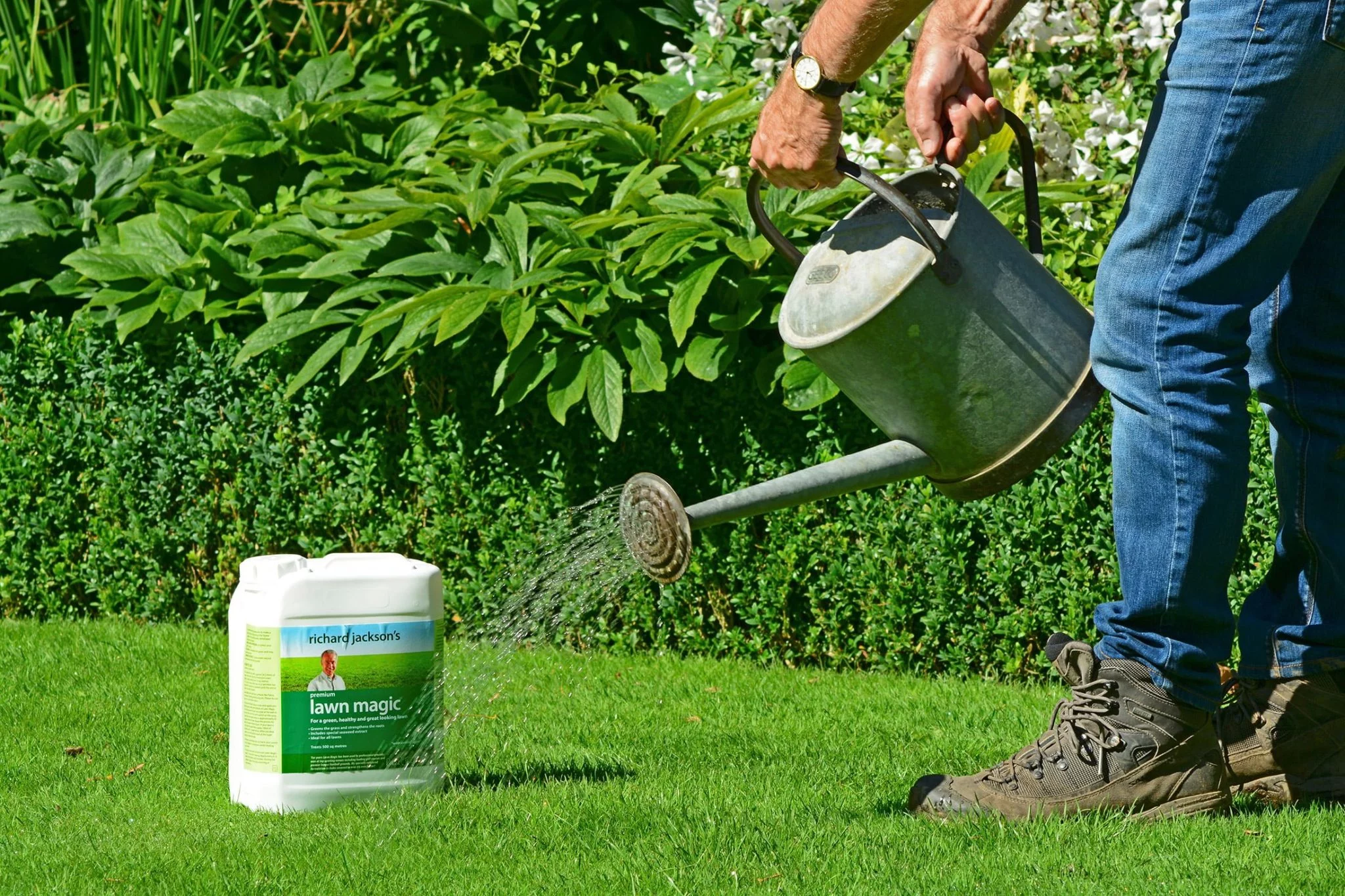
Step 6: Water if needed
If the soil is dry and the product directions permit watering, apply enough water to settle loose material. Avoid heavy irrigation that moves nutrients into drains or neighboring areas.
Step 7: Monitor the grass
Check the lawn over the following days and weeks. Look for even growth, normal leaf color, and signs of stress. Do not add another dose simply because the color change is not immediate.
How Thick Should the Manure Layer Be?
For an established lawn, a light topdressing is the goal, not a deep blanket. A thin layer of fine compost, often around one-quarter inch when used for routine topdressing, is a cautious starting point if the product is suitable and soil conditions support it. The correct amount still depends on nutrient analysis, the lawn’s needs, and local recommendations.
A simple example shows how much material a thin layer requires. One-quarter inch is one forty-eighth of a foot, so covering 1,000 square feet at that depth takes about 20.8 cubic feet of material before allowing for settling and unevenness. That is approximately 0.77 cubic yard, which can be more compost than a homeowner expects.
This calculation describes volume, not a safe nutrient application rate. If a soil test or product analysis indicates that the proposed quantity would add too much phosphorus or nitrogen, use less, choose a different amendment, or skip the application. Do not spread a full topdressing depth merely because it is easy to measure.
Keep grass blades visible
The compost should sift down around the grass, not bury the growing leaves or crowns.
Break up clumps
Remove large chunks and rake the surface until the material is spread evenly.
Treat small sections first
If you are unsure how a product behaves, test it on a small area and observe the grass before treating the whole yard.
Should You Aerate Before Adding Manure?
Core aeration can help when soil is compacted and grass roots struggle to access air and water. A core aerator removes small plugs of soil and creates openings that can help water enter the ground. Light compost topdressing after aeration may help fill surface irregularities and improve soil over time.
Aeration is not necessary for every lawn. Sandy soil or a lawn with good drainage may not need it, while saturated soil should not be worked because machinery and foot traffic can worsen compaction. If you aerate, use the grass’s active growth period and follow local lawn care guidance.
Aerate when compacted
Look for hard soil, water that pools, or thin grass in areas with heavy foot traffic.
Do not bury aeration holes
Use enough fine compost to work with the soil surface without leaving deep piles over the grass.
When Is the Best Time to Add Manure?
Apply manure compost when the grass is actively growing and the soil is suitable for lawn work. The best season varies across the United States because cool-season and warm-season grasses follow different growth patterns. Local weather matters more than a fixed calendar date.
Cool-season grasses, common in much of the northern United States and many transition-zone lawns, grow most strongly in spring and fall. Warm-season grasses, common in much of the South, grow best during warm weather. A treatment made during dormancy may provide little immediate benefit and may expose nutrients to loss before the grass can use them.
Avoid spreading compost before heavy rain, onto frozen ground, or over saturated soil. These conditions increase the risk of runoff and can move nutrients into storm drains, streams, ponds, and other waterways. Check local restrictions on fertilizer and manure application, especially near water or in areas with seasonal nutrient rules.
Source: www.gardeningknowhow.com
Spring
A suitable time for light topdressing when the grass is growing and the ground is workable. Avoid early application to cold, wet soil.
Summer
Warm-season grass may be growing actively, but extreme heat and drought can stress turf. Avoid disturbing or covering grass when it is struggling.
Fall
Fall can suit cool-season lawns when growth is active and there is enough time for the grass to respond before winter dormancy.
Winter
Dormant grass usually does not need routine manure applications. Frozen or waterlogged ground is unsuitable because nutrients may be lost in runoff.
Cool-Season Grass Timing
Kentucky bluegrass, perennial ryegrass, and tall fescue often benefit from lawn care during cooler periods of active growth. In many northern areas, early fall is a useful window for soil improvement, repair, and overseeding when moisture and temperatures support establishment.
Avoid treating a lawn during intense summer heat if the grass is dormant or drought-stressed. Wait for better growing conditions, and address watering or drainage problems first.
Best general window
Choose active growth in spring or fall, with fall often favored for major cool-season lawn renovation.
Warm-Season Grass Timing
Bermudagrass, zoysiagrass, and St. Augustinegrass generally grow during warm weather. Light compost topdressing is best timed when the grass is actively growing and can recover from the treatment.
Do not apply nutrients simply because the calendar says spring or summer. Wait until the grass has begun active growth, and follow local guidance for your species and climate.
Best general window
Use a warm growing period when the lawn is healthy and the soil is neither dry enough to stress grass nor saturated with water.
How Much Manure Does Your Lawn Need?
The right amount depends on the manure’s nutrient content, the soil test, and the lawn’s condition. There is no single safe weight or volume that suits every product. A small amount of concentrated poultry manure may supply far more nutrients than the same volume of a low-nutrient compost blend.
Use the soil test to determine which nutrients are needed and review the product’s nutrient analysis. If the compost has no reliable analysis, avoid treating it as a precise fertilizer replacement. It may still be useful as a modest soil amendment, but repeated large applications can cause nutrient imbalances.
For established grass, a thin surface layer is often more appropriate than mixing manure deeply into the soil. Deep incorporation would damage existing roots and turf. If a lawn needs major soil renovation, it may be more practical to remove or loosen the turf as part of a planned renovation rather than burying manure under living grass.
Source: Balcony Garden Web
Start with a soil test
Use the results to decide whether nutrients are needed and whether adding phosphorus would be unsuitable.
Read the product analysis
Check the listed nutrient values, moisture content when provided, application directions, and any restrictions.
Account for other fertilizer
Include nutrients from previous manure applications, lawn fertilizer, and other amendments when planning the next treatment.
Avoid automatic repeat applications
Do not add manure every month or every season without checking whether the soil and grass still need it.
A Simple Lawn Area Calculation
Measure the lawn’s length and width in feet and multiply them to find the area. For an irregular yard, divide it into simple rectangles, estimate each section, and add the results. Subtract large patios, driveways, and other areas that will not receive compost.
For example, a lawn measuring 40 feet by 25 feet covers 1,000 square feet. If a suitable product is applied at a quarter-inch layer, the theoretical volume is about 20.8 cubic feet, or 0.77 cubic yard. This is a volume estimate only; nutrient limits may require a thinner layer or no application.
Formula
Lawn area in square feet equals length in feet multiplied by width in feet for a rectangular lawn.
Volume formula
Cubic feet needed equals lawn area in square feet multiplied by the layer depth in feet.
Conversion
Divide cubic feet by 27 to convert the volume to cubic yards.
Common Mistakes That Can Damage a Lawn
Most manure-related lawn problems come from applying the wrong material, using too much, or spreading it under poor weather conditions. Organic does not mean harmless at every dose. Manure can contribute to nutrient pollution, grass injury, unpleasant odors, and unwanted weeds when handled poorly.
A lawn may also look uneven after topdressing if some areas receive thick piles while others receive almost none. Correct the distribution before assuming the grass needs another nutrient treatment. Extra manure will not make buried or damaged grass recover faster.
Source: milkwood.net
Using fresh manure
Fresh manure can injure grass and may contain pathogens and weed seeds. Choose properly composted material from a known source.
Applying too much
A thick layer can smother turf, while excess nutrients may harm plants or move into nearby water.
Ignoring soil pH
Grass may struggle to access nutrients if the soil pH is unsuitable. Use a soil test before adding lime or other pH amendments.
Spreading before a storm
Heavy rain can carry nutrients and organic particles into drainage systems and waterways. Wait for a suitable weather window.
Using unknown compost
Compost may contain herbicide residues, excess salts, plastics, or other contaminants. Ask about its source and quality.
Ignoring local rules
Some U.S. states and municipalities limit nutrient applications by season, weather, or location. Check applicable rules before spreading manure or fertilizer.
Keep Children and Pets Safe
Animal manure can contain disease-causing organisms, so keep children and pets away during application and follow the compost supplier’s safety instructions. Wash your hands after handling compost, wear gloves, and avoid creating dust when moving dry material.
Proper composting reduces many biological risks, but it does not guarantee that every product is free of harmful organisms. Do not assume that a product is safe to ingest or that a recently treated lawn is ready for unrestricted play simply because the material looks finished. Follow product directions and any local public-health guidance.
Wear basic protection
Use gloves and avoid breathing dust. Wash exposed skin and tools after handling manure.
Prevent contact with food
Keep manure and contaminated tools away from produce, outdoor dining surfaces, and children’s play equipment.
Store it properly
Keep unused material covered and away from wells, storm drains, and surface water.
Help Manure Work With Good Lawn Care
Manure can support a healthy lawn, but the strongest long-term results come from several good habits working together. Mowing, watering, drainage, soil structure, and grass selection all affect lawn color and density. If one of these factors is badly out of balance, manure alone is unlikely to solve the problem.
Mow at the recommended height for your grass type and avoid removing too much leaf tissue at once. Taller grass within the suitable range for its species often shades the soil and can reduce weed establishment. Keep mower blades sharp so they cut cleanly rather than tearing leaf tips.
Water deeply enough to wet the active root zone, then allow the soil and weather to guide the next irrigation. The exact schedule depends on rainfall, temperature, soil texture, and grass type. Short, frequent watering can encourage shallow roots in some conditions, while overwatering can lead to runoff, poor root health, and disease.
Leave healthy grass clippings on the lawn when practical. They break down and return nutrients to the soil, reducing the amount of extra fertilizer the lawn may need. Clippings are not the same as manure, but they can form part of a sensible nutrient plan.
Source: nginstitute.com.au
Mow correctly
Use the recommended mowing height for your grass and avoid cutting more than about one-third of the leaf blade at a time.
Water based on conditions
Account for rainfall, soil type, and root depth. Reduce irrigation when rain has already supplied enough moisture.
Improve compacted soil
Use core aeration when compaction is confirmed and the grass is growing well enough to recover.
Choose suitable grass
Select grass varieties that fit your region, sun exposure, and water availability when repairing or renovating a lawn.
Manage weeds early
Dense grass can compete with weeds. Identify persistent weed problems and correct the underlying causes instead of relying on manure to control them.
What to Do If the Lawn Does Not Improve
If grass remains pale after a manure treatment, do not immediately apply more. Check whether the grass is actively growing, whether water is reaching the roots, and whether the soil drains properly. Review the soil test and the compost’s nutrient information to see whether the treatment could address the actual problem.
Brown or yellow patches may come from drought, excessive water, pests, disease, chemical injury, or dog urine. Look at the pattern of damage and inspect the soil and roots where practical. If damage spreads quickly or the cause remains unclear, contact a local university extension office or qualified lawn professional for diagnosis.
Yellow grass with wet soil
Check drainage and root health before adding nutrients.
Brown edges after treatment
Consider excess salts, concentrated material, or uneven application. Stop further applications and seek product-specific guidance.
Thin grass in shaded areas
Evaluate sunlight and consider a shade-tolerant grass suitable for your region.
Patchy growth despite good care
Inspect for pests, disease, compaction, or uneven irrigation rather than assuming that the soil needs more manure.
Frequently Asked Questions
Q
Can I put manure directly on my lawn?
You can apply suitable, well-composted manure to an established lawn when the soil and grass are in good condition. Use a thin, even layer that does not bury the grass. Avoid fresh manure, and check the compost’s source, nutrient content, and application instructions.
Q
How often should I add manure to my lawn?
There is no universal schedule. Some lawns may benefit from occasional light topdressing, while others need none. Use soil tests, product nutrient information, grass growth, and local recommendations to decide whether another application is appropriate.
Q
Is cow manure or chicken manure better for grass?
Neither is always better. Composted cow manure is often used as a general soil amendment, while chicken manure can be more nutrient-rich and may require greater care with application rates. Choose a mature product with known ingredients and suitable nutrient information rather than selecting by animal source alone.
Q
Should I water my lawn after adding manure?
Light watering may help settle a dry, loose topdressing, provided the product directions allow it and the soil needs moisture. Avoid heavy watering that washes material away. If the soil is already wet or rain is expected, additional irrigation may not be needed.
Q
Can manure burn grass?
Yes. Fresh manure, overly concentrated material, and excessive application can expose grass to damaging levels of salts or nutrients. Use suitable composted manure, spread it evenly, and follow soil-test and product guidance to reduce the risk.
Q
Can manure replace regular lawn fertilizer?
Sometimes manure can supply part or even all of a lawn’s nutrient needs, but that depends on the product and soil. Composted manure often releases nitrogen slowly, and its phosphorus content may not match the lawn’s needs. Use a soil test and nutrient analysis before replacing a complete fertilizer program.
Q
Can I use manure when overseeding my lawn?
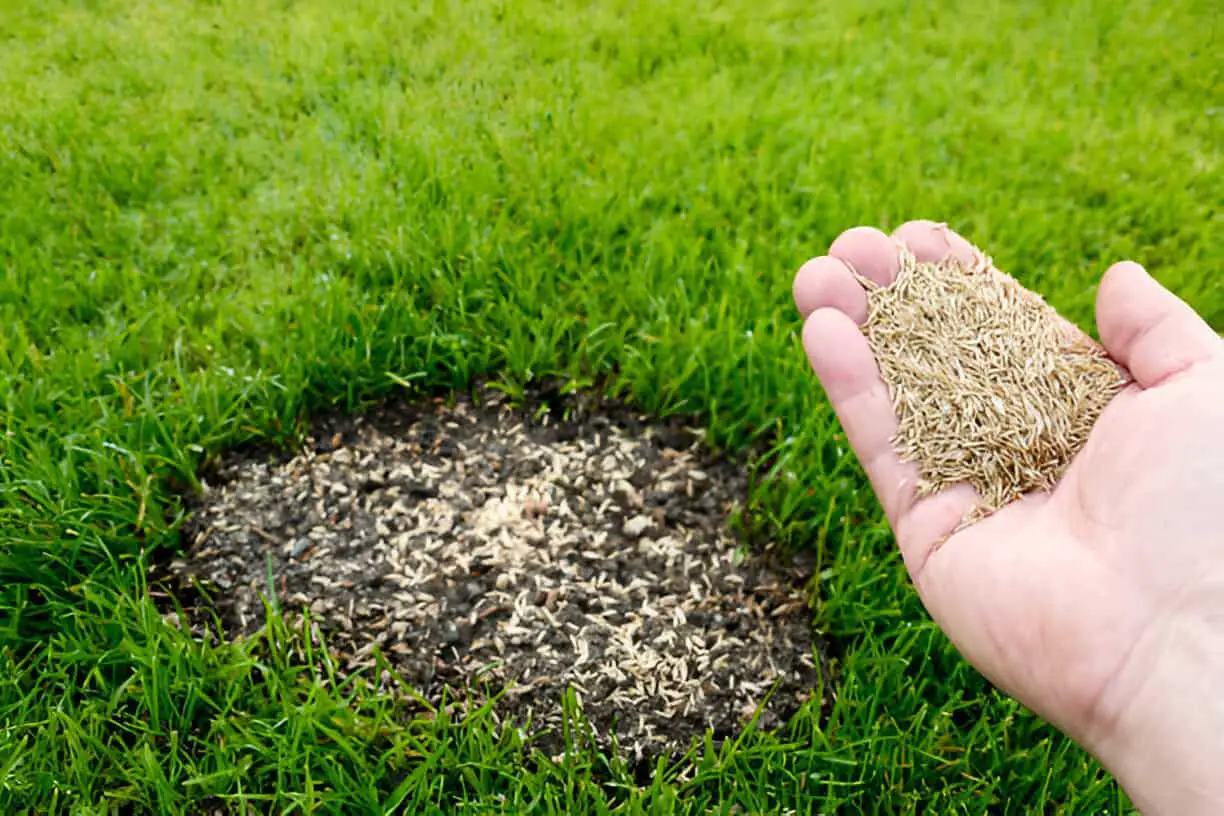
Fine, mature compost may be useful as a light cover for grass seed when local guidance supports the practice. Do not bury seed under a thick layer, and confirm that the material is suitable for seed establishment. Follow the seed supplier’s planting depth, moisture, and care instructions.
Q
Does manure kill weeds in a lawn?
Manure is not a reliable weed killer. Poorly composted material may even introduce weed seeds. Use finished compost, maintain dense grass, and identify the weed species before choosing a control method.
✦ Wrapping Up
Conclusion
The secret of a lush green lawn adding manure is not to spread as much as possible. It is to choose mature compost, apply it carefully, and match the treatment to the grass and soil. Used correctly, manure can add organic matter and useful nutrients while supporting steady growth.
Start with a soil test, identify your grass type, and choose a suitable time when the lawn is actively growing. Spread a thin layer, avoid heavy rain and saturated ground, and monitor the grass before deciding whether it needs more. Combine these steps with sound mowing, watering, and soil care to support a lawn that stays healthy through the seasons.
For homeowners in the United States, a local university extension service is a useful source for grass-specific advice, regional timing, and soil-testing options. Local guidance matters because the best lawn care plan for a cool-season yard in the Midwest may differ from the plan for a warm-season lawn in the Southeast.
💡 Key Takeaway
Before applying manure, test your soil, choose well-composted material with a known source, calculate your lawn area, and spread only a thin, even layer when growing conditions are suitable.
I enjoy sharing simple gardening ideas, lawn care tips, and honest product reviews that help make outdoor work easier. From home gardening guides to helpful tools and lawn care advice, I write easy-to-follow content to help readers create a healthier and better-looking outdoor space without wasting time or money.