As an Amazon Associate, I earn from qualifying purchases.
Front yard river rock landscaping adds texture, defines garden beds, and creates attractive paths with less routine care than many traditional lawn areas. For the best results, match the rock size and color to your home, prepare a stable base, and plan for drainage before spreading the stones.
Across the United States, homeowners use river rocks to shape welcoming front yards that suit many home styles, from classic brick houses in the Northeast to ranch homes in the Midwest and modern homes in the Southwest. These smooth stones come in natural shades of gray, tan, cream, brown, and mixed earth tones. They can frame a walkway, highlight shrubs, cover bare soil, or form a dry creek bed that gives a garden a natural look.
River rock landscaping can also reduce the need to mow, trim, and replace organic mulch in selected areas. Yet rocks are not a cure for every yard problem. They can collect leaves, heat up in direct sun, and move during heavy rain if the ground is not prepared well. A good design balances beauty, drainage, plant health, local climate, and the time you want to spend on care.
The ideas in this guide explain how to use river rocks in a practical way, choose suitable materials, and avoid common mistakes. Whether you want a small border near the porch or a full front yard makeover, you can start with one clear feature and build around it.
1. Create Clean Borders Around Front Yard Garden Beds
River rock borders give flower beds and shrub beds a clear edge. They separate planted areas from the lawn, driveway, or walkway without adding a large structure. This idea works well when you want a tidy front yard but still want the color and shape of living plants to stand out.
For a simple design, use one consistent rock color around the main beds. Cream and tan stones pair well with warm brick and beige siding, while gray stones can complement white, charcoal, and cool-toned exteriors. A narrow band often looks more natural than a thick strip that takes attention away from the plants.
Mark the edge with a garden hose before digging. Curves can soften a formal yard, while straight lines suit modern homes and small spaces. Install a sturdy edge where needed so stones do not spill onto the grass or pavement.
Source: decorhomeideas.com
Best for
Shrub beds, foundation plantings, mailbox gardens, and the edges of front lawns.
Design tip
Repeat the same stone color in two or three areas to make separate garden beds feel connected.
Watch out for
Rocks that spread too close to plant stems can trap moisture against crowns or make routine pruning harder.
How to build a lasting rock border
Remove grass and weeds from the border, then level the soil without creating a slope toward the house. Add edging if the site needs it, and spread the stones in an even layer. Keep the finished surface low enough that it does not spill onto sidewalks or cover nearby turf.
Keep plant space open
Leave room around stems and trunks, and follow the spacing needs of each plant.
Use a clear edge
Metal, stone, or suitable plastic edging can help hold the border in place.
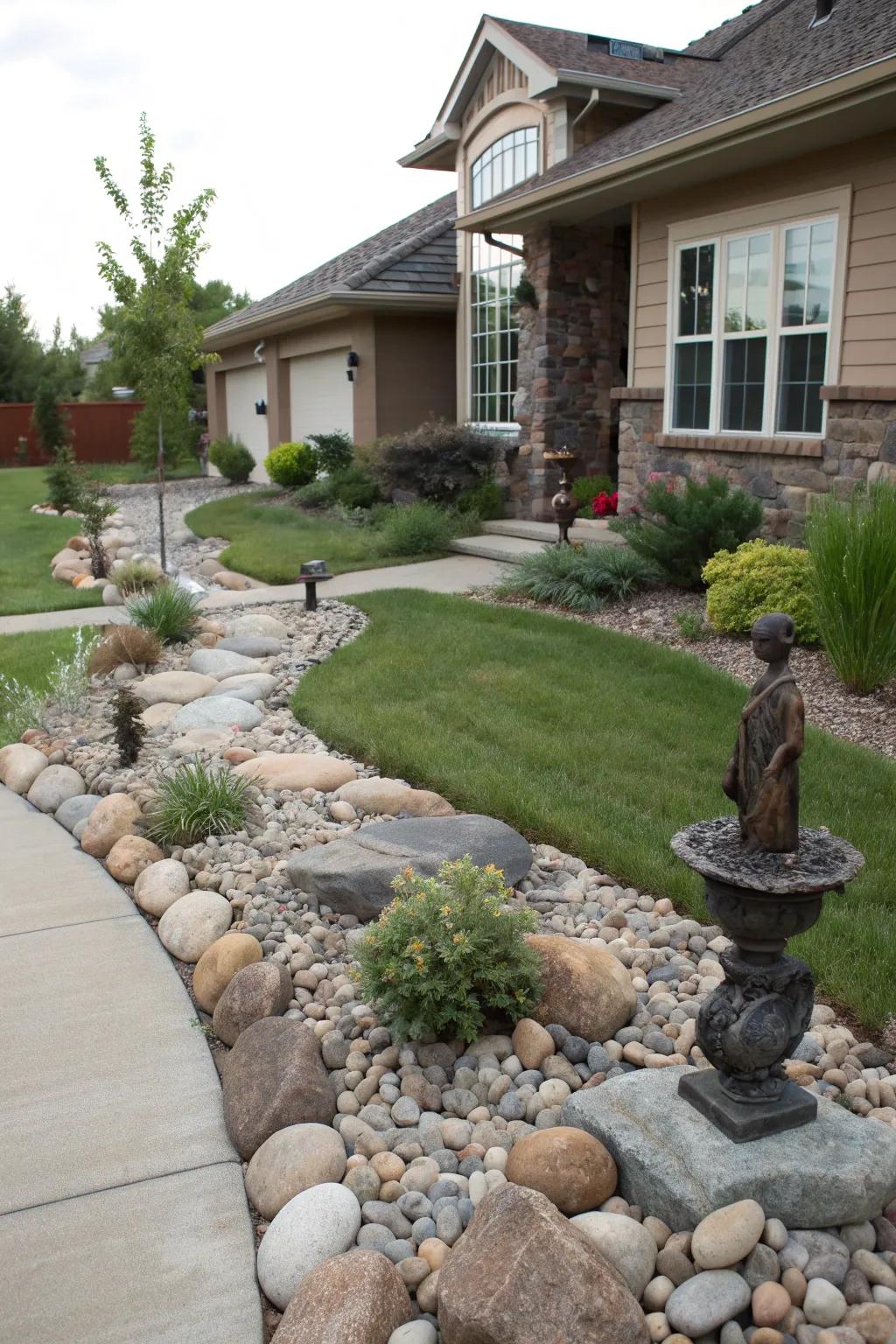
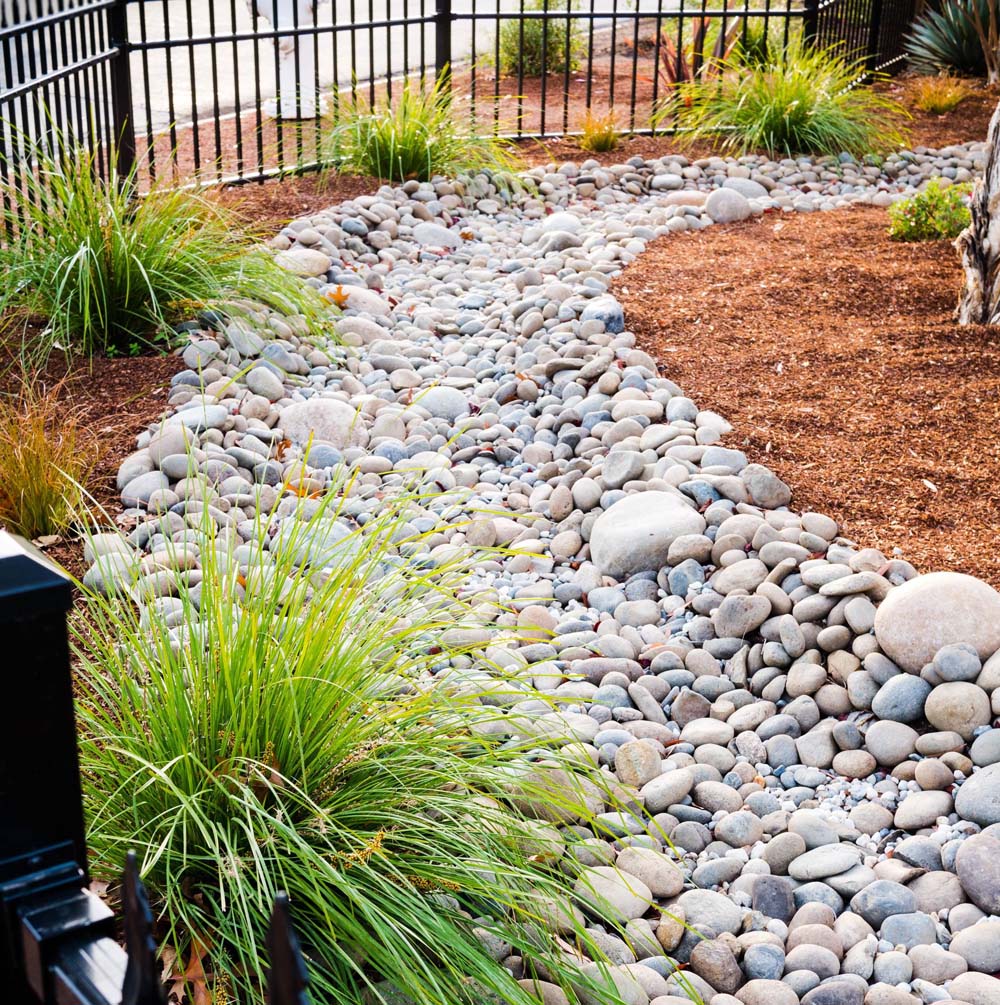
2. Design a Dry Creek Bed for a Natural Look
A dry creek bed uses rocks of different sizes to suggest the path of a small stream. It adds movement and shape to a front yard without requiring a pond or running water. It can also help guide runoff when the layout is based on the site’s actual drainage needs.
Start by watching where rainwater naturally travels. A shallow channel may work in a low area, but a decorative creek should not redirect water onto a neighbor’s property or toward the foundation. For a drainage project, check local requirements and seek qualified help if the flow is strong, the slope is steep, or erosion is already present.
Use larger stones along parts of the edge and smaller river rocks through the center. A few larger stones can look like natural banks or stepping points, while curves help the channel blend into the landscape. Plant suitable grasses and moisture-tolerant plants along the edges where conditions allow.
Source: garden.eco
Best for
Broad front yards, sloped areas with manageable runoff, and gardens that need a natural focal point.
Design tip
Make the channel look irregular rather than perfectly uniform, and vary the stone sizes in a planned way.
Watch out for
A decorative rock channel is not automatically a safe or effective stormwater system.
Choose stones for a layered creek effect
Use larger stones at selected bends and along the sides, then fill the central area with smaller, rounded rocks. Avoid creating a deep trench unless the drainage design calls for one. The channel should fit the scale of the yard and remain easy to inspect after rain.
Small yards
Use a narrow, shallow curve that creates interest without taking over the lawn.
Large yards
Extend the creek beside planting beds or across a broad open area where the flow path is suitable.
3. Build a Low-Maintenance Rock Garden
A river rock garden combines stones with plants that suit the local climate. It is a useful choice for a sunny front yard where turf is difficult to maintain or where you want a more natural, layered look. The stones provide texture while plants add height, seasonal color, and shade near the soil.
The best plant choices depend on your USDA hardiness zone, summer heat, rainfall, soil, and sun exposure. In dry parts of the West, suitable native shrubs, ornamental grasses, and drought-tolerant perennials may work well. In wetter regions, choose plants that can handle local rainfall and humidity rather than assuming all plants that look good with rocks need little water.
Group plants by their water needs. Place those that need more moisture together, and keep dry-site plants in areas that drain well. Leave enough open soil around each plant for growth, watering, and pruning. A rock garden should not become a solid stone blanket that prevents plants from growing.
Source: garden.eco
Best for
Sunny beds, dry corners, slopes that suit the chosen plants, and yards where mowing space can be reduced.
Design tip
Repeat a few plant types in groups instead of placing many unrelated plants one by one.
Watch out for
River rocks can reflect and hold heat near the ground, which may stress plants that prefer cool, moist soil.
Choose plants before you buy the rocks
Decide where plants will go, then size the stone areas around them. This prevents rocks from covering future planting spots and helps you estimate the amount of material needed. Check mature plant width as well as height so shrubs do not outgrow the bed or hide windows and walkways.
Select plants suited to shade and local moisture levels, and use rocks as accents rather than covering every open space.
4. Frame the Front Walkway With River Rocks
A river rock border can make the path to your front door look more defined. The stones create a clear visual line beside concrete, brick, pavers, or stepping stones. This works especially well when the walkway is plain and needs more texture without a major rebuild.
Choose a rock size that stays in place and does not roll underfoot. Smooth, rounded stones can be slippery or unstable when used as the walking surface, so keep them beside the path rather than where people step. Maintain a clear, firm route from the driveway or sidewalk to the entrance.
For a balanced design, combine the stone border with low plants or a few compact shrubs. Keep planting away from the narrowest parts of the path so branches do not brush visitors or block access. Use a consistent border width for a formal look, or vary the width gently where the bed follows a natural curve.
Source: decorhomeideas.com
Best for
Front entrances, side paths, short garden walks, and paths that need a neat visual edge.
Design tip
Match the rock color to the walkway or repeat a color found in the home’s stonework.
Watch out for
Loose rocks should not narrow an accessible route or create a trip hazard at path edges.
Keep the path easy to use
Set edging along the rock border where stones might migrate. Keep the walking surface even and free of loose material. If the route must meet accessibility needs, follow applicable guidance for a stable, firm, and slip-resistant surface rather than relying on rounded rocks.
For a small entrance
Use a narrow rock strip and a few compact plants to avoid crowding the doorway.
For a wide approach
Repeat the same border on both sides to give the entrance a calm, balanced frame.
5. Add a Rock Accent Around the Mailbox
A mailbox bed is a small place to try river rock landscaping without changing the whole yard. A simple ring or curved bed can make the mailbox feel like part of the landscape. The design also gives you a chance to repeat the rock color used near the walkway or foundation.
Keep the bed low enough to preserve a clear view for drivers and postal workers. Do not let stones, shrubs, or edging block access to the mailbox or create a hazard beside the road. Before digging, locate underground utility lines and check any local rules for planting near public rights of way.
A compact ornamental grass, a low flowering perennial, or a small group of hardy plants can soften the stones. Select plants that can handle the site’s sun and weather. If the mailbox sits beside a hot driveway, avoid plants that need steady moisture unless you can provide it.
Source: garden.eco
Best for
Small front yards, curbside planting spots, and homes that need one modest landscape feature.
Design tip
Use one main plant group and a simple stone border so the mailbox remains the focal point.
Watch out for
Avoid sharp edging, high plants, or loose stones that interfere with safe roadside access.
Keep the design small and neat
Outline a compact bed and check the view from the street before planting. Keep the area easy to reach for routine mailbox use and maintenance. A small, well-kept feature usually looks better than a large bed that crowds the curb.
Use a restrained palette
Two stone tones and one or two plant types are often enough for a small feature.
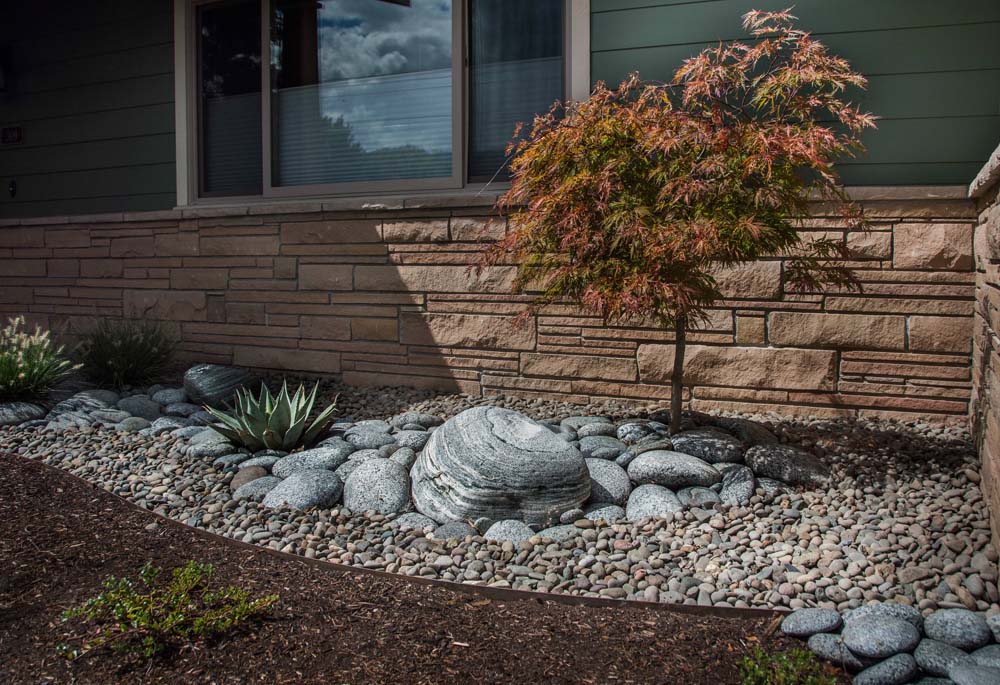
6. Use River Rocks Around Trees and Shrubs
River rocks can create a neat visual ring around selected trees and shrubs, but they need careful placement. A decorative stone area can reduce bare-soil exposure and make the bed easier to define. It should not bury the trunk flare or cover roots with a deep, compact layer.
Keep stones away from direct contact with tree trunks and avoid piling them against shrub stems. Roots need air and water, and excess material near the trunk can trap moisture or hide damage. A broad, open planting area is often better for tree health than a tight circle of stones pressed against the bark.
For a young tree, check its care needs before choosing rock mulch. Organic mulch is often more suitable around trees because it can improve soil conditions as it breaks down. If you prefer river rock for appearance, use it selectively and leave the trunk flare exposed.
Source: i.pinimg.com
Best for
Small ornamental shrubs, selected drought-tolerant plantings, and beds where stones serve as an accent.
Design tip
Use a broad border and a clear gap around the trunk rather than a tight pile of stones.
Watch out for
Do not use rock mulch to hide exposed roots, trunk damage, or drainage problems.
Should you put river rocks around every tree?
No. Tree species, soil, climate, and watering methods affect whether a rock layer is suitable. Avoid adding soil or stones over the root flare, and do not assume a stone ring will improve tree health. When in doubt, use a shallow, open bed and follow guidance for the specific tree.
Protect the trunk
Leave the base visible and keep the stone layer from touching the bark.
Check water access
Make sure irrigation or rainfall can reach the root zone without creating standing water.
7. Create a Modern Front Yard With Contrasting Rock Colors
A modern front yard often looks best with a limited palette, strong lines, and a clear balance between hard surfaces and plants. River rocks can help create this effect when their colors repeat the tones of the house, driveway, or entry path. The result can feel crisp without looking overly decorated.
For a simple scheme, pair gray rocks with white siding and dark trim, or use tan stones beside warm brick. A mixed natural blend can soften a home with many straight lines. Avoid using too many contrasting stone colors in a small yard, as the ground may look busy instead of unified.
Add structure with low shrubs, upright ornamental grasses, or a small group of architectural plants suited to the climate. Use spacing to make each plant stand out. Keep larger stones in deliberate clusters rather than scattering them evenly across the entire bed.
Source: i.pinimg.com
Best for
Contemporary homes, minimalist gardens, small entry beds, and front yards with simple architecture.
Design tip
Limit the main palette to one dominant rock color, one accent color, and a small range of plant shapes.
Watch out for
Very light stones may show dirt and leaf stains, while dark stones can become hot in direct summer sun.
Balance hardscape and greenery
Leave enough planted space to keep the yard from looking bare. Repeat the same shrubs or grasses in a few groups, then use the stones to connect those groups visually. A modern design can still support birds, pollinators, and soil life when it includes suitable living plants.
Use clear shapes
Straight beds and simple curves help make the layout easy to read from the street.
Keep maintenance in mind
Choose stone sizes that are easy to rake, rinse, or replace in the spaces available.
8. Choose the Right River Rock Size, Color, and Depth
The right stone depends on where you plan to use it. Small stones create a fine, even finish, while larger rocks make a stronger visual statement and may be easier to distinguish from soil. A mix of sizes can look natural in a creek bed, but a uniform size often works better in a narrow border.
River rock is usually rounded and smooth, unlike many crushed stone products with sharper edges. That rounded shape gives it a soft, natural appearance, but it can also make the stones roll underfoot or move on a slope. Keep that trade-off in mind when choosing material for paths, steep beds, or areas beside drains.
Measure the planned area before ordering. Stone depth depends on the size of the rocks, the base, and the job. A shallow decorative layer may suit some beds, while larger stones or drainage features may need a different depth and a more carefully prepared base.
Source: garden.eco
Small river rocks
Useful for narrow decorative areas and detailed borders, though small pieces can move or scatter more easily.
Medium river rocks
A versatile option for many garden beds and simple dry creek designs.
Large river rocks
Good for visible accents and creek-bed edges, but they are harder to move and may require more effort to place.
Estimate how much rock you need
Measure the length and width of the bed in feet to find its area. Multiply the area by the planned depth in feet to calculate the volume in cubic feet, then divide by 27 to convert cubic feet to cubic yards. For an irregular bed, split the space into simple rectangles or estimate each section separately.
For example, a bed that is 12 feet long and 4 feet wide covers 48 square feet. At a hypothetical depth of 2 inches, or about 0.167 feet, it needs roughly 8 cubic feet of rock, equal to about 0.30 cubic yards before allowing for variation, settling, or waste. Confirm the recommended depth and coverage with the stone supplier because rock size and packing affect the final amount.
Measure twice
Check the full bed area and the intended depth before placing an order.
Allow for site conditions
Uneven ground, large gaps, and stone size can change the volume required.
9. Prepare the Ground Before Installing River Rocks
Good ground preparation helps river rocks stay in place and makes future care easier. Simply dumping stones over grass or loose soil can lead to weed growth, uneven surfaces, and stones that sink or spread. The right method depends on whether the bed is decorative, planted, sloped, or designed to carry water.
Begin by removing unwanted grass, weeds, roots, and debris. Correct low spots without changing the natural drainage in a way that sends water toward buildings or neighboring lots. Compact the base only as appropriate for the intended use, since heavily compacted soil can harm plants and reduce water movement into the ground.
Landscape fabric can limit some weeds for a time, but it does not stop every weed and may complicate future planting. Soil and organic debris can collect on top, allowing new weeds to grow. In planted beds, a carefully prepared soil surface and routine hand weeding may be easier to manage than fabric covered by rocks.
Source: garden.eco
Step 1
Mark the design, identify utilities before digging, and confirm where rainwater will flow.
Step 2
Remove unwanted plants and debris, then shape the soil for the intended bed.
Step 3
Install suitable edging and any planned drainage components before spreading the stones.
Step 4
Place the rocks evenly, keep plant bases clear, and check the finished surface after rain.
Should you use landscape fabric under river rocks?
Landscape fabric is optional, not a universal requirement. It may help separate stone from soil in some decorative areas, but it does not replace weed removal or sound drainage design. Avoid using it where it would interfere with planned planting, soil care, or the function of a properly designed infiltration area.
Consider fabric
For a stable decorative bed with few plans for future planting, if the product suits the application.
Skip or limit fabric
Where plants need room to spread, where soil improvement is planned, or where the fabric could obstruct the intended water movement.
10. Plan for Drainage, Heat, and Long-Term Care
River rocks need less routine replacement than many organic mulches, but they are not maintenance-free. Leaves, dust, grass clippings, and soil can collect between the stones. Weeds may root in this debris, and heavy rain can shift rocks that sit on loose soil or a steep slope.
Drainage is a key part of a lasting design. Keep finished ground surfaces sloped away from the house where appropriate, and never cover foundation drains, cleanouts, or other access points. If water pools near the foundation, floods the walkway, or cuts channels through the bed, correct the cause rather than adding more stones on top.
Heat is another concern in sunny areas. Dark rocks can become very warm, and broad areas of bare stone may reflect heat toward nearby plants or windows. A mix of rock, suitable plants, and open soil can provide a better balance than covering every available inch with stone.
Source: decorhomeideas.com
Remove leaves
Use a hand rake or a suitable blower setting to clear debris without scattering the stones.
Control weeds early
Pull small weeds before their roots spread through the stone layer.
Check after heavy rain
Look for displaced stones, new erosion, standing water, and blocked drainage routes.
Refresh the surface
Add or reposition stones only after identifying why the original layer became thin or uneven.
When a drainage problem needs professional help
Seek a qualified drainage or landscape professional when water repeatedly enters the home, a slope is eroding quickly, or runoff affects neighboring property. A large stormwater project may need local permits or an engineered plan. Do not assume a rock-filled trench will solve a serious drainage issue without checking soil, slope, water volume, and discharge rules.
Act early
Take photos of pooling or erosion after rain so the problem can be assessed accurately.
Protect access
Keep utility covers, drains, and inspection points visible and reachable.
11. Compare River Rock With Other Front Yard Materials
River rock is only one way to finish a front yard. Its main strengths are its natural color, long-lasting appearance, and ability to define spaces without regular mowing. Other materials may suit you better if you want to improve soil, support dense planting, create a stable walking surface, or keep costs low.
Organic mulch can help retain soil moisture and add organic matter as it breaks down, making it useful around many trees and shrubs. Crushed stone may lock together more firmly than rounded river rock in some applications, while pavers and concrete provide a more stable walking route. A mixed design often gives the best result because each material can serve a different purpose.
Source: decorhomeideas.com
River rock
Best for decorative beds, borders, selected dry creek features, and areas where rounded texture is desired.
Organic mulch
Best for many planted beds where soil health and moisture retention are priorities, with periodic replenishment expected.
Crushed stone
Useful for certain compacted or drainage-related applications when the size, grading, and design are appropriate.
Pavers or concrete
Better suited to walking routes that need a stable, even surface.
Choose materials by function, not appearance alone
Start by asking what the space needs to do. A path needs a safe walking surface, a tree bed needs room for roots and water, and a drainage channel needs a suitable flow path. Once the practical need is clear, choose the finish that fits the house and the local climate.
For a planted bed
Compare rock with organic mulch based on plant needs, heat, water use, and future soil care.
For a walkway
Use a stable path material and keep loose rounded stones to the sides.
12. Estimate Your Budget and Avoid Common Installation Mistakes
The cost of a river rock project depends on stone type, size, depth, delivery distance, site access, ground preparation, edging, and labor. Prices vary by region and supplier, so request local quotes instead of relying on a single national estimate. Delivery can be a major part of the cost when the stones are heavy or the yard is difficult to reach.
A small border is often a manageable do-it-yourself project if the ground is easy to work and no drainage changes are needed. A large sloped area, deep excavation, or project near underground utilities may require professional help. Budget for preparation and edging as well as the stones themselves, because skipping these parts can lead to extra work later.
Before ordering, compare the delivered cost per cubic yard and confirm the coverage estimate. Ask whether the quoted volume is loose or compacted and whether the supplier recommends a particular depth for the stone size. Buy from a source that can explain the material and intended use clearly.
Source: garden.eco
Mistake: choosing stones before planning the layout
Mark the bed first, calculate its area, and choose the stone after you know where plants, paths, and drainage features will go.
Mistake: spreading rocks over weeds
Remove existing weeds and roots before installation, then plan for ongoing debris removal and weed checks.
Mistake: using the same depth everywhere
Match the layer to the stone size and the purpose of the area instead of assuming one depth suits every project.
Mistake: ignoring water flow
Check the yard during rain and avoid directing runoff toward the house or a neighboring property.
Mistake: covering too much soil
Keep enough suitable planting area to support the plants and avoid creating an overly hot, bare landscape.
A simple planning checklist
Before work begins, write down the purpose of the rock bed, its measurements, the chosen stone size and color, the planting plan, and the expected maintenance. Check local rules for work near sidewalks, roads, drainage easements, and utilities. A short plan can prevent costly changes after the stones arrive.
Measure
Record bed length, width, and planned stone depth.
Prepare
Identify utilities, remove unwanted growth, and check drainage.
Install
Set edging, place stones evenly, and protect plant bases.
Maintain
Remove debris, control weeds, and inspect the area after heavy rain.
Frequently Asked Questions
Q
Are river rocks good for front yard landscaping?
Yes, river rocks can work well in decorative beds, borders, selected rock gardens, and dry creek features. They last for many years when installed well and do not need the same regular replacement as organic mulch. However, they can collect debris, heat up in the sun, and make future planting harder if they cover too much soil.
Q
What size river rocks should I use in my front yard?
Small and medium stones suit many decorative beds, while larger stones can create bold accents and define dry creek edges. The best size depends on the scale of the yard, the depth of the layer, and whether the area slopes. Avoid loose rounded stones as the main walking surface because they can shift underfoot.
Q
Do I need landscape fabric under river rocks?
No, landscape fabric is not always needed. It may help separate stone from soil in some decorative beds, but it does not prevent every weed. Debris can build up above the fabric and allow new weeds to grow, while fabric can make future planting and soil care more difficult.
Q
Can river rocks help with drainage around a house?
River rocks can be part of a planned drainage feature, but a layer of decorative stones alone does not fix poor drainage. The ground shape, soil type, water volume, and discharge point all matter. Keep surfaces graded appropriately away from the house and seek professional help if water pools near the foundation or causes erosion.
Q
How do I keep weeds out of river rock landscaping?
Remove existing weeds and roots before laying stones, and check the bed often for small new growth. Pull weeds before they spread, and remove leaves and soil that collect between the rocks. Fabric may reduce some weeds in certain settings, but it should not be treated as a permanent or complete solution.
Q
Are river rocks better than mulch around trees?
Not in every situation. Organic mulch is often a better fit for tree beds because it can support soil health and retain moisture as it breaks down. If you prefer river rocks, keep them away from the trunk and root flare, avoid deep layers, and make sure water can reach the root zone.
Q
How much river rock do I need for a front yard bed?
Measure the bed area in square feet and multiply it by the intended depth in feet to find the volume in cubic feet. Divide that result by 27 to convert it to cubic yards. For example, a 48-square-foot bed with a hypothetical 2-inch layer needs about 8 cubic feet, or 0.30 cubic yards, before allowing for uneven ground and installation needs. Ask the supplier to confirm the correct depth and coverage for your chosen rock.
✦ Wrapping Up
Conclusion
Front yard river rock landscaping offers many ways to improve curb appeal while reducing mowing in selected areas. You can use stones to frame a walkway, create a natural-looking dry creek bed, define shrubs, or build a modern rock garden. The most successful design is the one that fits the house, local climate, site conditions, and level of care you can provide.
Start small if you are unsure which style will work best. Mark a border, compare rock samples beside your home’s exterior, and check how rain moves through the yard before buying materials. Prepare the ground well, protect existing trees and plants, and choose a stable surface for every path. These steps help create a front yard that looks intentional and remains practical over time.
💡 Key Takeaway
Measure one front yard bed, choose a river rock color that complements your home, identify any drainage or utility concerns, and calculate the amount of stone needed before ordering.
I enjoy sharing simple gardening ideas, lawn care tips, and honest product reviews that help make outdoor work easier. From home gardening guides to helpful tools and lawn care advice, I write easy-to-follow content to help readers create a healthier and better-looking outdoor space without wasting time or money.