As an Amazon Associate, I earn from qualifying purchases.
The best flowers for a rain garden include purple coneflower, black-eyed Susan, swamp milkweed, blue flag iris, cardinal flower, Joe-Pye weed, and New England aster. Choose plants suited to your region, sunlight, soil, and the amount of water each garden zone receives.
Across the United States, heavy rain can send water rushing from roofs, driveways, sidewalks, and lawns into low spots in the yard. A rain garden offers a practical way to manage some of that runoff while adding color, texture, and habitat to a home landscape. With the right flowers, a shallow garden bed can become a lively space filled with blooms, bees, butterflies, and birds.
The best rain garden flowers do more than tolerate wet soil. They must also cope with the drier periods between storms, since a well-designed rain garden drains rather than staying flooded. Native plants are often a strong choice because many are adapted to local rainfall patterns, seasonal changes, and regional wildlife. Still, no single flower suits every site, so plant selection should begin with the garden’s drainage, light, and location.
This guide covers colorful flowering plants for different rain garden zones, explains how to combine them, and offers practical advice on planting and care. It also highlights common mistakes, such as choosing plants that need constant moisture for a garden that dries out quickly. The goal is a beautiful, resilient planting that helps manage runoff without creating a high-maintenance bed.
A rain garden is a shallow planted depression that collects runoff from nearby surfaces and allows it to soak into the ground. Unlike a pond, it is not meant to hold standing water for long periods. Its plants must handle both temporary wet conditions and the dry spells that follow.
The best flowers for a rain garden have the right balance of moisture tolerance, root growth, seasonal interest, and regional adaptability. Some grow well near the lowest point, where water gathers after a storm. Others prefer the upper slope, where the soil drains sooner and stays less damp.
Plant labels such as water-loving or drought-tolerant can help, but they do not tell the whole story. A flower that thrives beside a stream may struggle in a rain garden that dries completely between storms. Likewise, a prairie flower may rot if planted in a depression that remains saturated for days.
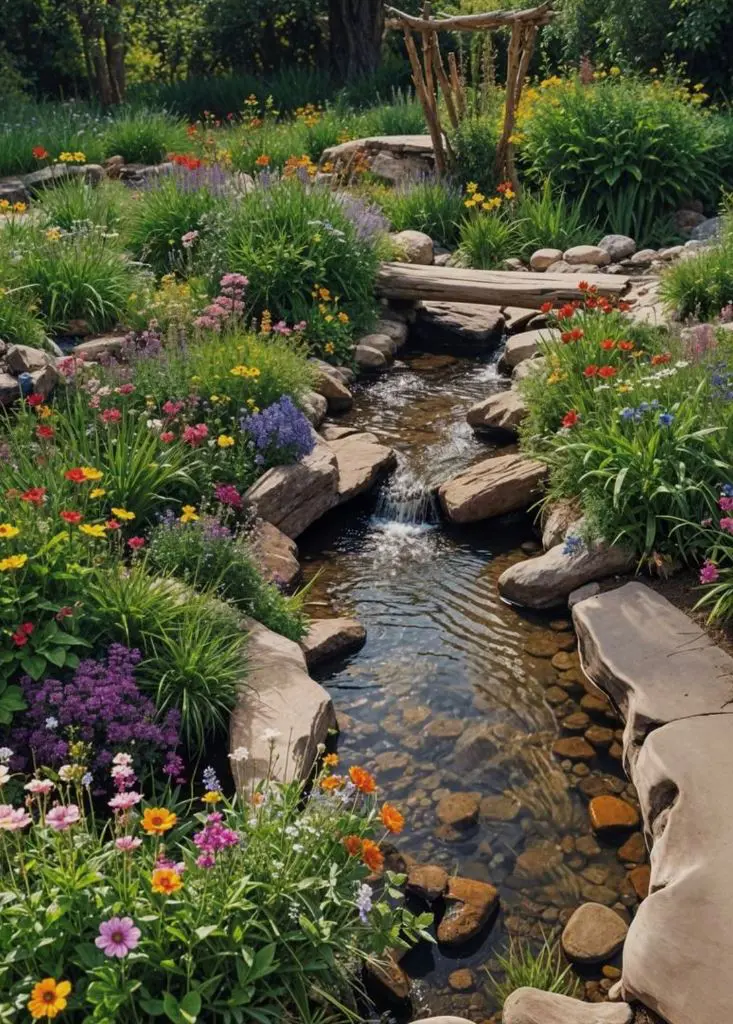
Source: Pinterest
Temporary moisture tolerance
Look for plants that can withstand short periods of saturated soil but also tolerate ordinary garden moisture when the bed drains.
Strong root systems
Deep or spreading roots can help plants establish in the soil and support the garden’s overall structure, although roots alone do not guarantee effective drainage.
Regional suitability
Favor species native to your part of the United States or otherwise known to grow well under your local climate and soil conditions.
Wildlife value
Flowers that provide nectar, pollen, seeds, or host plants for butterfly caterpillars can make a rain garden more useful to wildlife.
Understand the Three Main Rain Garden Zones
Most rain gardens have a lower basin, a sloping middle area, and a higher outer edge. These zones may look similar when dry, but they can experience very different soil moisture levels after a storm. Placing flowers in the right zone helps reduce stress and plant loss.
Lower basin
Use plants that tolerate temporary saturation, such as blue flag iris and swamp milkweed where local conditions suit them. The exact species must match the duration of wetness.
Middle slope
Try cardinal flower, New England aster, or suitable native sedges and grasses, depending on sunlight and drainage.
Upper edge
Plant flowers such as purple coneflower and black-eyed Susan where the soil drains more quickly and is not regularly saturated.
12 Best Flowers for a Rain Garden
The following flowers offer a useful starting point for a colorful rain garden. They differ in height, bloom time, moisture needs, and wildlife value, so choose a mix rather than planting every species in the same spot.
These recommendations are especially relevant to gardens in suitable parts of the United States. Native ranges and growing conditions vary, so verify each plant’s suitability for your state or ecoregion before buying. A species native to the Southeast may not be the best choice for a cold, dry site in the Mountain West.
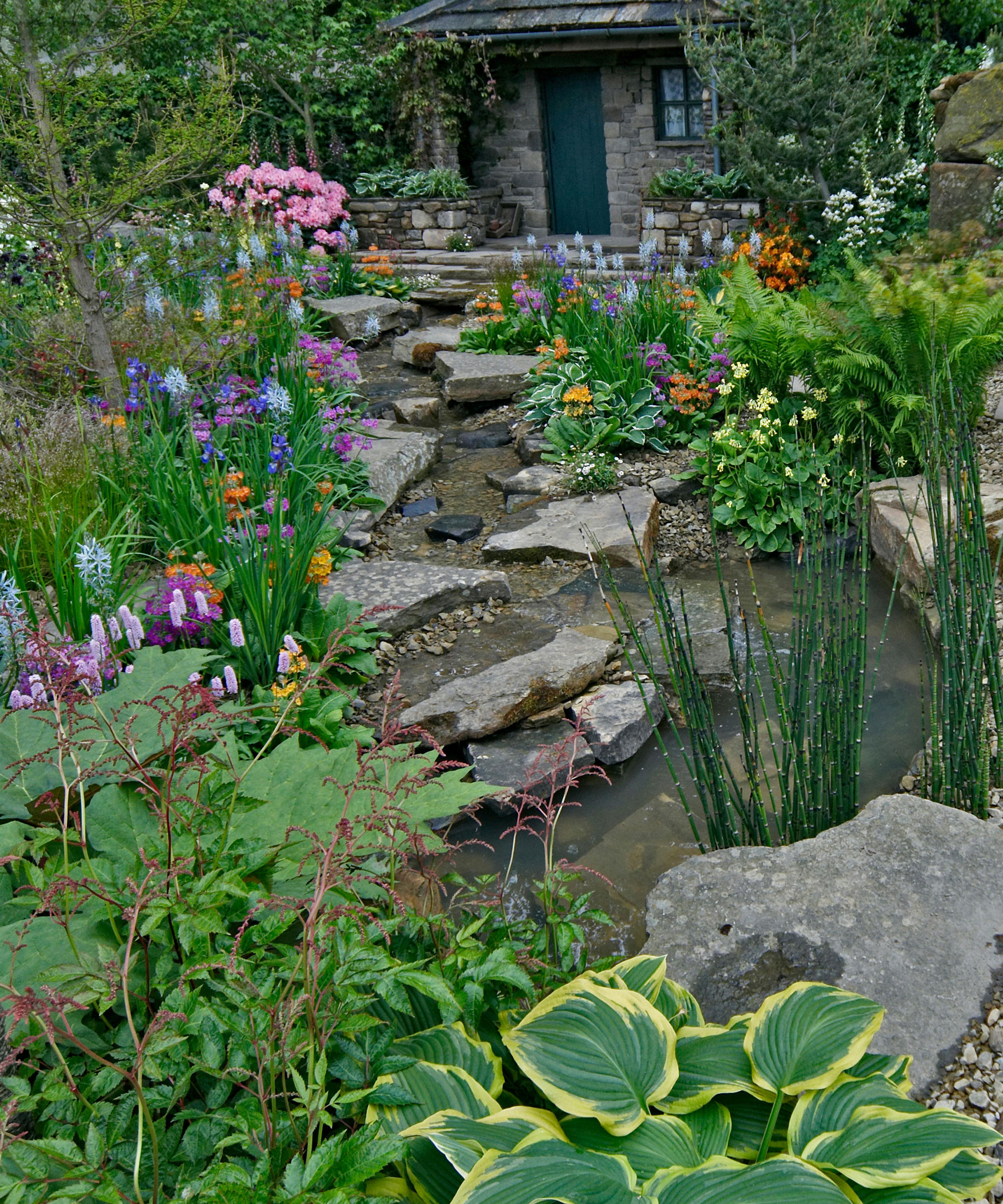
Source: inkl.com
1. Blue Flag Iris
Blue flag iris (Iris versicolor) produces striking blue to violet flowers and sword-shaped leaves. It suits moist soils and the lower or wetter parts of some rain gardens, particularly in regions where it is native. It needs adequate moisture during growth but should not be assumed to thrive in every site that becomes completely dry.
2. Cardinal Flower
Cardinal flower (Lobelia cardinalis) is known for tall spikes of vivid red flowers that attract hummingbirds. It generally favors moist soil and partial shade to sun when moisture is sufficient. Place it in a reliably moist zone rather than on a hot, dry edge, and confirm that it suits your local climate.
3. Swamp Milkweed
Swamp milkweed (Asclepias incarnata) produces clusters of pink flowers and serves as a host plant for monarch butterfly caterpillars. It prefers moist soil and can work well in a rain garden that experiences periodic wetness. It still needs appropriate drainage and should be placed according to its moisture requirements.
4. Black-Eyed Susan
Black-eyed Susan (Rudbeckia hirta) has bright yellow petals around a dark central disk. It brings a cheerful summer display and can attract bees and other pollinators. It generally suits sunny, well-drained to moderately moist sites, making it a good candidate for an upper rain garden edge rather than a persistently saturated basin.
5. Purple Coneflower
Purple coneflower (Echinacea purpurea) offers pink-purple petals, a raised central cone, and useful late-summer color. It performs well in many sunny gardens with well-drained soil and can attract butterflies and bees. Avoid planting it in ground that stays waterlogged, and check whether the species is native to your specific region.
6. Joe-Pye Weed
Joe-Pye weed (Eutrochium species) produces large clusters of pink to mauve flowers and can add height to a rain garden. Several species favor moist soil and attract butterflies. Because mature plants can grow tall and broad, check the exact species, expected size, and available space before planting.
7. New England Aster
New England aster (Symphyotrichum novae-angliae) provides purple or pink flowers late in the growing season. Its fall blooms can support bees and butterflies when many summer flowers have faded. It often suits sunny locations with moderate moisture, but its mature size and tendency to spread should guide placement.
8. Swamp Sunflower
Swamp sunflower (Helianthus angustifolius) produces masses of yellow flowers in late summer or fall. It is useful in suitable warm-region rain gardens and can tolerate moist conditions, though mature plants may become large. Give it room and confirm regional suitability before using it in a compact garden.
9. Golden Alexanders
Golden Alexanders (Zizia aurea) bears small yellow flower clusters in spring and early summer. This native perennial can provide an early source of nectar and pollen while adding a lower layer to the planting. It often grows in moist to moderately moist soils and can pair well with taller summer and fall flowers.
10. Blue Mistflower
Blue mistflower (Conoclinium coelestinum) produces fuzzy blue-purple flower clusters, often in late summer and fall. It can thrive in moist locations and attracts pollinators. However, it spreads by rhizomes and may become vigorous where conditions suit it, so use it where its growth can be managed.
11. Virginia Bluebells
Virginia bluebells (Mertensia virginica) offer clusters of soft blue, bell-shaped flowers in spring. They prefer rich, moist soil and partial shade, making them a useful choice for suitable shaded rain garden edges. Their foliage often dies back after flowering, so combine them with later-growing plants that cover the open space.
12. Wild Bergamot
Wild bergamot (Monarda fistulosa) produces lavender-pink flower heads that attract bees, butterflies, and other pollinators. It often performs well in sunny sites with moderate moisture and good drainage. It is better suited to many middle and upper zones than to a basin that remains saturated.
Best Flowers for Wet Areas
If the bottom of your rain garden stays moist for much of the growing season, start by evaluating blue flag iris, swamp milkweed, cardinal flower, and suitable Joe-Pye weed species. These plants can handle moist conditions, but the amount of time that water remains in the soil still matters. Choose based on observed drainage rather than the garden’s appearance on a dry day.
Best for bold vertical color
Blue flag iris provides upright leaves and distinctive flowers in spring or early summer.
Best for monarch habitat
Swamp milkweed provides a larval host plant for monarch butterflies and clusters of pink blooms.
Best for red flowers
Cardinal flower adds intense red color where its moisture needs can be met.
Best Flowers for Drier Edges
The upper rim often behaves more like an ordinary garden bed than a wetland. Purple coneflower, black-eyed Susan, and wild bergamot can add color here when the soil drains well and the plants suit the regional climate. They also help the planting look full between storms, when the basin itself may appear dry.
For sunny borders
Combine black-eyed Susan with purple coneflower for a warm yellow and purple display.
For pollinator activity
Wild bergamot adds aromatic foliage and flowers that attract many visiting insects.
For late-season color
New England aster can extend the bloom season into fall where it grows well.
How to Choose Flowers for Your Climate and Garden
The right flower depends on more than its color. Rain gardens across the United States face different winter temperatures, summer heat, rainfall patterns, soil types, and periods of drought. A plant that performs well in a humid Mid-Atlantic yard may struggle in an arid western garden without a different watering plan.
Before purchasing plants, identify your USDA hardiness zone and then check local native plant resources for your county or ecoregion. Hardiness zones help estimate winter survival, but they do not describe soil drainage, summer heat, humidity, or the length of a site’s wet periods. Use them as one filter, not as the only test.
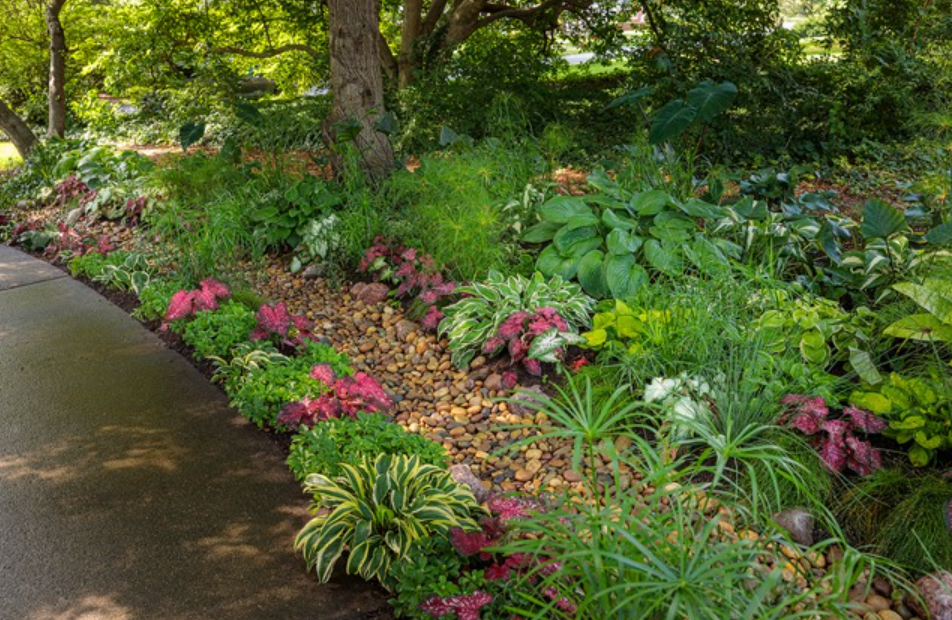
Source: gardeneros.com
Sunlight
Record whether the site receives full sun, partial sun, or shade. Many prairie flowers need strong sunlight, while Virginia bluebells often suit partial shade.
Soil drainage
Observe how quickly the basin drains after a typical storm. Plants for a briefly wet bed may fail where water remains for long periods.
Local native range
Check state native plant societies, university extension services, or local conservation agencies for species that belong in your region.
Mature size
Check the expected height and spread on the plant label. Tall Joe-Pye weed may overwhelm a narrow bed, while lower-growing species can help fill the front.
Bloom season
Mix spring, summer, and fall bloomers so the garden offers color over a longer period and provides food for pollinators at different times.
Match Flowers to Common U.S. Growing Conditions
In the humid Northeast and Mid-Atlantic, gardeners may be able to combine suitable native irises, cardinal flower, swamp milkweed, and fall asters in a well-designed basin. In the Southeast, regional species must also handle local heat, humidity, and rainfall. For the Midwest, many prairie and wet-meadow species can work when matched to the site’s moisture pattern.
In the arid West and Southwest, water management needs special care. A rain garden may receive intense runoff during brief storms yet remain dry for long stretches. Select native plants adapted to local rainfall and soil, and do not assume that a wetland flower will survive extended drought without supplemental water.
Cool or cold-winter regions
Check hardiness, seasonal drainage, and whether the plant can survive winter soil conditions.
Hot, humid regions
Choose species that tolerate local heat and humidity, and allow enough space for airflow around dense plantings.
Dry or drought-prone regions
Prioritize regional natives that tolerate the dry periods between storms and establish a sensible watering plan.
Plan a Rain Garden That Blooms From Spring to Fall
A rain garden looks more natural and supports a wider range of wildlife when flowers bloom at different times. Instead of filling the bed with plants that flower during the same few weeks, build a sequence of spring, summer, and fall color. Mix flower shapes and plant heights to create depth without blocking paths or drainage features.
The following plan is an example rather than a fixed planting recipe. It works only where the listed species are regionally suitable and the garden’s light and moisture match their needs. Adjust the mix to local conditions before planting.
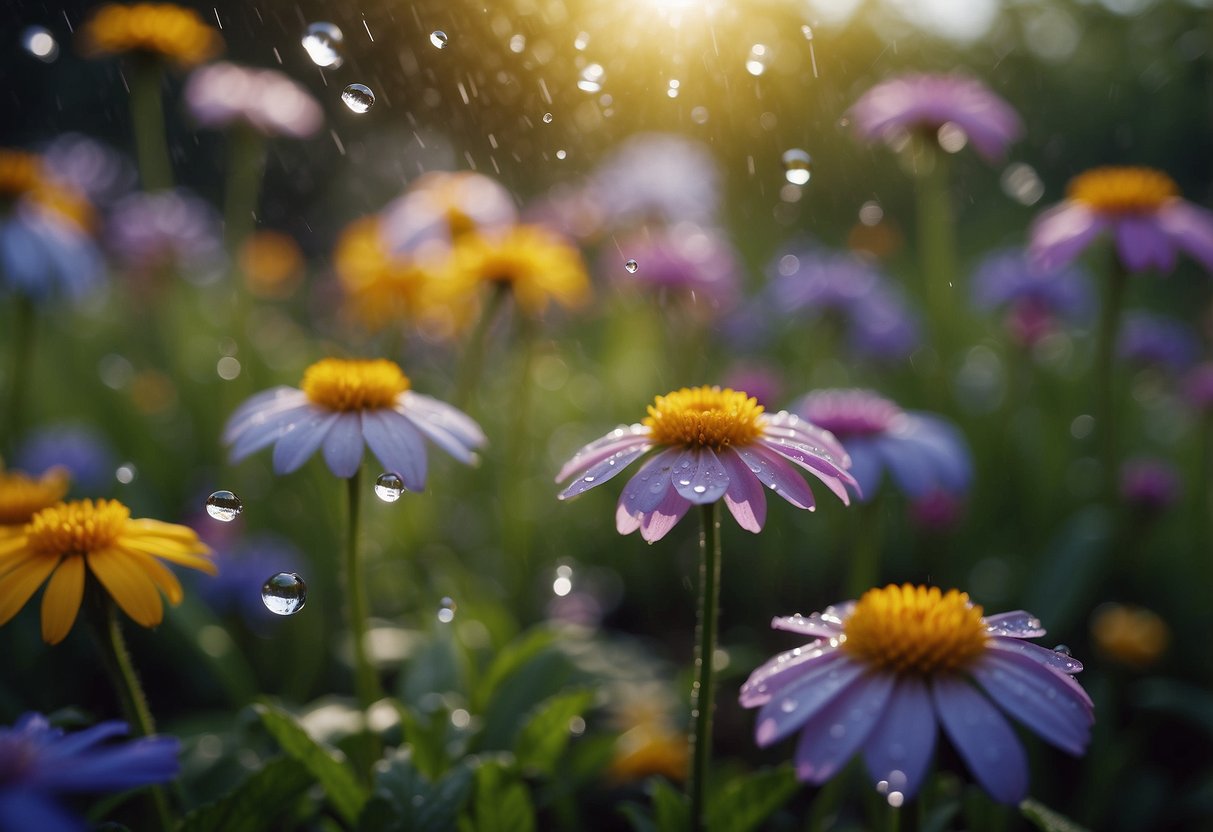
Source: Pinterest
Spring
Use Virginia bluebells in suitable shaded areas and golden Alexanders in appropriate sunny or partly sunny sites. These flowers provide early color before many taller summer perennials reach full size.
Early to midsummer
Add blue flag iris in a suitable moist zone and wild bergamot on a better-drained sunny slope. Cardinal flower may begin flowering in summer, depending on local conditions.
Late summer
Use swamp milkweed, black-eyed Susan, and purple coneflower in zones that fit their needs. Their contrasting colors make the planting feel full and lively.
Fall
Include New England aster, swamp sunflower, or suitable Joe-Pye weed species to extend seasonal interest and provide flowers for late-season pollinators.
Use Height and Color With Care
Place taller flowers toward the back of a bed viewed from one direction or in small groups toward the center of an island bed. Keep lower flowers near paths and front edges so they remain visible. Avoid rigid rows unless a formal design is the goal.
Repeat a few species in small groups rather than planting one of every flower in isolated spots. Repeated colors and leaf shapes help the garden feel cohesive. Keep sightlines clear near driveways, sidewalks, and street corners, and do not block inlets or overflow paths.
Pair yellow black-eyed Susan with purple coneflower and lavender wild bergamot for a bright, balanced display.
Add structure
Use upright iris leaves, medium-height flowering perennials, and suitable native sedges or grasses to create contrast.
Plan for winter
Leave healthy seed heads and stems through part of winter when practical, then cut them back according to plant needs and local pest guidance.
How to Plant Flowers in a Rain Garden
Good planting begins before the flowers go into the ground. First, make sure the garden is correctly placed and that runoff can enter and leave safely. A rain garden should not direct water toward a home’s foundation, destabilize a slope, or interfere with underground utilities.
If the garden is already built, assess its drainage before adding plants. If water remains for an unexpectedly long time, investigate soil compaction, clay layers, poor grading, or an undersized overflow route rather than trying to solve the problem by adding more moisture-loving flowers.
Source: citycacti.com
Step 1: Observe the site
Note sunlight, soil type, runoff entry points, and how long the garden stays wet after rain. Check whether water reaches the intended basin without eroding the soil.
Step 2: Check the soil
Use a basic soil test if nutrient levels or pH are uncertain. A drainage test can help assess infiltration, but local rain garden guidance may be needed for sites with heavy clay or a high water table.
Step 3: Mark the zones
Identify the basin, slopes, and outer edge. Assign plants according to the moisture pattern of each zone rather than arranging them by flower color alone.
Step 4: Set out the plants
Place nursery pots on the soil first to check spacing, mature size, and visual balance. Keep inlets, overflow routes, and access points clear.
Step 5: Plant at the correct depth
Follow each plant’s label and set the root ball at the recommended depth. Avoid burying crowns or stems, especially for species sensitive to deep planting.
Step 6: Water and mulch
Water new plants thoroughly after planting. Apply a suitable layer of mulch where it will remain in place, keeping mulch away from plant crowns and preventing it from washing into drains.
Step 7: Monitor after storms
Check for erosion, exposed roots, clogged inlets, and standing water that persists beyond the expected drainage period. Repair the cause before replacing plants that fail.
When Should You Plant Rain Garden Flowers?
In many parts of the United States, spring and early fall are good planting periods because temperatures are often moderate and rainfall may help new roots establish. Local climate matters more than a single nationwide planting date. Avoid planting when the soil is frozen, extremely wet, or too hot for young plants to establish well.
New plants need more care than established ones, even if they are native and adapted to local weather. Water them during dry spells while their roots develop, but do not keep the soil saturated unless the species and site are suited to that condition.
Spring planting
Provides a long growing season in many regions, but may require more watering as summer heat arrives.
Fall planting
Can work well in regions with enough time before the ground freezes, allowing roots to develop in cooler weather.
Container-grown plants
Can offer flexible planting times, but still need proper soil moisture, careful handling, and time to establish.
Care for Rain Garden Flowers Through the Seasons
A well-planned rain garden should need less attention once its plants establish, but it is not maintenance-free. The first growing season is especially important because young roots have not yet spread through the soil. Regular checks help catch drying plants, washed-out mulch, and drainage problems before they cause larger losses.
Care should support the site’s natural water cycle rather than trying to keep every part of the bed constantly wet. The goal is a planting that can accept runoff, drain as designed, and survive the dry periods between storms.
Source: dopegardening.com
Water during establishment
Check the root zone during dry spells and water as needed. Do not rely on rainfall alone until the plants have established.
Control weeds early
Remove invasive or aggressive weeds before they set seed. Learn to recognize young native plants so they are not pulled by mistake.
Inspect after heavy rain
Look for soil loss, sediment buildup, blocked inlets, leaning plants, and water that remains longer than expected.
Prune selectively
Remove dead or diseased growth as needed. Leave some healthy seed heads through winter if they provide food or shelter and do not create a local pest concern.
Refresh mulch carefully
Replace displaced mulch and maintain an appropriate layer without burying crowns or allowing material to clog drainage features.
Limit unnecessary fertilizer
Many native perennials grow well without heavy feeding. Test the soil before adding nutrients, since excess fertilizer can move into waterways with runoff.
What to Do When Flowers Struggle
Wilting, yellow leaves, weak growth, or dead roots can signal different problems. A plant may be too dry, too wet, planted too deeply, or poorly suited to the site. Check soil moisture at root depth before adding water or fertilizer.
If several plants in the basin fail at once, investigate the site rather than replacing them immediately. Repeated plant loss may indicate prolonged saturation, poor infiltration, erosion, or an unsuitable planting mix. Local extension staff or a rain garden specialist can help diagnose persistent problems.
Plants wilt between storms
Check soil moisture and establishment. The plant may need supplemental water or may be unsuitable for a dry upper slope.
Roots appear soft or rotten
Investigate prolonged saturation, planting depth, and drainage. Replace the plant only after correcting the cause.
Flowers grow tall but flop over
Check mature plant height, light levels, and spacing. Move or support the plant as appropriate, or select a shorter species for the next planting.
Water remains for too long
Inspect the inlet, overflow route, soil compaction, and grading. Seek qualified help if the garden threatens nearby structures or its drainage system needs redesign.
Common Rain Garden Flower Planting Mistakes
The most common planting mistake is assuming that every rain garden plant must love wet soil. In reality, much of the garden may be dry for long periods, and the lower basin may experience only brief saturation. Planting every flower in the wettest spot can cause root problems, while putting moisture-loving plants on the upper rim can lead to drought stress.
A second mistake is choosing plants based only on appearance. A flower may look attractive in a nursery but grow too large, spread too quickly, or fail under local winter conditions. A little research before purchase usually saves time and replacement costs later.
Source: locallandscapers.org
Planting nonnative invasive species
Avoid species known to invade natural areas in your region. Check local invasive plant lists before purchasing aggressive spreaders.
Ignoring mature size
Give large perennials enough room and avoid placing tall flowers where they block views or paths.
Using only one flowering species
A single-species bed may have a short bloom window and can be more vulnerable to pests, disease, or changing conditions. A varied planting offers more seasonal interest.
Assuming native means no maintenance
Native plants still need suitable site conditions, early watering, and occasional weed control while they establish.
Filling a poorly draining basin with wetland flowers
Flowers cannot fix a drainage design problem. Determine why water remains and correct the cause before adding plants.
Adding too much compost or fertilizer
Excess nutrients may encourage weak or overly lush growth and can wash into nearby waterways. Improve soil only when tests or local guidance support doing so.
Forgetting safe runoff management
Keep water away from foundations and maintain a safe overflow route. Consult local guidance before changing grading or directing roof runoff toward a new garden.
Are Rain Gardens Safe Near Homes and Septic Systems?
A rain garden should be placed where infiltrating water will not damage a foundation, destabilize a slope, or interfere with a septic system. Required setbacks depend on local soil, groundwater, utilities, and rules. Do not assume that a standard distance is safe for every property.
Before digging, contact the appropriate utility-marking service and review local stormwater or extension guidance. If the site has a high water table, a basement drainage problem, contaminated soil, or a failing septic system, obtain qualified advice before building or expanding the garden.
Protect structures
Do not direct runoff toward a house, garage, or neighboring property. Keep the garden’s overflow route away from foundations.
Check underground utilities
Arrange utility marking before excavation and identify buried irrigation lines or drainage pipes.
Follow local requirements
Check local rules and technical guidance for setbacks, infiltration, and permitted stormwater connections.
A Simple Rain Garden Flower Plan for Beginners
For a beginner, the easiest approach is to start with a small number of well-matched flowers and repeat them through the bed. This keeps the design easy to maintain and makes it simpler to identify which plants are thriving. The example below assumes a sunny site with a lower area that becomes temporarily wet and an upper edge that drains more quickly.
Use this as a planning framework, not a universal planting prescription. Confirm that each species is suitable for your state, soil, and hardiness zone, and adjust the choices for the amount of water the garden receives.
Source: Pinterest
Lower zone
Consider blue flag iris and swamp milkweed where they are locally suitable and the soil remains moist without prolonged harmful saturation.
Middle zone
Use cardinal flower or a suitable Joe-Pye weed species in spots that meet their moisture and light needs. Add native sedges or grasses for structure.
Upper zone
Plant black-eyed Susan, purple coneflower, and wild bergamot where the soil drains well.
Seasonal accents
Add golden Alexanders for spring color and New England aster for late-season flowers where both are suitable for the region.
How Many Flowers Should You Plant?
The number of plants depends on the size of the bed, the mature spread of each species, and whether you want a loose natural look or a fuller display. Use the spacing on plant labels or regional planting guidance rather than guessing. Crowding plants can increase competition and make weeding harder, while excessive spacing can leave bare soil open to weeds and erosion.
For a small garden, three to five well-chosen species can create a balanced planting. Larger beds can support more variety, including flowers, sedges, and grasses, as long as each species has a clear role and enough room to grow.
Choose repeatable groups
Plant small clusters of the same flower in several spots to create a unified look.
Allow for mature spread
Use the expected width of each plant to estimate spacing and avoid overcrowding.
Keep soil covered
Use suitable mulch during establishment and add ground-covering plants where they will not obstruct drainage.
How Rain Garden Flowers Help Local Wildlife
A rain garden can support more than stormwater management. Flowering native plants may provide nectar and pollen for bees, butterflies, and other insects, while seed heads and plant structure can offer food or shelter to birds and small wildlife. The benefits depend on the species planted and the surrounding habitat.
For the greatest value, include a range of flower shapes and bloom times. Swamp milkweed supports monarch caterpillars, while purple coneflower, wild bergamot, black-eyed Susan, and suitable asters can attract visiting pollinators. Flowers alone do not create a complete habitat, so retain healthy soil, limit pesticide use, and include suitable shelter where practical.
Source: digsdigs.com
Support specialist insects
Use locally appropriate host plants, such as swamp milkweed for monarch caterpillars, to provide food during the larval stage.
Extend the bloom season
Combine spring, summer, and fall flowers so nectar and pollen are available across more of the growing season.
Reduce pesticide use
Avoid routine broad-spectrum spraying, especially when flowers are in bloom and pollinators are active.
Include grasses and sedges
Suitable native grasses and sedges can add structure, cover, and root diversity alongside flowering plants.
Should You Remove Flowers After They Fade?
Deadheading, or removing faded flowers, can make a rain garden look tidy and may encourage further blooms in some species. However, leaving selected seed heads can provide food for birds and add winter structure. The best choice depends on the plant, desired appearance, and local wildlife needs.
If a plant spreads aggressively by seed or is unsuitable for the site, removing its seed heads may help control it. Do not remove every stem automatically, and check for signs of disease before leaving damaged plant material through winter.
For a longer floral display
Deadhead selected plants when appropriate, following guidance for the species.
For winter habitat
Leave healthy seed heads and standing stems where they provide useful shelter and do not conflict with local pest management.
For plant control
Remove seed heads from species that spread too freely or are identified as invasive in your region.
Frequently Asked Questions
Q
What are the best flowers for a rain garden?
Good options include blue flag iris, cardinal flower, swamp milkweed, black-eyed Susan, purple coneflower, Joe-Pye weed, New England aster, golden Alexanders, and wild bergamot. The best choice depends on drainage, sunlight, soil, and regional suitability. Match each flower to the part of the garden where it will grow.
Q
Do rain garden flowers need to tolerate standing water?
They need to tolerate the soil conditions they will actually experience, but most rain garden flowers do not need constant standing water. Many rain gardens are designed to drain after a storm. If water remains for unusually long periods, check the site’s drainage and local design guidance instead of assuming every plant needs wetter soil.
Q
Are native flowers better for rain gardens?
Native flowers are often a strong choice because they may be adapted to local weather and can support regional wildlife. However, a plant being native does not automatically mean it suits every rain garden. Check its native range, moisture needs, mature size, and light requirements before planting.
Q
Can I grow flowers in a shaded rain garden?
Yes. Some rain gardens receive partial shade or dappled light. Virginia bluebells and other locally suitable woodland-edge perennials may work in moist, shaded areas, while many prairie flowers need more sun. Choose species according to the amount of direct light the garden receives.
Q
How do I keep a rain garden colorful all year?
Use flowers with different bloom periods and combine them with native grasses or sedges that add structure outside the flowering season. Spring bloomers such as golden Alexanders can be followed by summer flowers such as wild bergamot and late-season asters. No perennial flower blooms throughout the entire year, so foliage, seed heads, and plant structure help maintain interest.
Q
Can I plant regular garden flowers in a rain garden?
Some conventional garden flowers may work on the upper edge if they tolerate the local climate and the soil drains well. However, plants that need constant moisture may struggle in a basin that dries between storms, while plants that dislike wet roots may fail in the lowest zone. Prioritize suitability over flower color or nursery labels.
Q
How long does it take for rain garden flowers to establish?
Many perennial flowers need one or more growing seasons to develop strong root systems and reach their expected size. Growth depends on the species, planting time, weather, soil, and care. Water new plants during dry periods, control weeds, and inspect the garden after storms while the planting establishes.
✦ Wrapping Up
Conclusion
The best flowers for a rain garden are those that suit its wet and dry cycles, local climate, sunlight, and soil. Blue flag iris, cardinal flower, and swamp milkweed can add color to suitable moist areas, while black-eyed Susan, purple coneflower, and wild bergamot often work well on better-drained edges. Golden Alexanders and New England aster can help extend the bloom season where regional conditions allow.
A successful rain garden starts with good site planning, not just a list of attractive flowers. Observe how water moves through the yard, select plants for each zone, and leave enough space for mature growth. With thoughtful plant choices and modest care during establishment, a rain garden can offer seasonal beauty, pollinator habitat, and a useful way to manage runoff.
💡 Key Takeaway
Start by observing how quickly your garden drains after rain and how much sun it receives. Then choose three to five locally suitable flowering plants for the basin, middle slope, and upper edge, checking native range, mature size, and moisture needs before you buy.
I enjoy sharing simple gardening ideas, lawn care tips, and honest product reviews that help make outdoor work easier. From home gardening guides to helpful tools and lawn care advice, I write easy-to-follow content to help readers create a healthier and better-looking outdoor space without wasting time or money.