
As an Amazon Associate, I earn from qualifying purchases.
The Best fungicide for Septoria leaf spot is a labeled tomato-safe product used early, with copper sprays among the options to consider.
You plant tomatoes in your backyard, water them each morning, and look forward to a fresh harvest. Then small dark spots appear on the lower leaves. Soon, those leaves turn yellow and fall. This can be Septoria leaf spot, a common problem in American vegetable gardens during warm, wet weather. Rain, crowded plants, and wet leaves can help the disease spread. The right fungicide may slow new infections, but it cannot heal damaged leaves. I will compare five products, explain their limits, and share simple steps to help protect your tomato crop.
Page Contents
Toggle🏆 Top 3 Products

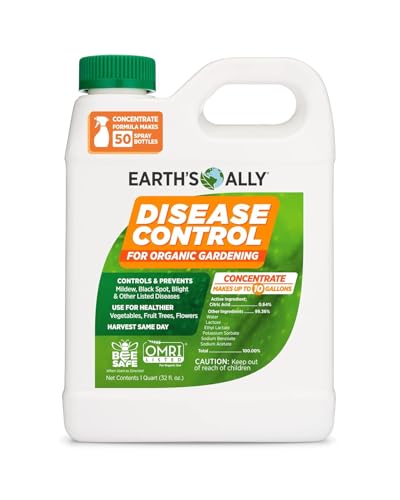
Earth’s Ally Disease Control Fungicide concentrate, 32 Oz
This concentrate is worth considering for gardeners who want a product marketed for several common plant diseases, provided its current label lists the crop and disease they need to treat.

Bonide Copper Fungicide, 1 lb. Ready-to-Use Spray or Dust
This copper-based option may suit gardeners who prefer a familiar contact treatment and can follow its crop-specific directions.

Bonide Captain Jack’s Copper Fungicide, 32 oz Ready-to-Spray
The ready-to-spray format may save mixing time for home gardeners treating a modest number of plants.
Earth’s Ally Disease Control Fungicide Concentrate Review
Earth’s Ally Disease Control Fungicide Concentrate is an option for gardeners who want one product for several plant disease concerns. The 32-ounce bottle comes in a concentrate format, so you must prepare the spray according to the current label. Before using it on tomatoes, check that the label lists tomatoes and Septoria leaf spot or the specific disease you need to control. Do not assume that a product works against every fungus just because its name says disease control.
For the Best fungicide for Septoria leaf spot, correct timing matters as much as product choice. A labeled treatment may help protect healthy leaves from new infection, but it will not restore leaves that already have many spots. Remove badly affected leaves when practical, water at the soil level, and leave enough space between plants for air to move. These steps can help a fungicide program work better.
✅ Pros
- ✔Concentrate format may suit gardeners treating several plants.
- ✔One bottle may support more than one application when mixed at the labeled rate.
- ✔May be useful for a broader garden disease-control routine when the label supports the intended uses.
- ✔Can fit into a regular plant care plan.
- ✔The bottle is easier to store than several large ready-to-use containers.
- ✔May suit gardeners who already have a suitable spray bottle or sprayer.
- ✔Provides another option for gardeners comparing treatments for leaf disease.
⚠️ Cons
- ✖The user must measure and dilute the concentrate correctly.
- ✖The label may not list Septoria leaf spot on tomatoes, so check before buying or applying.
- ✖A concentrate may be less convenient for someone treating only one small plant.
- ✖Rain and new plant growth can affect how long protection lasts.
- ✖It cannot repair leaves that the disease has already damaged.
My Recommendation
I would consider Earth’s Ally for a home garden where several plants need routine disease care, but only after checking the current label. The key question is not whether the product claims broad disease control. It is whether it specifically permits use on your crop and targets the disease you have. If Septoria leaf spot is not listed or otherwise covered by the label, choose a labeled alternative instead. Use the exact dilution rate and application interval stated on the package.
| Best For | Why |
|---|---|
| Gardeners with several plants | A concentrate may be practical when the label supports use across the plants in the garden. |
| Routine disease care | It may fit a planned treatment schedule for labeled diseases. |
| Careful label readers | The product is most useful when the crop, disease, rate, and timing all match the label. |
Bonide Copper Fungicide Review
Bonide Copper Fungicide is a copper-based garden disease treatment. The listed product is sold in a 1-pound format, but the exact method of use depends on the product version and its label. Copper products work mainly on plant surfaces. They can help prevent some new infections when applied before the disease takes hold, but they do not cure damaged leaves.
Copper fungicides are common options in home gardens because they can help manage certain plant diseases. Still, the Best fungicide for Septoria leaf spot must be chosen for the crop and disease listed on the package. Check whether this specific formulation is approved for tomatoes and Septoria leaf spot. Follow its mixing or application directions, avoid overuse, and take care near ponds or other water sources because copper can harm aquatic life.
✅ Pros
- ✔Uses copper as its active disease-control ingredient.
- ✔May help prevent some new infections when the label supports the target disease.
- ✔Can fit into a preventive garden care plan.
- ✔Offers an option for gardeners comparing contact fungicides.
- ✔May suit vegetable gardeners when the specific crop appears on the label.
- ✔Can be used alongside nonchemical steps such as pruning and better plant spacing.
- ✔Provides an alternative to products with different active ingredients.
⚠️ Cons
- ✖Copper can injure plant tissue under some conditions, especially when used incorrectly.
- ✖It does not restore leaves that already have Septoria spots.
- ✖Rain may reduce surface protection and lead to a need for another labeled application.
- ✖Repeated copper use can add copper to garden soil.
- ✖The exact directions may differ between spray, dust, and other formulations.
My Recommendation
This product deserves a place on a shortlist if its current label lists tomatoes and Septoria leaf spot. Copper treatments work best as part of a wider plan that includes dry foliage, good spacing, and removal of infected plant material. Do not spray more often or at a higher rate than the label allows. If plants are stressed by heat or drought, review the label’s cautions and avoid treatment conditions that could raise the risk of leaf damage.
| Best For | Why |
|---|---|
| Vegetable gardeners | A labeled copper product may help protect suitable crops from listed diseases. |
| Preventive treatment plans | Copper works mainly on plant surfaces and is most useful before infection becomes severe. |
| Gardeners comparing active ingredients | It offers a different treatment option from products based on other ingredients. |
Captain Jack’s Copper Fungicide 32 Oz Review
Bonide Captain Jack’s Copper Fungicide in the 32-ounce ready-to-spray format may appeal to gardeners who want a simple way to treat plants. This format can reduce the need to measure and mix a separate concentrate, though you must still read all directions before use. Its copper-based formula is intended for disease control within the uses listed on the package. Do not assume that every vegetable or fungal disease is covered.
If you are looking for the Best fungicide for Septoria leaf spot, convenience is helpful, but the label comes first. Confirm that the current product label allows use on tomato plants and covers Septoria leaf spot. Spray only at the stated rate and interval, and cover the plant as directed. Combine the treatment with careful watering, plant spacing, and removal of badly infected leaves to reduce the conditions that help the disease spread.
✅ Pros
- ✔Ready-to-spray format can reduce preparation time.
- ✔May be convenient for small backyard tomato gardens.
- ✔Uses a copper-based approach to disease control.
- ✔Can be easier for new gardeners than measuring a concentrate.
- ✔May fit a preventive program when the label lists the crop and disease.
- ✔Avoids the need to calculate a dilution rate for a ready-to-spray product.
- ✔Can be paired with sound garden sanitation.
⚠️ Cons
- ✖The ready-to-spray format may cost more per treated area than a concentrate.
- ✖The container may not cover a large vegetable garden.
- ✖Copper can cause plant injury if used in unsuitable conditions.
- ✖It will not make spotted leaves healthy again.
- ✖The product may need reapplication according to its label after rain or new growth.
My Recommendation
I would consider the 32-ounce ready-to-spray option for a small garden where ease of use matters. It may help reduce mixing errors, but it does not remove the need for careful application. Check the current label for tomato use, Septoria leaf spot, harvest intervals, protective gear, and reapplication rules. If you have many tomato plants, compare the total area treated and cost with a suitable concentrate before you buy.
| Best For | Why |
|---|---|
| Small tomato gardens | The ready-to-spray format may make spot treatment simpler. |
| Busy home gardeners | It can save the time needed to measure and mix a concentrate. |
| New gardeners | The format may reduce dilution errors when used exactly as directed. |
Bonide Infuse Systemic Disease Control Review

Bonide Infuse Systemic Disease Control is a concentrated plant disease treatment. The term systemic means that a plant can take up the active ingredient, depending on the product and its approved use. This differs from a contact fungicide, which mainly protects the surface it reaches. The listed bottle holds 16 ounces, and its exact uses, rates, and target diseases must come from the current label.
A systemic product is not automatically the Best fungicide for Septoria leaf spot. The target disease and crop must match the label. Check carefully before using this product on edible tomato plants, since ornamental plant uses do not establish that it is suitable for food crops. If the label does not permit the intended use, do not apply it to your tomatoes. Better spacing, clean tools, and watering at soil level remain useful steps for disease management.
✅ Pros
- ✔Systemic action can differ from surface-only protection.
- ✔Concentrate format may suit gardeners who treat several labeled plants.
- ✔Offers an alternative active ingredient to copper products.
- ✔Can be considered for diseases specifically listed on the label.
- ✔May fit a planned treatment program for approved ornamental plants.
- ✔The bottle is compact for storage.
- ✔Encourages comparison of treatment type rather than brand name alone.
⚠️ Cons
- ✖Do not assume it is approved for edible tomatoes or Septoria leaf spot.
- ✖Concentrate requires careful measuring and mixing.
- ✖A systemic label claim does not mean it controls every fungal disease.
- ✖Use on crops not listed on the label may be unsafe or unlawful.
- ✖It cannot reverse severe leaf damage that has already occurred.
My Recommendation
I would not choose this product for tomato Septoria leaf spot unless the current label clearly allows that crop and disease. It may be more suitable for a gardener managing the specific diseases and plants listed on its package. Read the full label before purchase, not just the front panel. For edible crops, follow all directions on harvest timing, protective gear, application rate, and use restrictions.
| Best For | Why |
|---|---|
| Gardeners treating labeled plants | The product should be used only for crops and diseases permitted by its label. |
| Users comparing systemic treatments | Its treatment type differs from that of surface-contact copper sprays. |
| Careful label readers | Crop approval and disease coverage must be confirmed before use. |
Captain Jack’s Copper Fungicide 16 Oz Review

Bonide Captain Jack’s Copper Fungicide in the 16-ounce ready-to-spray format is a smaller option for gardeners who have only a few plants to treat. It offers the convenience of a product that does not require a separate dilution step, but you should still read the label and use it as directed. Its copper-based approach may help control certain plant diseases when the crop and target appear on the approved label. Product sizes and directions can vary, so check the package details before use.
For anyone searching for the Best fungicide for Septoria leaf spot, this smaller bottle may be a practical choice for a patio garden or a few tomato plants. It is not a cure for leaves that already show many dark spots. Use it only if the current label permits the intended tomato use. Water near the soil, remove badly infected leaves, and clean tools after handling diseased plants to reduce the chance of spreading the problem.
✅ Pros
- ✔Smaller bottle may suit a few tomato plants.
- ✔Ready-to-spray format can save mixing time.
- ✔May be easier to store than a large container.
- ✔Uses copper for listed plant disease targets.
- ✔Can fit a preventive plan when approved by the label.
- ✔May help new gardeners avoid dilution mistakes.
- ✔Pairs well with careful watering and removal of infected leaves.
⚠️ Cons
- ✖A small bottle may run out quickly in a large garden.
- ✖The cost per ounce may be higher than larger formats.
- ✖Copper may damage leaves if applied incorrectly or under unsuitable conditions.
- ✖It does not heal existing spots or restore fallen leaves.
- ✖Its use for Septoria leaf spot depends on the current product label.
My Recommendation
This 16-ounce option may be a sensible fit for a few container-grown tomatoes or a small raised bed. Its smaller size can reduce leftover product, but compare the price and coverage with the 32-ounce version. Check the label for the crop, disease, rate, protective gear, and harvest interval. If Septoria leaf spot is not listed for tomatoes, choose a treatment that is approved for that use instead.
| Best For | Why |
|---|---|
| Container gardeners | A smaller bottle may be enough for a few plants. |
| First-time users | The ready-to-spray format can simplify preparation. |
| Gardeners with limited storage | The smaller package takes up less space than a larger bottle. |
Final Verdict: Which Should You Buy?
For gardeners comparing the Best fungicide for Septoria leaf spot, I would start by checking a labeled copper product, such as Bonide Copper Fungicide or Captain Jack’s Copper Fungicide. The ready-to-spray formats may suit small gardens, while the concentrate may offer more flexibility when its label supports the intended use. I cannot confirm that every listed product is approved for Septoria leaf spot on tomatoes, so check the current label before buying or applying any of them.
The Best fungicide for Septoria leaf spot works best as part of a full tomato care plan. Water at soil level, improve airflow, remove badly affected leaves, and follow all label directions. Choose a product that lists your crop and disease, and protect your plants early.
FAQs Of Best fungicide for Septoria leaf spot
Q What is the Best fungicide for Septoria leaf spot on tomatoes?
Q Can fungicide cure tomato leaves that already have Septoria spots?
Q Is copper fungicide safe for vegetable gardens?
Q How can I stop Septoria leaf spot from spreading?
Q How often should I apply fungicide for Septoria leaf spot?

I enjoy sharing simple gardening ideas, lawn care tips, and honest product reviews that help make outdoor work easier. From home gardening guides to helpful tools and lawn care advice, I write easy-to-follow content to help readers create a healthier and better-looking outdoor space without wasting time or money.