
As an Amazon Associate, I earn from qualifying purchases.
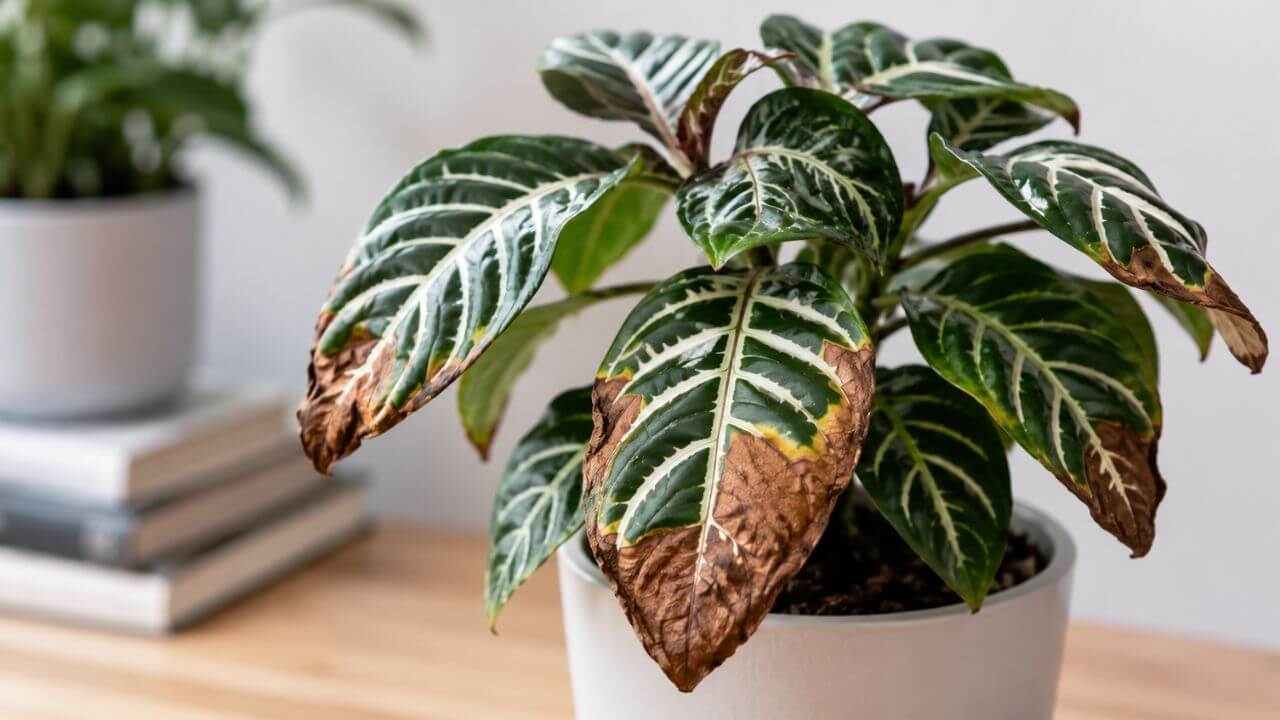
Zebra plant leaves turning brown is one of the most common problems owners face with this tropical houseplant. Brown tips, crispy edges, or dark patches are signs that something in the plant’s environment needs attention.
The good news is that zebra plants respond quickly once you correct the problem. In my experience, most cases come down to watering, humidity, or lighting issues rather than disease.
What Does Browning Mean on a Zebra Plant?
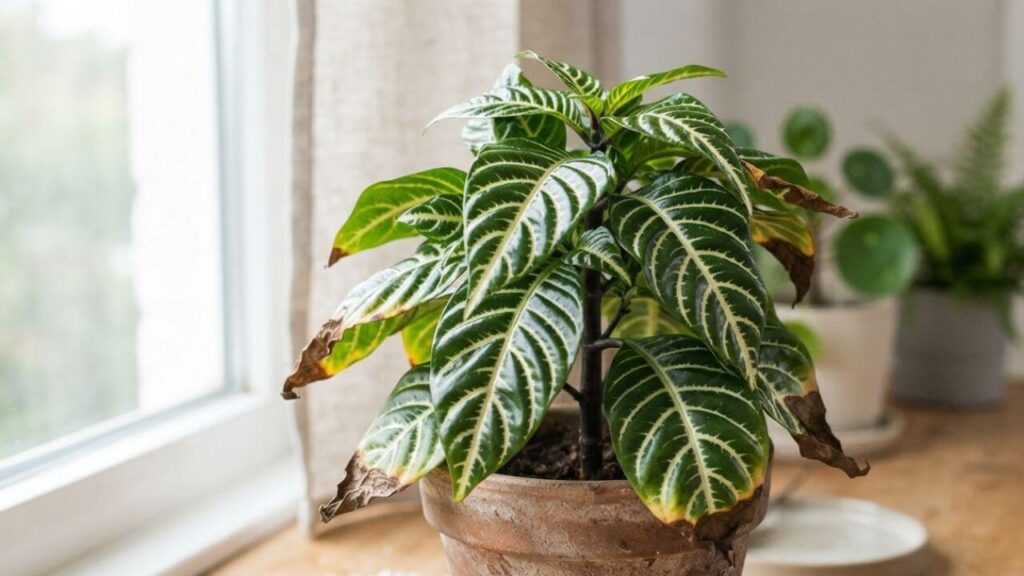
A zebra plant, also called Aphelandra squarrosa, uses its large striped leaves to signal stress. Healthy leaves stay glossy and deep green with bright white veins.
When leaves begin changing color, the plant is trying to tell you something.
Different browning patterns point to different causes:
| Symptom | Most Likely Cause |
| Brown tips | Low humidity |
| Crispy edges | Underwatering |
| Soft brown leaves | Overwatering |
| Brown spots | Sun damage or water issues |
| Curling and browning | Heat or dry air |
Looking at the type of damage helps narrow down the solution quickly.
Why Are My Zebra Plant Leaves Turning Brown?
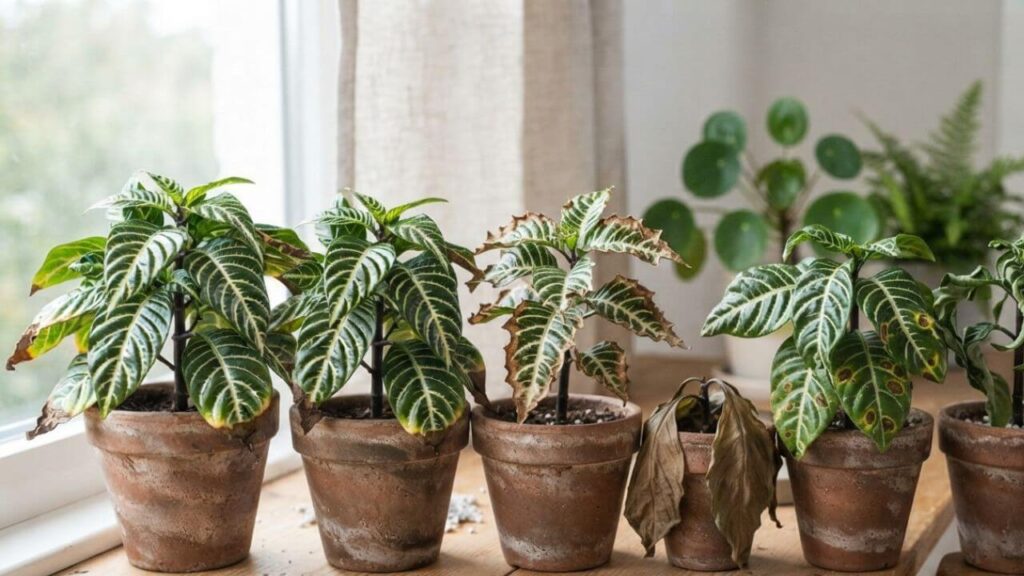
Several conditions can trigger zebra plant leaf discoloration. This tropical species evolved in warm and humid forests, so indoor environments can sometimes be challenging.
Low Humidity Damage on Houseplants
Low humidity causes more zebra plant problems than almost anything else.
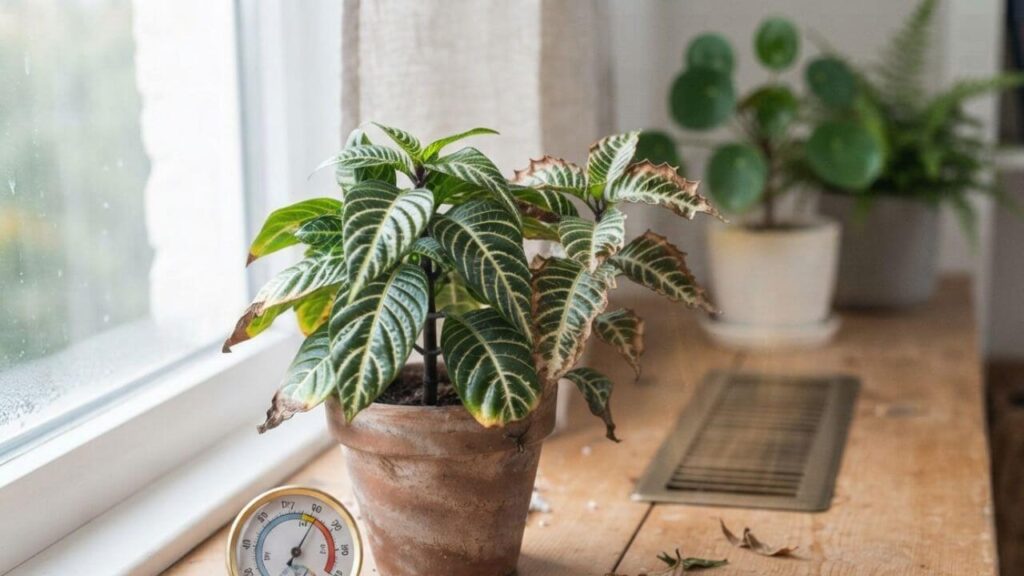
Most homes in the United States stay between 30% and 40% humidity indoors. Zebra plants prefer humidity levels between 60% and 70%.
When the air becomes too dry, moisture leaves the leaf faster than the roots can replace it. The first sign is usually zebra plant brown leaf tips.
During winter, heating systems make the problem worse.
I recommend checking humidity first whenever I see brown edges on leaves.
Zebra Plant Watering Issues
Improper watering causes both overwatering and underwatering symptoms.
The soil should stay lightly moist but never soggy. Zebra plants dislike extremes.
If the pot dries completely, leaves begin turning brown and crispy. If the soil stays wet for too long, roots lose oxygen and start to rot.
Many owners water on a schedule instead of checking the soil first. That mistake causes problems quickly.
Overwatered Zebra Plant Symptoms
Overwatering creates different symptoms than dryness.
Watch for:
- Soft brown leaves
- Yellowing foliage
- Mushy stems
- Wet soil that stays damp for days
- Leaf drop
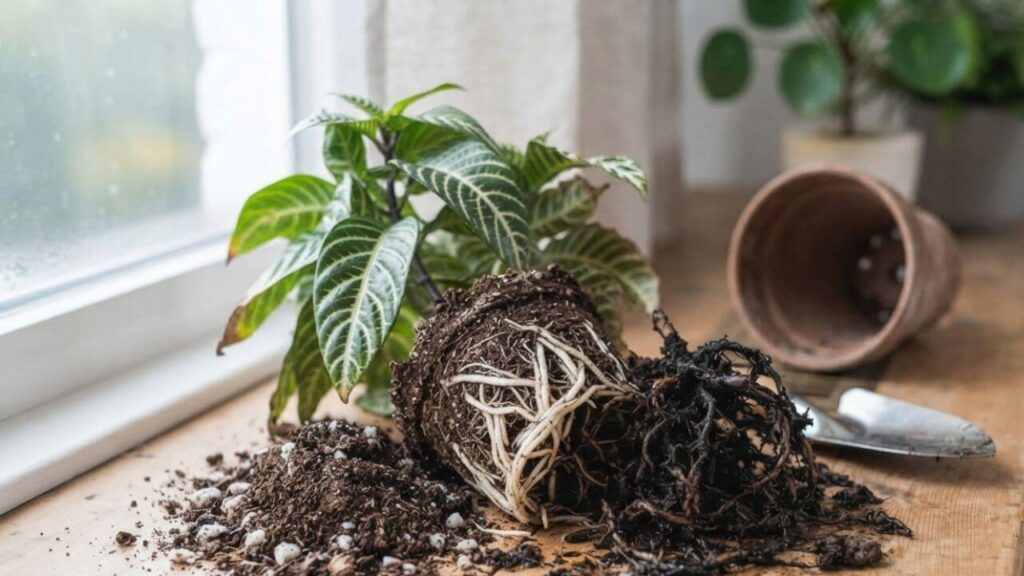
An overwatered zebra plant may also develop root rot symptoms beneath the soil surface.
Remove the plant from its pot if you suspect root rot. Healthy roots appear white or tan. Rotten roots look black, soft, and smell unpleasant.
Underwatered Zebra Plant Signs
Dry soil creates a different set of problems.
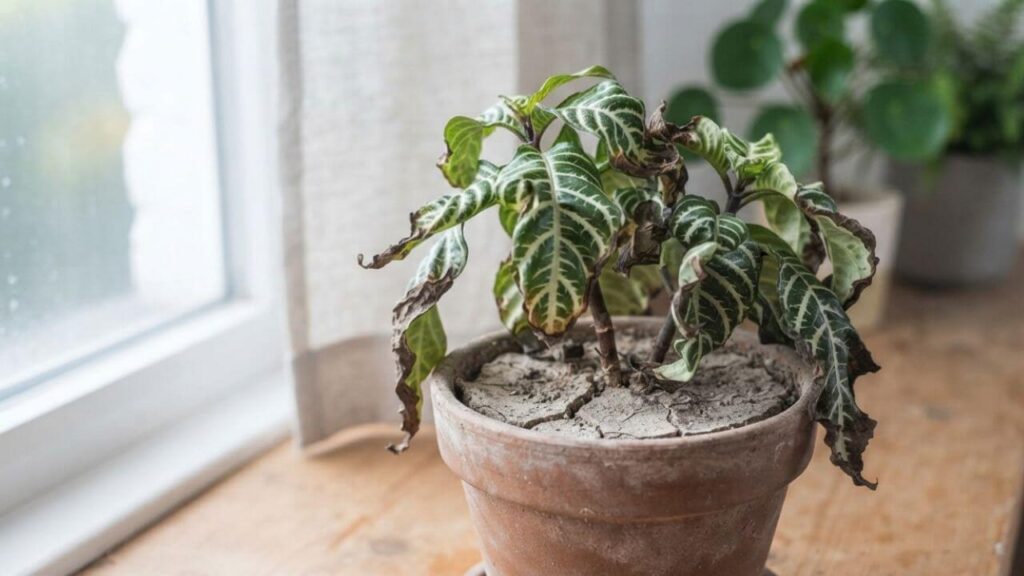
Common underwatered zebra plant signs include:
- Crispy leaf edges
- Curling leaves
- Dry potting mix
- Drooping foliage
- Slow growth
The soil should never remain bone dry for extended periods.
In my experience, zebra plants recover from underwatering faster than they recover from root rot.
Brown Spots on Zebra Plant Leaves
Brown spots on zebra plant leaves often confuse new owners because several problems create similar damage.
Possible causes include:
- Water sitting on leaves
- Cold drafts
- Direct sunlight
- Fertilizer burn
- Fungal disease
If the spots have yellow halos around them, inspect carefully for disease issues.
Isolated spots are less concerning than widespread discoloration spreading across the plant.
Zebra Plant Light Requirements
Lighting mistakes frequently cause brown leaves.
Zebra plants thrive in bright indirect light. Direct afternoon sun burns the foliage quickly.
Signs of direct sunlight leaf burn include:
- Brown patches in the center of leaves
- Faded leaf color
- Dry edges
- Curled foliage facing the window
Move the plant several feet back from south-facing windows or filter sunlight with curtains.
East-facing windows often provide ideal conditions.
Temperature Stress and Drafts
Zebra plants dislike sudden environmental changes.
Cold drafts from doors, air conditioners, and winter windows stress the foliage.
Temperatures below 60°F can damage leaves quickly.
Ideal temperatures include:
- Daytime: 65°F to 75°F
- Nighttime: 60°F to 70°F
Keep the plant away from heating vents and air conditioners whenever possible.
Best Soil for Zebra Plant Health
Poor soil traps excess moisture and increases root problems.
The best soil for zebra plant growth drains well while holding moderate moisture.
A good mix contains:
- Potting soil
- Perlite
- Orchid bark
- Coconut coir
Heavy garden soil should never be used indoors because it stays wet too long.
Drainage holes are equally important. Even perfect soil cannot compensate for a pot without drainage.
How to Fix Brown Leaves on Zebra Plant
Once you identify the cause, recovery becomes much easier.
Step 1: Check Soil Moisture
Insert your finger one inch into the soil.
If it feels dry, water thoroughly.
If it feels wet several days after watering, improve drainage and reduce watering frequency.
Step 2: Increase Humidity
Raise humidity levels using one of these methods:
- Use a humidifier.
- Place the pot on a pebble tray.
- Group houseplants together.
- Move the plant to a naturally humid room.
Humidifiers produce the best long-term results.
Step 3: Adjust Lighting
Move the plant away from direct sunlight.
Bright indirect light supports healthy growth while preventing leaf burn.
Step 4: Inspect the Roots
Check roots if browning continues despite environmental changes.
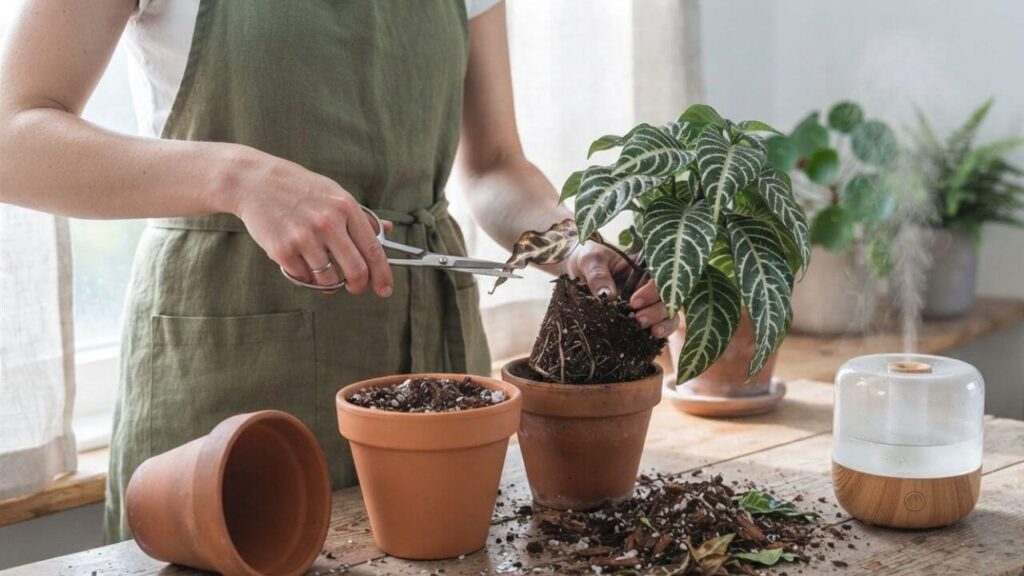
Trim black roots using clean scissors and repot the plant if necessary.
Step 5: Remove Damaged Leaves
Pruning damaged foliage improves appearance and allows the plant to focus energy on healthy growth.
Use clean scissors and avoid removing more than one-third of the foliage at one time.
Tools and Materials That Help
Most zebra plant indoor care problems can be solved using simple tools.
| Tool | Purpose |
| Moisture meter | Check soil moisture |
| Humidifier | Increase humidity |
| Sharp scissors | Remove damaged leaves |
| Well-draining soil | Prevent root problems |
| Pot with drainage holes | Improve airflow |
These small investments can prevent larger problems later.
Common Houseplant Watering Mistakes
Many zebra plant problems come from habits rather than neglect.
Avoid these mistakes:
- Watering on a schedule.
- Using pots without drainage holes.
- Letting the soil dry completely.
- Leaving water in saucers.
- Ignoring seasonal changes.
Plants need less water during winter because growth slows naturally.
Checking the soil remains more reliable than following calendar dates.
Expert Tips for Healthy Zebra Plants
Small adjustments make a major difference.
I recommend rotating the plant every few weeks so growth remains balanced.
Dust the leaves occasionally with a damp cloth to improve light absorption.
Fertilize monthly during spring and summer using a balanced houseplant fertilizer diluted to half strength.
Avoid heavy feeding during winter.
Consistency matters more than perfection with tropical houseplant care.
Preventing Brown Leaves on Zebra Plant
Prevention is easier than recovery.
Follow these habits:
- Maintain humidity above 50%.
- Water when the top inch of soil dries.
- Use bright indirect light.
- Avoid cold drafts.
- Repot every two to three years.
Most zebra plants stay healthy for years once their environment becomes stable.
Frequently Asked Questions
Why are my zebra plant leaves turning brown and crispy?
Crispy leaves usually point to underwatering, low humidity, or excessive sunlight exposure.
Why are zebra plant leaves turning brown and curling?
Curling and browning often indicate dry air, heat stress, or lack of water.
How often should I water a zebra plant?
Water when the top inch of soil feels dry. Frequency changes with season, temperature, and humidity levels.
Can brown zebra plant leaves turn green again?
No. Damaged areas remain brown. Focus on correcting conditions so new growth stays healthy.
What humidity does a zebra plant need?
Zebra plant humidity requirements range from 60% to 70%, which is higher than most homes provide naturally.
Conclusion
Zebra plant leaves turning brown rarely happen without a reason. Brown tips, crispy edges, and dark spots each provide clues about what your plant needs.
Start by checking humidity, soil moisture, and lighting conditions. Most zebra plants recover quickly once their environment improves. Correcting small issues early prevents larger problems and keeps those striking striped leaves looking their best.
Last Updated on July 31, 2026 by Saad Abdullah

I enjoy sharing simple gardening ideas, lawn care tips, and honest product reviews that help make outdoor work easier. From home gardening guides to helpful tools and lawn care advice, I write easy-to-follow content to help readers create a healthier and better-looking outdoor space without wasting time or money.