As an Amazon Associate, I earn from qualifying purchases.
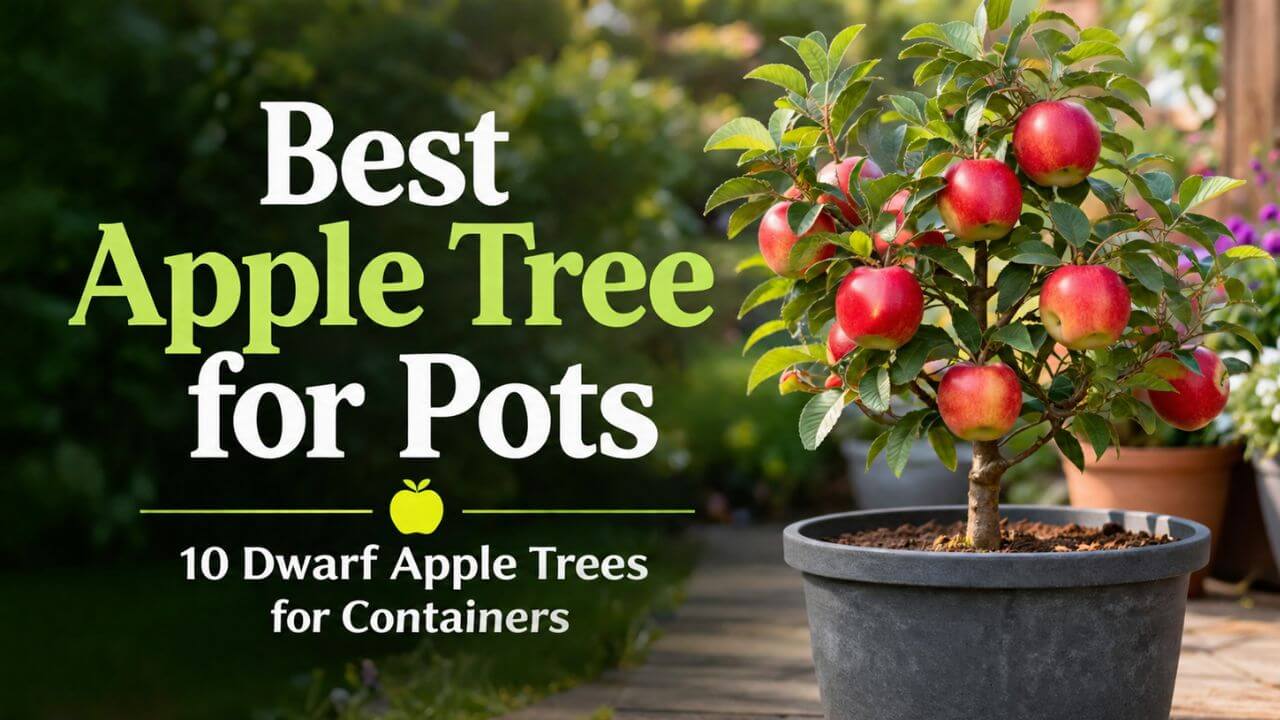
The best apple tree for pots is a dwarf, grafted variety that fits your climate and container size. Choose a self-fertile type when possible and provide full sun, good drainage, regular water, and annual pruning.
Growing an apple tree in a container can turn a sunny patio, balcony, or small yard into a productive fruit garden. The best apple tree for pots is usually a dwarf tree on a suitable rootstock, not a full-size orchard tree. With the right variety, container, and care, you can enjoy fresh apples even when garden space is limited.
What Is the Best Apple Tree for Pots?
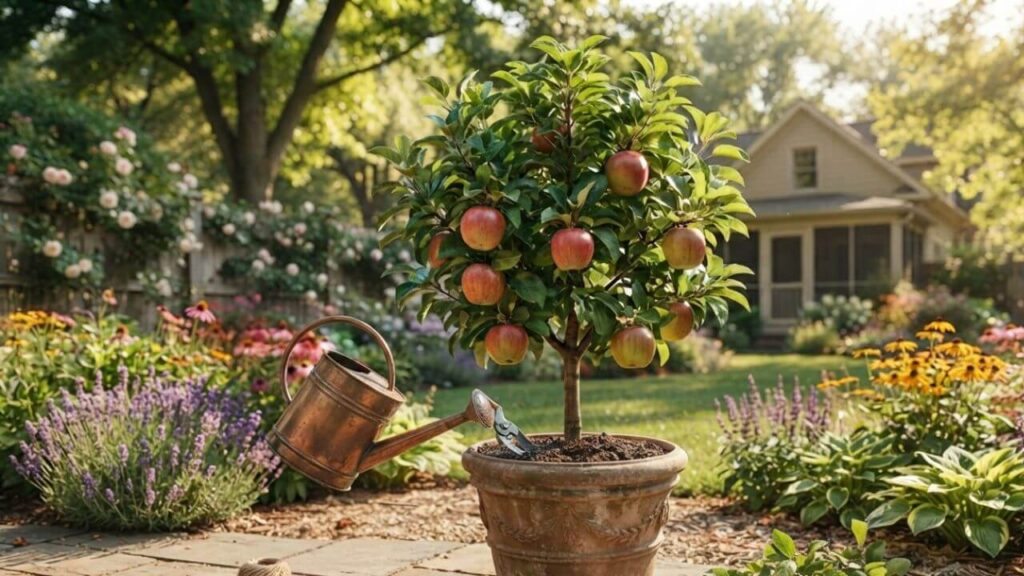
The best apple trees for containers stay compact, produce reliable fruit, and adapt well to restricted root space. Look for dwarf or naturally compact varieties grafted onto dwarfing rootstocks. The exact choice also depends on your USDA hardiness zone, winter temperatures, available sunlight, and whether another apple tree grows nearby.
For most home gardeners, I recommend choosing a tree that reaches about 6 to 10 feet at maturity or can be maintained at that size with pruning. A smaller tree is much easier to water, feed, protect, and harvest than a vigorous tree that quickly outgrows its pot.
Here are some popular options to consider:
| Apple variety | Why it works in containers | Pollination |
|---|---|---|
| Honeycrisp | Excellent flavor and cold tolerance | Needs a compatible partner |
| Gala | Sweet fruit and productive | Benefits from a partner |
| Fuji | Sweet, crisp apples | Needs a compatible partner |
| Granny Smith | Tart fruit and good storage | Needs a compatible partner |
| Pink Lady | Crisp, sweet-tart fruit | Needs a compatible partner |
| Golden Delicious | Good flavor and useful pollinator | Partially self-fertile |
| Braeburn | Firm, flavorful fruit | Needs a compatible partner |
| Cox’s Orange Pippin | Rich flavor in suitable climates | Needs a compatible partner |
| Anna | Useful for mild-winter regions | Partially self-fertile |
| Dorsett Golden | Good choice for warm-winter areas | Partially self-fertile |
The variety name alone does not tell you whether a tree will work well in a pot. Rootstock matters just as much. A dwarf apple tree grafted onto a dwarfing rootstock is generally a better choice for container growing than the same variety on a vigorous rootstock.
10 Best Apple Trees for Containers
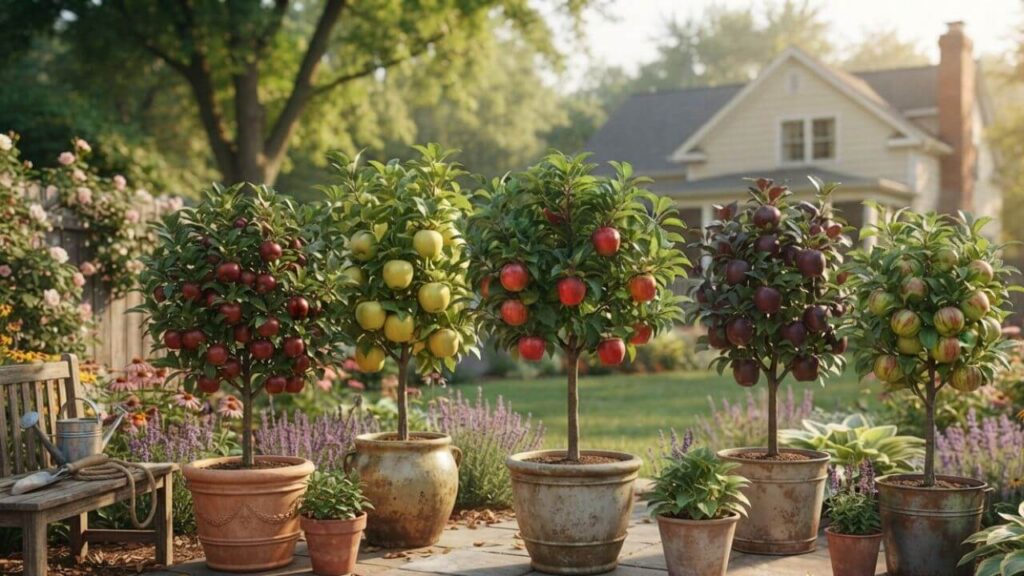
Choosing among apple tree varieties for containers can feel confusing because nursery listings may use the same variety with different rootstocks. Your local climate should guide the final decision, but these varieties are worth considering.
1. Honeycrisp
Honeycrisp is a popular choice for gardeners who want crisp, sweet fruit. It also handles cold winters well, making it useful for many northern U.S. gardens. However, it needs a suitable pollination partner for a reliable crop.
For container growing, choose a dwarf grafted Honeycrisp tree rather than a standard tree. The fruit can be heavy, so keep the tree well supported and prune it to maintain a balanced canopy.
2. Gala
Gala produces sweet, aromatic apples that are popular for fresh eating. It can be a good option for a sunny patio or small garden when grown on dwarf rootstock.
One advantage is its relatively manageable size when properly grafted and pruned. If you have limited space, check the nursery label carefully. A dwarf Gala is far more suitable for pots than a standard Gala tree.
3. Fuji
Fuji apples are known for their sweet flavor and crisp texture. They can be a strong choice for home gardeners who want an apple that stores well.
A dwarf Fuji can grow in a large container, but pollination deserves attention. If your tree is not self-fertile, plant another compatible apple nearby or place your container close to an existing flowering apple tree.
4. Granny Smith
Granny Smith is famous for its firm, tart apples. It can be a useful choice if you enjoy eating fresh apples with a sharp flavor or using them for baking.
This variety needs a long growing season to develop properly, so it is better suited to warmer areas. In cooler climates, the fruit may not mature fully before cold weather arrives.
5. Pink Lady
Pink Lady apples have a crisp texture and a balanced sweet-tart flavor. A dwarf tree can work well as one of the small apple trees for pots, especially when grown in a large container.
However, this variety has a relatively long growing season. Gardeners in areas with short summers should check local recommendations before planting.
6. Golden Delicious
Golden Delicious is a versatile apple that can also help with pollination in an apple collection. Its sweet fruit works well for fresh eating, cooking, and baking.
For a small garden, look for a dwarf grafted tree. It can be an excellent option when you want one tree that offers both useful fruit and good pollination potential for compatible varieties.
7. Braeburn
Braeburn produces crisp apples with a sweet and slightly tart flavor. It performs best where the growing season is long enough for fruit to mature properly.
A dwarf Braeburn can work in a container, but it may need more careful pruning than naturally compact varieties. Make sure the pot receives plenty of direct sunlight.
8. Anna
Anna is one of the more interesting choices for gardeners in mild-winter regions. It requires less winter chilling than many traditional northern apple varieties.
This makes it worth considering in parts of the South and other warm climates. It can also pair well with other low-chill varieties, depending on local growing conditions.
9. Dorsett Golden
Dorsett Golden is another low-chill apple that suits warmer regions. It produces sweet, crisp fruit and is frequently considered alongside Anna for warm-climate home orchards.
A dwarf Dorsett Golden can make a practical apple tree for a small garden. Check local nursery recommendations to confirm that your winter temperatures and flowering times are suitable.
10. Cox’s Orange Pippin
Cox’s Orange Pippin is valued for its rich, complex flavor. It can be challenging in some U.S. climates, especially areas with hot summers or conditions that do not match its preferred growing environment.
I would treat this as a specialty choice rather than a universal recommendation. If you live in a suitable region and can provide excellent care, a dwarf tree can make an interesting container specimen.
How to Choose the Best Apple Tree for Container Growing
The right tree depends on more than fruit flavor. Before buying a container apple tree, consider its mature size, rootstock, chill requirement, pollination needs, and expected harvest time.
Choose a True Dwarf Rootstock
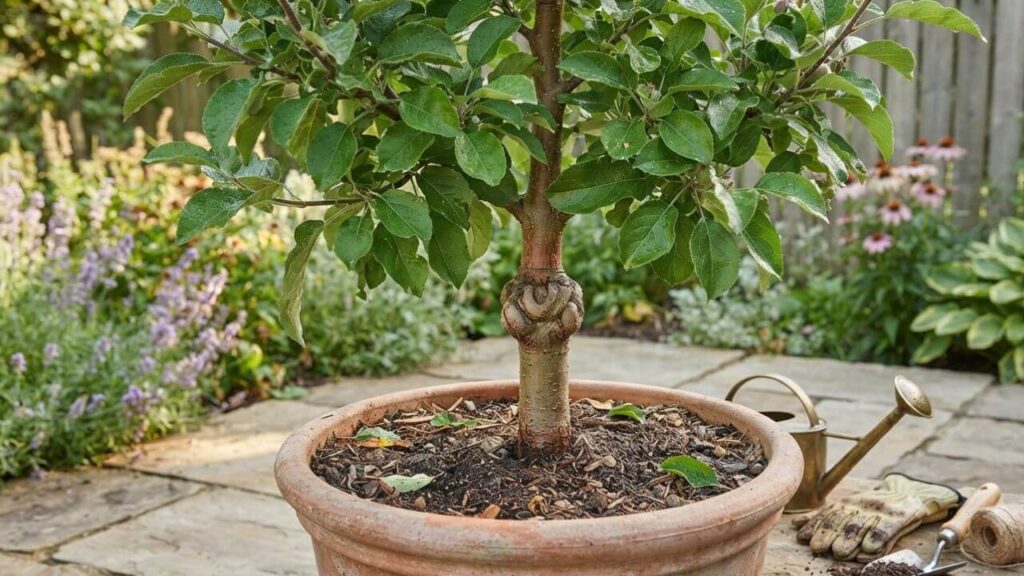
Rootstock controls much of an apple tree’s final size and vigor. A dwarf tree on suitable rootstock stays smaller and is easier to manage in a container.
Do not assume that a variety labeled “dwarf” will remain tiny. Ask the nursery about the specific rootstock and expected mature height. This is one of the most important questions to ask before buying.
Match the Tree to Your Climate
Apple trees need winter chilling, but the amount varies by variety. Northern varieties may struggle to flower properly in areas with mild winters. Low-chill varieties may perform better in parts of the South.
Your USDA hardiness zone helps determine winter survival, but it does not tell the whole story. Chill hours and summer heat also matter. Check recommendations from your local extension service or reputable nursery before making a final choice.
Check Pollination Requirements
Some apple trees are self-fertile to a degree, while others produce better crops with another compatible apple nearby. Even self-fertile varieties can benefit from cross-pollination.
If you have room for two pots, growing compatible varieties that bloom at the same time can improve fruit production. If you only want one tree, look for a variety described as self-fertile or partially self-fertile.
Can You Grow an Apple Tree in a Container?
Yes, you can grow an apple tree in a container if you choose the right tree and provide enough root space. Growing apple trees in containers works best with dwarf grafted trees because their root systems and canopy size are easier to manage.
The biggest challenge is that containers dry out faster than garden soil. Roots also have less insulation from summer heat and winter cold. This means container trees need more attention than apple trees planted directly in the ground.
A common beginner mistake is choosing a small pot because the tree looks small at the nursery. The tree will grow, and the roots need room to support healthy leaves and fruit. Starting with a suitable large container saves you from repeated transplanting.
Best Pot Size for Apple Trees
The best pot size for apple trees depends on the tree’s rootstock and current size. For a young dwarf apple tree, a container around 15 to 20 gallons can provide a useful starting point. Mature dwarf trees may need a larger container, often around 20 to 30 gallons or more.
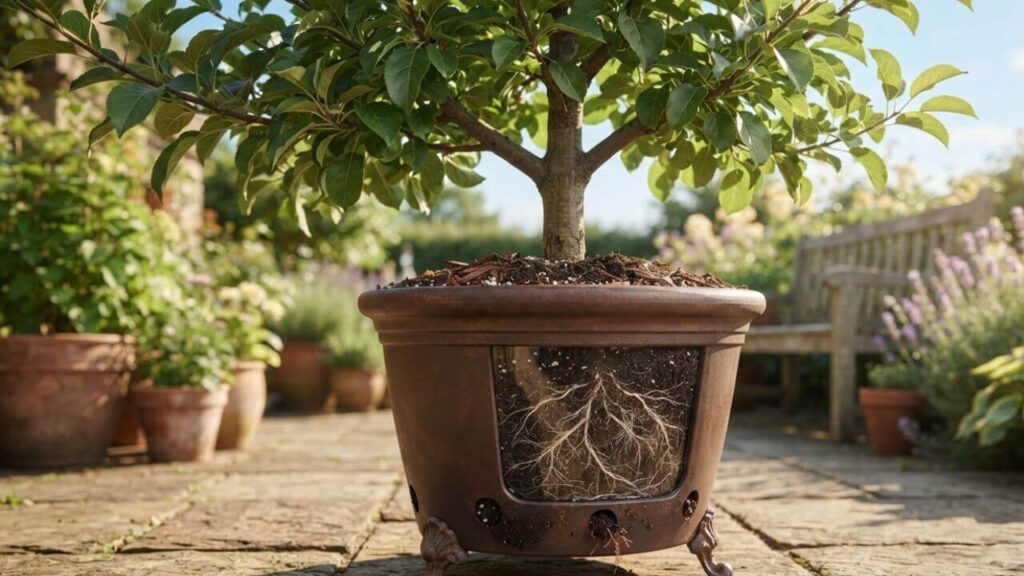
Choose a heavy, stable container with several drainage holes. A lightweight plastic pot may be easy to move, but it can become unstable as the tree grows.
Avoid placing the pot directly on a surface where drainage holes become blocked. Pot feet or a raised stand can improve drainage and reduce waterlogging after heavy rain.
Best Soil for Apple Trees in Pots
Good soil for apple trees in pots should drain freely while holding enough moisture for steady growth. Do not fill a container with heavy garden soil. It can become compacted and restrict drainage.
Use a quality commercial potting mix designed for containers. A mix containing materials such as pine bark, coco coir, or perlite can provide a useful balance of drainage and moisture retention.
Keep the graft union above the soil line. Never bury the swollen graft area where the chosen apple variety joins the rootstock. Burying the graft can cause unwanted roots to develop from the upper variety.
How to Grow Apple Trees in Pots Successfully
How to grow apple trees in pots comes down to five basics: sunlight, water, nutrition, pruning, and pollination. Get these right, and a container-grown tree can remain healthy for many years.
Give the Tree Full Sun
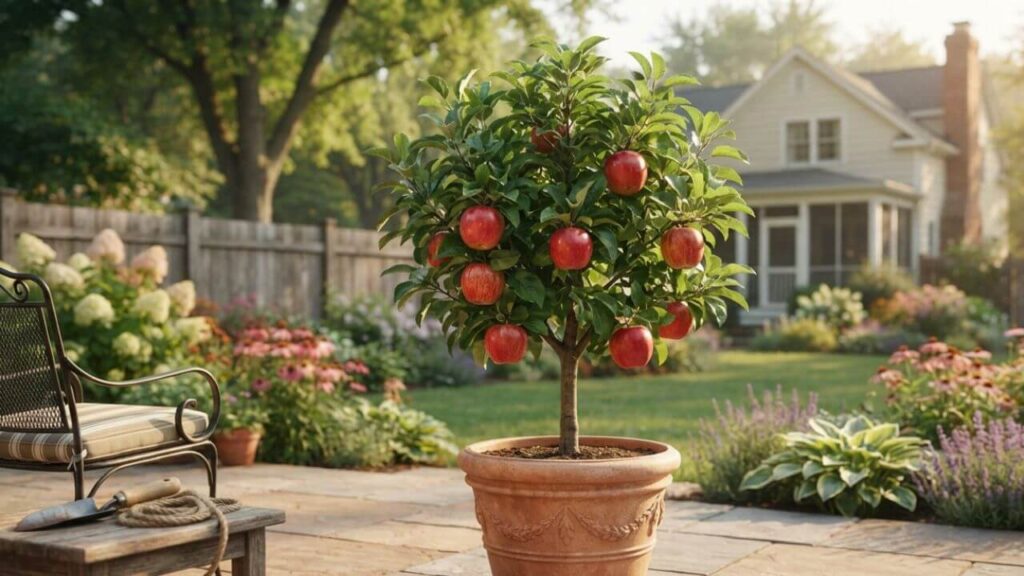
Place your apple tree in a pot where it receives at least six hours of direct sunlight each day. More sunlight can support stronger growth and better fruit development.
A south-facing or west-facing location may provide strong light, but watch for excessive heat in hot climates. Container roots can become much hotter than roots in the ground. During extreme summer weather, protect the pot from reflected heat without shading the canopy too much.
Water Deeply and Consistently
Watering apple trees in containers requires regular attention, especially during hot or windy weather. Check the top layer of potting mix with your finger rather than watering on a fixed schedule.
Water thoroughly until excess water drains from the bottom. Then allow the upper layer of soil to dry slightly before watering again. Never let the container remain in standing water.
If you are wondering how often to water apple trees in pots, the answer depends on weather, pot size, tree size, and soil mix. A small pot in summer may need water every day, while a larger pot in mild weather may need water less frequently.
Feed the Tree Carefully
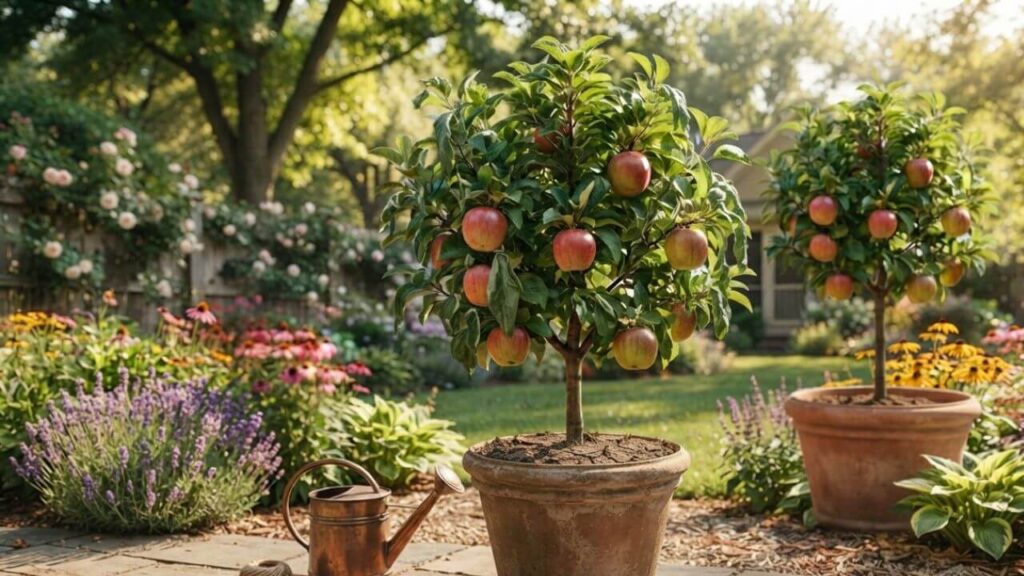
Container trees have limited access to nutrients. A balanced, slow-release fertilizer can help support healthy growth when applied according to the product label.
Avoid excessive nitrogen. Too much nitrogen can encourage leafy growth at the expense of fruit production and may create soft, overly vigorous growth. Follow the fertilizer instructions and adjust feeding based on the tree’s health and growth.
Prune for Shape and Fruit
Pruning apple trees in pots helps control size and maintain a strong structure. Remove dead, damaged, or crossing branches first.
Prune young trees with the goal of creating an open, balanced canopy. Remove overly vigorous shoots that compete with the main structure. Avoid severe pruning that removes too much of the tree at once.
Container trees benefit from regular maintenance pruning because you want to control both canopy size and root-to-shoot balance.
Common Problems With Potted Apple Trees
Container-grown apples face a few problems that gardeners may not expect. Understanding them early can prevent major setbacks.
Root Drying
A container can dry out quickly during summer heat. This is especially true on balconies, rooftops, and patios exposed to wind.
Check moisture regularly during hot weather. Mulching the surface with a thin layer of organic material can help reduce evaporation, but keep mulch away from the trunk.
Poor Pollination
A healthy tree may flower without producing many apples. Poor pollination is one possible reason.
If your variety needs a pollination partner, place two compatible apple trees close enough for pollinators to move between them. Flowering time matters more than simply choosing two different varieties.
Overcrowded Roots
A tree that stays in the same pot for years may eventually become root-bound. Signs can include slow growth, frequent wilting, or roots circling densely inside the container.
Repot during the tree’s dormant season when practical. Move it into a slightly larger container rather than jumping to an extremely oversized pot.
Excessive Fruit
A young dwarf tree may set more fruit than its branches can support. Heavy crops can stress a small tree and produce smaller apples.
Thinning some developing fruit can improve the remaining crop. It also reduces the risk of branches bending under excessive weight.
Winter Care for Potted Apple Trees
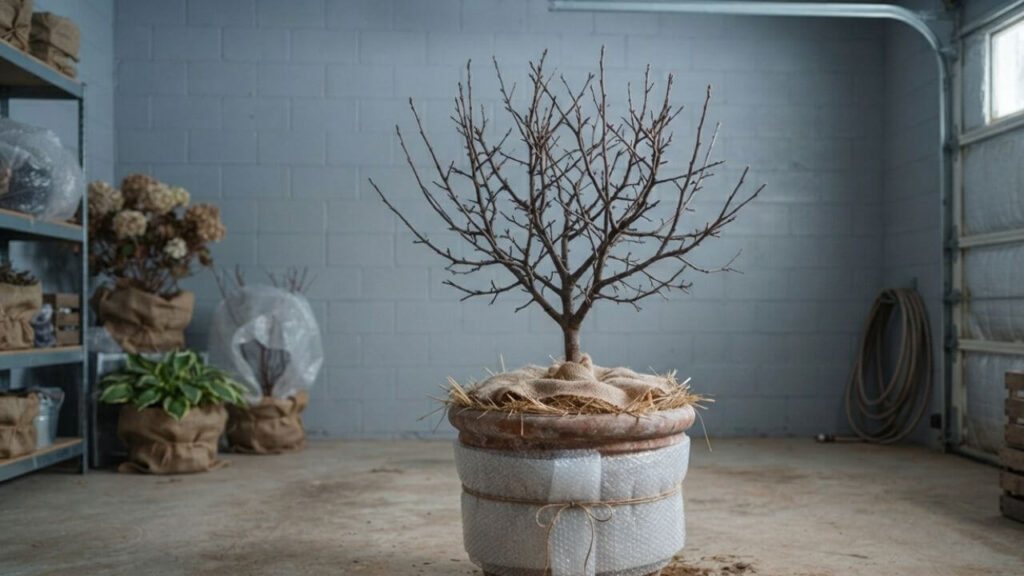
Winter care for potted apple trees is especially important in cold climates. Container roots have less protection than roots planted in the ground.
In colder USDA zones, consider moving the container to an unheated garage or another protected location after the tree enters dormancy. The goal is to protect the roots from extreme cold while still allowing the tree to experience its needed winter chilling.
Do not move a dormant tree into a warm indoor room for the entire winter. Warm temperatures can interrupt dormancy and cause premature growth.
In milder climates, you may be able to leave the tree outdoors. Protect the container from harsh wind and extreme temperature swings when possible.
Myths and Mistakes to Avoid
One common myth is that any apple tree can grow happily in any pot. In reality, a vigorous tree in a small container will struggle with root space, water management, and long-term stability.
Another mistake is choosing a variety based only on the name of the apple. A Honeycrisp, Gala, or Fuji may be excellent fruit varieties, but the rootstock and local climate determine whether the tree makes a good container plant.
I also recommend avoiding very small decorative pots. They may look attractive at first, but they dry out quickly and provide little room for root development. For long-term success, prioritize drainage, stability, and adequate volume over appearance.
Best Apple Tree for a Patio or Balcony
For apple trees for patios and apple trees for balconies, compact size and container stability matter most. Choose a dwarf tree that fits your available space and can handle the amount of direct sun your location receives.
Balconies also create extra challenges. Wind can dry the tree quickly and may make a tall container unstable. Use a heavy pot and place the tree in a sheltered position without blocking essential sunlight.
If space is extremely limited, choose one compact dwarf tree and focus on excellent care. If you have more room, two compatible dwarf trees can improve pollination and give you a longer harvest window.
Frequently Asked Questions
Do apple trees grow well in pots?
Yes. Dwarf apple trees can grow well in pots when they receive enough sunlight, water, nutrients, and root space. Container trees need more frequent monitoring than trees planted in the ground.
Can you grow an apple tree in a container?
Yes. Choose a dwarf grafted variety and use a large container with good drainage. The tree will need regular pruning to maintain a manageable size.
What is the best apple tree for pots?
The best choice depends on your climate and pollination needs. Dwarf Honeycrisp, Gala, Fuji, Golden Delicious, Anna, and Dorsett Golden can be good options in suitable regions.
What is the best pot size for an apple tree?
A 15- to 20-gallon container can work for many young dwarf apple trees. Mature trees may need 20 to 30 gallons or more, depending on rootstock and growth.
How big do dwarf apple trees get?
Dwarf apple trees can reach different sizes depending on rootstock and pruning. Many container-grown dwarf trees can be maintained around 6 to 10 feet, but always check the nursery’s expected mature size.
Do apple trees in pots need two trees?
Not always. Some varieties are self-fertile or partially self-fertile, but many produce better crops with a compatible pollination partner. Check the specific variety before buying.
Conclusion
The best apple tree for pots is a dwarf, grafted variety that matches your climate, available sunlight, and pollination needs. Honeycrisp, Gala, Fuji, Golden Delicious, Anna, and Dorsett Golden are worth considering, but the best choice depends on your location and rootstock.
Start with a stable 15- to 20-gallon container for a young dwarf tree, use a well-draining potting mix, and provide at least six hours of direct sun. Keep the soil consistently moist without leaving the roots waterlogged, feed according to the label, and prune to control size.
Before buying, check three things: the rootstock, the chill requirement, and the pollination needs. Those details will help you choose an apple tree that has a much better chance of thriving in your pot for years to come.

I enjoy sharing simple gardening ideas, lawn care tips, and honest product reviews that help make outdoor work easier. From home gardening guides to helpful tools and lawn care advice, I write easy-to-follow content to help readers create a healthier and better-looking outdoor space without wasting time or money.