As an Amazon Associate, I earn from qualifying purchases.
The best fake plants for outdoor planters are UV-resistant artificial boxwood, grasses, ferns, trailing vines, and seasonal flowers. Choose realistic leaves, colors that suit your home, and materials made for outdoor exposure. A good arrangement also needs a stable pot, secure stems, and regular cleaning.
Across the United States, outdoor planters help dress up front porches, apartment balconies, patios, and entryways. Yet hot summers, cold winters, travel, and busy workdays can make live plants hard to maintain. Artificial plants offer a way to keep a planter looking full without watering, feeding, or pruning it.
The best choice depends on where the planter sits. A sunny porch in Arizona faces a different challenge from a shaded entry in Oregon or a windy balcony in New York. UV exposure, rain, wind, temperature changes, and the distance from the viewer all affect which fake plants look good and how long they last.
A realistic display starts with the right plant shape, not the biggest bundle or the lowest price. Look for varied leaf sizes, natural color changes, flexible stems, and a finish suited to outdoor use. Also check whether the seller gives clear guidance on UV resistance and weather exposure, because the word artificial alone does not mean a plant can stay outdoors all year.
What Makes the Best Fake Plants for Outdoor Planters?
The best outdoor fake plants combine realistic looks with materials suited to their location. A plant that looks convincing in a covered entry may fade quickly in direct summer sun if it was made for indoor display. Before choosing a style, check the product description for outdoor use, UV protection, and any temperature or care limits.
Artificial foliage often uses plastic, polyester fabric, or a mix of materials. Plastic leaves can hold a firm shape, while fabric leaves may have a softer look. Neither material is automatically better outdoors. The quality of the finish, color treatment, construction, and protection from sunlight matters more than the material name alone.
Think about how the planter will look from the sidewalk, a nearby chair, or an upper-floor window. Large leaves and simple forms often look convincing from a distance. Up close, natural color variation, leaf veins, and well-made stems become more noticeable.
Source: m.media-amazon.com
UV resistance
Choose a product specifically made for outdoor use in sunlight. Ask whether UV protection applies to the leaves, flowers, and stems, and whether the maker provides care or warranty details.
Natural color and texture
Look for several shades of green, believable leaf edges, and subtle variation. A single shiny shade across every leaf can make a planter look artificial.
Weather suitability
Check guidance for rain, frost, heat, and wind. UV resistance does not prove that every part of a plant can handle freezing weather or standing water.
Secure construction
Stems should fit firmly into the base or planter insert. Loose joints can come apart when wind moves the foliage or when the arrangement is lifted for cleaning.
Why UV Resistance Matters
Sunlight can break down pigments and polymers over time. This may cause artificial leaves to fade, lose flexibility, or become brittle. A product labeled for outdoor use with UV protection is a better starting point for a sunny planter than an indoor decorative stem.
No UV-resistant product should be assumed to last forever. Exposure depends on the intensity of the sun, local climate, the number of hours outdoors, and the plant’s construction. A covered porch can help reduce direct exposure, while an open south-facing patio may need more frequent inspection.
For full sun
Favor outdoor-rated plants with clear UV-protection details and avoid relying on fabric flowers designed only for indoor use.
For covered porches
You may have more flexibility with foliage and flowers because the roof can limit direct sun and rain, though wind and reflected heat still matter.
Best Types of Fake Plants for Outdoor Planters
Several plant types work well in outdoor containers because their natural forms create clear structure. Boxwood gives a neat, formal look, grasses add height and movement, ferns fill shaded spaces, and trailing vines soften the edges of a pot. Artificial flowers add color when green foliage alone feels too plain.
Rather than filling every gap with the same plant, combine two or three forms. A tall center plant, medium foliage around it, and trailing stems at the rim can make a simple arrangement look layered. The same method works with a large porch urn, a rectangular window box, or a small balcony pot.
Source: m.media-amazon.com
Artificial boxwood
Best for formal entryways, symmetrical porch pots, and clean modern designs. Its dense shape can look tidy year-round, but tightly packed leaves may collect dust and reveal a repetitive pattern when viewed closely.
Artificial ornamental grasses
Best for tall planters, contemporary patios, and arrangements that need height. Select stems with varied blades and a natural mix of green or green and tan. Very thin blades may tangle in wind.
Artificial ferns
Best for shaded or covered porches, woodland-style displays, and containers with a soft, full shape. Their layered fronds can hide gaps between stems, but dense foliage needs occasional dust removal.
Trailing artificial vines
Best for railing planters, window boxes, and pots with visible rims. Trailing stems soften hard edges, though they should be secured so wind does not whip them against walls or railings.
Artificial flowers
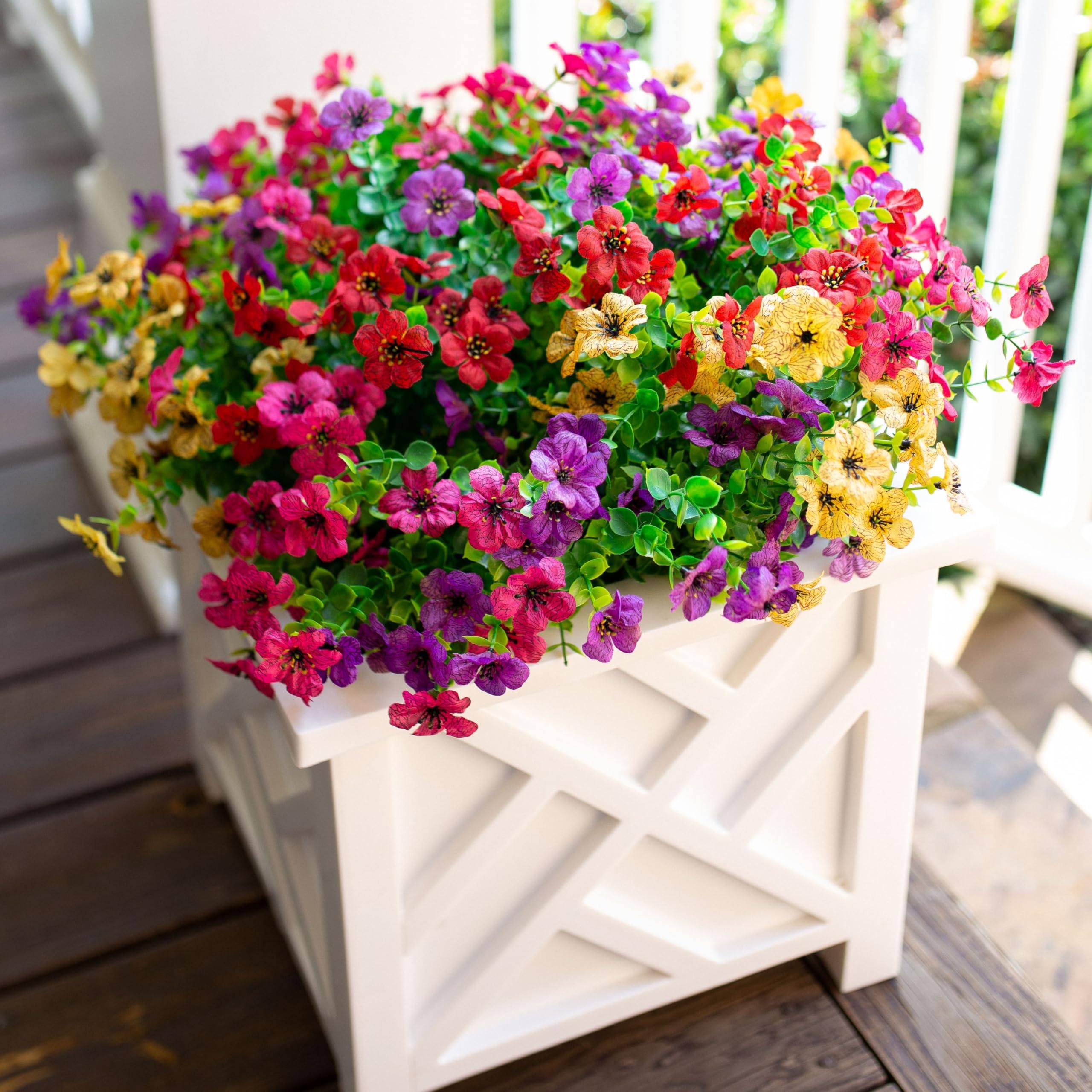
Best for bright entryways and seasonal color. Choose flower heads with natural variation and avoid placing delicate fabric blooms in exposed locations unless they are specifically made for outdoor use.
Artificial succulents
Best for small modern containers, dry-climate-inspired designs, and compact patio displays. Their bold shapes work well in close groupings, but an overly uniform color can make them look less lifelike.
Best Choices for Sunny Porches
For a sunny porch, start with outdoor-rated boxwood, firm-leaf greenery, or artificial grasses with documented UV protection. These shapes usually hold a clear outline and can look convincing without a large number of flower heads. If you want color, add a smaller cluster of outdoor-rated flowers rather than making every stem bright and glossy.
Dark containers can become hot in direct sunlight, and metal pots may heat up as well. Although artificial plants do not have roots to damage, intense heat can still affect the materials and any adhesive or foam used to hold the stems. Follow the maker’s limits and move the arrangement to shade if it shows signs of damage.
Simple design
Pair one upright plant form with a lower layer of foliage for a neat entryway arrangement.
Color choice
Use green foliage as the base, then add a restrained accent such as white, pink, or purple flowers.
Best Choices for Shady and Covered Areas
Ferns, broad-leaf greenery, and trailing vines suit shaded entries because their layered shapes fill the planter without relying on strong flower color. A mix of light and dark green leaves helps the arrangement stand out against a dark door or shaded wall.
Shade does not remove every outdoor risk. Wind-driven rain, moisture, dust, and cold can still affect the display. Use outdoor-suitable materials even when the planter sits under a roof.
For a soft look
Combine fern fronds with trailing vines and a few broad leaves.
For a neat look
Use compact boxwood or rounded foliage in a matching pair of containers.
How to Choose Fake Plants for Your Climate
Your local weather should guide the plant material, pot, and placement. The same artificial arrangement may hold up differently in the dry heat of the Southwest, the humid Southeast, the rainy Pacific Northwest, or a northern region with harsh winter conditions. Consider the actual exposure at your home rather than relying on a broad climate label alone.
Sun, moisture, wind, and temperature can affect different parts of an arrangement in different ways. Leaves may fade in sunlight, stems may loosen in gusts, and water trapped in a decorative pot may affect inserts or fasteners. A suitable plant still needs a stable setup and routine checks.
Source: m.media-amazon.com
Hot, sunny regions
Choose UV-protected plants intended for outdoor use. Check for heat-related limits, especially when the planter sits against a wall that reflects afternoon sun.
Humid and rainy regions
Choose foliage that can be cleaned and dried easily. Avoid arrangements that trap large amounts of water around metal parts, foam inserts, or glued joints.
Cold and snowy regions
Check the maker’s cold-weather guidance. Remove or store delicate arrangements before severe freezes if the product is not rated for those conditions.
Windy locations
Choose compact foliage or flexible stems, use a heavy or anchored container, and secure the arrangement so tall plants do not act like a sail.
Can Fake Plants Stay Outside All Year?
Some artificial plants are made for year-round outdoor display, but others are intended for seasonal decoration or sheltered use. Read the specific product instructions before leaving an arrangement outside through summer heat, winter freezes, or heavy storms.
A practical option is to use a durable base of outdoor-rated greenery and swap the accent flowers when the season changes. This keeps the main arrangement in place while limiting the time delicate decorative pieces spend in harsh weather.
Check the product details
Look for explicit outdoor-use instructions, UV protection information, temperature limits, and any storage advice.
Inspect after severe weather
Check for bent stems, loose inserts, fading, cracks, or water trapped in the pot.
How to Make Fake Outdoor Planters Look Real
The most convincing artificial planters use varied shapes, restrained color, and a layout that follows the way plants grow. A pot filled with identical stems in a flat row can look like a display shelf. A layered arrangement with different heights and some open space looks more natural.
Start with the planter itself. A substantial ceramic-style pot, a textured resin container, or a simple metal planter can provide a convincing base. The container should suit the home’s style and remain stable in the expected wind. The plants do not need to look expensive if the pot and arrangement are well balanced.
Source: i.pinimg.com
Use a Thriller, Filler, and Spiller Layout
A useful design method is to choose a thriller, a filler, and a spiller. The thriller is the tallest feature, the filler creates fullness in the middle, and the spiller trails over the rim. These are design roles, not specific plant species, so artificial grasses, boxwood, ferns, and vines can all fit depending on their shape.
For example, place artificial ornamental grass near the center, add medium-height greenery around the base, and tuck trailing vines along the front edge. In a broad planter, repeat a small group of stems rather than placing a single tall plant in the middle of a wide empty space.
Thriller
Use a tall grass, upright leafy stem, or compact artificial shrub to establish height.
Filler
Use medium foliage or flower clusters to cover gaps and create a fuller center.
Spiller
Use trailing vines or hanging foliage to soften the rim and connect the arrangement to the container.
Mix Leaf Shapes and Green Shades
Natural plants rarely have identical leaves in the same position. Mix broad leaves with narrow blades or fern-like fronds to break up repeated patterns. Two or three related green shades often look more natural than a single bright green across the entire pot.
Avoid forcing too many plant types into a small container. A limited palette gives the eye a clear shape to follow and helps the arrangement look intentional. If you use flowers, repeat their color in small groups instead of scattering every color evenly.
Vary the heights
Place the tallest stems toward the back or center, then step down toward the front and sides.
Hide the base
Use foliage, a fitted insert, or suitable decorative top dressing to cover visible stem ends and gaps.
Keep colors balanced
Choose a dominant green and one or two accent colors instead of mixing many unrelated shades.
How to Set Up an Artificial Outdoor Planter
A well-built planter keeps the display upright and hides the parts that make it look artificial. Before arranging the stems, check the container’s size, weight, drainage, and exposure to wind. A tall arrangement in a light empty pot may tip even if the plants themselves are lightweight.
You do not need to fill the whole container with decorative material. A fitted insert or a stable base can support the arrangement while keeping the visible top neat. Use materials that suit the pot and will not create a problem if rain enters the container.
Source: blesserhouse.com
Step 1: Choose a Stable Container
Choose a pot that fits the scale of the entryway or patio and has enough weight or anchoring to remain steady. Wide containers tend to provide a more stable base than narrow, tall ones, though the final result depends on the pot’s weight, shape, and exposure.
If you use a decorative outer pot, consider how rainwater will escape. Do not leave water sitting in a sealed container where it can damage inserts, collect debris, or freeze during cold weather.
Large porch pots
Use a stable base and a broad arrangement that does not become top-heavy.
Small balcony pots
Keep the display compact and check that both the container and any railing attachment are secure.
Step 2: Add a Support Base
Place a fitted planter insert, suitable support block, or other stable material in the container as needed. The goal is to hold stems at the right height and keep the display from shifting. Do not assume loose potting soil is the best support for every artificial arrangement, especially if the planter will be moved often.
Keep support materials away from drainage openings and avoid using a material that absorbs water if it may remain wet. If the pot is exposed to wind, add weight low in the container rather than placing all the weight near the top.
Secure the stems
Arrange stems firmly in the insert or support base, then test for movement with a gentle hand check.
Hide the mechanics
Cover visible support material with foliage or suitable decorative top dressing, while leaving any needed drainage path clear.
Step 3: Arrange from Tallest to Shortest
Set the tallest stems first, then add medium foliage and trailing pieces. Turn the planter as you work so the arrangement looks balanced from the angles people will see most often. For a planter against a wall, the back can be taller and fuller; for a freestanding pot, make the shape attractive from all sides.
Step back several feet and look for bare gaps, repeated patterns, or a lopsided outline. Adjust a few stems rather than adding more plants automatically. A clear silhouette often looks more realistic than a crowded arrangement.
Check the front view
Make sure the pot has a clear focal point and that the tallest stems do not hide all the middle foliage.
Check the side view
Look for empty spaces and stems that lean too far away from the container.
Compare Fake Plants by Planter Size and Use
The right artificial plant depends on the container’s dimensions and the view around it. A tall porch urn can support an upright focal point, while a shallow window box usually looks better with compact foliage and trailing stems. Matching the plant’s shape to the pot helps avoid an arrangement that appears too small, too dense, or unstable.
Use the table below as a starting point rather than a strict rule. Actual stem length, pot depth, wind exposure, and the look of the selected product will affect the final arrangement.
Source: i.pinimg.com
Quick Comparison by Outdoor Setting
Choose the overall form before deciding how many stems to buy. If a product is sold in a bundle, check the dimensions and number of usable stems rather than judging the listing image alone. Product photos can make small plants look much larger than they will appear in a real container.
Front porch or entryway
Use boxwood, upright grasses, or broad-leaf greenery in a substantial pot. Matching pairs work well on either side of a door.
Patio seating area
Use layered greenery with a few flowers or trailing vines. Keep the height low enough that the display does not block the view across the seating area.
Window box
Use compact foliage and trailing stems. Distribute plants along the length of the box so the arrangement looks balanced from the street.
Apartment balcony
Use a compact, lightweight arrangement that can be secured safely. Check the balcony’s rules before attaching anything to railings.
Outdoor dining area
Use low, tidy greenery that does not crowd the table or obstruct conversation. Avoid delicate flowers where people may brush against them often.
Common Mistakes When Buying Fake Outdoor Plants
The biggest mistake is buying for appearance alone. A plant may look lush in a product photo but be too small for the pot, too delicate for the weather, or made for indoor use. Check dimensions, construction, and outdoor-use details before choosing a bundle.
Another common problem is using too many identical stems. Repeated leaf shapes can become obvious when every branch faces the same way. A few well-chosen types often create a more convincing result than a large collection of unrelated flowers and foliage.
Source: i.pinimg.com
Assuming all artificial plants are weatherproof
Outdoor suitability varies. Check the maker’s instructions for sunlight, rain, cold, and storage rather than treating one label as proof of complete weather protection.
Ignoring the actual dimensions
Check the height and width of the whole plant, not just the flower head or pot shown in a listing. Compare these measurements with your container before ordering.
Choosing glossy, uniform foliage
Excess shine and identical leaves can look artificial. Look for texture, varied tones, and natural-looking shapes.
Leaving the stems loose
Unsecured stems may shift or fall out in wind. Test the arrangement before leaving it outdoors.
Using indoor flowers in full sun
Fabric petals and unprotected plastic can fade or deteriorate. Select flowers made for outdoor display if they will receive direct sunlight.
Overfilling the pot
Too much foliage can make the arrangement look crowded and increase wind resistance. Leave room for each plant form to show.
How to Judge Product Claims
Read claims carefully. UV-resistant describes protection against sunlight-related damage, while waterproof usually refers to resistance to water under stated conditions. Neither term alone guarantees that a plant will survive every storm, freeze, or long period of outdoor exposure.
If the listing does not explain its outdoor rating, temperature limits, or warranty, treat long-term durability as uncertain. Customer photos may help you assess appearance and scale, but they cannot prove how the product will perform in your climate over several seasons.
Look for clear specifications
Check the intended use, dimensions, materials, care instructions, and any limits on sun or temperature exposure.
Check replacement options
For an expensive display, consider whether individual stems can be replaced instead of buying a whole new arrangement.
How to Clean and Maintain Artificial Outdoor Plants
Artificial plants need less care than living plants, but they are not maintenance-free. Dust, pollen, rain marks, bird droppings, and outdoor grime can collect on leaves and stems. A light cleaning now and then helps preserve their appearance and makes it easier to spot damage before it spreads.
Use the gentlest cleaning method that suits the material. Follow the manufacturer’s instructions first, especially for fabric flowers, painted details, glued parts, or products with a stated UV coating. Avoid harsh solvents and abrasive tools that could strip color or damage the surface.
Source: m.media-amazon.com
A Simple Cleaning Routine
Start by removing loose dust with a soft brush or a gentle shake. If the product instructions permit water, rinse lightly or wipe the leaves with a damp cloth. Let the arrangement dry fully before returning it to a container where moisture could collect.
For a stubborn mark, test a mild cleaning method on a hidden area first. Do not use bleach, strong detergents, or pressure washing unless the maker specifically approves them. High-pressure water can bend stems, separate joints, or force moisture into parts that are not designed to hold it.
Remove dust
Use a soft brush or cloth to clear leaves, flower heads, and stem joints without pulling on delicate parts.
Clean gently
Use water only when the product permits it, and avoid soaking glued or fabric components.
Dry completely
Allow water to drain and the foliage to dry before storing or reassembling the arrangement.
Check for damage
Look for fading, cracks, brittle leaves, loose stems, and corrosion on any metal components.
When to Replace Outdoor Fake Plants
Replace a plant when its leaves become badly faded, crack under light handling, or lose enough pieces that the arrangement no longer looks full. A loose stem may be repairable if the base can be secured, but widespread brittleness is a sign that the material has deteriorated.
You can often refresh a planter without replacing everything. Keep the main foliage if it still looks good, then replace a few damaged flowers or trailing stems. This approach also lets you update the color scheme for a new season without rebuilding the entire display.
Repair when practical
Reposition loose stems or replace a damaged piece if the remaining arrangement is sound and the repair method suits the materials.
Replace damaged materials
Do not keep brittle or broken stems in a windy location where pieces could detach and become litter.
Are Fake Outdoor Plants Worth the Cost?
Artificial plants can be a practical choice when regular watering and plant care are difficult, but the best value depends on the purchase price, exposure, and how often the arrangement needs replacing. A cheap indoor bundle may cost less at first yet fade quickly in full sun. A more durable outdoor-rated arrangement may be a better fit if it stays attractive longer, although actual lifespan varies by product and conditions.
Compare the whole setup, not just the price per stem. A planter may need a weighted base, an insert, and a few different plant types to look full. A bundle with many small pieces may not cover a large pot as well as a smaller set of taller, wider plants.
A Simple Cost Comparison
You can compare options by estimating the cost over the period you expect to use them. For example, if an artificial arrangement costs $60 and remains suitable for three years, its simple purchase cost averages $20 per year. This is a hypothetical calculation, not a claim about how long any specific plant will last.
A fair comparison with living plants would also include pots, soil, water, fertilizer, replacements, and the value of your time. Live plants provide growth and seasonal change, while artificial plants keep a more fixed appearance. The right choice depends on whether you value low upkeep, natural growth, or both.
Compare complete arrangements
Include the container, support materials, plant bundles, and any replacement stems in the total cost.
Consider the setting
A sheltered porch may let an arrangement stay attractive longer than an exposed, sunny, or windy location.
Allow for seasonal changes
If you like changing colors throughout the year, choose a durable base and replace only the accent pieces.
A Practical Buying Checklist
Before ordering fake plants for an outdoor planter, check that the plant shape suits the container and that the product is intended for the conditions where you will use it. Product photos are useful for judging style, but specifications are more useful for checking scale and care limits.
A short checklist can prevent common buying mistakes and help you build an arrangement that looks balanced from the start.
Confirm outdoor use
Look for clear wording about outdoor placement and UV protection rather than relying on a general artificial-plant label.
Measure the container
Record the pot’s width, depth, and height. Compare these with the plant’s full dimensions and stem length.
Match the plant to the exposure
Consider direct sun, reflected heat, rain, wind, frost, and whether the planter is under a roof.
Choose a clear design
Select a focal plant, supporting foliage, and optional trailing stems instead of mixing many unrelated shapes.
Plan for stability
Choose a suitable container and a way to secure the stems, especially for tall arrangements or balconies.
Review cleaning instructions
Check whether the plant can be wiped, rinsed, or stored outdoors and whether any parts need special care.
Frequently Asked Questions
Q
What are the most realistic fake plants for outdoor planters?
Boxwood, ornamental grasses, ferns, and mixed green foliage can look realistic when the leaves have varied shapes, natural color changes, and a suitable finish. The most convincing choice depends on viewing distance and light. Look closely at leaf edges and repeated patterns before buying, and choose an outdoor-rated product for exposed locations.
Q
Do fake outdoor plants fade in direct sunlight?
They can. Sunlight may fade pigments and weaken some materials over time. UV-resistant plants made for outdoor use are a better choice for sunny locations, but their protection and expected performance vary by product. Follow the maker’s instructions and inspect the leaves regularly.
Q
Can I put artificial plants in a planter with real soil?
Yes, in some setups, but real soil is not always the easiest way to secure artificial stems. Soil can become wet, compact, or messy, and it may not hold stems firmly in a windy location. A fitted insert or stable support base may work better. Keep drainage paths clear and follow the plant maker’s care guidance.
Q
How do I stop fake plants from blowing out of a pot?
Use a stable container, add weight low in the pot, and secure stems in a fitted insert or other suitable base. Keep tall stems from becoming overly wide or loose, since dense foliage can catch the wind. For balconies and other exposed locations, check local building or property rules before attaching planters to railings.
Q
Should I bring artificial plants inside during winter?
That depends on the product and local conditions. Outdoor-rated plants may tolerate normal seasonal weather, while delicate fabric flowers or products without cold-weather guidance may need sheltered storage. Check the maker’s temperature limits, remove the display before severe weather if needed, and store it dry to reduce damage.
Q
How often should I clean fake plants outside?
Clean them when dust, pollen, or grime becomes visible rather than following a rigid schedule. Planters near roads, construction, or trees may need more frequent cleaning than those in sheltered spots. Use a soft brush or damp cloth when allowed by the maker, and let the plants dry fully after cleaning.
Q
Are UV-resistant artificial plants waterproof?
Not necessarily. UV resistance refers to protection against sunlight-related damage, while water resistance concerns exposure to moisture. A plant may have one feature without the other. Check the product details for rain exposure, drainage, temperature limits, and cleaning instructions before leaving it outside year-round.
✦ Wrapping Up
Conclusion
The best fake plants for outdoor planters are the ones that suit your climate, container, and style while offering the right level of outdoor protection. UV-resistant boxwood, ornamental grasses, ferns, trailing vines, and artificial flowers can all work well when their materials match the setting. No single type is best for every porch or patio.
For a natural look, build the arrangement in layers, vary the foliage, and keep the color palette simple. Secure the stems, use a stable pot, and clean the display as needed. These small choices can make artificial greenery look more convincing and help you avoid replacing it too soon.
💡 Key Takeaway
Measure your planter, check its sun and wind exposure, and choose outdoor-rated plants with clear UV and weather guidance. Start with one focal plant, add varied greenery, and finish with a few trailing stems for a balanced display.
I enjoy sharing simple gardening ideas, lawn care tips, and honest product reviews that help make outdoor work easier. From home gardening guides to helpful tools and lawn care advice, I write easy-to-follow content to help readers create a healthier and better-looking outdoor space without wasting time or money.