As an Amazon Associate, I earn from qualifying purchases.
The best fertilizer for hydrangeas in containers is usually a balanced, slow-release fertilizer or a complete liquid fertilizer made for flowering plants. Choose a product suited to your potting mix, follow its label, and feed during active growth rather than late fall or winter.
Across the United States, potted hydrangeas brighten front porches, patios, decks, and small gardens. In warm Southern states, containers can dry fast in summer heat. In cooler parts of the country, the same plants may need shelter from winter cold. Good feeding helps support healthy leaves, strong stems, and flower growth, but the right fertilizer is only one part of good care.
Container hydrangeas have less soil to draw nutrients from than hydrangeas planted in the ground. Each watering can carry some nutrients out through the drainage holes. Yet adding more fertilizer is not always the answer. Too much can damage roots, cause brown leaf edges, and encourage leafy growth at the expense of flowers.
The best approach is simple: start with a suitable potting mix, choose a complete fertilizer, and feed at the rate and time listed on its label. Check moisture, light, drainage, and soil conditions before adding extra nutrients. These steps help you avoid guesswork and give your hydrangea a better chance to thrive.
What Is the Best Fertilizer for Hydrangeas in Containers?
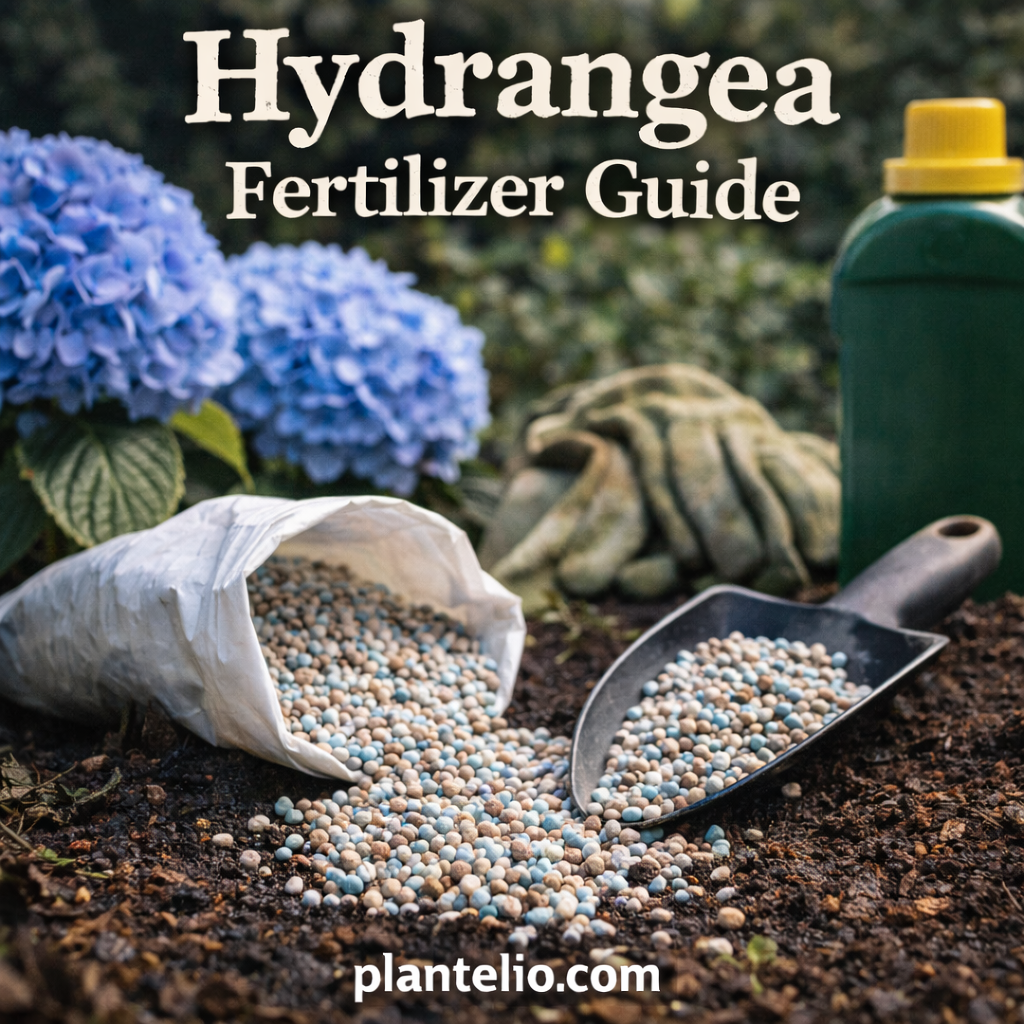
For most potted hydrangeas, a balanced, complete fertilizer is the best place to start. Look for a product that supplies nitrogen, phosphorus, and potassium, along with any needed secondary nutrients or micronutrients. A general-purpose fertilizer for flowering plants can work well when its label lists hydrangeas or other suitable container plants.
The three numbers on a fertilizer label show the percentages of nitrogen, phosphate, and potash, in that order. For example, a 10-10-10 fertilizer contains 10% nitrogen, 10% phosphate, and 10% potash by weight. These numbers describe nutrient content, not the amount you should apply to a particular pot.
There is no single fertilizer ratio that works best for every hydrangea. The right choice depends on the potting mix, plant size, growth stage, watering routine, and whether the plant shows signs of a nutrient shortage. A healthy plant in fresh, fertilized potting mix may need little or no extra food at first.
Source: i.pinimg.com
Best all-purpose option
A complete, balanced fertilizer labeled for flowering shrubs or container plants is a practical choice for most healthy potted hydrangeas.
Best for easy maintenance
A controlled-release fertilizer can supply nutrients over an extended period, reducing the need for frequent feeding. Its release rate depends on the product and growing conditions.
Best for flexible feeding
A liquid fertilizer allows you to adjust feeding intervals and stop easily when the plant is stressed or entering dormancy.
Best for a diagnosed deficiency
A targeted nutrient product may help when a deficiency is confirmed. Avoid adding iron, magnesium, or other supplements without a clear reason.
Is a balanced fertilizer better than a bloom booster?
A balanced fertilizer is often the safer starting point because hydrangeas need healthy roots, stems, and leaves as well as flowers. A bloom booster usually contains more phosphorus than nitrogen or potassium. That extra phosphorus is not automatically helpful, and repeated use can cause phosphorus to build up in the potting mix.
Hydrangeas need adequate nutrients, but flower production also depends on the variety, age of the plant, light, pruning, water, and winter conditions. If a hydrangea has healthy leaves but produces few flowers, adding more phosphorus may not solve the problem.
Choose balance first
Use a complete fertilizer at the labeled rate unless a soil or plant assessment points to a specific nutrient need.
Avoid excess phosphorus
Do not keep applying high-phosphorus products just because the plant has few blooms.
Should you use organic or synthetic fertilizer?
Both organic and synthetic fertilizers can support container hydrangeas. Synthetic products often provide nutrients in measured amounts and may act quickly or slowly, depending on their formulation. Organic products can release nutrients as soil organisms break them down, but their speed and availability depend on moisture, temperature, and the ingredients used.
Organic does not mean harmless in any amount. Too much compost, manure-based fertilizer, or concentrated organic feed can still create excess salts or nutrient imbalances. In a pot, use products designed for containers and avoid heavy additions that make the mix dense or hold too much water.
Organic option
A labeled organic fertilizer for container flowers can suit gardeners who prefer organic inputs.
Synthetic option
A measured, complete fertilizer can be useful when you want a clear nutrient analysis and predictable application instructions.
Slow-Release vs. Liquid Fertilizer for Potted Hydrangeas
Slow-release and liquid fertilizers can both work well, but they suit different routines. Slow-release granules are useful if you want fewer feeding sessions. Liquid fertilizer is helpful when you prefer to give smaller, measured feeds throughout the growing season.
A container has a limited supply of potting mix, so watering and feeding need to work together. Fertilizer that remains in the pot for too long can build up if the plant uses little of it or if salts are not washed out. On the other hand, frequent watering can carry soluble nutrients out of the drainage holes.
Choose one main feeding plan and monitor the plant. Combining full-strength liquid feed with slow-release granules can result in excess nutrients unless both labels clearly support that approach.
Source: herbvity.com
Slow-release granules
Best for gardeners who want less frequent feeding. Use only the amount listed for the container size and expected duration.
Liquid fertilizer
Best for gardeners who want to adjust the schedule as growth changes. Measure carefully and dilute according to the label.
Water-soluble powder
A useful alternative to liquid concentrate when the label gives clear instructions for mixing and container plants.
How often should you fertilize container hydrangeas?
The feeding interval depends on the fertilizer, not just the plant. Some controlled-release products are designed to feed for several months, while liquid products may call for more frequent applications. Always use the interval and dose on the specific label rather than following a schedule intended for a different formula.
A practical starting point is to begin feeding when new growth appears in spring, provided the potting mix does not already contain enough fertilizer. Continue only while the plant is actively growing and the product directions allow it. Reduce or stop feeding as growth slows near the end of the growing season.
Spring
Check whether fresh potting mix already contains fertilizer. Begin feeding only when the plant and product directions call for it.
Early summer
Continue the chosen plan if the hydrangea is growing well and the label allows further feeding.
Late summer and fall
Avoid pushing new, tender growth late in the season. Follow regional growing conditions and the fertilizer label.
Winter
Do not routinely fertilize dormant or barely growing hydrangeas.
Can you use both types together?
You usually do not need both a slow-release product and a regular liquid feed. Each can supply the nutrients a hydrangea needs, and using both at full rates may overfeed the plant. If you want to change products, check how long the first product remains active before starting the second.
If you suspect a deficiency, first check watering, root health, and the potting mix. A plant with damaged roots may not absorb nutrients well, even when the pot contains plenty of fertilizer.
Keep a simple record
Write down the product, dose, and application date so you can avoid accidental repeat feeding.
Watch the leaves
Very dark, soft growth or brown leaf edges can signal a problem, though water stress and other causes can produce similar symptoms.
When Is the Best Time to Fertilize Hydrangeas in Pots?
Spring is usually the best time to begin fertilizing a healthy container hydrangea because new leaves and shoots signal active growth. The exact timing varies across the United States. A hydrangea in a mild Southern climate may start growing earlier than one in a cold Northern region.
Do not use the calendar alone. Look for new growth, check the fertilizer already present in the potting mix, and consider whether the plant is newly purchased or recently repotted. Many commercial potting mixes contain a starter charge of nutrients, so adding more right away may be unnecessary.
Stop routine feeding when the plant is no longer growing actively or when the product label says to stop. Late feeding can encourage tender growth that may not harden before cold weather. Hydrangeas also need time to settle into their natural seasonal cycle.
Source: soul-sanctuaries.com
Newly purchased plants
Check the nursery label and potting mix details before adding fertilizer. The plant may already have enough nutrients.
Recently repotted plants
If the new mix contains starter fertilizer, wait until the label indicates feeding should resume.
Established plants
Start in spring when active growth begins and follow the chosen fertilizer’s instructions.
Dormant plants
Wait until active growth returns rather than feeding a plant that is resting.
Should you fertilize hydrangeas while they are blooming?
A blooming hydrangea does not always need extra fertilizer. If the plant has healthy leaves, normal growth, and a suitable feeding plan, adding more food during bloom may not improve the flowers. Too much nitrogen can favor leafy growth and may disrupt the balance between leaves and blooms.
If the plant is due for another application under the label, continue only as directed. Do not double the dose to make flowers larger or to extend the bloom period. Flower size and duration depend on variety, light, moisture, temperature, and the plant’s overall health.
Healthy and blooming
Keep to the existing schedule instead of adding extra feed.
Wilting during a hot afternoon
Check moisture and heat exposure first. Fertilizer will not fix a plant that needs water or root relief from heat.
How to Fertilize Hydrangeas in Containers Step by Step
The safest way to fertilize a potted hydrangea is to check the plant first, choose a suitable product, measure the dose, and water as directed. This approach reduces the risk of salt buildup and helps you spot problems that fertilizer cannot fix.
Before you begin, gather the fertilizer label, a measuring spoon or cup suitable for the stated dose, and clean water. Keep the product away from children and pets, and avoid mixing products unless the labels specifically permit it.
Source: storage.googleapis.com
Step 1: Check the plant
Look at new growth, leaf color, soil moisture, and drainage. Do not feed a plant that is severely wilted, waterlogged, or showing signs of root damage.
Step 2: Read the potting mix label
Find out whether the mix contains starter fertilizer or slow-release nutrients. This can change when the first feeding is needed.
Step 3: Choose one fertilizer
Use a complete product suitable for flowering plants or hydrangeas in containers. Avoid combining multiple feeds without checking their instructions.
Step 4: Measure the dose
Base the amount on the container size and the product label. Do not estimate by eye or use a garden-bed rate for a pot.
Step 5: Apply as directed
Apply granules evenly to the potting mix without piling them against stems. Dilute liquid fertilizer exactly as instructed.
Step 6: Water correctly
Follow the product directions for watering after application. Make sure excess water can drain freely from the pot.
Step 7: Record and monitor
Note the date and dose. Watch new growth over the next few weeks rather than repeating the application because the plant has not changed overnight.
How much fertilizer does one pot need?
There is no safe universal dose for all container hydrangeas. A small pot, a large patio tub, and a concentrated fertilizer all require different calculations. Use the label’s container directions and never assume that twice as much fertilizer will produce twice as many flowers.
For example, if a label directs you to use a stated amount for a specific pot diameter, follow that rate for a pot of the matching size. If your container falls between sizes, use the manufacturer’s guidance rather than guessing. Do not convert a lawn or garden-bed application rate into a container dose without clear instructions.
Small containers
Measure carefully because a small dosing error can create a large change in the amount of fertilizer per unit of potting mix.
Large containers
Use the labeled rate for the pot or growing medium, not the plant’s height alone.
Concentrated liquid feeds
Use the specified dilution and measure both the concentrate and water accurately.
How can you tell the feeding plan is working?
Success usually appears as steady new growth, leaves with normal color for the variety, and stems that support the plant well. Flowers may follow when the hydrangea reaches the right stage and its light, pruning, and seasonal needs are met.
Do not judge the fertilizer only by flower count. A hydrangea can grow healthy leaves yet fail to bloom because of shade, winter injury, or pruning at the wrong time. Give the plant time to respond and assess the whole growing environment.
Healthy signs
New growth looks normal, leaves remain firm when moisture is adequate, and the plant grows at a steady pace.
Warning signs
Burned leaf margins, a crust of salts, unusual wilting, or weak growth call for a review of watering, roots, and fertilizer use.
How Potting Mix, Water, and Pot Size Affect Fertilizer
Fertilizer works best when a hydrangea has healthy roots and a suitable growing medium. A container should hold enough moisture to support the plant while allowing extra water to drain. Heavy garden soil often stays too wet in pots and may limit oxygen around the roots.
Use a quality potting mix made for containers rather than filling a pot with ordinary yard soil. Choose a container with drainage holes and enough room for the root system. A pot that is too small can dry quickly, while an oversized pot with a dense mix may stay wet for too long.
Watering affects nutrient availability. Frequent watering can wash soluble nutrients out of the container, but adding more fertilizer to compensate without checking the plant may cause salt buildup. Water according to the plant’s needs, then let excess water drain away.
Source: busyyard.com
Potting mix
Use a well-drained container mix that holds moisture without becoming waterlogged.
Drainage
Keep drainage holes open and never leave the pot standing in a tray full of water for long periods.
Water quality
If leaves repeatedly show signs of nutrient problems despite suitable feeding, consider whether irrigation water or accumulated salts may be affecting the root zone.
Repotting
Refresh old, compacted potting mix when needed. Repotting can solve root and drainage problems that fertilizer cannot correct.
How often should you water after fertilizing?
There is no fixed number of watering days for every hydrangea pot. Weather, pot size, wind, sunlight, and root growth all affect how quickly the mix dries. In hot US summers, a patio container may need much more frequent checks than a pot in a cool, shaded spot.
Check the top layer of the mix and feel deeper when possible. Water thoroughly when the plant needs it, allowing excess water to drain. Do not water on a rigid schedule if the potting mix is still wet, and do not allow the root ball to dry out for long periods.
Hot and windy weather
Check containers more often because leaves and potting mix may lose water quickly.
Cool or rainy weather
Check moisture before watering because the mix may remain wet for longer.
Can fertilizer fix yellow hydrangea leaves?
Yellow leaves can result from several causes, including poor drainage, overwatering, root damage, unsuitable soil conditions, or a nutrient shortage. Yellow leaves with green veins can sometimes point to iron chlorosis, often linked to soil chemistry rather than a lack of iron in the pot itself.
Check whether the yellowing affects old or new leaves, whether the mix stays wet, and whether the plant is growing normally. Avoid adding iron or a general fertilizer without identifying the likely cause. If the problem continues, a suitable soil or growing-medium test can help guide treatment.
Yellow older leaves
Review watering, root health, and nitrogen availability before assuming a single cause.
Yellow young leaves with green veins
Check growing-medium pH and root conditions because iron availability may be limited.
Yellow leaves with soggy soil
Improve drainage and correct watering before applying more fertilizer.
Does Fertilizer Change Hydrangea Flower Color?
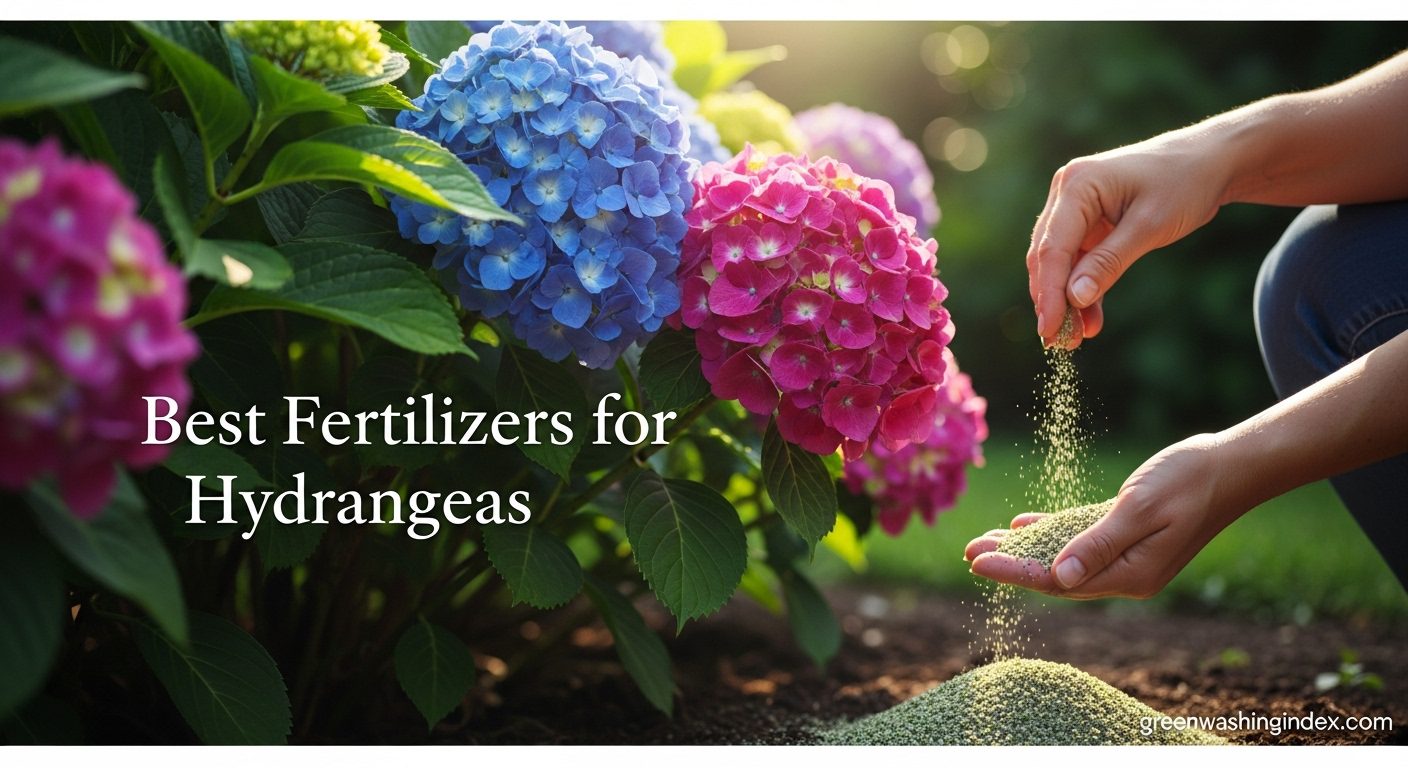
Fertilizer alone does not reliably turn every hydrangea blue or pink. In many bigleaf hydrangeas, flower color depends on the availability of aluminum in the root zone, which is affected by soil or potting-medium chemistry. Acidic conditions can make aluminum more available, while alkaline conditions can reduce its availability.
This effect is most relevant to certain bigleaf hydrangeas, including many mophead and lacecap varieties. White-flowered hydrangeas generally do not turn blue through acidification. Panicle and smooth hydrangeas also do not respond to soil acidity in the same way as color-changing bigleaf types.
If you want blue flowers, first identify the hydrangea variety and check the potting mix. A product labeled for blue hydrangeas may help with a suitable variety, but it must be used according to its instructions. Excessive soil acidification or repeated aluminum applications can damage roots and upset nutrient balance.
Source: greenwashingindex.com
For blue flowers
Confirm that the variety can turn blue, then manage root-zone chemistry with a product specifically labeled for that purpose.
For pink flowers
For a suitable bigleaf hydrangea, conditions that limit aluminum availability can support pink shades. Results depend on the variety and growing medium.
For white flowers
Do not expect a standard fertilizer or pH adjustment to create blue or pink flowers in a naturally white-flowered variety.
Should you use an acid fertilizer for blue hydrangeas?
An acid-forming fertilizer may be useful in some situations, but it is not the same as a dedicated treatment for blue flowers. Fertilizer formulation, the starting pH, the water supply, and the variety all affect the result. A product that supplies nutrients well may not create the root-zone conditions needed for a blue color.
Do not lower pH by adding random household ingredients. Vinegar, coffee grounds, and other home remedies do not provide a reliable, measured method for controlling container pH. Use a product intended for hydrangeas only when the plant type and growing conditions justify it.
Test before adjusting
A suitable pH test can help determine whether the growing medium is too acidic or too alkaline for the intended goal.
Change conditions gradually
Follow the labeled dose and retest as needed rather than making repeated large adjustments.
Common Fertilizing Mistakes to Avoid
The most common mistake is feeding more often because a hydrangea looks weak or fails to bloom. Weak growth does not always mean the plant lacks nutrients. It may have damaged roots, poor drainage, too much shade, insufficient water, or a pruning problem.
Another mistake is applying fertilizer to a dry root ball. Concentrated fertilizer can raise the salt level around roots and make water stress worse. Check the label for the correct application method and make sure the plant has adequate moisture before feeding when the directions call for it.
Do not assume that a product labeled natural, organic, bloom booster, or premium is automatically suitable for every pot. Read the nutrient analysis and directions. A basic, properly used fertilizer often serves a healthy hydrangea better than a stack of special treatments.
Source: i.pinimg.com
Overfertilizing
Too much fertilizer can cause brown leaf edges, root injury, excess salt buildup, and weak or unbalanced growth.
Feeding too late
Late-season feeding can encourage tender growth at a time when many hydrangeas should be slowing down.
Ignoring drainage
A waterlogged pot limits root function and can make nutrient uptake poor even when the growing medium contains fertilizer.
Using lawn fertilizer without checking
Lawn products may have unsuitable rates or added ingredients for container shrubs. Use them only if the label specifically supports the intended use.
Adding several products at once
Combining feeds, soil acidifiers, and nutrient supplements makes it harder to identify the cause of a problem and increases the risk of excess.
Expecting instant blooms
Fertilizer cannot replace the light, pruning, seasonal conditions, and mature growth needed for flowers.
What should you do if you accidentally overfertilize?
Stop adding fertilizer and assess the plant and potting mix. Look for a crust of salts on the soil surface, brown leaf margins, sudden wilting, or roots that appear unhealthy. These signs can have other causes, so consider watering and drainage as well.
If the pot drains freely and the growing medium is not waterlogged, flushing it with clean water may help wash out excess soluble salts. Apply water slowly enough for it to pass through the mix and drain from the bottom. Do not leave the pot sitting in the drained water.
If the mix is badly compacted, the roots are damaged, or the plant keeps declining, consider repotting into fresh, suitable potting mix. Remove severely damaged roots with care, and avoid feeding again until the hydrangea has recovered and active growth resumes.
Stop feeding
Do not add another fertilizer to counteract the first one.
Check drainage
Only flush the pot if water can move through it freely without leaving the roots waterlogged.
Watch recovery
Allow the plant time to recover before resuming a light, label-based feeding plan.
How to Choose the Right Fertilizer for Your Situation
The best choice depends on how you grow your hydrangea and what the plant needs now. A gardener with several large patio pots may prefer slow-release granules, while someone growing one hydrangea in a small container may prefer a liquid product that is easy to measure.
Start by checking the potting mix, the current growth, and the product directions. If the plant is healthy, there is no need to change fertilizers just to chase a different nutrient ratio. If the plant is struggling, diagnose the problem before buying a more specialized feed.
Source: herbvity.com
For a beginner
Choose one complete fertilizer labeled for container flowers and follow the rate exactly.
For several large pots
Consider a suitable slow-release formula if its feeding duration matches your growing season.
For frequent watering
A liquid fertilizer can offer control over feeding, but do not increase the dose simply because water drains from the pot.
For organic gardening
Use a labeled organic container fertilizer and avoid adding large amounts of dense compost to a pot that already drains poorly.
For yellowing or poor growth
Check root health, watering, light, and growing-medium pH before deciding that a nutrient deficiency is responsible.
For blue flowers
Choose a suitable bigleaf hydrangea first. Then manage the root-zone conditions that influence color rather than relying on ordinary fertilizer alone.
A simple decision guide
If the hydrangea is healthy and growing, keep the feeding plan simple. If it is newly repotted in a mix containing fertilizer, wait until feeding is appropriate. If it is wilting or has damaged leaves, check water, drainage, and root health before adding nutrients.
If your main goal is more flowers, review the plant’s light exposure, variety, and pruning history. If your goal is a particular flower color, confirm the variety and growing-medium chemistry. These checks can prevent you from spending money on a fertilizer that cannot solve the real problem.
Healthy plant, normal flowers
Maintain the current label-based feeding schedule.
Healthy leaves, few flowers
Review light, pruning, variety, and seasonal conditions before changing fertilizer.
Brown leaf edges
Check moisture, heat, and salt buildup before feeding again.
Yellow new leaves
Assess root conditions and pH, especially if the veins stay green.
Slow growth after repotting
Allow roots to settle and check moisture and drainage before applying more nutrients.
Frequently Asked Questions
Q
What is the best fertilizer for hydrangeas in containers?
A balanced, complete fertilizer labeled for flowering plants or container shrubs is a good starting point for most healthy potted hydrangeas. Choose between slow-release granules and liquid feed based on your routine, the potting mix, and the product directions. No single nutrient ratio is best for every hydrangea.
Q
Can I use 10-10-10 fertilizer on potted hydrangeas?
A 10-10-10 fertilizer may be suitable if its label permits use on hydrangeas or flowering container plants. The numbers describe the percentages of nitrogen, phosphate, and potash, not the correct dose for every pot. Follow the labeled rate and account for nutrients already present in the potting mix.
Q
How often should I fertilize hydrangeas in pots?
Follow the specific product’s schedule. Slow-release products may feed for months, while liquid fertilizers may require more frequent applications. Begin during active spring growth when additional feeding is needed, and reduce or stop as growth slows. Do not apply extra fertilizer just because a plant looks weak.
Q
Is Miracle-Gro suitable for potted hydrangeas?
Some general-purpose or flowering-plant fertilizers sold under the Miracle-Gro name may be suitable for container hydrangeas. The range includes different formulas, so check the exact product label rather than assuming they all work the same way. Use only the labeled dose and avoid stacking products that supply the same nutrients.
Q
Can coffee grounds fertilize hydrangeas in pots?
Coffee grounds are not a reliable stand-alone fertilizer for container hydrangeas. Their nutrient contribution varies, and adding too much directly to a pot can affect the surface of the mix and its water movement. A measured fertilizer with a stated nutrient analysis gives you better control.
Q
Does Epsom salt help hydrangeas grow better?
Epsom salt supplies magnesium and sulfur, but it is not a complete fertilizer. It is useful only when the plant needs those nutrients. Applying it without evidence of a deficiency can add unnecessary salts to a container, so check the likely cause of poor growth first.
Q
Why does my potted hydrangea have green leaves but no flowers?
A lack of flowers does not always mean the plant needs more fertilizer. Too much shade, pruning at the wrong time, winter injury, young plant age, or a variety that flowers on particular types of wood can explain the problem. Check the hydrangea type and its growing conditions before increasing the feed.
Q
Should I fertilize hydrangeas in winter?
Most dormant or barely growing hydrangeas do not need routine fertilizer in winter. Wait for active growth to resume in spring, unless a specific growing situation and product label indicate otherwise. In colder parts of the United States, protect container roots from severe cold because fertilizer cannot prevent winter damage.
Q
Can too much fertilizer stop hydrangeas from blooming?
Excess fertilizer can harm roots, cause leaf burn, and encourage soft leafy growth. It may contribute to poor flowering, but shade, pruning, winter injury, and variety also matter. Stop feeding if you suspect excess and review the plant’s care before applying more.
Q
Can I use tomato fertilizer on container hydrangeas?
Some tomato fertilizers may supply nutrients that hydrangeas can use, but tomato formulas differ in nutrient ratios and concentration. Check the label to confirm the product is appropriate for ornamental container plants. A complete fertilizer specifically labeled for flowering plants is often the simpler option.
✦ Wrapping Up
Conclusion
The best fertilizer for hydrangeas in containers is one that supplies the nutrients your plant needs without creating excess salts or unbalanced growth. For many potted hydrangeas, a complete, balanced fertilizer is a sensible starting point. Slow-release granules suit gardeners who want fewer applications, while liquid fertilizer gives more control over the feeding schedule.
Feed during active growth, check whether the potting mix already contains nutrients, and follow the product label. Keep the roots healthy with a suitable container, free drainage, and steady moisture. If the leaves turn yellow, the edges become brown, or flowers fail to appear, check growing conditions before assuming that more fertilizer will help.
Remember that a strong hydrangea grows from a balance of good roots, suitable light, proper watering, and careful feeding. You do not need a shelf full of special products to grow a healthy plant. Start with one suitable fertilizer, use it with care, and adjust only when the plant or growing conditions give you a clear reason.
💡 Key Takeaway
Check your hydrangea’s potting mix and current growth today. If it needs feeding, choose one complete fertilizer labeled for container flowering plants, measure the dose carefully, and follow the product’s seasonal schedule. If the plant is stressed, correct the cause before adding nutrients.
I enjoy sharing simple gardening ideas, lawn care tips, and honest product reviews that help make outdoor work easier. From home gardening guides to helpful tools and lawn care advice, I write easy-to-follow content to help readers create a healthier and better-looking outdoor space without wasting time or money.