As an Amazon Associate, I earn from qualifying purchases.
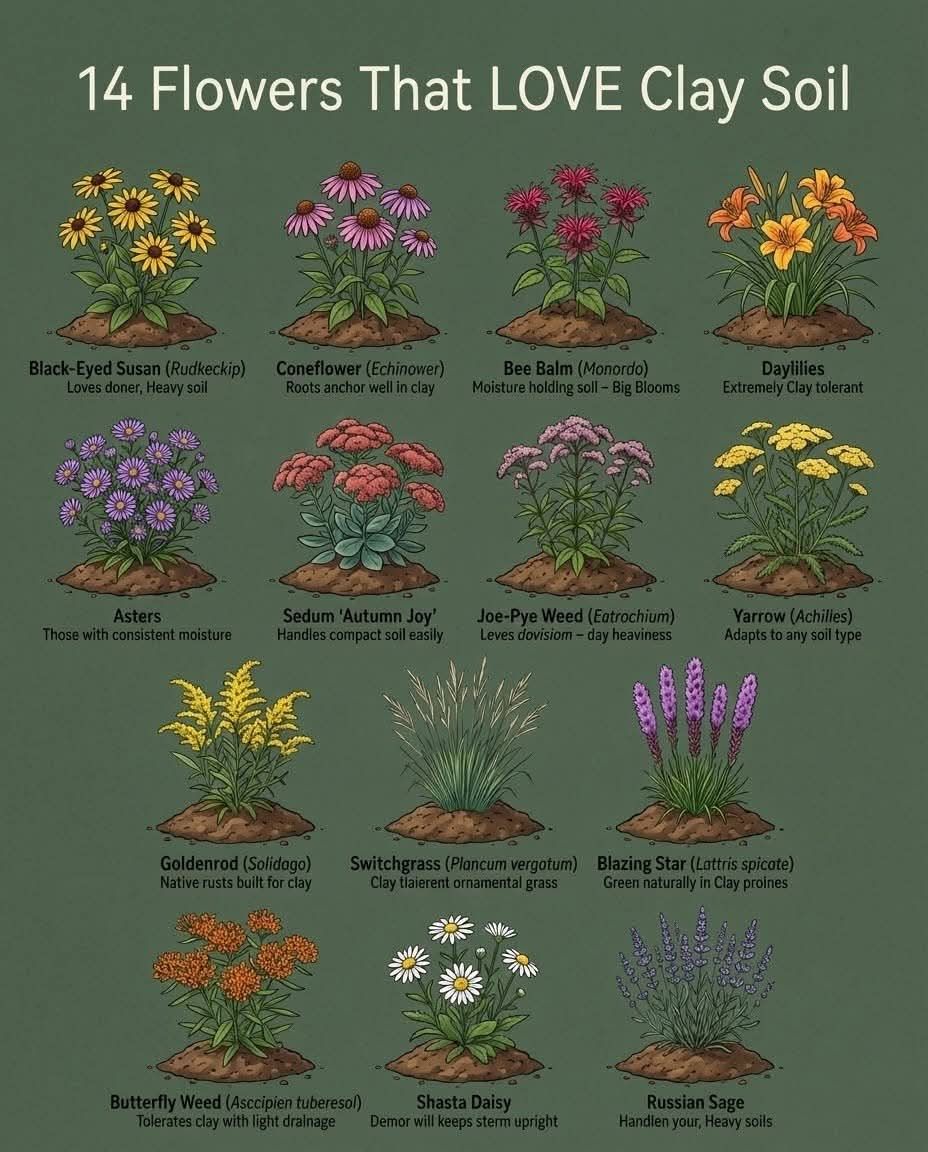
The best flowers for heavy clay soil include coneflowers, black-eyed Susans, daylilies, bee balm, asters, Joe Pye weed, and hardy geraniums. These plants can grow well in clay when sunlight, drainage, and moisture match their needs.
Across the United States, heavy clay soil is common in many yards, from parts of the Midwest and Great Plains to the Southeast and sections of the Northeast. This soil can make gardening feel like hard work. It may turn sticky after summer storms, then crack and harden during dry spells. Yet clay soil can support a beautiful flower garden when you choose plants that suit its texture and moisture levels.
Clay has very small mineral particles that fit closely together. This helps it hold water and nutrients, but it can also slow drainage and limit the air available to roots. The best flowers for heavy clay soil are not simply plants that tolerate wet ground. They are plants that can handle your site’s actual mix of moisture, sunlight, soil structure, and seasonal weather.
For many American home gardens, coneflowers, black-eyed Susans, daylilies, and hardy geraniums are useful starting points. Gardeners with moist areas can also consider bee balm, cardinal flower, and Joe Pye weed. Before planting, check how long water stays in the bed, choose varieties suited to your USDA hardiness zone, and improve the soil structure without trying to turn the entire garden into loose sand.
Heavy clay soil contains a high proportion of fine mineral particles. These particles create small spaces that can hold water for a long time. When the soil is compacted, air and water move through it even more slowly, making it harder for roots to get the oxygen they need.
Clay also has useful qualities. It can retain nutrients, hold moisture during dry weather, and support long-lived plants once roots become established. A clay garden is not automatically a poor garden. The main task is to select suitable plants and correct the conditions that cause the most trouble.
The term clay tolerant can also be misleading. A plant may grow well in moist, fertile clay but fail in a low spot that stays underwater for days. Another plant may tolerate clay that dries between rainstorms but struggle in saturated soil. Drainage and soil structure matter as much as texture.
Source: i.pinimg.com
Slow drainage
Water may remain around roots after rain. Plants that need dry conditions between watering can suffer from root damage or rot.
Compaction
Foot traffic and heavy equipment can press wet clay into dense layers. Roots then have less room to spread.
Hard soil during dry weather
Clay can become hard when dry, making it difficult for young roots to establish and for gardeners to dig planting holes.
Good nutrient retention
Clay often holds many plant nutrients well. A soil test can show whether your garden needs fertilizer or a change in pH.
How to Tell Whether Your Clay Soil Is Too Wet
Look at the garden after a normal rain. If puddles remain long after nearby areas have drained, the bed may have poor drainage or a compacted layer. Gray soil, a sour smell, and roots that look dark or mushy can also point to prolonged saturation.
A simple check is to dig a small hole when the soil is moist but not saturated. Watch how the soil feels and how water moves through it. This does not replace a formal drainage assessment, but it can help you decide whether moisture-loving flowers or a raised bed would be more suitable.
If the soil stays moist but does not flood
Consider daylilies, hardy geraniums, coneflowers, and black-eyed Susans, based on the available sunlight.
If the soil remains wet for long periods
Consider plants suited to moist conditions, or correct the drainage problem before planting species that need more air around their roots.
The Best Flowers for Heavy Clay Soil
The strongest choices for heavy clay soil are plants that suit both the soil and the garden’s moisture level. Some tolerate clay that drains reasonably well, while others prefer consistently moist ground. Use the following selections as a starting point rather than assuming every flower will thrive in every clay bed.
Perennials are especially useful because they can return year after year. Annuals can fill bare spaces with quick color, but they still need suitable drainage and regular care. Check the mature size of each plant before buying it so that the garden has room for roots, foliage, and flowers.
Source: i.pinimg.com
1. Purple Coneflower
Purple coneflower, Echinacea purpurea, is a durable perennial for sunny gardens. It can grow in clay that drains reasonably well and produces daisy-like flowers with raised central cones. Its blooms attract bees and butterflies, while mature seed heads can feed birds. Avoid planting it in ground that stays saturated.
2. Black-Eyed Susan
Black-eyed Susan, Rudbeckia hirta, brings bright yellow petals and dark centers to summer and fall beds. It grows in many soil types, including clay, when drainage and sunlight are suitable. Depending on the species or cultivar, plants may be annual, biennial, or short-lived perennial. Allow some seed heads to mature if you want seedlings.
3. Daylily
Daylilies, Hemerocallis hybrids, are adaptable perennials that often grow well in clay. They produce trumpet-shaped flowers in many colors and tolerate a range of garden conditions. Most bloom best with several hours of sun, although some varieties tolerate partial shade. They prefer soil that holds moisture without remaining waterlogged.
4. Hardy Geranium
Hardy geraniums, also called cranesbills, form useful mounds of foliage with flowers in shades of pink, purple, blue, or white. Some varieties tolerate heavy soil and light shade, making them helpful along paths and at the front of a border. Requirements vary by species, so select a variety suited to your moisture level and region.
5. Bee Balm
Bee balm, Monarda species, produces shaggy flowers that attract bees, butterflies, and hummingbirds. Many types prefer rich, moist soil and can suit clay beds that retain water without becoming persistently flooded. Give plants adequate airflow because some varieties are prone to powdery mildew. Choose a variety suited to your region and available space.
6. New England Aster
New England aster, Symphyotrichum novae-angliae, offers purple or pink flowers in late summer and fall. It suits many sunny sites with average to moist soil and can grow in clay. Its late blooms provide nectar when some earlier flowers have faded. Tall plants may need room or support, and regional native varieties are often useful choices.
7. Joe Pye Weed
Joe Pye weed, Eutrochium species, is a strong choice for larger gardens with moist clay soil. Its tall stems and broad clusters of pinkish-purple flowers create a dramatic late-season display. Pollinators visit the blooms, and the plants can help fill a damp border. Check mature height and spread before planting because many varieties grow quite large.
8. Cardinal Flower
Cardinal flower, Lobelia cardinalis, is a striking North American native with vivid red flower spikes. It is best for moist to wet soil and can work along rain gardens, pond edges, or low areas with suitable growing conditions. It is not a universal solution for compacted clay that alternates between flooding and severe dryness. Give it moisture and the light conditions recommended for your region.
9. Garden Phlox
Garden phlox, Phlox paniculata, produces large clusters of flowers in pink, purple, white, and other shades. It can grow in moisture-retentive clay when the bed drains adequately. Good airflow and appropriate spacing help reduce mildew problems. Select disease-resistant cultivars where available and avoid crowding plants against walls or dense shrubs.
10. Yarrow
Yarrow, Achillea millefolium, produces flat clusters of small flowers and finely divided leaves. It tolerates a range of soils but usually performs best in sunny locations with good drainage. Heavy clay that stays wet can be a poor match. Use yarrow in raised sections or improved beds where excess water can move away from the roots.
11. Blazing Star
Blazing star, Liatris species, sends up upright spikes of purple or pink flowers. It can add height and texture to a sunny perennial bed and supports visiting pollinators. Many species prefer well-drained soil, so persistent wet clay may cause problems. Choose the species carefully and plant it in a raised or naturally better-drained part of the yard when needed.
12. False Indigo
False indigo, Baptisia species, is a long-lived perennial with upright flower spikes and attractive seed pods. Once established, many types tolerate a range of soil conditions and develop deep roots. They prefer a suitable sunny site and do not respond well to repeated disturbance. Choose a species or cultivar that fits your region and allow it to remain in place.
Best Flowers for Wet Clay Soil
For beds that stay moist, start with plants that naturally grow in moist meadows, stream margins, or other damp habitats. Joe Pye weed, cardinal flower, and suitable bee balm varieties are useful candidates. They are more likely to cope with regular moisture than flowers that need sharp drainage.
Even moisture-loving flowers have limits. A plant that likes damp soil may still fail if its crown or roots remain underwater for too long. If the site floods repeatedly, assess the cause before treating plant selection as the only solution.
Joe Pye weed
Best for larger, sunny areas with consistently moist soil and enough space for a tall perennial.
Cardinal flower
Useful for damp borders and suitable rain-garden zones, especially where the soil stays moist.
Bee balm
A colorful pollinator plant for moist soil, provided it has enough airflow and is not left in standing water.
Best Flowers for Clay Soil in Full Sun
Sunny clay beds can support many colorful perennials if excess water drains away. Purple coneflower, black-eyed Susan, daylily, and New England aster are useful choices for a mixed border. Plant height and bloom time can help create a display that changes from summer into fall.
Do not assume that a sun-loving plant will tolerate every wet site. Yarrow and blazing star, for example, generally need better drainage than plants suited to moist ground. If your sunny bed holds water, fix that issue or use a different flower in the lowest section.
Purple coneflower
Adds height, long-lasting color, and seed heads that can attract birds.
Black-eyed Susan
Creates a bright display and can spread by seed in suitable conditions.
New England aster
Extends the flower display into late summer and fall.
How to Choose Flowers for Your Garden
The best flower for clay soil depends on more than its ability to tolerate dense earth. Sun exposure, seasonal moisture, winter temperatures, plant size, and maintenance needs all affect success. Start by matching the garden’s conditions to a plant’s natural preferences, then narrow the list to varieties suited to your region.
A simple site assessment can prevent wasted money and effort. Observe the bed after rain, note how many hours of direct sun it receives, and check your USDA hardiness zone. If you do not know whether the soil is acidic or alkaline, a soil test can help you avoid unnecessary amendments.
Source: i.pinimg.com
Sunlight
Measure direct sun over the growing season. Many coneflowers and black-eyed Susans prefer full sun, while some hardy geraniums perform well in partial shade.
Moisture
Separate moist soil from waterlogged soil. Choose moisture-tolerant species for damp spots and reserve drainage-sensitive plants for raised or naturally drier areas.
Hardiness zone
Check the USDA hardiness zone for your location and the cold tolerance of the exact species or cultivar. Heat and humidity tolerance also matter in many parts of the United States.
Mature size
Read the expected height and spread on the plant label. Tall Joe Pye weed and New England aster need more room than compact border plants.
Bloom season
Combine early-, mid-, and late-season bloomers to keep color in the garden for more of the year.
Wildlife value
Native plants suited to your area can provide food and habitat for local pollinators. Check that selected species are appropriate for your region and are not invasive.
A Practical Comparison of Clay-Tolerant Flowers
This table compares general growing preferences rather than ranking flowers by a universal performance score. Exact needs can vary by species and cultivar, so use the plant label and regional growing guidance before buying.
Purple coneflower
Sun: full sun to light shade. Moisture: moderate, with drainage. Best use: sunny perennial borders.
Black-eyed Susan
Sun: usually full sun. Moisture: moderate. Best use: colorful summer and fall beds.
Daylily
Sun: full sun to partial shade, depending on cultivar. Moisture: moderate. Best use: adaptable mixed borders.
Hardy geranium
Sun: varies by species. Moisture: moderate to moist for suitable types. Best use: border edges and partial shade.
Bee balm
Sun: usually sun to partial shade. Moisture: moderate to moist. Best use: pollinator beds.
New England aster
Sun: full sun is usually best. Moisture: average to moist. Best use: late-season color.
Joe Pye weed
Sun: sun to partial shade, depending on type. Moisture: moist. Best use: large, damp borders.
Cardinal flower
Sun: sun to partial shade, depending on climate. Moisture: consistently moist. Best use: rain gardens and wet borders.
Garden phlox
Sun: sun to partial shade. Moisture: evenly moist, with drainage. Best use: mid- to late-summer flower borders.
Yarrow
Sun: full sun. Moisture: relatively dry to moderate, with good drainage. Best use: sunny, improved beds.
Blazing star
Sun: full sun. Moisture: depends on species, often moderate with good drainage. Best use: upright accents in sunny beds.
False indigo
Sun: full sun is generally best. Moisture: moderate, with suitable drainage. Best use: long-lived perennial borders.
Plan a Flower Bed With Three Layers
A layered bed can look full without forcing every plant into the same growing conditions. Put taller plants toward the back, medium-height flowers in the middle, and lower plants near the front. This arrangement also helps you see the blooms and reach plants for maintenance.
For example, a sunny bed with reasonably drained clay could combine New England aster at the back, purple coneflowers and daylilies in the middle, and compact hardy geraniums along the edge. In a damp bed, use Joe Pye weed at the back and moisture-tolerant species toward the front, adjusting the plan to the mature size of each plant.
Back row
Use taller flowers such as Joe Pye weed or New England aster where the bed has enough space.
Middle row
Place medium-height coneflowers, daylilies, or suitable bee balm varieties where their flowers are easy to see.
Front edge
Choose compact hardy geraniums or other locally suitable low-growing flowers that will not block the plants behind them.
How to Improve Heavy Clay Soil Before Planting
Improving clay soil can help roots spread, increase air space, and make the bed easier to manage. The goal is not to remove every trace of clay. It is to improve the structure while keeping the soil able to retain useful moisture and nutrients.
Compost is a practical starting point for many garden beds. Mature compost adds organic matter and can help soil aggregates form, making the ground easier to work over time. A soil test is useful before adding lime, sulfur, or fertilizer because clay soil does not always have the same pH or nutrient needs.
Source: i.ytimg.com
Step 1: Work Only When the Soil Is Ready
Do not dig, till, or cultivate heavy clay when it is wet and sticky. Working saturated clay can press particles together and create dense clods that are hard to break apart. Wait until the soil is moist enough to crumble rather than smear.
Check by hand
Squeeze a small handful of soil. If it forms a slick, sticky lump that smears when pressed, wait before digging.
Avoid unnecessary traffic
Keep feet, wheelbarrows, and machinery off wet beds to reduce compaction.
Step 2: Add Suitable Organic Matter
Spread mature compost over the bed and mix it into the upper soil when conditions are suitable. For an established flower bed, a surface layer of compost can also support gradual improvement as soil organisms work it into the ground. Follow local extension guidance for the amount and depth appropriate to your soil and planting plan.
Avoid trying to fix heavy clay by adding a small amount of sand. Sand and clay can form an extremely dense mixture when the proportions are unsuitable. Large-scale changes to soil texture require careful planning and are usually less practical than adding organic matter and managing the planting site.
Use mature compost
Choose well-decomposed material rather than fresh manure or unfinished compost that may harm young plants.
Do not over-amend planting holes
A pocket of very different soil can affect how water moves around the root ball. Improve the broader bed where practical rather than filling each hole with a different mix.
Test before adding minerals
Use a soil test to determine whether pH correction or fertilizer is needed. More amendments do not automatically mean better growth.
Step 3: Address Persistent Drainage Problems
If water stands for long periods, compost alone may not solve the problem. The cause could be a compacted layer, a low site, runoff from a roof or driveway, or a naturally high water table. Correcting the source may be more effective than repeatedly replacing flowers.
A raised bed can help where soil stays too wet for plants that need better drainage. Build it with enough depth for the intended roots and use a suitable soil mix. Do not simply create a raised ring over a persistently flooded site without considering where the extra water will go.
For mildly slow drainage
Improve organic matter, reduce compaction, and choose flowers suited to moist clay.
For repeated standing water
Consider a properly designed rain garden, a raised bed, or professional advice if runoff affects buildings or neighboring property.
For slopes and runoff
Keep water from eroding bare soil and avoid redirecting drainage onto nearby properties or public areas.
Step 4: Plant at the Correct Depth
Set each plant at the depth recommended for its species. Most nursery-grown perennials should sit with the top of the root ball level with the surrounding soil, but plants with special crown or rhizome needs may differ. Planting too deeply in wet clay can increase the risk of crown and root problems.
Water thoroughly after planting to settle soil around the roots. Then monitor moisture rather than watering by habit. Clay may stay wet below a dry surface, so check the soil a few inches down before adding more water.
Give roots room
Loosen circling roots gently when the plant label or nursery guidance recommends it, and avoid packing the surrounding soil tightly.
Apply mulch carefully
A thin layer of organic mulch helps moderate soil moisture and temperature. Keep mulch away from crowns and stems.
Watch the first growing season
Check for wilt, yellow leaves, and standing water. These signs can indicate moisture stress, poor drainage, or other growing problems.
Native Flowers That Can Thrive in Clay Soil
Native flowers can be a valuable choice for American gardens because plants adapted to local conditions may support regional insects and other wildlife. The best species depend on where you live, however. A flower native to the eastern United States may not be the right choice for a dry garden in the Southwest or a short-season garden in the northern Rockies.
Several North American native flowers are worth considering for clay, including purple coneflower, black-eyed Susan, New England aster, cardinal flower, and some Joe Pye weed species. Their suitability still depends on soil moisture, sun exposure, and the local climate. Select plants identified as native to your region rather than relying on the word native alone.
Source: i.pinimg.com
Choose Regional Plants Instead of a National List
A regional native plant guide can help you select species that match your county or ecoregion. Local cooperative extension services, native plant societies, and state conservation agencies often provide useful planting lists. These resources can also help distinguish native species from ornamental cultivars and nonnative plants that may spread aggressively.
Native plants still need suitable growing conditions. A native prairie flower may fail in a shaded, saturated bed, while a wetland species may struggle in a sunny area that dries out each summer. Choose based on the conditions you can provide rather than assuming that native plants require no care.
For sunny, moderately moist clay
Consider regionally appropriate coneflowers, black-eyed Susans, and asters.
For damp garden sections
Consider cardinal flower or suitable Joe Pye weed species when local guidance supports them.
For wildlife-friendly borders
Mix flowering plants with different bloom times and retain some seed heads through fall and winter where practical.
Common Mistakes to Avoid in a Clay Soil Flower Garden
Many clay-soil gardening problems come from choosing plants based on flower color alone or trying to change the soil too quickly. A few small adjustments can improve plant survival more than adding extra fertilizer or watering more often.
The most useful rule is to match the plant to the site before planting. If a flower repeatedly fails in a low, wet bed, replacing it with another moisture-sensitive species is unlikely to solve the underlying problem.
Source: i.pinimg.com
Assuming every clay soil is the same
Clay varies in pH, nutrient levels, structure, and drainage. Test the soil and observe the bed before selecting plants.
Planting in saturated ground
Roots need oxygen. Delay planting until the soil is workable and address persistent waterlogging where needed.
Adding too much sand
A small amount of sand is not a reliable way to loosen heavy clay. Organic matter and sound site management are usually more practical.
Overwatering established flowers
Clay often retains moisture longer than sandy soil. Check moisture below the surface before watering again.
Using too much fertilizer
Extra nutrients can harm plants or wash into waterways. Base fertilizer use on a soil test and the plant’s actual needs.
Ignoring mature plant size
Crowded plants have less airflow and can become harder to maintain. Follow spacing guidance and allow tall species room to grow.
Choosing plants without checking local suitability
Hardiness, humidity tolerance, and invasive potential vary by species and region. Check reliable regional guidance before purchasing.
What to Do When Flowers Fail to Grow
If a new flower wilts soon after planting, check the soil moisture first. Both drought stress and saturated roots can cause wilting, so adding water without checking may make the problem worse. Feel the soil around the root ball and look for standing water or a crusted surface.
If the plant remains weak after moisture conditions improve, check sunlight, planting depth, and the expected mature size. Yellow leaves can have several causes, including poor drainage, nutrient issues, or root damage. Use a soil test before applying fertilizer or changing soil pH.
Wilted leaves and wet soil
Pause watering and check drainage, root condition, and whether the plant tolerates moist soil.
Wilted leaves and dry soil
Water slowly and thoroughly, then monitor moisture. Newly planted roots may need more frequent checks than established plants.
Few flowers
Check sunlight, plant maturity, pruning, and fertilizer use. Too much nitrogen can encourage leaves at the expense of flowers in some plants.
Poor growth across the whole bed
Consider a soil test and inspect compaction or drainage before replacing all the plants.
Frequently Asked Questions
Q
What flowers grow best in heavy clay soil?
Purple coneflower, black-eyed Susan, daylily, hardy geranium, bee balm, and New England aster are useful options for many clay-soil gardens. Joe Pye weed and cardinal flower are worth considering for moist areas. The best choice depends on drainage, sunlight, climate, and the exact species or cultivar.
Q
Can flowers grow in clay soil without adding compost?
Yes. Many flowers can grow in existing clay soil if it has suitable drainage and the plants match the site. However, compost can improve soil structure and make planting easier over time. If the soil is severely compacted or stays saturated, compost alone may not correct the problem.
Q
Which flowers tolerate wet clay soil?
Cardinal flower, suitable Joe Pye weed species, and some bee balm varieties can suit moist clay beds. Choose plants according to how wet the soil remains, because moisture-loving plants do not all tolerate prolonged flooding. If water stands for long periods, assess drainage before planting.
Q
Should I add sand to heavy clay soil?
Adding a small amount of sand is generally not a reliable fix for heavy clay and can create a very dense mixture. Mature compost and other suitable organic matter are usually more practical for improving garden soil structure. A soil test and local extension guidance can help you choose the right amendments.
Q
Are hydrangeas suitable for heavy clay soil?
Some hydrangeas can grow in clay soil if moisture, drainage, sunlight, and soil pH suit the species or cultivar. They generally prefer moisture-retentive soil but can suffer in persistently waterlogged ground. Check the selected hydrangea’s regional growing requirements before planting.
Q
When should I plant flowers in clay soil?
Spring and fall are common planting seasons for many perennials in much of the United States, but local climate and plant type matter. Plant when the soil is workable rather than sticky or saturated, and allow enough time for roots to establish before extreme heat or freezing weather. Follow regional planting guidance for your USDA hardiness zone.
Q
Do flowers need special fertilizer in clay soil?
Not necessarily. Clay often retains nutrients, but its actual fertility varies by site. A soil test can identify pH and nutrient needs so you can avoid unnecessary fertilizer. Apply amendments according to test results and the requirements of the flowers you grow.
✦ Wrapping Up
Conclusion
Heavy clay soil can support a colorful, lasting flower garden when you choose plants that match its moisture and drainage conditions. Purple coneflowers, black-eyed Susans, daylilies, hardy geraniums, bee balm, and asters offer useful starting points for many American yards. Moist sites may also suit cardinal flower and Joe Pye weed, while yarrow and blazing star generally need better drainage.
The best results come from understanding the bed before planting. Watch how it behaves after rain, check sunlight and your USDA hardiness zone, and test the soil before making major changes. Mature compost, reduced compaction, correct planting depth, and careful watering can help flowers establish and return year after year.
You do not need to replace all your clay soil to enjoy a healthy garden. Start with a small bed, choose a few suitable flowers, and observe how they respond through the growing season. Adjust the plant selection or drainage where needed, and build on the results.
💡 Key Takeaway
Start by checking how long your garden stays wet after rain. For a sunny bed with reasonable drainage, try purple coneflower, black-eyed Susan, and daylily. For a consistently moist bed, consider suitable bee balm, cardinal flower, or Joe Pye weed. Before buying plants, confirm local hardiness, mature size, and growing needs with your cooperative extension service.
I enjoy sharing simple gardening ideas, lawn care tips, and honest product reviews that help make outdoor work easier. From home gardening guides to helpful tools and lawn care advice, I write easy-to-follow content to help readers create a healthier and better-looking outdoor space without wasting time or money.