As an Amazon Associate, I earn from qualifying purchases.
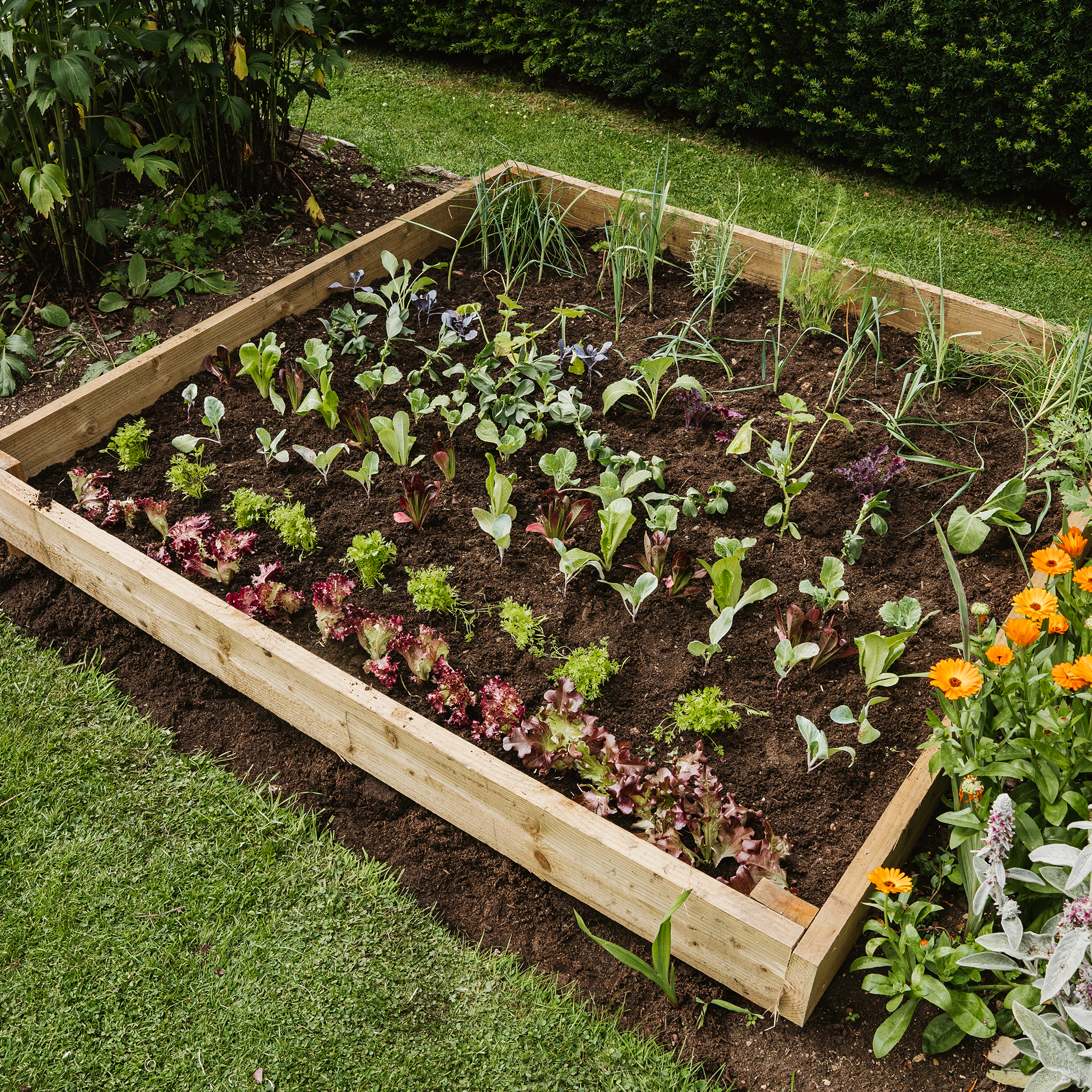
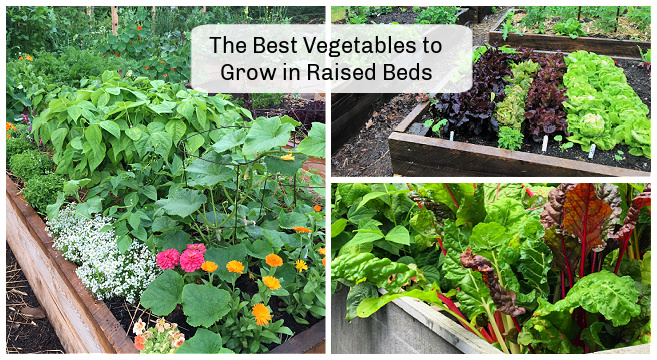
The best vegetables for shallow raised beds are lettuce, spinach, arugula, radishes, green onions, baby carrots, bush beans, and many leafy greens. These crops can grow well in limited soil depth when the soil is rich, loose, and kept moist. Choose crops that match your bed depth, local climate, and available sunlight.
Across the United States, home gardeners use raised beds to grow fresh food in backyards, side yards, patios, and community gardens. A shallow raised bed can be a smart choice for a small American home, a rental property, or a garden built over a hard surface. You do not need a deep wooden frame to grow a useful crop of greens, herbs, and quick-growing vegetables.
The key is to match the plant to the space available for its roots. Lettuce and spinach need less root room than full-size tomatoes or parsnips. Radishes and green onions also make useful choices, while compact bush beans can produce a good harvest if the bed offers enough soil and steady moisture.
Before planting, measure the actual soil depth rather than the height of the frame. A bed that is 8 inches tall but sits on loose, healthy garden soil may offer more root room than a bed of the same height built over concrete. This difference helps explain why some vegetables thrive in shallow beds while others struggle.
This guide explains which crops are best, how much soil depth they need, how to space them, and how to care for them through the growing season. The recommendations are based on general horticultural guidance and practical growing principles, not claimed firsthand product testing. Because the United States spans many climate zones, local planting calendars and frost dates should guide the final planting plan.
What Makes a Vegetable Suitable for a Shallow Raised Bed?
A vegetable suits a shallow raised bed when its roots can access enough soil, air, water, and nutrients within the available growing depth. Leafy greens and many quick crops often fit this need. Large plants with deep roots, heavy fruit loads, or long growing seasons may need a deeper bed.
For many home gardens, a shallow raised bed has about 6 to 10 inches of usable soil. This is a helpful planning range, not a strict rule for every crop. The right depth depends on the plant, the soil below the bed, drainage, and how often you can water.
Root depth is only one part of the decision. A shallow bed also holds less water and fewer nutrients than a deeper bed of the same surface area. Crops that grow quickly or have modest nutrient needs can be easier to manage in this setting.
Source: yardilo.com
Usable soil depth
Measure from the soil surface to the bottom of the bed. If the bed sits on native soil, check whether roots can enter it. A barrier such as concrete or solid paving limits the total root zone.
Root growth
Leafy crops often need less depth than long-rooted vegetables. Root crops must have enough loose soil for the edible part to develop without hitting stones, compacted layers, or the bed base.
Moisture retention
Shallow soil dries quickly. Organic matter, mulch, and regular moisture checks help reduce stress during warm weather.
Sunlight
Most fruiting vegetables need at least six to eight hours of direct sun for strong production. Leafy greens can often tolerate partial shade, especially where summer heat is intense.
Does a Shallow Bed Need a Bottom?
A raised bed does not always need a solid bottom. When it sits on healthy, loose ground, roots can often grow below the frame. This gives plants more room than the bed’s measured height alone would suggest.
A bed placed on concrete, stone, or a deck needs enough soil within the frame to support the selected crop. It also needs drainage holes or another suitable drainage design so water does not collect around the roots. Avoid placing a sealed bed where excess water has no way to escape.
Beds over garden soil
Loosen the ground beneath the frame if conditions allow, and remove weeds and large stones before adding soil.
Beds over hard surfaces
Choose shallow-rooted crops, provide sufficient growing medium, and confirm that drainage is adequate before planting.
The Best Vegetables to Grow in Shallow Raised Beds
The best crops offer a useful harvest without demanding a deep root zone. Lettuce, spinach, arugula, radishes, and green onions are among the easiest choices for many gardeners. Compact bush beans and short-rooted carrots can also work when the bed provides enough depth, sunlight, and moisture.
The soil-depth ranges below are practical starting points rather than universal biological limits. Variety, climate, soil structure, and access to the ground below the frame can change the results. When a seed packet or local extension guide gives a more specific requirement, follow that advice for the chosen variety.
Source: tinygardenhabit.com
1. Lettuce
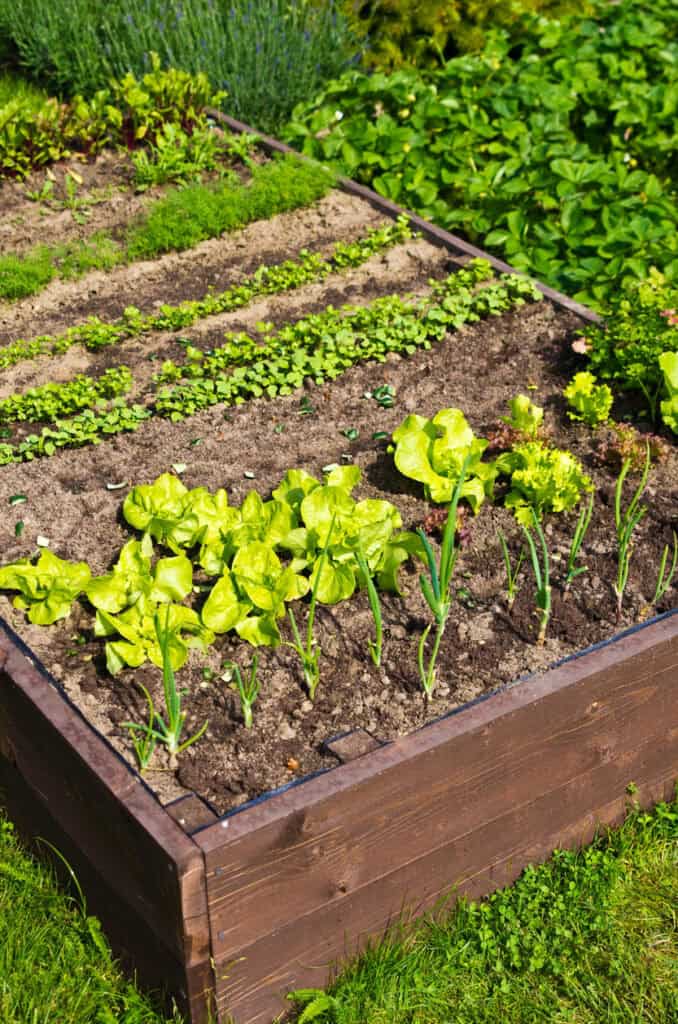
Lettuce is one of the most reliable crops for a shallow bed. Leaf lettuce varieties can produce repeated harvests, and compact heads fit well in small spaces. Aim for roughly 6 to 8 inches of loose soil, with more depth if the bed is exposed to heat or cannot be watered often.
2. Spinach
Spinach grows quickly in cool weather and does well in fertile soil that stays evenly moist. About 6 to 8 inches of soil can work for many home plantings. It tends to bolt, or send up a flower stalk, as days grow longer and temperatures rise.
3. Arugula
Arugula is a fast-growing leafy green with a peppery taste. It is a good choice for narrow beds and repeat sowing. A soil depth of around 6 inches can be enough when drainage and moisture are well managed.
4. Radishes
Radishes are quick crops that suit shallow gardens, especially round or short-rooted types. Many can grow in about 6 to 8 inches of loose soil. Sow small batches every week or two during suitable weather to spread out the harvest.
5. Green onions
Green onions need less root space than many bulb onions when harvested for their leaves and slender stems. They can fit in beds with about 6 to 8 inches of soil. Plant them in rows or small clusters, leaving enough space for air movement and easy harvesting.
6. Baby carrots
Short-rooted carrot varieties can grow in a shallow bed if the soil is loose and free of large stones. A depth of about 8 to 10 inches is a more useful starting point for many short types. True baby carrots harvested young may need less room than mature, full-size roots.
7. Bush beans
Bush beans grow upright without the tall supports needed by pole beans. They can suit a bed with around 8 to 10 inches of usable soil, though deeper soil often improves moisture stability. Plant after the danger of frost has passed and the soil has warmed.
8. Swiss chard
Swiss chard produces leafy stems over a long harvest period. It has a stronger root system than many small greens, so it benefits from about 8 to 10 inches or more of good soil. Keep it well watered, especially during hot spells.
9. Baby kale
Kale harvested as young leaves can be grown more closely than plants intended to form large mature leaves. Around 6 to 8 inches of soil may be adequate for baby-leaf production. For full-size plants, allow more room and consider a deeper bed.
10. Mustard greens
Mustard greens grow well in cool conditions and offer a bold flavor. They can be grown for baby leaves in a shallow bed with about 6 to 8 inches of soil. Harvest outer leaves while the plant is young, or sow again when warm weather causes the crop to become too strong or bitter for your taste.
Which Crops Are Best for Beds Only 6 Inches Deep?
For a bed with just 6 inches of usable soil and no access to the ground below, focus on baby-leaf greens, arugula, and small radishes. Green onions harvested young can also work. These crops are more forgiving than large root vegetables or full-size fruiting plants.
Six inches is a tight growing zone, so soil quality and watering matter a great deal. Use a loose, well-drained growing mix and avoid packing it down. If the bed dries out every day or roots reach the base too soon, choose smaller crops or add more depth before the next planting.
Best for frequent harvesting
Leaf lettuce, arugula, baby kale, and mustard greens can supply small harvests over time when plants are spaced well and new seeds are sown as needed.
Best for a quick crop
Radishes are a strong option because many varieties mature in a few weeks under suitable growing conditions.
Can Tomatoes and Peppers Grow in Shallow Raised Beds?
Tomatoes and peppers are possible in some shallow raised beds, but they are less dependable choices when the root zone is very limited. They need steady moisture, enough nutrients, and support for the weight of their stems and fruit. A shallow bed can dry rapidly and may not give larger plants enough root space for steady growth.
If you want to grow tomatoes or peppers, use a compact variety and provide a deeper growing area when possible. Containers with suitable volume and drainage may be a better choice than a very shallow bed. Do not assume that a small plant label means the mature root system will need little space.
Choose compact varieties
Look for plants described as dwarf, patio, or compact, then check the seed or plant label for mature size and container guidance.
Watch moisture closely
Fruiting plants may need frequent checks in warm weather. Water deeply enough to moisten the root zone without leaving the soil waterlogged.
Vegetables That Need More Depth or Careful Planning
Some vegetables are less suited to a shallow bed because their roots need more room or their mature size makes watering and feeding harder. You can still grow certain types in a shallow setup, but the variety and harvest goal must match the available space.
A useful rule is to consider the mature plant, not just the seedling. A tiny seed may sprout in a thin layer of soil, yet the mature plant may need much more room to hold itself upright and take up enough water.
Source: storage.googleapis.com
Long carrots and parsnips
These crops need deep, loose soil for straight roots. Choose short-rooted carrot varieties for shallow beds and reserve parsnips and long carrots for deeper soil.
Potatoes
Potatoes need room for underground tubers and often benefit from deeper soil or a system that allows additional soil to be added as plants grow. A very shallow bed can limit tuber development.
Large cabbage and broccoli
Full-size brassicas can develop broad leaves and substantial roots. They may need more depth, spacing, and nutrients than a small bed can easily provide.
Winter squash and pumpkins
These plants spread widely and can produce heavy fruit. They are usually poor choices for a small, shallow bed unless the variety is compact and there is room for vines to trail outside the bed.
Asparagus
Asparagus is a long-lived perennial with a deep, spreading root system. It is better suited to a deeper, permanent bed than a shallow seasonal planting.
Should You Grow Root Vegetables in a Shallow Bed?
Root vegetables can be a good fit when you select a variety whose mature root length is shorter than the usable soil depth. Radishes and small round carrots are often easier to manage than long carrots or parsnips. The soil should be fine, loose, and free from large stones so roots can expand without obstruction.
If roots split, fork, or stay small, check for compacted soil, stones, overcrowding, and inconsistent moisture. Excess nitrogen can also encourage leafy growth at the expense of some root crops. Correct the cause before sowing another batch.
For round radishes
Use a shallow but loose soil layer and thin seedlings according to the variety’s spacing guidance.
For short carrots
Read the seed packet for expected root length and harvest size. A short variety still needs enough depth for its full mature root.
How Much Soil Depth Does Each Vegetable Need?
Soil depth is a planning guide, not a promise of a certain harvest. A bed that is 8 inches deep may work for lettuce, yet the same depth can be challenging for a long carrot or a mature tomato. More depth often improves the soil’s ability to store water and gives roots more room to grow.
The following table gives practical starting ranges for shallow raised beds. These ranges assume suitable soil and good drainage. When the bed sits on native soil, roots may extend below the frame; when it sits on concrete or paving, the listed depth becomes much more important.
Source: gardentipsforall.com
Lettuce, spinach, and arugula
Plan for about 6 to 8 inches of usable soil for many leaf-harvest plantings.
Radishes and green onions
About 6 to 8 inches can work for many common varieties, provided the soil remains loose and moist.
Baby carrots
About 8 to 10 inches is a useful starting range for short-rooted types. Check the variety’s mature size.
Bush beans and Swiss chard
Aim for around 8 to 10 inches or more where possible, particularly when the bed is isolated from the ground below.
Full-size tomatoes and peppers
Provide a deeper root zone or a suitably sized container if possible. A very shallow bed makes moisture control more demanding.
A Simple Way to Estimate How Much Soil You Need
To estimate the volume of soil needed to fill a rectangular raised bed, multiply its inside length by its inside width and by the desired soil depth. Convert all three measurements to the same unit before multiplying. For example, a bed that is 4 feet long, 2 feet wide, and 8 inches deep needs about 5.3 cubic feet of soil, before allowing for settling.
The calculation helps you buy enough growing medium without guessing. A bag’s stated volume may be given in cubic feet or liters, so compare units before purchasing. If you are filling a bed over native soil, account for the actual amount of new soil you plan to add rather than assuming the entire frame must be filled with purchased mix.
Formula
Length in feet multiplied by width in feet multiplied by depth in feet equals cubic feet of soil.
Example
A 4-foot by 2-foot bed filled to 8 inches uses 4 × 2 × 0.667, or about 5.3 cubic feet of soil.
Allow for settling
Soil can settle after watering. Check the level after the first few waterings and add suitable mix if needed.
How to Prepare Soil for a Shallow Raised Bed
Good soil can make a shallow bed far more productive. Use a loose growing medium that drains well but holds enough moisture for roots to take up water between checks. Dense, compacted soil leaves less room for air and water movement, which can slow root growth.
For a bed built over native ground, remove persistent weeds and loosen the surface layer before filling. For a bed over a hard surface, use a suitable raised-bed mix and confirm that the frame can drain. Avoid using soil from a place that may be contaminated, especially when growing food.
Source: savvygardening.com
Use a suitable growing mix
Choose a mix intended for raised beds or vegetable gardens. A blend containing mineral soil and organic matter can support roots while balancing drainage and water retention.
Add mature compost
Compost can improve soil structure and supply some nutrients. Use mature, clean compost rather than fresh manure, which may damage plants and can create food-safety concerns.
Avoid compaction
Do not walk on the growing area. Reach across the bed from its edges so the soil stays open and easier for roots to explore.
Check the pH when needed
A soil test can help identify pH or nutrient issues when plants grow poorly. Do not add lime or other amendments without a reason, because the wrong change may make nutrients harder for plants to absorb.
Should You Put Rocks at the Bottom of a Raised Bed?
A layer of rocks is not a general solution for drainage in a shallow raised bed. A sudden change from fine soil to coarse material can leave water perched above the coarse layer rather than improving drainage through the full root zone. Rocks also take up valuable space that shallow-rooted crops need.
Instead, use a suitable soil mix and provide a clear drainage route. If the bed stands on a hard surface, make sure water can leave the base safely. If the bed sits on native soil, loosen compacted ground when appropriate and avoid creating a sealed pocket that traps water.
For a bed over soil
Focus on soil structure and drainage through the ground below the bed.
For a bed over paving
Use a design with drainage openings and enough growing depth for the selected crops.
How to Space Vegetables in a Shallow Raised Bed
Correct spacing helps every plant reach light, air, water, and nutrients. It may seem tempting to fill a small bed with as many seedlings as possible, but overcrowding often leads to smaller plants, poor airflow, and more competition for water. Follow the seed packet’s spacing advice and adjust only when you know the intended harvest size.
Leafy greens can often be grown closer together when harvested young. Plants intended to reach full size need more room. Root crops must be thinned to the recommended spacing so the edible roots have room to develop.
Source: plantilio.com
Use rows for root crops
Rows make it easier to thin radishes and carrots, spot weeds, and harvest without disturbing nearby plants.
Use blocks for leafy greens
A grid can make good use of the bed’s surface area, as long as each plant has enough room for its expected size.
Keep taller plants on the north side when practical
In many Northern Hemisphere gardens, placing taller crops toward the north can reduce the shade they cast on shorter crops. Adapt the layout to the path of the sun and the garden’s surroundings.
Leave room to harvest
Plan access before sowing. You should be able to remove leaves and roots without crushing plants or stepping into the growing area.
A Simple Planting Plan for a 4-by-2-Foot Bed
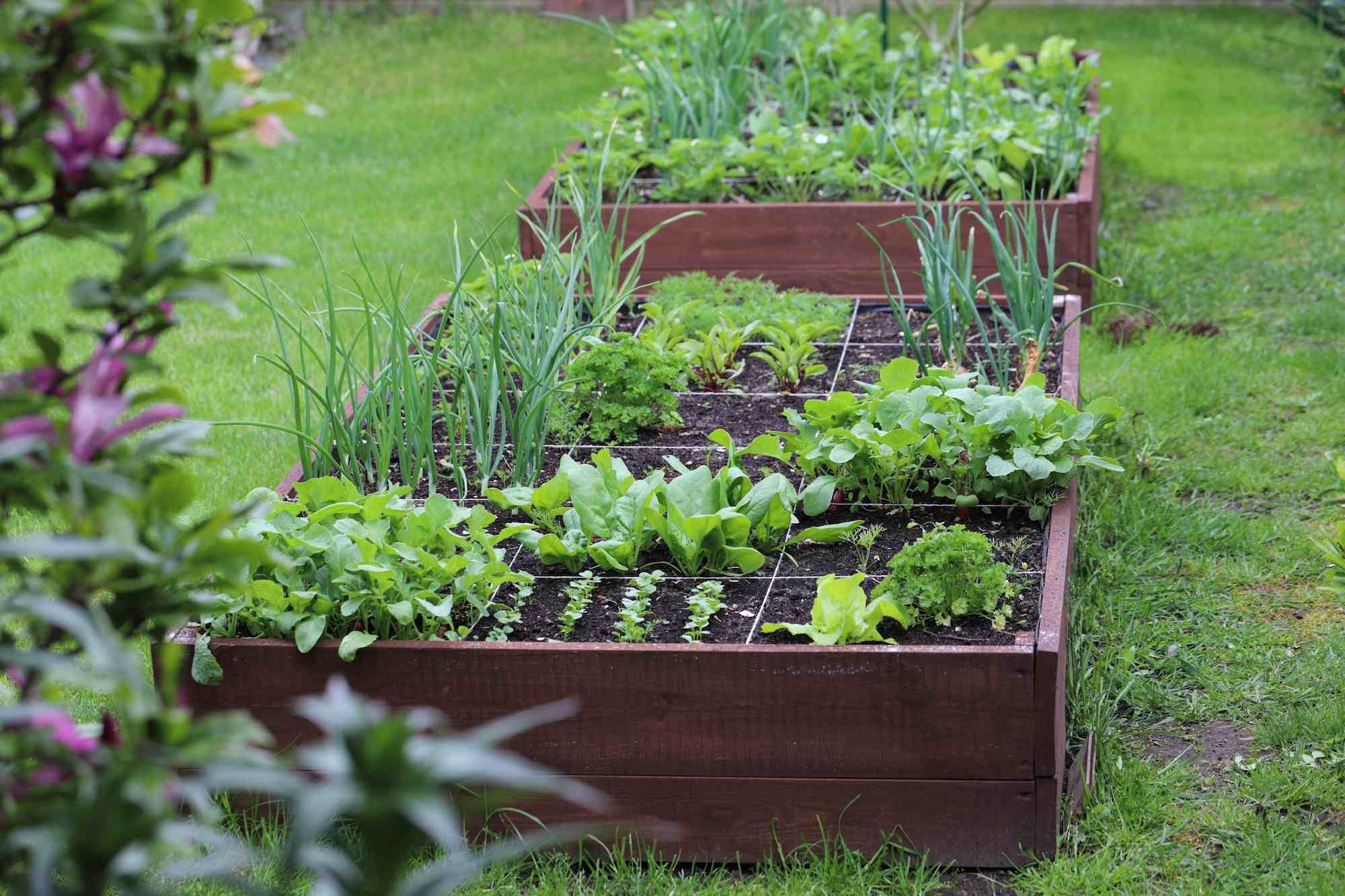
A 4-by-2-foot bed can support a useful mix of shallow-rooted crops. One practical plan is to dedicate one half to leaf lettuce and arugula, then use the other half for radishes and green onions. This keeps the layout simple and makes it easier to harvest each crop at the right stage.
For a longer harvest, sow a small new patch of lettuce or radishes every week or two while the weather suits them. Do not sow more than you can water and eat. When one crop finishes, replace it with another crop that suits the current season.
First section
Grow leaf lettuce and arugula in short rows or a small grid, leaving enough room for the intended leaf size.
Second section
Sow radishes in rows and plant green onions along an edge where they are easy to reach.
After harvest
Remove spent plants, check soil moisture and structure, and add compost only as needed before replanting.
Watering and Feeding Vegetables in Shallow Beds
Shallow raised beds often need more frequent watering than deeper beds because they contain less soil to store moisture. The surface can look dry while lower soil remains damp, or the entire root zone can dry during a hot afternoon. Check moisture below the surface before deciding whether to water.
Water near the soil rather than spraying leaves for long periods. Slow, even watering helps moisture reach the roots and reduces runoff. During hot, windy weather, check the bed more often, especially when growing lettuce, spinach, or newly sprouted seedlings.
Source: storage.googleapis.com
Check before watering
Feel the soil a short distance below the surface. If the root zone is drying, water; if it is still wet, wait and check drainage.
Water deeply enough
Apply water slowly until the usable root zone is moist. A brief splash may wet only the surface and leave lower roots dry.
Use mulch where suitable
A thin layer of clean organic mulch can slow evaporation. Keep mulch away from delicate seedlings and avoid covering small greens so deeply that growth is blocked.
Feed based on crop needs
Compost and a balanced fertilizer used according to its label may help maintain growth. Too much fertilizer can harm roots, waste nutrients, and encourage excessive leaf growth in some crops.
Signs That a Shallow Bed Is Too Dry
Wilting, dry soil, slow growth, and bitter or tough leaves can point to water stress. Young seedlings are especially vulnerable because their roots occupy only a small area. If the soil dries quickly each day, increase the frequency of checks and consider adding a suitable mulch layer.
Do not treat every wilted plant as a sign of drought. Waterlogged soil can also cause wilting because roots lack oxygen. Check the soil before watering again, and improve drainage if the root zone stays saturated.
Dry soil and limp leaves
Water slowly, then check whether the root zone has become moist. Reassess the bed during the next warm period.
Wet soil and persistent wilting
Pause watering and inspect drainage. If the soil remains saturated, improve the drainage route and review the growing mix.
When to Plant Shallow Raised Bed Vegetables in the United States
The right planting time depends on your USDA hardiness zone, local frost dates, and seasonal temperatures. Across the United States, spring arrives much earlier in parts of the South than in the Upper Midwest or New England. A national planting calendar cannot give every gardener the same sowing date.
Cool-season crops such as lettuce, spinach, arugula, radishes, and many mustard greens generally grow best in cool weather. Bush beans prefer warmer soil and should usually be planted after frost danger has passed. In hot regions, some greens can be grown in fall or winter instead of during the hottest months.
Use local extension service advice or a reliable regional planting calendar to select dates. Raised beds may warm sooner than surrounding ground in spring, but a shallow bed can also cool and dry quickly. Check the actual soil and weather conditions rather than relying on the calendar alone.
Source: savvygardening.com
Cool-season planting
Sow lettuce, spinach, arugula, and radishes when temperatures suit the crop. In warm regions, consider fall planting or a winter crop where the climate allows.
Warm-season planting
Plant bush beans after frost risk has passed and the soil has warmed enough for reliable germination.
Succession planting
Sow small batches of fast-growing crops over time instead of planting the whole bed at once. Stop or slow sowing when heat makes the crop perform poorly.
Seasonal crop changes
Replace a finished spring crop with a warm-season crop, then return to cool-season greens as temperatures fall.
Can You Grow Shallow-Bed Vegetables in Partial Shade?
Yes. Leaf lettuce, spinach, arugula, and some other greens can grow in partial shade, although growth may be slower than in a brighter spot. Shade can be useful during hot summers because it may reduce heat stress and slow bolting in leafy crops.
Fruiting crops such as beans generally need more direct sunlight for strong production. If the bed receives only a few hours of sun, choose leafy crops and set realistic expectations for the size and speed of the harvest.
For a shaded patio
Try leaf lettuce, arugula, or other greens suited to your local season, and monitor how much direct light the bed receives.
For a sunny yard
Use the brighter space for bush beans and other crops that benefit from more direct sun, while watching moisture levels during hot spells.
Common Problems and How to Fix Them
When vegetables struggle in a shallow raised bed, the cause is often limited root space, uneven moisture, poor drainage, overcrowding, or unsuitable growing conditions. Check these basics before adding fertilizer or replacing the plants. A simple change in watering, spacing, or crop choice may solve the problem.
Look at the whole plant and the soil together. A single symptom rarely proves one cause. For example, yellow leaves can result from excess water, nutrient issues, root damage, or normal aging of older leaves.
Source: www.almanac.com
Plants wilt soon after watering
Check for waterlogged soil and poor drainage. Roots need air as well as water, and saturated soil can prevent normal water uptake.
Radishes form leaves but tiny roots
Check spacing, heat, soil compaction, and fertilizer use. Thin plants as directed and sow during a suitable cool period.
Carrots split or fork
Look for stones, compacted soil, uneven moisture, or other root obstructions. Choose short-rooted varieties and prepare a loose growing layer.
Lettuce turns bitter or bolts
Heat and long days can trigger flowering. Grow heat-tolerant varieties where suitable, provide some afternoon shade, or shift the crop to a cooler season.
Plants remain small
Check root depth, soil moisture, sunlight, spacing, and nutrient supply. If roots have filled the shallow layer, choose smaller crops or increase the growing depth.
Leaves have holes or chew marks
Inspect both sides of leaves for pests. Remove small numbers by hand when practical, use physical barriers suited to the crop, and identify the pest before choosing a control.
How to Protect Vegetables From Pests Without Overreacting
Check plants regularly so you can spot pests while damage is limited. Small holes do not always require treatment, and some insects are beneficial. Identify the likely pest before using a control method.
Row covers can help block some insect pests, but they may also block pollinators when left over crops that need them. Follow the cover’s use instructions and remove it when the crop needs access to pollinators. If you use a pesticide, choose one labeled for the crop and pest, follow all label directions, and observe any harvest interval.
Inspect often
Look at new growth, leaf undersides, and the soil surface. Early checks can prevent a small problem from spreading.
Use barriers when suitable
Fine mesh or row covers can protect many crops from certain insects when installed correctly.
Keep harvest safety in mind
Follow product labels and wash harvested vegetables under clean running water before eating.
How to Choose the Best Crops for Your Own Bed
The best crop list depends on how deep the soil is, whether the bed sits over the ground, how much sun it receives, and how much time you can spend watering. Start with a few dependable crops rather than filling the entire bed with plants that have different needs. A small, well-managed harvest is often more useful than a crowded bed that dries out every day.
If the bed is less than 8 inches deep and rests on a hard surface, favor baby greens, arugula, radishes, and green onions. If the bed has 8 to 10 inches of soil, short-rooted carrots, bush beans, and Swiss chard become more practical choices. If roots can enter healthy soil below the frame, you have more flexibility, though surface moisture still needs attention.
Source: greenthumbrevival.com
For the easiest start
Plant leaf lettuce, arugula, and radishes. These crops offer a straightforward way to learn how quickly your bed dries and how well your soil supports growth.
For repeated harvests
Choose leaf lettuce, green onions, or baby-leaf kale, then sow new plants as space becomes available.
For a root crop
Grow radishes first, then try short-rooted carrots if your soil depth and structure suit the variety.
For a warm-season harvest
Try bush beans when the soil is warm and the bed has enough depth to support steady growth.
A Practical Checklist Before You Sow
Before planting, check the bed’s inside depth and determine whether roots can grow into the ground below. Confirm that the site receives enough sun for your chosen crops and that excess water can drain away. Use a suitable growing mix, follow seed spacing directions, and choose a planting date based on local weather.
After sowing, keep the seed zone moist without leaving it waterlogged. Thin seedlings when needed and watch how quickly the bed dries. These early observations will help you choose the best crop mix for the next planting.
Measure
Record the usable soil depth and note whether the bed rests on ground, gravel, concrete, or decking.
Match
Select crops whose root needs, mature size, and preferred temperatures suit the bed.
Prepare
Use loose soil with suitable drainage and enough organic matter to support steady growth.
Monitor
Check moisture, thin seedlings, and harvest at the right stage rather than waiting for every plant to reach full size.
Frequently Asked Questions
Q
What vegetables grow best in a 6-inch-deep raised bed?
Leaf lettuce, arugula, baby kale, mustard greens, green onions, and many radishes are useful choices for a bed with 6 inches of usable soil. They are generally more suitable than long-rooted carrots or large fruiting plants. Use loose soil, provide drainage, and check moisture often because a shallow bed dries quickly.
Q
Can carrots grow in shallow raised beds?
Yes, if you select a short-rooted variety and provide enough loose soil for its mature root. About 8 to 10 inches is a useful starting range for many short carrots, but the seed packet should guide the final choice. Remove stones, avoid compaction, and keep moisture steady to support even root growth.
Q
Do shallow raised beds dry out faster?
Yes, shallow beds usually hold less water than deeper beds of the same surface area. Warm weather, wind, and full sun can speed drying even more. Check the soil below the surface, water slowly when the root zone needs it, and use a suitable mulch to help limit moisture loss.
Q
Can I grow vegetables in a raised bed over concrete?
Yes, but the bed must contain enough soil for the selected crop and have a way for excess water to drain. Leafy greens and small radishes are sensible choices for a shallow bed over concrete. Avoid crops that need deep roots unless the container provides enough growing depth and volume.
Q
How many vegetables should I plant in a shallow raised bed?
The number depends on the bed’s surface area, the crop, and the expected harvest size. Follow seed-packet spacing for mature plants, and use closer spacing only when harvesting crops as baby leaves. A 4-by-2-foot bed can support a small mix of lettuce, arugula, radishes, and green onions when they are spaced to suit their varieties.
Q
Can I grow tomatoes in a shallow raised bed?
Compact tomatoes may grow in some shallow beds, but full-size plants are more demanding. They need adequate root space, steady moisture, nutrients, and support. A deeper bed or suitably sized container is usually easier to manage, especially when the bed rests on a hard surface.
Q
What soil is best for shallow raised beds?
Use a loose, well-drained growing mix designed for raised beds or vegetable gardens. A suitable blend should hold moisture while leaving air spaces around roots. Mature compost can improve structure and supply some nutrients, but avoid fresh manure and do not add fertilizers or soil amendments without checking the crop’s needs.
✦ Wrapping Up
Conclusion
The best vegetables to grow in shallow raised beds are those that make good use of a small root zone. Leaf lettuce, spinach, arugula, radishes, and green onions are strong choices for many gardeners. Short-rooted carrots, bush beans, baby kale, and Swiss chard can also work when the soil depth, light, and moisture suit their needs.
Start by measuring the usable soil depth and checking whether roots can grow into the ground below the frame. Prepare loose soil, follow crop spacing guidance, and use local planting advice to choose the right season. Because shallow soil can dry quickly, regular moisture checks are one of the most useful habits you can build.
A small raised bed can still provide a steady supply of fresh vegetables. Begin with a few crops that suit your space, learn how your bed responds to weather, and replant as each crop finishes. With the right choices, even a modest growing area can make room for a productive home garden.
💡 Key Takeaway
Measure your bed today, then plant leaf lettuce, arugula, radishes, or green onions if the soil is shallow. Add short-rooted carrots or bush beans only when you have enough usable depth, and check soil moisture regularly.
I enjoy sharing simple gardening ideas, lawn care tips, and honest product reviews that help make outdoor work easier. From home gardening guides to helpful tools and lawn care advice, I write easy-to-follow content to help readers create a healthier and better-looking outdoor space without wasting time or money.