
As an Amazon Associate, I earn from qualifying purchases.
Keep LED grow lights about 2–6 inches above tomato seedlings when the light maker allows it, then adjust for plant response and light strength.
Spring can feel rushed when you live in the United States and want to grow tomatoes before the warm weather arrives. You may start seeds in a spare room, basement, or kitchen. Soon, the tiny plants lean toward a window or grow tall and thin. The problem may be weak light or a lamp placed too far away. The Best Grow Light Distance for Tomato Seedlings depends on the lamp, its power, and the age of your plants. In this guide, I explain how to set the right height, compare five grow lights, and help you choose a setup for healthy seedlings.
Page Contents
Toggle🏆 Top 3 Products

LEOTER Full Spectrum Grow Light
Its adjustable brightness, flexible neck, and timer offer useful control for a small indoor seed-starting area.

LBW Grow Light With Stand
Its stand-based design suits growers who want a more organized setup for seedlings on a table or shelf.

84 LED Clip-On Grow Light
Its clip, flexible neck, timer, and dimming options offer convenient control for a small seed tray.
LEOTER Adjustable Full Spectrum Grow Light
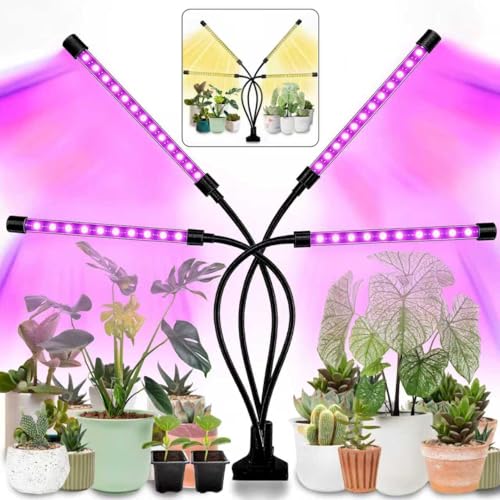
The LEOTER grow light offers several controls for people who start tomato seeds indoors. It has 80 LED lamps, a flexible gooseneck, and three light modes. You can choose from 10 brightness levels and set its timer for 3, 9, or 12 hours. These features help you adjust the setup as your seedlings grow.
For the Best Grow Light Distance for Tomato Seedlings, start with the lamp maker’s guidance and test the light over a small tray. Place the lamp close enough to limit stretching, but not so close that the leaves show signs of stress. The flexible neck makes it easier to aim the light at short plants. Keep in mind that this is a small plant light, so its coverage may not suit a large tray or a whole shelf.
✅ Pros
- ✔Offers 10 brightness settings for simple light adjustments.
- ✔Includes three light modes for different growing needs.
- ✔Provides timer settings of 3, 9, and 12 hours.
- ✔Uses a flexible gooseneck for easy positioning.
- ✔Can fit small indoor gardening spaces.
- ✔Makes it easier to keep the lamp aimed at growing plants.
- ✔Offers more control than a basic fixed-output lamp.
⚠️ Cons
- ✖May not cover a wide seed tray evenly.
- ✖A flexible neck may need adjustment as plants grow.
- ✖The listed timer options may not match every desired daily schedule.
- ✖LED count alone does not reveal the light level at the leaves.
- ✖The product details provided do not confirm measured light output.
My Recommendation
I would consider the LEOTER for a beginner who starts a few tomato plants on a desk, counter, or small shelf. Its dimmer and flexible neck make it easier to fine-tune the setup without buying a separate dimmer. For the Best Grow Light Distance for Tomato Seedlings, use the maker’s distance guidance first, then check plant shape and leaf health each day. If the stems stretch, increase light at the plant level by moving the lamp closer within its safe range or raising brightness. If leaves bleach, curl, or feel unusually warm, reduce the light intensity or increase the gap.
| Best For | Why |
|---|---|
| First-time seed starters | The dimmer and timer help simplify daily light care. |
| Small tomato batches | Its adjustable neck suits a compact growing area. |
| Growers who want control | Several brightness levels allow gradual changes. |
LBW Grow Light With Adjustable Stand
The LBW grow light with stand offers a different approach to indoor plant lighting. Instead of relying only on a clip or a flexible neck, it uses a stand-based design. This can make it easier to arrange a small seed-starting station on a table or shelf. Its full-spectrum lighting is intended for indoor plants, including plants that need light during early growth.
A stand can make it easier to keep the lamp steady over tomato seedlings. Still, the Best Grow Light Distance for Tomato Seedlings depends on the light output and the area it covers. Check the product instructions for the allowed height and adjust the stand as the plants grow. Before buying, confirm the stand’s height range, footprint, and coverage against your available space.
✅ Pros
- ✔Stand-based design can make placement more organized.
- ✔Offers full-spectrum lighting for indoor plants.
- ✔Can suit a small table or seed-starting shelf.
- ✔May reduce the need to attach a lamp to furniture.
- ✔Provides a dedicated structure for positioning the light.
- ✔Can be useful where a clip mount is not practical.
- ✔Allows a grower to plan a repeatable lighting setup.
⚠️ Cons
- ✖The stand takes up floor or table space.
- ✖Its usable height range must suit the growing tray.
- ✖Coverage and light output should be confirmed before purchase.
- ✖A stand alone does not guarantee even light across every seedling.
- ✖The product details supplied do not establish measured light intensity.
My Recommendation
I would choose the LBW stand model if I wanted a tidy seed-starting area and had room for a dedicated light. It may be easier to position than a lamp that must clip to a narrow shelf. Check whether the stand can place the light close enough to young seedlings and high enough for larger plants. For the Best Grow Light Distance for Tomato Seedlings, measure from the lamp’s light-emitting surface to the top leaves, not from the base of the pot. This gives you a more useful distance as the plants grow.
| Best For | Why |
|---|---|
| Neat indoor setups | A stand offers a dedicated place for the lamp. |
| Tabletop seed trays | The design may suit a fixed growing station. |
| Growers avoiding clips | The stand does not depend on a clip point. |
84 LED Clip-On Full Spectrum Grow Light
This clip-on grow light uses 84 LEDs and two light heads in a compact design. It includes a flexible gooseneck, three spectral modes, 10 dimming levels, and a timer with 3, 9, and 12-hour settings. These features give indoor gardeners several ways to aim and adjust the light. Its clip mount may work well on a desk, shelf, or table with a suitable edge.
For tomato seedlings, a clip-on lamp can be useful when you have only a little space. The Best Grow Light Distance for Tomato Seedlings still depends on actual light strength, so do not assume that a lamp with many LEDs can sit at any height. Position both heads to spread light over the leaves. Check the outer seedlings, too, because plants at the edges may receive less light than those in the center.
✅ Pros
- ✔Uses 84 LEDs across a two-head design.
- ✔Includes 10 dimming levels for light adjustment.
- ✔Offers three spectral modes.
- ✔Provides 3, 9, and 12-hour timer settings.
- ✔Flexible goosenecks allow individual aiming.
- ✔Clip mounting can save shelf space.
- ✔Can work well for a small number of seedling pots.
⚠️ Cons
- ✖Needs a stable edge that can hold the clip.
- ✖Two heads may not cover a large seed tray evenly.
- ✖The necks may need frequent adjustment as plants grow.
- ✖The listed LED count does not show the usable light level.
- ✖A built-in timer with fixed options may not suit every schedule.
My Recommendation
I would shortlist this light for a small home seed-starting project where flexible positioning matters. The two heads can help direct light toward more than one pot, and the dimmer gives you room to make small changes. Set the lamp over the whole group rather than focusing both heads on one plant. When testing the Best Grow Light Distance for Tomato Seedlings, watch the seedlings at the edges for leaning or long stems. If those plants stretch, improve coverage before assuming that every plant needs a stronger light setting.
| Best For | Why |
|---|---|
| Small seedling groups | Two heads can direct light toward several nearby plants. |
| Compact desks | The clip mount can save space. |
| Flexible light placement | The goosenecks allow changes to each head’s direction. |
FOXGARDEN Adjustable LED Grow Light Stand

The FOXGARDEN grow light stand is designed for indoor plants at different stages of growth. Its listed features include an adjustable height, six dimming options, and a timer with 4, 8, and 12-hour settings. A stand can help keep a light in place while you care for young tomato plants. The adjustable height may also help as seedlings gain leaves and grow taller.
Tomato seedlings need steady light, but the ideal lamp height changes with the light’s strength. The Best Grow Light Distance for Tomato Seedlings should not be set by height alone. Check the maker’s instructions, then look for short, sturdy stems and healthy leaf color. Since the listed timer options may provide fewer hours than many seedlings need, check whether you can use another suitable schedule or whether the light’s timer limits daily operation.
✅ Pros
- ✔Includes an adjustable stand height.
- ✔Offers six dimming options.
- ✔Provides timer settings of 4, 8, and 12 hours.
- ✔Can suit plants at more than one growth stage.
- ✔Offers a dedicated support structure for the light.
- ✔May be convenient for a tabletop growing station.
- ✔Height adjustment can help keep the lamp aligned with growing plants.
⚠️ Cons
- ✖Six dimming levels offer less fine control than a 10-level dimmer.
- ✖The stand needs space around the seed tray.
- ✖The timer options may not cover a full desired light schedule on their own.
- ✖The listed features do not provide measured light output or coverage.
- ✖Buyers should verify the height range before choosing it for taller plants.
My Recommendation
I would consider the FOXGARDEN if adjustable height matters more to me than a clip mount. It may fit a growing station where the seedlings need more headroom over time. Before choosing it, confirm that the stand reaches the height you need and that the timer suits your planned daily schedule. To find the Best Grow Light Distance for Tomato Seedlings, begin with the maker’s safe range and move the lamp in small steps. Do not rely on a timer alone; the light’s strength and the seedlings’ response matter just as much.
| Best For | Why |
|---|---|
| Growing seedlings | An adjustable stand can follow changes in plant height. |
| Fixed growing stations | A dedicated stand can keep the lamp in a repeatable position. |
| Simple dimming needs | Six brightness options provide basic adjustment. |
LBW 214 LED Full Spectrum Grow Light

The LBW 214 LED grow light is listed as a full-spectrum light for indoor plants. Its 214 LEDs suggest a larger array than the smaller lamps in this group, but the number of LEDs alone does not tell you how much useful light reaches the leaves. You should also check its shape, mounting method, coverage, and brightness controls before you buy. These details help determine whether it fits a few pots or a wider tray.
A wider light can help spread light across a group of tomato seedlings, but only if its output and placement suit the growing area. The Best Grow Light Distance for Tomato Seedlings will depend on the product’s power and the light that reaches each plant. Follow the maker’s recommended height and keep the seedlings under even coverage. Check both the middle and edges of the tray so the plants grow at a similar rate.
✅ Pros
- ✔Lists 214 LEDs in its lighting array.
- ✔Uses a full-spectrum design for indoor plants.
- ✔May suit growers who need more light coverage than a small clip lamp offers.
- ✔Can be considered for a dedicated seed-starting area.
- ✔Offers a higher listed LED count than the smaller lights in this comparison.
- ✔May provide a practical option for grouping several plants under one light.
- ✔Allows buyers to compare a larger light array with their available growing space.
⚠️ Cons
- ✖LED count does not confirm brightness or usable light at leaf level.
- ✖The product details supplied do not specify measured light intensity.
- ✖Coverage must be checked before using it over a wide tray.
- ✖Its mounting style and height range should be confirmed before purchase.
- ✖A larger light array may be unnecessary for only one or two seedlings.
My Recommendation
I would consider the LBW 214 LED model for a grower who plans to start several tomato plants in one area. Its listed LED count makes it worth comparing with smaller lamps, but I would not assume it is brighter or better without verified output and coverage details. Check the product specifications and use the maker’s recommended distance as your starting point. When setting the Best Grow Light Distance for Tomato Seedlings, aim for even light across the full tray and adjust the height if the edge plants stretch or the center plants show signs of excess light.
| Best For | Why |
|---|---|
| Several tomato seedlings | A larger listed LED array may suit a wider growing area. |
| Dedicated indoor gardens | A larger light may fit a planned seed-starting station. |
| Shoppers comparing light arrays | The listed 214 LEDs offer a clear specification to compare with other models. |
Final Verdict: Which Should You Buy?
For a small indoor tomato seed-starting setup, I would start with the LEOTER grow light because its 10 dimming levels, flexible neck, and timer offer useful control. The LBW stand model is worth considering if you prefer a dedicated support, while the 84 LED clip-on model suits compact spaces. Check each lamp’s verified output, coverage, and mounting range before buying.
The Best Grow Light Distance for Tomato Seedlings depends on light strength, plant height, and daily exposure. Start with the manufacturer’s guidance, keep light even, and watch how your plants respond. A steady schedule and healthy seedlings matter more than LED count alone.
FAQs Of Best Grow Light Distance for Tomato Seedlings
Q What is the best grow light distance for tomato seedlings?
Q How many hours a day should tomato seedlings get grow light?
Q Can a grow light be too close to tomato seedlings?
Q Why are my tomato seedlings tall and thin under a grow light?
Q Should I change the grow light distance as tomato seedlings grow?

I enjoy sharing simple gardening ideas, lawn care tips, and honest product reviews that help make outdoor work easier. From home gardening guides to helpful tools and lawn care advice, I write easy-to-follow content to help readers create a healthier and better-looking outdoor space without wasting time or money.