As an Amazon Associate, I earn from qualifying purchases.
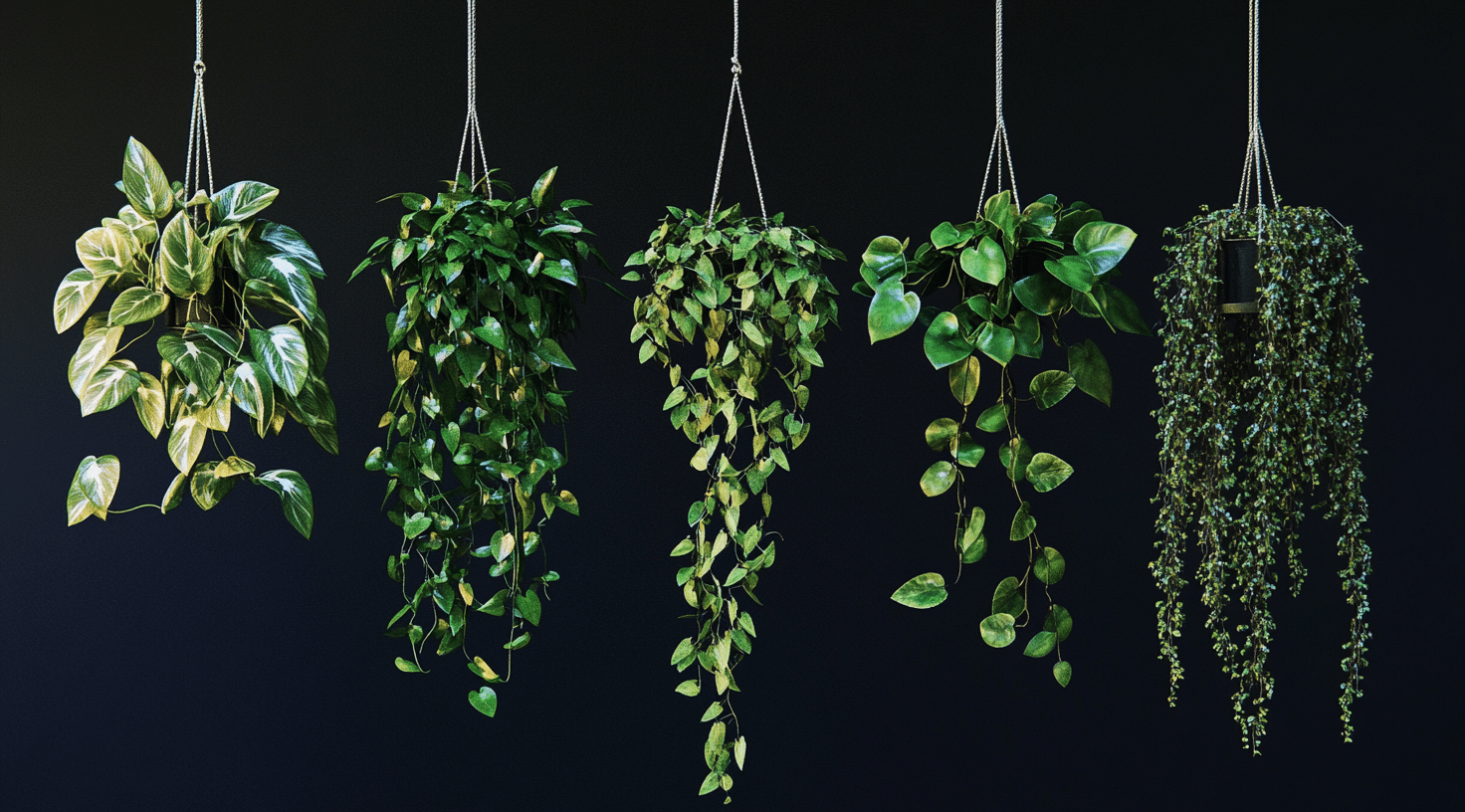
The best low light hanging houseplants include pothos, heartleaf philodendron, spider plants, English ivy, and satin pothos. These trailing plants can grow in many indoor spaces with indirect light, but none can thrive in complete darkness.
In American homes, a room with a north-facing window, a shaded apartment, or a living room set back from the windows can be a tough place to grow plants. Yet you do not need a sunny bay window to enjoy lush green leaves that spill from a hanging basket. The key is to choose plants that can adapt to lower indoor light and place them where they receive enough natural or artificial light to support steady growth.
Hanging houseplants are useful in small homes, apartments, home offices, and rental spaces. They add greenery above desks, soften bare shelves, and make use of vertical space without taking up much floor room. Pothos and heartleaf philodendron are strong starting points because they produce long vines and can adapt to a range of indoor conditions.
Low light does not mean no light. A plant may survive for some time in a dim corner while producing smaller leaves, longer stems, or little new growth. This guide compares suitable trailing plants, explains their care needs, and shows how to choose a hanging plant for your room, light level, watering habits, and household pets.
What Makes a Hanging Houseplant Suitable for Low Light?
A suitable low light hanging houseplant can maintain healthy leaves and make useful growth in limited indoor light. Many trailing tropical plants fit this role because they naturally climb or spread along surfaces. Their vines can also be trained over a shelf or allowed to hang from a basket.
The phrase low light can be misleading. A room that looks bright to your eyes may provide less light than a plant needs, especially several feet from a window. A room with no windows is different from a room with a shaded window, and the two should not be treated as equal growing spaces.
Light intensity falls as a plant moves farther from a window. Trees, porches, neighboring buildings, curtains, and window direction can reduce the amount of light that reaches the leaves. In the United States, a north-facing window often gives gentle light, while an unobstructed south-facing window may provide much stronger light. Local climate, season, and nearby buildings still affect the result.
Source: decorhomeideas.com
Low light
A spot with limited natural light that may support shade-tolerant plants, though growth can be slow.
Bright indirect light
A well-lit area where the leaves receive plenty of light without strong, direct midday sun. Many hanging houseplants grow best here.
No natural light
A windowless room needs suitable artificial lighting for long-term plant growth. Ordinary room lighting may not provide enough usable light.
How Can You Tell If Your Room Has Enough Light?
Start by looking at the space during the day. If you can read comfortably without turning on a lamp, that may suggest useful ambient light, but it does not prove that the spot is bright enough for a plant. Observe whether daylight reaches the hanging location and whether nearby walls or buildings block it.
Watch the plant after you place it. Healthy new growth, firm leaves, and normal leaf size are useful signs that conditions are working. Long bare sections of stem, small new leaves, slow growth during the growing season, or a loss of leaf color may point to insufficient light, although other care problems can cause similar symptoms.
Best placement
Start near a window with filtered daylight, then move the plant farther away only if it continues to grow well.
Windowless rooms
Use a plant grow light on a suitable schedule, following the light manufacturer’s instructions and the plant’s needs.
1. Pothos: The Best All-Around Low Light Hanging Plant
Pothos is one of the most practical choices for a hanging planter in a home with limited natural light. Its heart-shaped leaves grow along flexible vines, which can trail over a basket or spread across a high shelf. Green pothos varieties are especially useful when the available light is lower than ideal for more colorful foliage plants.
Pothos can tolerate a range of indoor conditions, but its growth is usually fuller and faster in moderate indirect light. In a dim corner, the vines may grow more slowly and develop larger gaps between leaves. Golden and heavily variegated forms may also lose some of their bright markings when light levels are too low.
Water pothos when the upper part of the potting mix has dried. Give the soil a thorough drink, then let excess water drain away. Do not leave the pot standing in a full saucer or decorative outer container, as constantly wet roots can develop rot.
Source: balconygardenweb.com
Light
Low to bright indirect light, with stronger indirect light generally supporting better growth and leaf color.
Water
Water when the upper soil has dried and adjust the interval to the room’s temperature, light, and pot size.
Best for
Beginners, shelves, living rooms, bedrooms, and offices with a window or suitable grow light.
Pet safety
Toxic to cats and dogs if chewed because it contains insoluble calcium oxalate crystals.
How to Keep Pothos Full Instead of Leggy
Give the plant more usable indirect light if the stems become long and bare. Trim weak vines just above a leaf node, which is the point where a leaf or root can emerge from the stem. Healthy cuttings can often be rooted in water or a suitable growing medium to create more plants.
Avoid trimming away too much growth at once if the plant is already weak. Improve its growing conditions first, then prune gradually as it produces healthy new leaves.
Choose a green variety
Solid green foliage is often a practical option for lower-light spaces compared with highly variegated forms.
Check the soil
Do not water again just because the surface looks dry if the soil deeper in the pot remains wet.
2. Heartleaf Philodendron: Best for Soft, Cascading Vines
Heartleaf philodendron is another strong choice for a hanging basket in a home with limited light. Its smooth, heart-shaped leaves grow along long, flexible stems, creating a soft cascade of green. It is well suited to a bookshelf, a home office, or a living room where a trailing plant can add greenery without taking up floor space.
This tropical plant can tolerate lower light than many foliage plants, though it generally grows more vigorously in bright indirect light. In a dim location, expect slower growth and less frequent watering. Avoid moving it straight from a dim room into intense direct sun, as the leaves may scorch.
Use a loose, well-draining potting mix and a container with drainage holes. Allow the upper layer of soil to dry before watering again. If the leaves turn yellow, check the moisture in the root zone before adding more water because excess moisture is a common cause of root stress.
Source: uk.pinterest.com
Light
Low to bright indirect light, with filtered daylight supporting the best overall growth.
Water
Water when the upper soil begins to dry, and avoid keeping the roots constantly wet.
Best for
People who want a simple green plant with long vines and modest care needs.
Pet safety
Toxic to cats and dogs if chewed.
Heartleaf Philodendron Care Tips
Turn the pot from time to time so the stems do not lean too heavily toward the nearest light source. Remove damaged leaves with clean pruning shears, and shorten unusually long vines if you prefer a fuller shape.
Wipe dusty leaves with a soft, damp cloth when needed. Clean foliage can receive light more effectively, and regular checks make it easier to spot pests before they spread.
For fuller growth
Provide better indirect light and prune selected stems when the plant is healthy.
For small rooms
Keep the longest vines away from doors, fans, and walkways to prevent damage.
3. Spider Plant: Best for Arching Leaves and Baby Plants
Spider plants are known for their narrow, arching leaves and small plantlets that form on long stems. These plantlets can make a hanging basket look lively, especially when they spill over the rim. Spider plants are often forgiving of ordinary indoor conditions, although they need enough light to maintain healthy growth.
A spider plant can cope with moderate shade, but a very dark location may reduce the number of new leaves and plantlets. Green varieties may be more adaptable to lower light than some strongly striped cultivars. Bright indirect light is a useful target if you want the leaves to remain dense and the plantlets to develop well.
Water when the upper soil begins to dry, and make sure the pot drains freely. Spider plants can be sensitive to certain dissolved minerals in tap water, which may contribute to brown leaf tips. If tip browning persists despite sound watering practices, try rainwater or filtered water when practical.
Source: ar.inspiredpencil.com
Light
Moderate indirect light is best, although the plant can tolerate some shade.
Water
Water when the upper soil begins to dry; avoid leaving the root ball soggy.
Best for
Homes that need a plant with arching foliage and the potential to produce baby plants.
Pet safety
Generally considered nontoxic to cats and dogs, according to commonly used veterinary and plant-safety references.
Why Spider Plants May Get Brown Tips
Brown tips can result from dry soil, inconsistent watering, mineral buildup, fertilizer salts, or low humidity. Trim only the brown part if you want to improve the plant’s appearance, and leave healthy green tissue in place.
If the soil has a crust of mineral residue, flush it with water and let the pot drain completely. Use fertilizer sparingly during active growth, since adding more plant food will not fix a light problem or damaged roots.
Keep the leaves clean
Remove dust with a damp cloth rather than applying leaf shine products.
Encourage plantlets
Provide enough indirect light and avoid keeping the roots waterlogged.
4. English Ivy: Best for Fine, Textured Trailing Foliage
English ivy produces slender trailing stems and lobed leaves that bring a different look to a hanging planter. Its fine foliage can soften a plain wall or add texture to a mixed plant display. It can tolerate some shade, but the amount of light it receives still affects how densely it grows.
Indoor English ivy may be more demanding than pothos or heartleaf philodendron because it can suffer in hot, dry rooms and may attract spider mites. A spot with good indirect light, moderate temperatures, and some air movement is usually a better choice than a dark shelf near a heater.
Keep the potting mix lightly moist without allowing the roots to sit in water. Check the plant regularly, especially on the undersides of the leaves and along the stems. Fine webbing, pale speckles, or tiny moving pests can signal a spider mite problem.
Source: www.youtube.com
Light
Moderate indirect light to filtered shade, depending on the cultivar and indoor conditions.
Water
Water when the surface begins to dry, while preventing the root zone from staying saturated.
Best for
Plant owners who enjoy fine-textured foliage and can check for pests regularly.
Pet safety
Toxic to cats and dogs. Keep the plant out of reach and collect fallen leaves.
How to Reduce Spider Mite Problems
Inspect new plants before bringing them into your home. Keep an affected plant apart from other houseplants, then wash the foliage carefully if the infestation is mild. Use a product labeled for the pest and the intended indoor plant if further treatment is needed, and follow its directions.
Do not assume that frequent misting will prevent spider mites. Misting is brief and does not reliably raise room humidity for long. Check the leaves and stems instead, and correct any persistent heat or dryness that is stressing the plant.
Inspect weekly
Look beneath the leaves and near new growth for speckles, webbing, or other signs of pests.
Avoid excessive heat
Keep the plant away from hot air vents and intense direct sun.
5. Satin Pothos: Best for Decorative Silver Leaves
Satin pothos, also called Scindapsus pictus, has matte green leaves marked with silver patches. Its trailing stems work well in a hanging planter, and the foliage adds contrast to rooms with simple decor. Despite its common name, it is a different plant from true pothos in the genus Epipremnum.
Satin pothos can manage moderate indirect light, but it is not a plant for a completely dark corner. Silver markings may become less striking when light is inadequate, and the vines may become sparse. A bright spot away from strong direct sun generally gives a better balance between leaf quality and protection from scorching.
Let the top portion of the potting mix dry before watering. Satin pothos can be sensitive to consistently wet soil, especially when light is low and water use slows. Use a loose mix and a pot with drainage holes so excess water can escape.
Source: balconygardenweb.com
Light
Moderate to bright indirect light; it may tolerate some shade, but very low light can weaken growth.
Water
Allow the upper soil to dry between waterings, then drain the pot fully.
Best for
People who want trailing foliage with silver markings rather than plain green leaves.
Pet safety
Toxic to cats and dogs if chewed because it contains insoluble calcium oxalates.
How to Preserve Satin Pothos Leaf Color
Give the plant enough indirect light to maintain its markings, and avoid sudden changes in exposure. If new leaves become smaller or the vines develop long bare sections, move the plant to a brighter position in stages.
Do not use extra fertilizer to make the silver markings brighter. Fertilizer supports growth when the plant needs nutrients, but it cannot replace light. Excess fertilizer may damage roots or cause salt buildup in the potting mix.
Protect from harsh sun
Avoid strong direct midday sunlight that can scorch the foliage.
Keep watering moderate
Check the soil before watering, particularly in a cool room or during winter.
6. String of Hearts: Best for Delicate, Decorative Vines
String of hearts, or Ceropegia woodii, has slender stems and small, heart-shaped leaves that often show a silver pattern. Its delicate vines can create an attractive curtain of foliage in a hanging basket. However, it is not one of the best choices for a truly low-light room because it needs more light than pothos or heartleaf philodendron to maintain compact growth.
Choose string of hearts if your room receives moderate to bright indirect light and you can avoid frequent watering. In a dim spot, the stems may stretch and the leaves may become widely spaced. Strong direct sun can also cause problems if the plant has not been gradually acclimated.
This plant stores some water in its leaves and stems, so constantly wet soil is especially unhelpful. Use a fast-draining mix suited to succulents, a pot with drainage holes, and a watering routine based on soil dryness rather than a fixed weekly schedule.
Light
Bright indirect light is preferred; it is less suitable than pothos for dim rooms.
Water
Allow the potting mix to dry well between waterings.
Best for
A bright apartment window, a well-lit office, or a shelf with ample indirect daylight.
Pet safety
Generally regarded as nontoxic to cats and dogs, but chewing any houseplant may still cause stomach upset.
When String of Hearts Is the Wrong Choice
Skip this plant if the intended spot is a dark hallway or a room with no windows and no grow light. It may remain alive for a while, but weak, stretched growth can make it difficult to maintain the neat cascade that makes the plant appealing.
For a dimmer room, choose green pothos or heartleaf philodendron instead. If you love the delicate look of string of hearts, give it the brighter position in your home and reserve the shaded corner for a more shade-tolerant plant.
Choose light first
Match the plant to the available light before choosing it for its appearance.
Use a light pot
A manageable hanging container can make watering and occasional inspection easier.
7. Which Low Light Hanging Plant Should You Choose?
The best choice depends on how much light your room receives, how often you want to water, and whether pets can reach the vines. Pothos and heartleaf philodendron are sensible starting points for many homes. Spider plants offer arching foliage and baby plants, while satin pothos adds silver markings when the light is adequate.
English ivy suits people who enjoy fine-textured leaves and can keep an eye out for pests. String of hearts is attractive but needs brighter conditions, so it should not be the first pick for a genuinely dim room. Comparing these differences before buying can save you time and help you avoid a plant that struggles in its assigned spot.
For beginners
Start with green pothos or heartleaf philodendron because both tolerate a range of indoor conditions.
For a pet-friendly home
Consider a spider plant and confirm the plant’s identity before purchase. Keep in mind that pet-safe foliage can still cause mild stomach upset if eaten.
For silver foliage
Choose satin pothos when you can provide moderate or bright indirect light.
For fine, lobed leaves
Try English ivy if you can provide suitable light and check regularly for spider mites.
For a brighter hanging display
Choose string of hearts for a brighter window area rather than a dark corner.
Quick Comparison of the Best Options
Use this table as a starting point rather than a promise that a plant will thrive at every light level. Individual cultivars, room conditions, and care habits can change the result.
Pothos
Low to bright indirect light; moderate watering; trailing green foliage; toxic to cats and dogs.
Heartleaf philodendron
Low to bright indirect light; moderate watering; heart-shaped leaves; toxic to cats and dogs.
Spider plant
Moderate indirect light with some shade tolerance; arching leaves; generally considered nontoxic to pets.
English ivy
Filtered shade to moderate indirect light; regular pest checks; toxic to cats and dogs.
Satin pothos
Moderate to bright indirect light; let the upper soil dry; silver-marked leaves; toxic to cats and dogs.
String of hearts
Bright indirect light; soil should dry well between waterings; delicate heart-shaped leaves; generally regarded as nontoxic to pets.
How to Care for Low Light Hanging Houseplants
Good care starts with the right spot and a pot that drains well. Low light usually means slower growth, so the plant may use less water than it would near a bright window. A watering schedule that works in summer may be too frequent in winter or in a cool room.
Before hanging a new plant, make sure the support can carry the combined weight of the container, moist potting mix, and mature foliage. Watering can make a planter much heavier than it feels when dry. Use a suitable hook and mounting method for the ceiling or wall, and avoid hanging heavy pots above beds, seating, or areas where people spend long periods.
Use a pot with drainage
Choose a container with holes so excess water can leave the root zone. If you use a decorative outer pot, remove the inner nursery pot for watering or empty the outer pot after drainage.
Pick the right potting mix
Use a quality indoor potting mix that retains some moisture but still lets air reach the roots. Succulent mixes are more suitable for string of hearts than for plants that prefer more even moisture.
Water based on soil moisture
Check the upper portion of the mix with a finger or a suitable moisture probe. Water thoroughly when the plant’s needs indicate it is time, then allow excess water to drain.
Feed lightly during active growth
Use a balanced houseplant fertilizer according to its label when the plant is growing. Reduce or pause feeding when growth slows, and never use extra fertilizer as a substitute for light.
Control room conditions
Keep plants away from heating vents, cold drafts, and abrupt temperature changes. Most common tropical houseplants prefer stable indoor conditions.
Prune and clean
Remove dead leaves, shorten damaged vines, and wipe dust from foliage when needed. Clean tools between plants if you are removing diseased growth.
Do Low Light Plants Need Less Water?
Often, yes. Lower light can slow photosynthesis and growth, which may reduce water use. Cool temperatures, a large pot, dense soil, and limited airflow can also make a pot stay wet for longer.
Do not respond by withholding water until a plant wilts severely. Instead, check the soil and learn how quickly it dries in your room. A plant that prefers more even moisture, such as English ivy, will not have exactly the same watering needs as a succulent-like string of hearts.
If soil stays wet
Check drainage, pot size, soil texture, and the amount of light reaching the plant before watering again.
If soil dries very fast
Check whether the pot is root-bound, the room is hot, or the plant receives more light than expected.
Can Artificial Light Help Hanging Plants?
Yes. A suitable full-spectrum LED grow light can support plants in a room that receives little daylight. Select a light intended for plant growth, position it according to the manufacturer’s directions, and use a consistent daily schedule suited to the plant.
A normal ceiling light may brighten a room without providing enough usable light for steady plant growth. If your hanging plant sits in a windowless office or hallway, artificial plant lighting is more reliable than hoping the plant will adapt to darkness.
Aim light at the foliage
Place the light so it reaches the leaves without overheating them or creating a hazard near curtains and other materials.
Watch new growth
Use leaf size, stem spacing, and the rate of new growth to judge whether the light setup is working.
Common Problems and How to Fix Them
A plant with yellow leaves, brown tips, or weak vines does not always need more water. The same symptom can have several causes, so check the soil, light, roots, and foliage before changing your care routine. Correcting one likely cause at a time makes it easier to tell what is helping.
Yellow leaves
Check whether the soil remains wet, whether the pot drains, and whether the plant receives enough light. A single older yellow leaf can be normal, but widespread yellowing calls for a closer inspection.
Long stems with few leaves
Insufficient light is a common cause. Move the plant closer to a suitable window or add a grow light, then prune leggy growth when the plant begins to recover.
Brown leaf tips
Possible causes include dry soil, mineral buildup, excess fertilizer, and low humidity. Check your watering pattern and soil before changing the room’s humidity.
Soft stems or a sour smell from the soil
These may indicate root rot from excessive moisture. Remove the plant from its pot, inspect the roots, trim clearly rotten sections with clean tools, and repot healthy roots in fresh, well-draining mix.
Fine webbing or pale speckles
Inspect for spider mites. Isolate affected plants and use an appropriate treatment if needed.
Leaves lose their variegation
Some variegated plants produce greener leaves in lower light. Move the plant to a brighter indirect-light location if maintaining its markings is a priority.
How to Revive a Struggling Hanging Plant
First, lower the basket carefully and inspect the soil. If it is saturated, make sure the drainage holes are open and check for signs of root damage. If it is very dry and has pulled away from the sides of the pot, water slowly and allow the mix to absorb moisture.
Next, examine the foliage and stems for pests, damage, and signs of weak growth. Move the plant to better indirect light if needed, but avoid sudden exposure to strong sun. Do not repot, fertilize, prune heavily, and change the light all at once unless an urgent problem requires action.
Give the plant time to respond. Damaged leaves may not turn green again, so judge recovery by firm new growth and a more stable watering pattern. If the roots are extensively rotten or the main stems are dead, taking healthy cuttings may be a better option than trying to save the entire plant.
Inspect first
Check soil moisture, drainage, roots, and pests before adding water or fertilizer.
Change conditions gradually
Move the plant toward better light in stages to reduce stress.
Track new growth
Look for healthy new leaves and firm stems rather than expecting damaged foliage to recover.
Safety Tips for Hanging Houseplants in American Homes
A hanging plant should be safe for both the people who live in the home and the structure supporting it. Check the plant’s identity before buying, especially if you have cats, dogs, or young children. A trailing vine can look tempting to a pet even when the pot hangs above a shelf.
Pothos, heartleaf philodendron, and satin pothos contain insoluble calcium oxalate crystals that can irritate the mouth and digestive tract if chewed. English ivy is also toxic to pets. Spider plants and string of hearts are generally regarded as nontoxic to cats and dogs, but eating any plant can still cause stomach upset.
If a child or pet chews a potentially toxic plant, remove any remaining plant material from the mouth if this can be done safely and seek advice from an appropriate poison-control or veterinary service. Do not induce vomiting or try home remedies unless a qualified professional instructs you to do so.
Secure the mount
Use hardware suited to the ceiling or wall material, and follow the mounting instructions. Do not rely on a weak adhesive hook to support a heavy, watered planter.
Protect the floor
Use a drip tray or remove the planter for watering to prevent water damage to wood floors, furniture, and electrical equipment.
Keep vines controlled
Trim stems that reach pets, food preparation areas, fans, or walkways.
Check the plant label
Common names can be confusing. Confirm the botanical identity and consult a trusted pet-safety source before bringing a new plant home.
Frequently Asked Questions
Q
What is the best hanging plant for a room with very little light?
Green pothos and heartleaf philodendron are practical starting points because they tolerate lower indoor light better than many decorative foliage plants. They still need some natural or artificial light to remain healthy. If the room has no windows, use a suitable grow light instead of relying on ordinary room lighting.
Q
Can hanging houseplants grow in a room with no windows?
Yes, if you provide suitable artificial plant lighting. A windowless room does not offer the natural light needed for long-term growth, even if the room itself looks bright under normal ceiling lights. Choose an appropriate LED grow light, follow its placement instructions, and monitor the plant for healthy new growth.
Q
Which hanging houseplants are safe for cats and dogs?
Spider plants and string of hearts are generally considered nontoxic to cats and dogs. Pothos, heartleaf philodendron, satin pothos, and English ivy can be harmful if chewed. Confirm the exact plant species before buying, and keep even pet-friendly plants out of reach when possible.
Q
How often should I water a low light hanging plant?
There is no single watering schedule that works for every plant and room. Check the potting mix before watering because lower light often slows water use. Pothos and heartleaf philodendron usually prefer some drying near the surface, while string of hearts needs a more thorough dry period between waterings.
Q
Why is my hanging plant growing long vines with very few leaves?
Insufficient light is a common cause of long, sparse growth. The plant stretches toward a stronger light source and may produce smaller leaves with wider gaps between them. Move it to a brighter spot with indirect light or add a grow light, then trim weak vines as healthy growth returns.
Q
Can I hang houseplants in a bathroom with no window?
A windowless bathroom is not a good permanent growing space unless you add suitable artificial plant lighting. Humidity can help some tropical plants, but it cannot replace light. If you want greenery in the bathroom, use a grow light or rotate plants between the bathroom and a brighter growing area.
Q
Do low light hanging plants need fertilizer?
They may benefit from a balanced houseplant fertilizer during active growth, but plants growing slowly in dim light usually need less frequent feeding than fast-growing plants in brighter spots. Follow the product label and avoid heavy applications. Too much fertilizer can damage roots and will not correct a lack of light.
✦ Wrapping Up
Conclusion
The best low light hanging houseplants bring greenery to shaded corners, compact apartments, and rooms where floor space is limited. Pothos and heartleaf philodendron are strong choices for beginners, while spider plants offer arching leaves and baby plants. Satin pothos, English ivy, and string of hearts provide different looks, but each has specific light and care needs.
Start by checking the light in the spot where you want to hang the plant. Choose a species that fits those conditions, use a well-draining pot, and water according to the soil rather than the calendar. If a plant becomes leggy or stops growing, review its light level before assuming it needs more water or fertilizer.
A healthy hanging plant does not need constant attention. With the right placement, safe mounting, suitable watering, and occasional pruning, a simple basket of greenery can make your home feel more welcoming without taking over your space.
💡 Key Takeaway
For the easiest starting point, choose green pothos or heartleaf philodendron, place it near a source of indirect daylight, and check the soil before each watering. If the intended spot has no natural light, plan for a grow light before you buy the plant.
I enjoy sharing simple gardening ideas, lawn care tips, and honest product reviews that help make outdoor work easier. From home gardening guides to helpful tools and lawn care advice, I write easy-to-follow content to help readers create a healthier and better-looking outdoor space without wasting time or money.