As an Amazon Associate, I earn from qualifying purchases.
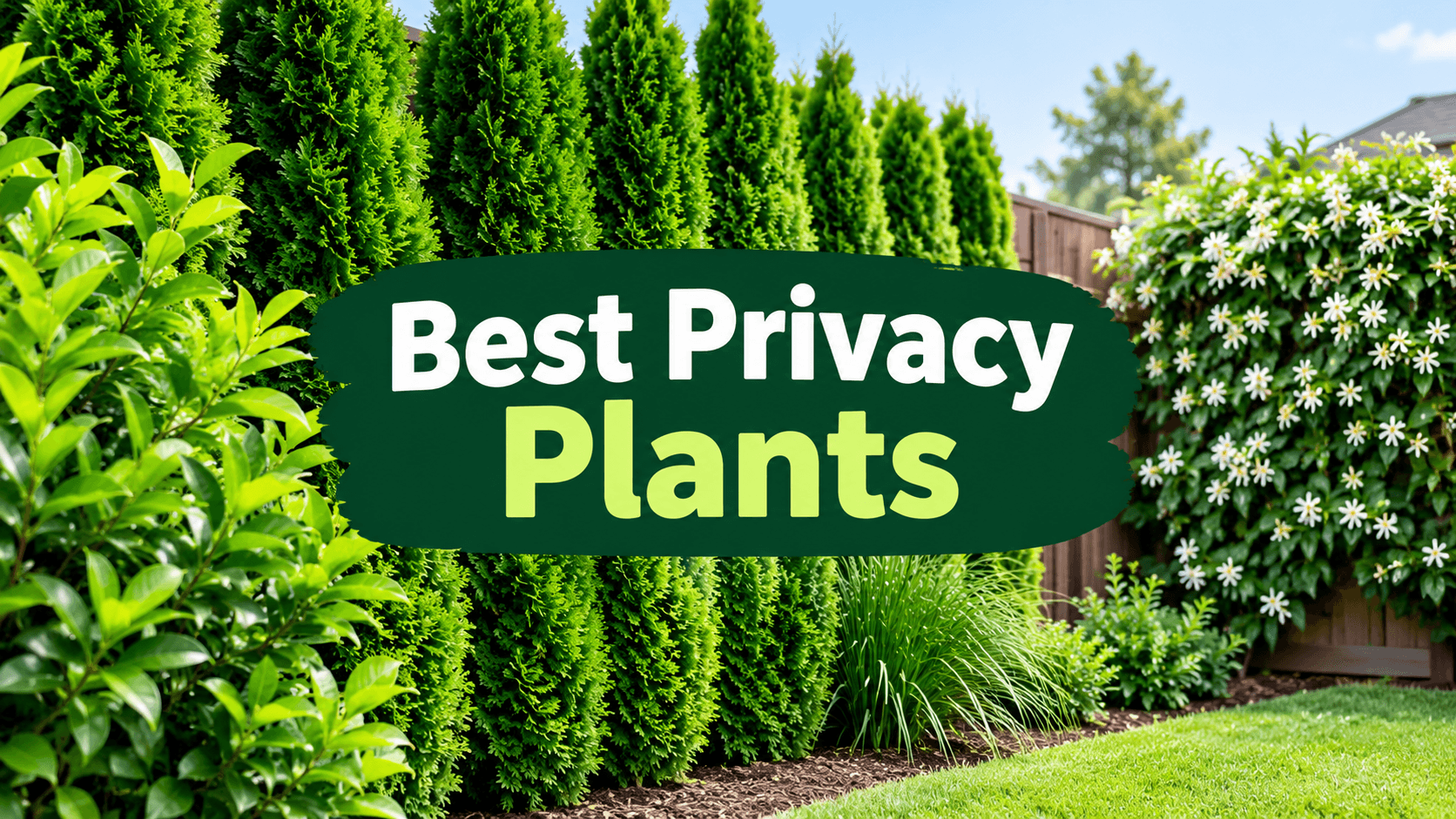
The best privacy plants for most American yards include arborvitae for year-round screening, holly for dense evergreen coverage, eastern redcedar for adaptable native planting, wax myrtle for suitable warm climates, and mixed shrubs for a resilient living fence. The right choice depends on your USDA hardiness zone, sunlight, mature plant width, soil drainage, and desired privacy height.
Homeowners across the United States use privacy plants to screen neighboring windows, create secluded patios, soften property boundaries, and make backyards more comfortable. A well-planned living screen can provide year-round foliage, seasonal flowers, wildlife habitat, and a more natural alternative to a solid fence. However, the best plant for a sunny Texas property may not survive a cold Minnesota winter, and a tall evergreen that fits a large suburban lot may overwhelm a narrow urban yard.
Choosing privacy plants starts with the view you want to block and the conditions where the plants will grow. Evergreen trees and shrubs provide the most dependable winter coverage, while deciduous hedges offer flowers, fall color, and seasonal screening. A mixed planting of compatible species can also reduce the risk of losing an entire screen to one pest, disease, or environmental stress. University extension guidance supports choosing plants according to local conditions, favoring appropriate native species, and avoiding invasive plants.
This guide compares practical options for different American landscapes, explains how to plan spacing and planting height, and identifies common mistakes that delay privacy. Mature dimensions and hardiness vary by species and cultivar, so confirm the specific plant label and local extension recommendations before buying.
The best privacy plants are species that grow densely enough to obstruct unwanted views while remaining healthy in the site’s climate and soil. For many American homeowners, evergreen trees and shrubs are the first choices because they retain foliage through winter. Other properties benefit from a layered combination of evergreen plants, flowering shrubs, and tall grasses.
There is no single best privacy plant for every yard. An exposed property in the Southeast has different heat and moisture demands from a shaded garden in the Northeast. Likewise, a narrow side yard requires a more compact plant than a spacious backyard boundary.
The following comparison is a starting point, not a universal planting prescription. Mature dimensions vary by cultivar and growing conditions, and native status depends on the region.
Source: jagonews24.com
Best for dense year-round coverage
Arborvitae cultivars, appropriately selected hollies, and suitable evergreen junipers can create a continuous screen when planted with adequate spacing.
Best for narrow spaces
Columnar junipers, narrow arborvitae cultivars, and upright holly selections can limit the footprint, although even narrow varieties need room for their mature width.
Best for natural-looking boundaries
A mixed screen of regionally appropriate evergreen and deciduous shrubs creates variation in texture, flowering, and seasonal interest.
Best for faster initial coverage
Tall ornamental grasses and suitable fast-growing shrubs may provide useful screening before slower-growing trees fill out, provided they are appropriate for the climate and are not invasive.
Evergreen Versus Deciduous Privacy Plants
Evergreen plants retain most of their foliage throughout the year and are generally the better option when privacy is needed in every season. Their main trade-offs are the need for suitable winter conditions, sufficient growing space, and occasional pruning or cleanup.
Deciduous plants lose their leaves during part of the year. Dense branching may still obscure some views, but the screen becomes less effective when leaves fall. These plants can be valuable when flowering, fall color, wildlife benefits, or a lower purchase cost matters more than complete winter coverage.
Choose evergreen plants when
You need consistent screening around a patio, bedroom window, outdoor seating area, or property boundary.
Choose deciduous plants when
You want seasonal interest, have adequate winter screening from other features, or prefer a varied hedge.
Best Evergreen Trees for Privacy
Evergreen trees are useful when you need a tall screen between properties, along a rear fence, or around an exposed outdoor living area. Select a species and cultivar based on mature height and width, winter hardiness, sunlight, and the amount of maintenance you can manage.
Before purchasing tall trees, check their expected mature spread. A row that looks slim in a nursery container can eventually occupy several feet of yard space. Trees also need adequate root space and should not be planted where their mature size conflicts with overhead wires, buildings, driveways, or utility infrastructure.
Source: x.com
Arborvitae
American arborvitae and selected hybrids are popular screening plants because many cultivars have dense foliage and an upright shape. Green Giant arborvitae can become a large tree, while Emerald Green arborvitae is generally more compact. Neither is appropriate for every climate or yard, and deer may browse some varieties heavily.
Eastern redcedar
Eastern redcedar is native to much of the eastern and central United States and tolerates a range of conditions once established. The species can grow into a substantial tree, so compact cultivars are often more practical for residential screens. Confirm the selected cultivar’s mature dimensions and suitability for the local site.
Hollies
American holly and selected hybrid hollies offer evergreen foliage and can create substantial screening. Some selections also produce ornamental berries when appropriate pollination conditions are met. Spiny leaves, mature width, and regional adaptability should influence placement.
Southern magnolia
In suitable parts of the South, southern magnolia offers broad evergreen leaves and a substantial visual barrier. It generally needs more room than a narrow hedge plant and may be unsuitable for small properties or climates with severe winter cold.
Junipers
Upright junipers can work well in sunny, well-drained sites, including narrow planting strips when the selected cultivar remains compact. Many tolerate dry conditions after establishment. Avoid heavy cuts into old, leafless wood because many junipers do not readily regenerate foliage from those areas.
Arborvitae: A Popular Choice for Living Privacy Fences
Arborvitae is a strong candidate when you want a relatively uniform evergreen screen. Emerald Green is often considered for smaller residential spaces because it has a narrower form than many large arborvitae selections. Green Giant is better suited to properties with enough room for a much taller and broader plant.
Planting distance should follow the cultivar’s mature width and the desired appearance of the finished screen. Trees planted too closely can compete for water, light, and root space. Trees planted too far apart may leave gaps for years.
Inspect foliage for browning and damage before buying. In regions with heavy deer pressure, consult local extension guidance about browsing-resistant alternatives or physical protection. No evergreen should be treated as completely deer-proof.
Main advantage
Dense foliage and an upright growth habit make suitable cultivars useful for visual screening.
Main limitation
The wrong cultivar, poor drainage, drought stress, or deer browsing can undermine the screen.
Best Privacy Shrubs for Hedges and Small Yards
Privacy shrubs are often more manageable than large trees in front yards, narrow side yards, and residential gardens. They can form a dense hedge, conceal the lower portions of a fence, or fill spaces between larger evergreens. The most suitable varieties depend on mature height, foliage retention, pruning tolerance, and local growing conditions.
Source: bengali.indianexpress.com
Inkberry holly
Inkberry holly is an evergreen shrub native to parts of the eastern United States. It can suit moist, acidic soils and partial shade or sun, depending on the site. Its natural shape may be less formal than a clipped hedge, but selected cultivars can provide a more compact appearance.
Yaupon holly
Yaupon holly is a useful option for many Southern landscapes. It tolerates heat and can be pruned into a hedge, while selected cultivars offer different sizes and shapes. Check local suitability, cultivar dimensions, and whether a compatible pollination partner is needed for berries.
Wax myrtle
Wax myrtle, also called southern wax myrtle, is an evergreen or semi-evergreen shrub in suitable warm regions. It can grow into a broad screen and tolerate coastal conditions, but it may become too large for a narrow planting strip without careful selection and management.
Yew
Suitable yew cultivars can provide dense foliage and tolerate more shade than many sun-loving screening plants. Climate suitability varies, and yew plant parts are toxic if ingested by people or animals. Avoid it where accidental ingestion is a concern.
Panicle hydrangea
Panicle hydrangea is a deciduous shrub that can add height and seasonal flowers to a mixed screen. It loses its leaves in winter, so it should not be the sole choice where uninterrupted year-round coverage is essential.
Arrowwood viburnum
Arrowwood viburnum is a deciduous shrub native to parts of eastern North America. It can contribute to a layered boundary with flowers, foliage, and fruit. Confirm the mature dimensions and regional suitability of the species or cultivar.
Choosing Shrubs for Narrow Planting Strips
For a strip between a patio and a fence, prioritize mature width over the height shown on the plant tag. A shrub that grows wider than the available bed may eventually obstruct a walkway, press against a fence, or require frequent corrective pruning.
Upright holly cultivars and narrow junipers may suit sunny locations, while selected yews or other shade-tolerant shrubs may be more appropriate beneath trees. However, deep shade can reduce density, and dry soil beneath established trees creates additional competition for water.
If a planting bed is extremely narrow, a trellis with a suitable climbing plant or a combination of container-grown screening and a fence may be more practical than forcing large shrubs into insufficient space.
Measure first
Measure the bed width, distance to structures, and space needed for access and maintenance.
Check light conditions
Observe direct sunlight across the day and choose plants that tolerate the actual exposure.
Avoid repeated severe pruning
Choose a naturally compact cultivar rather than relying on frequent cutting to hold an oversized plant in place.
Fast-Growing Privacy Plants: What to Choose and What to Avoid
Fast-growing privacy plants can reduce the time needed to establish a screen, but rapid growth does not automatically make a plant the best long-term choice. Large mature dimensions, weak branching, water demand, invasive growth, and frequent pruning can outweigh the initial advantage.
A practical strategy is to combine plants that provide different types of coverage. Suitable evergreen shrubs can maintain winter screening while tall ornamental grasses or faster-growing deciduous plants fill visual gaps during establishment. The combination should be designed around local climate and mature dimensions.
Source: nandighoshatv.com
Green Giant arborvitae
Can grow rapidly under favorable conditions and provide a tall screen, but it becomes large and needs substantial room. It is not the right choice for every small residential lot.
Ornamental grasses
Tall, clump-forming grasses can provide seasonal screening relatively quickly. Choose noninvasive species suited to the region, and account for winter dieback or leaf loss where year-round coverage is required.
Suitable native shrubs
Regionally appropriate viburnums, wax myrtle, or other native screening shrubs may fill space while supporting wildlife. Select species based on local soil, moisture, sunlight, and winter temperatures.
Climbing plants
A suitable vine can cover a fence or trellis without requiring a broad planting bed. Check its mature spread, support needs, and invasive potential before planting.
Why Invasive Plants Are a Poor Privacy Solution
Some plants sold for quick screening spread beyond the intended hedge through underground stems, seeds, or escaping shoots. This can create extra maintenance and damage nearby natural areas. Running bamboo is a prominent example of a plant that can become difficult to contain, while some nonnative shrubs are invasive in particular states or regions.
Avoid assuming that a plant is safe because a nursery sells it or because it is popular elsewhere. Check state invasive-plant lists and local extension recommendations before planting. Where bamboo is permitted and considered, distinguish clumping types from running types and investigate containment requirements before purchasing.
Check regional status
Use state or university extension resources to confirm whether a proposed plant is invasive or restricted locally.
Plan for mature spread
Consider underground runners, seedlings, suckering roots, and branches that extend beyond the property boundary.
Best Native Privacy Plants for American Landscapes
Native privacy plants can make a screen more compatible with local wildlife and regional growing conditions. Native status is geographically specific: a species native to the Southeast may be nonnative in the Pacific Northwest, and a plant that thrives in one part of a state may struggle in another.
A mixed screen can also be more resilient than a long row of one species. If one plant encounters a particular pest, disease, or environmental stress, a different species may remain healthy and preserve some of the screen. University extension guidance recommends considering plant diversity and regional suitability when planning privacy screens.
Source: www.youtube.com
Eastern redcedar
A useful evergreen tree across much of the eastern and central United States, especially where the selected form has adequate space and drainage.
American holly
An evergreen native tree in much of the eastern United States that can provide dense foliage and berries. It needs room for its mature size and is not a universal choice for every climate.
Inkberry holly
A broadleaf evergreen shrub native to parts of the eastern United States, particularly useful where soil and moisture conditions match its needs.
Arrowwood viburnum
A deciduous native shrub in parts of eastern North America that adds seasonal screening and wildlife value.
Regional native grasses
Suitable native grasses can add height and visual texture to a layered screen, although seasonal foliage changes may reduce winter privacy.
How to Verify That a Plant Is Native to Your Area
Start with a state university extension service, a regional native plant society, or a reputable botanical database. Verify the botanical name rather than relying on a common name, because several unrelated plants may share the same everyday name.
Next, compare the plant’s natural habitat with your yard. A native plant that naturally grows in wet woodland may not thrive in a dry, exposed strip next to a driveway. Native status does not remove the need to match sunlight, drainage, and available root space.
Confirm the botanical name
Match the scientific name and cultivar on the plant label to the regional reference.
Check site compatibility
Review soil moisture, sun exposure, winter hardiness, and mature dimensions before buying.
How to Choose the Right Privacy Plants for Your Yard
The most reliable way to choose privacy plants is to assess the site before visiting a garden center. Start by identifying the view you need to block, then match the planting to local climate, light, soil, mature height, and width. This process reduces the chance of buying a plant that grows too large, loses its foliage in winter, or struggles in the available conditions.
Source: duaa-news.com
1. Identify the privacy target
Decide whether you need to screen a ground-level view, a neighbor’s windows, an elevated deck, or a patio. The required height and planting location depend on the sightline.
2. Check the USDA hardiness zone
Use the USDA Plant Hardiness Zone Map to evaluate average annual extreme minimum winter temperatures. Remember that hardiness zones do not describe every climate factor, including summer heat, drought, wind, or soil moisture.
3. Measure the available area
Record the length and width of the bed and the distance from fences, foundations, walkways, and utility lines. Compare these measurements with mature plant dimensions.
4. Assess sunlight and soil
Determine whether the site receives full sun, partial shade, or substantial shade. Check drainage and consider whether the soil remains wet or dries quickly.
5. Choose a maintenance level
Decide whether you can regularly prune a formal hedge, water during dry periods, clear fallen leaves, or protect plants from browsing animals.
6. Compare plants locally
Ask a local extension service or knowledgeable nursery about regionally suitable species, likely pest problems, and realistic mature dimensions.
Quick Comparison of Common Privacy Plants
Use this table to narrow the choices before checking specific cultivars. The descriptions are general tendencies rather than guarantees, and regional growing conditions can change performance.
Arborvitae
Privacy benefit: dense evergreen coverage. Typical setting: suitable residential landscapes with adequate room and appropriate winter conditions. Main trade-off: deer browsing, drought stress, and cultivar-specific space requirements.
Eastern redcedar
Privacy benefit: evergreen structure and adaptability. Typical setting: many eastern and central U.S. landscapes. Main trade-off: the species can become a large tree unless a suitable compact cultivar is selected.
Holly
Privacy benefit: dense evergreen foliage. Typical setting: regionally suitable gardens and hedges. Main trade-off: some varieties have spiny leaves, require pollination for berries, or grow too wide for small spaces.
Wax myrtle
Privacy benefit: broad evergreen or semi-evergreen screening. Typical setting: suitable warm and coastal regions. Main trade-off: substantial width and limited suitability in colder climates.
Juniper
Privacy benefit: narrow evergreen forms for selected sites. Typical setting: sunny, well-drained landscapes. Main trade-off: some varieties become large, and old bare wood may not regrow foliage after severe pruning.
Panicle hydrangea
Privacy benefit: seasonal height, flowers, and a leafy summer screen. Typical setting: mixed deciduous hedges. Main trade-off: leaf loss reduces winter coverage.
Tall ornamental grasses
Privacy benefit: seasonal screening at relatively low planting widths for some clump-forming varieties. Typical setting: mixed borders and sunny beds. Main trade-off: winter appearance, seasonal dieback, and potential invasiveness of some species.
How Much Privacy Can You Expect?
Plant height alone does not determine privacy. A narrow upright tree may screen a window directly behind it but leave diagonal views open. A shorter, wider shrub can provide better coverage at seating height. Dense foliage, branch placement, planting distance, and the angle of the unwanted view all matter.
For an elevated neighbor’s window, a low hedge may have little effect even when it looks dense from the ground. Estimate the sightline from the actual viewing positions before planting. Where the required height would exceed practical or permitted plant dimensions, a trellis, fence, or combination of structures and plants may be a better solution.
For patio privacy
Prioritize foliage density at seated and standing eye level rather than choosing the tallest available tree.
For window screening
Estimate the height needed to interrupt the view from both properties and account for differences in ground elevation.
For boundary screening
Consider a mixed hedge with overlapping foliage rather than relying on one narrow row that may leave gaps.
How to Plant a Privacy Hedge for Long-Term Coverage
A successful privacy hedge depends on proper planting, realistic spacing, and establishment care. Even high-quality plants may struggle when planted too deeply, placed in poorly drained soil, or crowded together to create an instant wall. Follow the plant label and region-specific planting guidance.
Source: x.com
Step 1: Mark the planting line
Use stakes or a garden hose to mark the proposed hedge. Check property boundaries, easements, local restrictions, and access requirements before digging.
Step 2: Locate underground utilities
In the United States, contact 811 before digging and follow the local utility-marking process. Keep planting holes away from marked underground infrastructure as instructed.
Step 3: Space plants for mature growth
Use the expected mature width, growth habit, and desired density to determine spacing. Avoid copying a universal distance because compact shrubs and large trees have very different space requirements.
Step 4: Prepare the planting area
Assess drainage and soil conditions. Avoid creating an isolated pocket of heavily amended soil that differs sharply from the surrounding ground unless local guidance recommends a specific amendment.
Step 5: Plant at the correct depth
Follow species-specific instructions and keep the root flare appropriately positioned. Planting too deeply can contribute to root and trunk problems.
Step 6: Water and mulch
Water thoroughly after planting and maintain appropriate moisture during establishment. Apply a moderate layer of mulch while keeping it away from direct contact with trunks and stems.
Step 7: Monitor the screen
Inspect plants for drought stress, drainage problems, pests, and foliage damage. Adjust watering based on soil moisture and weather rather than following a rigid schedule.
Should You Plant Privacy Trees in a Straight Row or Stagger Them?
A straight row is appropriate for a formal hedge when the plants have a consistent growth habit and the bed provides enough room. Staggered planting can improve the appearance of a mixed screen and allow foliage at different heights to overlap, but it requires more lateral space.
Do not stagger trees simply to squeeze more plants into a small bed. Extra plants can compete for water and root space, making establishment harder. Choose the layout that supports mature growth and the type of screen you need.
Straight row
Useful for a formal hedge with uniform plants and a clearly defined boundary.
Staggered or layered planting
Useful for mixed screens that combine trees, shrubs, and smaller plants at different heights.
How Long Does It Take for Privacy Plants to Fill In?
The time required varies substantially with the species, cultivar, plant size at purchase, sunlight, soil moisture, climate, and care. Some grasses and shrubs can provide noticeable seasonal screening sooner than trees, while a newly planted evergreen hedge may need several growing seasons to develop a continuous appearance.
Avoid guarantees such as complete privacy in one year. A plant may grow taller without becoming wider or denser enough to block a view. When immediate coverage is essential, combine established fencing or a suitable screen structure with plants that can fill in over time.
Measure success by coverage
Look for fewer visible gaps from the viewpoints you want to screen, not just an increase in plant height.
Allow for establishment
Prioritize healthy roots and consistent moisture rather than forcing rapid top growth with excessive fertilizer.
Privacy Plant Maintenance, Common Problems, and Safety
Regular observation and appropriate care help a privacy screen remain dense without becoming an expensive maintenance burden. The main problems are usually unsuitable growing conditions, excessive crowding, incorrect pruning, browsing animals, and choosing plants that do not fit the local climate.
Source: hotjobs.bdjobs.com
Browning evergreen foliage
Possible causes include drought, waterlogged roots, winter injury, pests, or disease. Check soil moisture and inspect the pattern of damage before assuming the plant needs more water.
Bare lower branches
Crowding, shade, natural growth habit, or excessive pruning may contribute. Improve light conditions where practical and select naturally dense plants for future replacements.
Plants growing into walkways
The selected species or cultivar may be too broad for the available space. Use appropriate light pruning if the plant tolerates it, or replace it with a naturally narrower selection.
Repeated deer damage
Protect vulnerable plants with appropriate barriers and seek local advice on less palatable alternatives. Deer resistance varies by species, season, and local browsing pressure.
Weak or leaning trees
Check planting stability, root condition, and possible storm damage. Seek an arborist’s assessment for large trees with significant lean, broken limbs, or other structural concerns.
Pruning Without Damaging the Privacy Screen
Pruning requirements depend on the plant’s natural form. Formal hedges may need periodic trimming, while many native shrubs look better with selective cuts that preserve their natural shape. Avoid routinely shearing plants so severely that foliage is removed from areas that cannot readily regrow.
For many evergreen conifers, cutting deeply into old bare wood can leave permanent holes. Research the pruning response of the exact species before making substantial cuts. Large branches or trees near buildings, power lines, or public areas may require a qualified professional.
Use clean, suitable tools
Maintain sharp tools and follow safe operating practices. Clean tools appropriately when disease transmission is a concern.
Prune for the species
Check the recommended pruning season and whether the plant tolerates shearing, selective thinning, or rejuvenation pruning.
Toxic Plants, Pets, and Household Safety
Privacy planting should account for children, pets, and the way the outdoor space is used. Some popular landscape plants contain toxic compounds. Yews are particularly important to avoid where their plant parts could be ingested, because they can cause severe poisoning. Some hollies produce berries that may cause illness if eaten.
Verify the exact species before planting near play areas, pet runs, or edible gardens. Do not assume that a plant is safe because birds eat its berries or because it is commonly used in landscaping. If an exposure occurs, contact a local poison control service or veterinary professional as appropriate.
Around children and pets
Check reliable plant-toxicity references and avoid species with unacceptable ingestion risks for the household.
Near edible crops
Consider shade, roots, falling leaves, and access when positioning a privacy hedge beside vegetable beds.
Research Notes and Reader Question Gap Map
This guide was informed by a review of university extension resources and gardening guidance available on October 10, 2026. Sources examined included the University of Maryland Extension’s Plants for Mixed Privacy Screens, Mississippi State University Extension Service’s Plants for Privacy, North Carolina State Extension’s What Can I Plant for Privacy?, and University of Maine Cooperative Extension’s guidance on evergreen privacy hedges.
The strongest recurring recommendations were to match plant selection to local growing conditions, consider mature dimensions, favor appropriate native species, and avoid invasive plants. Extension guidance also supports mixed-species screening as a way to reduce dependence on a single plant type. These are evidence-based recommendations from published guidance, not results of hands-on testing for this article.
The following gap map separates useful questions inferred from the reader’s task from verified search-demand claims. No Search Console data, customer support records, live People Also Ask results, or search-volume data were supplied for this article, so the questions below are editorial inferences rather than claims about measured demand.
Source: medivoicebd.com
Question: Which privacy plant works in a narrow yard?
Reader stage: planning. Basis: inferred next need. Reviewed coverage: addressed through compact cultivars and mature-width guidance. Reader benefit: reduces overcrowding and repeat pruning. Evidence: university extension plant dimensions and local nursery guidance. Priority: high. Placement: plant comparison and selection sections.
Question: Which plants provide privacy in winter?
Reader stage: selection. Basis: inferred next need. Reviewed coverage: addressed through the evergreen versus deciduous comparison. Reader benefit: helps avoid seasonal gaps. Evidence: plant growth habits and regional horticultural guidance. Priority: high. Placement: opening comparison.
Question: How do I prevent an invasive privacy hedge?
Reader stage: purchase and long-term maintenance. Basis: inferred next need. Reviewed coverage: addressed through invasive-plant screening guidance. Reader benefit: lowers the risk of expensive containment and environmental harm. Evidence: regional extension recommendations and state invasive-plant lists. Priority: high. Placement: fast-growing plant section.
Question: How far apart should privacy trees be planted?
Reader stage: installation. Basis: inferred next need. Reviewed coverage: addressed with mature-width-based spacing, but exact distances remain cultivar-specific. Reader benefit: prevents crowding and gaps. Evidence: plant labels and local horticultural recommendations. Priority: high. Placement: planting instructions.
Question: Which privacy plants are safe around pets?
Reader stage: final selection. Basis: inferred next need. Reviewed coverage: addressed with a toxicity caution, not an exhaustive safety list. Reader benefit: encourages verification before planting. Evidence: reliable species-specific poison and veterinary references should be consulted for an individual household. Priority: medium to high. Placement: safety section.
Frequently Asked Questions
Q
What is the best plant for year-round privacy?
Arborvitae, selected evergreen hollies, and suitable junipers are common choices for year-round screening. The best option depends on your region, available space, sunlight, soil drainage, and local pest pressure. Choose a cultivar whose mature size fits the planting area.
Q
What are the fastest-growing privacy plants?
Some arborvitae cultivars, suitable shrubs, and tall ornamental grasses can establish useful screening relatively quickly under favorable conditions. Growth varies with climate, soil, water, sunlight, and plant age. Fast growth should be weighed against mature size, structural strength, maintenance, and invasive potential.
Q
Which privacy plants are best for a small backyard?
Compact upright arborvitae, narrow junipers, selected hollies, and appropriately sized shrubs can suit small yards. Measure the planting bed and check mature width before buying. For extremely narrow spaces, a trellis or existing fence combined with suitable climbing plants may be more practical than large shrubs.
Q
Can I create a privacy screen in a shady yard?
Yes, but the options depend on how much light the area receives and how dry the soil becomes. Some yews and selected evergreen shrubs tolerate shade better than many arborvitae and sun-loving junipers. Confirm the species’ local suitability, because shade tolerance and winter hardiness vary.
Q
Are native plants better for privacy hedges?
Regionally appropriate native plants can support local wildlife and may be well adapted to local environmental conditions. They are not automatically suitable for every yard, and not every native plant stays evergreen or forms a dense hedge. Choose native species based on the exact location, mature size, and desired level of screening.
Q
How close to a fence can I plant privacy trees?
There is no single safe distance for every species. Base the setback on mature width, root space, access for pruning, fence ownership, property boundaries, and local requirements. Large trees generally need more room than compact shrubs. Check utility locations and property restrictions before digging.
Q
Will privacy plants block noise as well as views?
Plants can soften a landscape and provide some sound absorption and psychological separation, but a typical residential hedge will not reliably eliminate traffic or neighborhood noise. A dense, sufficiently wide planting combined with an appropriate solid barrier may provide better results, depending on the sound source and site layout.
Q
What is the best time to plant a privacy hedge?
The best planting time depends on the species and regional climate. Many trees and shrubs establish well during cooler periods when soil conditions are workable and roots can develop before severe heat or freezing conditions. Consult local extension guidance and avoid planting when the ground is frozen, waterlogged, or extremely hot and dry.
✦ Wrapping Up
Conclusion
The best privacy plants are the ones that match your yard’s climate, available space, desired screening height, and maintenance requirements. Arborvitae is a popular option for dense evergreen coverage, holly and juniper offer alternatives for different site conditions, and suitable native shrubs can create a more diverse living boundary. Deciduous shrubs and ornamental grasses can add seasonal coverage and texture when uninterrupted winter screening is not essential.
Before buying plants, measure the area, identify the view you need to block, check the USDA hardiness zone, and compare mature dimensions. Favor regionally appropriate species, avoid invasive plants, and allow enough room for roots and branches to grow. A well-planned mixed screen may take longer to establish than an instant barrier, but it can provide lasting privacy while adding visual interest and habitat.
💡 Key Takeaway
Measure the planting area and required screen height, then shortlist three locally suitable species by mature width, evergreen coverage, sunlight needs, and maintenance. Confirm the final selection with a local university extension service or reputable nursery before planting.
I enjoy sharing simple gardening ideas, lawn care tips, and honest product reviews that help make outdoor work easier. From home gardening guides to helpful tools and lawn care advice, I write easy-to-follow content to help readers create a healthier and better-looking outdoor space without wasting time or money.