As an Amazon Associate, I earn from qualifying purchases.
The best vegetables for succession planting include lettuce, radishes, carrots, spinach, bush beans, beets, turnips, and green onions. Sow small amounts at regular intervals to spread your harvest across the growing season.
In the United States, a home vegetable garden can produce fresh food from spring through fall when planting dates match local weather. Gardeners in cool New England springs face different challenges from those in hot Texas summers or mild Pacific Northwest winters. Succession planting helps gardeners in every region make better use of their space and growing season.
Succession planting means sowing the same vegetable at set intervals or planting a new crop after an earlier one finishes. Instead of harvesting every radish or lettuce head at once, you spread planting dates to create a steadier supply. This approach can reduce waste, keep garden beds productive, and make fresh vegetables available for more weeks.
The best crops for this method grow quickly, mature at different rates, or tolerate repeated sowing. Radishes, leafy greens, carrots, beans, and beets are useful starting points. The right choices depend on your local frost dates, soil temperature, available sunlight, and how much time you have to care for each crop.
What Makes a Vegetable Good for Succession Planting?
The best succession crops have a short or predictable time to harvest, fit into small spaces, and grow well from repeated sowings. Some vegetables are ready within a few weeks, while others need a longer stretch of suitable weather. Choosing crops with different growth rates helps you plan a steady supply instead of a single large harvest.
Succession planting works in several ways. You can sow the same vegetable again, plant a new crop after harvesting an earlier one, or grow varieties with different maturity dates. Each method helps manage the timing of your harvest, but the best choice depends on your garden and the crop.
Before choosing seeds, check the number of days to maturity on the packet. This number is an estimate, not a promise, and the starting point can vary by crop. For direct-sown vegetables, maturity is often counted from sowing, while for transplants it may be counted from transplanting.
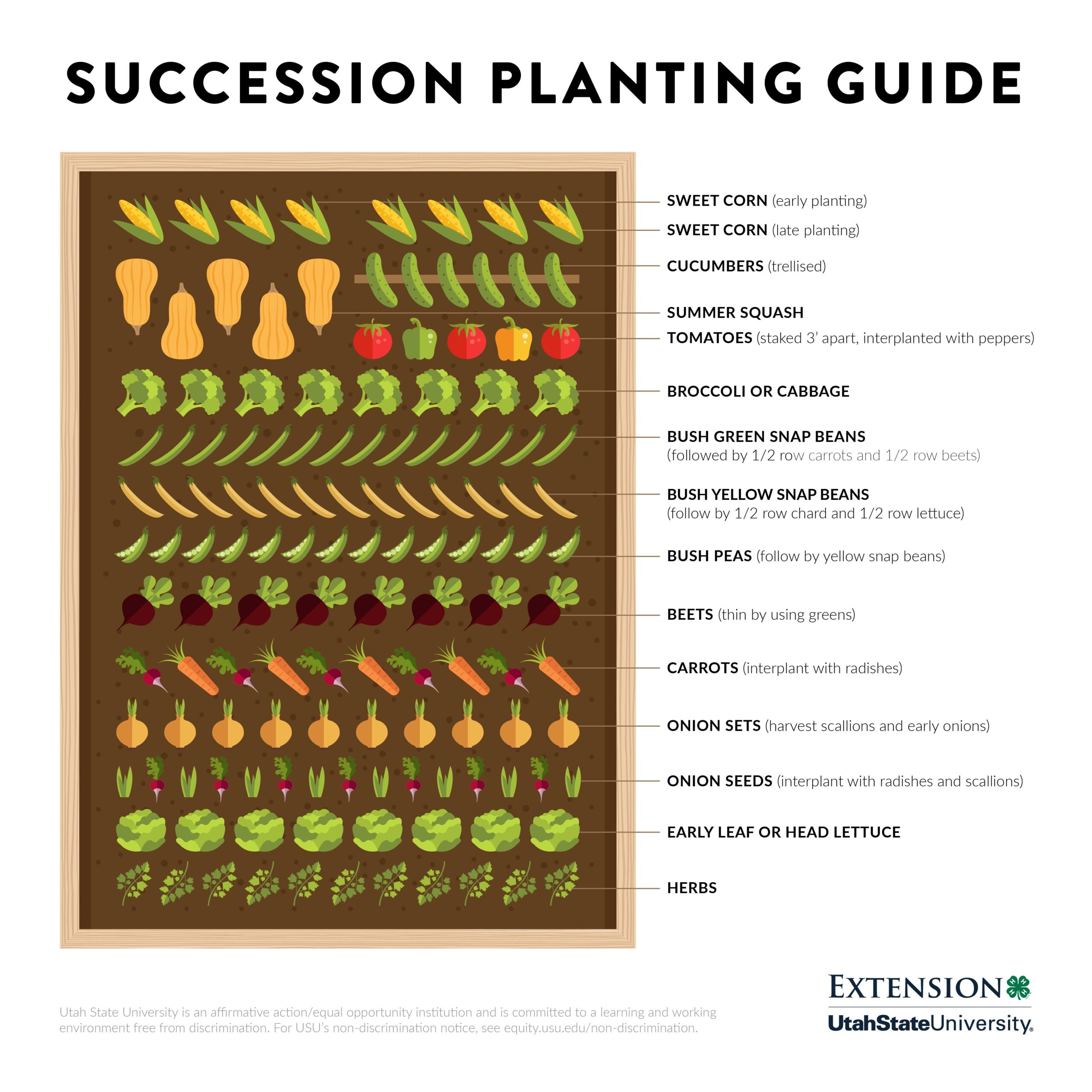
Source: morningchores.com
Short growing time
Quick crops such as radishes and baby leaf lettuce can produce food in a short window, leaving room for another sowing or a replacement crop.
Reliable germination
Vegetables that germinate well in suitable soil conditions make it easier to predict when the next batch will mature.
Flexible harvest
Leafy greens, green onions, and some root crops can be harvested in stages, giving you more control over how much food you pick.
Seasonal adaptability
A useful garden plan includes cool-season crops for spring and fall and heat-tolerant crops for summer where local conditions allow.
The Three Main Types of Succession Planting
Repeated sowing is the simplest form. You plant another small row of radishes or lettuce while the first row grows. When the first batch is harvested, the second is approaching maturity, so the supply overlaps.
Replacement planting uses a garden bed more than once. For example, after spring spinach finishes, you can plant bush beans if enough warm weather remains. Later, you might replace the beans with spinach or another cool-season crop.
Staggered maturity planting uses varieties that mature at different speeds. An early carrot variety may be ready before a main-season variety planted at the same time. This spreads the harvest without requiring a new sowing every week.
Choose repeat sowing
Use it for radishes, lettuce, spinach, and other crops that can be sown in small batches.
Choose replacement planting
Use it when an early crop finishes and another crop can mature within the remaining season.
Choose staggered varieties
Use it when you want a broader harvest window without frequent new planting.
The Best Vegetables for Succession Planting
Start with vegetables that match your climate, meal habits, and available space. The following crops are useful because they offer short harvest windows, repeat sowing opportunities, or flexible planting seasons. Days to maturity are approximate and vary with variety, temperature, sunlight, and care.
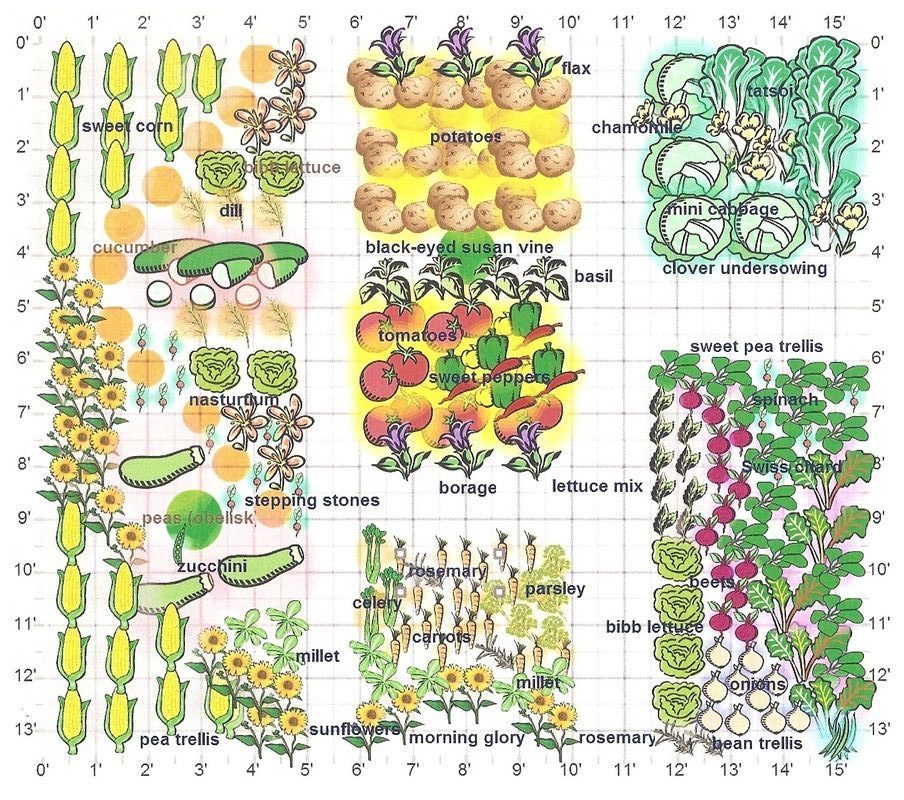
Source: i.pinimg.com
Radishes
Radishes are among the easiest crops for repeated sowing. Many varieties mature in about 25 to 35 days under suitable conditions. Sow a small row every 7 to 10 days during cool weather. Warm soil can make roots woody or encourage plants to bolt, so pause sowing when heat becomes intense.
Leaf lettuce
Leaf lettuce grows quickly and fits well in beds, containers, and small gardens. Baby leaves may be ready in roughly 25 to 35 days, while full-sized plants need longer. Sow a new small patch every 10 to 14 days during mild weather. Choose heat-tolerant varieties for warmer periods, and provide afternoon shade when useful.
Spinach
Spinach is a strong choice for spring and fall succession planting. Baby leaves can often be picked in about 25 to 35 days, while mature leaves take longer. Sow every 10 to 14 days when temperatures favor leafy growth. Spinach often bolts in hot weather, so plan to switch to heat-tolerant greens during summer.
Carrots
Carrots offer a longer harvest window when planted in separate batches. Many varieties need around 55 to 80 days to mature. Sow a new short row every 2 to 3 weeks while soil and weather remain suitable. Keep the seedbed evenly moist during germination, because drying out can lead to poor or uneven emergence.
Bush beans
Bush beans are well suited to warm-season succession planting. Many varieties mature in about 50 to 60 days. Sow another batch every 2 to 3 weeks during the suitable warm season, allowing enough time before the first expected fall frost. Beans need warm soil, steady moisture, and good airflow.
Beets
Beets provide both edible roots and nutritious leaves. Many varieties reach useful harvest size in about 50 to 65 days, depending on conditions. Sow small batches every 2 to 3 weeks in cool spring or late-summer weather. Thin crowded seedlings so roots have room to develop.
Turnips
Turnips are useful for spring and fall harvests because many varieties grow quickly in cool weather. Small roots may be ready in roughly 30 to 45 days, while larger roots take longer. Sow every 10 to 14 days during a suitable cool period. Harvest promptly when roots reach the size you prefer.
Green onions
Green onions are useful for small gardens because they take little room and can be harvested young. Depending on the variety and planting method, they may provide usable stems within several weeks to a few months. Sow another short row every 2 to 3 weeks during favorable conditions, and keep the soil moist while seeds establish.
Arugula
Arugula grows rapidly and is well suited to repeated sowing in cool weather. Baby leaves may be ready in about 20 to 30 days. Sow small patches every 7 to 14 days, then harvest young leaves before plants become too mature or start to bolt. Shade can extend its usefulness during mild periods of warming weather.
Kale and mustard greens
Kale and mustard greens offer flexible harvests, especially in spring and fall. Young leaves can be harvested before plants reach full size. Sow small batches every 2 to 3 weeks when temperatures suit the variety. Mustard greens often grow quickly but can become sharp or bolt in hot weather.
Summer squash
Summer squash is not usually sown as frequently as radishes or lettuce, but staggered planting can help extend production. A second planting may become useful as the first plants age or suffer from pests. Leave adequate space, and do not start a late batch unless enough warm weather remains for it to produce.
Cucumbers
Cucumbers can also benefit from a carefully timed second planting. Sow a new batch after the first has established, provided the season is long enough. Bush varieties suit smaller gardens, while vining types need a trellis or more room. Check local disease pressure and avoid planting where recent cucurbit problems make another crop risky.
Which Crops Are Best for Beginners?
Radishes, leaf lettuce, and green onions are easy places to start because they fit into small areas and can be planted in modest batches. They also give gardeners a quick way to learn how sowing dates affect harvest timing. Carrots and beets are good next choices once you are comfortable keeping a seedbed moist and thinning seedlings.
If your garden is in a region with very hot summers, focus on cool-season crops in spring and fall, then switch to warm-season vegetables when the soil warms. In cooler northern regions, use the summer growing period for beans and other crops that need warmth. Local planting calendars are more useful than a single nationwide schedule.
Best quick crop
Radishes provide a fast first harvest and help beginners practice repeat sowing.
Best flexible green
Leaf lettuce can be harvested young and planted in repeated small patches.
Best warm-season choice
Bush beans work well when soil is warm and frost is no longer a concern.
How Often Should You Plant Each Vegetable?
The best interval depends on how quickly a crop grows and how much of it you use. Quick crops may need another sowing every week or two, while slower root crops often do well with a gap of two or three weeks. These intervals are starting points, not fixed rules.
Planting too much at once can create a glut. If your family uses only a small bowl of salad greens each week, a short row every 10 days may be more useful than sowing a large bed all at once. Adjust your schedule after observing how much each batch produces.
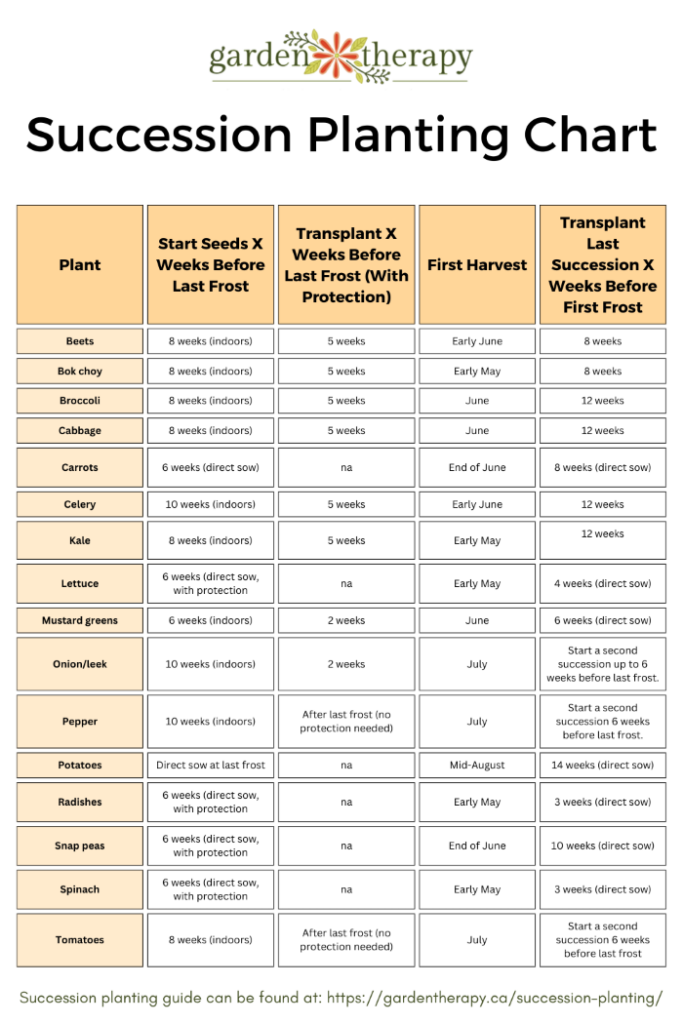
Source: gardentherapy.ca
Every 7 to 10 days
Try this interval for radishes and arugula during suitable cool weather, especially when you want a continuous supply of young produce.
Every 10 to 14 days
Use this as a starting point for leaf lettuce and spinach when temperatures support steady growth.
Every 2 to 3 weeks
This interval often works for carrots, beets, turnips, green onions, and bush beans when the season allows.
One or two later plantings
Summer squash and cucumbers often need fewer repeat plantings because they take more room and can produce heavily from established plants.
A Simple Way to Calculate Your Next Sowing Date
Start with the date you sow the first batch and the interval you want to use. If you sow lettuce on April 1 and choose a 12-day interval, your next sowing dates would be April 13, April 25, and May 7. This is a planning example, not a recommendation for every location, because local temperatures and frost dates may change the suitable planting window.
Next, compare the estimated maturity time with the weather expected later in the season. A crop that needs 60 days may not finish before a hard frost if you sow it too late. Heat-sensitive greens may also fail when planted too close to the start of summer heat.
Step 1
Read the seed packet for maturity time and suitable soil conditions.
Step 2
Choose a sowing interval based on how much food you use and how quickly the crop matures.
Step 3
Check the local planting calendar and count backward from the end of the suitable growing period.
Step 4
Record the actual harvest date and adjust the next interval if the crop grows faster or slower than expected.
A Seasonal Succession Planting Plan for U.S. Gardens
A successful succession plan follows local weather rather than the calendar alone. The United States includes cold northern climates, humid southern regions, dry western areas, and mild coastal zones. A planting date that works in Minnesota may be too early in the Southeast, while a late-summer sowing that works in Oregon may struggle in a hot inland climate.
Use your average last spring frost and first fall frost as planning guides, then check local extension recommendations for soil temperatures and regional planting windows. Frost dates are estimates, and heat can limit a crop even when frost is not a concern.
Source: cdn.shopify.com
Early spring
Where soil can be worked and conditions suit the crop, sow radishes, spinach, lettuce, arugula, peas, and some root vegetables. Avoid working wet soil, because this can damage its structure.
Late spring
As soil warms, begin successive sowings of bush beans and other warm-season crops. Continue cool-season crops only while temperatures remain suitable.
Summer
In hot regions, focus on heat-tolerant crops or use shade and steady watering to protect suitable greens. In cooler regions, repeat plantings of beans, carrots, beets, and other crops that can mature before fall.
Late summer and fall
Sow fall crops according to the expected first frost and days to maturity. Spinach, lettuce, radishes, turnips, and some mustard greens can provide useful cool-weather harvests.
How to Plan Around Frost and Heat
For fall planting, count backward from the expected first frost using the crop’s days to maturity. Add extra time for shorter days and cooler weather, which can slow growth. For example, a crop listed at 45 days may need longer to reach harvest size in autumn than it does in summer.
For spring planting, check whether a crop tolerates light frost or needs warmer conditions. Spinach and some other cool-season vegetables can handle cooler weather, while beans and cucumbers should generally wait until frost danger has passed and the soil has warmed. Follow the specific variety’s growing guidance.
Use local frost data
Look up average frost dates for your area and treat them as estimates rather than guarantees.
Watch soil temperature
Warm-season crops may germinate poorly in cold soil, even when daytime air temperatures seem pleasant.
Allow a harvest buffer
Plan for slower autumn growth and the possibility of early frost, especially for late plantings.
How to Succession Plant in a Small Garden
A small garden can produce a steady harvest when each planting has a clear purpose. You do not need a large plot or a complex spreadsheet. Divide a bed into short rows or small blocks, then give each section a planting date and expected harvest window.
Containers work too, especially for radishes, leaf lettuce, arugula, green onions, and compact varieties of other vegetables. Choose containers with drainage holes and enough depth for the crop’s roots. Larger root vegetables need deeper soil than shallow-rooted greens.
Source: growagoodlife.com
Plant short rows
Sow only as much as you expect to eat before the next batch matures. Short rows make it easier to change crops and reduce waste.
Mark every sowing
Write the crop, variety, and planting date on a label or garden map. This helps you compare growth rates and plan the next batch.
Use empty spaces
When a crop is harvested, prepare the space for a suitable replacement instead of leaving it bare for weeks.
Mix crops by growth rate
Fast-growing radishes can sometimes be grown alongside slower crops if both have enough light, water, and room. Avoid crowding plants or letting one crop shade another too heavily.
An Example Plan for a Small Raised Bed
Imagine a raised bed divided into four equal sections. Plant radishes in the first section, leaf lettuce in the second, carrots in the third, and leave the fourth for a later planting of bush beans once temperatures are warm enough. The exact layout should reflect bed depth, sunlight, crop spacing, and your local season.
When the radishes are harvested, use that section for another radish sowing or a suitable replacement crop. When lettuce begins to bolt in hot weather, remove it and consider a warm-season vegetable. Later, as temperatures cool, prepare a section for spinach or another fall crop.
Early planting
Start with crops that tolerate the current temperatures and soil conditions.
Midseason transition
Replace finished crops with vegetables suited to the warmer part of the season.
Fall transition
Use the remaining growing window for cool-season vegetables with enough time to mature.
Prepare Soil and Water for Each New Planting
Healthy soil and steady moisture help each succession crop establish before the weather changes. When one crop finishes, remove diseased plants and clear large plant residues. Check soil moisture and structure before sowing the next batch.
Finished compost can improve soil structure and add organic matter. Apply it based on the condition of the soil and the needs of the next crop rather than assuming every planting needs a heavy dose. Too much fertilizer, especially excess nitrogen, can encourage leafy growth at the expense of roots or fruit in some vegetables.
Source: images.squarespace-cdn.com
Check soil moisture
Keep the seed zone consistently moist while seeds germinate. Do not allow the surface to dry out completely, but avoid waterlogging.
Protect soil structure
Avoid digging or walking on wet beds. Loosen only as much soil as needed to prepare a suitable seedbed.
Use compost wisely
Add mature compost when needed to support soil health, and use a soil test to guide major nutrient corrections.
Mulch established crops
A suitable mulch can reduce moisture loss and weeds, but keep fine seeds uncovered until they germinate unless the crop’s planting instructions say otherwise.
How to Improve Uneven Germination
If a new row emerges unevenly, first check whether the seedbed stayed moist. Small seeds often fail when the top layer dries, while heavy rain can wash seeds away or form a crust that seedlings struggle to break through.
Check seed depth, soil temperature, seed age, and spacing before adding more seed. If gaps remain, reseed them when conditions improve. For crops with a short harvest window, a fresh small row may be more useful than repeatedly repairing a poor planting.
Dry surface
Water gently and often enough to keep the seed zone moist without washing seeds out of place.
Cold or hot soil
Wait for the suitable temperature range for the crop before sowing another batch.
Crowded seedlings
Thin seedlings to the recommended spacing so roots and leaves have room to develop.
Common Succession Planting Mistakes to Avoid
The most common mistake is planting on a fixed schedule without checking the weather. A new sowing may fail if soil is too cold, a heat wave arrives, or frost comes before the crop matures. A good succession plan gives you a starting date but leaves room to adjust.
Another common problem is planting more than you can eat. Frequent sowing works best when each batch is small enough to harvest and use before the next one becomes ready. Track actual yields and shorten or lengthen your intervals based on what your household needs.
Source: i.pinimg.com
Ignoring maturity time
A late crop may not mature before the season ends. Check the packet and allow extra time when growth slows in cooler weather.
Sowing too much at once
Large batches can mature together and overwhelm your kitchen. Use smaller rows and adjust the interval to your actual use.
Planting in unsuitable heat
Spinach, arugula, and many lettuce varieties may bolt or struggle during hot weather. Pause sowing or select varieties suited to warmer conditions.
Skipping crop rotation
Repeatedly growing related crops in the same place can increase the risk of certain pests and diseases. Rotate plant families where space permits.
Forgetting crop spacing
Overcrowded plants compete for light, water, and nutrients. Follow spacing instructions and thin seedlings when needed.
Neglecting pests and disease
Inspect plants before reusing a bed. Remove diseased material appropriately and avoid carrying affected debris into new plantings.
Should You Keep Planting the Same Vegetable in One Bed?
Repeated sowing of the same vegetable in one bed can work over a short period, but it should not become an automatic year-after-year practice. Different crops belong to plant families that may share pests and diseases. Rotating among unrelated families can help reduce some of these problems.
For example, follow a crop of leafy brassica greens with beans or carrots where the timing, soil, and available space suit them. Rotation is not a guarantee against pests or disease, and some problems affect many plant families. Remove infected plants and seek local extension guidance if a recurring issue appears.
Plan beyond one season
Keep a simple record of which plant families occupied each bed so you can avoid repeating vulnerable crops in the same location.
Inspect before replanting
Look for root damage, wilt, leaf spots, and other signs of disease before sowing a new crop.
Choose the next crop carefully
Match the replacement vegetable to the season and avoid planting a crop that is vulnerable to a known problem in the bed.
How to Tell Whether Your Succession Plan Is Working
A successful plan gives you harvests at useful intervals without creating long gaps or too much surplus. You should see new seedlings establish while earlier crops approach harvest, provided the crops and weather allow that overlap. Your harvest record will show whether the intervals suit your garden.
Do not judge the plan by a single planting. Germination, rainfall, pests, and sudden temperature changes can affect a batch. Make small adjustments over several sowings so you can identify which changes actually improve results.
Source: premeditatedleftovers.com
Harvests overlap
A new batch is growing as the earlier one approaches harvest, giving you a more continuous supply.
Waste stays low
You harvest amounts that your household can use, freeze, share, or preserve without leaving large quantities unused.
Empty beds are reused
Finished crops are replaced with vegetables that can grow within the remaining suitable season.
Planting dates improve
Your notes help you learn when each vegetable germinates, matures, and performs best in your local garden.
Keep a Simple Garden Record
Record the crop, variety, sowing date, first harvest, final harvest, and any major problems. Add short notes about heat, rainfall, shade, or pest damage when they affect the crop. A notebook or basic calendar is enough.
After a few rounds, compare the results. If radishes repeatedly mature before you can use them, increase the interval between sowings. If lettuce runs out too soon, shorten the interval or plant a slightly larger batch. Let the harvest guide the next decision.
Track the sowing date
Use it to compare actual growth time with the seed packet estimate.
Track harvest amounts
Record whether each batch produced too much, too little, or about the right amount.
Track weather problems
Note heat, frost, heavy rain, or dry spells so you can tell whether a poor result came from timing or growing conditions.
Frequently Asked Questions
Q
What is the easiest vegetable to succession plant?
Radishes are one of the easiest choices because many varieties mature in about 25 to 35 days. You can sow small batches every 7 to 10 days during suitable cool weather. Leaf lettuce and arugula are also good choices for gardeners who want a quick, repeated harvest.
Q
How often should I succession plant vegetables?
The right interval depends on the crop and your needs. Quick crops such as radishes may be sown every 7 to 10 days, while lettuce and spinach often suit intervals of 10 to 14 days in favorable weather. Slower crops such as carrots and beets may be sown every 2 to 3 weeks. Adjust these intervals for local conditions and actual harvest amounts.
Q
Can I succession plant vegetables in containers?
Yes. Containers work well for radishes, lettuce, arugula, green onions, and other crops suited to the container’s depth and width. Use a container with drainage holes and a suitable growing mix. Water more often during hot, dry weather because containers can lose moisture faster than garden beds.
Q
Can I succession plant the same vegetable all year?
Not usually outdoors in one location. Each vegetable has a suitable temperature range, and frost, heat, daylight, and disease can limit its growing season. In many U.S. gardens, lettuce and spinach are best in spring and fall, while bush beans grow during warm weather. Gardeners in mild climates may have a longer planting window, but local conditions still matter.
Q
What vegetables should I plant after harvesting lettuce?
The best replacement depends on the season and the space available. After spring lettuce, you may plant bush beans once the soil is warm enough, or carrots and beets if sufficient growing time remains. After late-summer lettuce, consider spinach, radishes, turnips, or other cool-season crops that can mature before severe frost.
Q
Does succession planting increase vegetable yields?
Succession planting can increase the amount of food harvested from a garden over a season by reducing the time beds sit unused and spreading production across several plantings. It does not guarantee a higher yield from every individual plant. Results depend on climate, soil health, sunlight, crop choice, water, and pest management.
Q
When should I stop succession planting in fall?
Stop when the crop is unlikely to reach a useful harvest before temperatures become unsuitable. Check the expected first frost, days to maturity, and the slower growth that often occurs as autumn days shorten. Some cold-tolerant crops may continue producing after light frost, but their ability to survive depends on the variety and local conditions.
✦ Wrapping Up
Conclusion
The best vegetables for succession planting are those that fit your local growing season and provide harvests at useful intervals. Radishes, lettuce, spinach, carrots, beets, turnips, green onions, and bush beans are practical choices for many home gardens. Summer squash and cucumbers can also benefit from carefully timed later plantings when enough warm weather remains.
Start with one or two crops rather than trying to plan the whole garden at once. Sow small batches, mark each planting date, keep the soil moist, and track when you harvest. After a few rounds, your own records will help you find the right intervals and choose the best replacement crops for each season.
💡 Key Takeaway
Choose one quick crop, such as radishes or leaf lettuce, and sow a small batch this week if local conditions are suitable. Schedule the next sowing based on the crop’s growth rate, check your local planting calendar, and record the harvest date so you can improve your plan.
I enjoy sharing simple gardening ideas, lawn care tips, and honest product reviews that help make outdoor work easier. From home gardening guides to helpful tools and lawn care advice, I write easy-to-follow content to help readers create a healthier and better-looking outdoor space without wasting time or money.