As an Amazon Associate, I earn from qualifying purchases.
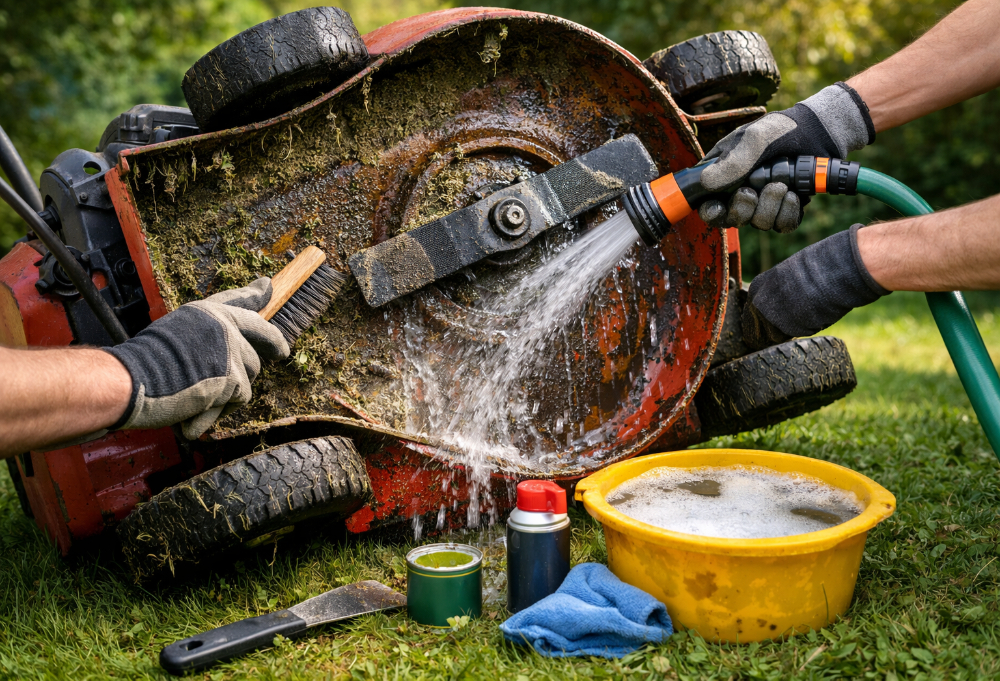
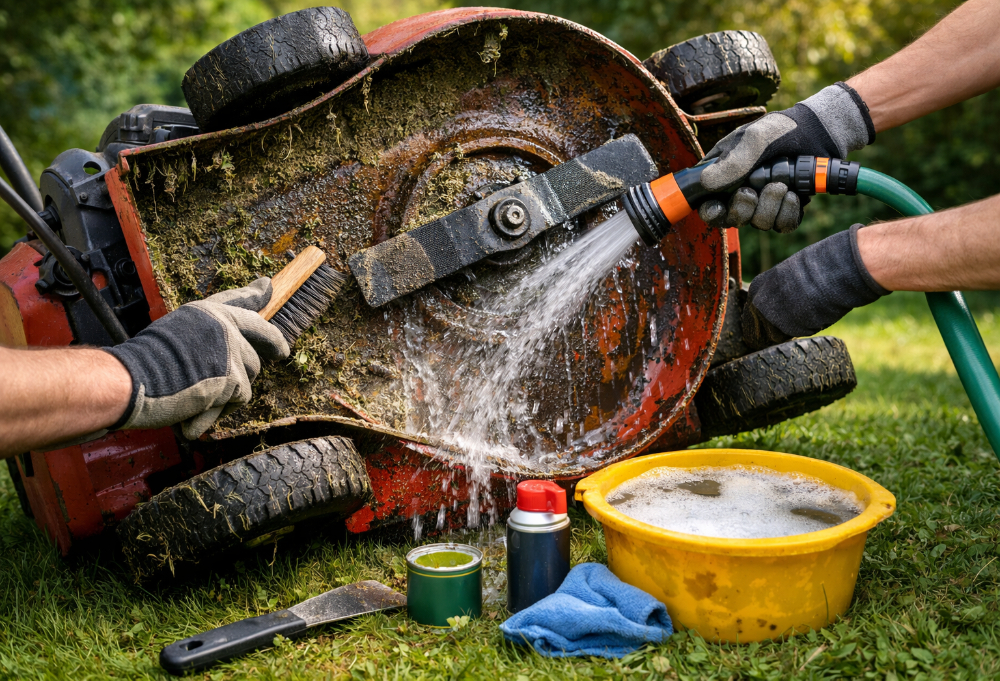
The best way to clean a lawn mower deck is to disconnect the spark plug or remove the battery, let the mower cool, and brush or scrape away stuck grass. Use a small amount of water only when the owner’s manual allows it, then dry the deck well to help prevent rust.
Across the United States, lawn mowers work hard from spring through fall. A push mower may cut a small suburban lawn in Ohio, while a riding mower may handle several acres in Texas or Georgia. In both cases, grass clippings can stick to the underside of the deck, especially when the grass is damp or grows fast after rain.
A dirty mower deck is more than an eyesore. Thick layers of wet grass can block airflow, collect moisture, and make routine maintenance harder. Cleaning the deck on a regular basis helps keep the mower in good shape and makes it easier to spot worn parts, rust, and other problems.
The right cleaning method depends on the mower design. A battery-powered mower, a gas push mower, and a riding mower do not all have the same safety steps or washing limits. Always check the owner’s manual before using water, tilting the machine, removing a blade, or using a built-in deck wash port.
You do not need a pressure washer or a shelf full of cleaners for routine care. A stiff nylon brush, a plastic scraper, a cloth, and a pair of gloves are often enough. The key is to prevent accidental starting, remove debris without damaging the deck, and leave the mower dry before storing it.
Cleaning the mower deck helps remove grass, soil, leaves, and other debris that collect during mowing. The underside is especially prone to buildup because cut grass can stick to the metal or plastic surfaces as the blade moves it through the cutting chamber.
Fresh grass may come off with a brush, but old clippings can dry into a tough layer. When wet grass stays in place, it also holds moisture against metal surfaces. Over time, this can contribute to corrosion, particularly where the deck’s protective finish has worn away.
A clean deck also makes inspection easier. You can spot cracks, missing fasteners, damaged guards, and signs of blade contact that a layer of grass might hide. Cleaning does not repair these problems, but it gives you a better chance of finding them before the next mowing session.
Source: yardcare.com
More consistent cutting
Heavy buildup can interfere with the movement of grass through the deck. Removing it helps maintain the airflow and discharge path the mower was designed to use.
Less trapped moisture
Removing wet clippings helps the deck dry faster. This is useful for steel decks, which can rust when moisture stays against damaged paint or exposed metal.
Easier maintenance checks
A clean underside makes it easier to inspect blade condition, fasteners, discharge components, and visible damage.
Fewer difficult cleanup jobs
Regular light cleaning usually takes less effort than removing a thick layer of old, hardened grass at the end of the season.
Can a Dirty Deck Affect Mowing Performance?
Yes, buildup can affect how grass moves through the cutting chamber. A thick layer may restrict airflow or interfere with the discharge of clippings, depending on the deck design and the amount of debris present.
A dirty deck is not the only reason for poor cutting. Dull blades, a clogged discharge chute, an incorrect cutting height, wet grass, and an overloaded engine can cause similar symptoms. Clean the deck first, then inspect these other areas if the mower still leaves uneven patches or clumps.
Clumps behind the mower
Check for stuck grass, a blocked discharge chute, wet conditions, and grass that is too tall for one pass.
Uneven grass height
Inspect the blade for damage and check tire pressure, deck leveling, and wheel settings where applicable.
What You Need Before Cleaning the Deck
Gather your tools before you begin so you do not have to leave a partly cleaned mower unattended. For most routine jobs, basic hand tools are enough. Choose tools that remove grass without scratching the deck or putting your hands near a blade.
Read the owner’s manual for your exact mower model. Manufacturers may differ on whether you can wash the underside, which side a mower may be tilted toward, and how to use a deck wash port. These instructions take priority over general cleaning advice.
Source: lawnstarter.com
Stiff nylon brush
Use it to loosen dried grass, dust, and loose debris from accessible deck surfaces.
Plastic scraper
A plastic tool can lift stubborn clippings while reducing the chance of scratching painted steel or softer deck materials.
Work gloves and safety glasses
Gloves help protect your hands from sharp edges and debris. Safety glasses help keep dirt and dried grass out of your eyes.
Cloth or shop towels
Use these to wipe accessible surfaces and dry areas that remain damp after approved washing.
Garden hose, if permitted
A gentle flow of water can help loosen residue on compatible decks. Do not assume every mower can be washed.
Owner’s manual
Check the manual for battery removal, spark plug disconnection, lifting points, blade access, deck wash instructions, and approved cleaners.
Tools to Avoid or Use With Care
Avoid using a sharp metal scraper as your first choice. It can gouge paint, damage a protective coating, or leave scratches where rust may begin. If a plastic scraper cannot remove a stubborn patch, use only a tool and method that the mower manufacturer permits.
Pressure washers can force water into bearings, seals, electrical connections, and other parts that are not meant to receive a concentrated spray. A powerful jet can also damage paint or labels. For routine care, a brush and a low-pressure rinse, when allowed, are usually easier to control.
Do not use gasoline, kerosene, or other flammable solvents to dissolve grass. These products create unnecessary fire and exposure risks around engines, hot surfaces, and electrical equipment. Choose mild soap only if the manual permits it, and keep all cleaning products away from the engine’s air intake and electrical parts.
Avoid open flames
Do not clean a mower near cigarettes, pilot lights, sparks, or other ignition sources, especially if fuel or flammable cleaners are present.
Do not force tools into tight gaps
A stuck tool can slip toward the blade or damage a belt, cable, or deck component.
Safety Steps Before You Start
The most important part of deck cleaning is preventing the mower from starting or the blade from moving. Turning off the engine is not enough on its own. A blade can still move if the machine is handled incorrectly, and some electric models have different controls and interlocks.
Park the mower on firm, level ground in a well-lit area. Keep children and pets away from the work area, remove loose clothing or jewelry that could catch on a part, and wait until hot surfaces have cooled. Never work beneath a mower supported only by a jack or an unstable stack of blocks.
Source: mowersboy.com
Gas push mower
Turn off the engine, remove the ignition key if fitted, wait for the engine and muffler to cool, and disconnect the spark plug wire as directed by the manual. Secure the disconnected wire away from the plug.
Battery-powered mower
Switch off the mower, remove the safety key if fitted, and take out the battery or batteries according to the manufacturer’s instructions. Keep the battery away from water and cleaning products.
Riding mower
Park on level ground, disengage the blades, set the parking brake, shut off the engine, remove the key, and disconnect the spark plug or battery as specified by the manual. Follow the approved lifting or deck-access procedure.
Mower with a deck wash port
Use the port only as directed. Keep all body parts clear of the discharge opening and follow the specified operating conditions and attachment instructions.
Can You Clean a Mower While the Engine Is Running?
Never put your hands, a brush, a scraper, or any other tool beneath the deck while the blade is running. The blade can throw debris at high speed and can cause severe injury. Do not attempt to clear a blockage by reaching into the discharge chute while the mower is powered.
Some manufacturers provide a wash-port procedure that uses water while the blade turns. This is a specific manufacturer-approved process, not permission to reach near a moving blade. Follow the manual exactly, remain in the required position, and keep people and animals away. If you are unsure how the system works, use the manual’s alternative cleaning method.
Stop if the mower is unstable
Do not clean beneath a raised riding mower unless it is secured with the approved lifting equipment and support points.
Get help with difficult access
If the deck cannot be accessed safely, ask a qualified mower service technician to clean or remove it.
How to Clean a Lawn Mower Deck Step by Step
The safest general method is to remove loose grass by hand tools, use water only when allowed, and dry the deck before storing the mower. The steps below apply to many residential mowers, but the owner’s manual may require a different procedure for a particular model.
Allow extra time if the grass is wet or packed tightly against the deck. Do not rush by pushing a scraper into a hidden area or reaching beneath an unprotected blade.
Source: loefumjvz.blob.core.windows.net
Step 1: Park and cool the mower
Choose level ground, turn off the machine, remove the key, and wait for hot engine and exhaust parts to cool.
Step 2: Disable the starting system
Disconnect the spark plug wire or remove the battery and safety key according to the manual. Check that the machine cannot start unexpectedly.
Step 3: Remove loose debris
Brush away leaves, dry clippings, twigs, and loose dirt from accessible surfaces. Keep your hands and tools away from sharp blade edges.
Step 4: Scrape stuck grass
Use a plastic scraper to loosen layers of packed clippings. Work in small sections and avoid damaging the deck coating, belts, wiring, or other components.
Step 5: Clean with an approved method
If the manual permits water, use a gentle rinse or the approved wash port. If it prohibits washing, continue with dry brushing and scraping instead.
Step 6: Remove remaining residue
Brush away loosened material and wipe accessible surfaces with a cloth. Check the discharge area without putting your fingers into the chute.
Step 7: Dry the deck
Wipe away standing water and allow the deck to air-dry fully. Do not restart or reconnect power while electrical parts are wet.
Step 8: Inspect before use
Look for damage, loose hardware, rust, and blade wear. Reassemble any parts removed for cleaning and reconnect the starting system only after the mower is dry and safe.
How to Remove Dried Grass That Will Not Come Off
Dried grass can form a hard layer that resists a quick brush. If it is safe to do so, use a plastic scraper to lift the edge of the buildup and work gradually. Several light passes are better than one forceful push that could slip or damage the deck.
If the clippings remain firmly attached, check whether the manual allows a small amount of water or a mild cleaning solution. Let the approved method soften the residue before brushing again. Do not soak electrical components, bearings, belts, or the engine area in an effort to reach the underside.
Never use a hand or fingers to feel for debris near a blade. A blade can have sharp edges even when it is stationary, and unexpected movement can cause injury. If the blockage is trapped behind the blade or a fixed component, have a service technician assess it rather than forcing it loose.
Use patience
Break the buildup into small areas instead of trying to remove the entire layer at once.
Protect the finish
Avoid sharp tools that can scrape away paint or protective coatings.
Know when to stop
If a component blocks access or the deck must be removed, follow the service manual or contact a qualified technician.
Should You Wash a Lawn Mower Deck With Water?
Water can help remove grass residue, but it is not suitable for every mower. The deck may be designed for rinsing, while the engine, electrical system, battery compartment, bearings, and other parts still need protection. The correct answer depends on the manufacturer’s instructions for your model.
If washing is allowed, use a gentle stream and direct it only where the manual permits. Avoid pressure washers and do not spray the air intake, muffler, fuel system, battery, electrical connections, or other sensitive parts. Never assume that a weather-resistant electric mower is safe to soak.
After washing, remove standing water and dry the deck completely. Water trapped beneath a thick layer of grass can stay in contact with the surface long after the outside looks dry. A clean, dry mower is easier to inspect and less likely to develop moisture-related problems.
Source: gardenitemreviews.com
Water is allowed by the manual
Use the specified wash port or approved cleaning method, keep water away from restricted components, and dry the mower afterward.
Water is not allowed or guidance is unclear
Use dry scraping and brushing. Contact the manufacturer or an authorized service center if you need clarification.
The mower has electrical or battery parts near the deck
Remove the battery as directed and avoid spraying electrical housings or connections. Let the machine dry before reconnecting anything.
Is a Pressure Washer Safe for the Underside?
A pressure washer is usually unnecessary for routine deck cleaning and can cause damage if used too close to seals, bearings, wiring, paint, or labels. A concentrated jet may push water into places that are difficult to dry.
A hand scraper and brush offer better control over stubborn grass. If a manufacturer explicitly allows a particular washing method, follow its distance, pressure, and access instructions rather than applying a general pressure-washing technique.
Preferred routine method
Use a scraper and brush, followed by a gentle rinse only if the manual permits it.
Avoid forced water
Do not direct a high-pressure jet at bearings, seals, electrical parts, or painted surfaces.
Cleaning a Push Mower Versus a Riding Mower
Push mowers and riding mowers collect similar debris, but access to the underside differs. A small push mower may allow safe access by following the manual’s approved tilt or lift method. A riding mower is heavier and may require special equipment or deck removal.
Never tip a gas mower in an arbitrary direction. Tilting it the wrong way can allow oil or fuel to enter parts where it does not belong. Some electric models also have restrictions on tilting because of their battery and electrical design.
For a riding mower, use the manufacturer’s deck wash port if one is provided and approved for your model. If the underside needs direct access, follow the service procedure for deck removal or have a qualified technician do the work.
Source: lawnsolutionsaustralia.com.au
Push mower
Use the manual’s approved tilt or lifting instructions. Keep the air filter, carburetor, fuel system, and electrical components protected as specified.
Battery-powered push mower
Remove the battery and safety key before cleaning. Do not tilt or wash the mower unless the manual allows it.
Riding mower
Use the parking brake, remove the key, disable the starting system, and follow the proper deck-access procedure. Use approved supports if the machine must be raised.
Zero-turn mower
Follow the model-specific instructions for deck access and support. Never rely on hydraulic components alone to hold a raised machine in place.
How to Clean a Riding Mower Deck Without Removing It
If the manufacturer permits cleaning without deck removal, start with the mower parked on a firm, level surface. Shut it down, remove the key, set the parking brake, and disable the starting system as directed. Allow hot components to cool.
Use a deck wash port only according to the manual. If there is no approved wash system, use accessible brush and scraper methods where they can be performed safely. Do not crawl beneath an unsupported mower or reach into an opening that exposes the blade.
When packed grass cannot be reached safely, deck removal may be necessary. This job can involve belt tension, spring-loaded parts, electrical connections, and heavy components. Use the service manual or seek professional service if you lack the tools or experience.
Do not work under an unsupported deck
Use only the specified lifting points, rated supports, and service procedure.
Check belts and pulleys visually
Look for visible debris or damage without placing fingers near moving parts or dismantling components unnecessarily.
How Often Should You Clean the Mower Deck?
Clean the deck whenever a noticeable layer of grass builds up, and inspect it as part of routine mower maintenance. There is no single schedule that suits every lawn. Grass type, rainfall, mowing frequency, cutting height, and deck design all affect how quickly clippings collect.
For many homeowners, a brief inspection after each mowing session is practical. Remove loose material when the deck is safe to access, and do a more thorough cleaning when residue begins to stick. During periods of rapid spring growth or wet summer weather, you may need to clean more often.
At the end of the mowing season, remove built-up debris and inspect the deck before storing the mower. If you use the mower through winter in a warm climate, keep up the same basic care rather than waiting for a seasonal shutdown.
Source: hillsrepair.com
After mowing wet or damp grass
Inspect the underside once the mower is shut down and safe. Damp clippings tend to stick and can form a thick layer.
During fast spring growth
Check the deck more often because frequent mowing and heavy clippings can speed up buildup.
After mowing leaves or rough areas
Remove leaves, twigs, and other debris that can block openings or hide damage.
Before long-term storage
Clean, dry, and inspect the deck before storing the mower in a garage or shed.
A Simple Deck Cleaning Schedule
Use this schedule as a starting point, not a fixed rule. A dry lawn with short grass may leave little residue, while a damp lawn with tall grass can coat the deck in a single session.
The most useful trigger is visible buildup. If grass starts to form a thick layer, clogs the discharge area, or holds moisture against the deck, clean it before the next mowing session.
After each mowing session
Check for loose grass and obvious clogs. Remove debris when the mower is fully disabled and safe to handle.
When buildup appears
Perform a full deck cleaning instead of allowing several layers to harden.
At the start and end of the season
Inspect the deck, blade, discharge components, and visible hardware as part of broader maintenance.
How to Prevent Grass From Sticking to the Deck
The easiest cleanup is the one that never turns into a thick layer. You can reduce buildup by mowing under suitable conditions, keeping the blade in good shape, and avoiding cuts that force the mower to handle too much grass at once.
Do not mow a lawn while the grass is heavily wet if you can safely wait for it to dry. Damp blades of grass clump together and can stick to the underside. When the lawn has grown too tall, raise the cutting height and make another pass later rather than removing too much growth in one cut.
Keep the blade sharp according to the manufacturer’s maintenance schedule. A dull or damaged blade can produce a poor cut and may leave more visible clumping under difficult conditions. Sharpening or replacing a blade requires its own safety procedure, so do not treat deck cleaning as a reason to handle a blade without proper precautions.
Source: loefumjvz.blob.core.windows.net
Mow when the grass is dry
Wait until dew, rain, or irrigation moisture has cleared when conditions allow.
Avoid cutting too much at once
Follow the mower and grass-type guidance for cutting height. Tall growth may need more than one pass.
Keep the blade in good condition
Inspect for wear and damage, and sharpen or replace it according to the manual.
Maintain the discharge path
Check that the chute, deflector, and any approved mulching components are correctly fitted and not blocked.
Should You Apply a Nonstick Spray to the Deck?
Some mower owners use products intended to reduce grass adhesion, but these treatments are not required for every mower. Their suitability depends on the deck material, coating, product ingredients, and manufacturer’s guidance.
Before applying a spray, check the manual and product label. Do not coat belts, pulleys, bearings, blades, engine parts, or electrical components. Keep flammable sprays away from hot surfaces and ignition sources, and never apply a product while the mower is powered.
A coating cannot replace cleaning or correct mowing practices. If grass builds up because it is wet or excessively tall, changing the mowing conditions will usually address the underlying cause more directly.
Check compatibility first
Use a deck treatment only if the manufacturer permits it and the product label identifies a suitable use.
Keep the coating off moving parts
Do not spray drive belts, pulleys, bearings, electrical parts, or other restricted components.
Preventing Rust and Corrosion After Cleaning
Drying the deck is one of the most useful ways to limit moisture-related corrosion. Steel decks can rust when water stays on bare metal or damaged paint. Aluminum and plastic components do not rust in the same way as steel, but they still need suitable care and inspection.
After approved washing, wipe away pooled water and let the deck dry fully before storing the mower. Pay attention to corners, seams, mounting points, and areas where grass tends to collect. Avoid using a flame or placing a heat source close to fuel, batteries, wiring, or plastic parts to speed up drying.
If you find rust, first determine whether it is a small surface spot or evidence of deeper damage. A minor spot on a steel deck may be manageable with a manufacturer-approved repair process. Deep pitting, cracks, holes, loose structural parts, or extensive corrosion require professional assessment because they can affect the deck’s strength.
Source: gardenitemreviews.com
Keep the deck dry
Remove standing water and allow all accessible surfaces to dry before storage.
Inspect damaged paint
Small chips may expose steel. Use a compatible repair coating only as directed by the manufacturer.
Store the mower under cover
A dry garage or shed can reduce exposure to rain and prolonged dampness.
Do not ignore structural damage
Stop using a mower with a cracked, perforated, or seriously weakened deck until a qualified technician has assessed it.
Can You Oil the Underside of a Mower Deck?
Do not apply ordinary motor oil to the deck as a general rust-prevention method. Oil can collect dust and grass, contaminate the lawn, and reach belts or other parts where it does not belong. It may also conflict with the manufacturer’s maintenance guidance.
If the manual recommends a corrosion inhibitor or a deck-specific protective coating, use only a compatible product and apply it to the approved surfaces. Keep the blade, belts, pulleys, bearings, and other moving or restricted components free of unintended coatings.
For many homeowners, regular debris removal, careful drying, prompt attention to paint damage, and covered storage provide a practical maintenance routine without the need for an extra coating.
Do not use random household oils
Use a protective treatment only when it is appropriate for the deck and approved by the manufacturer.
Check for exposed metal
Repair damaged finishes according to the mower maker’s instructions rather than coating over heavy rust.
Common Lawn Mower Deck Cleaning Mistakes
Most cleaning problems come from rushing, using the wrong tool, or ignoring the mower’s safety instructions. A little care at the start can prevent damage to the machine and reduce the risk of injury.
Do not assume that a mower is safe because the engine has stopped. Disable the starting system, keep the blade area clear, and use the correct access method. If the manual is missing, look for the manufacturer’s official instructions for the exact model before using water or lifting the machine.
Source: lawnstarter.com
Cleaning before the engine cools
Hot engine and exhaust parts can cause burns. Wait until they have cooled before working nearby.
Leaving the battery or starting system connected
Accidental starting can cause severe injury. Follow the model’s full shutdown and isolation procedure.
Using a pressure washer without checking the manual
High-pressure water may damage seals, bearings, electrical parts, paint, and labels.
Tipping a mower in the wrong direction
An incorrect tilt can allow fluids to enter unsuitable parts or cause other damage. Follow the approved procedure.
Scraping with excessive force
A slipping tool can cause injury or damage the deck. Use a suitable scraper and work in small sections.
Storing the mower while wet
Trapped moisture can encourage corrosion. Remove standing water and allow the deck to dry.
Reaching into the discharge chute
Never put fingers into a blade area or exposed chute. Use approved tools from a safe position or seek service.
What to Do if the Deck Still Looks Dirty
A few stains or discolorations may remain after the grass has been removed. The goal is to clear loose and packed debris, maintain the deck’s condition, and make damage visible. You do not need to strip away sound paint or scrub the surface until it looks new.
If a hard deposit remains, check whether the manual permits a suitable cleaning solution. Use it only as labeled and keep it away from restricted components. If the material appears to be melted plastic, hardened residue from another substance, or damage to a coating, avoid aggressive scraping and seek model-specific advice.
If the deck continues to clog quickly after cleaning, review the grass conditions, cutting height, blade condition, and discharge setup. Persistent vibration, unusual noises, or signs that the blade has contacted the deck call for immediate shutdown and professional inspection.
Surface stain only
Clean what you can safely remove and check the finish for damage.
Persistent clogging
Check mowing conditions, blade sharpness, and the discharge path.
Cracks, impact marks, or unusual vibration
Stop using the mower until the cause has been checked.
Frequently Asked Questions
Q
How often should I clean my lawn mower deck?
Inspect the deck after mowing and clean it whenever grass begins to build up. Wet grass, fast spring growth, and frequent mowing can make cleaning necessary more often. A thorough cleaning before long-term storage is also useful.
Q
Can I spray my lawn mower deck with a garden hose?
Only if the owner’s manual permits water cleaning. Use the approved method and avoid spraying the engine, battery, electrical connections, bearings, and other restricted parts. Remove standing water and let the deck dry before storage.
Q
Is it safe to turn a lawn mower on its side to clean it?
It depends on the mower design and the manufacturer’s instructions. Tilting a gas mower the wrong way can allow oil or fuel to enter parts where it does not belong. Some battery-powered models also have restrictions. Use only the approved tilt or lifting procedure.
Q
Can I use a pressure washer to clean the underside?
A pressure washer is generally unnecessary for routine cleaning and can force water into seals, bearings, electrical parts, or other sensitive areas. A scraper and brush are easier to control. Use a pressure washer only if the manufacturer explicitly allows the method and provides suitable instructions.
Q
What is the easiest way to remove dried grass from a mower deck?
First, disable the mower according to the manual and let hot parts cool. Use a plastic scraper to lift dried clippings in small sections, then brush away the loosened material. If residue remains, use an approved cleaning method rather than a sharp tool or flammable solvent.
Q
Should I clean my mower deck after every use?
You do not always need a full wash after every mowing session. A quick inspection and removal of loose debris can be enough when the deck is clean. If wet clippings or thick buildup remain, clean the deck before they harden.
Q
Does cleaning the mower deck help prevent rust?
Yes, cleaning can help by removing wet grass and debris that hold moisture against the deck. Dry the mower after any approved rinse, repair damaged paint as directed, and store the machine under cover. Cleaning reduces one source of moisture but cannot prevent every form of corrosion.
Q
Can I use dish soap to clean a lawn mower deck?
Use mild dish soap only if the mower manufacturer permits it. Apply it sparingly to approved surfaces and keep it away from the engine, battery, electrical connections, and other restricted components. Rinse only when allowed and dry the deck well.
✦ Wrapping Up
Conclusion
Cleaning a lawn mower deck is a simple maintenance task that can help control grass buildup, limit trapped moisture, and make wear or damage easier to spot. For most routine jobs, a brush, a plastic scraper, and a cloth are enough. Water is optional and should be used only when the owner’s manual allows it.
Safety comes first every time. Shut the mower down, disconnect the starting system as directed, wait for hot parts to cool, and never reach beneath an exposed blade. Riding mowers and some electric models need special care, so use the correct access and lifting procedure instead of improvising.
A clean deck is only one part of good mower care. Keep the blade in sound condition, mow under suitable conditions, clear debris before it hardens, and store the mower in a dry place. If the deck has cracks, holes, severe rust, or signs of blade contact, stop and arrange a proper inspection.
💡 Key Takeaway
Before your next mowing session, check the owner’s manual, gather a nylon brush and plastic scraper, disable the mower safely, and remove any stuck grass. If washing is allowed, rinse gently and dry the deck fully. Finish with a visual check for rust, damage, and loose parts.
I enjoy sharing simple gardening ideas, lawn care tips, and honest product reviews that help make outdoor work easier. From home gardening guides to helpful tools and lawn care advice, I write easy-to-follow content to help readers create a healthier and better-looking outdoor space without wasting time or money.