As an Amazon Associate, I earn from qualifying purchases.
Yes, most gas-powered lawn mowers need engine oil to lubricate moving parts, reduce friction, and prevent overheating and damage. Most battery-powered electric mowers do not need engine oil, although some have other parts that require maintenance.
Across the United States, homeowners use lawn mowers to maintain small suburban lawns, large rural yards, and everything in between. Whether you mow a small patch of grass in Ohio or care for a wide lawn in Texas, knowing what your mower needs can help it run well through the mowing season. Oil is one of the first things to check if you own a gas-powered model.
The answer depends on the type of mower you have. A gas push mower, riding mower, or zero-turn mower with a four-stroke engine usually needs oil in its crankcase. A battery-powered mower usually does not. Some two-stroke gas engines use oil mixed with fuel instead of a separate engine oil supply, so you should always identify your engine type before adding anything.
Using too little oil can cause severe engine wear, while using the wrong oil or adding too much can also cause problems. The owner’s manual is the best source for the correct oil type, amount, checking method, and service schedule. Once you know these basics, routine mower care becomes much easier.
Most gas-powered lawn mowers need oil, but not every mower uses it in the same way. The engine design determines whether oil sits in a separate reservoir, mixes with gasoline, or is not needed at all. Identifying your mower type is the first step toward proper care.
Look for the model number on the mower’s frame, deck, or engine label. Use that information to find the owner’s manual. If the manual is missing, the engine manufacturer’s website may provide the correct instructions.
Source: i.ytimg.com
Four-stroke gas mowers
Most standard gas push mowers, riding mowers, and zero-turn mowers use four-stroke engines with a separate crankcase oil supply. These engines need the correct oil level and regular oil changes.
Two-stroke gas mowers
Some older or specialized gas-powered mowing equipment uses a two-stroke engine. Such engines often require a specified amount of two-stroke oil mixed with gasoline, though designs vary. Follow the exact fuel and oil instructions for the engine.
Battery-powered electric mowers
Battery mowers use electric motors instead of gas engines. They do not require engine oil, but their blades, wheels, battery, and other components may need cleaning or inspection.
Corded electric mowers
Corded electric mowers also use an electric motor and generally do not need engine oil. Follow the manual for blade care, cleaning, cord inspection, and other maintenance.
Do Riding Lawn Mowers Need Oil?
Yes, most riding lawn mowers need engine oil. This includes many lawn tractors and zero-turn models powered by gas engines. Their engines often hold more oil than a small push mower, but the correct capacity varies by engine size and design.
Some riding mowers also have separate oil requirements for hydrostatic transmissions or other drive components. Do not assume that engine oil is suitable for every reservoir. Check the instructions for each system before adding fluid.
Check the engine separately
Use the engine dipstick or the checking method stated in the manual.
Check other systems as directed
Some transmissions are sealed or require a specific fluid and service procedure. Do not open or refill them unless the manufacturer provides instructions.
Do Push Lawn Mowers Need Oil?
Most gas push mowers need engine oil, even if they have a small engine and are used only for short periods. Their compact design does not remove the need for lubrication. A low oil level can damage internal engine parts just as it can in a larger mower.
Electric push mowers generally do not need engine oil. If you are unsure which type you own, check whether it has a gasoline engine, fuel tank, and engine oil dipstick or fill cap.
Why Does a Gas Lawn Mower Need Oil?
Engine oil protects the moving parts inside a gas mower. When the engine runs, metal components move at high speed and create friction. A suitable layer of oil helps those parts move smoothly and reduces wear.
Oil also helps carry heat away from some engine parts and holds small particles in suspension until the oil is changed or filtered, depending on the engine design. It cannot prevent every form of damage, but the right oil level is essential to normal operation.
Source: thedailygardener.com
Reduces friction
Oil forms a lubricating film between moving engine parts, helping reduce metal-to-metal contact.
Limits wear
Proper lubrication helps protect components such as bearings and other moving parts from excessive wear.
Helps manage heat
Oil carries some heat away from internal components, supporting the engine’s normal temperature range.
Carries contaminants
Oil can hold fine particles and combustion-related contaminants until they are removed through maintenance.
What Happens If a Gas Mower Runs Without Enough Oil?
Running a gas mower with too little oil can cause rapid wear and serious engine damage. Depending on the engine and how long it runs, poor lubrication can damage bearings, the crankshaft, cylinder surfaces, and other internal parts. In severe cases, the engine can seize and stop turning.
Some engines have a low-oil shutdown feature, but not every mower has one. Even when such protection is present, you should never rely on it as a substitute for checking the oil. If the engine stops unexpectedly and you suspect low oil, turn it off and investigate before trying to restart it.
Stop the engine
If you discover a dangerously low oil level, stop using the mower and allow it to cool before checking it.
Inspect the oil level
Follow the manual’s procedure and add only the specified oil if the engine is otherwise safe to operate.
Get help if damage is suspected
If the engine knocks, seizes, leaks heavily, or will not turn normally, have it inspected before restarting it.
How to Check Lawn Mower Oil
Check the oil before mowing, especially after the mower has been stored for several weeks or months. The process is usually simple, but the correct position of the mower and dipstick method can vary by model. Follow the owner’s manual if its directions differ from these general steps.
Park the mower on a level surface, switch it off, and remove the key if it has one. Disconnect the spark plug lead before carrying out maintenance on a gas mower, following the manufacturer’s safety instructions. Let hot engine parts cool enough to handle safely.
Source: workhabor.com
Step 1: Find the oil fill point
Look for a dipstick or oil fill cap, often marked with an oil symbol. Do not confuse it with the fuel cap or another service opening.
Step 2: Remove the dipstick
Wipe the dipstick with a clean cloth. Check whether the manual says to screw it back in fully before taking a reading or simply insert it without tightening.
Step 3: Check the level
Insert the dipstick as directed, then remove it and read the oil mark. The level should fall within the range indicated by the manufacturer.
Step 4: Add oil if needed
If the level is below the permitted range, add a small amount of the recommended oil. Allow it to settle and check again.
Step 5: Replace the dipstick
Secure the dipstick or fill cap as directed before starting the engine. Wipe away spilled oil and check for leaks.
How Often Should You Check the Oil?
A practical habit is to check the oil before each mowing session on a gas mower, especially when the mower is used often or operates in hot weather. At a minimum, follow the checking interval in the owner’s manual. New, heavily used, or older engines may need closer attention if the manufacturer says so.
Also check the oil after noticing smoke, a new leak, an unusual engine sound, or a sudden change in performance. These signs do not always mean the oil is low, but they are good reasons to stop and inspect the machine.
Before mowing
Check the level and look for visible leaks.
After storage
Inspect the oil before the first use of the season.
After an oil change
Confirm the level using the manufacturer’s prescribed procedure.
What If the Dipstick Shows No Oil?
If the dipstick shows no oil, do not start or continue running the engine. First confirm that you used the correct checking method and that the mower is on level ground. Some dipsticks must be threaded into the fill tube for the reading, while others must not be screwed in.
If the level is truly below the dipstick’s range, add the specified oil gradually and check again. Look for signs of a leak. If the engine has already run without enough oil, adding oil may not reverse any damage that has occurred.
What Kind of Oil Does a Lawn Mower Need?
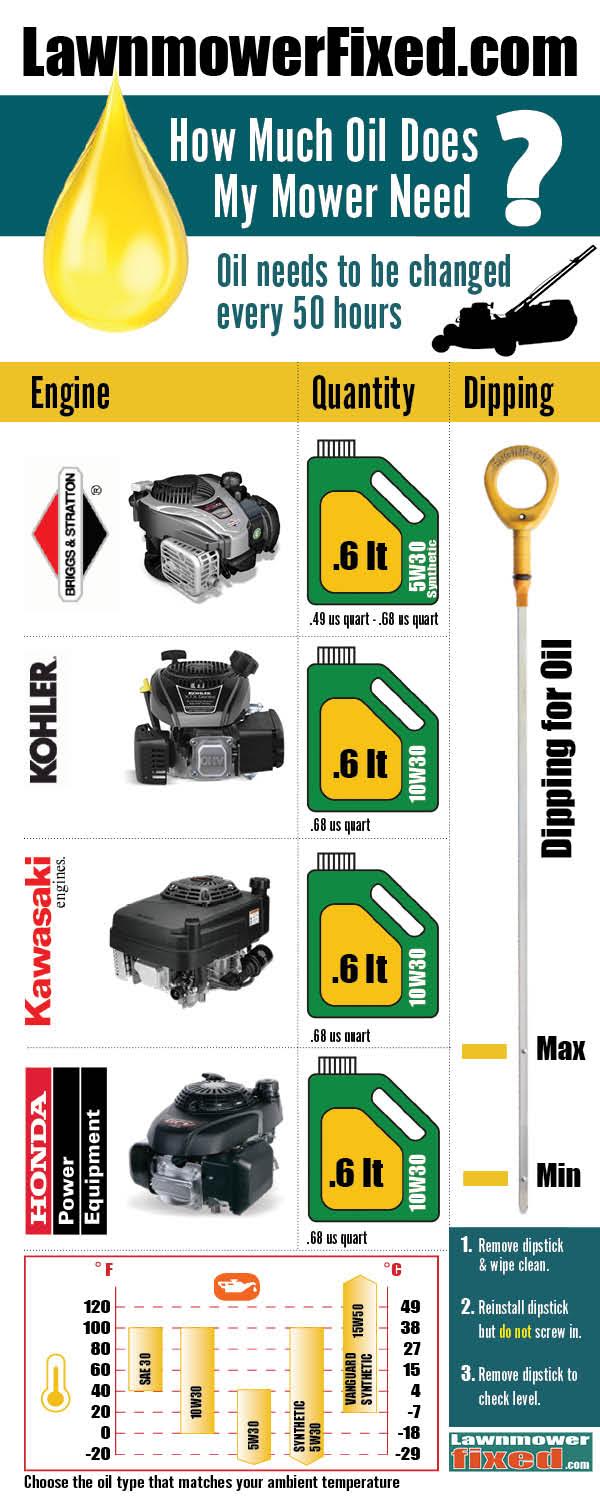
The right oil depends on the engine design, the manufacturer’s specifications, and the temperatures in which you use the mower. Many four-stroke mower engines can use an oil grade such as SAE 30 or 10W-30, but those grades are not interchangeable choices for every engine. Always check the exact recommendation in your manual.
Oil labels contain information about viscosity, which describes how readily the oil flows under certain conditions. Multigrade oils are designed to meet viscosity requirements across a range of temperatures. The correct grade helps the engine receive suitable lubrication during startup and normal operation.
Source: suaveyards.com
SAE 30
A single-grade oil commonly specified for some small four-stroke engines in warmer operating conditions. It may not be suitable for every temperature range or engine.
10W-30
A multigrade oil used by many small engines when the manufacturer approves it. The correct temperature range and application must still be confirmed.
Synthetic oil
Some mower engines permit synthetic oil, including specified multigrade formulations. Follow the manual rather than assuming that all synthetic oils are suitable.
Two-stroke oil
A specially formulated oil used in engines designed for oil mixed with fuel. Use the exact oil type and mix ratio stated by the engine manufacturer.
Can You Use Car Oil in a Lawn Mower?
Sometimes, but only when the car oil meets the mower engine manufacturer’s requirements. Some small engines accept certain automotive oils, while others have more specific recommendations. The label on the bottle alone does not tell you whether the oil is right for your mower.
Check the required viscosity grade and applicable performance specifications in the manual. Do not use two-stroke oil in a four-stroke crankcase unless the manufacturer explicitly specifies it. Likewise, do not put ordinary four-stroke engine oil into a fuel tank that requires a two-stroke mixture.
Check the viscosity grade
Confirm that the grade is approved for your engine and expected operating temperatures.
Check the oil specification
Use any required service classification or manufacturer-specific specification.
Avoid guessing
If the manual is unclear, identify the engine model and seek guidance from its manufacturer or an authorized service center.
Does Hot or Cold Weather Change the Oil You Need?
Temperature can affect which oil grade a manufacturer recommends. A mower used during hot summers in states such as Arizona or Georgia may operate under different conditions from one used in a cooler spring climate. Still, climate alone is not enough to choose an oil grade.
Consult the temperature chart or oil recommendations in the engine manual. If the manufacturer permits more than one grade, select the one that matches the expected operating conditions. Never assume that a thicker or thinner oil is automatically better.
How Much Oil Does a Lawn Mower Need?
A lawn mower needs the amount of oil specified for its exact engine. There is no single capacity that applies to every push mower, riding mower, or zero-turn mower. Engine design, size, and model can all change the amount required.
Some small push mower engines hold roughly 15 to 20 fluid ounces, but this is only a broad example, not a safe fill target for every model. Larger riding mower engines may require substantially more. The manual’s stated capacity and dipstick reading are more useful than a general estimate.
Source: constructionhow.com
Find the listed capacity
Look in the engine manual for the oil capacity, including whether the amount refers to a routine oil change or a dry engine.
Add oil in small amounts
Pour slowly, pause to let the oil settle, and check the level as directed.
Do not overfill
Too much oil can cause foaming, smoke, leaks, or running problems. Remove excess oil using the manufacturer’s approved method.
Recheck after service
After filling or changing oil, verify the level and make sure the fill cap is secure before operating the mower.
Why Is Too Much Oil a Problem?
An overfilled crankcase can allow moving engine parts to churn the oil, which may create foam and reduce effective lubrication. Excess oil can also reach areas where it does not belong, including the air intake on some engine designs. This may lead to smoke, poor running, or oil leaks.
If you add too much, do not try to burn off the excess by running the mower. Keep the engine off and remove the extra oil according to the manual. If oil has entered the air filter or other components, clean or replace affected parts as instructed.
When Should You Change Lawn Mower Oil?
Change the oil according to the engine manufacturer’s service schedule. The required interval depends on the engine, the number of operating hours, and the conditions in which the mower works. Many small-engine manuals call for an initial oil change after a specified break-in period, followed by regular changes based on time or operating hours.
Dusty yards, long mowing sessions, heavy loads, and frequent use can make maintenance more demanding. However, do not invent a universal interval or assume every mower needs the same schedule. Follow the manual for your model and keep a record of the service date and operating hours when applicable.
Source: outdoorguide.com
New mower
Check whether the engine requires an early first oil change after its break-in period.
Regular seasonal use
Follow the specified operating-hour or calendar-based schedule.
Heavy or dusty use
Check the manual for a shorter service interval under severe operating conditions.
Long-term storage
Follow the manufacturer’s preparation instructions for storing the mower between seasons.
How to Change the Oil in a Gas Lawn Mower
Changing mower oil is a task many homeowners can handle if the manufacturer provides a clear procedure and the mower is designed for owner maintenance. You will need the specified fresh oil, a suitable drain pan, a clean cloth, and any tools required by the manual. Work outside or in a well-ventilated area, away from flames and other ignition sources.
Used oil can be hot, and gasoline vapors can ignite. Turn off the engine, remove the key if present, disconnect the spark plug lead as directed, and let the mower cool enough to handle. Never drain oil while the engine is running or work beneath a mower supported only by a jack.
Step 1: Prepare the mower
Park it on a stable, level surface. Review the manual for the correct draining method and any instructions about warming the engine before draining.
Step 2: Position the drain pan
Place an oil-safe container beneath the specified drain point. Some engines use a drain plug, while others allow oil to be removed through the fill tube.
Step 3: Drain the old oil
Open the drain point or use the approved removal method. Avoid spilling oil onto the deck, soil, storm drains, or nearby plants.
Step 4: Close the drain point
Reinstall the drain plug or restore the fill opening as specified. Make sure seals and fasteners are correctly fitted.
Step 5: Add fresh oil
Use the correct oil and add it gradually. Check the dipstick or other level indicator using the manufacturer’s method.
Step 6: Inspect the mower
Secure the fill cap, clean spills, and check for leaks. If the manual calls for a brief run and a second level check, follow that procedure carefully.
How Should You Dispose of Used Lawn Mower Oil?
Used engine oil should not be poured onto the ground, into a storm drain, or into a household sink. It can pollute soil and water. Keep it in a clean, sealed, clearly suitable container and avoid mixing it with gasoline, solvents, coolant, or other waste.
Many U.S. communities have used-oil collection sites, recycling centers, or participating auto service businesses. Accepted containers and drop-off rules vary by location, so contact the facility before taking your oil there. If you also replace an oil filter, ask whether the facility accepts used filters.
What If Your Lawn Mower Has Oil Problems?
Oil-related symptoms can have several causes, so inspect the mower before deciding what needs repair. Start with simple, safe checks such as the oil level, visible leaks, and the condition of the fill cap. Do not keep running an engine that makes severe knocking sounds, loses power suddenly, or appears to have no oil.
Smoke, leaks, or a hard start do not always prove that the oil is at fault. Fuel problems, a dirty air filter, worn engine parts, or other faults can create similar symptoms. If the basic checks do not reveal the cause, use the service instructions or contact a qualified repair shop.
Source: i.ytimg.com
White or blue smoke
Possible causes include excess oil, oil entering the combustion chamber, or oil spilled onto hot engine parts. Turn off the mower, let it cool, and check the level and visible spill areas.
Oil leaking under the mower
Check whether the oil fill cap, drain plug, or accessible seals appear loose or damaged. Do not operate the mower if a significant leak is present.
Engine knocking or unusual noise
Low oil can contribute to serious internal damage, but other mechanical faults are possible. Stop the engine and arrange an inspection rather than repeatedly restarting it.
Oil level keeps dropping
Look for visible leaks and follow the manual’s oil-consumption guidance. Persistent loss may require professional diagnosis.
Oil looks unusually dirty
Dark oil is not always proof of failure, but oil that contains metal particles, looks milky, or has an unusual fuel smell deserves attention. Follow the manual and seek service if contamination is suspected.
Can You Run a Mower With Dirty Oil?
Oil naturally darkens as it collects contaminants during use, so color alone does not determine whether it needs changing. The service interval, oil condition, engine behavior, and manufacturer’s instructions are more useful indicators. If the oil contains visible metal particles or looks milky, stop using the mower until the cause is checked.
Old oil can lose some of its ability to protect engine parts. Change it when required by the manual, and do not extend the interval simply because the mower still starts. Regular service costs less than ignoring a problem that can damage the engine.
Can You Add Oil Without Draining the Old Oil?
Yes, if the existing oil is suitable and the level is low, adding the recommended oil can bring the level back into the permitted range. You do not have to drain the entire crankcase every time you top up. Add oil slowly and avoid exceeding the full mark.
Topping up is not a substitute for a scheduled oil change. If the oil is due for service, badly contaminated, or the wrong type was added, follow the manufacturer’s correction procedure instead. Frequent top-ups also deserve investigation because they may point to a leak or excessive oil consumption.
Common Lawn Mower Oil Mistakes to Avoid
Small maintenance errors can cause problems even when you use good oil. The safest approach is to follow the manual, work on a cool and stable mower, and check the level instead of relying on estimates. A few simple habits can help prevent avoidable engine damage.
Source: i.ytimg.com
Guessing the oil capacity
Engine capacities vary. Check the correct specification and verify the final level rather than pouring in a generic amount.
Using the wrong oil grade
A grade suitable for one engine or temperature range may not suit another. Check the manual before buying or adding oil.
Confusing two-stroke and four-stroke engines
A two-stroke engine may require oil mixed with fuel, while a four-stroke engine usually has a separate crankcase supply. Using the wrong method can cause serious problems.
Overfilling the crankcase
Excess oil can cause smoke, leaks, foaming, and poor running. Add oil gradually and recheck the level.
Ignoring oil leaks
A small wet patch can signal a loose plug, damaged seal, or other fault. Find the cause before continuing to mow.
Skipping scheduled changes
Oil can degrade and collect contaminants. Keep to the specified service interval, even if the mower appears to run normally.
Working around a running blade
Never reach under the deck or work near moving parts while the mower runs. Disconnect the spark plug lead or battery as directed before maintenance.
A Simple Seasonal Oil Checklist
Before the first mow of spring, inspect your gas mower for leaks, check its oil level, and review the service schedule. If the oil change is due, complete it before regular use. Check the air filter, blade, fuel system, and other maintenance items listed in the manual as well.
During the mowing season, keep track of oil changes and check the level before mowing. At the end of the season, follow the manufacturer’s storage instructions. Some engines need specific preparation for long storage, so avoid using a one-size-fits-all procedure.
Before the season
Check the oil level, look for leaks, and confirm whether an oil change is due.
During regular use
Check the oil as directed, watch for unusual sounds or smoke, and record maintenance.
Before storage
Follow the engine manufacturer’s instructions for oil, fuel, cleaning, and storage conditions.
Frequently Asked Questions
Q
Do all lawn mowers need oil?
No. Most gas-powered four-stroke lawn mowers need engine oil in a separate crankcase. Some two-stroke engines use oil mixed with gasoline. Battery-powered and corded electric mowers generally do not need engine oil because they use electric motors rather than gas engines.
Q
Can I use my lawn mower without oil?
Do not run a gas mower without the oil required by its engine. Insufficient lubrication can cause rapid wear, overheating, and severe engine damage. If the oil level is below the safe range, stop the engine and correct the problem according to the manual before using it again.
Q
How often should I put oil in my lawn mower?
Check the oil level before mowing or at the interval stated in your manual. Add oil only when the level needs topping up, and stop at the specified range. Oil changes follow a separate maintenance schedule based on time, operating hours, or other manufacturer instructions.
Q
Can I use 10W-30 oil in my lawn mower?
Some mower engines permit SAE 10W-30 oil, but it is not the right choice for every engine. Check the engine manual for the approved viscosity grade, performance specification, and temperature range before using it.
Q
Do electric lawn mowers need oil changes?
Most corded and battery-powered electric mowers do not need engine oil changes because they do not have an internal combustion engine. They still need regular care, including blade inspection, cleaning, and checks of the battery, cord, wheels, and other components as directed by the manufacturer.
Q
What happens if I put too much oil in my lawn mower?
Overfilling can cause oil foaming, smoke, leaks, and poor engine performance. Turn off the mower, let it cool, and remove the excess oil using the approved procedure. Check the level again before restarting the engine.
Q
Should I check lawn mower oil when the engine is hot or cold?
Follow the checking procedure in your owner’s manual because instructions vary by engine. Some manufacturers specify checking after the engine has cooled for a period, while others give a different procedure. Always switch the engine off, place the mower on level ground, and avoid touching hot parts.
✦ Wrapping Up
Conclusion
Most gas lawn mowers need oil to protect their engines from friction, wear, and heat. Four-stroke engines generally use a separate crankcase supply, while some two-stroke engines require oil mixed with fuel. Electric mowers usually do not need engine oil, though they still need routine maintenance.
The key is to identify your mower and follow its exact maintenance instructions. Check the oil level regularly, use the approved grade, add it slowly, and change it on schedule. If you notice a serious leak, unusual knocking, or signs that the engine has run without enough oil, stop using the mower and seek proper service.
💡 Key Takeaway
Before your next mowing session, park your mower on level ground, identify its engine type, and check the owner’s manual for the correct oil and checking procedure. If it is a gas mower, confirm the oil level before starting the engine.
I enjoy sharing simple gardening ideas, lawn care tips, and honest product reviews that help make outdoor work easier. From home gardening guides to helpful tools and lawn care advice, I write easy-to-follow content to help readers create a healthier and better-looking outdoor space without wasting time or money.