
As an Amazon Associate, I earn from qualifying purchases.
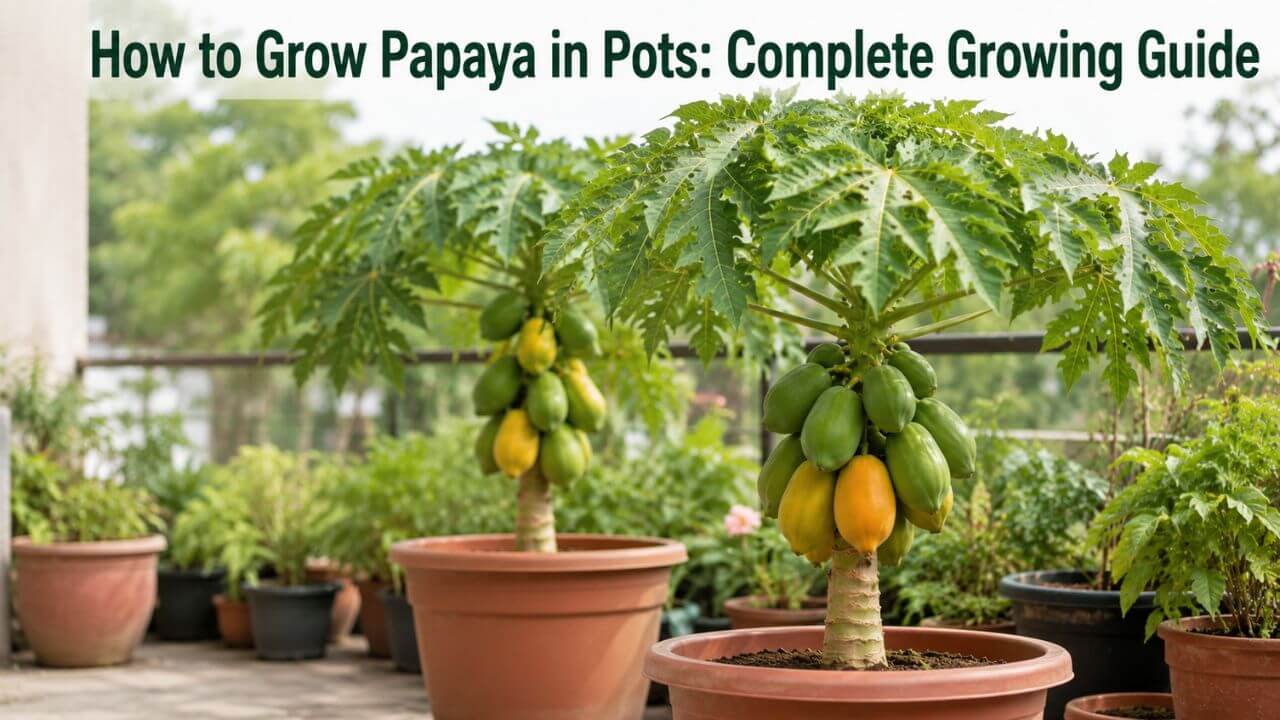
To grow papaya in pots, choose a large container, use well-draining soil, provide full sun, and keep the plant warm and evenly watered. How to grow papaya in pots also depends on choosing a suitable variety and allowing enough root space. Start with fresh seeds or a healthy nursery plant. Give it at least six hours of sunlight each day, feed it regularly during active growth, and protect it from cold weather. With the right setup, even gardeners with limited space can grow fresh papaya at home.
Can Papaya Grow Well in Pots?
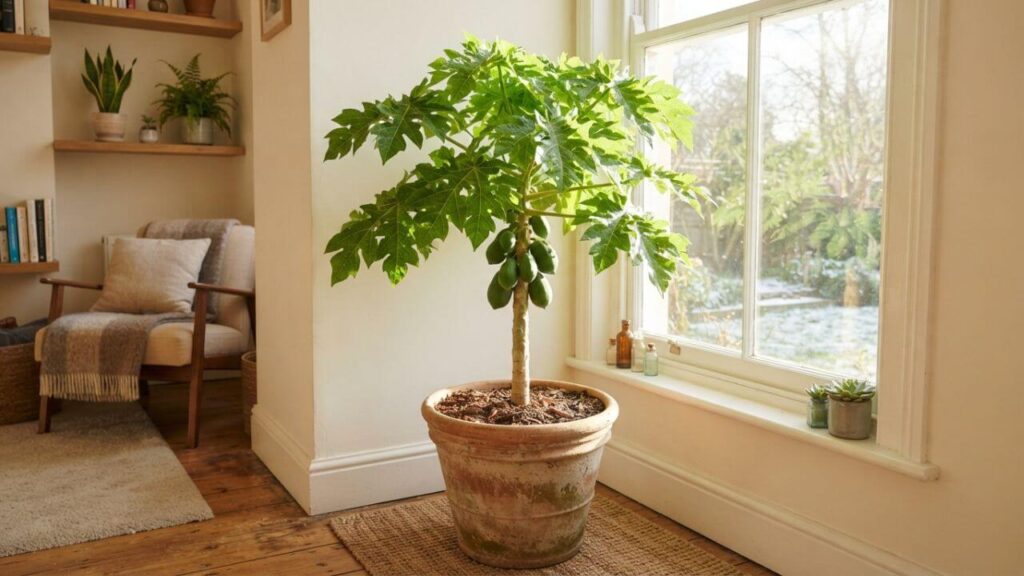
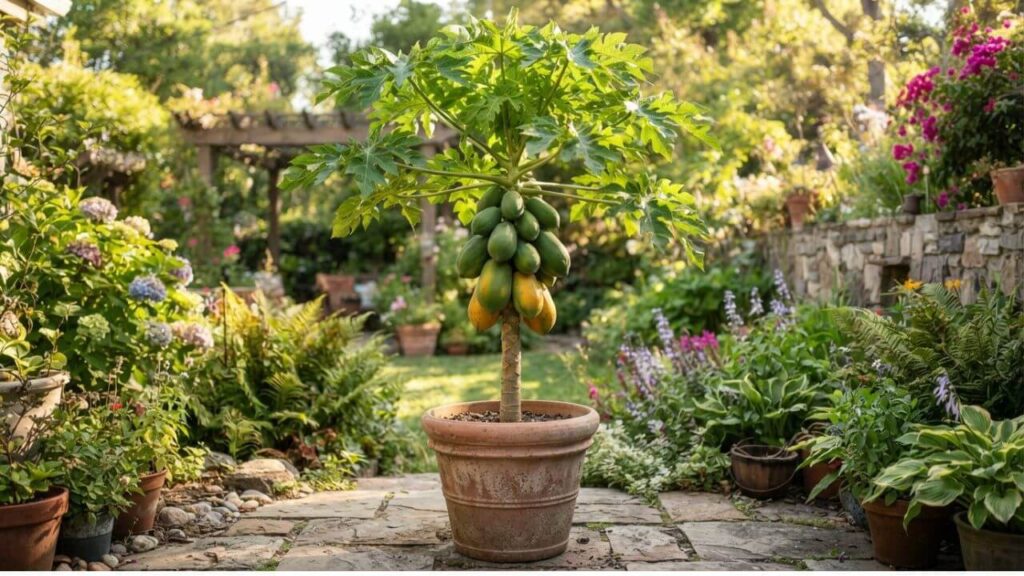
Yes, papaya can grow in containers, but the plant needs more space and care than many common patio fruits. Papaya (Carica papaya) is a fast-growing tropical plant that can become quite tall. UF/IFAS notes that papayas can grow many feet tall, with some plants reaching more than 30 feet under favorable conditions.
Container growing gives you one major advantage: mobility. A potted papaya can be moved to a warmer, protected location when temperatures fall. This makes growing papaya in pots especially useful for gardeners outside the warmest parts of the United States.
However, a container will limit the plant’s size and root space. Do not expect a small decorative pot to produce a large harvest. Choose a strong container, provide excellent drainage, and select a compact or suitable variety when available.
Papaya grows best in warm conditions. UF/IFAS reports ideal growth around 70°F to 90°F, while temperatures below freezing can severely damage or kill the plant.
What Is the Best Pot for a Papaya Tree?
The best pot for a papaya tree is large, sturdy, and has several drainage holes. Papaya develops an extensive root system, so a small container can restrict growth and make the plant unstable as it gets taller.

For a young plant, you can start with a smaller container and move it into a larger one as it grows. If you start with seeds, avoid putting several mature plants in one pot. Thin the seedlings so only the strongest plant remains.
A large container also provides better stability when the plant develops a tall stem and broad leaves. Outdoor papayas can become vulnerable to strong winds, so a heavy pot can help reduce tipping.
What Size Pot Should You Use?
For long-term container growing, I recommend starting with a container around 15 to 25 gallons when practical. A larger container provides more root space and reduces the chance of the plant becoming top-heavy.
Make sure the container has drainage holes at the bottom. Do not rely on a layer of gravel to fix poor drainage. The growing mix itself should drain well.
If you live in a colder region, consider the container’s weight before choosing an extra-large pot. You may need to move the papaya indoors during cold weather.
How to Plant Papaya Seeds in Pots
How to plant papaya seeds in pots starts with fresh, viable seeds. You can collect seeds from a ripe papaya or buy seeds from a reliable seed supplier.
UF/IFAS recommends removing the gelatinous coating around the seeds, rinsing them well, and allowing them to dry away from direct sunlight before planting.
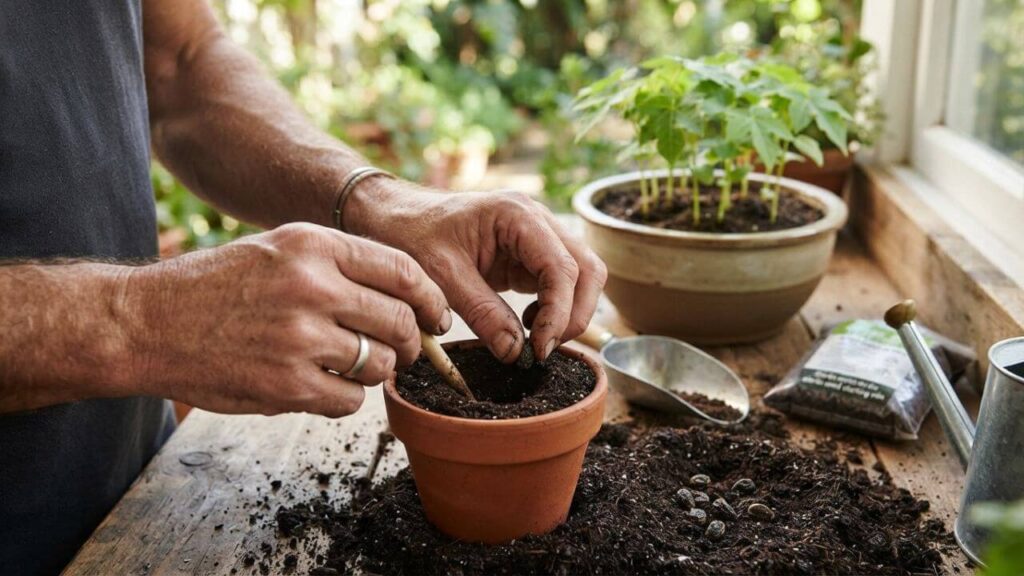
Fill a clean container with a sterile, well-draining seed-starting mix. Plant several seeds in the container rather than relying on one seed. UF/IFAS recommends planting two to four seeds in a 1-gallon container and selecting the strongest seedling after germination.
Keep the mix moist but not waterlogged. Place the container somewhere warm and bright. Under suitable conditions, papaya seeds may germinate in about two to three weeks.
Once the seedlings emerge, choose the strongest plant and remove the weaker ones at soil level. Do not pull them out forcefully because you may disturb the roots of the plant you want to keep.
What Is the Best Soil for Papaya in Pots?
The best soil for papaya in pots is loose, fertile, and well draining. Papaya does not perform well in soil that stays saturated around the roots.
A quality commercial potting mix designed for containers works well. You can improve drainage by choosing a mix that contains materials such as perlite, pine bark, or coarse material designed for container plants.

Avoid using heavy garden soil by itself in a container. It can compact and restrict drainage. Good container soil should hold enough moisture for the roots while allowing excess water to escape.
Papaya Plant Soil Requirements
Papaya can tolerate a range of soil types when drainage is good. UF/IFAS reports that papayas can grow in sandy, loamy, and rocky soils across a relatively broad pH range.
For container gardening, focus less on matching a specific native soil and more on creating a healthy growing medium. The mix should remain loose after repeated watering.
If water sits on the surface for a long time or the pot stays wet for many days, improve the drainage before adding more fertilizer. Root problems can quickly reduce growth.
How Much Sunlight Does Papaya Need?
Papaya is a sun-loving plant. Papaya plant sunlight requirements are high, and UF/IFAS recommends full sun for strong growth and fruit production. Its gardening guidance also recommends at least six hours of sunlight.
Place your container where it receives at least six hours of direct sunlight. Eight hours can be helpful when temperatures are suitable and the plant has been acclimated to strong light.
If you move a young papaya from an indoor location to full outdoor sun, make the change gradually. Sudden exposure to intense sunlight can stress tender foliage.
A sunny patio, balcony, or south-facing outdoor location can work well. In extremely hot regions, watch the plant during periods of intense heat and make sure it has enough water.
How Often Should You Water Papaya Plants?
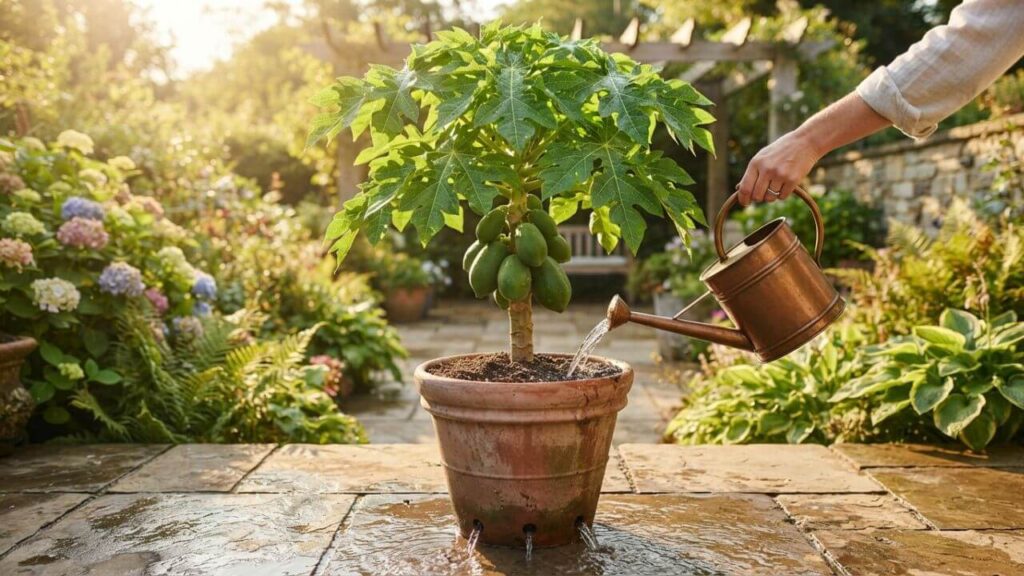
Papayas need steady moisture for good growth, but they should not sit in soggy soil. How often to water papaya plants depends on container size, temperature, sunlight, wind, and the potting mix.
Check the top layer of soil before watering. If the mix feels dry and the plant is actively growing, water thoroughly until excess water drains from the bottom.
Do not give a small amount of water every day just because the plant is in a pot. Deep watering encourages the entire root area to receive moisture.
UF/IFAS notes that drought can reduce papaya growth and production, while well-distributed moisture supports healthy growth and fruit production.
Papaya Plant Watering Tips
During hot weather, container plants may dry faster than plants growing in the ground. Check the soil more frequently during heat waves.
At the same time, avoid leaving the pot in a saucer filled with water. Good drainage is essential because excess moisture can damage roots.
A simple routine works well:
- Check the soil before watering.
- Water deeply when the mix begins to dry.
- Let excess water drain completely.
- Check containers more frequently during hot weather.
- Reduce watering when growth slows in cooler weather.
What Is the Best Fertilizer for Papaya Plants?
Papaya grows quickly and benefits from regular feeding during active growth. Papaya plant fertilizer should provide balanced nutrition rather than relying on one nutrient alone.
UF/IFAS recommends frequent applications of small amounts of complete fertilizer for continuous growth and fruit production. Young plants may need feeding at shorter intervals than established plants.
For container plants, use a complete fertilizer according to the product label. A slow-release fertilizer can simplify feeding, while a diluted liquid fertilizer gives you more control.
Do not assume that more fertilizer means more fruit. Excess fertilizer can damage roots and create overly lush growth.

When to Fertilize Papaya Plants
Feed during active growth and adjust the schedule based on the fertilizer you choose. Young seedlings need much less fertilizer than mature container plants.
If the plant has pale leaves, poor growth, or weak stems, check light, watering, drainage, and root health before increasing fertilizer.
Healthy roots and adequate sunlight must come first. Fertilizer cannot compensate for poor growing conditions.
How to Grow Papaya From Seeds and Get Fruit
How to grow papaya from seeds successfully involves more than simply planting seeds and waiting. The biggest challenge is that papaya seedlings may develop different flower types.
Papaya plants can be male, female, or hermaphroditic. Fruit normally develops from female or bisexual plants.
This matters when growing from seed. A single seed may produce a plant that does not provide the fruit production you want.
For better odds, grow several seedlings and keep the strongest plants until you can identify their flower type. UF/IFAS recommends planting two to three plants to improve the chance that at least one will produce fruit.
If available, a nursery plant with known characteristics may be a better choice for gardeners who want fruit rather than an experiment.
What Are the Best Papaya Varieties for Containers?
The best papaya varieties for containers are compact types that suit your climate and growing space. However, truly dwarf papayas can be harder to find than standard varieties.
UF/IFAS lists ‘Red Lady,’ ‘Maradol,’ ‘Tainung No. 1,’ and Solo-type varieties among papayas grown in the United States. It also notes that dwarf-like types exist but can be difficult to find.
When buying seeds or plants, check the mature size and fruiting characteristics. A variety marketed as compact can be easier to manage in a container than a vigorous full-size plant.
For gardeners in colder states, a container variety that can be moved indoors has another advantage. Smaller plants are easier to protect from cold weather.
How Long Does Papaya Take to Grow and Fruit?
Papaya is relatively fast compared with many fruit trees. Under favorable conditions, well-cared-for plants may begin flowering around four months after planting and producing fruit around seven to eleven months after planting.
However, container plants may grow at different rates. Temperature, sunlight, nutrition, water, variety, and pollination all affect the timeline.
How long does it take for papaya to fruit? There is no guaranteed number of months for every plant. A plant grown in a warm, sunny location may develop much faster than one growing indoors under weak light.
Do not panic if a young plant does not fruit as quickly as expected. First check whether it receives enough light and warmth.
How Do You Get a Papaya Plant to Fruit?
How to get papaya plant to fruit starts with the right growing conditions. Give it full sun, warm temperatures, adequate moisture, and regular nutrition.
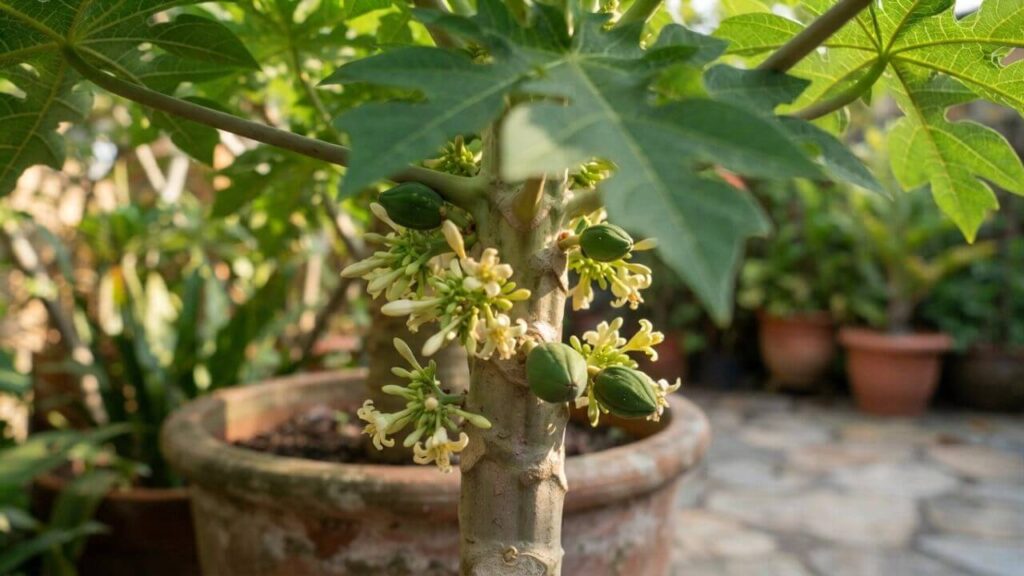
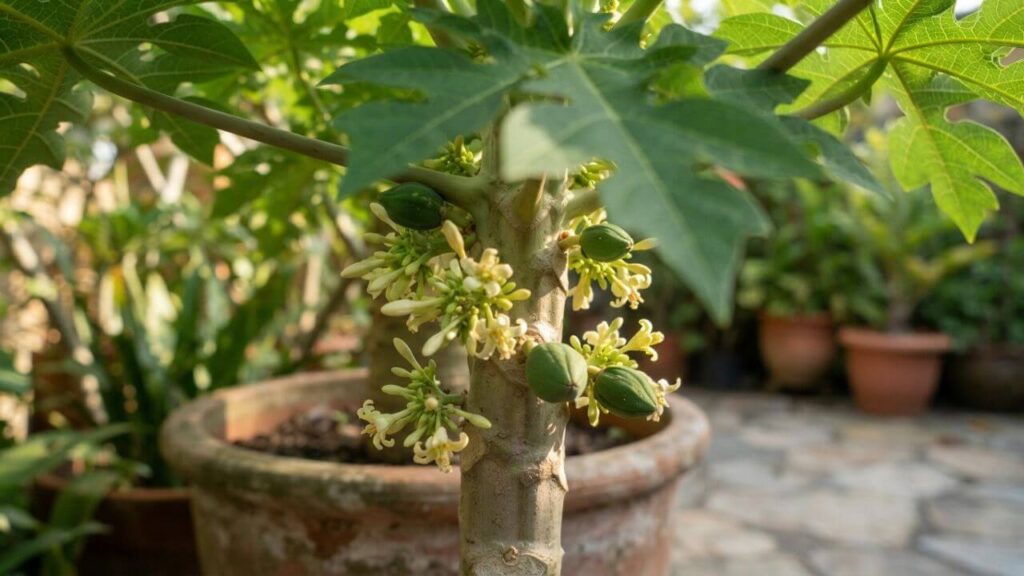
Pollination also matters. If your plant is female, it may need pollen from a male or bisexual plant. Bisexual plants can produce flowers with both reproductive structures and may be capable of setting fruit alone.
Papaya Plant Pollination
Watch the flowers once your plant begins flowering. Male flowers appear in clusters on longer stalks, while female and bisexual flowers grow closer to the trunk.
If you have only one female plant and no suitable pollen source nearby, fruit production can fail. Growing more than one plant can improve your chances when the sex of seedlings is unknown.
Avoid pruning the main growing point. UF/IFAS advises that papaya plants are not normally pruned because their terminal growing point is important to growth and production.
How Big Does a Papaya Plant Get in a Pot?
A container can limit growth, but papaya is still a vigorous plant. Standard papayas can become very tall if they receive excellent growing conditions.
How big does a papaya plant get in a pot? The final size depends on the variety, container size, climate, nutrition, and length of the growing season.
A large pot can support substantial growth. That is useful for fruit production but creates a challenge for gardeners who need to move the plant indoors.
For this reason, container gardeners should plan for mature size before planting. A small, movable plant is much easier to protect from winter cold than a tall plant with a heavy container.
Papaya Plant Problems to Watch For
Container papayas can face pests, diseases, weather stress, and watering problems. Early inspection gives you a better chance of correcting problems before the plant declines.
Common issues include:
- Papaya leaves turning yellow: Check watering, drainage, nutrition, and root health.
- Papaya leaves curling: Inspect the plant for pests, heat stress, or watering problems.
- Papaya plant not growing: Check temperature, sunlight, root space, and nutrition.
- Papaya plant not producing fruit: Check plant type, pollination, sunlight, and temperature.
- Root problems: Look for consistently wet soil and poor drainage.
- Wind damage: Move the container to a protected location.
Papaya is also susceptible to serious diseases such as papaya ringspot virus. UF/IFAS identifies it as an important papaya disease and recommends replacing affected plants rather than trying to maintain severely infected plants.
How to Care for a Papaya Plant in Winter
Cold weather is one of the biggest challenges for papaya tree care in pots. Papaya is tropical and does not tolerate freezing temperatures.
UF/IFAS reports that papayas grow best around 70°F to 90°F. Temperatures below 31°F can cause severe damage or death, while temperatures below about 59°F can interfere with flowering.
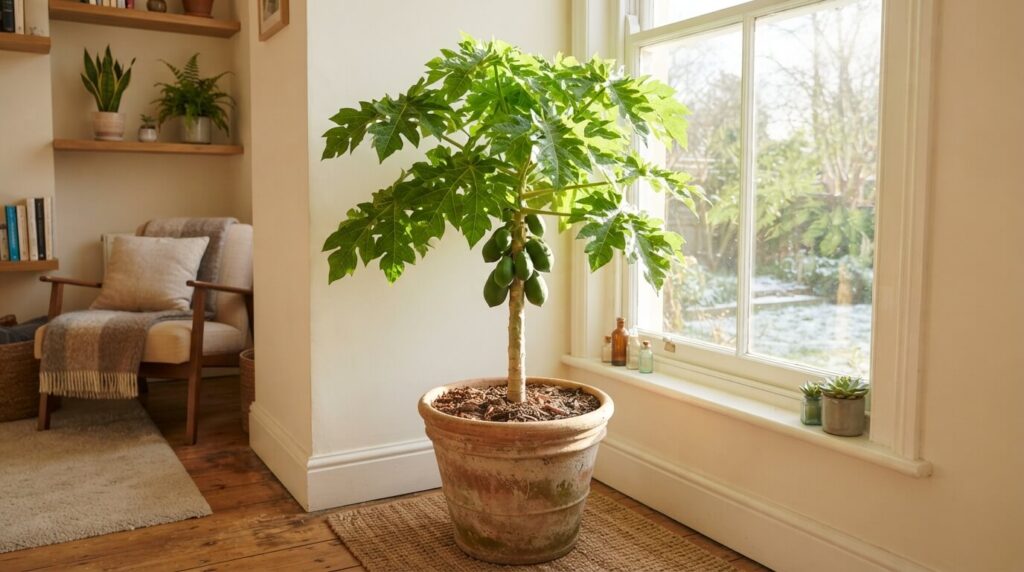
If you live outside a warm climate, move your container indoors before freezing weather arrives. Choose the brightest location available, such as a sunny south-facing window or a suitable indoor growing setup.
Container growing is particularly useful in cooler areas because you can move the plant for cold protection. UF/IFAS specifically notes that containers make papayas easier to move indoors when temperatures drop.
Simple Papaya Container Care Schedule
A regular routine makes growing papaya in containers easier. Instead of changing several things at once, check the plant and soil before making adjustments.
| Task | What to check |
|---|---|
| Weekly | Soil moisture, pests, leaves |
| Growing season | Sunlight, watering, fertilizer |
| Monthly | Container drainage, roots, plant support |
| Before cold weather | Temperature and indoor location |
Remove dead leaves as needed and keep the growing area clean. UF/IFAS notes that removing dead leaves can reduce disease and insect problems.
As the plant becomes taller, check that the container remains stable. Protect it from strong winds because papayas can suffer wind damage and may topple when carrying fruit.
FAQ
Can you grow papaya in a pot?
Yes. Papaya can grow in containers when given enough root space, full sun, good drainage, regular water, and warm temperatures. Container growing also makes it easier to protect papayas from cold weather.
What size pot is best for growing papaya?
Use a large, sturdy container with excellent drainage. A 15- to 25-gallon container can provide useful long-term root space, although the ideal size depends on the variety and growing conditions.
How much sunlight does a potted papaya need?
Give papaya at least six hours of direct sunlight each day. Full sun supports strong growth and fruit production.
How long does it take for papaya to fruit?
Under favorable conditions, papaya can begin flowering within several months and may produce fruit around seven to eleven months after planting. The timing varies with variety, temperature, sunlight, pollination, and care.
Why is my potted papaya plant not producing fruit?
Check whether the plant receives enough sunlight and warmth. Also determine whether it is male, female, or bisexual because plant sex affects fruit production. A female plant may need pollen from a suitable male or bisexual plant.
Conclusion
How to grow papaya in pots comes down to giving this tropical plant enough space, warmth, sunlight, water, and nutrition. Start with a large container that drains well, use a quality potting mix, and place the plant in full sun.
If you grow from seed, remember that seedlings can produce different flower types. Growing several plants can improve your chances of getting a fruit-producing plant. For cooler parts of the United States, container growing also gives you the option to move papaya indoors before freezing weather.
Start with the right pot and location, then focus on steady care. With enough warmth and sunlight, a healthy container papaya can become a rewarding home fruit plant.
Last Updated on September 26, 2026 by Saad Abdullah

I enjoy sharing simple gardening ideas, lawn care tips, and honest product reviews that help make outdoor work easier. From home gardening guides to helpful tools and lawn care advice, I write easy-to-follow content to help readers create a healthier and better-looking outdoor space without wasting time or money.