As an Amazon Associate, I earn from qualifying purchases.
Protect hydrangeas in winter by adding mulch over the root zone, watering before the ground freezes, and shielding flower buds from harsh cold when needed. The right method depends on your hydrangea type and local winter weather.
Across the United States, winter can mean very different things for a garden. A hydrangea in a mild Georgia yard may face only a few cold nights, while one in Minnesota or upstate New York may endure frozen soil, strong winds, and repeated freeze-thaw cycles. Your care plan should match the plant and the weather where you live.
The key is to protect the parts of the shrub that need help, not to wrap every hydrangea in a thick cover. Some hydrangeas form flower buds on old wood, which means last summer’s growth may hold next year’s blooms. Others flower on new wood and can often handle winter with little more than healthy roots and a layer of mulch.
Start by identifying your hydrangea, checking its site, and learning the cold risks in your USDA hardiness zone. Then prepare the soil and stems before severe weather arrives. With a few careful steps, you can reduce winter damage without smothering the plant or encouraging rot.
The first step is to find out which hydrangea you have. Winter protection depends on where the shrub forms its flower buds and how well its stems and roots tolerate cold. A method that works for one kind may be unnecessary or harmful for another.
Look at the leaves, flower shape, and growth habit, or check the plant label. If the variety is unknown, avoid major fall pruning and choose gentle root protection until you can identify it more clearly.
Source: backyardboss.net
Bigleaf hydrangea
Hydrangea macrophylla often forms flower buds on old wood. In cold regions, protecting the stems and buds can help preserve summer blooms, especially on varieties that are not reliably hardy in the local climate.
Mountain hydrangea
Hydrangea serrata also includes many varieties that flower on old wood. Wind exposure and severe cold can harm buds, so shelter may be useful in colder sites.
Oakleaf hydrangea
Hydrangea quercifolia flowers on old wood. It benefits from a good site and root mulch, while extra shelter may help young plants or shrubs exposed to harsh winter winds.
Panicle hydrangea
Hydrangea paniculata flowers on new wood and is generally cold-hardy. Established plants often need only normal fall watering, a sound layer of mulch, and protection from unusual site hazards.
Smooth hydrangea
Hydrangea arborescens also flowers on new wood. Its roots still benefit from mulch, but a full stem enclosure is rarely needed for a healthy, established shrub in a suitable climate.
Climbing hydrangea
Hydrangea anomala subsp. petiolaris grows on walls, fences, and other supports. Protect young roots with mulch and check that exposed stems are securely attached, especially where winter wind or ice is common.
Why old wood matters
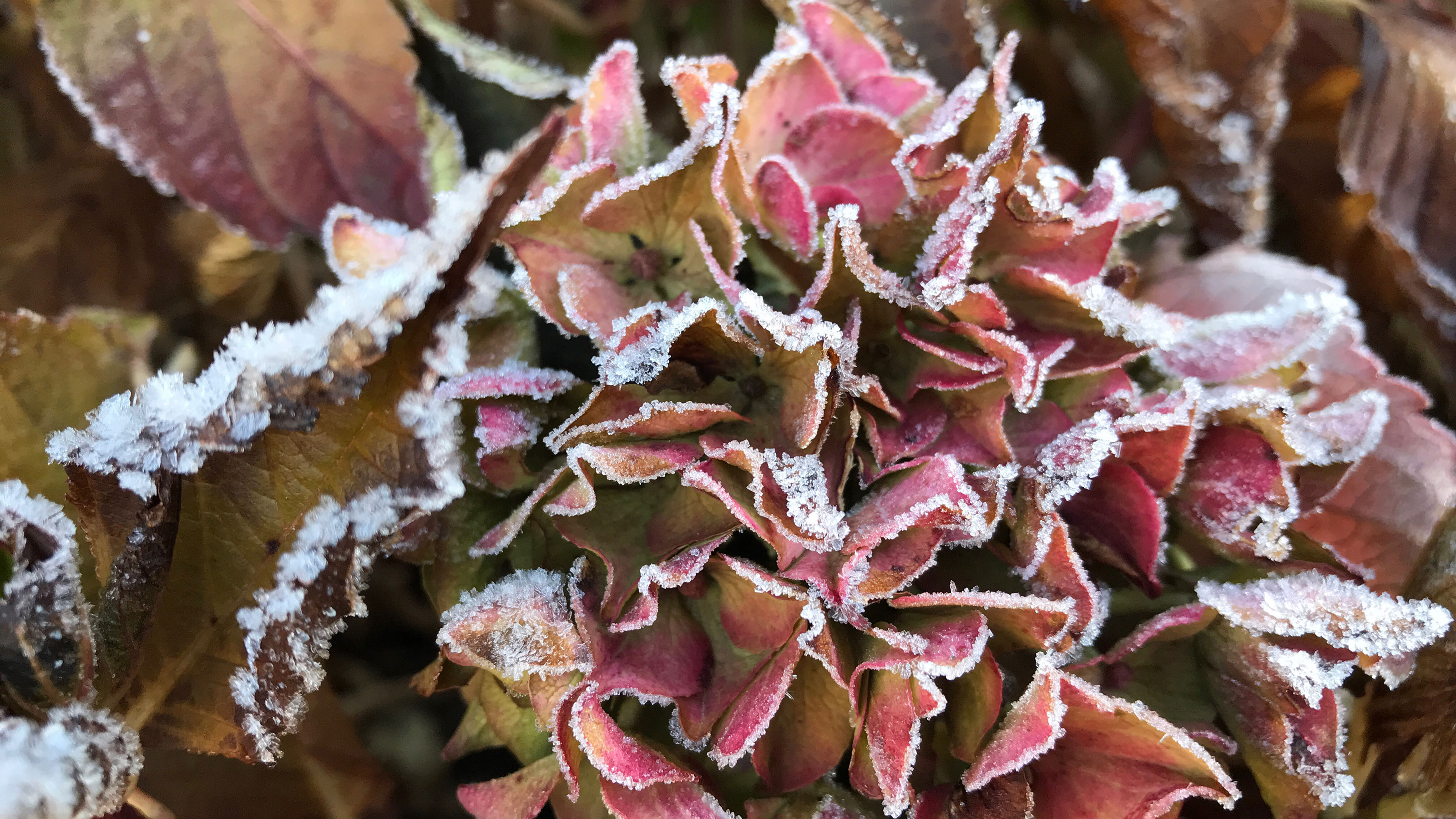
Old wood means stems that grew in a previous season. On many bigleaf and oakleaf hydrangeas, flower buds develop before winter arrives. If those buds die during a cold spell, the shrub may grow healthy leaves in spring but produce few or no flowers.
New-wood bloomers form their flowers on growth made during the current growing season. This gives many panicle and smooth hydrangeas more room to recover after winter damage. It does not make them immune to extreme cold, drought, root injury, or damage to young plants.
When in doubt
Skip hard fall pruning and focus on root health. You can inspect dead or damaged stems in spring, when living buds are easier to distinguish.
2. Prepare Hydrangeas in Fall
Fall preparation should help the shrub enter winter with moist soil, healthy roots, and intact stems. Begin before the ground freezes, but do not rush to cover the plant at the first cool night. Hydrangeas need time to slow their growth and become dormant.
Remove weeds and fallen debris from around the base. Check the plant for broken branches, signs of disease, and standing water. Clear away badly diseased plant material, but leave healthy stems in place if they may hold flower buds.
Source: stacyling.com
Water during dry weather
If fall rainfall has been low, water slowly and deeply around the root zone while the soil is still workable. Moist soil can help roots withstand winter stress, but constantly wet soil can cause root problems.
Stop late-season feeding
Avoid applying nitrogen-rich fertilizer late in the growing season unless a soil test and local guidance indicate a specific need. Late feeding can encourage tender growth that may not harden before frost.
Keep pruning light
Remove broken or clearly diseased wood when needed. Save shaping and size control for the proper pruning season for your hydrangea type.
Check drainage
If water pools around the plant after rain, address the drainage issue rather than adding more cover. A wet root zone can remain cold and poorly aerated through winter.
When should you start winter protection?
Prepare materials in fall, then install the main protection after the plant has slowed down and leaves have begun to drop, if your hydrangea needs shelter. The exact timing varies with local weather and plant type. In colder parts of the Northeast and Upper Midwest, preparation often needs to be finished before the ground freezes; in milder parts of the South, a heavy enclosure may not be necessary at all.
Do not use one calendar date for the whole country. Watch the forecast, your local first hard freeze, and the needs of the variety. A sudden cold snap can call for temporary protection, while a mild fall may allow more time for the shrub to become dormant.
A useful rule
Have mulch and shelter materials ready before repeated hard freezes are forecast. Apply them according to the plant’s needs, not just because the calendar says winter is near.
3. Mulch the Root Zone to Reduce Winter Stress
Mulch is one of the easiest ways to protect most hydrangeas. It helps slow sudden changes in soil temperature, limits moisture loss, and reduces the risk of repeated freezing and thawing around shallow roots. It is useful even for many cold-hardy varieties that do not need their stems covered.
Use loose organic material such as shredded leaves, clean straw, pine needles, or bark mulch. For most garden beds, a layer about 2 to 4 inches deep is a practical starting point, adjusted for local conditions and the material used. Do not pile it tightly against the stems.
Source: www.youtube.com, Flower Fanatic
Step 1: Clear the base
Remove weeds and thick mats of wet, decaying debris. Keep the soil surface intact so you do not damage shallow roots.
Step 2: Spread mulch outward
Cover the root zone beneath the canopy and extend toward the drip line when practical. Spread the material evenly rather than creating a high mound around the crown.
Step 3: Leave breathing room
Keep mulch a few inches away from the main stems. This helps reduce prolonged moisture against the bark and discourages decay.
Step 4: Check it after storms
Wind and heavy rain may shift mulch. Restore thin areas, but avoid adding so much that the root zone stays saturated.
Which mulch works best?
Shredded leaves are a useful, low-cost option for many American home gardens. They insulate the soil and can break down over time. Use leaves that are reasonably healthy and shred them if they tend to form a dense, wet mat.
Clean straw can also provide insulation, especially in a temporary winter setup. Bark mulch is useful for a longer-lasting bed cover, though very coarse pieces may leave more gaps. No mulch can guarantee that flower buds will survive a severe freeze; its main role is to buffer the root zone.
Avoid tight, wet piles
A deep, compacted layer can hold excess moisture and reduce air flow. More mulch is not always better, especially on poorly drained soil.
4. Protect Old-Wood Hydrangeas from Severe Cold
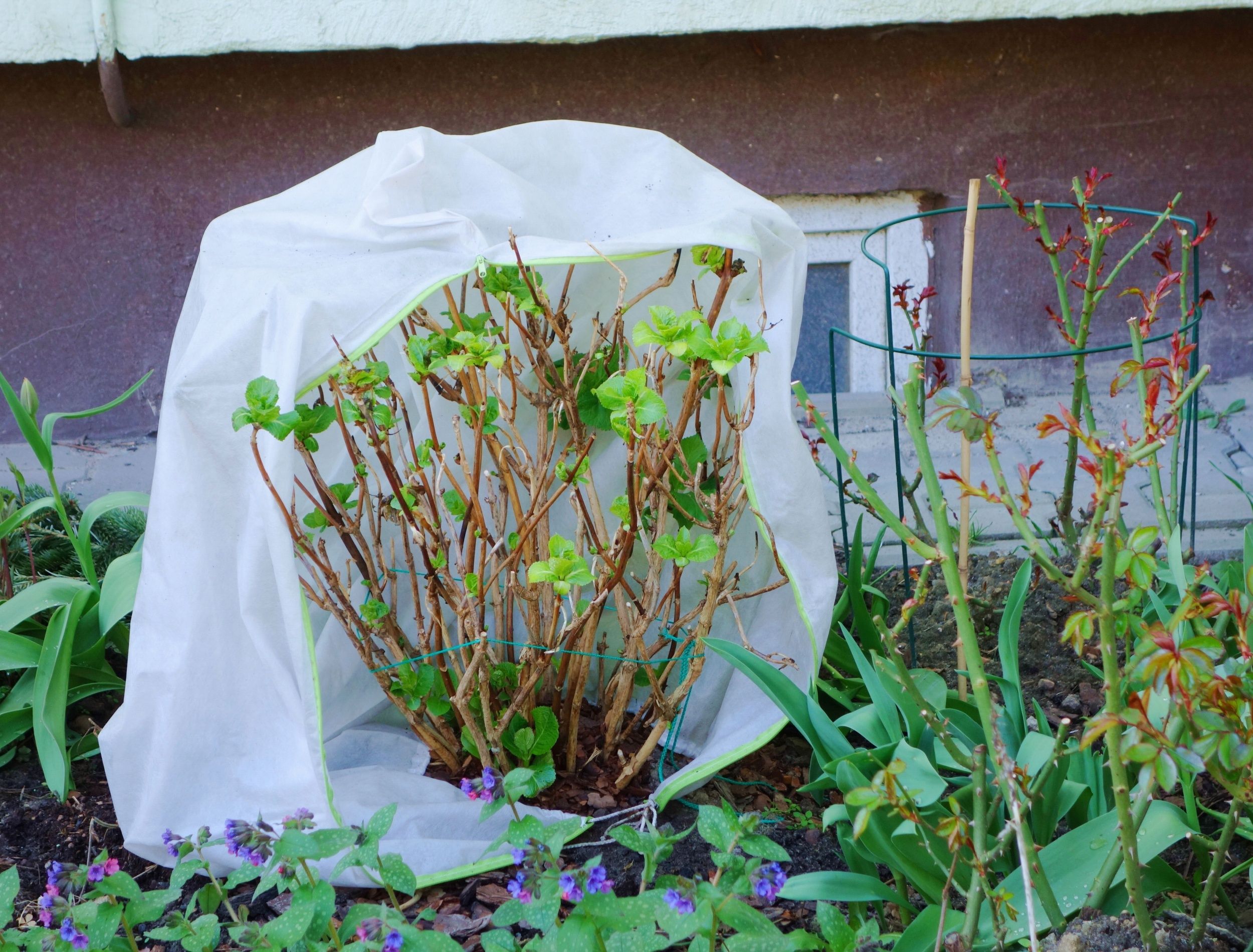
If your hydrangea forms flower buds on old wood and grows in a cold or exposed location, a simple frame can help shield the stems from wind and severe temperature swings. This is most useful for vulnerable bigleaf and mountain hydrangeas, especially where winter conditions regularly threaten next year’s buds.
The goal is to reduce exposure without sealing the plant inside a damp, airtight shell. Use sturdy stakes or a loose wire frame, then fill the space around the stems with dry leaves or another light insulating material. The frame should remain stable in wind and snow, with enough space to avoid crushing branches.
Source: plantisima.com
Build a loose frame
Place stakes around the shrub without driving them through the main root crown. Secure wire mesh or another open support to the stakes, leaving space between the frame and the stems.
Add dry insulation
Fill the frame loosely with dry leaves after the shrub is dormant. Do not pack the material tightly around every branch, since trapped moisture and pressure can damage the plant.
Use a breathable outer layer
Where wind is a concern, attach burlap to the outside of the frame. Keep the enclosure ventilated and avoid wrapping wet material tightly around the stems.
Secure the top if needed
A loose cover can keep much of the rain and snow from saturating the insulation, but it should not trap heat or moisture. Check the structure after storms.
Can you wrap a hydrangea in burlap?
Yes, burlap can serve as a wind screen or as part of a protective frame. It is more useful when it reduces exposure while allowing air to move around the plant. A frame is often preferable to pulling fabric tightly over the shrub because it is less likely to bend branches or rub off buds.
Do not assume burlap alone will keep a tender variety safe in every climate. Protection can reduce damage, but the plant’s hardiness, site, duration of cold, and severity of the freeze still matter. In a very exposed site, moving a suitable container plant to a sheltered location may work better than adding more layers.
Avoid plastic sealed around stems
Plastic can trap moisture and warm up in winter sun, then cool quickly at night. If a temporary cover is needed during a brief freeze, remove or open it when conditions improve.
5. Adjust Protection for Your USDA Hardiness Zone
Your USDA hardiness zone is a useful starting point because it describes the average annual extreme minimum winter temperature for a location. It does not predict every cold snap, nor does it account for all site factors such as wind, drainage, snow cover, or the warmth of a sheltered wall.
Use the zone together with the plant label and local weather patterns. A hydrangea near the cold edge of its recommended range may need more care than the same variety planted in a protected spot a few miles away. Young shrubs and recently transplanted plants also deserve closer attention.
Source: homesandgardens.com
Colder regions, including much of the Upper Midwest and northern New England
Prioritize root mulch and assess whether old-wood varieties need a frame filled with dry leaves. Choose varieties rated for local conditions whenever possible.
Mid-Atlantic and parts of the Northeast
Winter risk can vary widely from one site to another. Shelter exposed bigleaf hydrangeas when hard freezes and drying winds threaten their buds, but avoid unnecessary heavy wrapping during mild spells.
Pacific Northwest and coastal areas
Cold may be less severe in many coastal sites, but prolonged rain and poor drainage can be a major concern. Focus on healthy soil drainage, modest mulch, and protection from strong winds where needed.
Southern states and milder winter areas
Established, hardy hydrangeas may need little more than mulch and occasional watering during dry periods. Avoid building a tight enclosure that stays damp through mild, rainy weather.
Do not rely on snow as your only insulation
A stable snow cover can insulate soil and lower the effect of rapid temperature swings. But snow may melt, blow away, or arrive after a severe freeze. Treat it as a helpful bonus rather than the whole protection plan.
Likewise, a south-facing wall can offer shelter and warmth, but it may also cause earlier warming and repeated temperature changes. Check the specific site instead of assuming that a warm-looking position is always best.
Match care to the site
Observe where snow collects, where winter winds blow, and where water pools. These clues can help you decide whether mulch, a wind screen, or better drainage will make the greatest difference.
6. Give Hydrangeas in Pots Extra Root Protection
A hydrangea growing in a container faces a different winter risk from one planted in the ground. Cold air can reach the pot from the sides as well as the top, so the root ball may freeze more quickly. A variety that survives winter in garden soil may need added protection when grown in a pot.
First, check the plant’s expected hardiness and whether your container is suitable for outdoor winter conditions. A large, frost-resistant pot is generally less vulnerable to cracking than a thin container, but the roots can still freeze. Do not assume a sheltered porch will keep a tender plant warm enough in a prolonged cold spell.
Source: www.pinterest.com
Move the pot to a sheltered spot
Place it in a protected, unheated area such as a suitable cold frame or sheltered garage where the plant can remain dormant. The best location depends on local temperatures, the plant’s needs, and whether the space stays cold enough without becoming dangerously cold.
Insulate the container
Where the pot must remain outdoors, group containers together and surround the pot with insulating material or place it in a protected enclosure. Keep drainage holes clear and do not seal the root ball in a waterlogged wrap.
Water sparingly but check the soil
Dormant plants need less water, yet their roots should not dry out completely. Check the potting mix during mild spells and water when needed, allowing excess water to drain away.
Avoid heated indoor rooms
A warm living room can disrupt dormancy and may not provide the light or humidity the plant needs. If you move a hardy deciduous hydrangea, a cool, protected place is usually more suitable than a heated room.
Should you bury a container for winter?
In some cold climates, sinking a suitable pot into the ground can buffer the roots from temperature swings. This approach works only when the site drains well and the container can be placed safely without damaging roots or underground utilities.
If burying the pot is impractical, use a protected location and insulation around the container. Check the plant through winter rather than assuming that a cover eliminates all risk.
Watch drainage
Never let a container sit in a tray of frozen water. Blocked drainage can leave the roots saturated and increase the chance of damage.
7. Avoid Common Winter Care Mistakes
Winter damage does not always mean a hydrangea needed more insulation. Too much water, poor drainage, late pruning, and tightly wrapped covers can create their own problems. The best plan protects the plant from a known risk while allowing normal air flow and seasonal dormancy.
If a shrub has struggled in past winters, look at the pattern of damage before changing everything. Dead flower buds with healthy roots suggest a different problem from blackened stems after a wet freeze or a plant that wilts because its root zone dried out.
Source: stacyling.com
Do not prune every hydrangea in fall
Bigleaf, mountain, and oakleaf hydrangeas may carry next season’s flowers on old wood. Cutting them back can remove buds even if the stems are healthy. Learn the plant’s flowering habit before pruning.
Do not pile mulch against the stems
A tight mound can hold moisture at the base and create conditions that favor decay. Spread mulch over the root zone and leave space around the crown.
Do not fertilize to force late growth
Late-season feeding is not a reliable way to improve winter survival. Focus on appropriate watering, drainage, and steady growth during the growing season.
Do not keep a sealed cover on through mild weather
A closed plastic cover can trap condensation and heat. Use breathable materials for longer protection and remove temporary covers when the immediate cold threat passes.
Do not treat every brown leaf as winter injury
Brown leaves in fall can be part of normal dormancy. Assess stems and buds in spring before deciding that the shrub is dead or needs hard pruning.
What if your hydrangea was not protected before a freeze?
Do not rush to cut the shrub down after one cold night. Keep the root zone mulched, water only when the soil is not frozen and the plant needs it, and wait until spring growth begins before judging the stems. Some buds may be lost while the plant itself remains alive.
If another severe cold spell is forecast, add a temporary breathable wind screen or protect the root zone if the ground is still workable. Avoid bending frozen branches or handling them roughly, since cold stems can snap.
Assess damage in spring
Look for swelling buds and flexible living stems. If you are unsure which sections are alive, wait for clearer growth before removing large branches.
Frequently Asked Questions
Q
Should I cut hydrangeas back before winter?
Not all hydrangeas should be cut back in fall. Bigleaf, mountain, and oakleaf hydrangeas often flower on old wood, so fall pruning may remove next year’s buds. Panicle and smooth hydrangeas flower on new wood and can be pruned at an appropriate time, often in late winter or early spring, depending on local conditions and the variety.
If you do not know the type, leave healthy stems in place until you can identify it.
Q
Can hydrangeas survive winter without being covered?
Yes. Many established hydrangeas survive winter without a full cover, especially hardy panicle and smooth varieties planted in suitable locations. A layer of mulch and sensible fall watering may be enough.
Old-wood varieties in cold, windy locations may benefit from extra protection to preserve flower buds. The need depends on the cultivar, local climate, and exposure.
Q
How much mulch should I put around a hydrangea for winter?
A layer of about 2 to 4 inches of loose organic mulch is a useful starting point for many garden hydrangeas. Spread it over the root zone and keep it a few inches away from the main stems.
Adjust the depth to the mulch type, soil drainage, and local conditions. Avoid compacted piles that keep the crown wet.
Q
Should I water hydrangeas in winter?
Water is helpful when the soil is dry and not frozen, especially during a mild, dry spell. Hydrangeas in pots may dry out sooner than shrubs planted in the ground, so check their potting mix from time to time.
Do not water frozen soil or leave pots standing in water. Excess moisture can harm roots as well as drought can.
Q
When should I remove winter protection from hydrangeas?
Remove or open protective covers gradually in spring when the risk of severe cold has eased in your area. Start on mild days so air can circulate and the plant can adjust, while keeping materials ready if a late freeze is forecast.
Do not strip away all protection based on one warm afternoon. Local forecasts and the plant’s stage of growth are better guides than a fixed date.
✦ Wrapping Up
Conclusion
The best way to protect hydrangeas in winter is to match the care to the plant, the site, and the weather. Start with a healthy root zone, add a loose layer of mulch, and water during dry fall periods while the soil remains unfrozen. Reserve a frame or breathable wind screen for varieties and locations where winter cold threatens stems and flower buds.
Remember that not every hydrangea needs a full cover. Panicle and smooth types often tolerate winter well in suitable climates, while bigleaf, mountain, and oakleaf varieties may need more care if they bloom on old wood. Avoid heavy fall pruning, tight plastic wraps, and waterlogged soil, then inspect the plant in spring before removing stems that may still be alive.
💡 Key Takeaway
Before the next hard freeze, identify your hydrangea, check the soil moisture and drainage, spread 2 to 4 inches of mulch over the root zone, and add breathable shelter only if your variety and local conditions call for it.
I enjoy sharing simple gardening ideas, lawn care tips, and honest product reviews that help make outdoor work easier. From home gardening guides to helpful tools and lawn care advice, I write easy-to-follow content to help readers create a healthier and better-looking outdoor space without wasting time or money.