
As an Amazon Associate, I earn from qualifying purchases.
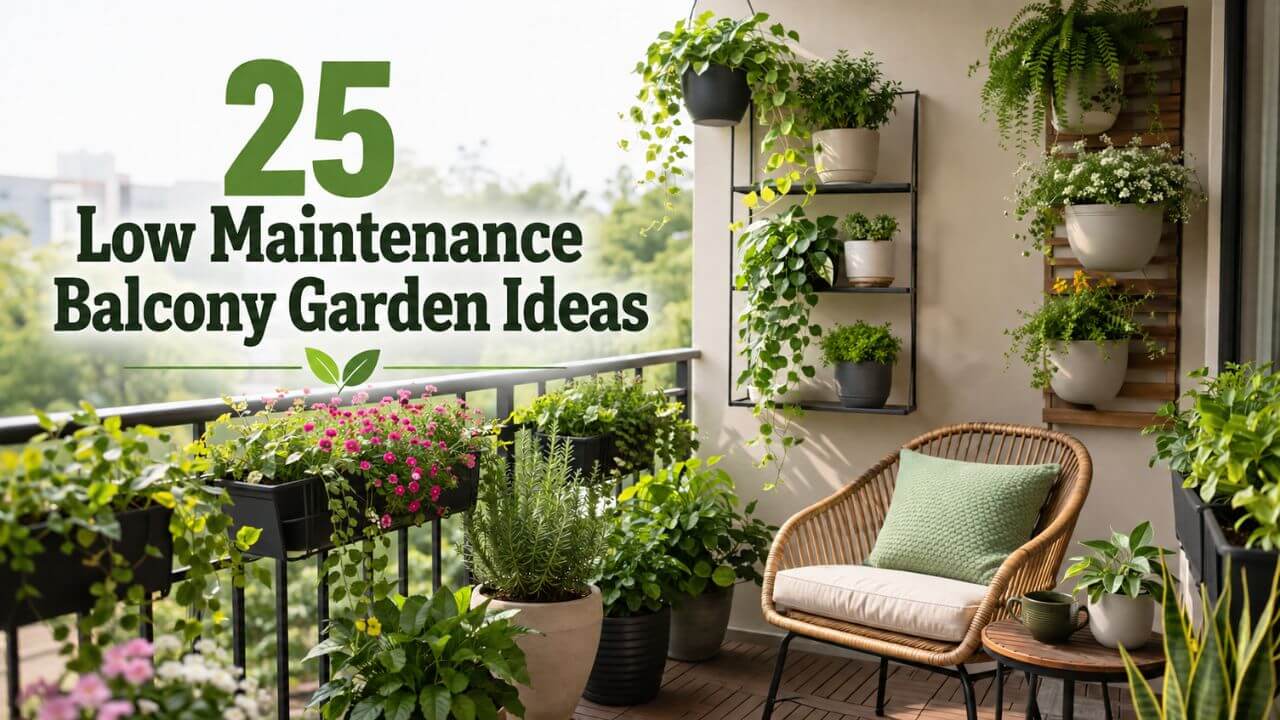
Daily watering and constant maintenance make many people abandon balcony gardening after a single season. The good news is that low-maintenance balcony garden ideas can create a beautiful outdoor space without demanding hours of work every week.
The secret is not finding magic plants that survive without care. It is choosing plants, containers, and layouts that naturally reduce maintenance.
What Makes a Balcony Garden Low Maintenance?
A low-maintenance balcony garden is designed to reduce watering, pruning, fertilizing, and seasonal replacement.
These gardens usually share several characteristics:
- Drought-tolerant plants
- Larger containers
- Fewer plant varieties
- Simple layouts
- Mulch for moisture retention
- Self-watering systems
In my experience, reducing plant variety is one of the easiest ways to reduce maintenance. Fewer types of plants means fewer watering schedules and fewer problems to monitor.
Plan Your Minimal Care Balcony Garden Setup First
Good planning prevents most maintenance problems before they start.
Know Your Sunlight
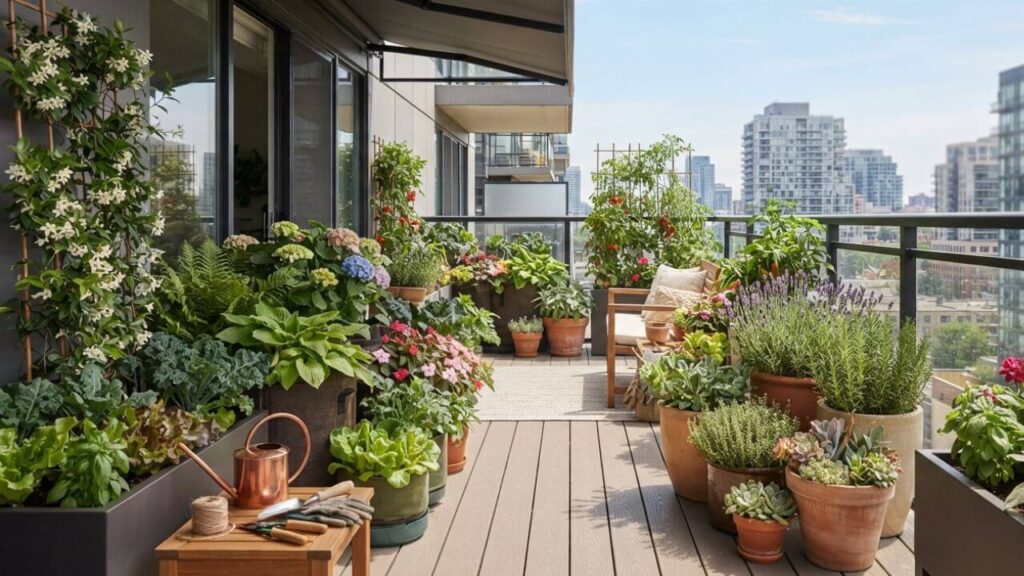
Before buying plants, observe your balcony for a full day.
- 6-8 hours = Full sun
- 3-6 hours = Partial sun
- Less than 3 hours = Shade
Matching plants to available sunlight reduces stress and improves growth.
Choose Larger Containers
Large pots hold moisture longer and protect roots from temperature swings.
A small six-inch pot may require daily watering in July, while a larger container may only need water every few days.
Group Plants by Water Needs
Keeping thirsty herbs beside drought tolerant plants creates extra work.
Group moisture-loving plants together and keep dry-loving plants in separate containers.
25 Low Maintenance Balcony Garden Ideas
1. Succulent Balcony Garden
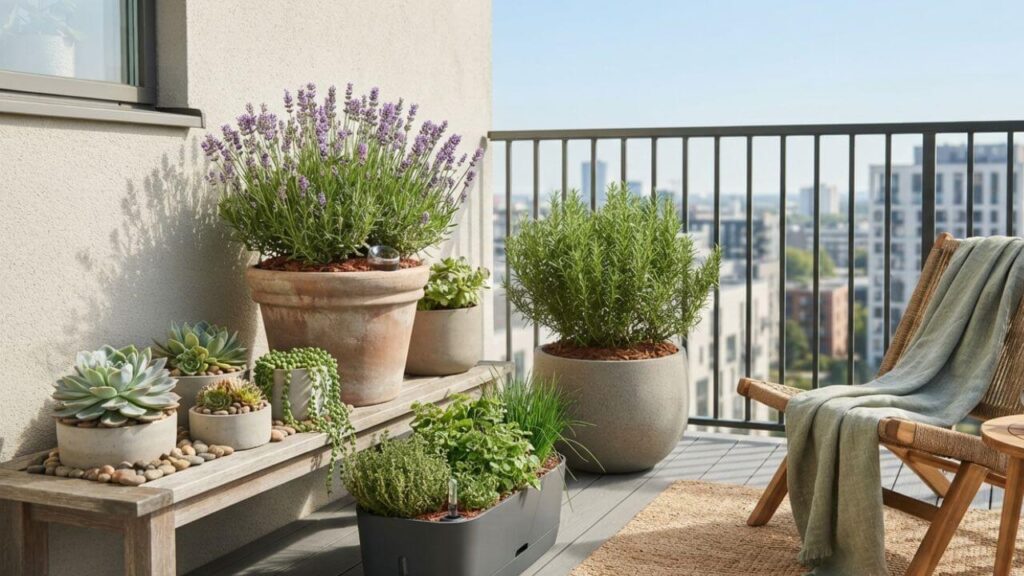
Succulents are some of the easiest plants to grow on a balcony. They store water in their thick leaves, which helps them survive dry weather and missed watering days.
Popular choices include jade plants, echeveria, sedum, aloe, and haworthia. Most succulents only need water once every one or two weeks during summer.
They also grow well in strong sunlight and hot conditions. If your balcony faces south or west, a succulent garden can be one of the easiest options to manage.
2. Mediterranean Herb Garden
Rosemary, thyme, oregano, and sage come from warm and dry regions. Because of this, they grow very well in sunny balcony containers.
These herbs need less water than basil or parsley. They also provide fresh ingredients for cooking throughout the growing season.
I recommend planting them together because they all enjoy similar soil and watering conditions. This makes maintenance much easier.
3. Lavender Corner Garden
Lavender adds color, fragrance, and beauty to a balcony garden. It also attracts bees and butterflies during summer.
Once the plant settles into its container, it needs very little water. Too much watering causes more problems than too little water.
A single lavender plant can become a beautiful focal point in a small balcony garden.
4. Cactus Container Display
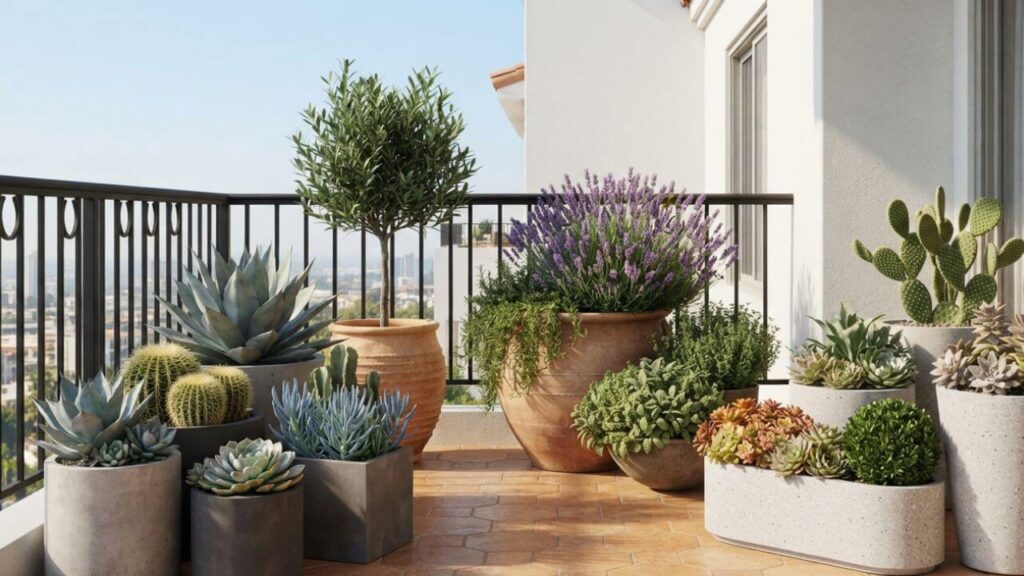
Cactus plants are perfect for people with busy schedules. Many varieties can go several weeks without watering.
They love sunny balconies and hot weather. Most cactus plants also need very little fertilizer or pruning.
Decorative pots filled with different cactus varieties can create a modern and stylish balcony display.
5. Evergreen Planter Garden
Evergreen shrubs keep their leaves throughout the year. This means your balcony stays green even during winter months.
Dwarf boxwood and compact juniper are excellent choices for containers. They grow slowly and need very little trimming.
For homeowners who want year-round color, evergreen planters are a smart investment.
6. Balcony Railing Planters
Railing planters use space that normally stays empty. They free up floor space and make small balconies feel larger.
These planters work well for herbs, flowers, and compact vegetables. Their higher position also makes harvesting easier.
Basil, parsley, petunias, and trailing flowers all perform well in railing boxes.
7. Vertical Herb Walls
Vertical gardens use walls instead of valuable floor space. This makes them ideal for apartment balconies and small outdoor areas.
Wall planters, pocket planters, and hanging containers all work well. Herbs such as basil, thyme, oregano, and parsley grow especially well in these systems.
Vertical gardens also make watering and harvesting easier because plants stay within easy reach.
8. Ladder Shelf Gardens
Ladder shelves create several growing levels in a small space. This allows gardeners to grow more plants without making the balcony feel crowded.
The open design improves airflow around containers and helps plants dry faster after watering.
In my experience, ladder shelves offer one of the best combinations of appearance, productivity, and easy maintenance.
9. Hanging Basket Gardens
Hanging baskets save floor space and add color at eye level. They work especially well for trailing flowers and herbs.
Petunias, mint, oregano, and strawberries grow very well in hanging containers. Better airflow also helps reduce some disease problems.
Hanging baskets are a great choice for balconies with limited space.
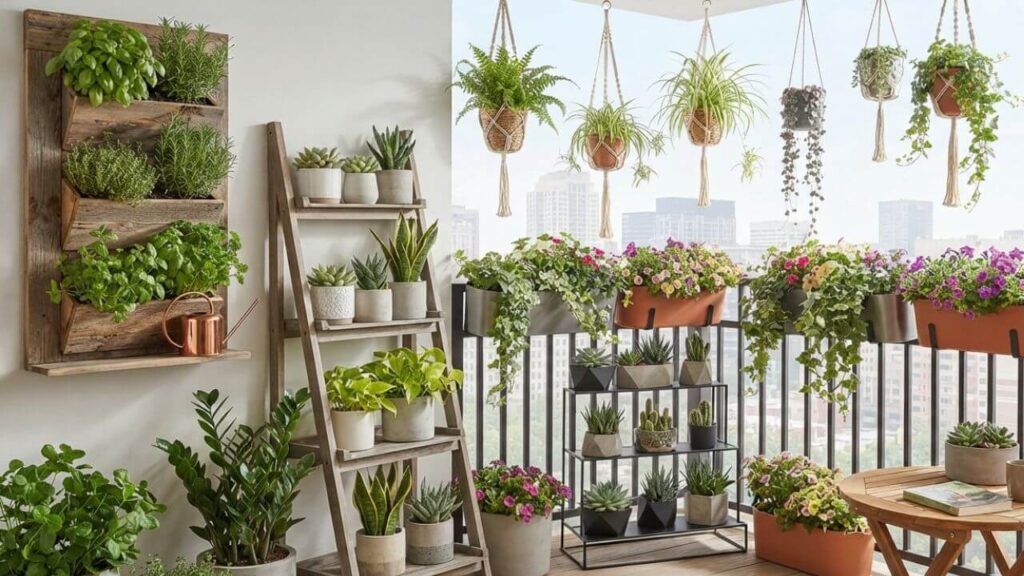
10. Tiered Plant Stands
Tiered stands allow gardeners to grow many plants in a very small area. A simple three-level shelf can hold ten or more containers.
Plants remain organized and easy to reach during watering and harvesting. Different shelf levels also make balconies look more attractive.
This is one of the easiest ways to increase growing space.
11. Geranium Containers
Geraniums are famous for their long flowering season. They continue blooming for months with very little care.
These flowers tolerate heat and dry soil better than many other annual plants. They are also available in many different colors.
For beginners, geraniums are one of the safest choices for reliable summer color.
12. Marigold Displays
Marigolds bring bright yellow, orange, and red flowers to balcony gardens. They grow quickly and need very little attention.
Their flowers attract bees and beneficial insects. Some gardeners also believe their scent helps discourage certain pests.
Marigolds are easy to grow and perform well in containers.
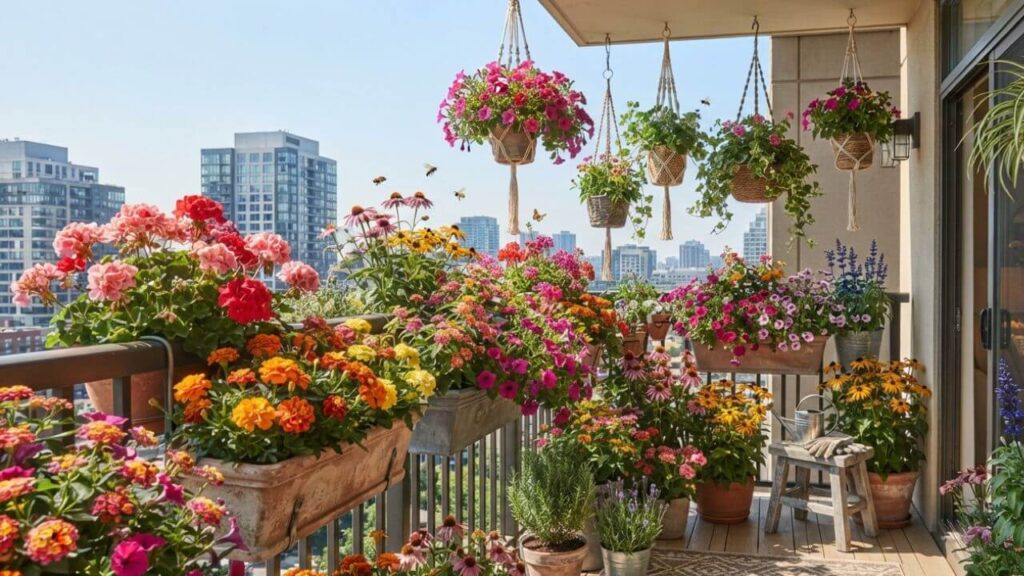
13. Lantana Pots
Lantana loves hot weather and sunny locations. It continues blooming even during periods of summer heat.
Once established, it needs very little watering. This makes it one of the best low maintenance flower choices for balconies.
Butterflies also love lantana flowers, which adds extra life to the garden.
14. Petunia Hanging Baskets
Petunias provide bright color from spring until fall. Modern varieties continue blooming for months without much work.
They perform especially well in hanging baskets and railing planters. Regular watering is usually enough to keep them looking healthy.
Petunias can quickly make a balcony feel more welcoming and colorful.
15. Native Pollinator Containers
Native flowers already understand local weather conditions. Because of this, they usually need less care than exotic plants.
They also support local bees, butterflies, and other pollinators. This helps create a healthier garden environment.
Choosing native plants can reduce both maintenance and watering needs.
16. Rosemary Containers
Rosemary enjoys sunny balconies and dry soil conditions. In fact, overwatering causes more problems than underwatering.
A healthy rosemary plant can live for several years in the same container. It also provides fresh herbs for cooking throughout the year in warmer regions.
Few herbs offer as much value for so little work.
17. Thyme Borders
Thyme grows low and spreads slowly around the edges of containers. It creates a neat and attractive appearance.
This herb needs very little water and handles heat very well. It also releases a pleasant smell when touched.
Thyme works beautifully around larger pots and mixed herb containers.
18. Sage Pots
Sage combines attractive foliage with excellent drought tolerance. Its soft gray-green leaves add texture and color to balcony gardens.
Once established, sage requires very little care. Occasional trimming is usually all that is needed.
Sage is both decorative and useful in the kitchen.
19. Oregano Planters
Oregano grows quickly and fills containers with fragrant leaves. It handles heat and dry conditions better than many herbs.
One plant can provide enough oregano for most families during the growing season. Regular harvesting also encourages fuller growth.
It remains one of the easiest herbs for beginners.
20. Chive Containers
Chives are easy to grow and easy to harvest. In many parts of the United States, they return year after year.
Their purple flowers attract bees during spring and summer. The leaves can be harvested many times during the season.
Chives provide excellent value for very little effort.
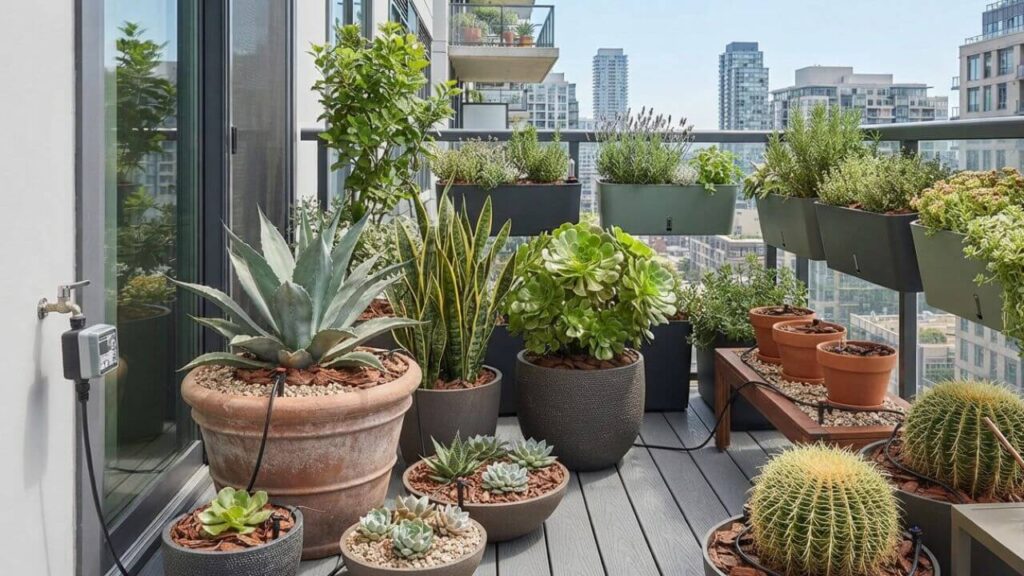
21. Self-Watering Planters
Self-watering containers include a small water reservoir below the soil. Plants take up moisture as they need it.
These containers reduce watering work during hot weather. They are especially useful for busy homeowners and frequent travelers.
For beginners, they can prevent many common watering mistakes.
22. Mulched Containers
Mulch helps soil stay cool during hot weather. It also slows water loss from the surface of the container.
Wood chips, bark, and decorative stones all make good mulch choices. This simple step can reduce watering needs noticeably.
Healthy roots usually start with cooler and more stable soil conditions.
23. Drip Irrigation Systems
Drip irrigation systems water plants automatically and slowly. Water goes directly to the roots instead of soaking leaves and surrounding areas.
This saves both time and water. Small systems are now affordable and easy to install on balconies.
For larger balcony gardens, drip irrigation can make maintenance much easier.
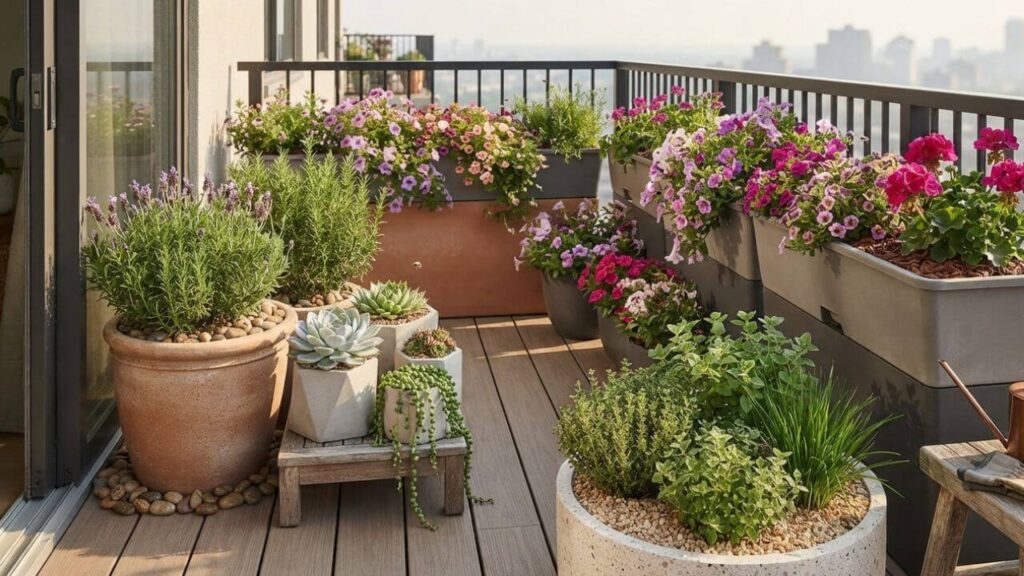
24. Large Statement Planters
Large containers hold more soil than small pots. More soil means plants stay moist for longer periods.
Large pots also protect roots from sudden temperature changes. This reduces stress during hot summer weather.
I recommend choosing fewer large containers instead of many small ones whenever possible.
25. Mixed Drought-Tolerant Displays
Combining lavender, rosemary, sedum, ornamental grasses, and sage creates an attractive and easy-care display.
These plants enjoy similar growing conditions and need similar amounts of water. This makes watering faster and simpler.
A mixed drought-tolerant garden can look professional while requiring very little maintenance throughout the year.
Best Plants for Balcony Gardens
| Plant | Sun Requirement | Water Needs |
| Rosemary | Full Sun | Low |
| Lavender | Full Sun | Low |
| Sedum | Full Sun | Very Low |
| Sage | Full Sun | Low |
| Geranium | Full Sun | Moderate |
| Thyme | Full Sun | Low |
These plants remain some of the best plants for balcony gardens because they tolerate heat, wind, and occasional missed watering.
Balcony Gardening Mistakes to Avoid
Many maintenance problems come from avoidable mistakes.
Avoid:
- Tiny containers
- Overwatering
- Too many plant varieties
- Mixing different watering needs
- Ignoring sunlight conditions
Correcting these issues reduces maintenance immediately.
Expert Tips to Cut Maintenance in Half
- Choose perennials over annuals.
- Use slow-release fertilizer.
- Install drip irrigation if possible.
- Use mulch in every container.
- Buy larger pots whenever space allows.
I recommend starting with only three to five plant varieties during the first season. Simpler gardens almost always perform better.
Frequently Asked Questions
What are the easiest plants for balcony gardens?
Rosemary, thyme, sedum, lavender, and geraniums are excellent choices.
How often should low-maintenance balcony gardens be watered?
Most containers need water when the top inch of soil becomes dry.
Are succulents good for balconies?
Yes. Succulents are among the easiest and lowest-maintenance balcony plants available.
What is the best low-maintenance herb for balconies?
Rosemary remains one of the best choices because it tolerates heat and dry soil.
What is the biggest mistake beginners make?
Using small containers creates frequent watering and unnecessary maintenance.
Conclusion
A low maintenance balcony garden is not about ignoring plants. It is about making smart choices that reduce work while keeping the space attractive and productive.
Start with drought-tolerant plants, larger containers, and simple layouts. Even a small balcony can become a relaxing garden that fits comfortably into a busy lifestyle.

I enjoy sharing simple gardening ideas, lawn care tips, and honest product reviews that help make outdoor work easier. From home gardening guides to helpful tools and lawn care advice, I write easy-to-follow content to help readers create a healthier and better-looking outdoor space without wasting time or money.