
As an Amazon Associate, I earn from qualifying purchases.
Fresh mint from the grocery store loses flavor quickly, and buying new bundles every week becomes expensive. How to Grow Mint Indoors is surprisingly simple because mint adapts well to containers and indoor conditions. With the right light, soil, and watering routine, you can harvest fresh leaves throughout the year without stepping outside.
Indoor mint solves another problem too. Mint spreads aggressively outdoors and can take over garden beds in a single season. Growing mint in pots indoors keeps it under control while giving you easy access to fresh herbs for tea, cooking, desserts, and drinks.
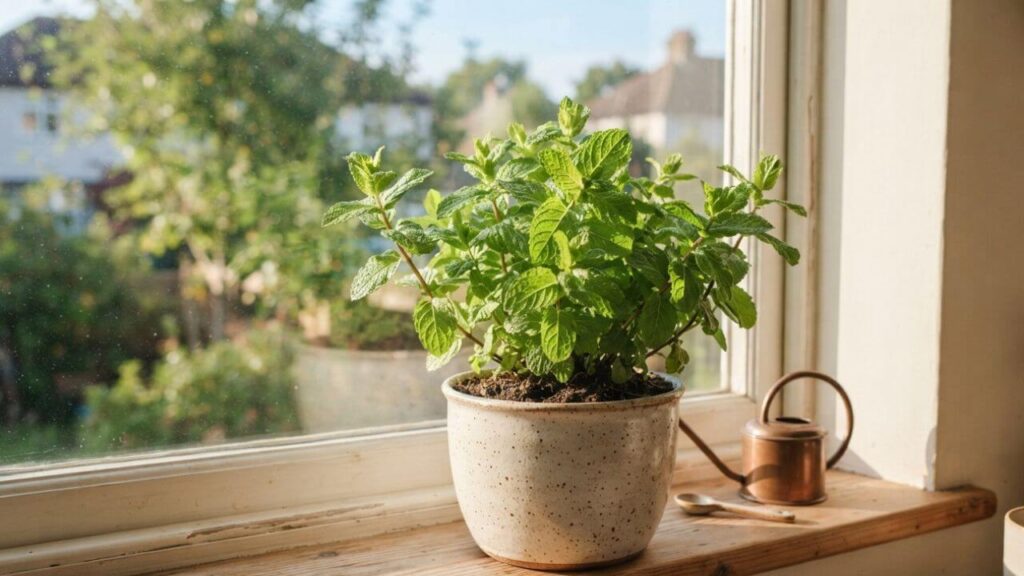
Why Grow Mint Indoors?
Mint is one of the easiest herbs for beginners to grow inside the house. Unlike some herbs that struggle in containers, mint grows quickly and recovers well from minor mistakes.
One of the biggest advantages is year-round harvesting. Outdoor mint slows down or dies back during winter in much of the United States. Indoor plants continue producing new leaves as long as they receive enough light.
Growing herbs indoors also makes cooking easier. I like keeping mint close to the kitchen because I can snip a few leaves whenever I need them for tea, lemonade, or fruit salads.
Benefits of indoor mint include:
- Fresh mint available all year.
- Better control over spreading roots.
- Fewer weeds and outdoor pests.
- Easy harvesting from the kitchen.
- Attractive greenery for windows and countertops.
Best Mint Varieties for Indoor Growing
Most mint varieties grow indoors successfully, but some perform better than others.
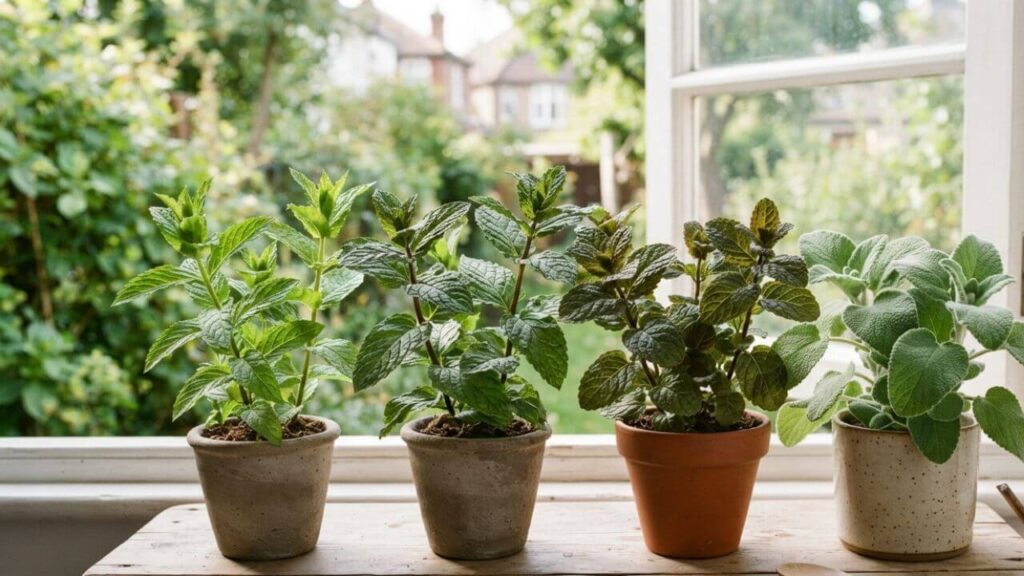
Spearmint
Spearmint is my first recommendation for beginners. It grows vigorously, handles indoor conditions well, and has a mild flavor that works in cooking and drinks.
Peppermint
Peppermint has a stronger flavor and higher menthol content. It is excellent for tea and desserts.
Chocolate Mint
Chocolate mint offers a subtle chocolate aroma that pairs well with desserts and specialty drinks.
Apple Mint
Apple mint produces soft leaves with a mild fruity flavor. It grows slightly slower indoors than spearmint or peppermint.
| Mint Variety | Flavor | Indoor Performance |
| Spearmint | Mild and sweet | Excellent |
| Peppermint | Strong and cool | Excellent |
| Chocolate Mint | Chocolate aroma | Very Good |
| Apple Mint | Mild fruity taste | Good |
What You Need Before Growing Mint Indoors
Preparing the right environment makes indoor mint growing much easier.
Choosing the Right Container
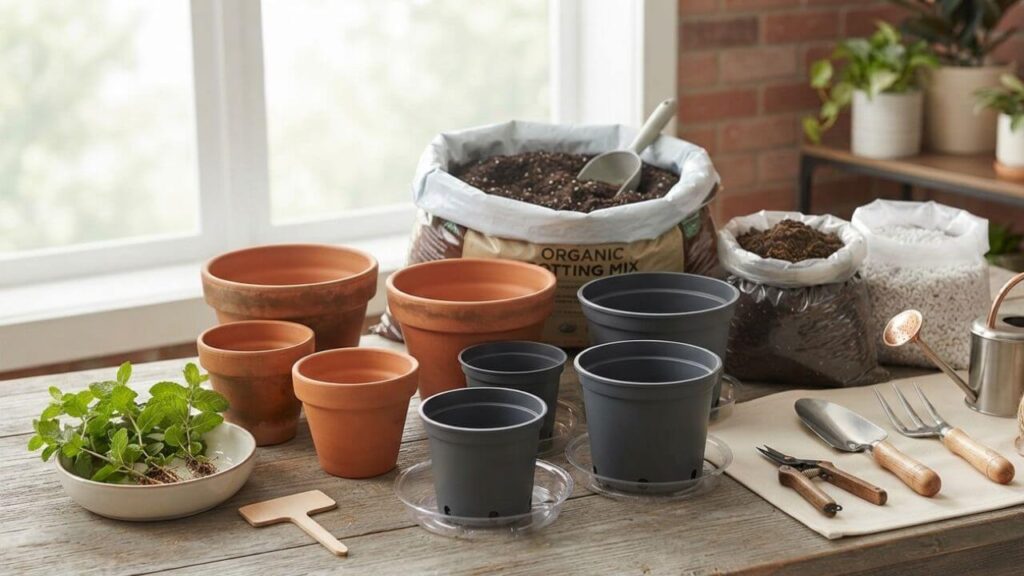
Mint likes room to spread its roots. Choose a pot that is at least 8 inches wide and 8 inches deep.
Containers must have drainage holes. Standing water quickly causes root problems.
Terracotta pots dry faster and reduce overwatering risks. Plastic containers hold moisture longer and work well in dry homes.
Best Soil for Indoor Mint
Choosing the best soil for indoor mint is one of the most important decisions.
Mint prefers soil that drains well while holding enough moisture for steady growth.
I recommend using:
- 2 parts quality potting mix
- 1 part compost
- 1 part perlite
Avoid using garden soil indoors. It compacts inside containers and limits airflow around roots.
Drainage Requirements
Good drainage prevents root rot.
Adding perlite improves airflow and reduces soil compaction. Always empty drainage trays after watering if water remains for more than a few minutes.
Light Requirements
Mint needs bright light to produce thick stems and flavorful leaves.
Aim for:
- 6 hours of direct light, or
- 10 to 12 hours under grow lights.
South-facing windows provide the best results in most homes.
How to Grow Mint Indoors Step by Step
Following a simple planting process increases success rates significantly. Mint is forgiving, but starting with the right setup helps the plant establish faster and produce healthier leaves. I recommend spending a little extra time on the first few steps because small decisions about containers, soil, and light can affect growth for months.
Step 1: Choose Your Starting Method
You can grow mint indoors from seeds, stem cuttings, or nursery plants. Each option works, but they produce results at different speeds.
- Seeds are inexpensive but require patience because germination can take one to three weeks.
- Stem cuttings root quickly and are one of the easiest ways to start new plants.
- Nursery plants provide the fastest harvest and are the best choice for beginners.
In my experience, nursery plants and cuttings deliver the most reliable results indoors. Mint cuttings placed in a glass of water often develop roots within 7 to 14 days, making propagation simple and inexpensive.
Step 2: Prepare Your Pot
Choose a container that is at least 8 inches wide and has drainage holes in the bottom. Mint spreads quickly below the soil surface, so extra room encourages stronger growth.
Fill the pot with a high-quality potting mix and leave about one inch of space below the rim. This small gap prevents water from overflowing during irrigation and makes future watering easier.
If your potting mix feels heavy, mix in a small amount of perlite to improve drainage and airflow around the roots.
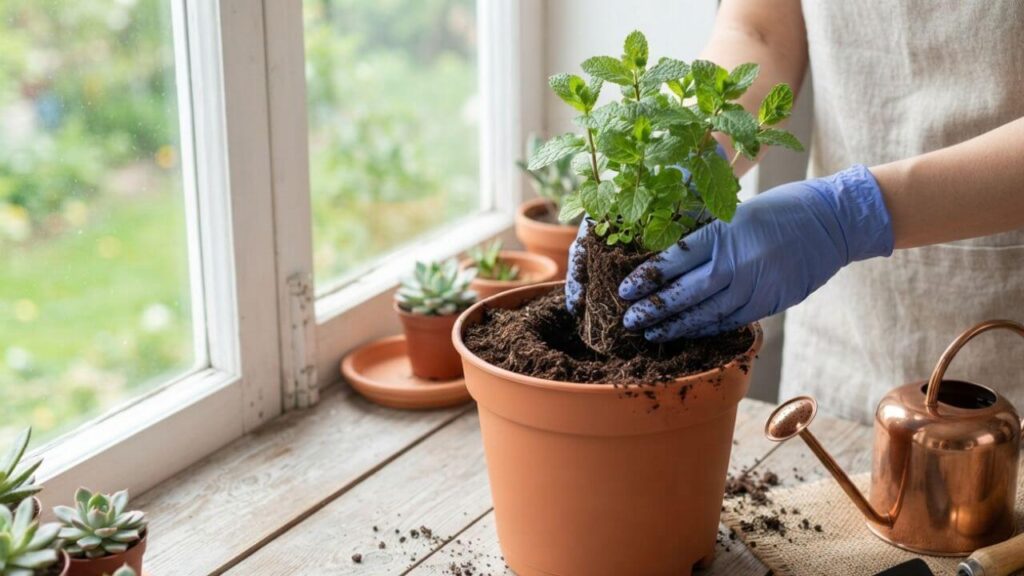
Step 3: Plant Your Mint
Place the mint plant in the center of the container and gently spread the roots outward if they appear tightly packed. Backfill with soil until the roots are covered but avoid burying stems deeper than they were in the original container.
Press the soil lightly around the plant to remove large air pockets without compacting it too much. Mint prefers loose soil that allows roots to expand easily.
After planting, check that the crown of the plant sits slightly above the soil surface rather than below it.
Step 4: Water Thoroughly
Water slowly and evenly until moisture begins draining from the bottom of the pot. This first deep watering helps settle the soil around the roots and removes hidden air pockets.
Allow excess water to drain completely before returning the pot to its saucer or decorative container. Standing water around the roots can lead to rot and fungal problems later.
A thorough first watering gives new plants the best chance to establish quickly.
Step 5: Place in Bright Light
Move the container to its permanent location immediately after planting. Mint grows best with at least six hours of bright light each day.
South-facing windows provide the strongest light in most American homes, while east-facing windows supply gentle morning sun that mint also enjoys. If natural light is limited, a small LED grow light can keep growth strong during winter months.
Try to avoid moving the plant frequently because changing light conditions can slow growth and stress young plants.
Step 6: Begin Regular Harvesting
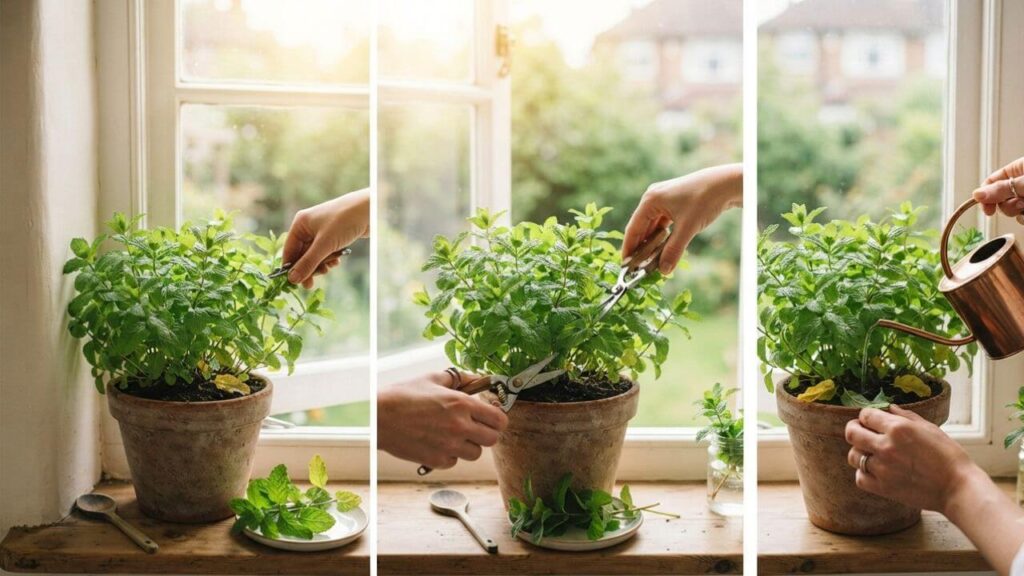
Once stems reach about six inches tall, begin harvesting small amounts regularly. Pinch or cut stems just above a set of leaves rather than removing individual leaves one at a time.
This encourages branching and creates a fuller, bushier plant instead of tall, weak stems. Regular harvesting also improves airflow and keeps the plant producing fresh growth.
I recommend never removing more than one-third of the plant at a time. This allows mint to recover quickly and continue producing leaves for future harvests.
Growing Mint in Pots Indoors
Growing mint in pots indoors offers several advantages compared to outdoor beds.
Outdoor mint spreads aggressively using underground runners. Indoor containers stop this spread completely.
Container growing also gives you better control over:
- Soil quality
- Moisture levels
- Fertilizer use
- Root growth
Repot mint every one or two years if roots begin circling the container or growing through drainage holes.
A slightly larger container refreshes growth and improves leaf production.
Indoor Mint Plant Care
Good indoor mint plant care keeps plants productive for years.
How Often to Water Mint Indoors
The most common question gardeners ask is how often to water mint indoors.
Mint prefers evenly moist soil but dislikes soggy roots.
A simple rule works well:
- Check the top inch of soil.
- Water if it feels dry.
- Wait another day if moisture remains.
Most indoor mint plants need watering every three to five days during active growth.
Winter watering requirements drop because growth slows and evaporation decreases.
Fertilizing Indoor Mint
Mint does not require heavy feeding.
Apply a balanced liquid fertilizer every four to six weeks during spring and summer.
Too much fertilizer creates rapid growth but weaker flavor.
Pruning and Harvesting
Regular harvesting keeps mint healthy.
Harvest from the top of the plant rather than removing lower leaves first.
Remove flower buds as soon as they appear. Flowering reduces leaf production and changes flavor.
Repotting Mint Plants
Mint grows quickly and eventually fills its container.
Signs that repotting is needed include:
- Roots growing from drainage holes.
- Water running through the pot immediately.
- Slower growth despite proper care.
Fresh soil and extra space often revive tired plants quickly.
Common Problems When Growing Mint Indoors
Even easy herbs encounter occasional issues.
Yellow Leaves
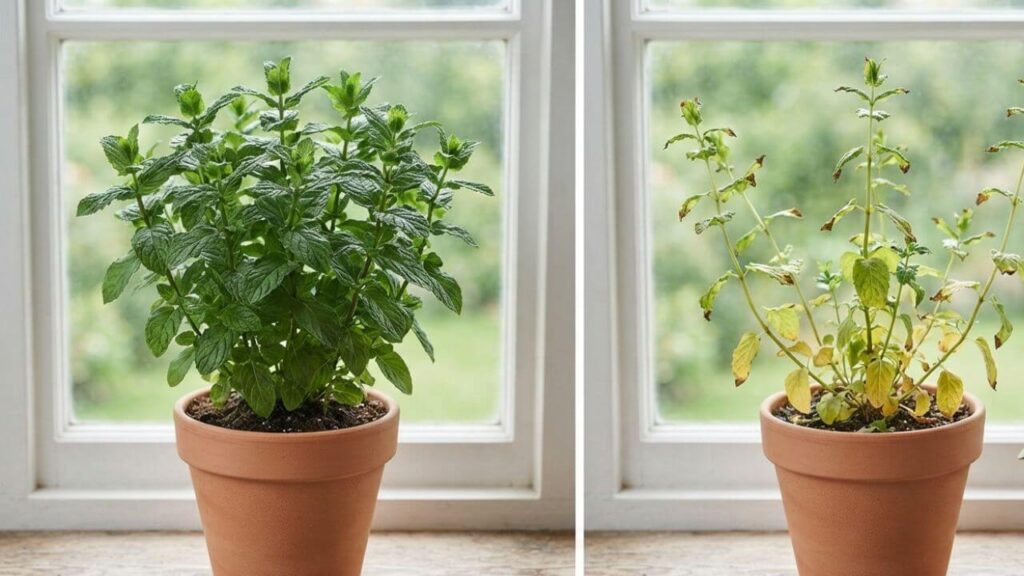
Yellow leaves usually indicate overwatering or poor drainage.
Check the soil before adding more water.
Brown Leaf Tips
Dry indoor air, underwatering, and fertilizer buildup can all cause brown edges.
Increasing humidity slightly often helps.
Leggy Growth
Long stems with few leaves almost always point to insufficient light.
Move plants closer to a window or add grow lights.
Root Rot
Root rot develops when soil remains wet for long periods.
Affected roots appear brown, soft, and mushy.
Pests
Indoor mint occasionally attracts:
- Spider mites
- Aphids
- Fungus gnats
Regular inspections catch problems early.
Growing Mint Indoors vs Outdoors
Both methods work well, but they offer different advantages.
| Feature | Indoors | Outdoors |
| Year-round growth | Yes | No |
| Spreading control | Excellent | Poor |
| Weather exposure | None | High |
| Growth speed | Moderate | Fast |
| Pest pressure | Low | Higher |
For homeowners with limited space, indoor growing provides more control and fewer problems.
Expert Mint Plant Growing Tips
These mint plant growing tips consistently improve results.
Rotate Pots Weekly
Plants naturally lean toward light.
Turning containers every week promotes even growth.
Pinch Growing Tips Frequently
Pinching new growth encourages branching and thicker plants.
Remove Flowers Quickly
Flowering shifts energy away from leaf production.
Remove buds as soon as they appear.
Use Grow Lights During Winter
Northern states receive limited sunlight during winter months.
LED grow lights maintain growth and flavor quality.
Start New Plants from Cuttings
Mint roots very easily in water.
Starting new plants every year keeps your indoor herb garden fresh and productive.
Indoor Herb Garden Ideas Using Mint
Mint fits beautifully into small indoor herb collections.
Popular combinations include:
- Mint and basil for summer drinks.
- Mint and parsley for cooking.
- Mint and oregano for Mediterranean recipes.
- Mint and chives for kitchen gardening.
Windowsills remain the most popular location, but tiered plant stands and countertop herb gardens also work well.
For people interested in growing herbs indoors, mint remains one of the easiest and most rewarding starting points.
Frequently Asked Questions
Can mint grow indoors year-round?
Yes. Mint grows indoors throughout the year if it receives enough light and regular watering.
Does mint need direct sunlight indoors?
Mint performs best with six hours of bright light daily. Morning sunlight works especially well.
Can I grow mint from grocery store stems?
Yes. Healthy stems often develop roots within one to two weeks when placed in water.
Why is my indoor mint dying?
Overwatering, poor drainage, and low light are the most common causes.
How long does an indoor mint plant live?
With proper care, mint plants can live for several years and can easily be renewed through cuttings.
Conclusion
Learning how to grow mint indoors is one of the easiest ways to start an indoor herb garden. Give mint bright light, well-draining soil, and consistent moisture, and it will reward you with fresh leaves throughout the year.
Start with one healthy plant, place it near a sunny window, and monitor the soil during the first few weeks. Once you understand your home’s light and watering conditions, growing mint indoors becomes simple, productive, and surprisingly rewarding.

I enjoy sharing simple gardening ideas, lawn care tips, and honest product reviews that help make outdoor work easier. From home gardening guides to helpful tools and lawn care advice, I write easy-to-follow content to help readers create a healthier and better-looking outdoor space without wasting time or money.