As an Amazon Associate, I earn from qualifying purchases.
The best poinsettia planter ideas combine a pot that suits your home, a color scheme that highlights the plant, and a setup that lets extra water drain away. Try white ceramic pots, rustic baskets with waterproof liners, metallic containers, or grouped planters for a festive display.
Across the United States, poinsettias bring bright color to homes during Thanksgiving, Christmas, and the winter season. A red plant beside a front door, a white pot on a living room table, or a row of small plants along a mantel can make a space feel warm and festive. The right planter helps the plant stand out without adding clutter.
Choosing a planter is about more than looks. Poinsettias need bright, indirect light, steady warmth, and soil that does not stay wet. Many store-bought plants come in lightweight nursery pots wrapped in decorative foil, so you can often create a fresh display without repotting the plant at all.
This guide covers simple poinsettia planter ideas for small apartments, family homes, holiday tables, entryways, and covered porches. You will also learn how to choose a pot, arrange plants with other decor, water them well, and avoid common problems that can shorten their colorful display.
1. Choose a Planter Style That Fits Your Holiday Decor
Start by looking at the colors and materials already in your room. A planter should support the poinsettia, not compete with its bright bracts, which are the colored leaves that surround its small central flowers. A simple pot often gives the plant more impact than a container covered in many patterns.
You do not need a special Christmas pot to make a festive display. A clean planter you already own can work well with a ribbon, a small evergreen sprig placed nearby, or a simple fabric wrap around the outside of the nursery pot. Keep decorations clear of the soil and avoid anything that blocks drainage.
Before buying a new container, measure the nursery pot and decide where the plant will sit. A table display may need a compact, stable pot, while a large entryway arrangement may call for a heavier outer container that is less likely to tip.
Source: www.pinterest.com
White and cream ceramic
These light colors create a clean backdrop for red, pink, and white poinsettias. They work well with natural wood, green wreaths, and neutral living rooms.
Black and charcoal pots
Dark containers create contrast with bright bracts and suit modern spaces. Pair them with simple greenery rather than lots of extra decorations.
Gold and silver finishes
Metallic finishes add a holiday touch to a dining table or entry console. Use them as outer covers for nursery pots, and check for water buildup inside.
Woven baskets and natural textures
A basket, wood box, or jute-style cover adds warmth to a rustic room. Place a waterproof, removable liner inside and keep the plant in its draining nursery pot.
Match the Pot to the Poinsettia Color
Red poinsettias pair easily with white, cream, dark green, and natural wood. Pink varieties look soft in pale gray or white containers, while white poinsettias stand out against charcoal, bronze, or deep green. Variegated plants often look best in plain pots that do not compete with their mixed colors.
For a coordinated holiday look, repeat one container color in two or three places. For example, use white pots on a console and dining table, then add the same white tone to a nearby candle holder or vase. This creates a visual link without making every surface look identical.
For a traditional Christmas look
Combine red poinsettias with white pots, evergreen foliage, and a small amount of plaid or red ribbon.
For a calm winter look
Choose white or blush poinsettias in cream, gray, or pale wood containers with minimal decoration.
2. Create a Simple Poinsettia Centerpiece
A poinsettia centerpiece adds seasonal color to a dining table, kitchen island, or coffee table. Choose a plant that fits the surface and leaves enough room for meals, drinks, and daily use. A single healthy plant can look striking when the pot and surrounding decor stay simple.
For a small table, use one compact poinsettia in a low outer planter. For a long dining table, arrange two or three small plants along the center rather than using one oversized display. Keep the plants low enough for people to see each other across the table.
If you want to add pinecones, ornaments, or evergreen clippings, place them around the outer pot instead of pressing them into the soil. This makes watering easier and helps prevent decorative items from trapping moisture against the stems.
Source: garden.eco
The single-pot centerpiece
Set one medium poinsettia in a white ceramic or metal-look cover. Add a plain runner and a few separate seasonal accents to keep the arrangement neat.
The grouped centerpiece
Use three small plants in matching pots. Leave gaps between them for serving dishes, or place them on a tray that can be moved before dinner.
The natural centerpiece
Pair a poinsettia with pinecones and a few evergreen sprigs placed around the pot. Keep foliage away from candles and never let decorations touch an open flame.
Make the Display Easy to Water
A beautiful centerpiece can become a mess if water leaks onto wood or a tablecloth. Keep the plant in its original nursery pot and set it inside a decorative container with room to lift it out. Water the plant at a sink, allow the excess to drain, and return it to the display once dripping has stopped.
If you use a tray, check it after watering and remove any collected water. A tray protects the table, but standing water around the bottom of the pot can keep the soil too wet and harm the roots.
Before guests arrive
Check the soil, remove dead leaves, and make sure the outer pot is dry on the outside.
After the meal
Move the plant away from leftover drinks, food spills, and heat sources. Return it to a bright spot when the table is cleared.
3. Use Poinsettia Planters to Brighten an Entryway
An entryway is a natural place for a poinsettia because the plant adds color as soon as visitors enter the home. A sturdy planter on a console, a compact pot beside a bench, or a pair of matching containers near an interior doorway can make the space feel ready for the holidays.
Choose the size based on the space people need to walk through. A large planter may suit a wide foyer, but a narrow apartment entry usually benefits from a smaller pot on a stable table. Keep the leaves away from doors that swing open and avoid placing the plant where coats or bags will brush against it.
Many US homes experience cold air when an exterior door opens during winter. Keep the poinsettia far enough from the door to avoid repeated cold drafts, and do not leave it between an open storm door and the main entrance. A bright indoor location is usually more suitable than an exposed doorstep when temperatures drop.
Source: jp.pinterest.com
A welcoming console display
Place one poinsettia in a low-profile planter beside a small bowl for keys. Add a wreath or framed seasonal print above the console rather than crowding the tabletop.
A matched pair
Use two similar pots on a broad indoor entry landing or at either end of a wide console. Matching containers create balance without requiring matching plants.
A small-space solution
Set a compact plant on a sturdy shelf or side table that receives bright, indirect light. Keep it clear of narrow walking routes and unstable surfaces.
Style a Planter Without Blocking the Plant
A ribbon tied around the outer pot can bring in red, gold, or green without hiding the leaves. You can also place a small evergreen wreath flat on the console and set the planter in its center, as long as the plant remains stable and the wreath does not interfere with watering.
Avoid wrapping the entire plant in paper or fabric. Poinsettia leaves and stems need room, and tight wrapping can trap moisture or damage the branches. If you use a decorative sleeve, keep it around the container rather than the foliage.
Keep the path clear
Leave enough room for people to pass without brushing against the plant or knocking over its pot.
Check the light
If the entryway is dim, use it as a short-term display spot and move the plant to a brighter room when needed.
4. Try Rustic, Farmhouse, and Natural Planter Ideas
Natural textures make poinsettias feel at home in farmhouse, cottage, and casual holiday decor. Wood boxes, woven baskets, simple galvanized-style containers, and terracotta-colored covers can all work. The key is to use the decorative container as an outer shell while keeping the plant in a pot that drains well.
For a rustic arrangement, set a red poinsettia inside a basket and place the basket on a wood stool or side table. Add a folded linen napkin or a few pinecones nearby. This gives the display texture without piling decorations on top of the plant.
A reclaimed wood box can also hold several small poinsettias. Line the box with a waterproof tray, set the nursery pots inside, and use crumpled paper or another dry spacer to keep the pots upright. Do not fill the gaps with wet moss or soil unless the box is designed as a true planter with proper drainage.
Source: 1millionideas.com
Woven basket cover
Use a basket that is slightly wider than the nursery pot. Add a removable waterproof liner, and lift the pot out for watering.
Wooden box arrangement
Place several small nursery pots in a shallow box with a protective tray. Choose plants of similar height for a tidy row.
Galvanized-style container
The muted metal look pairs well with red bracts and evergreen foliage. Protect surfaces from scratches and moisture, and do not assume a metal container has drainage holes.
Terracotta-look pot
Warm clay colors complement red, pink, and cream plants. If the decorative pot has no drainage, use it as a cover rather than planting directly into it.
Build a Balanced Rustic Display
Vary the height of the containers instead of stacking several plants at the same level. A medium poinsettia on a low stool, a smaller pot on a nearby table, and a simple evergreen wreath can create depth while leaving open space around each plant.
Keep the color palette limited to two or three main tones, such as red, natural wood, and cream. Too many ribbons, signs, ornaments, and patterns can distract from the poinsettia’s natural shape.
Use sturdy supports
Check that stools, boxes, and tables can support the pot without wobbling. Keep heavy containers away from narrow ledges.
Protect wood surfaces
Place a waterproof saucer beneath the nursery pot or use a removable liner that can be dried after watering.
5. Make a Small Room Feel Festive With Compact Planters
Small rooms do not need large poinsettia displays to feel festive. One compact plant can bring enough color to a desk, bookshelf, kitchen counter, or side table. A small planter is also easier to move when you need the surface for everyday tasks.
Look for a plant whose leaves fit comfortably within the available space. A wide plant may be harder to place than a slightly taller, narrower one, especially in an apartment where tables and window ledges serve more than one purpose. Check the full width of the foliage rather than judging the plant by its nursery pot alone.
Use vertical space carefully. A sturdy shelf can hold a small poinsettia if it receives suitable light and has enough room for the leaves. Do not place the plant above a heater, in a dark corner for the sake of decoration, or where watering could drip onto electronics or books.
Source: www.remodelaholic.com
A desk planter
Choose a compact plant in a simple white or dark pot. Keep it away from screens, power strips, and crowded work areas.
A kitchen counter display
Use a small plant in a stable cover on a bright counter. Keep it away from cooking heat, splashes, and food preparation surfaces.
A windowside planter
Place the plant near a bright window but not against cold glass. Move it if leaves touch the window or the area becomes chilly at night.
Use One Strong Accent Instead of Many Small Decorations
In a small room, a single poinsettia often works better than a collection of pots, candles, garlands, and ornaments on every surface. Let the plant provide the main seasonal color, then repeat one small detail elsewhere in the room.
If the room has many patterns, choose a plain planter. If the room is mostly neutral, a metallic or textured pot can add interest without taking up more space.
For a neutral room
Use a red poinsettia in a cream or natural wood cover to create a clear focal point.
For a colorful room
Choose a plain container that repeats an existing color rather than introducing another bold pattern.
6. Create a Coordinated Group of Poinsettia Planters
Grouping poinsettias creates a fuller display and can make several small plants look like one planned arrangement. Use a shared pot color, a matching tray, or a repeated material to tie the group together. This approach works well on a long console, a wide fireplace hearth that is not in use, or a broad kitchen island.
Try three plants in different sizes, or use several plants of the same size in matching containers. Odd-numbered groups often look relaxed, while pairs can create a more formal, balanced effect. Neither arrangement is a rule; the available space and the shape of the plants matter more.
Leave enough space between pots for air to move and for you to reach each plant when watering. A group should not become a tight mass of wet leaves and hidden containers. If one plant needs different care or begins to wilt, you should be able to lift it out without disturbing the others.
Source: www.pinterest.com
Three-pot arrangement
Place a medium plant between two smaller ones. Use the same pot finish for a unified look and keep the group on a tray that can be moved.
Layered-height display
Set plants on stable risers or low stands to vary their height. Check each pot for balance and keep foliage clear of shelves above.
Mixed-color grouping
Combine red and white or red and pink poinsettias in matching covers. Keep the number of colors limited so the display still feels calm.
How to Plan the Space Before You Arrange the Pots
Measure the length and depth of the surface first. Leave open space at the edges and enough room to lift the plants out. If the display is on a dining table, preserve a clear area for plates and serving dishes.
Arrange the empty containers before adding the plants. Once the layout looks balanced, place the nursery pots inside and check that no leaves are pressed against a wall, curtain, or another plant.
For a narrow console
Use a short row of small pots instead of a wide, spreading arrangement.
For a broad surface
Combine one larger plant with two smaller ones and leave a little open space around the group.
7. Choose Planters for a Covered Porch or Outdoor Display
Poinsettias can brighten a sheltered porch or protected entry during mild weather, but they are tropical plants that do not tolerate frost. In much of the United States, winter temperatures make an exposed outdoor planter risky. Check the local forecast before moving a poinsettia outside, and bring it indoors before cold conditions arrive.
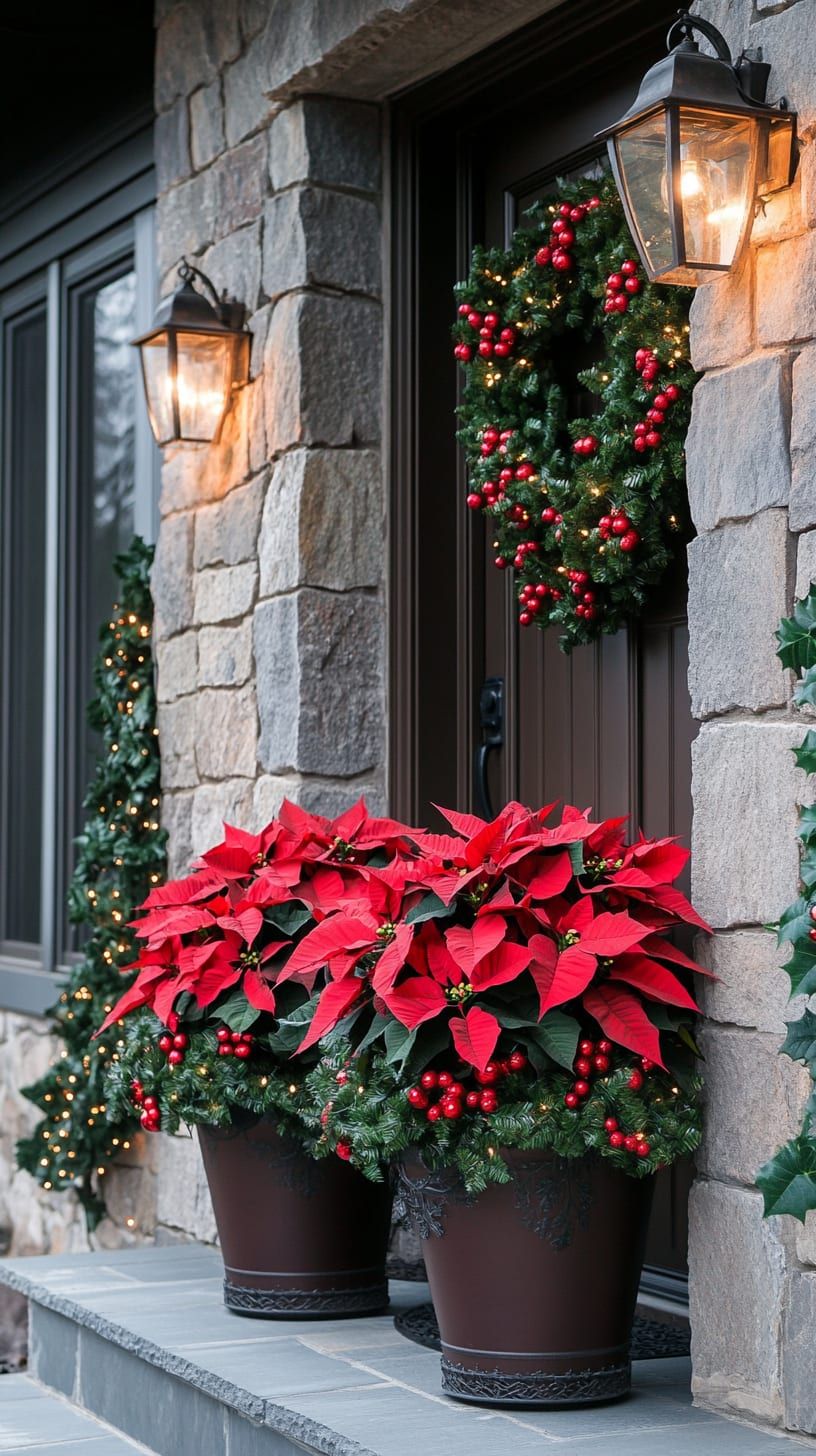
For a porch display, use a stable outer container that suits the home’s exterior. A white pot looks crisp against a dark door, while a natural basket or wood-look planter suits a rustic porch. Keep the nursery pot inside the cover so the plant can be moved indoors quickly when temperatures fall.
Do not treat a covered porch as a warm indoor room. Wind, cold air, and sharp temperature changes can still harm the plant. If the porch is exposed to chilly nights or receives little light, an indoor location is the more dependable choice for keeping the plant in good condition.
Source: jp.pinterest.com
A single porch accent
Place one poinsettia in a sturdy decorative pot beside the door in mild weather. Keep it out of the walking path and away from wind that could tip the container.
A pair of matching containers
Use matching planters on either side of a broad entrance only when the location stays warm enough. Bring the plants indoors if cold weather threatens.
A seasonal mixed display
Combine the potted poinsettia with separate evergreen branches and weather-suitable decor. Keep the living plant removable so it can be protected indoors.
Outdoor Planter Checklist
Before placing a poinsettia outdoors, check the forecast, light exposure, wind, and access to an indoor spot. The container should be stable, and water should not collect around the roots. A decorative arrangement is not worth exposing the plant to damaging cold.
Temperature
Protect the plant from frost and cold exposure. Move it inside before temperatures approach conditions that can chill or damage tropical foliage.
Light and wind
Choose a sheltered spot with suitable light and low wind. Avoid exposed ledges and places where gusts can knock the pot over.
Water management
Use a container that allows excess water to drain or be removed. Do not leave the plant standing in water after rain or watering.
8. Select the Right Pot Size and Drainage Setup
The easiest way to display a store-bought poinsettia is to keep it in its nursery pot and place that pot inside a decorative cover. This lets you enjoy a new style without disturbing the roots. It also makes watering, draining, and moving the plant much easier.
Choose an outer container that is wide enough for the nursery pot to slide in and out without crushing leaves or stems. The pot should sit upright and remain stable. If the decorative container is much wider than the nursery pot, use a stable, dry spacer beneath or around the pot rather than packing wet material into the gaps.
If you decide to repot the plant, select a container with drainage holes and a suitable potting mix. A much larger pot holds more wet soil than a small root system may use, so a modest increase in size is generally more practical than moving the plant into a huge container. Do not cover drainage holes with material that blocks water flow.
Source: garden.eco
Keep the nursery pot
Best for quick decorating, easy watering, and seasonal displays. Lift it out of the decorative cover before watering, then let it drain.
Use a planter with drainage
Suitable when you want to plant directly into a new container. Make sure excess water can escape and that the potting mix does not remain saturated.
Avoid a sealed container for direct planting
A container without drainage can trap excess water around the roots. Use it as an outer cover instead, and remove any water that collects at the bottom.
How to Set Up a Decorative Outer Pot
First, check that the nursery pot has drainage holes and is not sitting in old water. Place it inside the clean decorative cover. If you use a saucer, make sure it fits and can be removed for emptying.
Water the plant only when the surface of the potting mix feels dry to the touch. Apply water evenly, let the excess run through the drainage holes, and empty the saucer or outer cover. Do not water on a fixed daily schedule without checking the soil.
If the pot feels very light
Check the soil before watering. A light pot can indicate dry mix, but the soil surface and the plant’s condition should guide your decision.
If water collects in the cover
Lift out the nursery pot, pour away the excess, and let the pot drain before returning it to the display.
If the plant wilts while the soil is wet
Do not add more water automatically. Check drainage and root conditions, and move the plant away from cold drafts or heat vents.
9. Keep Poinsettias Healthy After Decorating
A good planter helps protect the plant, but the location and watering routine matter just as much. Keep poinsettias in a bright spot with indirect light and a comfortable indoor temperature. Avoid cold drafts from doors and windows, as well as hot, dry air from heating vents.
Check the potting mix regularly rather than watering because the calendar says it is time. When the surface feels dry, water thoroughly enough to moisten the mix, then let excess water drain. A decorative sleeve or cover should never become a hidden reservoir.
Remove damaged leaves as needed and check the plant when you water. Drooping, yellowing, or leaf drop can have several causes, including wet soil, dry soil, temperature stress, and changes in light. Look at the soil and location before changing your routine.
Source: 1millionideas.com
Bright, indirect light
Choose a bright room with filtered light. Avoid leaving the plant in a dark decorative corner for long periods.
Steady indoor warmth
Keep the plant away from cold drafts, chilly glass, fireplaces, and heating vents that can cause sudden temperature changes.
Careful watering
Check the soil, water when the surface feels dry, and empty excess water from the outer container or saucer.
Safe holiday placement
Keep the plant out of reach of pets and children when practical. Poinsettias are not generally considered highly toxic, but their sap may irritate the mouth or stomach, and eating plant material can cause discomfort.
Troubleshoot Common Poinsettia Problems
If the leaves begin to fall, first check for cold exposure and sudden changes in location. Then check whether the soil is very dry or remains wet for long periods. Both underwatering and poor drainage can cause stress, so adding more water without checking can make the problem worse.
If the leaves look limp while the soil is dry, water the plant thoroughly and let it drain. If the soil is already wet, stop adding water until you understand the cause, and check whether the pot has blocked drainage. Move the plant to a bright, warm location away from drafts while you assess it.
Yellow leaves
Check for persistently wet soil, poor drainage, or sudden environmental changes before assuming the plant needs fertilizer.
Brown or crispy edges
Check whether the plant is drying out too much or sitting near hot, dry air. Adjust the location and watering based on the soil.
Fading or falling bracts
Review light, temperature, and watering conditions. Some gradual change occurs as the display ages, but sudden decline suggests stress.
Frequently Asked Questions
Q
What kind of planter is best for a poinsettia?
A planter that allows proper drainage and fits the plant’s nursery pot is a practical choice. For easy holiday decorating, use a ceramic pot, basket, or metallic container as an outer cover and keep the poinsettia in its original draining pot. If planting directly into a new container, choose one with drainage holes and a suitable potting mix.
Q
Can I plant a poinsettia directly into a basket?
You can use a basket as a decorative cover, but most woven baskets are not designed to hold wet soil or drain water safely. Keep the plant in its nursery pot, place a removable waterproof liner inside the basket, and lift the pot out for watering. Dry the liner if water collects in it.
Q
How many poinsettias should I put in one planter?
For most home displays, one plant per nursery pot is the simplest option. Several small nursery pots can be arranged together in a larger decorative box, as long as each plant can be removed for watering and has room for its leaves. Planting multiple poinsettias together in one container requires enough space, suitable drainage, and careful watering.
Q
Can poinsettias stay outside in winter?
Poinsettias do not tolerate frost and can suffer from cold exposure. In many parts of the United States, they are safer indoors during winter. You may use one on a sheltered porch during mild weather, but check the local forecast and bring it inside before temperatures become too cold.
Q
How often should I water a potted poinsettia?
There is no single watering schedule that suits every plant and room. Check the potting mix and water when the surface feels dry, then allow excess water to drain completely. Room temperature, light, pot size, and soil mix all affect how quickly the plant dries.
Q
Are poinsettias safe around pets and children?
Poinsettias are often described as highly poisonous, but they are generally considered to have low toxicity. Their milky sap can irritate the mouth or skin, and eating the leaves may cause stomach upset. Keep plants out of reach, avoid contact with the sap, and contact a veterinarian or poison control service if a child or pet has a concerning reaction.
✦ Wrapping Up
Conclusion
The best poinsettia planter ideas start with a healthy plant and a container that suits the space. White ceramic pots create a clean holiday look, woven baskets add natural texture, and coordinated groups can brighten a large console or dining table. Even a simple nursery pot can look festive when paired with a thoughtful color scheme.
Keep care simple as you decorate. Give the plant bright, indirect light, protect it from cold drafts, check the soil before watering, and remove excess water from decorative covers. For outdoor displays, remember that poinsettias need protection from frost and cold winter conditions.
You do not need to buy a full set of matching holiday decor to make a poinsettia stand out. Choose one container you like, add only a few accents, and leave enough space to care for the plant. A tidy display will look inviting throughout the season and make daily maintenance easier.
💡 Key Takeaway
Choose a planter that matches your room, keep the poinsettia in a draining nursery pot when possible, and place it in a bright, warm spot away from drafts. Check the soil before watering and empty all standing water.
I enjoy sharing simple gardening ideas, lawn care tips, and honest product reviews that help make outdoor work easier. From home gardening guides to helpful tools and lawn care advice, I write easy-to-follow content to help readers create a healthier and better-looking outdoor space without wasting time or money.