As an Amazon Associate, I earn from qualifying purchases.
Plant cosmos seeds outdoors after the last spring frost, when the soil has warmed. Across much of the United States, this means spring, but the best planting date depends on your local frost calendar and growing conditions.
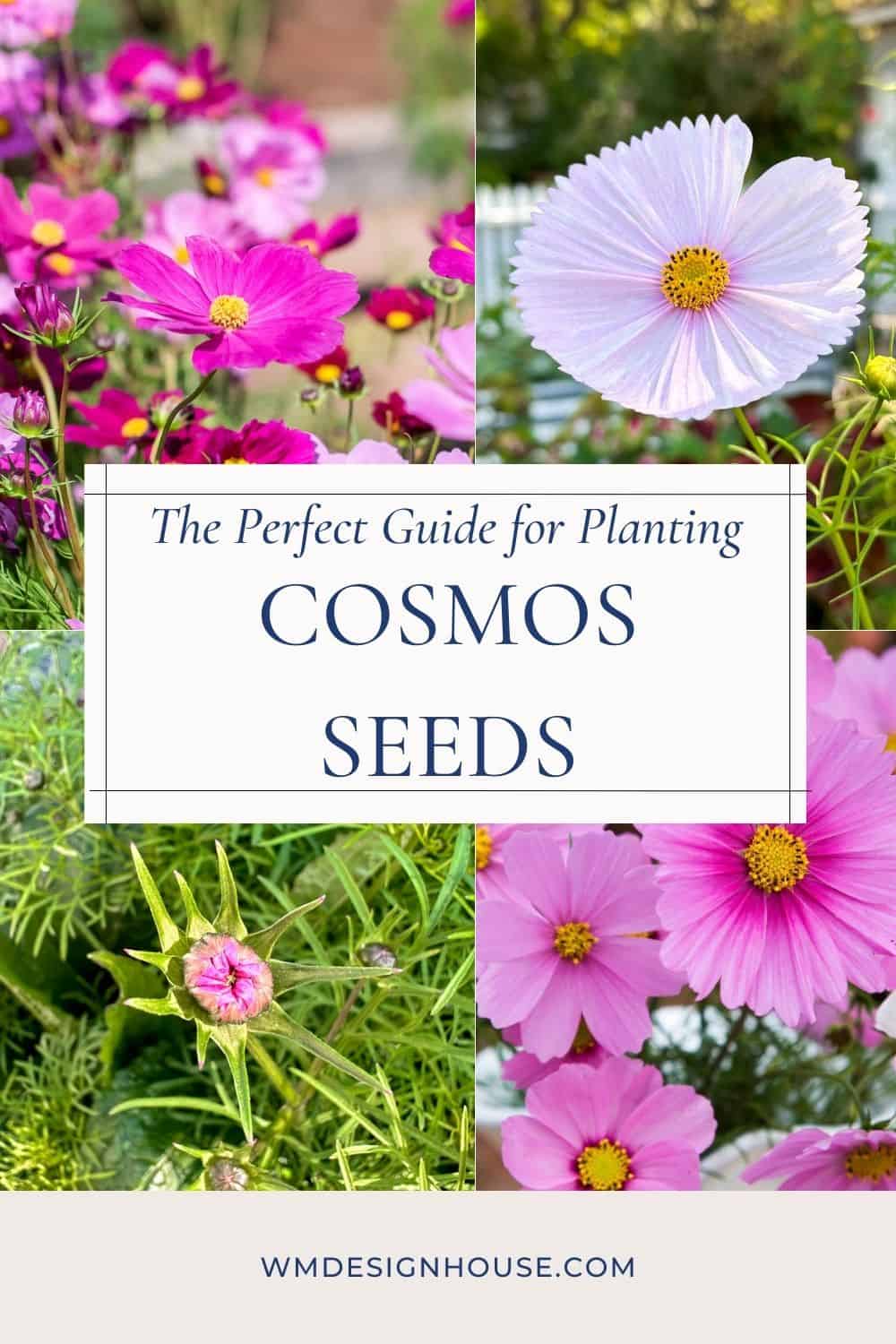
From backyard flower beds in Texas to cottage gardens in Pennsylvania and sunny borders in California, cosmos can bring a bright splash of color to the American summer garden. These easy-to-grow flowers thrive in sun and well-drained soil. They also grow quickly from seed, making them a useful choice for gardeners who want flowers without a long indoor starting season.
The best time to plant cosmos seeds varies across the United States. A gardener in USDA Zone 9 may be able to sow seeds weeks before a gardener in Zone 5 can safely work outdoors. Yet USDA zones alone do not tell the whole story. Your local last frost date, soil temperature, and the weather forecast matter more when deciding the exact day to sow.
Cosmos are warm-season annuals in most American gardens. They complete their life cycle in one growing season, producing leaves, flowers, and seeds before cold weather ends their growth. Most gardeners grow them from seed after frost danger passes, although starting seeds indoors can help gardeners in colder areas get an earlier display.
This guide explains when to plant cosmos seeds in each USDA zone, how to adjust dates for your local climate, and what to do if spring arrives early or late. It also covers direct sowing, indoor seed starting, watering, and common problems so you can plan a healthy display of flowers.
The simplest rule is to sow cosmos seeds outdoors after the last spring frost. In cold regions, this may mean late spring or early summer. In warmer regions, gardeners may be able to sow in early spring. These are broad planning windows, not fixed dates for every garden.
The table below offers a general starting point for gardeners in the contiguous United States. It assumes typical seasonal conditions and a spring planting for summer flowers. Your local frost history may shift the best date by several weeks.
Cosmos can grow well across a wide range of climates, but young seedlings are vulnerable to frost. When a cold night threatens after sowing, cover emerging seedlings with suitable frost protection if practical, or wait until the danger has passed.
Source: apieceofrainbow.com
Zones 3–4
Usually sow outdoors from late May through June, depending on elevation and the local last frost date. Indoor starting can help extend the growing season.
Zones 5–6
A common outdoor sowing window is late April through May, but cold springs may push planting into early June.
Zones 7–8
Many gardeners can sow from March through April. In cooler uplands, wait for frost danger to pass.
Zones 9–10
Early spring sowing is often possible. In hot areas, avoid extreme summer heat and consider a cooler-season sowing if the local climate allows.
Zone 11
In frost-free tropical or subtropical areas, sowing may be possible during a mild season. Heat, rainfall, and local growing conditions matter more than a frost date.
USDA Zones 3 and 4: Plant After the Long Winter
Gardeners in northern states and high-elevation areas often have short growing seasons. Wait until the expected last frost has passed and the soil has begun to warm. Late May or June is a common planning period, but a cold spring can delay sowing.
Starting seeds indoors about four to six weeks before the local last frost can give plants a head start. Cosmos grow quickly, so avoid starting them too early. Tall, crowded seedlings can become weak before outdoor conditions are suitable.
Best approach
Start a small batch indoors if you want earlier flowers, then sow another batch outdoors after frost danger passes.
Main risk
Planting too early exposes tender seedlings to frost and cold, wet soil.
USDA Zones 5 and 6: Use the Local Frost Date
In much of the Midwest, Northeast, and interior parts of the country, cosmos are commonly sown in late spring. April may be suitable in a mild year or a sheltered garden, while May is a safer general guide in colder locations.
Do not treat the zone number as a calendar. A Zone 5 garden near a large lake may have a different spring pattern from a Zone 5 garden at a higher elevation. Check a local frost calendar and watch the forecast before sowing.
Best approach
Direct sow after frost danger passes, or start indoors four to six weeks before the estimated last frost.
Main risk
A warm spell can be followed by another cold snap, so do not rush to plant based on one sunny week.
USDA Zones 7 and 8: Take Advantage of Mild Spring Weather
Many gardens in Zones 7 and 8 can support outdoor sowing during March or April. Coastal areas and warm urban sites may be ready earlier, while mountain areas and inland cold pockets may need to wait.
Spring is often the easiest season for establishing cosmos in these zones. If the weather is already hot, germination and early growth may be less reliable when the soil dries quickly. Keep the seedbed evenly moist while seeds sprout.
Best approach
Sow in a sunny bed as soon as frost risk is low and the soil is warm enough for quick germination.
Main risk
Planting too late into summer heat can stress new seedlings, especially in dry locations.
USDA Zones 9 and 10: Work Around Heat
In many warm parts of the South, Southwest, and coastal West, gardeners can sow cosmos in early spring. Frost is less common in many of these areas, but local cold pockets still exist. Check local conditions rather than assuming that every garden in a warm zone is frost-free.
Hot summers create a different challenge. Cosmos generally perform best when they can establish roots before the most intense heat arrives. In areas with very hot summers, an early spring sowing or a later sowing for a cooler season may be more successful than planting during peak heat.
Best approach
Choose a mild growing window and make sure young plants have regular moisture while roots develop.
Main risk
High temperatures and dry soil can hinder establishment, even when frost is not a concern.
USDA Zone 11: Focus on the Mild Season
Zone 11 includes places where winter freezes are rare or absent. Here, the best sowing time depends on heat, rainfall, humidity, and the local seasonal pattern. Cosmos may grow during a mild period but struggle during prolonged extreme heat or in persistently wet soil.
Choose a sunny site with good drainage. If the hottest or wettest part of the year is approaching, wait for a more favorable period instead of planting simply because frost is unlikely.
Best approach
Sow during a mild spell when the soil drains well and young plants can establish without severe heat stress.
Main risk
Excess moisture and extreme heat can be more important than frost in warm climates.
Why USDA Hardiness Zones Do Not Give an Exact Planting Date
USDA plant hardiness zones are based on average annual extreme minimum winter temperatures. They help gardeners compare winter cold across locations and assess whether perennial plants may survive there. They do not tell you the exact date when spring frost ends.
Two gardens in the same zone can have different planting windows. A low spot may collect cold air, while a sunny slope warms sooner. Coastal areas, cities, mountain valleys, and open rural sites can also experience different weather even when their zone labels match.
For cosmos, the last spring frost date is a more useful timing guide than the zone alone. Soil temperature and current weather are also important. Use your zone to understand the broad climate, then use local conditions to choose the sowing day.
Source: gardentruth.com
Find your zone
Use the official USDA Plant Hardiness Zone Map to identify your location’s zone.
Check frost dates
Consult a local extension service, regional gardening calendar, or reliable frost-date resource for an estimated last spring frost.
Watch the forecast
Check for cold nights before sowing and while seedlings are emerging.
Check the soil
Wait until the soil is workable, reasonably warm, and not waterlogged.
How to Use Your Last Frost Date
Suppose your area’s estimated last frost date is May 10. A gardener who plans to sow cosmos directly outdoors can use that date as a guide and wait until frost danger has passed. If the forecast calls for a late cold snap, delay planting or protect young seedlings.
If you want to start seeds indoors, count backward about four to six weeks from the expected last frost. In this example, that would place indoor sowing around late March or early April. This is a planning estimate, not a requirement, and the timing should fit the variety and your growing setup.
For direct sowing
Plan for after the expected last frost, with suitable soil and weather.
For indoor sowing
Count backward four to six weeks, then transplant after frost danger passes and seedlings have adjusted to outdoor conditions.
When to Start Cosmos Seeds Indoors
Starting cosmos indoors can help gardeners in colder zones get a head start, but it is optional. Cosmos grow readily from seed, and direct sowing is often simpler when spring weather is suitable. Indoor starting is most useful when your outdoor season is short or you want a more controlled start.
Begin about four to six weeks before your expected last spring frost. Use clean seed trays or small pots with drainage holes and a fine-textured seed-starting mix. Sow seeds according to the packet instructions, cover them lightly if directed, and keep the mix moist without soaking it.
Place the containers in a warm area with bright light. Cosmos seeds often germinate within roughly one to two weeks under suitable conditions, although the exact time varies with seed freshness, temperature, and moisture. Once seedlings emerge, provide strong light to prevent weak, stretched growth.
Source: i0.wp.com
Use a light seed mix
A clean, well-drained seed-starting medium helps provide moisture without leaving the roots in saturated soil.
Avoid deep sowing
Follow the seed packet for planting depth. Cosmos seeds are generally sown shallowly rather than buried deep.
Give seedlings enough light
Place seedlings in a bright window or under suitable grow lights, adjusting the setup to prevent leggy growth.
Water with care
Keep the mix evenly moist during germination, but empty standing water from trays.
When Are Cosmos Seedlings Ready to Transplant?
Transplant seedlings when they are sturdy, have developed true leaves, and can tolerate outdoor conditions. Do not use height alone to decide whether a seedling is ready. A short, sturdy plant may establish better than a tall, weak one.
Harden off indoor-grown seedlings for about a week before planting. Set them outdoors in a sheltered place for a short time at first, then gradually increase their exposure to sunlight and wind. Bring them inside or protect them when conditions are too cold or harsh.
Plant them outdoors after frost danger has passed. Handle the root ball gently, water after planting, and leave enough room for the mature variety. Check the seed packet for the expected plant height and spacing.
Healthy sign
Seedlings have firm stems, healthy green leaves, and roots that hold the growing medium together without being severely tangled.
Warning sign
Very long, thin stems often indicate insufficient light or crowded growth.
How to Direct Sow Cosmos Seeds Outdoors
Direct sowing is an easy way to grow cosmos because it avoids the need to transplant seedlings. Choose a sunny bed after frost danger has passed and the soil has warmed. A site with good drainage is usually better than a low area where water collects after rain.
Prepare the bed by removing weeds and large stones. Loosen the surface soil, but do not add large amounts of rich compost or high-nitrogen fertilizer unless the soil genuinely needs improvement. Very rich soil can produce lots of leafy growth and fewer flowers.
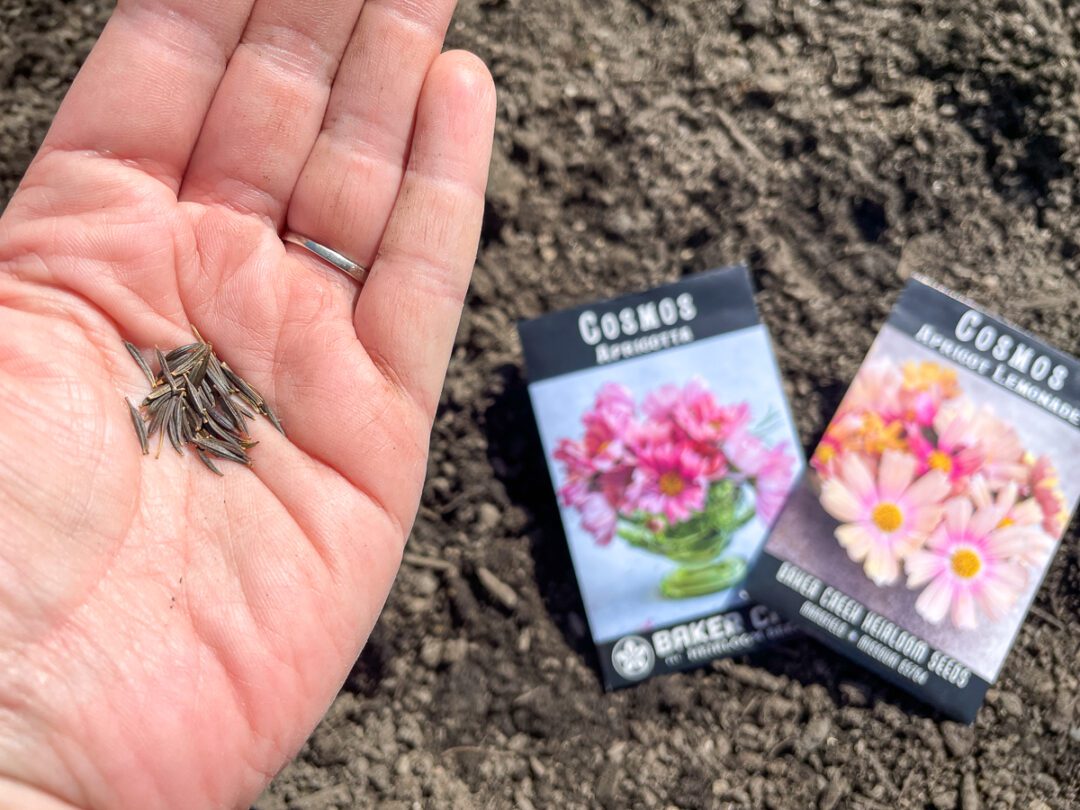
Sow the seeds at the depth listed on the packet, then cover them lightly with soil. Water gently so the seeds stay in place. Keep the seedbed evenly moist until germination, then water according to the weather and the plants’ needs.
Source: growhappierplants.com
Step 1: Choose the site
Pick a place that receives about six or more hours of direct sun each day.
Step 2: Prepare the soil
Remove weeds and loosen compacted surface soil. Make sure excess water can drain away.
Step 3: Sow the seeds
Follow the packet’s depth and spacing guidance, since varieties can differ.
Step 4: Water gently
Use a gentle spray or watering can to moisten the seedbed without washing seeds away.
Step 5: Thin if needed
Once seedlings are large enough to handle, thin crowded plants to the spacing recommended for the variety.
How Warm Should the Soil Be?
Cosmos germinate best when the soil is warm rather than cold and soggy. Seed packets may give a preferred temperature range for a particular variety, so follow those instructions when available. As a practical guide, wait until spring soil has begun to warm and no longer feels cold and waterlogged.
A soil thermometer can help if you garden in a cold region or want to sow early. Take readings in the area where you plan to plant, since raised beds and containers can warm faster than heavy ground soil. A warm afternoon alone does not prove that the soil is ready.
Good conditions
The soil is workable, drains well, and stays reasonably warm through the day.
Poor conditions
The soil is saturated, very cold, or likely to freeze soon after sowing.
Choosing the Best Planting Time for Your Local Climate
The best planting time depends on more than a zone number. Local frost patterns, summer heat, rainfall, elevation, and whether you are growing in the ground or in a container can all affect success. A flexible plan is more useful than a calendar date treated as a rule.
In northern states, a late planting can still produce flowers if the remaining warm season is long enough for the selected variety. In hot southern areas, a spring planting may establish before intense heat. In dry western gardens, moisture management may matter more than the average date shown on a general planting calendar.
Cosmos can also be sown in succession. Instead of planting every seed at once, sow a small batch and repeat after a short interval while conditions remain favorable. This can spread the bloom period and reduce the risk of losing the entire planting to an unexpected weather event.
Source: wmdesignhouse.com
Cold northern climate
Wait until frost risk has passed, and choose a variety that can flower within the remaining growing season.
Hot southern climate
Aim for a mild spring window or another locally suitable season rather than the peak of summer heat.
Dry western climate
Prepare a seedbed that holds enough moisture for germination but still drains well.
Humid eastern climate
Give plants good spacing and airflow, and avoid keeping the soil constantly wet.
Use a pot with drainage holes and a suitable potting mix. Containers can warm and dry faster than garden beds.
Can You Plant Cosmos Seeds in Summer?
Yes, summer sowing can work when enough warm growing time remains and conditions are not excessively hot. Cosmos are warm-season flowers, but seeds and young seedlings still need consistent moisture while they establish. In a heat wave, wait for a milder stretch if possible.
Check the approximate days to maturity on the seed packet. That figure is a guide rather than a promise, because temperature, sunlight, and growing conditions affect the time to flowering. If frost is approaching in a cold climate, a late sowing may not have enough time to bloom.
Summer sowing works best when
The remaining season is long enough, the soil drains well, and you can keep the seedbed moist during germination.
Wait when
Extreme heat, severe drought, waterlogged soil, or an approaching frost makes establishment unlikely.
How to Care for Cosmos After Planting
Once cosmos seedlings are established, care is fairly simple. Give them plenty of sun, avoid excessive fertilizer, and water deeply enough to support root growth when rainfall is lacking. Established plants are often more tolerant of short dry periods than newly sprouted seedlings.
Cosmos usually grow best in ordinary, well-drained soil. A bed that is too rich can encourage lush stems and leaves while reducing flower production. If your soil is already fertile, additional fertilizer may not be necessary.
Spacing matters because crowded plants compete for light and air. Follow the seed packet for the variety you grow, and thin seedlings when needed. Taller types may need support in exposed gardens, particularly where strong winds or heavy rain are common.
Source: gardentruth.com
Sunlight
Choose a sunny location with around six or more hours of direct light for strong growth and flowering.
Water
Keep the soil moist during germination, then adjust watering to rainfall, soil drainage, and plant development.
Fertilizer
Avoid excess nitrogen. Feed only when the soil or growing setup calls for it.
Spacing
Thin crowded seedlings and follow the mature spacing listed for the variety.
Deadheading
Remove faded blooms to keep the planting tidy and encourage continued flowering in many varieties.
Should You Pinch Cosmos Seedlings?
Pinching is optional. Removing the growing tip of a young cosmos plant can encourage branching and a fuller shape, which may lead to more flowering stems. The trade-off is that pinching can delay the first flowers slightly.
If you want tall stems for cutting, you may prefer to leave the plants unpinched or pinch only some of them. For a fuller border, pinch a healthy young plant once it has several sets of true leaves, provided the variety responds well to the practice.
Pinch for branching
Remove the soft growing tip with clean fingers or clean snips when the plant is established and growing strongly.
Skip pinching for an earlier display
Leave seedlings alone if you want the earliest possible flowers or are growing a compact variety that branches naturally.
Common Cosmos Seed Planting Problems and Fixes
When cosmos seeds fail to sprout or seedlings struggle, start by checking moisture, temperature, planting depth, and seed quality. These basic factors explain many early problems. Change one condition at a time so you can see what helps.
Cosmos seeds need moisture to begin growing, but waterlogged soil can deprive them of oxygen and encourage decay. On the other hand, a seedbed that dries out repeatedly may interrupt germination. Aim for even moisture rather than constant saturation.
Poor flowering is often a later problem rather than a seed-starting issue. Too much shade, excess fertilizer, crowding, or extreme heat can reduce bloom quality. Correct the growing conditions before adding more fertilizer or replanting.
Source: shuncy.com
Seeds do not sprout
Check whether the soil was too cold, too dry, too wet, or whether the seeds were planted too deeply. Review the packet for germination guidance and sow a small fresh batch if needed.
Seedlings are tall and weak
Provide stronger light and avoid overcrowding. If seedlings are indoors, move the light closer according to its instructions.
Seedlings wilt after planting
Check soil moisture, recent heat, and wind exposure. Water as needed and give newly transplanted plants temporary protection from harsh conditions.
Plants have many leaves but few flowers
Check sunlight and avoid excess nitrogen. Cosmos generally need plenty of direct light for strong flowering.
Plants fall over
Crowding, excessive shade, wind, and overly rich soil may contribute. Improve spacing and light, and support tall varieties if needed.
What If a Late Frost Is Forecast?
If cosmos have not been planted yet, the simplest choice is to wait. A few days of delay are often less costly than losing a new planting to frost. Check the forecast again before sowing.
If seedlings are already in the ground, cover them with suitable frost cloth when frost threatens, making sure the cover is supported if necessary and reaches the ground to help retain warmth. Remove or adjust the cover when conditions improve. Plastic should not rest directly on tender foliage, and covers must be used with care to avoid damage or overheating.
Before sowing
Delay planting until the forecast and local conditions are favorable.
After seedlings emerge
Use appropriate frost protection when practical, and remove it when it is no longer needed.
A Simple Cosmos Planting Calendar for American Gardens
A planting calendar is most useful when it combines broad seasonal guidance with local observations. Use the table below to decide what to do as spring approaches, then adjust the plan to your actual frost date and weather. The same steps apply whether you are planting in a backyard bed, a community garden, or a large container.
Do not feel that every seed must be planted on the same day. A small first sowing followed by another batch can help spread flowers over a longer period when the growing season allows. Keep notes on sowing dates and flowering times so you can refine your schedule in later seasons.
Source: gardenerspath.com
Late winter
Check seed packets, identify your USDA zone, and find your local estimated last frost date.
Four to six weeks before the last frost
Start a small number of seeds indoors if you want to get ahead of the outdoor season.
After frost danger passes
Direct sow into warm, well-drained soil or transplant hardened-off seedlings.
During early growth
Keep the seedbed moist, thin crowded seedlings, and watch for weather stress.
During flowering
Remove faded flowers if you want to encourage continued blooming, and leave some seed heads if you want to collect seeds.
How to Adjust the Calendar for Your Garden
If your garden is warmer than nearby areas, the soil may be ready earlier, but that does not guarantee frost has ended. If your garden is in a low spot or at high elevation, spring cold may linger. Use your own garden’s conditions alongside local weather records.
Containers, raised beds, and exposed slopes can warm at different rates from the surrounding ground. Raised beds may be ready sooner, but they can also dry out faster. Check soil moisture before watering, especially during windy or sunny weather.
Use a local calendar
Choose an estimated frost date for your town or nearest suitable weather station rather than relying on a broad state average.
Check the seed packet
Use the listed maturity time, height, and spacing to decide whether the variety suits your remaining growing season.
Keep a garden record
Write down sowing dates, germination results, and first blooms to improve next year’s timing.
Saving Cosmos Seeds for Next Season
Saving cosmos seeds can help you grow another batch without buying new seed each year. Let a few healthy flowers remain on the plant until their seed heads mature and begin to dry. Harvest them before rain or wind scatters the seeds, and handle them gently.
Spread the collected seeds in a dry, well-ventilated place until they are fully dry. Store them in a labeled paper envelope or another suitable container in a cool, dry location. Add the variety name and collection date so you can track them.
Seeds collected from named varieties may not produce plants identical to the parent, especially if different cosmos varieties grew nearby and cross-pollinated. If you want to preserve a particular appearance, check whether the variety is open-pollinated or a hybrid and understand that saved seed may vary.
Source: i.ytimg.com
Choose mature seed heads
Collect seeds from healthy plants after the seed heads have turned dry and the seeds are developed.
Dry before storage
Make sure seeds are dry to reduce the chance of mold during storage.
Label the envelope
Record the variety and date, and keep the seeds away from heat and dampness.
Test old seed
If stored seed is several seasons old, test a small sample before relying on it for a full bed.
When to Sow Saved Cosmos Seeds
Saved cosmos seeds follow the same basic planting calendar as purchased seeds. In most climates, sow them outdoors after frost danger passes and the soil has warmed. In colder zones, indoor starting can be useful if the outdoor season is short.
Do not assume saved seed will germinate at the same rate every year. Storage conditions and seed maturity affect viability, so sow a few extra seeds if you are unsure how well the batch will perform.
Use the same seasonal rule
Wait for suitable outdoor conditions rather than choosing a date based only on the previous year’s planting.
Allow for uncertainty
Test older seed or sow a modest extra amount where spacing and garden size permit.
Frequently Asked Questions
Q
What month should I plant cosmos seeds?
The month depends on your location. Many gardeners in colder US regions sow cosmos in May or June, while gardeners in warmer regions may sow in March or April. Use your local last frost date, soil conditions, and current forecast to choose the right time.
Q
Can I plant cosmos seeds before the last frost?
It is usually best to wait until frost danger has passed before direct sowing cosmos outdoors. Seeds may tolerate some variation in conditions, but young seedlings are vulnerable to frost. If you want an earlier start, sow indoors four to six weeks before the expected last frost.
Q
How long do cosmos seeds take to germinate?
Cosmos seeds often sprout within about one to two weeks under suitable conditions. Cold soil, uneven moisture, planting too deeply, and old seed can delay or reduce germination. Follow the packet directions and keep the seedbed evenly moist without making it waterlogged.
Q
Do cosmos come back every year?
Most commonly grown garden cosmos are annuals, so the original plants usually finish their life cycle in one growing season. However, cosmos can drop seeds that sprout in later seasons when conditions are favorable. These self-sown seedlings are not the same as a perennial plant returning from its roots.
Q
Can cosmos grow in pots?
Yes, cosmos can grow in containers if the pot has drainage holes and enough room for the variety’s roots. Choose a sunny location and use a well-drained potting mix. Containers dry faster than garden beds, so check moisture regularly, but avoid keeping the roots constantly wet.
Q
Should I soak cosmos seeds before planting?
Soaking is generally not necessary for cosmos seeds. You can usually sow them directly according to the packet directions. The more useful steps are to plant at the correct depth, provide suitable warmth, and keep the soil evenly moist during germination.
Q
Can I plant cosmos seeds in the fall?
Fall sowing may work in mild climates where the weather is suitable and enough time remains for the plants to grow. In colder regions, seeds sown too late may not flower before frost. In warmer areas, choose a mild period and avoid sowing during extreme heat or heavy, persistent rain.
✦ Wrapping Up
Conclusion
The best time to plant cosmos seeds depends on your local spring weather more than the USDA zone number alone. Gardeners in Zones 3 and 4 often need to wait until late spring or early summer, while many gardeners in Zones 7 through 10 can sow earlier. These broad windows are starting points, not fixed dates for every location.
For the best chance of success, check your local last frost date, wait until the soil has warmed, and choose a sunny, well-drained planting site. Direct sowing is simple when the weather is suitable, while starting seeds indoors four to six weeks before the last frost can help in colder climates. With good timing and basic care, cosmos can bring bright color to summer beds, borders, and containers.
💡 Key Takeaway
Find your USDA zone and local last spring frost date today. Plan to sow cosmos outdoors after frost danger passes, or start seeds indoors four to six weeks earlier if your growing season is short.
I enjoy sharing simple gardening ideas, lawn care tips, and honest product reviews that help make outdoor work easier. From home gardening guides to helpful tools and lawn care advice, I write easy-to-follow content to help readers create a healthier and better-looking outdoor space without wasting time or money.