As an Amazon Associate, I earn from qualifying purchases.
Flowers that come back every year are called perennial flowers, or simply perennials. These plants live for more than two years and can bloom again during the right season when growing conditions suit them.
In American gardens, perennial flowers help bring color back to a yard each spring and summer without the need to plant new flowers every year. From sunny flower beds in Texas to cool New England gardens, the right perennial can return season after season. Some grow back from roots that survive winter, while others stay green through much of the year in mild climates.
Perennials are different from annual flowers, which complete their life cycle in one growing season, and biennials, which usually need two growing seasons to finish their life cycle. Popular perennial flowers include coneflowers, daylilies, black-eyed Susans, peonies, and garden phlox. However, not every perennial thrives in every part of the United States, so climate, soil, sunlight, and drainage all matter.
If you want a garden that returns with less yearly planting, perennial flowers are a useful place to start. You can choose varieties that bloom in spring, summer, or fall, then combine them to keep your garden colorful for more of the growing season. With good planting and basic care, many perennials can live and flower for years.
What Are Flowers That Come Back Every Year Called?
Flowers that come back every year are called perennials. A perennial plant lives for more than two years, often producing fresh leaves and flowers during its growing season before resting or becoming dormant. Many herbaceous perennials die back above the ground in cold weather but survive underground through their roots, crowns, bulbs, or other storage structures.
When spring arrives, these plants use stored energy to grow again. A peony may send up new shoots from an established root system, while a daylily may produce fresh leaves and flower stalks. The plant does not need to start its entire life cycle from seed each year.
The term perennial describes how long a plant lives, not how long its flowers stay open. Some perennials bloom for weeks, while others produce flowers for only a short period. Even so, their ability to return makes them useful for long-term garden planning.
Source: homesteadhow-to.com
Perennial flowers
These plants live for several years and may flower repeatedly during suitable growing seasons. Examples include peonies, coneflowers, and daylilies.
Annual flowers
These plants grow, flower, produce seeds, and complete their life cycle in one growing season. Zinnias, marigolds, and many garden petunias are common examples.
Biennial flowers
These plants usually grow leaves and roots in their first year, then flower and set seed in their second year. Hollyhocks and foxgloves are familiar examples, although growing behavior varies by species and cultivar.
Do Perennial Flowers Really Come Back Every Year?
Many perennials return each year when they grow in a suitable climate and receive the care they need. However, the word perennial does not mean a plant can survive every winter or every growing condition. A perennial that thrives in Minnesota may struggle with the heat and humidity of a southern Florida garden.
Some perennials also have shorter lifespans than others. A well-established peony may remain in a garden for decades, while another perennial may decline after a few years. Soil drainage, disease, competition, and extreme weather can affect how long a plant survives.
Check plant hardiness
Choose plants suited to the winter temperatures in your area. The USDA Plant Hardiness Zone Map can help you assess whether a perennial is likely to survive local winter lows.
Match the growing conditions
Provide the sunlight, soil moisture, and drainage that the plant needs. A hardy plant can still fail if it grows in unsuitable soil.
The Best Perennial Flowers for American Gardens
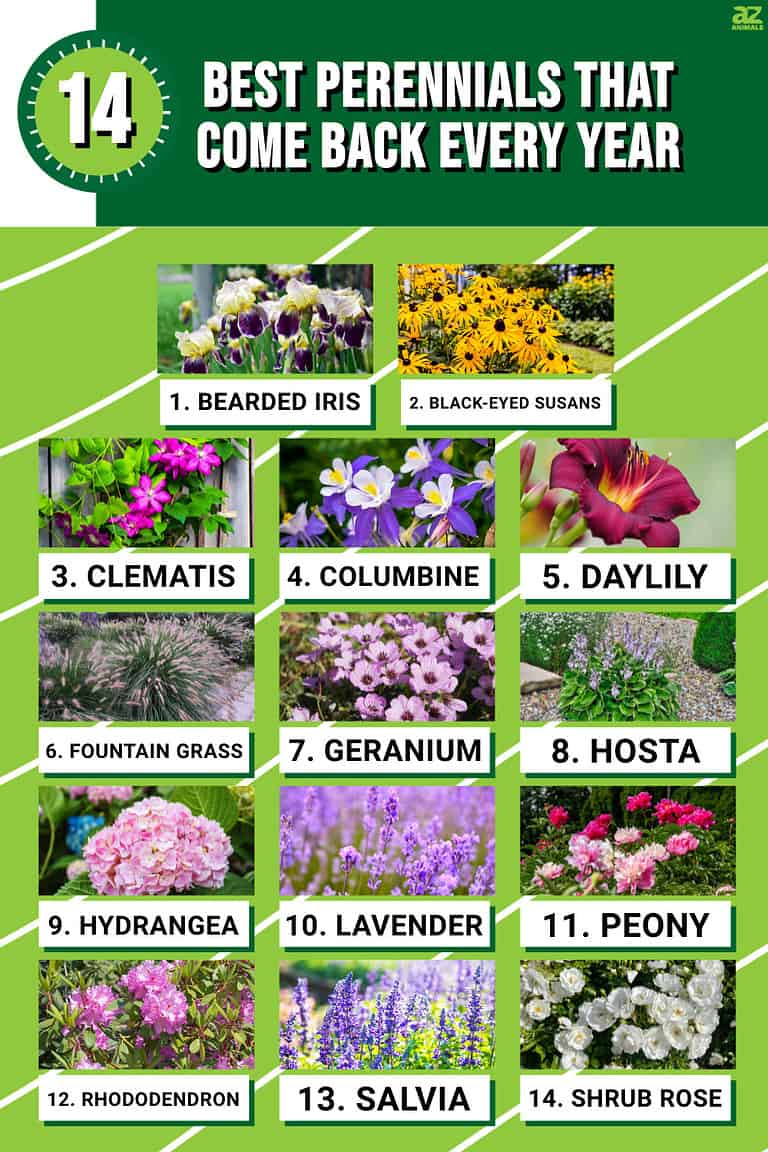
The best perennial flowers depend on your climate, garden style, and available sunlight. Some are known for bright summer blooms, while others provide early spring color or late-season flowers. Choosing several varieties with different bloom times can help your garden stay attractive for longer.
Before buying plants, check the mature height and spread listed on the plant label. A flower that looks small in a nursery pot may grow into a wide clump over several seasons. Giving plants enough space improves airflow and reduces competition for water and nutrients.
Source: happydiyhome.com
Coneflowers
Purple coneflowers are familiar summer perennials with raised central cones and daisy-like petals. Many grow well in sunny locations with well-drained soil, and their seed heads can provide food for birds if left standing.
Black-eyed Susans
These flowers have bright yellow petals and dark centers. Many varieties thrive in full sun and add a cheerful look to borders, meadow-style plantings, and pollinator gardens.
Daylilies
Daylilies grow from clumps of strap-shaped leaves and produce colorful flowers on upright stalks. Individual blooms often last only a day, but established plants can produce many buds over their flowering period.
Peonies
Peonies produce large, showy flowers in spring or early summer. They can live for many years in suitable climates, but they need well-drained soil and enough sunlight to flower well.
Garden phlox
Garden phlox produces clusters of flowers, often in summer. Good airflow, appropriate spacing, and suitable varieties can help reduce problems with powdery mildew.
Hostas
Hostas are grown mainly for their leaves, but they also produce flower stalks. They are useful in shady gardens, although deer may eat them and they need protection from harsh afternoon sun in some climates.
Perennial Flowers for Sunny Gardens
For a sunny garden, consider coneflowers, black-eyed Susans, daylilies, garden phlox, and suitable perennial salvias. Most perform best with several hours of direct sunlight, although exact needs vary by species. In hot regions, afternoon shade may help some varieties cope with intense summer heat.
A sunny flower bed can combine early, middle, and late bloomers. For example, spring-blooming perennials can provide the first burst of color, daylilies can flower in early or midsummer, and some coneflowers can continue into late summer or fall. Local growing conditions and cultivar choice affect the exact timing.
For a natural look
Mix coneflowers and black-eyed Susans with ornamental grasses or other suitable native plants.
For a formal border
Use repeated groups of daylilies or phlox to create a more organized planting.
Perennial Flowers for Shade
Shady gardens can support many attractive perennials, but the right choice depends on how much light reaches the bed. Hostas, astilbes, and some ferns can grow well in partial shade or shade when moisture and soil conditions suit them. Astilbes often produce feathery flower plumes, while hostas provide bold foliage.
Dry shade beneath mature trees is more challenging than moist shade. Tree roots compete with flowers for water, and the soil may dry quickly even when little direct sunlight reaches the ground. Choose plants suited to dry shade or improve the planting area carefully without damaging tree roots.
For moist partial shade
Consider astilbe and other shade-tolerant plants suited to your region.
For leafy texture
Hostas offer many leaf shapes and colors, although they need protection from pests such as slugs and deer where these are common.
How to Choose Perennials for Your Climate
Climate is one of the most important factors when choosing flowers that return each year. A perennial must tolerate the conditions in your garden, including winter cold, summer heat, humidity, rainfall, and soil moisture. A plant may survive winter but still struggle during a hot or wet summer.
The USDA Plant Hardiness Zone Map groups areas by average annual extreme minimum winter temperature. It is a useful starting point for choosing plants, but it does not account for every factor that affects plant growth. Sun exposure, elevation, wind, soil type, and local microclimates can all change the result.
Read the plant label and check reliable regional gardening guidance before planting. When a variety is listed as hardy in your zone, that usually means it has a reasonable chance of surviving winter under suitable conditions. It does not guarantee healthy growth in every garden.
Source: pondinformer.com
Cold northern regions
Gardeners in places such as Minnesota, Wisconsin, and Maine should check winter hardiness and consider whether the plant needs protection during periods of severe cold.
Hot southern regions
Gardeners in Texas, Georgia, and Florida should consider heat tolerance, summer humidity, drainage, and whether afternoon shade is needed.
Dry western regions
In areas with limited rainfall, select suitable drought-tolerant perennials and water new plants while their roots establish.
Mild coastal regions
Some coastal gardens can grow plants that struggle in colder inland locations, but wind, salt exposure, and wet soil may create other challenges.
Can You Grow the Same Perennials Across the United States?
Some widespread perennials grow across a broad range of the country, but no single plant is ideal for every region. A variety that tolerates cold winters may need extra attention in a humid southern summer. In warmer regions, a plant that requires winter chill may also flower poorly if its seasonal needs are not met.
Native plants can be especially useful because many are adapted to local soils, rainfall patterns, and wildlife. However, native status alone does not guarantee that a plant will suit every site. Check the species and its natural range, then match it to the conditions in your yard.
Use local plant guidance
University extension services, botanical gardens, and regional native plant groups can help identify varieties suited to your area.
Consider the planting site
A sunny, dry front border and a shaded, damp backyard corner may need different perennials even when they are in the same city.
How to Plant Flowers That Come Back Every Year
Planting perennials well from the start helps them establish strong roots and return in later seasons. Many gardeners plant in spring or fall, when temperatures are moderate, but the best timing depends on the species and local weather. Avoid planting during extreme heat or when the soil is frozen or waterlogged.
Prepare the bed before setting plants in the ground. Remove weeds, loosen compacted soil where practical, and check drainage. Add organic matter when the soil needs improvement, but avoid making a planting hole dramatically different from the surrounding soil.
Set each plant at the depth recommended on its label. Most container-grown perennials should sit at about the same depth as they did in the pot, while some plants have special needs. Peonies, for example, may flower poorly if their growing eyes are buried too deeply in cold-winter regions.
Source: balconygardenweb.com
Choose the right location
Match sunlight, soil moisture, drainage, and mature plant size to the needs of the perennial.
Prepare the soil
Remove weeds and loosen dense soil without working it when it is wet. Use compost when needed to improve soil structure.
Plant at the correct depth
Follow the plant label or trusted growing guidance. Do not assume every perennial needs to be planted at the same depth.
Water thoroughly
Water after planting to settle the soil around the roots. Continue to monitor moisture while the plant establishes.
Add suitable mulch
A light layer of organic mulch can help conserve moisture and reduce weeds. Keep mulch away from plant crowns and stems to reduce the risk of rot.
Should You Plant Perennials in Spring or Fall?
Spring planting gives many perennials time to grow roots before their first winter. It is often a practical choice in regions with harsh winters or for plants that need a long establishment period. Regular watering is especially important when spring turns quickly into hot, dry weather.
Fall planting can work well in areas with mild autumn weather and enough time before the ground freezes. Cooler temperatures may reduce water stress while roots continue to grow. In colder regions, plant early enough for roots to establish, and follow the recommended timing for the specific species.
Choose spring when
Your area has a short fall season, severe winters, or a perennial that benefits from a full growing season before winter.
Choose fall when
Your region has a suitable cool season, the soil remains workable, and the plant has time to establish before freezing weather.
How to Care for Perennial Flowers Each Year
Perennials need regular care, especially during their first growing season. Once established, some need little attention beyond occasional watering and cleanup, while others benefit from dividing, staking, or more frequent pruning. Their care needs depend on the species and the conditions in your garden.
Water deeply enough to moisten the root zone rather than wetting only the soil surface. Check moisture before watering, because frequent shallow watering can encourage roots to remain near the surface. Soil type, rainfall, plant size, and heat all affect how often you need to water.
Feed plants based on their needs rather than adding fertilizer automatically. Too much nitrogen can encourage leafy growth at the expense of flowers in some perennials. A soil test can help you decide whether nutrients or pH adjustments are needed.
Source: uk.pinterest.com
Water as needed
Newly planted perennials need closer monitoring than established plants. Increase attention during dry spells and heat waves.
Remove spent flowers when useful
Deadheading, or removing faded blooms, can improve appearance and encourage further flowering in some plants. It will not extend the bloom period of every perennial.
Cut back at the right time
Follow species-specific guidance for pruning and cleanup. Some plants benefit from fall cleanup, while others are best left standing until spring.
Divide crowded clumps
Some perennials grow into dense clumps that may need dividing to maintain vigor or control size. Divide only when the plant and season are suitable.
Watch for pests and disease
Check leaves, stems, and crowns for damage. Correct watering, spacing, and airflow problems before reaching for a pesticide.
Do Perennials Need Winter Protection?
Some perennials need winter protection, while others survive cold weather without special treatment. The right approach depends on hardiness, soil drainage, exposure, and how much temperature variation the plant can tolerate. Plants in containers may face colder root temperatures than the same varieties planted in the ground.
In cold regions, a suitable mulch layer applied after the soil begins to cool can help reduce repeated freezing and thawing. Avoid piling wet mulch tightly over crowns, because excess moisture can lead to rot. Plants that require a dry winter rest may need a different approach from plants that prefer steady moisture.
Do not assume every perennial should be cut down in autumn. Seed heads and stems can provide winter interest and food or shelter for wildlife. If you leave them standing, remove diseased material and clear away growth that could create problems for the next season.
Protect roots, not just stems
In suitable situations, mulch helps moderate soil temperature and moisture around the root zone.
Avoid excess winter moisture
Good drainage is vital for many perennials. Waterlogged soil can damage roots even when temperatures are not especially low.
Perennial Flowers Compared With Annuals and Biennials
Perennials, annuals, and biennials differ mainly in how long they live and how they complete their life cycles. Understanding these differences helps you choose plants that fit your budget, schedule, and desired garden appearance. You can also combine all three types to create a garden with both lasting structure and changing seasonal color.
Perennials can reduce the need to buy replacement plants every spring, but they may cost more initially than small annual seedlings. Annuals often flower for long periods in one season, while perennials may have a shorter bloom window. Biennials generally need two growing seasons to complete their life cycle, although many gardeners grow them as part of mixed plantings.
Source: www.pinterest.com
Perennials
Live for more than two years. Examples include peonies, coneflowers, and many daylilies.
Annuals
Complete their life cycle in one growing season. Examples include zinnias, marigolds, and many types of cosmos.
Biennials
Usually grow vegetatively in the first year and flower or set seed in the second. Hollyhocks and foxgloves are common examples.
Are Perennial Flowers Cheaper Over Time?
Perennials can offer good long-term value because many return for several years. Once established, they may need less replanting than annual flowers. However, the total cost depends on the plant’s lifespan, the purchase price, water needs, fertilizer, pest control, and the work needed to keep it healthy.
Annuals can still make sense when you want continuous color in a container or a flower bed that changes each season. A mixed garden often offers the most flexibility: perennials provide a lasting framework, while annuals fill gaps and add bright color where needed.
For long-term garden structure
Use suitable perennials to establish repeating groups and stable planting areas.
For seasonal color
Add annuals when you want a fresh color scheme or blooms that last much of the growing season.
Why Perennial Flowers May Not Come Back
When a perennial fails to return, the cause is often related to climate, moisture, planting depth, or plant health. A plant may appear healthy during its first summer but fail to establish enough roots before winter. In other cases, it survives underground but emerges later than expected.
Before replacing a missing plant, check the expected emergence time for its species. Some perennials emerge early in spring, while others wait until the soil warms. Marking where plants are located can prevent accidental digging or damage during spring cleanup.
Source: storage.googleapis.com
Winter damage
The plant may not be hardy enough for local winter temperatures, especially in an exposed site or container.
Poor drainage
Roots and crowns may rot in soil that stays wet for too long, particularly during cool weather.
Drought stress
Newly planted perennials can die if the root zone dries out before they establish.
Incorrect planting depth
Planting too deeply or too shallowly can harm certain perennials. Follow guidance for the exact species.
Pests or disease
Root damage, crown rot, or severe disease can prevent a plant from producing healthy new growth.
Natural lifespan
Some perennials are short-lived or decline over time. A plant may need replacing or dividing even when care is appropriate.
What Should You Do if a Perennial Does Not Grow Back?
First, confirm that the plant should have emerged by that time in your region. Then inspect the soil moisture and drainage without digging deeply into the crown or root system. If the plant is still missing after its normal emergence period, gently check for signs of living growth or root damage.
Correct the likely cause before replanting. Improve drainage where appropriate, adjust watering, or select a hardier variety. Replacing the plant with the same species in the same unsuitable location may lead to the same result.
If the soil stays wet
Consider a better-drained location or a plant that tolerates the site’s moisture conditions.
If winter killed the plant
Choose a variety rated for colder conditions or provide suitable protection where practical.
If the cause is unclear
Ask a local university extension service or garden center for help identifying likely causes from the plant, soil, and site conditions.
How to Plan a Flower Bed That Returns Each Year
A successful perennial bed starts with a clear plan for sunlight, space, bloom time, and plant height. Begin with a few reliable plants suited to your region rather than filling the entire bed with varieties that have different care needs. A smaller, well-planned bed is often easier to maintain than a crowded collection.
Place taller plants toward the back of a border that is viewed from one side. In a bed viewed from all directions, taller plants can sit near the center, with shorter plants around the edges. Allow enough room for mature plants so they do not crowd one another after a few seasons.
For a longer display, combine perennials that bloom at different times. Spring flowers can start the season, summer bloomers can provide the main show, and late-season varieties can carry color into fall. Foliage also matters because many perennials remain attractive when they are not flowering.
Source: happydiyhome.com
Start with the site
Measure the bed and note the hours of direct sunlight, drainage, and access to water.
Choose a small plant palette
Select a few compatible varieties and repeat them through the bed for a balanced look.
Plan for mature size
Use the expected height and spread on plant labels to avoid crowding.
Mix bloom periods
Choose early, middle, and late-season flowers that suit the same growing conditions.
Leave room for maintenance
Make sure you can reach plants for weeding, watering, pruning, and dividing without stepping on the bed.
A Simple Example of a Perennial Flower Bed
Imagine a sunny border in a US backyard with well-drained soil. You could plant a few peonies for spring flowers, followed by daylilies and garden phlox for summer color, then use suitable coneflowers for a later display. The exact bloom periods will depend on your climate and the varieties you choose.
This is a planning example, not a universal planting recipe. A garden in a hot, humid area may need varieties that tolerate those conditions, while a cold northern garden needs plants that can survive local winters. Check each plant’s needs before combining them in one bed.
Keep the layout flexible
Leave space for plants to spread and adjust the arrangement as you learn how they grow.
Track seasonal changes
Record bloom times and plant performance so you can fill gaps or move plants during an appropriate season.
Frequently Asked Questions
Q
What is the name for flowers that come back every year?
Flowers that come back every year are called perennial flowers, or perennials. They live for more than two years and can grow and flower again during suitable seasons. Their ability to return depends on the species, climate, and care.
Q
What are the easiest flowers that come back every year?
Coneflowers, black-eyed Susans, daylilies, and some perennial salvias are often good starting points for sunny gardens. Hostas can work well in shady areas, while astilbes suit some moist, partly shaded sites. The easiest choice is the one that matches your local climate, soil, and sunlight.
Q
Do perennial flowers bloom all summer?
Not all perennials bloom throughout summer. Some flower for a short period, while others produce blooms over several weeks or repeat flowering when conditions are suitable. Planting varieties with different bloom times can extend the overall flowering season in your garden.
Q
Do perennial flowers come back after winter?
Many hardy perennials survive winter and send up new growth when temperatures rise. Some lose their aboveground stems but survive through roots, crowns, or other underground structures. A perennial may fail to return if winter temperatures exceed its tolerance or if the roots suffer from rot, drought, or other damage.
Q
Can you grow perennial flowers in pots?
Yes, many perennials grow well in containers if the pot has drainage holes and enough room for the roots. Container-grown plants can be more exposed to heat, cold, and drying soil than plants in the ground. In cold regions, some pots may need winter protection or a sheltered location to help the roots survive.
Q
Do you have to replant perennial flowers every year?
No. Established perennial flowers generally do not need to be replanted every year. You may need to divide crowded plants, replace short-lived varieties, or replant specimens that die from unsuitable conditions. Regular care can help many perennials remain healthy for several seasons.
Q
Are flowers that spread and return every year always perennials?
No. Some annual flowers reseed themselves, so new plants appear in the same garden each year even though the original plants have died. A plant that returns from surviving roots or crowns is perennial, while a plant that reappears only from new seedlings may be an annual that self-seeds.
✦ Wrapping Up
Conclusion
Flowers that come back every year are called perennials. These plants can bring lasting color, structure, and seasonal interest to a garden without requiring you to start over each spring. Popular choices include coneflowers, black-eyed Susans, daylilies, peonies, and garden phlox.
The key to success is choosing plants that fit your local climate and garden conditions. Check hardiness, sunlight needs, mature size, soil drainage, and bloom time before planting. Give new plants suitable care as they establish, then adjust watering, pruning, and winter protection to their needs.
A perennial garden does not have to be large or complex. Start with a few well-suited flowers, observe how they grow through the seasons, and add more varieties when you know what works in your yard. Over time, those plants can become the lasting foundation of a colorful garden.
💡 Key Takeaway
Choose two or three perennial flowers suited to your USDA hardiness zone, check their sunlight and soil needs, and plant them at the recommended depth. Water them as they establish and keep a simple record of their growth and bloom times.
I enjoy sharing simple gardening ideas, lawn care tips, and honest product reviews that help make outdoor work easier. From home gardening guides to helpful tools and lawn care advice, I write easy-to-follow content to help readers create a healthier and better-looking outdoor space without wasting time or money.