
As an Amazon Associate, I earn from qualifying purchases.
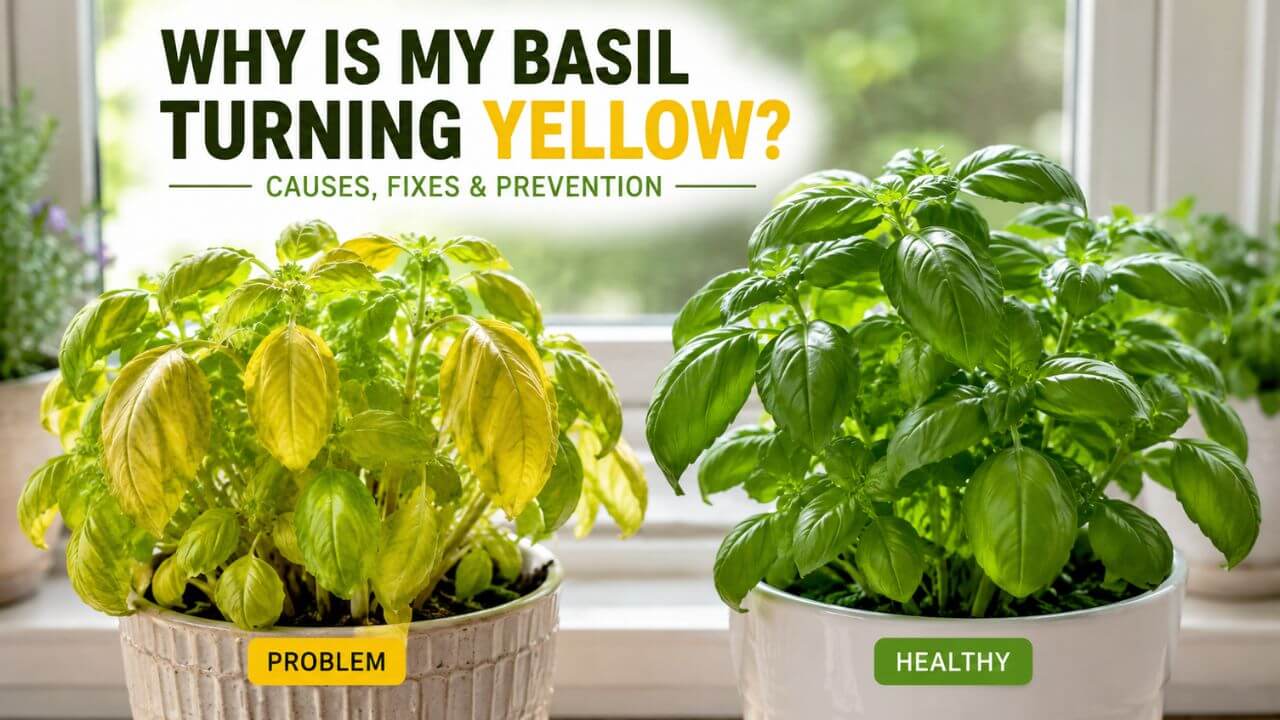
Basil can go from healthy green leaves to yellow foliage surprisingly fast. If you are wondering Why Is My Basil Turning Yellow, the answer usually involves watering, sunlight, drainage, or nutrients. Yellow leaves are not the problem themselves. They are your basil plant’s way of signaling that something in its growing conditions needs attention.
Basil responds quickly to both good and bad conditions. The good news is that most yellow basil leaves can be fixed if you identify the cause early and make the right adjustment.
What Yellow Basil Leaves Are Telling You
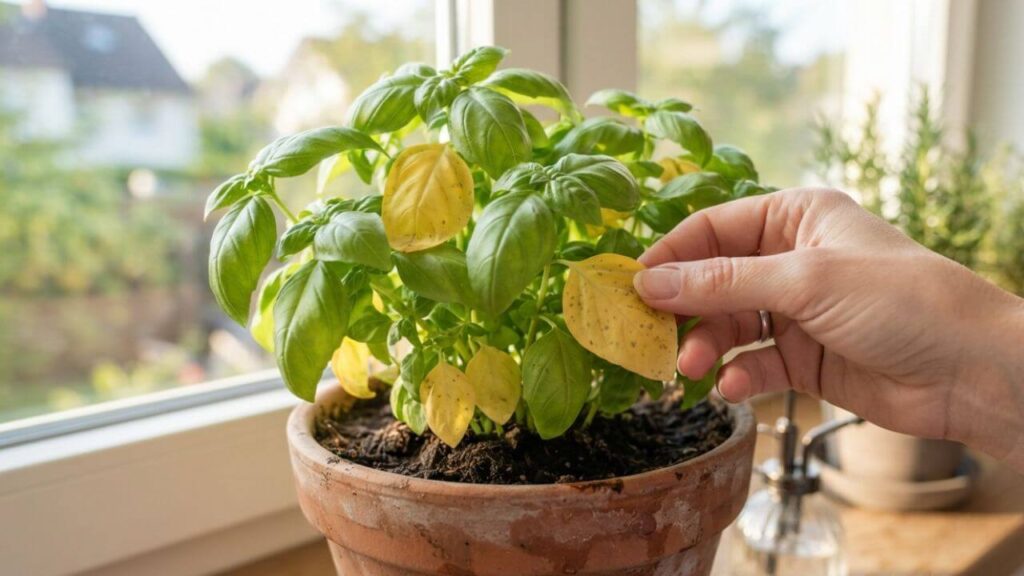
Healthy basil leaves should be rich green and firm. When basil leaves turn yellow, the plant is warning you that something in its environment is wrong.
Yellowing may appear as:
- Entire leaves turning yellow
- Yellow edges around leaves
- Pale green foliage
- Leaves turning yellow and falling off
- Yellow lower leaves while new growth stays green
The pattern matters. Lower leaves usually point to watering or nutrient issues, while pale new growth may indicate fertilizer or root problems.
One mistake beginners make is removing yellow leaves without finding the cause first.
Overwatering Is the Most Common Cause
An overwatered basil plant is the number one reason homeowners see yellow basil leaves.
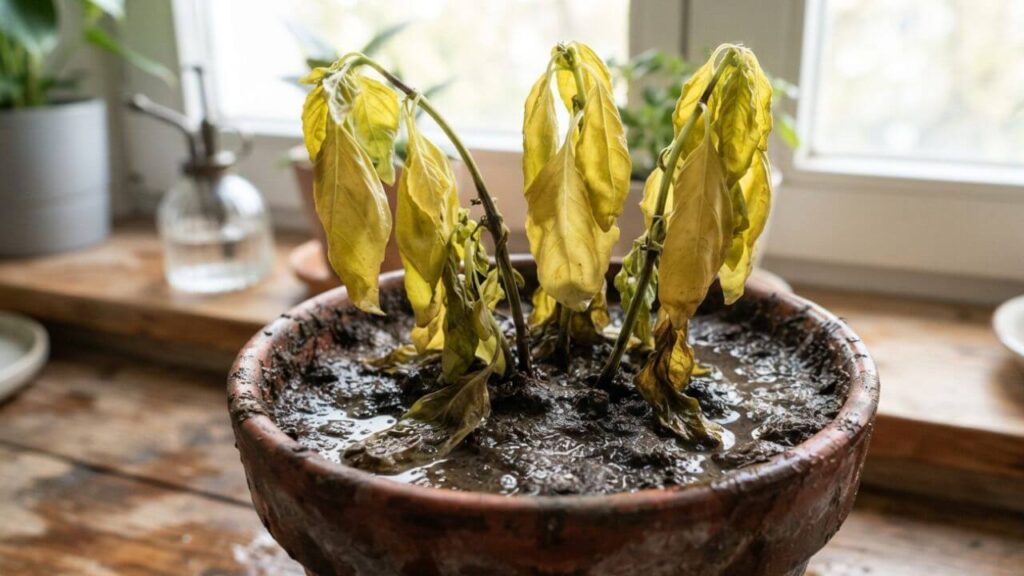
Basil roots need moisture, but they also need oxygen. Soil that stays wet for days blocks airflow and stresses the roots. Eventually, the plant cannot absorb nutrients properly.
Signs of an overwatered basil plant include:
- Yellow leaves
- Soft stems
- Wet soil for several days
- Mold on the soil surface
- Slow growth
I made this mistake with container basil on a shaded patio. The soil never dried properly, and the lower leaves yellowed within days.
How to Fix Overwatering
- Stop watering immediately.
- Allow the top inch of soil to dry.
- Improve airflow around the plant.
- Move containers into brighter light if possible.
- Empty saucers after watering.
If roots smell sour or appear black, root rot may already be developing.
Underwatering Can Cause Yellow Leaves Too
An underwatered basil plant can show symptoms similar to overwatering.
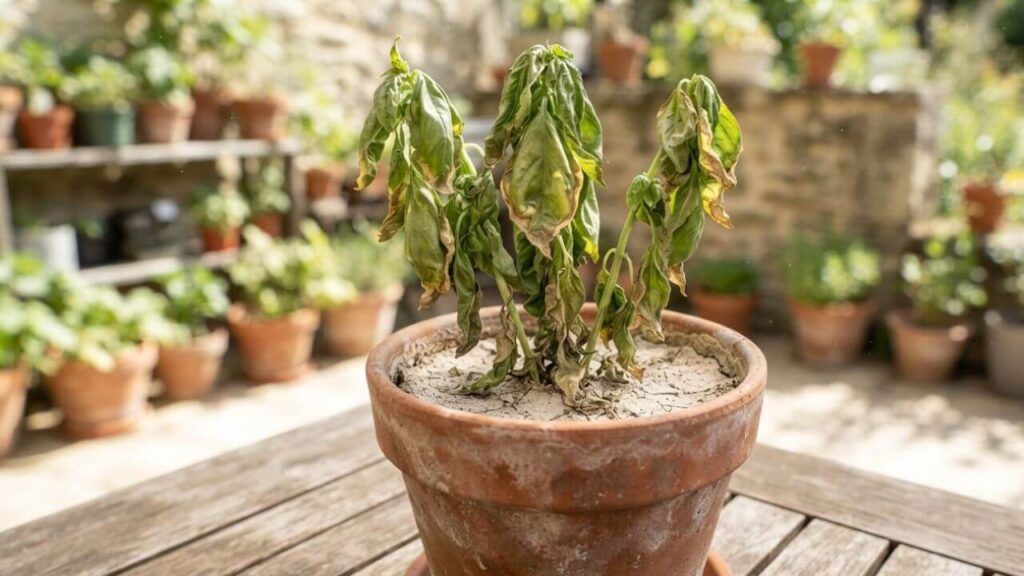
Dry roots struggle to move nutrients through the plant. Leaves may first droop, then turn yellow and crispy around the edges.
Look for these signs:
- Dry soil pulling away from the pot
- Wilted leaves during warm afternoons
- Crispy edges
- Lightweight containers
Check soil moisture before watering. A schedule alone rarely works because temperature and sunlight change water needs every week.
Basil Root Rot Symptoms
Root rot develops when roots remain wet for too long.
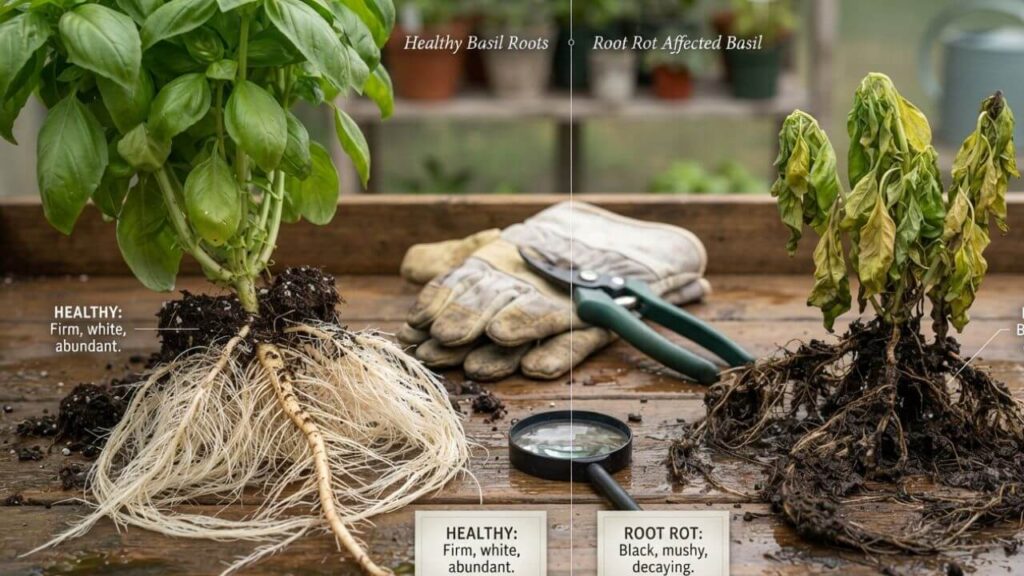
Many gardeners continue watering because the plant looks thirsty. Unfortunately, damaged roots cannot absorb water, so the plant keeps drooping even though the soil is wet.
Common basil root rot symptoms include:
- Yellow leaves
- Black roots
- Mushy stems
- Bad smells from the soil
- Leaves falling off suddenly
Healthy roots should look white or light tan.
How to Save a Yellow Basil Plant With Root Rot
Remove the plant from the pot and inspect the roots carefully.
Trim black or mushy roots with clean scissors. Replace old soil with fresh potting mix and use a container with drainage holes.
Recovery takes time, but mild root rot can be reversed.
Basil Nutrient Deficiency and Yellow Leaves
Basil grows quickly and uses nutrients fast.
A basil nutrient deficiency can cause leaves to turn pale green or yellow. Nitrogen shortages are the most common issue because nitrogen supports leaf growth.
Signs of basil nitrogen deficiency include:
- Yellow lower leaves
- Slow growth
- Small leaves
- Thin stems
A balanced fertilizer usually solves the problem.
Avoid heavy feeding because too much fertilizer can burn roots and create new problems.
Basil Plant Not Getting Enough Sunlight
Basil loves sunlight.
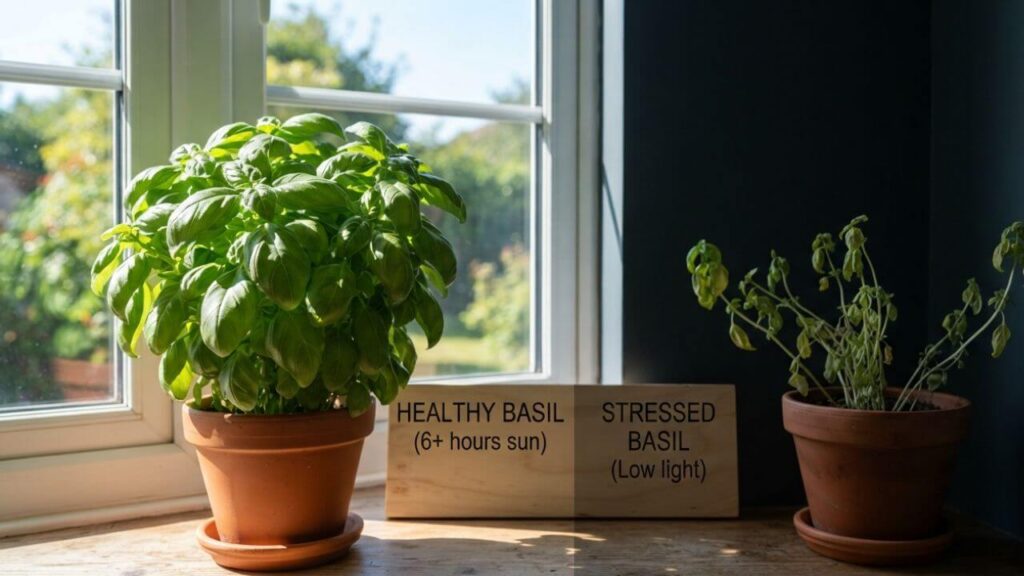
Plants that receive too little light become weak and pale. Stems stretch toward windows, and leaves lose their deep green color.
Basil sunlight requirements include:
- Six to eight hours of direct sunlight outdoors
- Bright south-facing windows indoors
- Supplemental grow lights during winter
Indoor basil struggles more with low light than outdoor basil.
When growing basil indoors, light problems appear quickly.
Poor Drainage Creates Hidden Problems
Basil drainage problems are easy to miss because the soil surface may look dry while roots remain wet underneath.
Heavy garden soil traps moisture and limits airflow around roots. Containers without drainage holes create the same issue.
The best soil for basil plants should contain:
- Compost
- Potting mix
- Perlite
- Coco coir
Improving basil drainage solves many yellow leaf problems without any fertilizer or treatments.
Basil Temperature Problems and Transplant Shock
Basil dislikes sudden environmental changes.
Cold nights, strong winds, and rapid temperature swings can cause yellow basil leaves. Temperatures below 50°F stress the plant quickly.
Basil transplant shock can create:
- Yellow leaves
- Drooping growth
- Slow recovery
- Leaf drop
Give newly transplanted basil several days to adjust before making more changes.
Growing Basil Indoors Versus Outdoors
Indoor basil plant care differs from outdoor basil care.
Indoor plants struggle more with:
- Low sunlight
- Poor airflow
- Overwatering
- Small containers
Outdoor basil faces different challenges:
- Heavy rain
- Cool nights
- Heat stress
- Wind damage
Growing basil in pots makes it easier to control watering, drainage, and sunlight exposure.
Step-by-Step: How to Fix Yellow Basil Leaves
If your basil plant is turning yellow, follow this process:
- Check soil moisture.
- Inspect drainage holes.
- Review sunlight levels.
- Look for root rot symptoms.
- Check recent fertilizer applications.
- Inspect roots if problems continue.
Changing one thing at a time makes troubleshooting easier.
When gardeners change watering, fertilizer, and location on the same day, they rarely know what solved the problem.
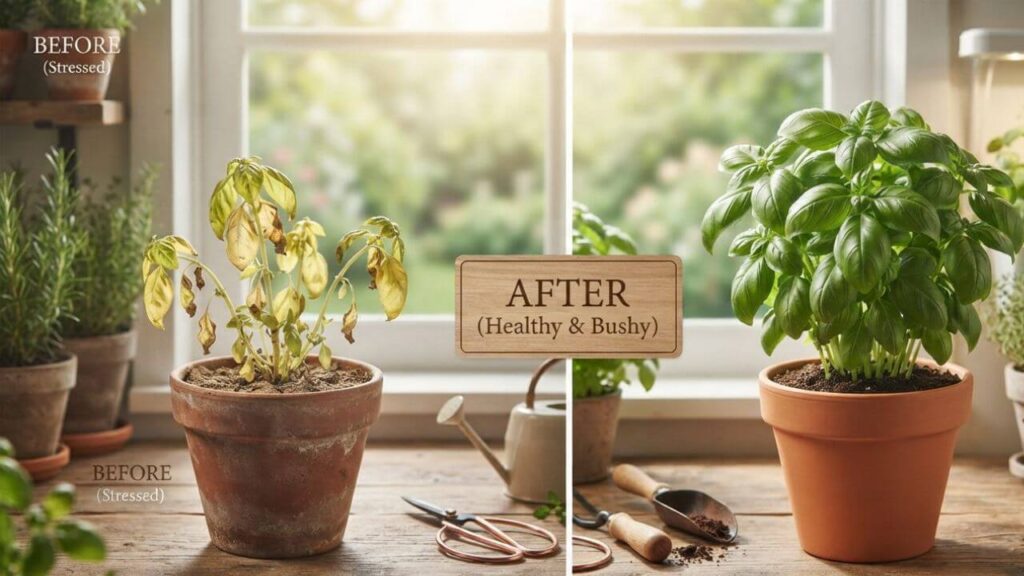
Tools and Materials That Help Basil Recover
Keeping a few simple supplies nearby makes recovery easier:
- Moisture meter
- Pruning scissors
- Fresh potting mix
- Perlite
- Balanced fertilizer
- Containers with drainage holes
Most yellow basil problems do not require expensive products.
Common Mistakes to Avoid
The same mistakes appear in almost every struggling basil plant.
Avoid these problems:
- Watering on a schedule instead of checking soil
- Growing basil in shade
- Using containers without drainage holes
- Applying fertilizer to stressed plants
- Ignoring root health
The healthiest basil plants come from consistent care rather than constant adjustments.
Expert Tips for Healthier Basil Plants
After years of growing basil indoors and outdoors, several habits consistently improve results:
- Harvest regularly to encourage branching.
- Water deeply but less frequently.
- Rotate indoor pots every week.
- Remove damaged leaves quickly.
- Use fresh potting soil each season.
Healthy basil recovers surprisingly fast once the underlying problem is corrected.
Frequently Asked Questions
Why are my basil leaves yellow but not falling off?
This usually points to overwatering, nutrient deficiency, or low sunlight.
Can yellow basil leaves turn green again?
Fully yellow leaves rarely recover, but healthy new growth should appear after fixing the problem.
How often should I water basil?
Water when the top inch of soil feels dry rather than following a fixed schedule.
Does basil need full sun?
Yes. Basil grows best with six to eight hours of direct sunlight daily.
Can an overwatered basil plant recover?
Yes. Most plants recover if you improve drainage and reduce watering before root rot spreads.
Conclusion
Yellow basil leaves are frustrating, but they are also helpful warning signs. Overwatering, poor drainage, low sunlight, nutrient deficiencies, and temperature stress cause most problems.
Start by checking soil moisture and root health before adding fertilizer or more water. Fix one issue at a time and watch how the plant responds.
Most basil plants bounce back quickly once their growing conditions improve.

I enjoy sharing simple gardening ideas, lawn care tips, and honest product reviews that help make outdoor work easier. From home gardening guides to helpful tools and lawn care advice, I write easy-to-follow content to help readers create a healthier and better-looking outdoor space without wasting time or money.