
As an Amazon Associate, I earn from qualifying purchases.
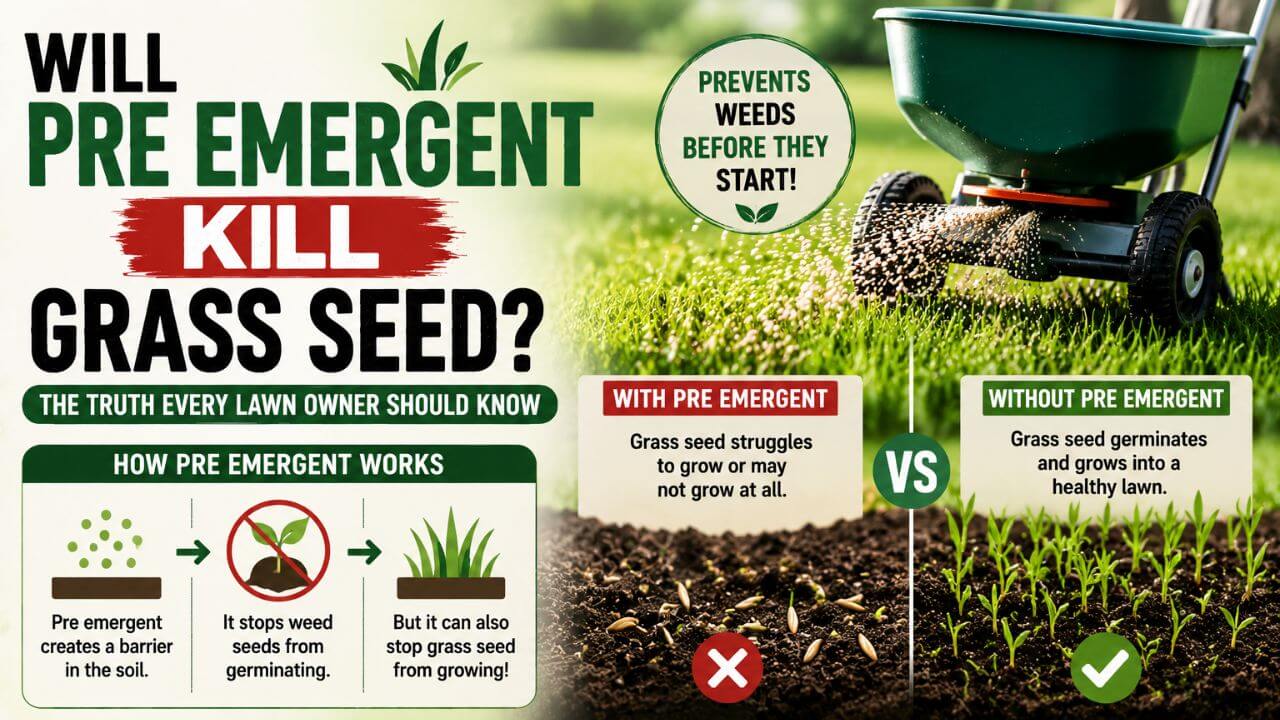
Most pre-emergents block new grass seed from rooting if you mistime them.
You want a clean lawn and fewer weeds. But you also want thick, fresh grass. I’ve spent years testing products and timing on real yards. In this guide, I answer Will Pre Emergent Kill Grass Seed with clear steps, pro tips, and science-backed rules you can trust. Read on to seed with confidence and still keep crabgrass in check.
What pre-emergent herbicides do and why seed is at risk
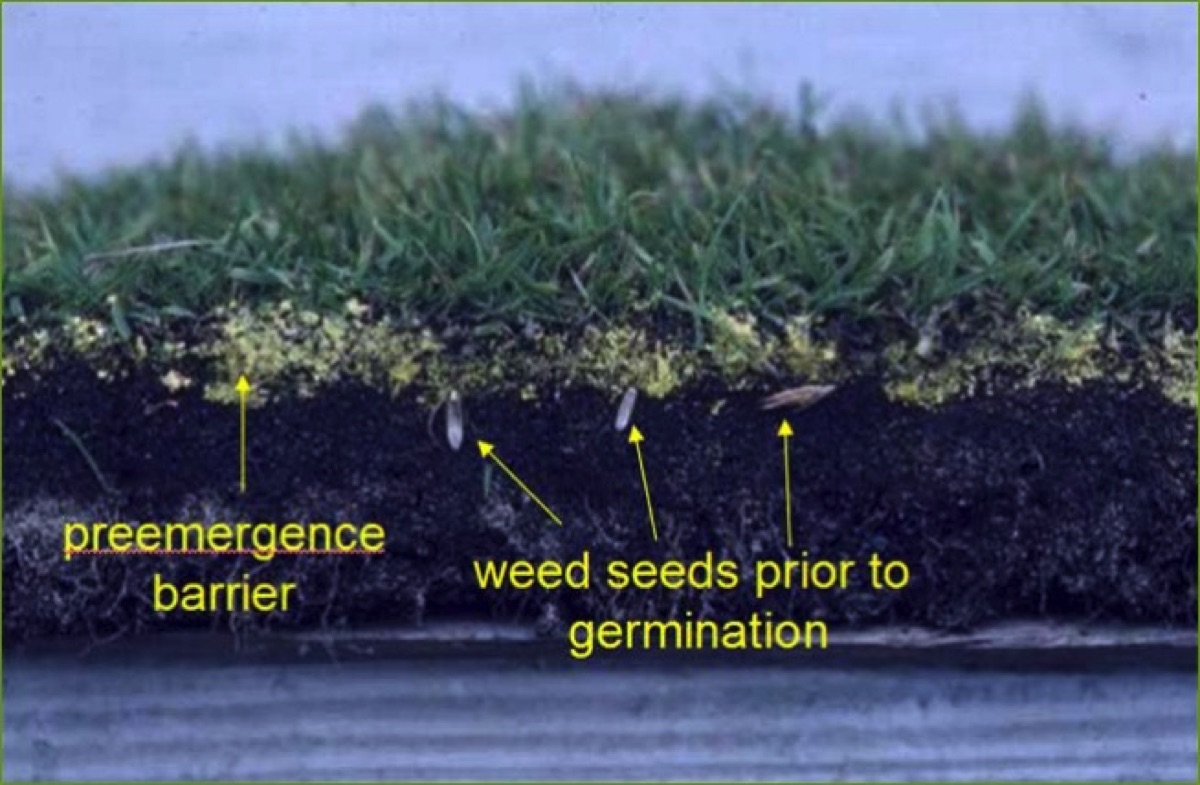
Pre-emergent herbicides stop weed seeds from sprouting. They create a thin barrier in the top layer of soil. When a seed wakes up, the new root hits that barrier. Cell growth slows or stops. The seed fails to root and dies.
That same barrier can affect grass seed. New turf depends on tender roots. If those roots cannot grow, you lose time and money. That is why timing is key.
Common active ingredients include prodiamine, pendimethalin, dithiopyr, and indaziflam. These are strong and long lasting. They work great on crabgrass and other annual weeds. But they also pose a risk to fresh seed if used too soon.
Will Pre Emergent Kill Grass Seed? The full answer
The honest answer is yes, often. Will Pre Emergent Kill Grass Seed if you seed right after you apply it? In most cases, yes. The barrier that stops crabgrass will also block your new turf from taking hold.
It does not burn seed like a flame. It blocks growth right at sprout or root. That means poor germination, weak seedlings, or no stand at all. Labels and turf research say to wait weeks or months before seeding. The wait depends on the product, the rate, and your grass type.
If you must seed now, use products made for that use. A few options can protect against weeds and still allow seedlings to grow. I cover those below.

Timing rules for seeding vs pre-emergent
Good timing is half the battle. Use these rules to reduce risk.
- Seed cool-season lawns in late summer to early fall. Soil is warm. Air is mild. Weeds are less wild.
- Seed warm-season lawns in late spring to early summer. Soil is warm enough to spark growth.
- Apply pre-emergent before weed seeds wake. For crabgrass, that is when soil at 2 inches hits about 55°F for several days.
- Water in the product as the label says. The barrier must sit in the top soil to work.
How long after pre-emergent can I seed?
- Prodiamine: often 4 to 6 months. High rates can push longer.
- Pendimethalin: 3 to 5 months.
- Dithiopyr: 2 to 4 months. You can often seed after the new lawn has been mowed twice.
- Indaziflam: 6 to 8 months or more. Very long residual.
Always check your label. Rates and grass species change the wait.
Can I put pre-emergent down right after I seed?
Most of the time, no. Will Pre Emergent Kill Grass Seed in that case? Very likely. Wait until the new lawn has been mowed at least twice. Some labels ask for three mowings.

Products that allow seeding now
Some tools let you seed and still fight weeds.
- Mesotrione: Safe to use at seeding for many cool-season grasses. It targets young weeds but is gentle on new turf when used as directed.
- Siduron: Designed for seeding cool-season lawns. It controls crabgrass without stopping turfgrass seedlings.
These are not the same as classic crabgrass preventers. They have a different mode of action. They help you seed in spring or fall and still keep early weeds in check.
What about dithiopyr, pendimethalin, or prodiamine? These are strong pre-emergents. They are not safe at seeding. Use them only after new grass is mature. Read the label for the number of mowings before use.
If you plan to seed and still worry, ask yourself again: Will Pre Emergent Kill Grass Seed if I use the wrong one? Yes. Pick the right tool for the job.

Overseeding with pre-emergent already down
It happens. You put down a preventer, then see thin spots. Now what?
- Wait it out. If you used prodiamine, pendimethalin, or indaziflam, delay seeding until the safe window. The barrier needs time to fade.
- Patch with sod. Sod has roots. It can bridge the barrier better than seed. But check the label. Some products slow sod rooting too.
- Seed in fall. Many lawns fill best in late summer or fall. Your pre-emergent may wear off by then.
- Do not rely on raking or light aeration to beat the barrier. It sits across the top layer. Breaking it can reduce weed control but still harm seedlings.
One more reminder: Will Pre Emergent Kill Grass Seed if it is still active? In most cases, yes. Patience pays here.
Species-specific notes
Not all grasses act the same.
- Cool-season turf (tall fescue, Kentucky bluegrass, perennial ryegrass): Best seeding window is late summer to early fall. Mesotrione and siduron can be used at seeding. Classic pre-emergents need long wait times.
- Warm-season turf (Bermuda, zoysia, centipede, St. Augustine): Best seeding or plugging window is late spring to early summer. Many warm-season lawns use pre-emergents with long residual. Plan far ahead before seeding or plugging.
For sprigging or plugging, check the label. Some products are safe on established warm-season sod but not on seed. When in doubt, ask: Will Pre Emergent Kill Grass Seed of my chosen species? If the product is not listed as safe for seeding, assume risk.
My field notes and common mistakes
I have learned these lessons the hard way.
- Do not chase a calendar alone. Use soil temps and local cues. Forsythia bloom can help as a rough signal in spring.
- Calibrate your spreader. Too much product extends the wait to seed.
- Water in as directed. Too little water leaves the barrier patchy. Too much runoff moves it off target.
- Do not core aerate right after you apply. It breaks the layer and drops product deeper.
- Keep a lawn journal. I log when I seeded, when I mowed, and what rate I used. It saves me from asking Will Pre Emergent Kill Grass Seed this season for the third time.
A simple rule helps: seed when you can give young plants warm soil, steady water, and at least two good mowings before peak summer or winter stress.
Safety, environmental, and label considerations
You want a strong lawn and a safe yard. Follow these tips.
- Read labels. They control timing, rates, watering, and species rules.
- Keep granules off drives and sidewalks. Sweep them back onto the lawn.
- Protect beds and young ornamentals. Many products can harm shallow roots if misused.
- Store products dry and locked away. Keep kids and pets off the area until the product is dry and watered in.
- Confirm local rules. Some areas limit certain actives.
Labels and extension guides agree on one key point. The label is the law. It is also your best safety net when you ask, Will Pre Emergent Kill Grass Seed in my case?
Quick troubleshooting scenarios
It rained hard after I applied. Did I lose control?
Heavy rain can wash product off slopes or into drains. On flat lawns, much of it soaks in. Check for runoff lines. Reapply only if the label allows and you see clear loss of control.
I aerated after applying. Did I break the barrier?
Likely yes, at least in spots. Do aeration before you apply. If it is too late, expect some weeds to slip through. Seed only after the safe wait time.
My new grass is up. When can I use a stronger pre-emergent?
Wait until after two to three mowings. The plants need time to build roots and shoots. Then follow the label for your species and rate.
Can I mix pre-emergent with fertilizer at seeding?
Use caution. Most classic pre-emergents are not safe at seeding. Choose mesotrione or siduron if you need weed help at the time you seed.
Will Pre Emergent Kill Grass Seed if I add compost on top?
A thin compost layer does not shield seed from the barrier below. The root still must enter treated soil. Expect poor results.
Frequently Asked Questions of Will Pre Emergent Kill Grass Seed
Does pre-emergent kill grass seed or only stop it from sprouting?
It mainly stops growth at sprout or root. Seed may swell, then fail to root and die.
How soon after using prodiamine can I seed?
Often 4 to 6 months, depending on rate and species. Always confirm the label for your product.
Can I seed and use Tenacity at the same time?
Yes, for many cool-season grasses when used as directed. It helps reduce weeds while seedlings establish.
Will Pre Emergent Kill Grass Seed if I water a lot after seeding?
Extra water will not undo the barrier. It may even activate it more. Seedlings still fail to root.
Is dithiopyr safe on new lawns?
Not at seeding. Wait until the new lawn has been mowed twice or as the label states.
Can I sod after applying pre-emergent?
It depends on the product and rate. Some labels suggest waiting or accept reduced rooting; check before you lay sod.
Are organic options safer for new seed?
Corn gluten meal has weak and variable results. It is not a reliable crabgrass preventer for new seed.
Conclusion
You can have both a weed-free yard and fresh, thick turf. Plan your timing, choose the right product, and follow the label. Ask yourself at each step, Will Pre Emergent Kill Grass Seed with my current plan? If yes, pivot to a seeding-safe option or wait for the right window.
Take action this week. Map your seeding date, match a compatible product, and set reminders for mow counts and soil temps. Want more help? Subscribe for seasonal lawn checklists, or drop a comment with your grass type and climate for a custom plan.

I enjoy sharing simple gardening ideas, lawn care tips, and honest product reviews that help make outdoor work easier. From home gardening guides to helpful tools and lawn care advice, I write easy-to-follow content to help readers create a healthier and better-looking outdoor space without wasting time or money.