
As an Amazon Associate, I earn from qualifying purchases.
How to keep grass green in summer starts with deep watering, proper mowing, balanced feeding, and protecting your lawn from heat and drought stress.
Your grass type, local climate, and lawn condition also play an important role in keeping turf healthy through the hottest months. High temperatures can quickly dry the soil and stress grass, especially during drought or long periods without rain. The goal is not to water constantly or force rapid growth. Instead, build a healthy lawn that can handle summer heat and recover when conditions improve.
1. Know Your Grass Type Before Changing Your Routine
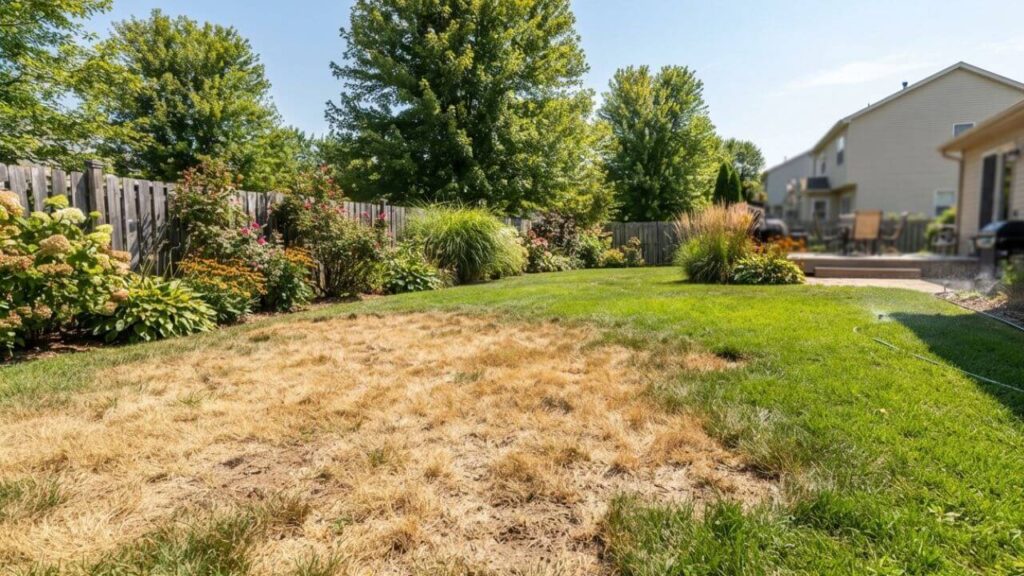
The best way to keep your lawn green in summer is to understand the grass growing in your yard. Different turfgrass species have different heat, drought, and water needs.
Warm-season grasses grow actively during hot weather. Common types include Bermuda, Zoysia, St. Augustine, Centipede, and Bahia. These grasses can perform well during summer when grown in the right climate.
Cool-season grasses include Kentucky bluegrass, perennial ryegrass, and tall fescue. They grow best during cooler months and may slow down or turn brown during severe summer heat.
Your location also matters. A lawn in humid Georgia has different needs from one in dry Arizona. Before changing your summer lawn care routine, identify your grass type and check local recommendations.
2. Water Deeply Instead of Watering Every Day
Proper watering is one of the most important parts of summer grass care. Light, frequent watering may keep the surface looking green for a short time, but it can encourage shallow roots.
Deep watering helps moisture reach the root zone. This encourages roots to grow deeper into the soil, which can improve drought tolerance.
A common starting point for established lawns is around 1 inch of water per week from rainfall and irrigation combined. However, this is not a fixed rule for every lawn. Soil type, grass species, temperature, rainfall, and local restrictions all affect your lawn’s needs.
Check the soil before turning on your sprinkler. If the soil still feels moist several inches below the surface, you may not need to water yet.
How Often to Water Grass in Summer
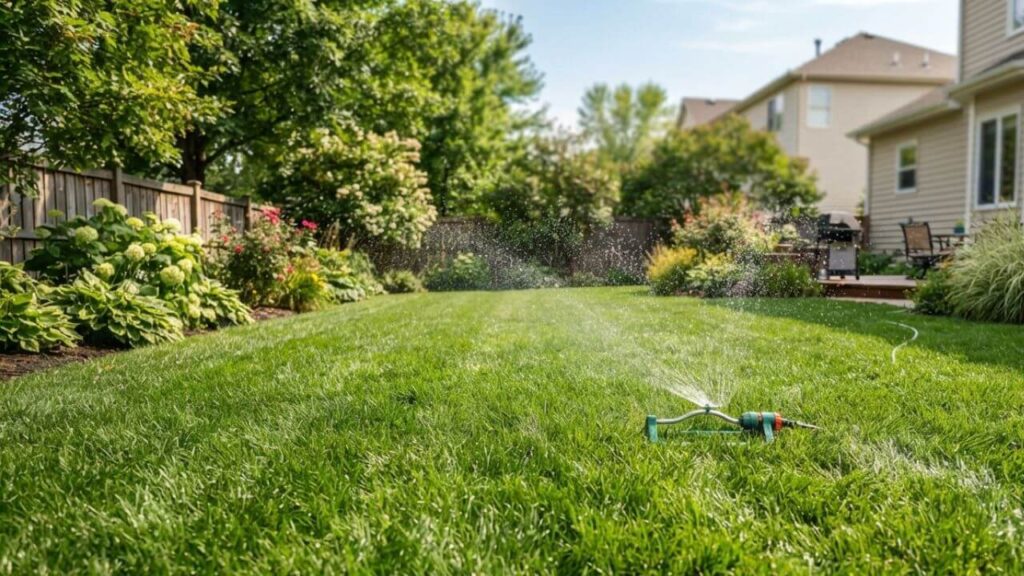
Many established lawns need watering once or twice a week during dry periods instead of receiving a small amount every day. The exact schedule depends on how quickly your soil dries.
Sandy soil drains faster and may need more frequent watering. Clay soil holds water longer but can become saturated if you apply too much at once.
A simple test can help. Push a screwdriver into the soil. If it enters easily several inches, moisture may still be available. If the soil feels hard and dry, your lawn may need water.
Avoid following a rigid summer lawn watering schedule without checking weather and soil conditions. Rainfall should reduce the amount of irrigation your lawn receives.
3. Water at the Best Time of Day
The best time to water grass in summer is generally early morning. Morning watering gives moisture time to soak into the soil before the strongest heat arrives.
It also allows grass blades to dry during the day. This can help reduce conditions that favor some lawn diseases.
Watering during the hottest part of the day may lead to more evaporation. However, it is not true that every drop will simply disappear. If your lawn needs water and morning watering is not possible, watering later is still better than allowing severe drought stress.
Avoid routine late-night irrigation when possible. Grass that remains wet for long periods can face a greater risk of fungal problems, especially in humid climates.
Always follow local watering restrictions. During drought, your community may limit irrigation days or times.
4. Measure How Much Water Your Lawn Receives
Many homeowners do not know how much water their sprinkler actually applies. This can lead to both overwatering and underwatering.
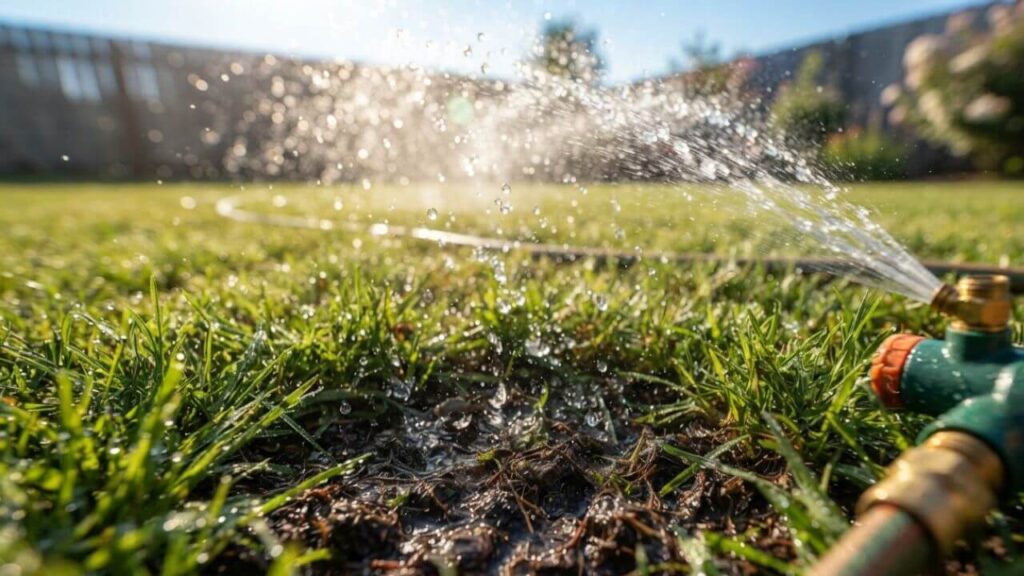
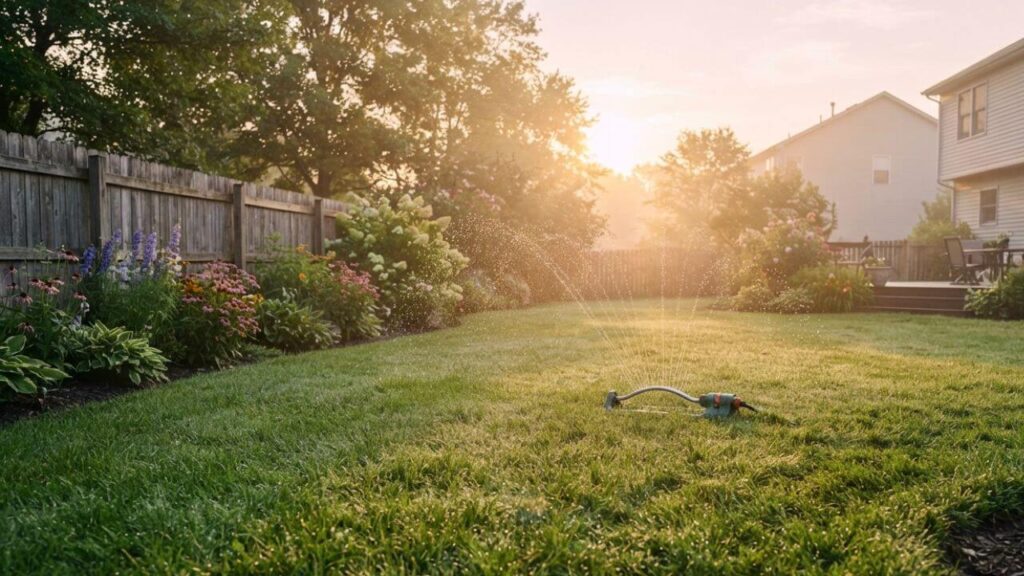
Place several shallow containers around your lawn before running the sprinkler. Measure the water collected in each container. This simple test shows whether your irrigation system covers the lawn evenly.
If one area receives much more water than another, adjust the sprinkler heads. Fix broken or clogged sprinkler nozzles as soon as possible.
How Much Water Does Grass Need in Summer?
Established lawns may need about 1 inch of total water per week during active growth, including rainfall. Some lawns need less, while others need more during extreme heat.
Your goal should be to maintain adequate moisture in the root zone without keeping the soil constantly saturated.
If water starts flowing onto sidewalks or driveways, pause the irrigation. Let the soil absorb the water before continuing. This technique can improve efficiency on compacted or sloped lawns.
5. Mow at the Right Height
Mowing too short is one of the easiest ways to stress grass during summer. Short grass has less leaf area and may have a harder time protecting the soil from heat.
For most lawns, follow the recommended mowing height for your specific grass type. Keep the mower blade sharp and avoid removing more than one-third of the grass blade at one time.
A taller mowing height can help shade the soil and reduce moisture loss. However, do not assume that letting every lawn grow extremely tall is better. Each grass species has an ideal range.
If you need to mow during a heat wave, avoid aggressive cutting. Remove only what you need to maintain the correct height.
6. Keep Your Mower Blade Sharp
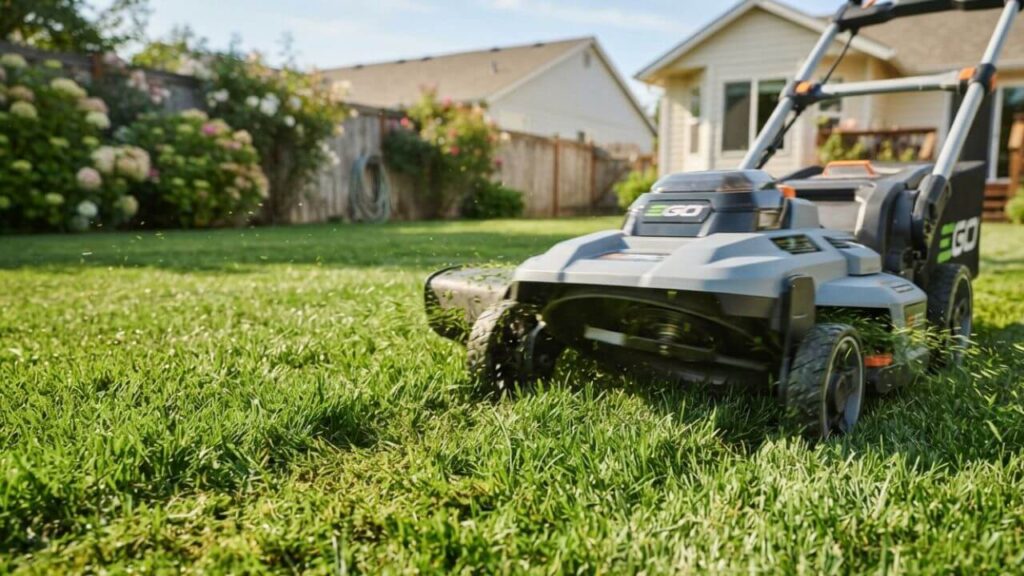
A dull mower blade tears grass instead of cutting it cleanly. Torn grass may develop a ragged appearance and lose moisture more quickly.
Check your mower blade throughout the season. Sharpen it when the cut looks uneven or the grass tips appear shredded after mowing.
I recommend checking the blade before the peak summer season. It is a small maintenance step, but it can improve mowing quality.
Avoid mowing wet grass if it causes clumping. Wet clippings can block airflow and create uneven piles that may damage the lawn underneath.
7. Avoid Heavy Fertilizing During Extreme Heat
Fertilizer can support healthy growth, but more is not always better. Applying too much fertilizer during severe heat or drought can increase stress.
Warm-season grasses may benefit from appropriate fertilization during active summer growth. Cool-season grasses may struggle during extreme heat and may not need heavy summer feeding.
A soil test can help you decide whether your lawn actually needs additional nutrients. This is more reliable than guessing based on color alone.
If your lawn is severely stressed, focus first on water management and mowing. Once conditions improve, you can reassess the lawn’s nutrient needs.
8. Learn How to Prevent Grass From Turning Brown
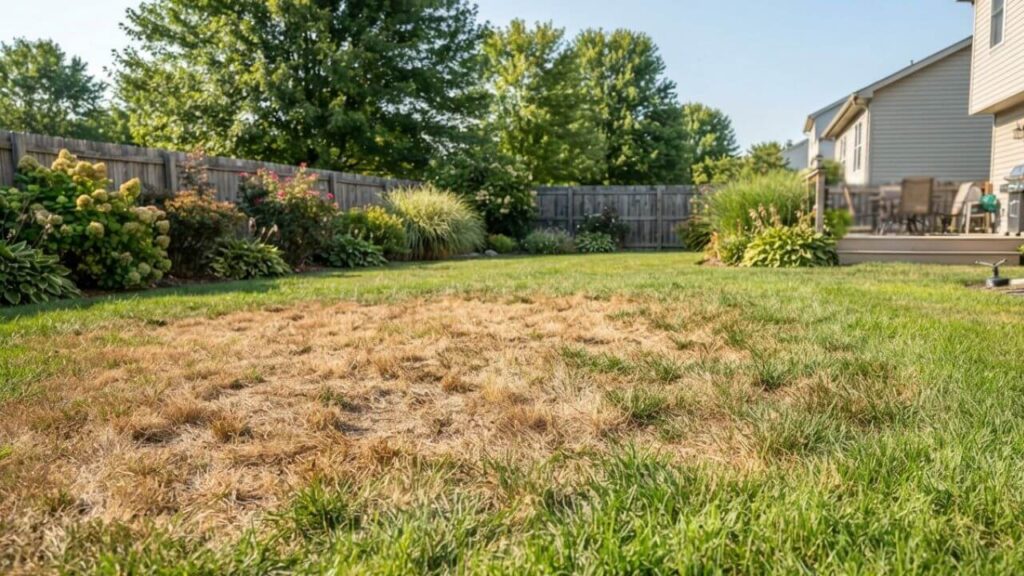
If you want to know how to prevent grass from turning brown, start by identifying the reason for the color change. Brown grass does not always mean the lawn is dead.
Drought, heat, natural dormancy, disease, insects, and poor irrigation can all cause browning.
Look at the pattern:
- Entire lawn turns brown: Drought or dormancy may be involved.
- Small irregular patches: Check for insects or disease.
- Brown areas near pavement: Heat from hard surfaces may increase stress.
- Circular patches: A lawn disease may be responsible.
- Grass pulls up easily: Inspect roots for insect damage.
Do not automatically add more water when you see brown patches. If the problem is disease or insects, extra water may not solve it.
9. How to Fix Brown Grass in Summer
How to fix brown grass in summer depends on the cause. Start by checking soil moisture and irrigation coverage.
If drought caused the problem, water deeply when local conditions and restrictions allow. Avoid trying to restore extremely dry soil with one huge watering session. Water may run off before it reaches the roots.
If the grass is naturally dormant, it may recover after temperatures drop and moisture returns. Some warm-season grasses can survive extended dry periods by slowing growth.
If you notice unusual patches, inspect the grass closely. Look for insects, fungal growth, damaged roots, or differences in soil moisture.
When the cause is unclear, contact your local university extension service. A correct diagnosis can prevent unnecessary fertilizer, pesticides, or irrigation.
10. Protect Your Lawn From Heat Stress
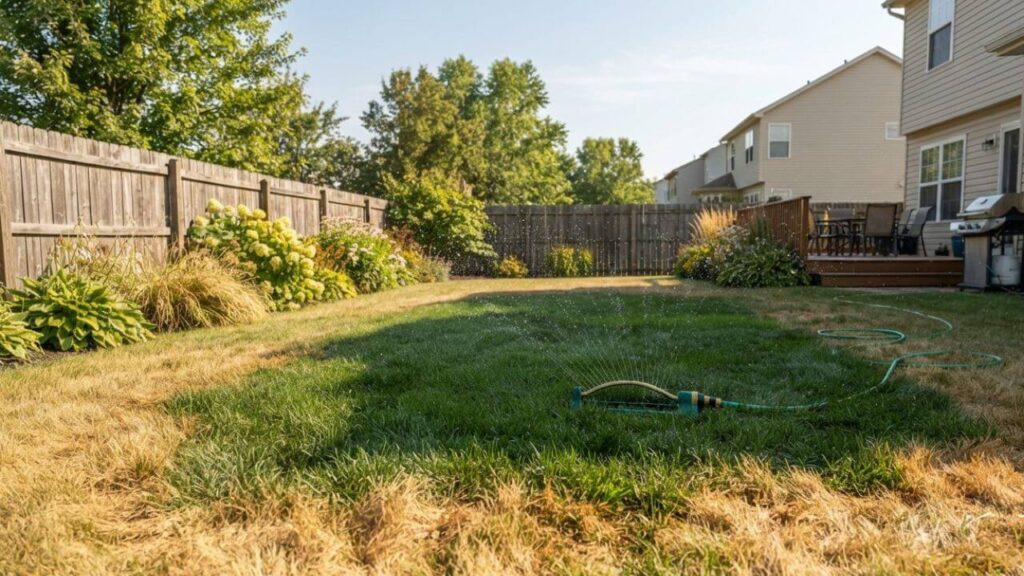
How to keep grass green in hot weather depends on reducing stress before the lawn reaches a critical point.
Avoid unnecessary foot traffic during extreme heat. People, pets, and heavy equipment can damage already stressed turf.
Raise the mowing height within the recommended range for your grass. Taller grass can provide more shade to the soil and help protect the root zone.
Do not start major lawn renovation projects during extreme heat unless the grass type and local conditions support it. New seed and sod need careful moisture management and may struggle during severe weather.
During a heat wave, focus on basic lawn health. Water when needed, mow carefully, and avoid pushing rapid growth with excessive fertilizer.
11. Adjust Your Routine During Drought
Knowing how to keep grass green during drought requires realistic expectations. During severe water shortages, maintaining a perfect green lawn may not be possible or responsible.
Follow local water restrictions first. If irrigation is limited, prioritize newly planted trees, shrubs, and valuable landscape plants according to local guidance.
Established lawns may enter dormancy during drought. This can be a natural survival response rather than a sign of permanent damage.
If you live in a dry climate, consider reducing lawn areas that require constant irrigation. Replace difficult sections with drought-tolerant plants or landscape materials suited to your region.
The best long-term strategy is to choose grass that fits your climate instead of fighting local conditions every summer.
12. Improve Your Soil for Better Summer Performance
Healthy soil supports stronger roots, which can help grass handle summer stress. Compacted soil can limit water movement and restrict root growth.
If your lawn has heavy foot traffic, check for compacted areas. Water may run off quickly instead of soaking into the soil.
Core aeration can help relieve compaction in suitable lawns. The best timing depends on grass type. Cool-season grasses are commonly aerated during their active growth periods, while warm-season lawns are often aerated during active summer growth.
Do not aerate a severely drought-stressed lawn. Wait until conditions support recovery.
A soil test can also reveal pH and nutrient issues. Correcting the soil based on test results is more effective than adding products without knowing what the lawn needs.
13. Control Weeds Without Stressing Your Lawn
Weeds compete with grass for water, light, and nutrients. A dense, healthy lawn naturally does a better job of limiting weed growth.
Good summer lawn maintenance includes regular inspection. Remove small weeds before they produce seeds when practical.
Avoid applying herbicides during extreme heat unless the product label specifically allows it. Heat can increase the risk of turf injury with some products.
Use the right product for the weed and grass species. A herbicide that is safe for one turfgrass may damage another.
If weeds appear across the entire lawn, look for the underlying problem. Thin grass may indicate poor watering, low fertility, shade, compaction, or an unsuitable grass type.
14. Choose Grass That Fits Your Climate
The best grass for summer is not the same across the United States. Your climate zone, soil, sunlight, and water supply should guide your choice.
Warm-season grasses are popular in southern states because they grow actively during hot weather. Bermuda and Zoysia can perform well in many warm regions. St. Augustine works well in suitable warm, humid areas but has specific pest and disease concerns.
Tall fescue is a popular choice in transition zones and cooler regions because its deeper roots can help it handle some summer stress. However, it still needs water during extended drought.
If you are starting a new lawn, ask your local extension service about recommended turfgrass varieties. A grass that thrives in your region can make summer lawn care much easier.
15. Follow a Simple Summer Lawn Care Routine
A simple routine can help you maintain a green lawn in summer without constantly guessing what to do.
Every Week
- Check soil moisture.
- Look for brown or thinning areas.
- Inspect for weeds and pests.
- Mow when the grass reaches the recommended height.
- Check sprinkler coverage.
- Track rainfall.
During Hot, Dry Weather
- Water deeply when needed.
- Avoid unnecessary foot traffic.
- Mow carefully and avoid removing too much grass.
- Skip heavy fertilizer applications during severe stress.
- Watch for signs of drought and heat damage.
After Heavy Rain
- Check for standing water.
- Look for runoff and erosion.
- Inspect areas with poor drainage.
- Adjust irrigation if rainfall provided enough moisture.
The best summer lawn care tips are simple: observe your lawn, respond to actual conditions, and avoid doing too much at once.
FAQ
How do I keep my grass green in summer?
Water deeply when the soil needs moisture, mow at the correct height, avoid excessive fertilizer during extreme heat, and choose grass suited to your local climate.
How often should I water grass in summer?
Many established lawns need around 1 inch of total water per week from rainfall and irrigation, but the exact amount depends on grass type, soil, weather, and local restrictions.
Why is my grass turning brown in summer?
Brown grass can result from drought, heat stress, natural dormancy, poor irrigation, insects, or lawn disease. Check the pattern and soil moisture before changing your care routine.
What is the best time to water grass in summer?
Early morning is usually the best time because it allows water to soak into the soil before peak heat and gives grass blades time to dry during the day.
Can brown grass turn green again?
Yes, some grass types can recover after drought or heat stress once they receive adequate moisture and temperatures improve. However, severe or prolonged damage may kill portions of the lawn.
Conclusion
Learning how to keep grass green in summer is mainly about giving your lawn what it needs without overdoing it. Deep watering, proper mowing, healthy soil, and careful fertilizing can help grass handle heat and drought.
Remember that not every brown lawn is dead. Some grasses naturally slow growth or enter dormancy during severe dry weather. Check the soil, grass type, and damage pattern before taking action.
Start with three simple steps today. Check your soil moisture, measure your sprinkler output, and confirm your mowing height. These small adjustments can make your lawn more resilient and help it stay healthier through the hottest months.

I enjoy sharing simple gardening ideas, lawn care tips, and honest product reviews that help make outdoor work easier. From home gardening guides to helpful tools and lawn care advice, I write easy-to-follow content to help readers create a healthier and better-looking outdoor space without wasting time or money.