As an Amazon Associate, I earn from qualifying purchases.
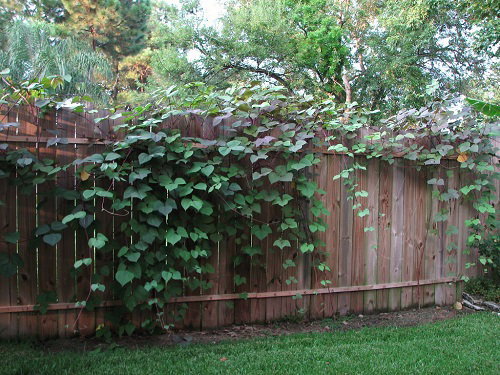
Some of the best fast growing vines for fences include annual morning glory, hyacinth bean vine, native trumpet honeysuckle, Virginia creeper, and crossvine. Choose according to your USDA hardiness zone, fence material, sunlight, and tolerance for pruning.
Across the United States, a bare backyard fence can make a landscape feel unfinished, expose a patio to neighboring views, or leave a garden without enough greenery. Fast-growing climbing plants can soften these boundaries, provide seasonal privacy, attract pollinators, and add flowers or colorful foliage without requiring a row of large shrubs.
The best choice depends on where you live and how quickly you need coverage. Annual vines such as hyacinth bean and morning glory can create substantial summer growth, while perennial vines such as trumpet honeysuckle and Virginia creeper return year after year in suitable climates. Evergreen options may provide additional screening in mild regions, but their winter performance varies by species and location.
Before planting, check the USDA Plant Hardiness Zone Map, local invasive-plant guidance, and the fence manufacturer’s recommendations. A vigorous vine can become difficult to control, add considerable weight, or damage a weak fence. For most homeowners, the best result comes from combining an appropriately sized vine with a suitable support system and regular pruning.
The following vines offer different ways to cover a fence, from fast annual growth to permanent foliage and colorful perennial flowers. Growth speed depends on temperature, sunlight, moisture, soil conditions, plant maturity, and the length of the growing season. The descriptions are general horticultural guidance, not results from a comparative growth trial.
Use the list to identify suitable candidates, then verify regional hardiness and invasive status before purchasing a plant. A vigorous species that thrives in one state may be unsuitable in another.
Source: plantnative.org
Best for quick seasonal greenery
Hyacinth bean vine and morning glory are useful annual choices when you want a fence covered during the warm months without committing to a permanent woody vine.
Best for native flowering coverage
Trumpet honeysuckle and crossvine are candidates for suitable parts of the eastern and southeastern United States. Both provide flowers and can attract hummingbirds.
Best for colorful foliage
Virginia creeper grows vigorously and develops striking red autumn foliage, although it can overwhelm small spaces if left unchecked.
Best for winter screening
Crossvine can retain some foliage in mild climates, but winter leaf retention depends on the local climate. Confirm the expected seasonal appearance before choosing it for privacy.
1. Hyacinth Bean Vine
Hyacinth bean vine (Lablab purpureus) is a warm-season annual or short-lived perennial in frost-free climates, commonly grown as an annual in much of the United States. It is valued for vigorous climbing growth, broad green or purplish foliage, purple flower clusters, and decorative pods. It can create a leafy screen over a wire fence or trellis during the summer.
Plant it after the danger of frost has passed, when the soil has warmed. Give the stems a sturdy network of wires, mesh, or narrow supports to wrap around. Full sun generally supports strong growth and flowering, while consistent moisture helps plants establish. In colder regions, expect the aboveground growth to die after frost.
Do not eat the raw pods or seeds. Raw hyacinth bean seeds contain compounds that can cause illness; edible preparations require appropriate processing. Keep seeds and pods away from children and pets who might ingest them.
Growth habit
Fast-growing twining vine suited to seasonal fence coverage.
Light
Full sun is generally best for vigorous growth and flowers.
Best use
Summer privacy, ornamental foliage, and purple flowers on a supported fence.
2. Morning Glory
Morning glory (Ipomoea species, including Ipomoea purpurea) is a popular annual vine with trumpet-shaped flowers in shades of blue, purple, pink, and white. It can climb a fence rapidly during a warm growing season and is useful when you want substantial greenery without a permanent woody plant.
Morning glory stems twine around thin supports, so open fencing, wire mesh, and trellis panels work better than a completely smooth surface. Plant in a sunny location and provide water while young plants establish. Once growing strongly, guide wandering stems back toward the fence before they tangle with nearby shrubs.
Some morning glory species self-seed readily and may become unwanted weeds. Choose a suitable ornamental species, check local restrictions, and remove seedpods before they mature if you want to limit volunteer seedlings. Do not confuse ornamental morning glory with sweet potato vines or edible sweet potatoes.
Growth habit
Twining annual vine that can provide quick warm-season coverage.
Best use
Sunny fences, seasonal flowers, and temporary privacy.
Maintenance
Guide new stems and control self-seeding where necessary.
3. Trumpet Honeysuckle
Trumpet honeysuckle (Lonicera sempervirens), also called coral honeysuckle, is a North American native perennial vine that produces clusters of tubular flowers, often in shades of red or coral. It is a useful choice for gardeners who want a long-term flowering vine and a nectar source for hummingbirds.
This vine climbs by twining stems and therefore needs wire, lattice, or other slender supports. It generally flowers best in full sun, although it can tolerate some shade. Provide reasonably well-drained soil and water during establishment. Mature plants can develop a substantial spread, so guide stems along the intended fence line.
Select trumpet honeysuckle rather than assuming every honeysuckle sold at a garden center is equally suitable. Japanese honeysuckle and certain other introduced honeysuckles are invasive in parts of the United States. Verify the exact species and local recommendations before planting.
Growth habit
Perennial twining vine with colorful tubular flowers.
Wildlife value
Flowers can provide nectar for hummingbirds and other pollinators.
Best use
Long-term flowering coverage on a supported fence in suitable regions.
4. Virginia Creeper
Virginia creeper (Parthenocissus quinquefolia) is a vigorous North American native vine recognized by its leaves, usually divided into five leaflets, and brilliant red fall color. It grows in a range of conditions and can cover fences, walls, and trellises more rapidly than many restrained ornamental climbers.
The vine uses tendrils with adhesive tips to attach to suitable surfaces. It may grow directly on some fences, but its vigorous habit makes regular inspections essential. Keep stems away from gutters, windows, rooflines, and neighboring plants, and confirm that the fence can tolerate the growth.
Virginia creeper is deciduous, so it will not provide complete winter screening in most climates. Its berries are important to some birds, but the foliage and berries should not be treated as edible. The sap can irritate sensitive skin, and handling the plant may cause a rash in some people. Wear gloves when pruning and avoid touching your face.
Growth habit
Fast-growing perennial vine with adhesive-tipped tendrils.
Best feature
Dense summer foliage and vivid red autumn color.
Main drawback
Can spread beyond the fence and requires routine containment.
5. Crossvine
Crossvine (Bignonia capreolata) is a vigorous woody vine native to parts of the eastern and southeastern United States. Its trumpet-shaped flowers may be orange, reddish, or yellow-orange, and established plants can cover substantial vertical space where climate and support are appropriate.
Crossvine climbs with tendrils and adhesive structures rather than simply wrapping every stem around a post. Narrow wire supports or a suitable open fence help young growth get established. Full sun to partial shade is generally suitable, with flowering typically better when the plant receives ample light.
Crossvine may retain foliage through mild winters but can lose some or much of it in colder weather. Its potential size makes it a poor choice for a delicate fence or a very narrow planting bed. Confirm that the species is appropriate for your region before using it as a permanent screen.
Growth habit
Vigorous perennial woody vine suited to substantial supports.
Best feature
Showy flowers and potential for semi-evergreen foliage in mild climates.
Best use
Larger fences and garden boundaries where a strong native climber is appropriate.
6. Clematis
Clematis includes many perennial climbing species and cultivars with flowers in white, pink, purple, red, and blue. Some grow vigorously, while others are comparatively compact. That variation makes clematis useful for homeowners who want flowers on a fence without automatically choosing a very large woody vine.
Clematis leaf stalks wrap around thin supports. Use narrow wire, mesh, or a trellis with small openings rather than expecting the plant to climb a broad, smooth fence board. Most flowering garden clematis perform best with good sunlight on the foliage and cooler conditions around the roots, although the precise requirements vary by cultivar.
Check the mature dimensions, pruning group, and climate suitability of the exact cultivar. Some clematis establish slowly or flower primarily on older stems, so heavy pruning at the wrong time can remove developing flower buds. Clematis is a better choice for decorative flowering than for guaranteed, immediate, year-round privacy.
Growth habit
Perennial climber with leaf stalks that grasp slender supports.
Best feature
A wide range of flower colors, sizes, and seasonal displays.
Maintenance
Follow the pruning requirements for the selected cultivar.
7. Black-Eyed Susan Vine
Black-eyed Susan vine (Thunbergia alata) is a warm-season climbing vine with bright flowers featuring dark centers. Depending on the cultivar, flowers may be orange, yellow, cream, or other colors. It is commonly grown as an annual in much of the United States and can provide seasonal coverage on an open fence.
The vine twines around thin supports and performs well with adequate warmth, moisture, and sunlight. It can also grow in partial shade, although flowering may be reduced. Start plants after frost danger has passed and provide enough space for stems to spread across the fence.
In warm regions, this species may persist or self-seed. Check local invasive-plant guidance before planting, particularly in subtropical climates. Its seasonal growth is useful for decorative coverage, but it should not be treated as a guaranteed evergreen privacy screen.
Growth habit
Warm-season twining vine with a long ornamental flowering period in favorable conditions.
Best use
Colorful seasonal coverage for sunny or partly shaded fence sections.
Maintenance
Provide climbing support and control unwanted seedlings.
8. Passionflower
Passionflower vines, especially suitable native Passiflora species such as purple passionflower (Passiflora incarnata), are grown for distinctive flowers and vigorous climbing growth. Some species also produce edible fruit when conditions and pollination are suitable, but fruit characteristics differ across the genus.
Passionflower climbs with tendrils that grasp narrow supports. An open fence, wire framework, or trellis can provide suitable attachment points. Choose a species suited to your climate and consider how far its roots and shoots may spread. Purple passionflower is native to parts of the southeastern United States, while other passionflower species have different ranges and climate requirements.
Hardiness, winter dieback, fruiting, and spread vary by species. Some passionflowers spread through underground shoots, so give them room and remove unwanted growth. Do not assume every passionflower is native, hardy, or appropriate for a small urban garden.
Growth habit
Tendril-climbing vine with unusual, intricate flowers.
Best feature
Ornamental flowers and potential wildlife value for suitable native species.
Main consideration
Select the correct species for your region and control spreading shoots.
9. Star Jasmine
Star jasmine (Trachelospermum jasminoides) is an evergreen or semi-evergreen woody vine grown for glossy leaves and fragrant white flowers. It is particularly useful in mild U.S. climates where winter temperatures are suitable. In colder regions, it may suffer frost damage or need to be grown in a protected location.
Star jasmine generally needs a trellis, wires, or another support to cover a fence evenly. Young stems benefit from tying and training because the vine does not attach to every surface as strongly as a self-clinging ivy. Full sun to partial shade is suitable, with adequate light supporting flowering.
Although established plants can provide year-round greenery in favorable climates, star jasmine is not a reliable evergreen screen everywhere. Check local hardiness recommendations and protect young plants from damaging cold. Its mature growth should also be kept clear of openings, hardware, and neighboring structures.
Growth habit
Woody climbing vine with glossy foliage and fragrant white flowers.
Best use
Decorative screening in regions with suitable winter temperatures.
Limitation
Cold tolerance restricts its suitability in many northern locations.
10. Carolina Jessamine
Carolina jessamine (Gelsemium sempervirens), also called yellow jessamine, is a native evergreen or semi-evergreen vine in suitable parts of the southeastern United States. Its fragrant yellow flowers can brighten a fence in late winter or spring, depending on the local climate.
This twining vine needs narrow supports such as wire, mesh, or a trellis. It grows well in suitable sun or partial shade and prefers reasonably well-drained soil. In climates where it is hardy, its foliage can offer more winter coverage than deciduous vines.
Every part of Carolina jessamine is poisonous if ingested, and the plant is not suitable for edible landscaping. Use caution around children and pets, wear gloves when pruning, and avoid planting it where foliage could be mistaken for a food plant. Verify regional suitability before choosing it for a family garden.
Growth habit
Evergreen or semi-evergreen twining vine in suitable climates.
Best feature
Fragrant yellow flowers and potential seasonal screening.
Safety
All plant parts are poisonous if ingested.
11. Climbing Roses
Climbing roses can soften a fence with flowers, fragrance, and long arching canes. They are not true self-clinging vines. Their stems do not naturally wrap around a support or attach themselves to a wall, so the canes must be tied or trained onto a trellis or sturdy fence framework.
Choose a rose variety that matches your climate, available space, disease resistance needs, and desired flowering season. Most climbing roses flower best with several hours of direct sun and adequate airflow. Water at the base when possible and prune according to the variety’s flowering habit.
Roses usually require more training and seasonal maintenance than annual twining vines. Thorny canes can make pruning difficult in narrow spaces, and dense rose growth is not necessarily the fastest way to create a continuous privacy screen. Select climbing roses when flowers and structure matter more than rapid, uninterrupted foliage.
Growth habit
Long canes that require tying and training onto a support.
Best feature
Large flowers, fragrance, and a classic garden appearance.
Maintenance
Plan for pruning, tying, watering, and monitoring for disease.
12. Trumpet Vine
Trumpet vine (Campsis radicans) is a vigorous North American native climber known for orange to red tubular flowers that attract hummingbirds. It can cover a substantial fence relatively quickly in suitable conditions, especially in warm weather with adequate sunlight.
Trumpet vine climbs using aerial rootlets and can also spread by underground shoots. It may attach to suitable surfaces and send new shoots beyond its original planting location. A strong fence and enough space are essential, and routine pruning is usually necessary to keep the vine within bounds.
Its aggressive growth makes trumpet vine unsuitable for some small yards and delicate fences. Plant it only where its spread can be managed, keep it away from vulnerable structures, and remove unwanted root shoots promptly. If you want a less assertive native flowering vine, trumpet honeysuckle may be a better starting point.
Growth habit
Vigorous perennial vine that attaches with rootlets and spreads through shoots.
Best feature
Showy tubular flowers and a strong attraction for hummingbirds.
Main drawback
Aggressive spreading and regular pruning requirements.
How to Choose the Right Vine for Your Fence
Choose a vine by considering its mature size, attachment method, winter behavior, and maintenance needs before comparing flower colors. The fastest-growing plant is not automatically the best choice if it cannot climb your fence or will require constant pruning.
The following table compares practical starting points. Growth descriptions are qualitative because actual speed depends on climate, plant age, growing conditions, and the particular species or cultivar.
Source: in.pinterest.com
For seasonal privacy
Start with hyacinth bean vine or a suitable morning glory when you want temporary foliage during the warm growing season.
For native flowers
Consider trumpet honeysuckle, crossvine, or a regionally appropriate native passionflower.
For dramatic foliage
Virginia creeper offers fast coverage and fall color where its vigorous growth can be controlled.
Compare the Main Growing Characteristics
Use this comparison to narrow your options, then check the requirements for the exact plant sold by your local nursery. Evergreen behavior and hardiness cannot be assumed from a common name alone.
Hyacinth bean vine
Seasonal coverage; full sun; twining stems; usually grown as a warm-season annual.
Morning glory
Seasonal coverage and colorful flowers; full sun is generally best; twining stems; may self-seed.
Trumpet honeysuckle
Perennial flowering coverage; sun to partial shade; twining stems; suitable native choice in parts of the United States.
Virginia creeper
Fast, dense summer foliage; sun to shade depending on conditions; adhesive-tipped tendrils; deciduous.
Crossvine
Vigorous perennial coverage; sun to partial shade; tendrils and adhesive structures; may retain foliage in mild winters.
Clematis
Flower-focused perennial coverage; sunlight and pruning needs depend on cultivar; leaf stalks grasp slender supports.
Black-eyed Susan vine
Warm-season flowering coverage; sun to partial shade; twining stems; commonly grown as an annual.
Passionflower
Ornamental perennial coverage; needs a suitable climate and support; tendrils; spreading varies by species.
Star jasmine
Evergreen screening in mild climates; sun to partial shade; needs training; cold tolerance is a key limitation.
Carolina jessamine
Potential evergreen screening in suitable southeastern climates; twining stems; poisonous if ingested.
Climbing roses
Flowering canes rather than self-clinging growth; require tying and training; usually need substantial sunlight.
Trumpet vine
Vigorous perennial coverage; full sun generally improves flowering; attaches with rootlets and spreads through shoots.
Choose Plants for Your USDA Hardiness Zone
The USDA Plant Hardiness Zone Map describes average annual extreme minimum winter temperatures. It helps gardeners assess whether perennial plants are likely to survive winter, but it does not describe every factor affecting growth. Summer heat, humidity, soil drainage, rainfall, wind exposure, and local pests also matter.
Use the zone information on the plant label as a starting point rather than a guarantee. A plant can survive winter yet grow poorly in unsuitable summer conditions. Ask a local Cooperative Extension office or reputable nursery for recommendations suited to your state and county.
For colder regions, annual vines may provide a practical way to cover a fence during summer without relying on a frost-sensitive perennial. In warmer regions, perennial or evergreen choices may provide a longer display, but they still need appropriate space and maintenance.
Cold winters
Check perennial hardiness and consider annual vines for seasonal coverage.
Hot summers
Select species that tolerate local heat and provide adequate water during establishment.
Mild winters
Evaluate evergreen candidates, while checking their suitability for local rainfall and humidity.
Match the Vine to Your Fence Material
The fence determines which climbing method will work. Some vines wrap their stems around narrow objects, some grasp thin supports with tendrils or leaf stalks, and others attach to surfaces using adhesive pads or aerial rootlets. A plant that cannot reach or grip its support may sprawl on the ground rather than cover the fence.
Before planting, check the fence’s condition and the manufacturer’s guidance. Dense foliage can trap moisture, hide deterioration, and add wind resistance. Avoid encouraging heavy woody vines on a fence that is not designed to carry their weight.
Source: wildyards.com
Chain-link fences
Often accommodate twining vines, tendril climbers, and suitable lightweight annuals because the openings provide places to grasp.
Wooden fences
Use a separate trellis or wires when the vine needs narrow supports. Inspect the wood regularly and avoid allowing persistent moisture to collect behind dense growth.
Vinyl fences
Use a freestanding or properly supported trellis where appropriate. Do not assume the panels can carry the weight of a mature vine.
Metal rail fences
Thin rails and wires can suit twining vines and tendril climbers, provided the fence is strong enough and the stems do not interfere with gates.
Use a Trellis for Smooth or Solid Fences
A trellis or tensioned wire system can give climbing plants a reliable attachment point when a fence has broad, smooth surfaces. For a solid privacy fence, install supports according to the fence and hardware manufacturer’s guidance, leaving enough space for air circulation and maintenance access.
Keep vines away from hinges, latches, gates, electrical equipment, and other components that need to remain accessible. Check ties periodically so they do not cut into growing stems.
Twining stems
Use narrow wires, mesh, or slender trellis elements that stems can wrap around.
Tendrils or leaf stalks
Provide fine supports that the plant can grasp securely.
Self-clinging vines
Confirm that the surface and structure are suitable, and inspect the area for unwanted spread.
How to Plant Fast Growing Vines Along a Fence
Planting at the correct time and providing suitable support will help a vine establish more reliably. For most frost-sensitive annuals, wait until frost danger has passed and the soil has warmed. For hardy perennial vines, planting in spring or fall may work well depending on local weather and the plant’s requirements.
Prepare the fence and planting area before installing the vine. Correcting drainage, removing weeds, and providing a suitable climbing structure early are easier than trying to fix these problems after the plant becomes dense.
Source: balconygardenweb.com
Prepare the site
Check sunlight, drainage, mature plant size, underground utilities, and the condition of the fence.
Install supports
Provide wires, mesh, or a trellis suited to the vine’s climbing method.
Plant correctly
Follow the nursery label for planting depth and spacing rather than placing every vine at the same distance.
Water and guide growth
Keep the root zone appropriately moist during establishment and direct new stems toward the support.
Step 1: Measure the Fence and Evaluate the Site
Measure the length and height of the fence section you want to cover. Record how many hours of direct sunlight the area receives, whether water drains away from the fence, and whether neighboring plants compete for light or moisture.
Check for buried utilities before digging and follow local requirements for planting near property boundaries. Confirm that the fence is stable and that any trellis attachments will not weaken its posts or panels.
Success sign
The planting area has suitable light, workable soil, enough root space, and a secure climbing support.
Step 2: Improve the Soil and Plant at the Correct Depth
Remove weeds and loosen compacted soil where appropriate. If a soil test indicates a nutrient deficiency or an unsuitable pH, make amendments based on the test results rather than automatically adding fertilizer. Avoid digging deeply near existing fence posts or underground utilities.
Plant each vine at the depth recommended for its container or root system. Space plants according to their mature width and expected vigor. Planting too close together may produce early coverage but can also increase competition and make future pruning harder.
Success sign
Roots are covered correctly, soil drains adequately, and each plant has room to establish.
Step 3: Water and Mulch the Root Zone
Water thoroughly after planting and monitor soil moisture while roots establish. The correct watering frequency depends on rainfall, temperature, soil texture, and container size. Check the soil before watering again instead of following a rigid daily schedule.
Apply a moderate layer of organic mulch around the root zone if appropriate, keeping mulch away from stems and fence components. Mulch can help moderate soil temperature and reduce moisture loss, but it does not compensate for poor drainage.
Success sign
New leaves appear healthy, the root zone stays appropriately moist, and the plant does not wilt repeatedly between waterings.
Step 4: Train the Young Vines
Guide flexible stems toward the fence support as they grow. Use soft plant ties when necessary and attach stems loosely so they can thicken without being constricted. Twining vines may attach on their own once they reach a suitable support, while climbing roses and some woody vines require continued training.
Distribute stems across the fence rather than allowing all the growth to collect in one spot. Redirect shoots away from neighboring plants, gates, roofs, and areas where they could become a nuisance.
Success sign
New stems reach the support and begin filling the intended fence section without pulling on weak panels.
Step 5: Prune and Monitor Growth
Inspect vines throughout the growing season. Remove dead or damaged stems, cut back unwanted growth, and keep gates and maintenance access clear. Follow species-specific pruning guidance so that you do not remove flower buds or damage the plant’s main framework.
For aggressive vines, inspect the ground around the original planting for new shoots. Remove unwanted growth early and dispose of invasive plant material according to local guidance. Avoid composting seeds or rhizomes when they may survive and spread.
Success sign
The vine covers the intended area, remains attached securely, and does not invade neighboring plants or structures.
How Long Do Fast Growing Fence Vines Take to Cover a Fence?
A vine may produce noticeable new growth during its first growing season without completely covering a fence. The time required for full coverage depends on the plant’s starting size, fence dimensions, planting density, climate, sunlight, water availability, and whether the species is annual or perennial.
Annual vines can provide substantial seasonal foliage relatively quickly in favorable conditions, but they generally need to be replanted or allowed to reseed. Perennial vines invest in root and stem establishment and may take longer to create a continuous screen. Avoid relying on a universal number of weeks or months because growth rates differ considerably.
Source: howcanthis.com
Annual vines
Can grow quickly during one warm season and are useful when you need temporary summer coverage.
Perennial herbaceous vines
Return in suitable climates and gradually develop more coverage as the root system becomes established.
Woody perennial vines
Can eventually create extensive coverage but may need more training, space, and pruning.
Estimate How Many Plants You Need
Use the plant label’s recommended spacing as your starting point. For a simple estimate, divide the fence length by the intended spacing between plants, then adjust for the end positions and the plant’s mature width. This calculation estimates plant quantity, not the time needed to achieve full coverage.
For example, a hypothetical 24-foot fence with plants spaced 4 feet apart would require approximately six plants along the run if the first plant is positioned at the starting point and the last is placed near the end. Exact placement may require an additional plant or wider end margins, depending on the desired coverage and the species.
Calculation
Approximate number of intervals equals fence length divided by desired spacing. Adjust the final plant count to account for end placement and the plant’s mature spread.
Avoid overcrowding
Do not reduce spacing without considering mature size, airflow, water availability, and future pruning.
Maintenance Tips for Healthy Fence Vines
Fast-growing vines usually need more monitoring than their small size at planting suggests. Consistent establishment care, timely training, and appropriate pruning help prevent dense growth from becoming difficult to manage.
The maintenance routine should reflect the species. Annual flowers, woody vines, self-clinging climbers, and climbing roses do not all need the same pruning schedule or fertilizer program.
Source: balconygardenweb.com
Water according to conditions
Check the soil and adjust watering for rainfall, heat, soil drainage, and the plant’s stage of establishment.
Fertilize only when needed
Use soil-test results and plant-specific recommendations to avoid excessive leafy growth at the expense of flowers.
Keep growth contained
Redirect stems, remove unwanted shoots, and maintain clearance around gates, walkways, and neighboring plants.
Inspect the fence
Look for loose hardware, corrosion, rotting wood, trapped moisture, and signs of excessive weight.
What to Do When a Vine Is Not Growing Well
Slow growth is not always a sign that a plant needs fertilizer. First check whether the species suits the climate and light conditions, whether the roots are staying too wet or too dry, and whether the plant has a suitable support. Correct the most likely environmental problem before adding fertilizer or replacing the vine.
Yellow leaves
Check soil moisture, drainage, root damage, and nutrient issues. Yellowing can have several causes, so do not assume nitrogen deficiency.
Long stems with few flowers
Review sunlight, fertilizer use, plant maturity, and the pruning requirements of the selected species.
Vine will not climb
Provide narrow supports suited to its climbing method and gently guide new stems toward them.
Leaves wilt repeatedly
Check root-zone moisture and drainage, and inspect for heat stress, root injury, or pests before increasing watering.
Vine spreads beyond the fence
Prune unwanted stems or root shoots and reconsider whether the species is appropriate for the available space.
Vines to Avoid or Plant with Caution
Some vines are popular because they grow aggressively, but that same vigor can create problems for homeowners. Invasive vines may escape gardens, displace native plants, and spread into nearby natural areas. Other vines can overwhelm a fence, damage finishes, or create maintenance problems when they are planted too close to structures.
Always check the scientific name and state or county invasive-species guidance before buying a vigorous climber. A plant described as fast-growing in a nursery listing is not necessarily appropriate for every U.S. region.
Source: fity.club
Japanese honeysuckle
Lonicera japonica is invasive in many parts of the United States. Prefer a locally appropriate native alternative such as trumpet honeysuckle where suitable.
Oriental bittersweet
Celastrus orbiculatus is invasive in many areas and can smother vegetation. Do not confuse it with the native American bittersweet.
English ivy
Hedera helix can spread beyond gardens and may damage or obscure surfaces. Check regional restrictions and avoid using it where it can escape into natural areas.
Chinese and Japanese wisteria
These vigorous woody vines can become invasive in parts of the country and may place substantial loads on supports. Check local guidance before planting.
Trumpet vine
Campsis radicans is native to parts of the United States but can spread aggressively through root shoots. Its suitability depends on space and the gardener’s ability to control it.
Protect Children, Pets, and Nearby Structures
Several ornamental vines have poisonous plant parts, including Carolina jessamine and raw hyacinth bean seeds. Identify the plant accurately, keep potentially hazardous plant material out of reach, and seek veterinary or poison-control advice if an ingestion is suspected.
Do not allow vines to grow into roof drainage, electrical equipment, ventilation openings, or areas that require inspection. If a mature vine has attached firmly to a wall or fence, obtain suitable guidance before pulling it away, because removal can damage the underlying surface.
Check local rules
Consult state invasive-species lists and local Cooperative Extension guidance before purchasing a potentially invasive vine.
Use protective equipment
Wear gloves and appropriate eye protection when pruning vigorous or irritating plants.
Preserve fence access
Keep gates, hardware, drainage areas, and structural inspection points accessible.
Best Fast Growing Vines for Different Fence Goals
The best fence vine depends on what you want the finished planting to accomplish. A temporary summer screen, a native pollinator planting, a flowering border, and an evergreen privacy barrier have different requirements. Choose the primary goal first, then select a species that can meet it without excessive maintenance.
Source: www.southernliving.com
For a quick summer privacy screen
Choose hyacinth bean vine or a suitable morning glory variety, with the understanding that seasonal coverage ends when conditions become unfavorable.
For a native flowering fence
Consider trumpet honeysuckle or crossvine where locally appropriate and where the support can accommodate mature growth.
For autumn color
Virginia creeper provides dramatic fall foliage, but its spreading habit and deciduous nature make it unsuitable for some small gardens.
For fragrant flowers in a mild climate
Star jasmine may be suitable where winter temperatures meet its requirements and a trellis can support the growth.
For large, showy flowers
Consider clematis or climbing roses if you can provide appropriate supports and regular training.
For a compact, manageable planting
Select a cultivar with a known mature size and avoid especially aggressive vines that will require frequent containment.
A Practical Selection Checklist
Before purchasing, answer these questions: Is the vine suitable for your hardiness zone? Does it need full sun or tolerate shade? Can it climb the fence you already have? Will it stay within the available space? Does it create the seasonal privacy you need? Is it considered invasive in your region?
If you cannot answer these questions from the plant label, ask a local nursery or Cooperative Extension office. A small amount of research before planting can prevent years of pruning or an expensive removal project.
Confirm the plant identity
Use the scientific name, not just a broad common name such as ivy, jasmine, or honeysuckle.
Confirm mature size
Compare expected spread and climbing height with the fence dimensions and planting space.
Plan for maintenance
Choose a vine you can realistically water, train, inspect, and prune throughout the year.
Frequently Asked Questions
Q
What is the fastest growing vine for a fence?
Hyacinth bean vine and suitable morning glory varieties are practical choices for rapid seasonal coverage in warm weather. Virginia creeper and trumpet vine can also grow vigorously as perennials, but their mature size and spreading habits require more careful management. Actual growth speed depends on climate, sunlight, moisture, soil conditions, and plant maturity.
Q
Which vines stay green all year on a fence?
Evergreen or semi-evergreen vines such as star jasmine and Carolina jessamine may provide year-round or extended seasonal greenery in suitable climates. Crossvine can retain some foliage during mild winters. None should be assumed to stay fully green in every U.S. region, so check cold tolerance and local growing recommendations.
Q
What is the best fast growing vine for a chain-link fence?
Chain-link fences can support many twining vines and plants that climb using tendrils. Hyacinth bean vine, morning glory, and trumpet honeysuckle are options where climate and local plant guidance permit. Virginia creeper can also attach using adhesive-tipped tendrils, but its vigorous growth may require more containment.
Q
Can vines damage a wooden or vinyl fence?
Vines can contribute to moisture retention, conceal damage, obstruct hardware, or add weight and wind resistance. Self-clinging species may also attach to suitable surfaces. Inspect the fence before planting, use a properly supported trellis when appropriate, and keep vegetation from interfering with gates or maintenance access.
Q
How can I cover a fence with vines in one growing season?
Choose a vigorous annual suited to your climate, install an appropriate climbing support before planting, and provide adequate sunlight, water, and growing space. Hyacinth bean vine and morning glory are common options for warm-season coverage. Complete coverage is not guaranteed in one season, especially on a tall or long fence, so set expectations according to the plant and site.
Q
Do fence vines need a trellis?
Many do. Twining vines need narrow supports to wrap around, while clematis uses leaf stalks and some other climbers use tendrils. Virginia creeper and certain other species can attach directly to suitable surfaces. A trellis or wire system is often the most flexible solution for smooth fences, provided the fence can safely support the installation.
Q
Which fence vines are best for attracting hummingbirds?
Trumpet honeysuckle, crossvine, and trumpet vine can attract hummingbirds through their tubular flowers. Choose a locally appropriate species and consider mature size, spread, and pruning needs. A native plant suited to your region can also contribute to the broader local wildlife habitat.
Q
Should I plant vines directly against my fence?
Planting near the fence can work, but allow enough room for root development, maintenance, and airflow. Follow the plant’s spacing recommendations and avoid digging near fence posts or underground utilities. Where the fence material is vulnerable or the vine needs narrow supports, a separate trellis can make training and inspection easier.
✦ Wrapping Up
Conclusion
Fast growing vines for fence coverage can add privacy, flowers, seasonal color, and greenery to U.S. backyards. Hyacinth bean vine and morning glory are useful for temporary summer coverage, while trumpet honeysuckle, crossvine, clematis, and other suitable perennial vines offer longer-term landscaping possibilities. Virginia creeper and trumpet vine can cover large areas quickly but require more attention to spreading and mature size.
The right choice is not simply the vine that grows fastest. It is the species that suits your climate, matches your fence’s climbing support, fits the available space, and can be maintained without becoming a nuisance. Check local invasive-species guidance and identify plants accurately before planting, especially when children or pets use the yard.
💡 Key Takeaway
Measure the fence, assess sunlight and soil drainage, check your USDA hardiness zone, and select a locally suitable vine based on the coverage you want. Install appropriate supports before planting, water consistently during establishment, and inspect new growth regularly to keep the fence healthy and the vine under control.
I enjoy sharing simple gardening ideas, lawn care tips, and honest product reviews that help make outdoor work easier. From home gardening guides to helpful tools and lawn care advice, I write easy-to-follow content to help readers create a healthier and better-looking outdoor space without wasting time or money.