As an Amazon Associate, I earn from qualifying purchases.
To winterize plants in pots, check each plant’s cold tolerance, water the soil before it freezes, add insulation around the pot, move containers to a sheltered spot, and protect tender plants indoors. Keep the roots from freezing hard, but do not let the soil stay soggy.
When fall winds sweep across the United States, potted plants face a tougher winter than many plants growing in the ground. A garden bed gives roots a large mass of soil that changes temperature slowly. A pot has much less soil around its roots, so cold air can chill it from the sides as well as from the top.
The best way to prepare a container garden depends on where you live and what you grow. A gardener in Minnesota may need to protect pots from long periods of freezing weather, while a gardener in coastal North Carolina may focus more on cold snaps, winter rain, and chilly winds. Even in warmer parts of the country, a sudden freeze can damage tropical plants and young roots.
You do not need to bring every pot into your house or wrap every plant in layers of fabric. Start by finding out whether each plant can survive your local winter, then choose a suitable method. With a few steps in fall and simple checks through winter, you can protect many container plants and give them a better chance of growing well again in spring.
Potted plants need extra winter care because their roots have less protection from the weather. In the ground, roots benefit from the surrounding soil, which helps limit sudden temperature changes. In a container, cold can reach the root ball from several sides.
Roots are often less cold-hardy than the stems and leaves above them. A perennial that survives winter in a garden bed may suffer when planted in a small exposed pot. The difference becomes more important when a container sits on concrete, a deck, or a windy balcony.
Winter also brings problems beyond freezing temperatures. Repeated freezing and thawing can crack some pots, heavy rain can leave roots waterlogged, and dry winter winds can pull moisture from evergreen leaves. A good winter plan deals with these risks rather than focusing on frost alone.
Source: biggergarden.com
Cold reaches roots more easily
Small pots have less soil to buffer temperature changes. Larger containers usually provide more insulation, although the plant’s hardiness and the local climate still matter.
Wet soil can harm roots
Many plants tolerate cold better than cold, saturated soil. Poor drainage can reduce the air around roots and encourage root damage.
Wind and winter sun can dry plants
Evergreens may continue losing water through their leaves during winter. Frozen soil can prevent roots from replacing that moisture.
Know Your Plant’s Cold Tolerance
Before you wrap a pot or move it indoors, identify the plant and learn how much cold it can handle. The USDA Plant Hardiness Zone Map is a useful starting point because it groups locations by average annual extreme minimum winter temperature. Your zone helps you compare local winter conditions with a plant’s stated hardiness.
A hardiness zone is not a guarantee that a potted plant will survive outdoors. The map describes the climate where a plant grows in the ground, not the temperature a small container can safely withstand. A hardy shrub may need more protection in a pot than it would need in a garden bed.
Check the plant label or a reliable growing guide for its hardiness range. Also consider your site’s exposure, the size of the container, and whether your area often experiences sudden cold snaps.
Hardy perennials and shrubs
These may remain outdoors if their roots receive suitable protection and the container can handle freezing weather.
Tender perennials and tropical plants
These often need to move into a frost-free indoor space before temperatures fall below their safe range.
Annual flowers and seasonal vegetables
Many finish their life cycle in one growing season. Decide whether to save seeds, collect a final harvest, or replace them next season.
Prepare Your Potted Plants Before the First Freeze
Start winter preparation in fall, before the first hard freeze is in the forecast. This gives plants time to adjust to a new location and lets you handle pruning, watering, and pot repairs while the weather is still mild.
Check local forecasts as well as your usual first frost date. Frost dates are estimates, not promises, and a cold front can arrive earlier than expected. In colder parts of the northern United States, preparations may need to begin well before late fall, while some southern areas can wait longer.
Work through your containers one at a time. Remove weeds, check drainage holes, and look for dead leaves or damaged stems. Clean up fallen plant debris that may shelter pests, but avoid removing healthy foliage from plants that need it to store energy for winter.
Source: www.pinterest.com
Remove diseased or dead growth
Cut away clearly dead or diseased material with clean tools. Follow the pruning needs of each plant, since some shrubs and perennials should not be cut back heavily in fall.
Check the pot and drainage
Make sure water can escape freely. Replace cracked containers when practical, and clear blocked drainage holes before cold weather arrives.
Look for pests
Inspect leaf undersides, stems, and the soil surface. This is especially important for plants that will move into a home, sunroom, or greenhouse.
Stop late-season feeding when appropriate
Avoid pushing many plants into soft new growth just before cold weather. Follow species-specific guidance for feeding and seasonal dormancy.
Water Plants Before the Soil Freezes
Water plants well when the potting mix is dry and the weather is still mild. Moist soil holds heat better than very dry soil, and a plant that enters winter dehydrated may suffer more stress. Let excess water drain away instead of leaving the pot in a full saucer.
Do not water on a fixed schedule without checking the soil. Rainfall, pot size, plant type, and temperature all affect how quickly a container dries. A pot under an eave may need water even when nearby garden beds receive rain.
Once the root ball freezes, roots cannot take up water normally. During a winter thaw, check whether the soil has become dry enough to need a small amount of water. Avoid watering frozen soil or adding water when the container is already saturated.
Check the root zone
Feel the mix a short distance below the surface. If it is dry and the plant can still take up water, water slowly until the mix is evenly moist.
Allow drainage
Keep drainage holes open and do not let containers sit in standing water, especially when temperatures are near freezing.
Move Containers to a Sheltered Winter Location
Moving a pot to a protected spot is one of the simplest ways to reduce winter stress. Choose a place with less wind and fewer sharp temperature swings. The best location depends on whether the plant needs winter dormancy or must stay warm and actively grow.
A sheltered position beside a building can help block wind, but do not place containers where roof runoff will flood them or where falling ice can cause damage. A covered porch, unheated garage, or protected garden corner may work for certain plants. Make sure the location still provides the light and temperature conditions each plant needs.
Group similar plants together when possible. Grouping can reduce exposure to wind and makes it easier to check soil moisture, but it does not replace insulation or suitable cold protection. Leave enough space for air to move around foliage, especially in damp climates.
Source: homesandgardens.com
Near a sheltered wall
A wall can block some wind and provide a little protection from rapid temperature changes. Keep pots away from direct heater exhausts, dangerous roof runoff, and spots where snow or ice may fall.
Under a covered porch
A porch can reduce rain and wind exposure. Check soil more often because the roof may prevent useful rainfall from reaching the pot.
In an unheated garage or shed
This can suit dormant hardy plants that need protection from extreme cold, provided the temperature does not fall below their tolerance. Dark storage is unsuitable for plants that need light or remain actively growing.
For some hardy perennials, placing the pot in the ground up to its rim can reduce temperature swings. Choose a well-drained site and keep the pot’s drainage holes clear.
Should You Leave Potted Plants Outside?
Yes, some potted plants can stay outside through winter, but the answer depends on the plant, the pot, and the local climate. Hardy perennials and shrubs may survive outdoors when their roots are insulated and the container is suitable for freezing weather.
Tender plants such as many tropical foliage plants, frost-sensitive herbs, and warm-climate flowering plants usually need more protection. Bring them indoors or into another suitable frost-free space before a damaging freeze, rather than waiting until leaves show cold injury.
When in doubt, look up the plant’s winter needs before moving it. A dormant plant may need cool conditions, while a tropical plant may need warmth and light. Putting both in the same dark, cold garage can harm one or both.
Outdoor wintering is more suitable when
The plant is hardy in your area, the pot drains well, and you can protect the root ball from prolonged extreme cold.
Indoor wintering is more suitable when
The plant is frost-sensitive, the container is too small to protect its roots, or your local winter temperatures fall below its safe range.
Insulate Pots to Protect the Roots
Insulate outdoor containers when the plants are hardy enough to remain outside but their roots need extra protection. The goal is to slow temperature changes around the root ball, not to make the pot warm at all times. Insulation is most useful when it is paired with a sheltered location and good drainage.
You can use burlap, straw, dry leaves, or purpose-made insulating wraps around the outside of a container. Keep loose material from blocking drainage holes, and make sure the pot remains stable in wind. If you use leaves or straw, keep them from becoming a dense, wet mass against vulnerable stems.
Container material also matters. Thin plastic and metal pots can change temperature quickly, while thick containers may provide more buffering. Terracotta and some ceramic pots can crack when water enters their pores and freezes, so move vulnerable pots under cover or use containers designed for outdoor winter conditions.
Source: epicgardening.com
Wrap the outside of the pot
Use burlap, insulating fabric, or another suitable wrap around the container. Secure it so wind cannot pull it loose, and keep drainage holes open.
Use a larger outer container
Place a smaller pot inside a larger container and fill the gap with dry insulating material. Check that the inner pot does not sit in pooled water.
Set pots on a protective surface
Raise containers slightly on suitable pot feet or another stable support if needed for drainage. Avoid unstable stacks or supports that may tip in winter wind.
Group pots in a sheltered area
Place containers close together to reduce wind exposure. Do not crowd foliage so tightly that damp leaves remain wet for long periods.
How to Mulch Potted Plants for Winter
Add a layer of suitable mulch over the soil surface to help reduce temperature swings. Shredded leaves, clean straw, or bark mulch can work, depending on the plant and container. Keep the mulch loose and leave a small gap around the crown or main stems when excess moisture could cause rot.
A layer around 2 to 3 inches deep is a useful starting point for many outdoor containers, but adjust it to the plant and the pot. Do not pile mulch against woody stems, bury evergreen foliage, or cover the growing point of a perennial with material that stays wet.
Mulch is not a substitute for moving tender plants indoors or insulating a very exposed container. It works best as one part of a broader plan that accounts for local cold, container size, and drainage.
Choose a clean mulch
Use material free of obvious disease and weed seeds. Avoid compacting it into a soggy layer that blocks airflow.
Check after storms
Wind and heavy rain may shift mulch away from the root zone. Restore an even layer when the weather allows.
Protect Foliage During Frost and Cold Snaps
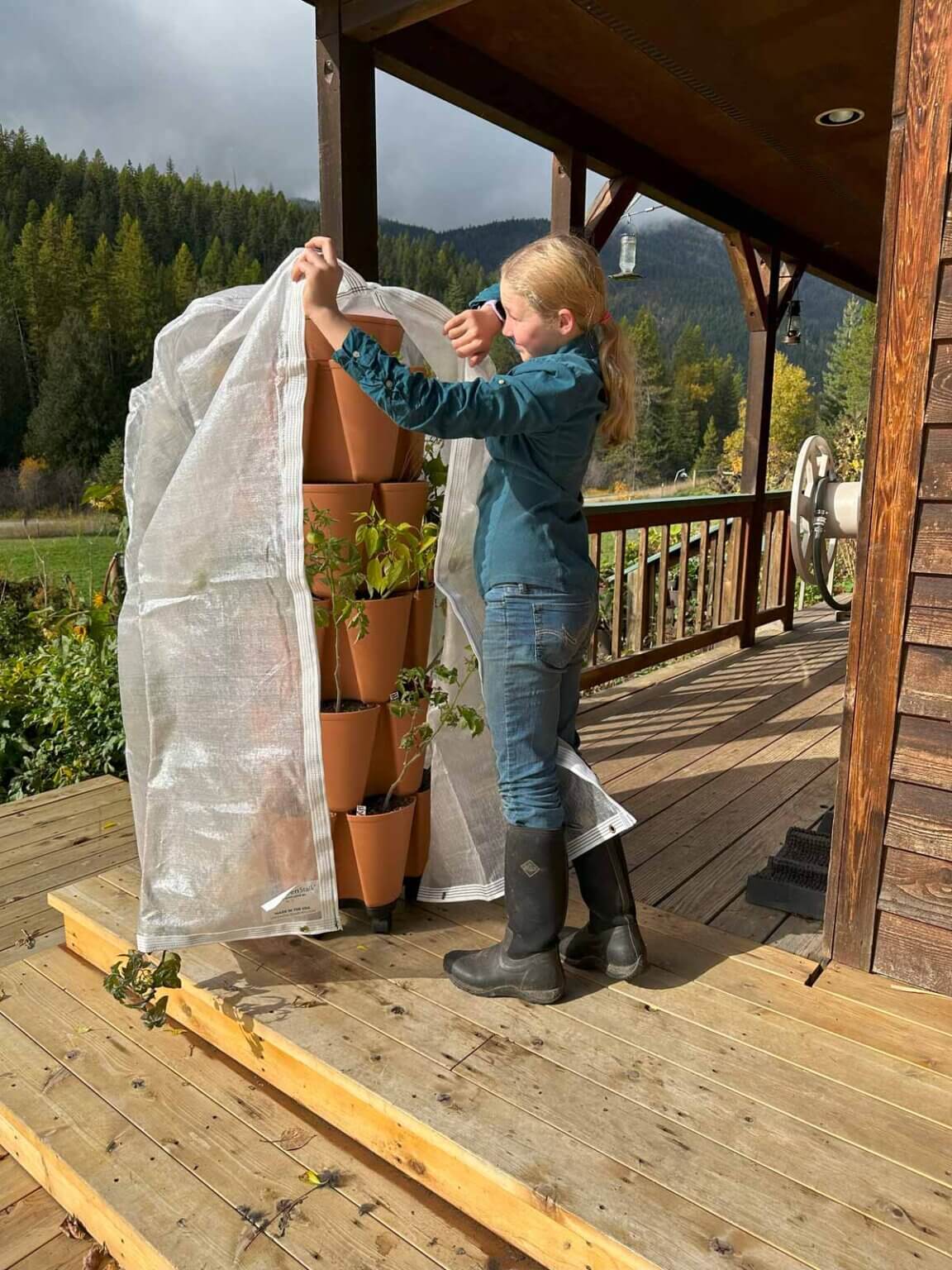
Protect foliage when a forecast calls for frost or temperatures near a plant’s cold limit. A breathable frost cloth can trap some heat around a plant and reduce direct exposure to cold air. It offers limited protection, however, and cannot make a tender plant safe during a long, severe freeze.
Drape the cover over the plant before temperatures drop, and secure it so wind cannot pull it away. When practical, support the fabric with stakes or a frame so it does not press heavily on stems and leaves. Extend the cover toward the ground to help hold warmth from the soil, while keeping it from crushing the plant.
Remove or open the cover when conditions warm, especially if the sun makes the space beneath it hot and humid. Repeatedly leaving a damp cover on foliage can encourage disease. Check the plant’s needs rather than assuming that a cover should stay in place all winter.
Source: biggergarden.com
Use breathable fabric
Frost cloth, burlap, or a suitable plant cover allows more air exchange than sealed plastic. Select a cover that fits without damaging the plant.
Avoid direct plastic contact
Plastic touching leaves can contribute to cold injury and trap moisture. If plastic is used as an outer rain shield, support it away from foliage and remove it when conditions allow.
Secure covers safely
Use clips, stakes, or weights that will not damage the pot or stems. Check covers after strong wind or heavy snow.
What About Evergreen Plants in Pots?
Evergreen plants need special attention because their leaves may keep losing moisture during winter. Sun, wind, and frozen soil can create a problem: the foliage loses water while cold roots cannot replace it quickly enough.
Place vulnerable evergreens where they receive protection from strong winter winds and intense afternoon sun. Water when the soil is unfrozen and dry enough to need it. A breathable wind screen can help in exposed locations, but it should not trap the plant in a damp, sealed space.
Brown leaf tips or scorched patches can result from winter drying, cold injury, or other issues. Check the pattern of damage and the soil conditions before deciding that the plant needs more water or fertilizer. Wait until spring growth makes the extent of the damage clearer before removing large amounts of apparently damaged growth.
Protect against drying winds
Use a sheltered location or breathable screen, especially for broadleaf evergreens and conifers exposed to winter gusts.
Avoid winter overwatering
Water only when needed and when the root zone can take up moisture. Cold, wet soil can damage roots even when foliage looks dry.
Bring Tender Plants Indoors the Right Way
Move frost-sensitive plants into a suitable indoor space before the first damaging cold spell. Do not wait until the leaves turn black or limp, because severe cold can injure roots and stems as well as foliage. Check the forecast and leave enough time to move large or heavy containers safely.
Before bringing plants inside, inspect them closely for insects, eggs, and disease. Check both sides of the leaves, stems, drainage holes, and the soil surface. Clean the outside of the pot and remove dead material that could carry pests indoors.
Choose the indoor location based on the plant’s needs. Some tropical houseplants need bright indirect light and warm rooms, while dormant plants may do better in a cool, protected space. A sunny window can help light-loving plants, but it may also create sharp temperature changes near cold glass.
Source: storage.googleapis.com
Inspect and clean
Remove visible pests and debris. If needed, isolate the plant from houseplants already indoors while you monitor it for signs of insects or disease.
Match light to the plant
Place active, light-loving plants near a suitable window or under an appropriate grow light. Keep dormant plants in the light and temperature conditions their species requires.
Adjust watering
Indoor plants often use less water in winter because growth slows and light levels fall. Check the potting mix before watering instead of following a summer schedule.
Avoid heat vents
Keep plants away from hot air blowing directly from heating vents, radiators, and other sources of dry heat.
Can Potted Plants Overwinter in a Garage?
An unheated garage can work for some hardy plants that enter dormancy, provided the temperature stays within a safe range for their roots. It can also protect pots from wind and heavy rain. However, an unheated garage may become too cold during a prolonged freeze, and a dark garage may not suit plants that remain active.
Check the temperature in the garage during cold weather rather than assuming it stays warmer than outdoors. Keep containers off spots where meltwater collects, and do not seal the plants in plastic. Water dormant plants sparingly when the soil is unfrozen and begins to dry.
Do not use a fuel-burning heater in an enclosed garage unless the equipment and ventilation arrangements are specifically safe for that setting. Carbon monoxide is a serious hazard, and a heater should never be used in a way that risks exhaust buildup or fire.
Suitable candidates
Some dormant, hardy perennials and other plants that tolerate cool storage may overwinter in a protected garage if temperatures remain suitable.
Poor candidates
Tropical plants that need warmth and light, or plants whose roots cannot tolerate the garage’s lowest temperatures, need another location.
Choose the Right Winter Method for Your Plant
There is no single winter method that suits every container plant. A hardy shrub may need an insulated pot outdoors, while a tropical plant may need a warm room. A dormant perennial may tolerate cool storage but suffer if kept in a heated living room.
Use the following table as a starting point, then confirm the requirements of the plant you have. The terms hardy, tender, and dormant describe different needs, and the same common plant name may cover varieties with different cold tolerance.
When a plant’s hardiness is uncertain, favor a method that reduces exposure to extreme cold without keeping the roots constantly wet. If you have limited indoor space, prioritize valuable tender plants and those that cannot survive the expected outdoor minimum.
Source: fity.club
For hardy outdoor plants
Choose a sheltered position, insulate the container, maintain drainage, and add mulch if appropriate.
For tender plants
Move the plant into a suitable frost-free environment and match light, temperature, and watering to its needs.
For dormant plants
Provide cool conditions within the plant’s tolerance, check moisture occasionally, and avoid encouraging soft new growth.
Winter Care by Plant Type
Hardy herbs such as some varieties of thyme and sage may remain outside in suitable climates, but the pot still needs protection from extreme cold. Tender herbs, including basil, generally need to be harvested or moved indoors before frost.
Potted roses, small shrubs, and hardy ornamental grasses may survive outdoors when their roots receive protection. The result depends on the variety, pot size, and winter severity. Do not assume that a plant sold as hardy can survive every winter in an exposed container.
Mums sold as fall decorations may not be reliably winter-hardy in a pot, even when the variety can survive in the ground in some regions. If you want to keep them, check the variety’s hardiness and give the root system more protection than a thin decorative pot provides.
Citrus, many tropical foliage plants, and other frost-sensitive container plants usually need a frost-free location. Some may need extra light or humidity indoors, while others need a cool resting period. Follow guidance for the exact species rather than treating all potted plants alike.
Herbs
Separate hardy perennial herbs from tender annual herbs. Bring frost-sensitive herbs inside or harvest them before damaging cold arrives.
Flowering perennials
Check the variety’s hardiness and protect the root ball. Some perennials need a cool dormant period rather than warm indoor conditions.
Small trees and shrubs
Use a sheltered site, protect the pot, and monitor moisture. Consider whether the container is large enough for outdoor wintering.
Tropical foliage plants
Move them indoors before frost and inspect them for pests. Keep them away from cold drafts and direct heating vents.
A Simple Winter Protection Decision Table
Use this table to choose a first step based on the plant’s needs and your winter conditions. It is a planning aid, not a guarantee of survival; check the exact plant and local forecast before acting.
Hardy plant, mild winter
Leave it outdoors in a protected spot, keep drainage open, and water during suitable dry spells.
Hardy plant, severe winter
Insulate the pot, group containers, consider sinking the pot into the ground, and use a sheltered location.
Tender plant, frost forecast
Move it into a suitable indoor or protected frost-free space before temperatures fall below its tolerance.
Dormant plant, cold storage
Keep it cool but within its safe temperature range, inspect moisture, and avoid keeping the root ball saturated.
Plant with uncertain hardiness
Identify the plant, check its cold tolerance, and avoid exposing it to a forecast freeze until you have a reliable plan.
Avoid Common Winterizing Mistakes
Many winter plant problems begin with a well-meant step used in the wrong conditions. Extra water, heavy wrapping, and a warm indoor room may sound protective, but each can cause harm if it does not suit the plant.
The safest approach is to check the plant, pot, soil, and forecast before making changes. Avoid treating every container as though it needs the same amount of insulation, water, or light. Small adjustments made at the right time are usually more useful than a complicated setup that stays wet or overheats.
If a plant looks damaged in late winter, do not rush to prune every brown stem or add fertilizer. Cold injury may not be clear until new growth begins. Give the plant suitable care and assess which parts remain alive before making major cuts.
Source: fity.club
Wrapping pots too tightly
A wrap that traps water against the pot or blocks drainage may create new problems. Secure insulation around the container while allowing excess water to escape.
Keeping soil constantly wet
Dormant plants use less water, and cold soil dries slowly. Check moisture before watering and empty standing water from saucers.
Using plastic as a permanent plant cover
Sealed plastic can trap condensation and heat. Use a suitable breathable cover for foliage protection and remove it when conditions allow.
Bringing pests indoors
Inspect plants and pots before moving them into the home. Isolate questionable plants and treat pests with a method suited to the plant and the pest.
Pruning every plant in fall
Different species have different pruning needs. Some retain foliage or stems that protect crowns and provide shelter through winter.
Assuming a garage is always safe
Garage temperatures can drop sharply, and some plants need light even when growth slows. Monitor conditions and choose a better location if the space becomes too cold or dark.
How to Tell If a Potted Plant Has Winter Damage
Winter damage can show up as limp leaves, blackened foliage, brown leaf edges, split pots, or stems that appear dry. These signs do not all have the same cause. Frost, drying winds, waterlogged roots, and pests can create similar symptoms.
Start by checking the soil and the drainage holes. If the root ball is frozen, wait until conditions thaw before assessing moisture. If the soil is wet and smells sour, poor drainage or root damage may be involved; if it is very dry, the plant may need water once the soil is unfrozen and able to absorb it.
Scratch a small area of a woody stem with a clean fingernail or tool only if you need to check whether the tissue underneath is alive. Green, moist tissue may indicate living growth, while dry brown tissue can suggest damage at that point. Repeat sparingly on a few stems rather than damaging the whole plant, and wait for spring growth before declaring a dormant perennial dead.
Blackened leaves after a freeze
Cold injury is possible, especially on tender growth. Move tender plants to a suitable protected place and wait for the full extent of damage to become clear.
Brown evergreen foliage
Winter drying, cold injury, or root problems may be responsible. Check exposure, moisture, and drainage before changing the care routine.
Soft stems or a sour-smelling root ball
Excess moisture or root damage may be involved. Improve drainage where possible and avoid adding more water until the root zone needs it.
Cracked terracotta or ceramic
Water may have entered the pot and frozen. Move the plant to a safe container if needed, and use a frost-resistant pot for future outdoor winters.
Maintain Potted Plants Throughout Winter
Winterizing is not a one-time task. Check your containers every week or two when weather permits, and inspect them after a major freeze, thaw, windstorm, or heavy rain. Regular checks help you spot drying soil, blocked drainage, loose insulation, and broken covers before they cause lasting damage.
Water based on soil moisture and the plant’s condition rather than the calendar. Outdoor pots under shelter may dry more quickly than expected, while cold, rainy weather can leave other containers wet for days. If the soil is frozen, wait for a suitable thaw before watering.
Keep an eye on indoor plants as well. Lower winter light and indoor heating can change how quickly the soil dries. Check leaves and stems for pests, and give actively growing plants enough light without placing them in harsh drafts.
Source: homesteadingfamily.com
Check the weather
Watch for extreme cold, warm spells, heavy rain, and high winds. Adjust covers and plant locations when conditions change.
Inspect drainage
Make sure water can escape after rain or thawing snow. Clear blocked holes only when you can do so without damaging frozen roots.
Check the soil
Feel below the surface before watering. Avoid both prolonged dryness in plants that need moisture and prolonged saturation in dormant plants.
Look for pests and disease
Inspect indoor and sheltered plants for unusual spots, mold, insects, or soft stems. Address the cause rather than applying fertilizer or water without checking.
When Should You Remove Winter Protection?
Remove winter protection gradually when the risk of severe cold has passed and the plant begins its normal spring growth. Do not use a single calendar date for every part of the United States. A gardener in the Upper Midwest may need to keep protection longer than someone in a mild coastal area.
Start by opening covers on mild days, then remove them when conditions are suitable for the plant. Keep insulation around the pot a little longer if the root zone remains vulnerable to sudden cold snaps. Continue checking forecasts because warm spring days can be followed by freezing nights.
If you move indoor plants outside for spring, acclimate them gradually. Start in a shaded, sheltered spot for a short period and increase exposure over several days or longer, depending on the plant and weather. Sudden exposure to direct sun, wind, or cold can damage foliage that developed indoors.
Wait for suitable weather
Use local forecasts and the plant’s cold tolerance to decide when to remove covers or move plants outside.
Increase outdoor exposure slowly
Give indoor plants time to adjust to brighter light and changing temperatures before leaving them outside full-time.
Resume feeding at the right time
Wait until the plant begins active growth and follow its usual feeding needs. Do not try to repair winter damage with excess fertilizer.
Frequently Asked Questions
Q
How do you winterize plants in pots without bringing them inside?
Start with plants that are hardy enough for your local winter. Move their pots to a sheltered spot, group containers to reduce wind exposure, insulate the sides of the pots, and add a suitable mulch layer over the soil. Keep drainage holes clear and water during suitable thaws when the soil is dry.
These steps reduce risk but cannot protect every plant during a long, severe freeze. Tender plants may still need a frost-free space, and small exposed pots may need more protection than large containers.
Q
Should I water potted plants in winter?
Yes, when the plant needs water and the soil is not frozen. Outdoor pots protected from rain may dry out, and evergreens can continue losing moisture in winter. Check below the soil surface before watering.
Avoid watering saturated soil or letting pots sit in standing water. Dormant plants often need less water than they do during active growth, so adjust the amount to the plant and conditions.
Q
Can I leave terracotta pots outside in winter?
Some terracotta pots can crack when water absorbed into the clay freezes and expands. The risk depends on the pot, its condition, how wet it becomes, and the local weather. In regions with freezing winters, move vulnerable terracotta pots under cover or use containers rated for outdoor freezing conditions.
If a plant must remain outside, consider moving it to a suitable frost-resistant container before winter. Keep drainage open and avoid letting water collect around the pot.
Q
Is burlap good for protecting potted plants from frost?
Burlap can help block wind and provide a layer of insulation around a container. It can also serve as a breathable screen around some plants. Its protection is limited, so it should not be treated as a substitute for bringing tender plants indoors during a severe freeze.
Secure the material so it does not blow away, and keep drainage holes open. If burlap becomes soaked and stays wet against vulnerable plant tissue, adjust it when the weather allows.
Q
Can potted perennials survive winter outdoors?
Many potted perennials can survive winter outdoors if the plant is hardy in the area and its roots receive enough protection. Pot size, material, exposure, drainage, and the length of the cold spell all affect the outcome.
A perennial that survives in the ground may be less reliable in a container because its roots face cold air from several sides. Insulate the pot, choose a sheltered spot, and check the plant’s specific winter needs before leaving it outside.
Q
Should I fertilize potted plants during winter?
Most dormant outdoor plants do not need routine winter feeding. Fertilizer will not protect roots from freezing and may encourage tender growth at an unsuitable time. Wait until active growth resumes unless reliable guidance for the specific plant says otherwise.
Indoor plants that continue growing may need some fertilizer, but often less than they receive in summer. Follow the plant’s growing needs and product directions instead of using a heavy dose to make up for low light.
Q
How do I know if my potted plant is dead after winter?
Brown leaves alone do not prove that a plant is dead. Some perennials lose their top growth during dormancy, and woody plants may show damage only on exposed stems. Check the roots and a small section of stem where appropriate, and look for new growth as spring conditions improve.
Give the plant time to respond if its species normally emerges late. Remove clearly dead material when appropriate, but avoid heavy pruning or digging up the plant too soon.
✦ Wrapping Up
Conclusion
Learning how to winterize plants in pots starts with one simple rule: protect each plant according to its cold tolerance. Hardy plants may stay outdoors with a sheltered location, insulated containers, suitable mulch, and careful watering. Tender plants usually need a frost-free place with the right light and temperature.
Do not overlook the container itself. A pot that drains well and can withstand freezing conditions gives roots a better chance, while waterlogged soil and cracked containers create avoidable problems. Check plants throughout winter and adjust protection after major changes in the weather.
As spring approaches, remove covers gradually, watch for new growth, and return indoor plants to outdoor conditions slowly. A little preparation in fall can save plants, reduce the need to replace containers, and make it easier to enjoy a healthy garden when the growing season returns.
💡 Key Takeaway
Before the next freeze, identify each potted plant, check its cold tolerance, water only when needed, clear drainage holes, and move tender plants to a suitable frost-free location. Then insulate the pots of hardy outdoor plants and inspect them regularly through winter.
I enjoy sharing simple gardening ideas, lawn care tips, and honest product reviews that help make outdoor work easier. From home gardening guides to helpful tools and lawn care advice, I write easy-to-follow content to help readers create a healthier and better-looking outdoor space without wasting time or money.