As an Amazon Associate, I earn from qualifying purchases.
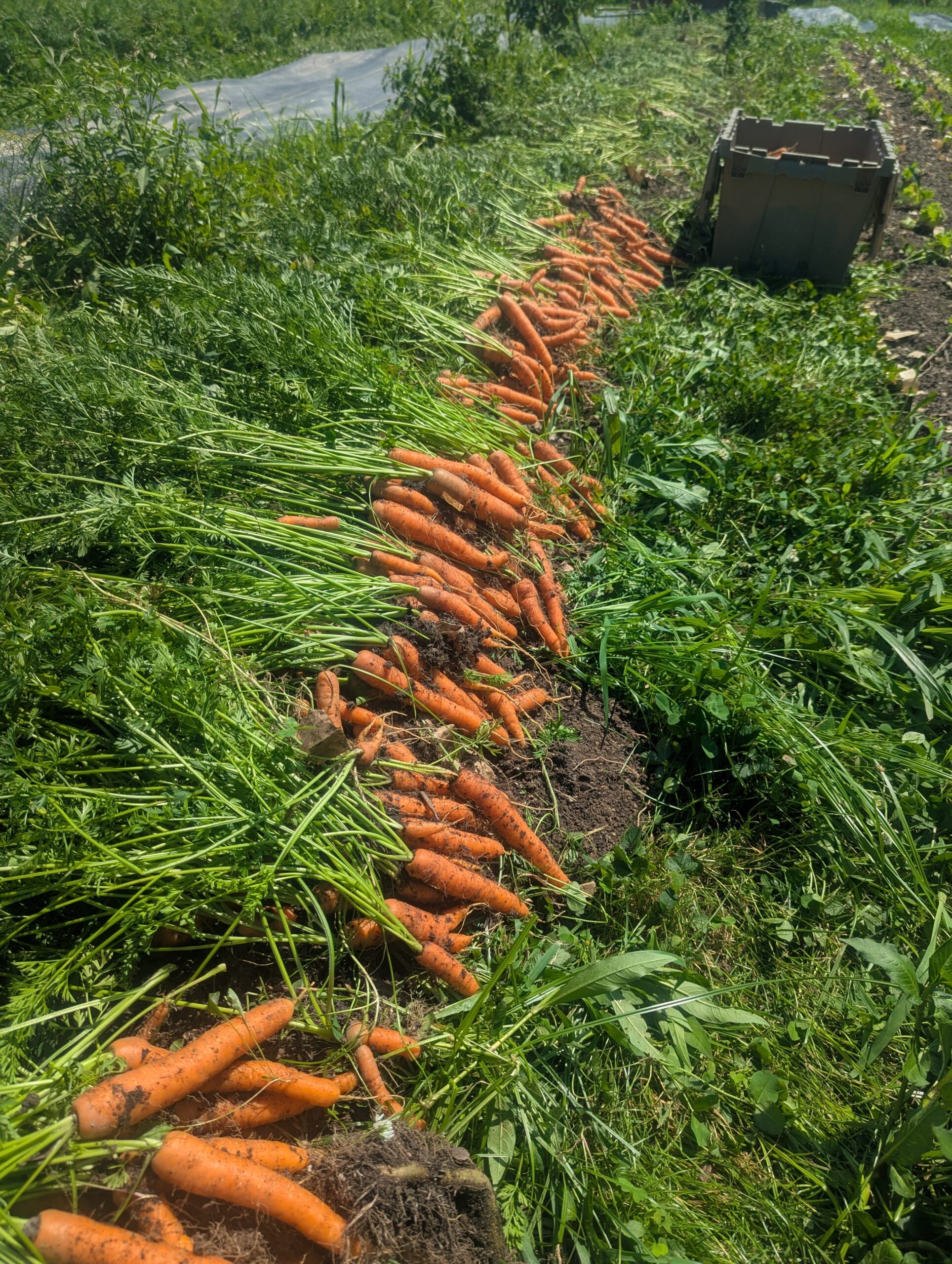
You can grow carrots in heavy clay soil by choosing short-rooted varieties, loosening the soil, adding mature compost, sowing seeds in a fine seedbed, and keeping the soil evenly moist. For the straightest roots, grow carrots in a raised bed filled with loose, stone-free soil.
Across the United States, home gardeners face many soil types, from sandy ground in the Southwest to dense clay in parts of Texas, Georgia, Ohio, and the Midwest. Clay soil can hold water and nutrients well, but it can also become hard, sticky, and slow to drain. These traits make it harder for carrot roots to grow long and straight.
The good news is that heavy clay does not have to keep you from growing carrots. The key is to work with the soil rather than fight it. Short carrot varieties, careful soil preparation, and steady watering can help you grow crisp roots even when your garden soil feels more like pottery clay than garden loam.
This guide explains how to prepare clay soil, choose suitable carrot varieties, sow tiny seeds, care for young plants, and harvest your crop. It also covers common problems, including forked roots, poor germination, and waterlogged beds, so you can make practical choices for your garden and local growing season.
1. Understand Why Heavy Clay Makes Carrots Hard to Grow
Heavy clay contains many fine mineral particles that fit closely together. These small spaces can hold water for a long time, but they may leave too little air around plant roots when the soil is wet. When clay dries, it can become firm and form a hard crust on the surface.
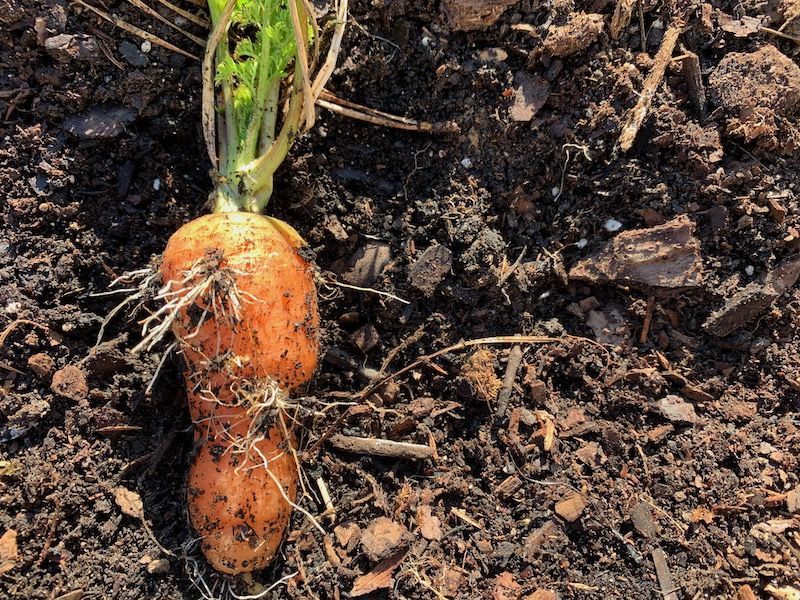
Carrots grow a main taproot that pushes down through the soil as the plant develops. If the root meets a hard clod, stone, compacted layer, or other obstruction, it may bend, split, or form several smaller roots. This is why carrots grown in dense clay often look crooked even when their leaves appear healthy.
Clay also presents a challenge at planting time. Tiny carrot seeds need close contact with moist soil to germinate, but a thick crust can block young shoots from reaching the surface. If the bed stays waterlogged, seeds may rot or seedlings may fail before they establish.
Still, clay has useful traits. It can hold nutrients and moisture better than very sandy soil. The aim is not to remove all the clay but to create enough loose, stable soil for roots to expand while keeping drainage and moisture under control.
Source: yourgardencoach.substack.com
Poor root shape
Hard clods, stones, and compacted soil can make carrots fork, twist, or grow short.
Slow drainage
Water may collect after rain or irrigation, reducing the air available to roots and increasing the risk of rot.
Surface crusting
A dry, compacted surface can stop carrot seedlings from emerging evenly.
Uneven moisture
Clay may stay wet deep down while its top layer dries and hardens, so careful watering matters.
How to tell whether your soil is heavy clay
Take a small sample of moist soil and squeeze it in your hand. If it forms a sticky ball that can be rolled into a long ribbon between your thumb and finger, it may contain a high proportion of clay. This simple check gives a rough indication, not a precise soil classification.
Watch how your garden behaves after rain. If water remains on the surface, footprints leave deep marks, or the soil becomes sticky and difficult to crumble, drainage or compaction may be a concern. A soil test from a local extension service can provide more useful information about soil conditions and nutrient needs.
Workability test
Soil that crumbles into small aggregates when gently squeezed is usually easier to prepare than soil that smears or forms hard lumps.
Drainage check
Observe how quickly water disappears after rain and whether the bed remains saturated for long periods.
2. Choose Carrot Varieties That Suit Clay Soil
The easiest way to grow carrots in heavy clay is to choose varieties with short, rounded, or moderately sized roots. These carrots need less depth than long-rooted types and are often more forgiving when the soil is not ideal. Variety choice will not fix severe compaction, but it can make the job easier.
Chantenay and Danvers types are useful starting points for gardeners who want traditional orange carrots. Parisian carrots are small and round, making them a practical choice for shallow beds or containers. Nantes types can also work if the soil is loose enough for their roots to develop without meeting hard barriers.
Read the seed packet before buying. Root length, days to maturity, and recommended planting season can differ between cultivars sold under similar type names. A short-rooted cultivar is generally a safer choice than a long, slender carrot when the bed has limited depth.
For a first attempt, grow two varieties in separate short rows. This simple comparison can help you learn which one performs better in your soil and climate without changing too many growing conditions at once.
Source: www.pinterest.com
Chantenay
A broad-shouldered carrot with a relatively short, tapered root. It is a useful option for heavier soil when the bed is well prepared.
Danvers
A medium-length, tapered carrot traditionally valued for its ability to perform in a range of garden soils. Loose soil still improves root shape.
Parisian or round carrots
Small, round roots suit shallow growing spaces and can be easier to harvest from compact beds.
Nantes
A smooth, cylindrical type that can produce tender carrots in improved clay soil, especially where adequate depth is available.
Which carrot should you grow first?
If your soil is dense and you cannot build a raised bed, try a short Chantenay or round Parisian type. If you can loosen the soil well to a depth of about 8 to 12 inches, you can also try Danvers or Nantes types, checking the specific seed packet for expected root length.
Do not assume that a variety described as suitable for heavy soil will thrive in waterlogged ground. All carrots need adequate oxygen around their roots. Better drainage and a crumbly seedbed remain important regardless of the cultivar.
Very shallow soil
Choose a round or short-rooted carrot and make sure the available soil depth is greater than the expected root depth.
Improved garden bed
Try Chantenay, Danvers, or Nantes according to the depth and looseness you can provide.
3. Prepare Heavy Clay Soil Before Planting
Soil preparation has the greatest effect on carrot shape. Aim for a bed that is loose, crumbly, free of large stones, and deep enough for the chosen variety. A little preparation before sowing can prevent many problems that are difficult to fix once the roots begin to grow.
Start when the soil is moist enough to break apart but not wet enough to smear. Pick up a handful and press it gently. If it sticks together in a slick lump or leaves a shiny smear when rubbed, wait for it to dry. Working wet clay can squeeze out air spaces and leave the bed more compacted than before.
Use a garden fork to loosen the soil rather than repeatedly walking over or aggressively turning it. Break up large clods and remove stones, old roots, and other obstructions. Avoid digging deeper into a hard layer when the soil is wet, as this can make the structure worse.
Add mature compost to improve aggregation, water movement, and the soil’s ability to support root growth. Mix it through the upper growing layer where the carrots will develop. Compost helps clay become easier to work, but it does not instantly turn dense soil into perfect loam, so repeat soil care over time.
Do not add a small amount of fine sand to clay as a quick fix. The mixture can become very dense, and changing the texture of a heavy clay bed with mineral material requires a carefully planned amendment strategy. For a home garden, organic matter, reduced compaction, and a raised bed are often more practical.
Source: www.pinterest.com
Loosen the growing zone
Prepare the soil to a depth suited to the mature roots of your chosen carrot variety, often around 8 to 12 inches for shorter types.
Add mature compost
Blend in finished compost to help the soil form stable crumbs and improve workability. Avoid fresh manure, which can encourage forked roots and add excess nutrients.
Remove obstructions
Pick out stones, woody pieces, and hard clods from the main rooting zone.
Keep feet off the bed
Work from paths or bed edges to prevent fresh compaction after loosening the soil.
How much compost should you use?
The right amount depends on your existing soil, the maturity of the compost, and the size of the bed. A modest layer worked into the top several inches is a reasonable starting point for many garden beds, but avoid repeatedly adding large quantities without checking soil conditions.
For example, a 4-foot-by-8-foot bed covers 32 square feet. A 1-inch layer of compost over that area is about 2.7 cubic feet before settling. This is a volume calculation, not a universal prescription. If your soil already contains plenty of organic matter or has a high nutrient level, use less and consider a soil test.
Use finished compost
It should look dark and crumbly and have an earthy smell rather than smelling sour or strongly like fresh manure.
Avoid excess nitrogen
Too much nitrogen can encourage leafy growth without improving the carrot roots and may contribute to poor root quality.
When a raised bed is the better option
If the native soil stays saturated, forms hard blocks, or has a shallow compacted layer that you cannot reasonably improve, use a raised bed. Fill it with a loose, well-drained growing medium intended for vegetables, with enough depth for the selected carrot type.
A raised bed does not need to be extremely tall for every carrot. A bed with about 10 to 12 inches of usable, loose soil can suit many short or medium-rooted varieties, though longer cultivars may need more depth. Ensure the bed drains freely and that the fill does not sit over a sealed or waterlogged surface.
Choose a practical depth
Match the depth of loose soil to the mature root length, allowing extra space for the root tip.
Fill with a balanced mix
Use a suitable blend of topsoil and mature organic matter or a vegetable-bed mix that retains moisture without staying saturated.
4. Select the Right Planting Time in the United States
Carrots are cool-season vegetables, so the best planting time depends on your local climate. In much of the United States, gardeners sow carrots in early spring as soon as the soil can be worked and again in late summer for a fall crop. Mild winter regions may support additional sowings during cooler months.
In northern states and other places with short growing seasons, spring planting allows roots to mature before summer heat. A second sowing may work if enough frost-free time remains. In warmer parts of the South and Southwest, late summer or fall can be more favorable because the soil becomes cooler and seedlings face less intense heat.
Use your local frost dates as a guide, but pay attention to soil conditions as well. Clay that is still saturated after snowmelt or heavy spring rain should not be dug just because the calendar says it is time to plant. Wait until the bed is workable, or sow in a prepared raised bed that drains well.
Check the seed packet for the expected days to maturity and count backward from the time you want to harvest. The number is an estimate, and cool weather, soil conditions, and variety can change the pace of growth.
Source: www.pinterest.com
Spring crop
Sow when the soil is workable and cool. Avoid preparing wet clay immediately after heavy rain.
Fall crop
Count backward from your area’s typical first fall frost and allow for the variety’s stated growing time.
Warm winter areas
Try sowing during the cooler season, using local extension planting calendars for regional guidance.
How soil temperature affects germination
Carrot seeds germinate best in cool to moderate soil conditions, but germination can be slow and uneven. Cold soil may delay emergence, while very hot soil can make it harder to keep the seedbed evenly moist.
The surface of a clay bed can dry and harden even while the lower soil remains wet. If warm weather is expected, sow at a suitable time of day, water gently, and consider a light covering that helps conserve moisture without blocking seedlings.
Check local guidance
Use your state university extension’s planting calendar and current local weather to choose a suitable sowing window.
Avoid saturated beds
Good timing means both suitable weather and soil that can support healthy roots.
5. Sow Carrot Seeds for Even Germination
Carrot seeds are small, and young seedlings grow slowly. Sow them directly in the prepared bed rather than relying on transplanting, which can disturb the developing taproot and lead to misshapen carrots.
Make a shallow furrow according to the seed packet, commonly about one-quarter to one-half inch deep. Place seeds thinly along the row, cover them with fine soil, and press lightly to ensure good contact. Avoid burying the seeds deeply, especially in heavy soil where emerging shoots may struggle to reach the surface.
Water with a gentle spray so the seeds do not wash into clumps or become exposed. The seed zone must remain consistently moist until germination. In suitable conditions, emergence may take around one to three weeks, and it can take longer when temperatures are unfavorable.
Because clay often forms a crust as it dries, check the surface daily during the germination period. If the top begins to dry, apply a light watering. A thin layer of fine, clean compost or another suitable seedbed cover may help, but it should not be so thick that seedlings cannot emerge.
Source: bloomingexpert.com
Prepare a fine surface
Rake the upper layer until it is crumbly and remove large clods that could block seedlings.
Sow shallowly
Follow the seed packet’s depth recommendation and cover the seeds with fine soil.
Water gently
Use a fine rose or gentle spray to prevent seeds from moving or washing away.
Keep the surface moist
Check often until seedlings emerge, but do not flood the bed or leave the soil saturated.
How to prevent a clay crust from blocking seedlings
A hard surface crust is a common reason for patchy carrot rows. To reduce the risk, prepare the seedbed when the clay is workable, break the top layer into small crumbs, and water gently rather than using a strong hose stream.
If you cover the row to conserve moisture, use a material that allows air and water through, and remove it as soon as seedlings begin to emerge if it could block their growth. Do not scrape or hoe deeply over the row because carrot seeds and seedlings are easily damaged.
Use gentle irrigation
A fine spray reduces surface disturbance and helps keep seeds in place.
Avoid deep disturbance
Once seeds are sown, work around the row rather than digging into it.
6. Thin Seedlings and Control Weeds
Thin carrot seedlings so each plant has enough space to develop a usable root. If seedlings grow too close together, they compete for water, light, and nutrients. Crowded roots may remain small or press against one another as they expand.
Thin in stages if the row is very dense. First remove obvious clumps, then make a final adjustment when the seedlings are large enough to handle. Follow the spacing on the seed packet; many carrot varieties need about 2 to 3 inches between plants, while some small-rooted types can grow at closer spacing.
When possible, snip unwanted seedlings at soil level with small scissors rather than pulling them out beside plants you want to keep. Pulling can disturb the roots of neighboring carrots, especially in dense soil. Remove the thinnings from the bed if their scent attracts pests in your area.
Weeds can quickly overtake slow-growing carrot seedlings. Remove them while they are small, using shallow hand weeding near the row. Deep hoeing can damage carrot roots, and heavy cultivation can compact wet clay or break the developing roots.
Source: positivebloom.com
Thin to the right spacing
Use the seed packet as the final guide and leave enough room for each root to widen.
Snip unwanted plants
Cut excess seedlings at ground level to limit disturbance to neighboring roots.
Weed early
Remove small weeds before they compete strongly with the carrots.
Work shallowly
Keep tools near the soil surface and avoid working clay while it is wet.
How to recognize a healthy carrot row
A healthy row has upright green leaves, enough space between plants, and no long gaps caused by poor emergence. Growth may be slow at first, so do not assume the crop has failed simply because seedlings are small.
Once the plants develop several true leaves, keep the row free of weeds and watch how quickly the soil dries. If the leaves remain green and the roots begin to widen without signs of water stress, the crop is generally on track.
Good signs
Even growth, upright foliage, and steadily enlarging roots are useful signs of progress.
Warning signs
Large gaps, yellowing leaves, prolonged wilting, or standing water call for closer checks.
7. Water Carrots Properly in Heavy Clay
Carrots need steady moisture, but heavy clay can hold water long after the surface appears dry. The goal is to keep the root zone moist without leaving it saturated. Too little water can slow growth and make roots tough, while repeated wet conditions can deprive roots of oxygen and increase the risk of disease.
During germination, water lightly and often enough to prevent the seed zone from drying. Once seedlings are established, water more deeply when the soil begins to dry rather than giving frequent shallow drinks. Check below the surface with a finger or a small hand tool before watering again.
The right interval depends on rain, temperature, wind, soil structure, and bed depth. A raised bed filled with a loose mix may dry faster than native clay, while a low area with poor drainage may remain wet for days. Use the soil itself as your guide instead of following a fixed daily schedule.
Apply water near the base of the plants and avoid strong sprays that expose roots or compact the surface. A thin layer of suitable mulch between rows can reduce evaporation and weed growth, but keep the seedling row clear until plants are established and avoid piling mulch over carrot crowns.
Source: fity.club
Check below the surface
Feel the soil in the root zone to decide whether watering is needed.
Avoid standing water
If the bed stays saturated, improve drainage or move the next crop to a raised bed.
Use gentle watering
A slow flow helps water enter the soil without washing away young plants.
Keep moisture steady
Avoid repeated cycles of severe drying followed by heavy watering.
What if the soil is wet below but dry on top?
Do not water automatically just because the surface looks pale or dusty. Clay may still be moist a short distance below the surface, and extra water can keep the lower root zone saturated.
Check the soil near the depth of the growing roots. If it is cool and moist, wait and check again later. If the root zone is dry and the bed drains normally, water slowly enough to wet the soil without creating puddles.
Moist soil below
Delay watering and watch for changes in the weather and soil moisture.
Dry root zone
Water gradually and reassess the bed to make sure moisture reaches the growing roots.
8. Feed the Crop Without Encouraging Excess Leaf Growth
Carrots need nutrients for healthy leaves and roots, but heavy feeding is not a shortcut to better harvests. Too much nitrogen can produce large tops without matching root growth. Fresh manure can also increase the risk of forked or irregular roots, so use mature compost and avoid heavy applications of high-nitrogen fertilizer.
A soil test is the best way to identify nutrient needs and soil pH. Carrots generally grow well in slightly acidic to near-neutral soil, with a commonly suitable pH range around 6.0 to 6.8. Do not add lime just because the soil is clay; use it only when a test indicates that raising the pH is appropriate.
If the soil test recommends fertilizer, choose a product and rate suited to the test results and follow its label. Mix amendments evenly into the prepared bed before sowing rather than leaving concentrated fertilizer in direct contact with the seeds.
Compost can help maintain soil structure, but it is not a substitute for testing when plants show persistent nutrient problems. If the leaves become pale or growth remains weak, first check water, drainage, sunlight, and root health before assuming the crop needs more fertilizer.
Source: plantisima.com
Test before feeding
Use a soil test to guide pH adjustments and nutrient applications.
Avoid fresh manure
Choose mature compost instead of fresh manure, which can disrupt root development and nutrient balance.
Follow fertilizer labels
Apply only the amount recommended for your soil and crop.
Should you add lime to heavy clay?
No, not unless a soil test shows that the pH is too low and lime is needed. Clay soils can vary widely in acidity, and their texture alone does not tell you whether lime will help.
Applying lime without testing can push the pH too high and make some nutrients less available. Ask your state university extension service about a soil test if you are unsure which amendment to use.
Low pH
Follow the soil test recommendation for the type and amount of lime, if needed.
Suitable pH
Focus on drainage, soil structure, and steady moisture instead of adding lime.
9. Diagnose Common Carrot Problems in Clay Soil
When carrots fail, look at the roots and the soil before adding more fertilizer or water. Similar symptoms can have different causes, so check the bed conditions and recent weather before choosing a fix. The most useful changes are often simple: better drainage, less compaction, more even moisture, or wider spacing.
Forked roots usually point to obstacles, root injury, or other stresses during early growth. Small, misshapen roots may result from crowding, a shallow rooting zone, or soil that remains too hard. Patchy germination often traces back to a dry seedbed, surface crusting, seeds planted too deeply, or conditions that are too cold or too hot.
Yellow leaves are not always a sign of nutrient deficiency. Waterlogged roots may struggle to absorb nutrients, and drought can also weaken foliage. Check whether the soil is saturated or dry at root depth before feeding the crop.
If plants wilt while the soil is wet, do not respond with more water. Improve drainage, stop irrigation until needed, and inspect for root damage or disease. If wilting continues despite appropriate moisture, contact your local extension service for help identifying possible pests or pathogens.
Source: yourgardencoach.substack.com
Forked or twisted roots
Check for stones, hard clods, fresh manure, root injury, and dense soil. Improve the rooting zone before the next sowing.
Short or thin carrots
Check plant spacing, soil depth, weeds, sunlight, and moisture. Crowding and a shallow hard layer can restrict root size.
Poor germination
Check seed depth, seedbed moisture, soil temperature, and whether a crust formed over the row.
Yellow leaves
Inspect moisture and drainage first, then consider nutrient problems if the soil conditions appear suitable.
Cracked roots
Large changes in soil moisture can contribute to cracking. Keep watering more consistent as the roots mature.
A practical troubleshooting order
Start by checking soil moisture at root depth, because both excess water and drought can cause trouble. Next, inspect compaction, surface crusting, plant spacing, and the amount of light the crop receives. Only after those checks should you consider fertilizer or other amendments.
Record what you observe, including the sowing date, variety, rainfall, and watering pattern. A short note can help you compare crops from one season to the next and identify which change made the greatest difference.
First
Check whether the soil is too wet or too dry.
Second
Inspect the rooting depth, clods, stones, and signs of compaction.
Third
Review spacing, weeds, sunlight, and planting conditions.
Fourth
Use soil testing or local extension advice if the cause remains unclear.
10. Harvest Carrots Without Breaking the Roots
Harvest carrots when they reach the size and maturity you want. Check the seed packet for the estimated growing time, but use the visible root shoulders as a guide because weather and soil conditions can change the pace of growth.
Brush away a little soil around the top of a carrot to see how wide it has become. If the shoulder looks large enough for the variety, loosen the soil beside the root with a garden fork. Pull gently on the foliage while supporting the surrounding soil so the carrot comes out with less force.
Heavy clay can grip roots tightly, especially when it dries. If a carrot resists, loosen more soil rather than yanking hard on the leaves. This reduces the chance of snapping the root or leaving part of it underground.
Harvesting after the soil has become slightly moist but is not saturated can make the task easier. Avoid digging when the bed is extremely wet, since walking and working in wet clay can compact it. Brush off loose soil and store sound carrots under cool, humid conditions appropriate for root vegetables.
Source: www.pinterest.com
Check root size
Use the expected mature size of the variety and the visible shoulders to decide when to harvest.
Loosen first
Use a fork beside the row to free the roots before pulling.
Avoid rough handling
Handle carrots gently to reduce breaks, cuts, and bruises.
Store sound roots
Remove damaged roots from long-term storage plans and keep healthy carrots cool and humid.
Can carrots stay in the ground after maturity?
Carrots can often remain in the ground for a short period after reaching a useful size, provided the soil is not waterlogged and pests are controlled. Leaving them too long in hot conditions may affect quality, while prolonged wet weather can increase the risk of rot.
In colder regions, a light mulch may help protect roots from brief cold spells, but local frost conditions matter. If the ground is likely to freeze hard or stay saturated, harvest the crop before those conditions make removal difficult.
Mild weather
Harvest as needed while the roots remain firm and healthy.
Wet or freezing weather ahead
Harvest before the soil becomes saturated or too hard to work safely.
11. A Simple Carrot-Growing Plan for Heavy Clay
A simple plan helps you focus on the changes that matter most. You do not need special equipment or a complete garden redesign to start. Choose a short-rooted variety, prepare a small test bed, and pay close attention to moisture during germination.
For a first crop, a short row is easier to manage than a large planting. It lets you assess how the soil drains, whether the surface crusts, and how well your chosen variety develops. If the roots remain badly misshapen, use a deeper raised bed or container for the next sowing.
Source: buckinghamshirelandscapegardeners.com
Before sowing
Check drainage, wait until the clay is workable, loosen the rooting zone, remove stones, and blend in mature compost if needed.
At sowing
Plant a short-rooted variety shallowly, water gently, and keep the seed zone moist.
During germination
Check the bed daily, prevent the surface from drying hard, and avoid disturbing the row.
After emergence
Thin plants to suitable spacing, control weeds, and water according to moisture at root depth.
At harvest
Check root size, loosen the soil beside each carrot, and record the results for the next crop.
How to decide whether to improve native soil or use a container
Improve native clay if it drains reasonably well, can be worked without smearing, and has enough depth for the chosen carrot variety. This option can be economical and can improve the garden bed for other vegetables too.
Choose a raised bed or deep container if drainage remains poor, the soil is heavily compacted, or you need more control over the growing medium. Containers dry faster than clay beds in some conditions, so check their moisture more often and make sure excess water can drain freely.
Improve the existing bed
Best when the soil can be loosened and drained well enough to support a suitable root zone.
Use a raised bed
Useful when native clay is too dense, drainage is poor, or you want straighter roots with less soil preparation.
Use a container
Practical for patios and small spaces when the container is deep enough and has unobstructed drainage holes.
Frequently Asked Questions
Q
Can carrots grow directly in heavy clay soil?
Yes. Carrots can grow directly in heavy clay if the soil is loosened, drains reasonably well, and has enough depth for the selected variety. Short-rooted types are often easier to manage than long carrots. If the soil stays waterlogged or forms hard blocks, a raised bed filled with loose growing medium is usually a more reliable option.
Q
What is the best carrot variety for heavy clay soil?
Chantenay, Danvers, and round Parisian types are useful options because their roots are shorter or more compact than those of many long-rooted carrots. The best choice depends on your available soil depth and the specific cultivar. Even a clay-tolerant variety needs adequate drainage and a loose rooting zone.
Q
Should I add sand to clay soil before planting carrots?
Do not add a small amount of sand as a quick fix. A mixture of clay and a little fine sand may become dense rather than loose. Mature compost, careful loosening, reduced foot traffic, and raised beds are generally more practical ways to improve conditions for a home carrot crop.
Q
How deep should soil be for growing carrots in clay?
Many short-rooted varieties need roughly 8 to 12 inches of loose soil, though the exact depth depends on the cultivar and its mature root length. Longer varieties need a deeper, less obstructed rooting zone. Check the seed packet and allow room for the root tip to develop.
Q
Why are my carrots growing crooked or forked?
Crooked or forked roots may develop when the growing tip meets stones, hard clods, compacted soil, or other obstacles. Root injury, crowding, and unsuitable growing conditions can also contribute. Prepare a finer seedbed, remove obstructions, avoid fresh manure, and try a shorter variety if the soil remains difficult to work.
Q
How often should I water carrots in heavy clay?
There is no single watering schedule that suits every clay bed. Keep the seed zone consistently moist during germination, then water when the soil begins to dry at root depth. Check below the surface before adding more water, because clay can remain wet even when the top looks dry.
Q
Can I grow carrots in a raised bed over clay soil?
Yes. A raised bed can provide a loose rooting zone above dense native clay. Use a suitable vegetable growing mix, provide enough depth for the chosen variety, and make sure excess water can drain. If the ground below is saturated or sealed, a raised bed may still need a carefully planned drainage solution.
✦ Wrapping Up
Conclusion
Growing carrots in heavy clay soil is possible when you give their roots a loose, moist, and well-drained place to grow. Start with a short-rooted variety, prepare the soil when it is workable, mix in mature compost where needed, and remove stones and hard clods from the rooting zone.
After sowing, keep the seedbed moist without flooding it. Thin seedlings, control weeds, and check soil moisture before watering. If the native ground remains hard or waterlogged, use a raised bed or deep container instead of spending another season fighting poor conditions.
Each crop can teach you something about your soil. Keep notes on the variety, sowing date, watering, and harvest quality, then adjust one or two things for the next planting. With patient soil care and the right carrot type, a heavy clay garden can produce useful, flavorful roots.
💡 Key Takeaway
Start with one short row of Chantenay or Parisian carrots. Loosen the soil to the depth your variety needs, add mature compost if appropriate, remove stones, sow shallowly, and keep the seed zone moist. If the bed remains saturated or hard, grow the next crop in a raised bed filled with loose, well-drained soil.
I enjoy sharing simple gardening ideas, lawn care tips, and honest product reviews that help make outdoor work easier. From home gardening guides to helpful tools and lawn care advice, I write easy-to-follow content to help readers create a healthier and better-looking outdoor space without wasting time or money.