
As an Amazon Associate, I earn from qualifying purchases.
The Best Irrigation For Raised Beds is a well-planned drip system that waters plant roots with less waste and effort.
Summer can make a raised bed dry out fast. One hot afternoon can leave tomato leaves drooping and lettuce looking limp. Many US gardeners also juggle work, family, and weekend chores, so daily hand watering can feel like one more job. A good irrigation kit makes that task much easier. It sends water to the bed through small tubes, emitters, or a grid. Some kits need a simple hose connection, while others offer more control over where water flows. In this guide, I compare five options for home gardens, explain their strengths and limits, and help you choose a setup that suits your beds.
Page Contents
Toggle🏆 Top 3 Products

CARPATHEN 100-Foot Drip Irrigation Kit
Its mix of mainline tubing, smaller tubes, and 30 emitters offers a flexible starting point for many raised beds.

Garden Grid 2×8 Irrigation System
Its pre-built grid layout offers a simple way to spread water across a standard narrow raised bed.

TJJFMM 230-Foot Drip Irrigation Kit
Its advertised tubing length and 40 watering outlets give gardeners room to plan a larger setup.
CARPATHEN 100-Foot Drip Irrigation Kit
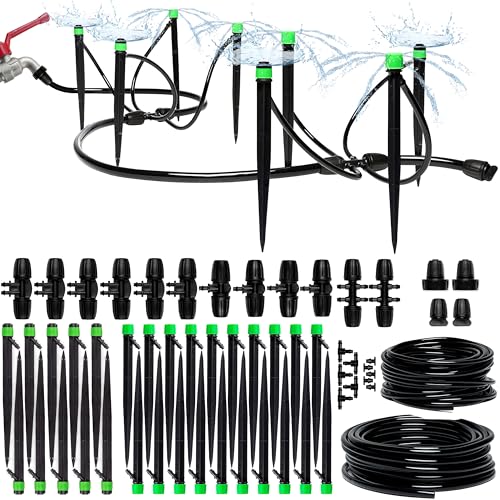
The CARPATHEN Drip Irrigation System Kit is a flexible option for gardeners who want to stop watering each plant by hand. Its listed package includes 100 feet of tubing, a 5/16-inch mainline, smaller 1/4-inch tubing, and 30 emitters. The product listing gives a working pressure range of 20 to 45 PSI and advertises up to 40 gallons per hour. These parts can help you build a watering layout around the shape of your raised beds.
I would consider this kit for a home vegetable garden with tomatoes, peppers, beans, or other crops planted in rows. You can plan the small tubes to reach the plants that need water, rather than wetting every inch of the bed. The flexible design also suits gardeners who may change their planting layout from season to season. Before buying, check the included fittings, water-pressure needs, and emitter styles to make sure they match your hose and garden plan.
✅ Pros
- ✔ Includes 100 feet of tubing for a range of small garden layouts.
- ✔ Provides 30 emitters for distributing water to multiple planting spots.
- ✔ Uses a mainline and smaller tubing to create separate watering paths.
- ✔ Works well as a starting point for vegetable beds and garden rows.
- ✔ Lets gardeners place outlets near plant roots.
- ✔ Can reduce water splashed onto leaves compared with overhead watering.
- ✔ Allows a custom layout instead of requiring one fixed bed shape.
⚠️ Cons
- ✖ The tubing and emitters need careful placement to avoid dry areas.
- ✖ The advertised flow rate does not mean every emitter will deliver the same amount of water.
- ✖ The system may need extra fittings or a pressure regulator, depending on the water source.
- ✖ Small outlets can clog if the water contains grit or mineral deposits.
- ✖ Installation takes more planning than a ready-made grid.
My Recommendation
I would choose the CARPATHEN kit for a gardener who wants control over the location of each watering outlet. Its 100-foot layout is a useful size for a modest raised-bed garden, and the separate tubing lets you adapt the system to different crops. Plan the route before cutting any tubing. Test the setup with the water running, then check the soil near each plant to make sure it gets enough moisture. This is my leading general-purpose choice among these five kits, based on its listed parts and flexible layout, rather than on independent product testing.
| Best For | Why |
|---|---|
| Small vegetable gardens | The 100-foot tubing supply and 30 emitters provide a practical base for several planting rows. |
| Mixed crops | The flexible tubing layout can place outlets near plants with different spacing needs. |
| DIY gardeners | Separate mainline and smaller tubes let you plan a custom watering route. |
Garden Grid 2×8 Raised Bed Irrigation
The Garden Grid 2×8 is designed for a narrow raised bed that measures about 2 feet by 8 feet. Rather than asking you to run many separate tubes between plants, it uses a pre-built grid layout to spread water across the bed. The listing describes it as a full-coverage watering system and advertises a setup time of about one minute. Its fixed shape may appeal to gardeners who want a clear, simple layout instead of a large collection of small parts.
This style can be handy for home gardeners who grow several crops in a defined bed. A grid gives you a repeatable pattern for planting and watering, which can make seasonal planning easier. Still, water distribution depends on the source pressure, bed level, soil, and exact watering time. I would check the grid dimensions against the inside of your bed and confirm the connection requirements before ordering. A grid is convenient, but it cannot remove the need to check soil moisture.
✅ Pros
- ✔ Designed for a common 2-by-8-foot raised-bed size.
- ✔ Pre-built grid layout can simplify installation.
- ✔ Offers a consistent pattern for arranging plants.
- ✔ Can reduce the number of separate tubing runs you need to plan.
- ✔ May suit gardeners who prefer a neat and organized bed.
- ✔ Can make repeat watering routines easier to manage.
- ✔ The listed dimensions help shoppers check fit before purchase.
⚠️ Cons
- ✖ The fixed grid size may not suit wider, longer, or irregular beds.
- ✖ A grid may not match the spacing needs of every crop.
- ✖ The advertised quick setup does not account for every hose or bed arrangement.
- ✖ Water coverage can vary with pressure, slope, and soil conditions.
- ✖ The listing’s claims about long service life should not be treated as a guarantee.
My Recommendation
I would look at the Garden Grid if ease of setup matters more than a highly customized watering plan. Its pre-built layout may be a good match for a standard 2-by-8-foot raised bed with crops spread across the surface. It is less flexible than loose drip tubing when plants sit in unusual rows or need very different water amounts. Measure the bed carefully, confirm the water connection, and test coverage before leaving the system on a timer. For gardeners who value simplicity, this is a strong alternative to a traditional drip kit.
| Best For | Why |
|---|---|
| Standard 2-by-8-foot beds | The advertised dimensions are designed around this narrow raised-bed shape. |
| New gardeners | A pre-built layout can reduce the need to design a tube network from scratch. |
| Neat planting patterns | The grid offers a regular structure for crops planted across the bed. |
TJJFMM 230-Foot Drip Irrigation Kit
The TJJFMM Drip Irrigation System is listed with 230 feet of tubing, 40 nozzles and emitters, and a mix of 1/2-inch and 1/4-inch tube. The product is also described as an adjustable sprinkler and emitter kit for greenhouses, lawns, and raised beds. This longer tubing supply gives you more room to plan a watering route across multiple beds or a larger growing area. Its range of parts may suit gardeners who want to combine different outlet styles in one setup.
A long kit can be useful when a hose connection sits far from the garden or when several raised beds share one water source. However, more tubing does not automatically mean better coverage. Water pressure and the number of active outlets affect how evenly the system runs. I would map each bed, estimate the tube lengths, and leave room for future changes before assembly. Check the package details to confirm the exact fittings and adjustability included with the version you buy.
✅ Pros
- ✔ Advertises 230 feet of tubing for larger watering layouts.
- ✔ Lists 40 nozzles and emitters for multiple watering points.
- ✔ Includes both 1/2-inch and 1/4-inch tubing sizes.
- ✔ Can serve more than one raised bed when the layout and pressure allow.
- ✔ The adjustable outlet design may help suit different planting areas.
- ✔ Can support a greenhouse or other garden zone as well as raised beds.
- ✔ Offers room to route tubing around paths and bed edges.
⚠️ Cons
- ✖ The large collection of tubing and fittings may take time to organize.
- ✖ Long runs can reduce flow at distant outlets if the layout is poorly planned.
- ✖ The number of listed outlets does not guarantee equal water delivery.
- ✖ Some garden layouts may need extra connectors or pressure control.
- ✖ More tubing can create more places for leaks, kinks, or loose fittings.
My Recommendation
The TJJFMM kit is worth considering if you have several raised beds or a larger garden and need more tubing than a small kit offers. Its advertised length gives you freedom to design routes across a wider space. I would not choose it only because the number looks large; first, make sure your hose supply can support the planned number of outlets. Divide the garden into sensible watering zones if the system struggles to deliver even flow. For a bigger DIY project, the long tubing supply may be more useful than a compact pre-built layout.
| Best For | Why |
|---|---|
| Multiple raised beds | The advertised 230-foot tubing supply offers room for longer routes between beds. |
| Greenhouse gardens | The listed kit is intended for greenhouse watering as well as garden use. |
| Custom watering plans | The mix of tubing sizes and outlet types gives you options when laying out the system. |
Bonviee 230-Foot Quick-Connect Drip Kit

The Bonviee Drip Irrigation System Kit is advertised with 230 feet of tubing and 40 emitters. Its listed parts include a 33-foot 5/16-inch mainline, smaller 1/4-inch tubing, and quick-connect fittings. The listing gives a pressure range of 20 to 45 PSI and advertises a maximum flow figure of up to 40 gallons per hour. These details make it an option for gardeners who want a flexible tubing layout with a set of outlets for several plants.
The quick-connect design may make assembly easier for a home gardener who wants to avoid a complicated plumbing project. The mainline can carry water toward different parts of the garden, while the smaller tubes lead to selected plants. As with any drip kit, the real result depends on the source pressure, tube length, outlet placement, and water quality. I would inspect each connection for leaks and check the soil under the emitters during the first few watering sessions. This helps you spot dry patches before they harm a crop.
✅ Pros
- ✔ Advertises 230 feet of tubing for a broad garden layout.
- ✔ Lists 40 emitters for multiple plant locations.
- ✔ Includes a 33-foot mainline section for routing water through the garden.
- ✔ Uses quick-connect fittings intended to simplify assembly.
- ✔ Provides smaller tubing for placing water near individual plants.
- ✔ Can be adapted to many raised-bed shapes.
- ✔ May support several watering zones when the water supply is suitable.
⚠️ Cons
- ✖ The long tubing supply can take time to plan and secure.
- ✖ Quick-connect fittings still need proper seating to prevent leaks.
- ✖ The listed pressure range may require a regulator with some water sources.
- ✖ A large number of emitters can affect flow across long tube runs.
- ✖ The actual layout may need extra parts if your garden has unusual dimensions.
My Recommendation
I would consider the Bonviee kit for a gardener who wants a longer drip system with quick-connect fittings. It may be a practical fit for several raised beds, a greenhouse, or a mixed garden where plants need water at different points. Before installation, compare the tubing lengths with your planned route and check whether the included connections fit your hose. Keep the first setup simple, test it fully, and add more branches only after you confirm even flow. This is a useful alternative to the CARPATHEN kit if you need the longer advertised tubing supply.
| Best For | Why |
|---|---|
| Several garden beds | The listed tubing length offers more room to reach separate planting areas. |
| Gardeners who want quick connections | The kit is designed with quick-connect fittings for easier assembly. |
| Mixed vegetable gardens | The smaller tubes can direct water to selected plants rather than one fixed grid. |
MIXC 230-Foot Quick-Connect Drip Kit

The MIXC Quick-Connect Drip Irrigation System is advertised with 230 feet of tubing and a combination of 1/4-inch and 1/2-inch fast-lock tubing. The listing describes adjustable nozzles and sprinklers for gardens, greenhouses, lawns, and potted plants. This mix of parts may appeal to gardeners who want to water several types of growing areas from one supply. The longer tubing also gives you room to plan a route around raised beds and nearby containers.
I would consider this kit for a gardener who likes to adjust the watering pattern as plants grow. Different crops need different amounts of water, and an adjustable outlet can help you direct flow where it is most useful. Still, adjustable nozzles need testing, and spray-style outlets may wet leaves and paths as well as soil. For raised beds, position each outlet with care and watch for runoff. Check the included connector types, tube sizes, and pressure needs before you commit to a layout.
✅ Pros
- ✔ Advertises 230 feet of tubing for a larger watering area.
- ✔ Includes listed 1/4-inch and 1/2-inch tubing sizes.
- ✔ Fast-lock connections may make assembly more straightforward.
- ✔ Adjustable nozzles and sprinklers offer flexibility for different areas.
- ✔ Can be planned for raised beds and nearby potted plants.
- ✔ May suit a garden that uses both drip outlets and spray-style watering.
- ✔ Provides room for custom routing around garden paths and containers.
⚠️ Cons
- ✖ Adjustable outlets may need frequent checks to maintain the desired pattern.
- ✖ Spray-style watering can wet foliage and nearby surfaces.
- ✖ The long tubing supply can be more than a small garden needs.
- ✖ Flow may vary across the layout when many outlets run at once.
- ✖ Fast-lock connections must fit securely to prevent leaks.
My Recommendation
The MIXC kit may suit gardeners who want one watering system for raised beds, containers, and other nearby garden areas. Its advertised mix of tube sizes and adjustable outlets offers more options than a simple fixed layout. I would use drip outlets near crops that need water at the roots and reserve spray-style outlets for places where that pattern makes sense. Test each outlet before setting a regular schedule. If your main goal is a simple, root-focused system for a few beds, a smaller drip kit may be easier to manage.
| Best For | Why |
|---|---|
| Mixed garden spaces | The listed parts are intended for raised beds, containers, lawns, and greenhouse areas. |
| Adjustable watering patterns | The kit advertises adjustable nozzles and sprinklers. |
| Larger DIY layouts | The advertised tubing length gives room to reach multiple planting zones. |
Final Verdict: Which Should You Buy?
For a flexible everyday setup, I would start with the CARPATHEN 100-Foot Drip Irrigation Kit. Its listed tubing, mainline, and 30 emitters offer a useful base for many home raised beds. Choose the Garden Grid if you prefer a pre-built layout for a standard 2-by-8-foot bed. For larger gardens, compare the longer TJJFMM, Bonviee, and MIXC kits based on their fittings and outlet styles.
The Best Irrigation For Raised Beds should fit your garden, not the other way around. Measure first, check water pressure, and test the soil after each early watering run. A well-planned system can make growing vegetables easier through hot US summers and busy weeks.
FAQs Of Best Irrigation For Raised Beds
Q What is the best irrigation for raised beds?
Q Is drip irrigation better than hand watering?
Q How long should I run irrigation in a raised bed?
Q Do I need a timer for raised-bed irrigation?
Q How do I stop a raised-bed drip system from clogging?

I enjoy sharing simple gardening ideas, lawn care tips, and honest product reviews that help make outdoor work easier. From home gardening guides to helpful tools and lawn care advice, I write easy-to-follow content to help readers create a healthier and better-looking outdoor space without wasting time or money.