As an Amazon Associate, I earn from qualifying purchases.
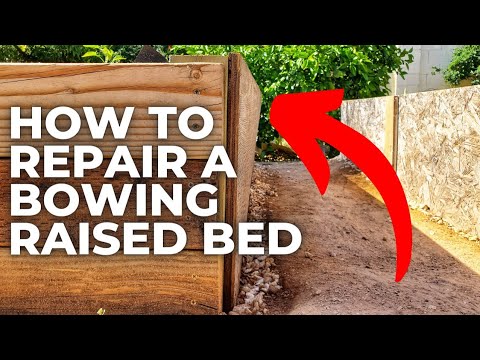
Prevent raised bed boards from bowing by using sturdy lumber, strong corner joints, and well-placed braces across long walls. Build the bed on level ground, fasten the boards securely, and add support before filling the bed with soil. If a board already curves outward, reduce the pressure before attempting a repair.
Across the United States, raised garden beds are a popular way to grow tomatoes, peppers, lettuce, carrots, and other backyard crops. A simple wooden frame can turn a patch of lawn into a productive vegetable garden, but the sides must hold back a heavy load of damp soil. When the boards are too thin, the walls are too long, or the joints are weak, the frame can begin to bow outward.
The good news is that most preventable bowing comes down to a few basic building choices. Strong boards, sound fasteners, solid corner posts, and cross-bed braces help spread the load instead of letting one long board carry it alone. Climate also matters because rain, irrigation, freeze-thaw cycles, and repeated wetting can change how wood performs over time.
Whether you are building a new bed in a small suburban yard or fixing an older vegetable garden in a rural backyard, start by checking the frame’s size, materials, and current condition. A small amount of reinforcement during construction is often easier than straightening a wall after it has pushed outward under the weight of soil.
Raised bed boards bow when the force from the soil exceeds what the boards, joints, and supports can resist. Soil has weight, and wet soil can be especially heavy. As the bed fills, that load pushes against the inside faces of the walls.
The force increases with the height of the soil and the length of an unsupported wall. A long, thin board may look straight when the bed is empty but curve outward once the frame is full. The problem may appear slowly over a season or develop sooner when the structure is weak.
Wood also changes with moisture. Boards can swell as they absorb water and shrink as they dry. Repeated wet and dry cycles may cause checks, splits, loose fasteners, or changes in shape. These changes can weaken a frame that was already close to its limits.
Bowing is not always a sign that the wood itself is poor. A sound board can still bend if the wall is too long, the posts are too far apart, or the frame lacks cross-supports. The most reliable fix addresses the whole structure rather than simply adding more screws to the curved section.
Source: thrivingyard.com
Long unsupported walls
The middle of a long board has more room to flex between its supports. Add intermediate posts or braces where the wall needs extra stiffness.
Thin or weak lumber
Boards with too little thickness for the bed’s dimensions may bend under soil pressure, especially when wet or weakened by decay.
Weak corners and joints
If corner connections loosen, the walls can spread apart and allow the boards to shift outward.
Excessive bed height
A taller column of soil creates greater pressure near the bottom of the wall. Taller beds need a design that accounts for this additional load.
How to Recognize Early Bowing
Check the long sides from outside the bed. A board that curves away from a straight line, gaps that open at the corners, or fastener heads that pull into the wood can signal trouble. A corner post that leans or a wall that shifts when gently pressed also deserves attention.
Compare the same wall over time. A photo taken from the same position can help reveal gradual changes that are hard to notice day by day. Do not wait for a major curve, a split board, or a failing corner before adding support.
Measure the wall
Use a straightedge or taut string to check for a growing gap between the wall and a straight reference line.
Check the connections
Look for loose screws, pulled fasteners, cracked posts, and joints that have begun to separate.
Inspect the wood
Soft spots, deep cracks, crumbling fibers, or persistent dampness may point to decay rather than simple flexing.
Choose Boards That Can Handle the Soil Load
Start with straight, sound lumber that fits the planned bed dimensions. Thickness, board condition, wall height, and the distance between supports all matter. There is no single board size that suits every raised bed because a low, short frame places different demands on its walls than a tall, long one.
For a small, low bed, standard dimensional lumber may work well when the frame has sound joints and adequate support. For taller beds or long walls, thicker boards, intermediate posts, or a purpose-built raised-bed system may be needed. If the bed will hold a deep column of soil, design the walls for that load instead of relying on the lumber alone.
Inspect every board before assembly. Avoid pieces with major splits near the ends, severe warping, soft areas, or large defects where screws must hold. A slightly rough surface is usually less concerning than damage that weakens the board or prevents a tight joint.
Wood species and treatment also affect service life. Naturally durable wood can resist decay, while some untreated species break down more quickly when kept in contact with damp soil. Modern pressure-treated lumber varies by product and intended use, so check its label and current manufacturer guidance before using it in a vegetable garden. Do not use reclaimed wood if its prior treatment or contamination is unknown.
Source: i.pinimg.com
Match thickness to the design
Use boards with enough stiffness for the wall height and unsupported span. Add structural support when a long or tall wall needs more resistance to bending.
Check for straightness
Sight down each board before buying or cutting it. Strongly bowed or twisted lumber can make it harder to build a straight, stable frame.
Choose suitable wood
Consider durability, local availability, cost, and the intended contact with soil. Avoid lumber with unknown chemical exposure.
Plan for moisture
Keep drainage open around the bed and avoid designs that trap water against the boards. Less persistent moisture can help slow decay.
Should You Use Thicker Boards or More Braces?
Both can help, but they solve the problem in different ways. Thicker boards resist bending along their length, while braces and posts reduce the distance over which a board must span without support. A well-supported wall made from suitable lumber may perform better than a much thicker board attached to weak corners.
For a long bed, adding a support near the middle of each long wall may be more practical than replacing every board. For a tall bed, however, the frame may need a stronger overall design, not just a single extra post. Consider the full height, length, soil depth, and condition of the existing frame before choosing a repair.
Choose thicker lumber
This is useful when existing boards are too flexible or damaged and you are rebuilding the frame.
Add intermediate support
This is useful when a long wall bends most strongly between otherwise sound corner posts.
Rebuild a failing frame
If the boards are rotten, split, or badly distorted, replacing damaged parts is usually more reliable than adding hardware to weak wood.
Build Strong Corners and Secure Joints
Strong corners keep the four walls connected and help prevent the frame from spreading as soil presses outward. Corner posts, sound joints, and suitable exterior-rated fasteners create a more stable structure. A raised bed with weak corners can still bow even when its boards are thick.
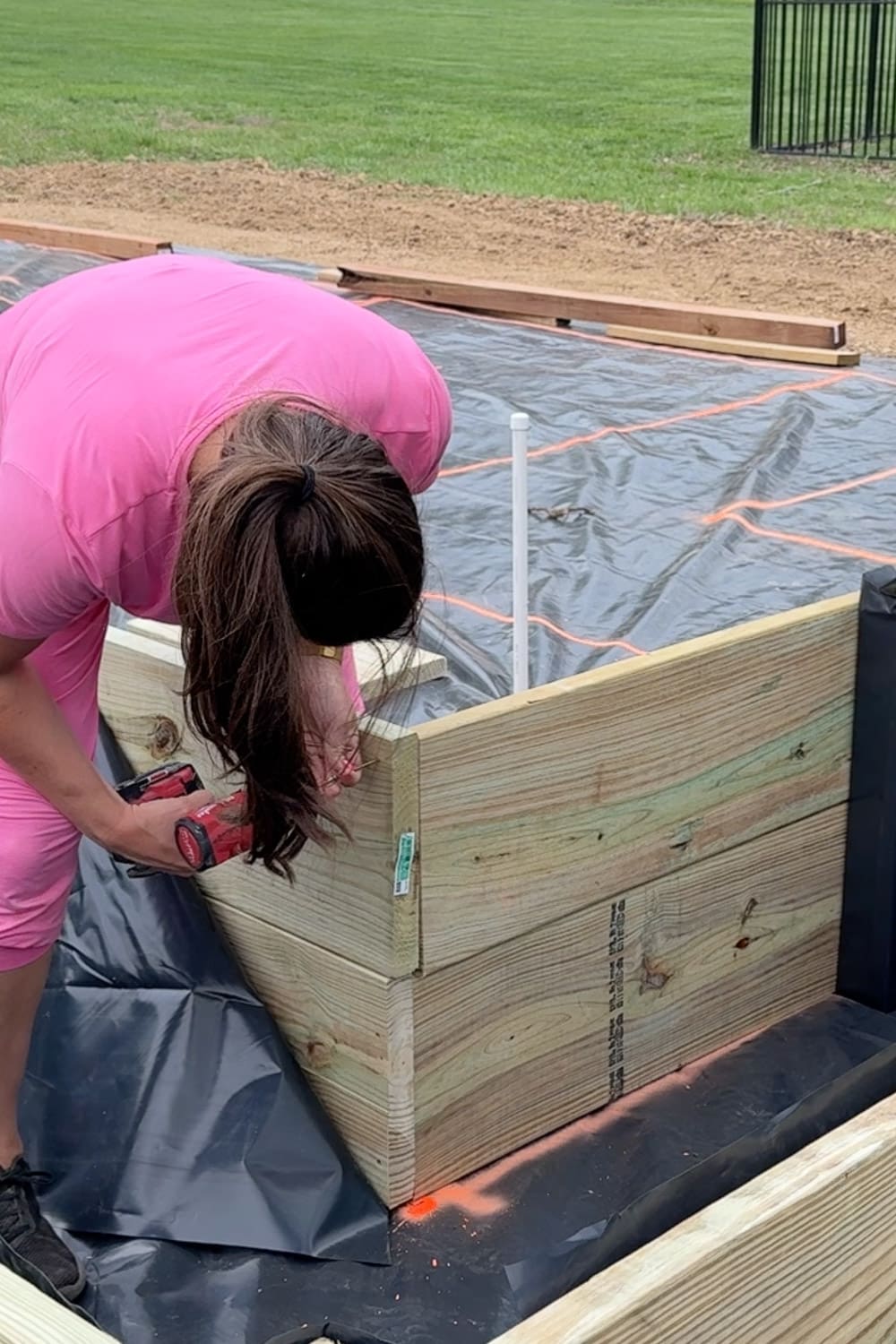
Place the boards against solid corner posts or use a proven corner-joint design suited to the lumber and bed dimensions. Fasten the boards into sound wood, not just into a thin edge that can split. Predrilling near board ends can reduce the chance of splitting, especially in dry or brittle lumber.
Choose screws or other fasteners rated for the outdoor conditions and materials involved. Fasteners exposed to moisture may corrode, and some metals are not compatible with certain treated woods. Follow the fastener and lumber manufacturers’ instructions for compatible materials, embedment, and placement.
Do not assume that adding many short screws will make a weak joint strong. Fasteners need sound wood to grip, and crowded holes can split a board. A cracked post or decayed corner should be repaired or replaced before the bed is refilled.
Source: crystelmontenegrohome.com
Use sound corner posts
Posts should be sturdy enough for the frame and long enough to support the intended wall arrangement.
Fasten into solid material
Position screws so they engage the post or other intended structural member without splitting the board ends.
Use outdoor-rated hardware
Select compatible screws and connectors for damp outdoor conditions and any treatment used on the lumber.
Replace failed connections
Do not rely on new fasteners alone when the surrounding wood is soft, cracked, or badly damaged.
Keep the Frame Square During Assembly
A square frame distributes the soil load more evenly and makes it easier to fit the braces. Before tightening every connection, measure both diagonals across the rectangular frame. If the two measurements match, the frame is square, assuming the opposite sides are also the intended lengths.
Set the bed on a firm, reasonably level base. Small ground variations can often be corrected during setup, but a major slope may require a different layout or a more carefully designed base. Do not bury the lower boards in a way that traps moisture or hides early decay.
Check both diagonals
Measure from corner to opposite corner in both directions and adjust the frame before final fastening.
Recheck after assembly
Confirm that the corners remain aligned and the boards sit firmly against their supports.
Install Cross Braces to Stop Long Walls from Spreading
Cross-bed braces help prevent the long sides from moving outward. They connect opposite walls so the sides resist spreading together instead of flexing independently. This can be one of the most useful changes for a rectangular bed with a long unsupported span.
A common approach is to install a sturdy cross-tie between the two long walls. The tie should connect to sound structural members and be designed for the expected load. A loose stick resting across the bed will not provide reliable support because it can shift or lift away from the walls.
For a long bed, more than one cross-tie may be needed. Place the supports where they divide long unsupported spans into shorter sections, taking account of board height and existing posts. The right spacing depends on the materials and dimensions; do not treat one spacing rule as safe for every frame.
Cross-ties can interfere with planting if they sit at soil level, so plan their position before filling the bed. A properly designed tie may sit below the soil surface or be arranged to leave useful planting areas open. Make sure the design does not create sharp edges or exposed hardware where gardeners could catch their hands or tools.
Source: nurserylady.com
Connect the opposing walls
Use a suitable structural tie or brace that attaches securely to both sides and resists outward movement.
Support long spans
Consider additional braces where a long wall still has a large unsupported section.
Use compatible hardware
Choose outdoor-rated connectors and fasteners that suit the lumber and the expected forces.
Plan around planting
Position braces so they do not create a major obstacle for roots, garden tools, or normal bed maintenance.
Can a Center Stake Prevent Bowing?
A center stake can help if it is designed and attached as part of the wall support system. A post placed beside a board without a sound connection may offer little resistance to outward movement. The post must be anchored and connected in a way that transfers the load safely.
For a low bed, an intermediate post on the outside of a long wall may shorten the unsupported span. For a taller bed, use a structural design that accounts for the soil pressure and the post’s anchorage. If the bed is deep or heavily loaded, do not assume a single stake is enough.
Use a firm attachment
Fasten the wall to the support using suitable hardware and sound lumber.
Check the base
Make sure the post cannot simply lean or shift as the soil presses against the wall.
Inspect after filling
Watch for movement around the post and fasteners as the bed settles.
Prepare the Ground and Fill the Bed Evenly
A stable base helps the frame stay aligned, while careful filling limits sudden uneven pressure. Clear away loose debris and set the bed on ground that can support the filled structure. If the site slopes, decide whether to level the bed area or use a design suited to the slope before assembly.
Avoid placing the frame on loose fill that may settle unevenly. One corner that sinks can twist the structure, loosen joints, and make a wall appear bowed. A shallow, well-prepared base is often enough for a simple low bed, but deeper beds or sloping sites may need more planning.
When filling the frame, add soil in reasonably even layers around the bed. Do not heap all the soil against one wall while leaving the opposite side empty. Even filling will not eliminate the total pressure, but it reduces the risk of uneven loading during construction.
Leave room for watering and normal soil settlement. Wetting the soil after filling may cause it to settle, and topping up may be needed later. Inspect the frame as you fill it so you can spot a loose joint or early movement before the bed is completely loaded.
Source: static.themarthablog.com
Clear the base
Remove unstable debris, large loose stones, and plant material that could decay beneath the frame.
Check level and stability
Make sure the frame sits firmly and does not rock or twist before adding soil.
Fill in layers
Distribute the soil around the bed instead of placing the entire load against one wall first.
Watch the walls
Pause if you see a growing curve, separating corner, or fastener pulling free.
Does Wet Soil Cause More Bowing?
Wet soil can increase the load on a raised bed, although the amount depends on soil texture, water content, drainage, and how tightly the material is packed. Soil that holds a lot of water may weigh much more than the same volume when dry. This is one reason a wall can look fine during a dry spell and show a curve after heavy rain.
Good drainage helps prevent water from remaining around the boards and can reduce persistent dampness that encourages decay. However, drainage does not remove the need for structural support. Even well-drained soil still exerts pressure on the frame, so use braces and suitable lumber rather than relying on drainage alone.
Keep drainage open
Avoid blocking intended drainage paths or creating a base that traps water around the wood.
Water with care
Apply water according to plant needs and soil conditions instead of repeatedly saturating the bed.
Inspect after storms
Check for new movement, pooled water, soft wood, and loose fasteners after periods of heavy rain.
How to Fix Raised Bed Boards That Already Bow
If a raised bed board has already bowed, first determine whether the problem comes from flexing, a loose joint, a failed support, or decayed wood. The repair depends on the cause. Adding a brace to a rotten board will not restore the strength of the damaged wood.
Before working on a heavily loaded wall, remove enough soil to reduce the outward pressure. Keep people away from a wall that is splitting or close to collapse, and do not stand in the path of a board that may suddenly move. A tall or badly distorted bed can release soil and hardware with little warning.
Once the pressure is reduced, inspect the full wall and its connections. Check the corner posts, fasteners, and the ground below the frame. Look for water damage, insect damage, splits, and movement that extends beyond the most obvious curved section.
If the lumber is sound and the bend is modest, you may be able to reinforce the wall with a properly attached post or cross-tie. If the board is cracked, rotten, or permanently distorted, replacing it is often the more dependable repair. Restore the support system before refilling the bed gradually.
Source: static.themarthablog.com
Reduce the load first
Remove soil carefully from the affected area so the board and joints are under less pressure before repair.
Find the root cause
Check the board, corner connections, support posts, fasteners, and ground for the source of movement.
Reinforce sound materials
Add a suitable brace or replace weak connections when the existing lumber remains structurally sound.
Replace damaged lumber
Use new, suitable material when a board has severe cracks, rot, or permanent deformation that makes it unreliable.
Refill gradually
Add soil evenly and watch the repaired wall for renewed movement rather than loading it all at once.
Can You Straighten a Bowed Board Without Removing Soil?
A small curve may look easy to pull back with a clamp or screw, but the soil continues to push outward. Forcing a loaded board into place can split the wood, strip the fasteners, or cause the wall to shift suddenly. Reducing the load first is the safer approach.
If the board returns close to its original shape after the pressure is relieved, inspect it carefully for cracks and damage before reusing it. Wood that has taken a permanent bend may not regain its original strength. Replace it if its condition or the stability of the wall is uncertain.
Do not force the wall
Avoid using a vehicle, jack, or improvised lever to pull a loaded wall back into line.
Check the entire section
A board that looks sound at the center may have hidden splits near the ends or fasteners.
Get help for major damage
A badly leaning or tall frame may need a qualified carpenter or other suitable professional to assess the repair.
When Is Replacement Better Than Repair?
Replace the board when it has deep splits, soft rot, extensive insect damage, or a bend that remains severe after unloading. Replacement is also sensible when the fasteners can no longer grip the wood securely. A new board connected to the same weak corner or unsupported span may bow again, so correct the original design flaw at the same time.
Replace rotten wood
Decay weakens the material and can spread beyond the visible surface.
Replace badly split boards
Cracks near fasteners or along the board can reduce the wall’s ability to resist pressure.
Improve the frame design
Add suitable posts, braces, or stronger joints before returning soil to the bed.
Common Mistakes That Lead to Bowing
Many raised bed failures begin with small shortcuts during construction. A frame may look sturdy when empty, yet the soil exposes weaknesses that were not obvious at first. Avoiding a few common mistakes can save time and reduce the need to rebuild the bed later.
One frequent mistake is choosing board dimensions based only on price. Cheap lumber can be a good option when it suits the design, but the lowest-cost thin board may need extra support or may not be suitable for a tall wall. Compare the full cost of lumber, braces, fasteners, and likely repairs rather than looking at the price of one board alone.
Another mistake is assuming that more fasteners always make a stronger wall. Screws placed too close together can split wood, while screws driven into weak material may pull free under load. Correct joint design and support placement matter as much as the number of fasteners.
Gardeners may also overlook the ground, drainage, and wood condition. A frame set on unstable soil can twist, and a frame that stays wet can decay. Regular inspection helps catch these issues while the repair is still manageable.
Source: thegardenfixes.com
Using long walls without support
Break up long unsupported spans with suitable posts or cross-ties rather than relying on the board alone.
Building too tall without a stronger design
Greater soil depth increases the demands on the walls, joints, and supports.
Ignoring early warning signs
A small outward curve or loose corner can worsen when the bed becomes saturated or the soil settles.
Using unsuitable reclaimed wood
Unknown chemical treatments or contamination can make salvaged material inappropriate for a food garden.
Refilling before repairs are complete
A new brace cannot do its job if it is poorly attached or the damaged wood around it remains weak.
Do Not Rely on Decorative Corner Brackets Alone
Small decorative brackets may help hold boards in position during assembly, but they are not automatically suitable for resisting soil pressure. Their strength depends on the metal, dimensions, fasteners, mounting surfaces, and intended use. Choose connectors that are designed for the structural role they must perform.
If the bed is tall, unusually long, or built on a slope, consider a design that has been evaluated for those conditions. For a large or heavily loaded structure, professional advice may be worthwhile before construction.
Check the intended use
Follow the connector manufacturer’s guidance instead of judging strength by appearance.
Inspect the fastener pattern
Use the specified fastener type, size, and placement for the connector and lumber.
Choose the Right Reinforcement for Your Bed
The best reinforcement depends on the bed’s dimensions, the condition of the boards, and where the movement begins. A low bed with a loose corner needs a different fix from a tall bed with a long wall that curves across its center. Use the table below to narrow down the next step.
These options are general guidance, not engineered specifications. Soil type, moisture, lumber species, board thickness, and fastener design all affect the result. For unusually tall, deep, or heavily loaded beds, use a suitable structural design rather than relying on a generic rule.
Source: thegardenfixes.com
For early movement
Inspect fasteners and joints, then add suitable support if the lumber and frame remain sound.
For a long unsupported side
Consider an intermediate post, a properly anchored wall brace, or cross-bed ties.
For damaged lumber
Unload the affected wall and replace weak boards before rebuilding the support system.
Raised Bed Bowing Troubleshooting Table
Use this table to match the visible symptom with the first useful check. Always reduce the load before making repairs to a severely bowed or unstable wall.
The center of a long wall curves outward
Likely cause: too much unsupported span or insufficient board stiffness. Check the board and add suitable intermediate support or cross-ties.
A corner opens or shifts
Likely cause: loose fasteners, weak corner posts, or a frame that is no longer square. Inspect the joint and replace damaged structural parts.
The lower board is soft or crumbling
Likely cause: decay or moisture damage. Reduce the load and replace the affected material after correcting the source of persistent moisture.
The whole frame leans
Likely cause: unstable ground, settling, or weak supports. Unload the bed as needed and stabilize the base before rebuilding.
The wall moves after heavy rain
Likely cause: increased soil weight, drainage problems, or an already weak frame. Check for pooling water and inspect every joint and brace.
New screws keep pulling loose
Likely cause: damaged wood, poor fastener placement, or continuing excessive pressure. Do not keep adding screws to weak material; repair or replace the affected section.
How to Plan a New Bed to Reduce Bowing
Before cutting lumber, decide the bed’s length, width, soil depth, location, and intended crops. Consider whether you can reach the center from the sides without stepping into the bed. A practical layout can reduce unnecessary length and make it easier to support the walls.
Next, choose suitable lumber and draw the corner and brace locations. Identify where the long walls need intermediate support and how the braces will attach. Buy compatible hardware before assembly so the frame does not depend on improvised connections.
Finally, assemble the empty frame, check its diagonals, and inspect every joint before filling. A short pause at this stage can reveal a weak corner or missing brace while the structure is still easy to adjust.
Set the dimensions first
Avoid making the bed longer or taller than the available materials and support system can handle.
Plan the braces
Mark the location of posts and cross-ties before cutting and fastening the boards.
Inspect before filling
Check the frame for square corners, secure joints, sound lumber, and stable contact with the ground.
Maintain Your Raised Bed to Prevent Future Damage
A raised bed needs occasional checks because wood, fasteners, and soil conditions change over time. Inspect the frame at the start of the growing season and again after periods of heavy rain or major freeze-thaw changes. Pay special attention to the long walls, bottom boards, and corners.
Keep drainage paths clear and avoid piling mulch or wet organic matter against the outside of the frame for long periods. Where practical, allow air to move around the exterior boards. Do not coat food-garden lumber with a product unless its label confirms that the intended use is appropriate.
Tighten loose hardware only when the surrounding wood is sound and the frame is not under dangerous pressure. If a fastener has pulled free because the wood is cracked or rotten, replacing the damaged part is more reliable than simply driving the screw back into the same hole.
Keep a simple record of any movement or repairs. A photo of each long wall can help you compare its shape from season to season. If the same area begins to bow again, review the design and load rather than repeating the same temporary repair.
Source: i.ytimg.com
Inspect each season
Look for curves, loose joints, cracks, rusted hardware, soft wood, and changes in the base.
Manage water
Maintain good drainage and correct recurring puddles or runoff that keeps the frame wet.
Repair the cause
Address weak supports, failing lumber, or poor ground conditions instead of hiding the visible damage.
Replace failing parts early
Timely repairs can help prevent a small defect from spreading across the entire frame.
A Simple Seasonal Inspection Routine
Walk around the bed and look at each wall from a low angle. Check whether the boards remain straight, the corners are tight, and the posts are still upright. Gently inspect accessible hardware, but do not push hard against a wall that looks unstable.
After heavy rain, check whether water collects around the base and whether the walls have shifted. In cold regions of the United States, repeated freezing and thawing may also affect the ground and connections. Repair drainage and structural problems before they worsen during the next growing season.
Before planting
Check the frame, supports, corners, drainage, and wood condition before adding new soil or crops.
After severe weather
Look for new curves, leaning posts, water damage, and loose connections.
At the end of the season
Repair small defects and plan any board replacements before the next planting cycle.
Frequently Asked Questions
Q
What is the best way to prevent raised bed boards from bowing?
Use suitable lumber, secure corner joints, and add intermediate posts or cross-bed braces where long walls need support. Set the frame on stable ground and fill it evenly. The right combination depends on the bed’s height, length, soil depth, and material condition.
Q
How thick should raised bed boards be to prevent bowing?
There is no universal thickness that prevents bowing in every raised bed. The required stiffness depends on board length, wall height, lumber species, soil load, and the spacing of supports. Taller or longer beds may need thicker boards, more braces, or a stronger overall design.
Q
How far apart should raised bed braces be?
Brace spacing depends on the bed dimensions, board strength, wall height, and expected soil load. Long, unsupported walls generally need more support than short walls, but a single spacing recommendation cannot cover every design. Follow a suitable plan for the exact frame and inspect the wall after filling.
Q
Can I fix a bowed raised bed without rebuilding it?
Often, yes, if the boards and joints remain sound and the bow is minor. Reduce the soil pressure, inspect the frame, and add suitable structural support or repair loose connections. Replace boards that are rotten, badly split, or permanently distorted, and correct any design flaw that caused the problem.
Q
Will landscape fabric or a plastic liner stop boards from bowing?
No. Landscape fabric and liners may serve other purposes, but they do not replace structural braces or strong joints. Some liners can also trap moisture against the wood if installed poorly. Use materials according to their intended purpose and keep the frame structurally sound.
Q
Does a metal raised bed need braces too?
Some metal raised beds include stiffening ribs, corner supports, or cross-ties, while others rely on a different panel design. Follow the manufacturer’s assembly and filling instructions. Do not assume that every metal bed can hold the same soil depth without additional support.
Q
Is a bowed raised bed dangerous?
A small curve may only indicate that the wall needs reinforcement, but a severe bow can signal that a board, joint, or support is close to failure. Keep people clear of an unstable wall, especially while it is loaded with soil. Reduce the load before repairs, and seek qualified help for a tall, heavily loaded, or badly damaged structure.
✦ Wrapping Up
Conclusion
Raised bed boards stay straighter when the frame is designed to handle the weight of its soil. Choose suitable lumber, build strong corners, install well-secured braces where needed, and set the bed on stable ground. These steps help reduce the strain that causes long walls to curve outward.
If your bed already shows signs of bowing, do not cover up the problem with extra screws or force the board back into place while it is fully loaded. Reduce the pressure, inspect the wood and joints, and repair the actual cause. Replace any material that has lost its strength, then refill the bed gradually and check for movement.
Regular inspections are easier than major repairs. A quick look at the corners, supports, boards, and drainage before planting can help you catch trouble early and keep your vegetable garden ready for another season.
💡 Key Takeaway
Before adding or replacing soil, inspect each long wall, confirm that the corners are secure, and add suitable support wherever a board spans too far without reinforcement. If a wall is badly bowed or unstable, unload it before attempting repairs.
I enjoy sharing simple gardening ideas, lawn care tips, and honest product reviews that help make outdoor work easier. From home gardening guides to helpful tools and lawn care advice, I write easy-to-follow content to help readers create a healthier and better-looking outdoor space without wasting time or money.