
As an Amazon Associate, I earn from qualifying purchases.
The Best Portable Generators combine reliable power, safe operation, easy starting, and flexible fuel options for home backup and outdoor use.
A storm rolls across your town. The lights go out, the fridge stops, and your phone battery keeps falling. Or perhaps you plan a weekend in your RV and need power for lights, fans, and other gear. A good portable generator can help in both cases. It can also support tools at a worksite or power a tailgate party. The key is to match the generator to your needs. In this guide, I compare five popular models from Westinghouse, WEN, and Generac. I look at their power ratings, fuel choices, useful features, limits, and best uses so you can choose with care.
Page Contents
Toggle🏆 Top 3 Products

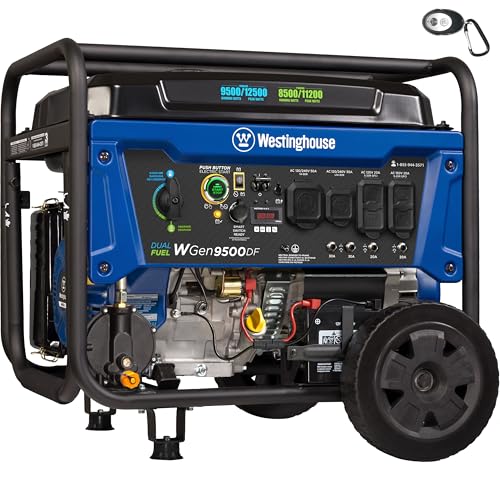
Westinghouse 12500-Watt Dual Fuel Generator
Its high listed power, dual-fuel design, remote start, and transfer-switch readiness make it a strong choice for home backup.

WEN DF680iX Dual Fuel Inverter Generator
Its inverter design, dual-fuel setup, RV-ready feature, and CO Watchdog make it appealing for flexible backup and travel needs.
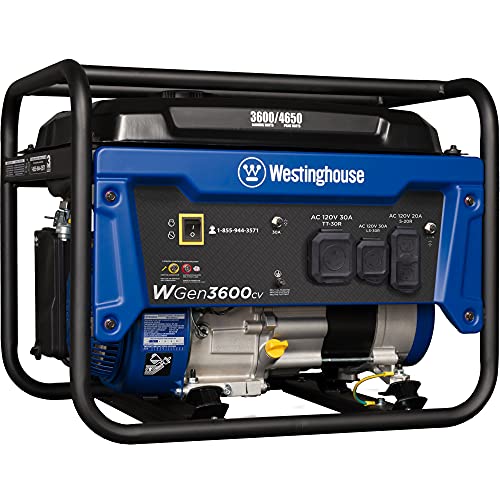
Westinghouse 4650-Peak-Watt Generator
Its more modest power class and RV-ready 30A outlet may suit campers and buyers who do not need a large home backup unit.
Westinghouse 12500-Watt Dual Fuel Generator
The Westinghouse 12500-watt dual-fuel generator is aimed at people who need a strong source of backup power. It runs on gasoline or propane, so you have two fuel choices when one is hard to get. The listing also names remote electric start, which can save effort when you need to start the unit. Its transfer-switch-ready design may help support selected home circuits with the right setup.
This model makes the most sense for a house, a large workshop, or another place with several power needs. Its high power class can support a wider mix of loads than a small camping generator, but the total load still matters. You must check running watts, starting watts, and the output for each fuel. The unit is also likely to need more space and care than a compact inverter model.
✅ Pros
- ✔Offers gasoline and propane as fuel choices.
- ✔Remote electric start can make startup easier.
- ✔High listed wattage suits larger backup needs.
- ✔Transfer-switch-ready design can support a planned home backup setup.
- ✔May run several household devices at once when the total load stays within its rating.
- ✔Useful for workshops and some jobsite power needs.
- ✔A practical option for buyers who want a fuel-powered unit rather than a battery-only power station.
⚠️ Cons
- ✖Its large power class may mean a heavy, bulky machine.
- ✖A fuel-burning generator must stay outdoors during use.
- ✖It may use more fuel than a smaller unit when loads are light.
- ✖Gasoline and propane can provide different power levels and run times.
- ✖A transfer switch and home wiring work may add to the total cost.
My Recommendation
I would shortlist this Westinghouse model for a homeowner who wants substantial backup power and the choice of gasoline or propane. Remote start is a useful feature during bad weather, while transfer-switch readiness can make a planned setup more practical. Before buying, I would confirm the running-watt rating on each fuel, the exact outlets, the unit’s weight, the warranty, and the recommended transfer-switch setup. Do not connect it to household wiring through a wall outlet. Use a properly installed transfer switch or another approved connection method.
| Best For | Why |
|---|---|
| Homeowners | Its high power class and transfer-switch-ready design may suit selected home circuits during an outage. |
| Workshop owners | It can support multiple tools and devices if their combined running and starting loads fit the generator’s ratings. |
| Fuel-flexibility buyers | Gasoline and propane provide two ways to plan for supply changes. |
WEN DF680iX Dual Fuel Inverter Generator
The WEN DF680iX is a dual-fuel inverter generator listed with 6,800 watts in its name. It is designed for buyers who want more than a small camping unit but still value an inverter design. Its listed features include electric start, RV readiness, fuel shutoff, and CO Watchdog. Those features make it worth a look for RV trips, home backup planning, and outdoor work where portable power matters.
The inverter design is a key reason to consider this WEN model. Inverter generators can adjust engine speed to suit demand, depending on the design and load, and they often offer regulated output for suitable electronics. Still, you should check the exact running-watt and starting-watt figures, as well as the total harmonic distortion rating. Do not assume that the number in the product name represents its continuous output on every fuel.
✅ Pros
- ✔Offers two fuel choices for added flexibility.
- ✔Inverter design may suit users who need regulated electrical output.
- ✔Electric start can reduce the effort needed to start the engine.
- ✔RV-ready design is useful for compatible recreational vehicles.
- ✔CO Watchdog adds a carbon monoxide safety feature.
- ✔Fuel shutoff can help with storage and fuel-system care when used as directed.
- ✔Its listed power class may suit more loads than a small travel generator.
⚠️ Cons
- ✖It remains a combustion generator and must run outdoors.
- ✖Its power output may be lower on one fuel than on the other.
- ✖The unit may be too large for buyers who need a light, compact camping option.
- ✖Inverter design does not remove the need to check power quality and device limits.
- ✖Buyers must verify exact RV outlet details and cable needs before connecting.
My Recommendation
I would consider the WEN DF680iX for an RV owner or household that wants inverter-style output and two fuel options. The listed safety and fuel features are useful, but the exact outlet layout, rated output, weight, and noise rating should guide the final choice. If you plan to run electronics, check the manual for power quality limits. If you plan to power a home, make a list of the circuits and starting loads first. This is not an indoor generator, even with its CO safety system.
| Best For | Why |
|---|---|
| RV owners | The RV-ready design and dual-fuel setup offer useful options for compatible travel power needs. |
| Electronics users | The inverter design may provide regulated output, subject to the model’s published power quality rating. |
| Prepared households | Electric start, fuel shutoff, and a CO safety feature support a more planned backup setup. |
Generac 12,500-Watt Tri-Fuel Generator

The Generac 12,500 starting-watt tri-fuel portable generator is designed for buyers who want more fuel choices. Its listed design supports gasoline, propane, and natural gas, and it includes electric start. This can help people plan for home backup when fuel supplies change during a storm or other outage. Its high starting-watt figure also points to a model aimed at larger loads, though starting watts do not tell the whole story.
Tri-fuel support can be useful, but it also calls for careful planning. You need the correct approved connection and setup for the fuel you use, and you should confirm the unit’s running watts for each fuel type. Natural gas supply and pressure must meet the maker’s rules. The generator still needs an outdoor operating spot with safe clearance from the home, even if it draws fuel from a natural gas line.
✅ Pros
- ✔Offers three listed fuel choices: gasoline, propane, and natural gas.
- ✔Electric start can make startup easier than relying only on a pull cord.
- ✔High starting-watt rating may help with some motor startup loads.
- ✔Useful for households that want more than one fuel plan.
- ✔Can suit backup needs where a suitable natural gas connection exists.
- ✔Portable format gives more placement options than a fixed standby unit, within safe operating limits.
- ✔A potential fit for users who already understand generator fuel and load planning.
⚠️ Cons
- ✖Running-watt output can vary by fuel and must be checked.
- ✖Natural gas setup may need a suitable line, pressure, and approved connector.
- ✖A high-power generator can be heavy and take up storage space.
- ✖Fuel-burning operation creates carbon monoxide and is unsafe indoors or in a garage.
- ✖Three fuel options may add setup steps and parts to manage.
My Recommendation
I would look at this Generac for a home backup plan where fuel choice is a major concern. The tri-fuel design gives more options than a gas-only unit, and electric start adds ease of use. Before buying, I would check the full power table for all three fuels, the approved natural gas setup, the included accessories, and the warranty. I would also plan the outdoor location and home connection before an outage occurs. If you only need a few small devices, a smaller model may cost less and be easier to move.
| Best For | Why |
|---|---|
| Home backup planners | Three fuel choices can give a household more ways to prepare for supply problems. |
| Homes with suitable natural gas service | Natural gas may be a convenient option when the connection meets the maker’s requirements. |
| Users with larger power needs | Its high starting-watt class may suit larger loads when the running-watt rating also fits. |
Westinghouse 4650-Peak-Watt RV Generator
The Westinghouse 4650-peak-watt generator is a smaller option than the high-output home backup units in this guide. Its listing names gasoline power, an RV-ready 30A outlet, and a carbon monoxide sensor. That mix may suit campers, tailgaters, and households that need power for a limited set of devices. The peak-watt figure is not the same as the power it can supply all day, so check the running-watt rating before planning your loads.
A 30A RV outlet can be handy when your RV and cable match the generator’s output. You still need to check the RV’s power needs and any limits for air conditioning or other large loads. The CO sensor is a helpful safety feature, but it does not make this unit safe to run in a tent, RV, garage, shed, or home. Like every fuel-powered generator, it needs a safe outdoor location and careful fuel handling.
✅ Pros
- ✔A lower peak-watt class may suit modest power needs.
- ✔Gasoline fuel is widely used and easy to understand for many buyers.
- ✔The listed 30A RV-ready outlet supports compatible RV connections.
- ✔A CO sensor adds a useful safety feature.
- ✔May suit tailgating, camping, and outdoor work with suitable loads.
- ✔Can be more practical than a large home backup unit for buyers who do not need high output.
- ✔A good model to compare when cost, size, and simple use matter more than maximum power.
⚠️ Cons
- ✖Peak watts exceed the power available for continuous use.
- ✖Gasoline is the listed fuel, so it offers less fuel flexibility than dual-fuel or tri-fuel models.
- ✖The power level may not cover large home loads or several high-draw devices at once.
- ✖An RV may need a matching cord or adapter to connect safely.
- ✖The CO sensor cannot replace safe outdoor placement and proper clearance.
My Recommendation
I would shortlist this Westinghouse model if I needed portable power for a compatible RV, tailgate, or a small group of household devices. Its 30A RV-ready outlet and CO sensor are useful listed features. I would not choose it for a large whole-home load without first checking the running-watt rating and the devices I need to run. For a simpler buying choice, list your gear and add both normal power use and startup needs. That will show whether this smaller generator has enough capacity.
| Best For | Why |
|---|---|
| RV travelers | The listed 30A RV outlet can work with a compatible RV and the correct cable. |
| Tailgaters | It may cover modest lighting, charging, and other small loads when their total demand fits. |
| Small backup needs | It can be a practical option for a limited set of essential devices. |
Westinghouse 14500-Watt Tri-Fuel Generator
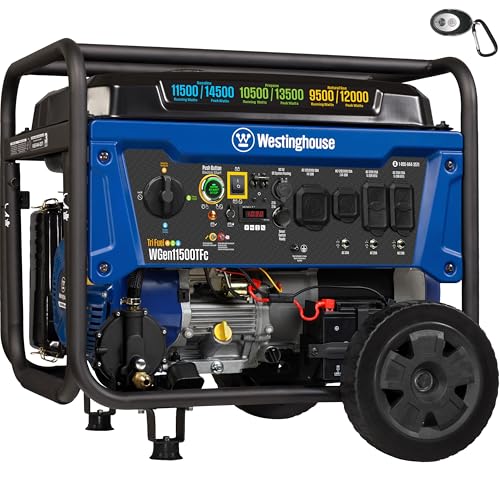
The Westinghouse 14500-peak-watt tri-fuel generator targets buyers who want a high-output portable unit and three fuel choices. The listing names gasoline, propane, and natural gas, along with remote electric start and transfer-switch readiness. These features may suit a household that wants to prepare for long outages and keep selected circuits running. The peak rating is a starting point, not a promise that the unit can supply that level for long periods.
This model deserves a close look if you need a broad backup plan. Tri-fuel operation may reduce dependence on a single fuel, while remote start can make startup more convenient. Yet the setup still needs care. Check running watts for each fuel, outlet ratings, noise data, fuel connections, and the unit’s size. A qualified electrician should handle any connection to home circuits, and the generator must run outdoors with the required clearance.
✅ Pros
- ✔Three listed fuel choices add flexibility for backup planning.
- ✔Remote electric start can make starting more convenient.
- ✔High peak-watt class may suit some large startup loads.
- ✔Transfer-switch-ready design can support selected home circuits with proper installation.
- ✔May suit homes that need to power several devices at once.
- ✔Natural gas support may help households with a suitable and approved supply.
- ✔Offers a portable alternative to a fixed standby generator for some backup plans.
⚠️ Cons
- ✖High-output units are often large and hard to move without wheels or help.
- ✖Running output varies by fuel and must be checked in the manual.
- ✖Remote start does not remove the need to inspect the unit and fuel supply.
- ✖Natural gas and propane connections must meet the manufacturer’s requirements.
- ✖Home wiring work, safe placement, and fuel storage can add cost and effort.
My Recommendation
I would consider this Westinghouse tri-fuel model for a household with high power needs and a clear backup plan. Its listed fuel options, remote start, and transfer-switch readiness are useful when planned home backup matters more than low weight. Before buying, compare its running watts on each fuel with your actual loads. Check how it will be stored and moved, and make sure you can operate it outdoors at a safe distance from the home. If you only need lights, phones, and a fridge, a smaller generator may be a better fit.
| Best For | Why |
|---|---|
| Large households | Its high-output class may suit a carefully chosen set of household circuits. |
| People planning for long outages | Three fuel choices can give more options when one source becomes hard to get. |
| Home backup setups | Transfer-switch readiness and remote start can support a planned system when installed and used correctly. |
Final Verdict: Which Should You Buy?
For many buyers who need strong home backup, I would start with the Westinghouse 12500-watt dual-fuel generator because its listed power, remote start, and gasoline-or-propane setup offer a useful mix. The WEN DF680iX is worth a look for RV users who want inverter design and dual-fuel flexibility. Buyers who value three fuel options should compare the Generac and Westinghouse tri-fuel models, while the Westinghouse 4650-peak-watt unit may suit more modest needs.
The Best Portable Generators are the ones that match your real loads, fuel plan, and safe operating space. Check current specifications, running watts, warranty terms, and total setup cost before you buy. Plan for safe outdoor use, proper home connections, and regular care. The right generator can help you stay ready for outages, RV trips, and outdoor work.
FAQs Of Best Portable Generators
Q What are the Best Portable Generators for home backup?
Q Is a dual-fuel generator better than a gas-only model?
Q Can I run a portable generator inside my garage?
Q Can a portable generator power an entire house?
Q What is the difference between peak watts and running watts?

I enjoy sharing simple gardening ideas, lawn care tips, and honest product reviews that help make outdoor work easier. From home gardening guides to helpful tools and lawn care advice, I write easy-to-follow content to help readers create a healthier and better-looking outdoor space without wasting time or money.