
As an Amazon Associate, I earn from qualifying purchases.
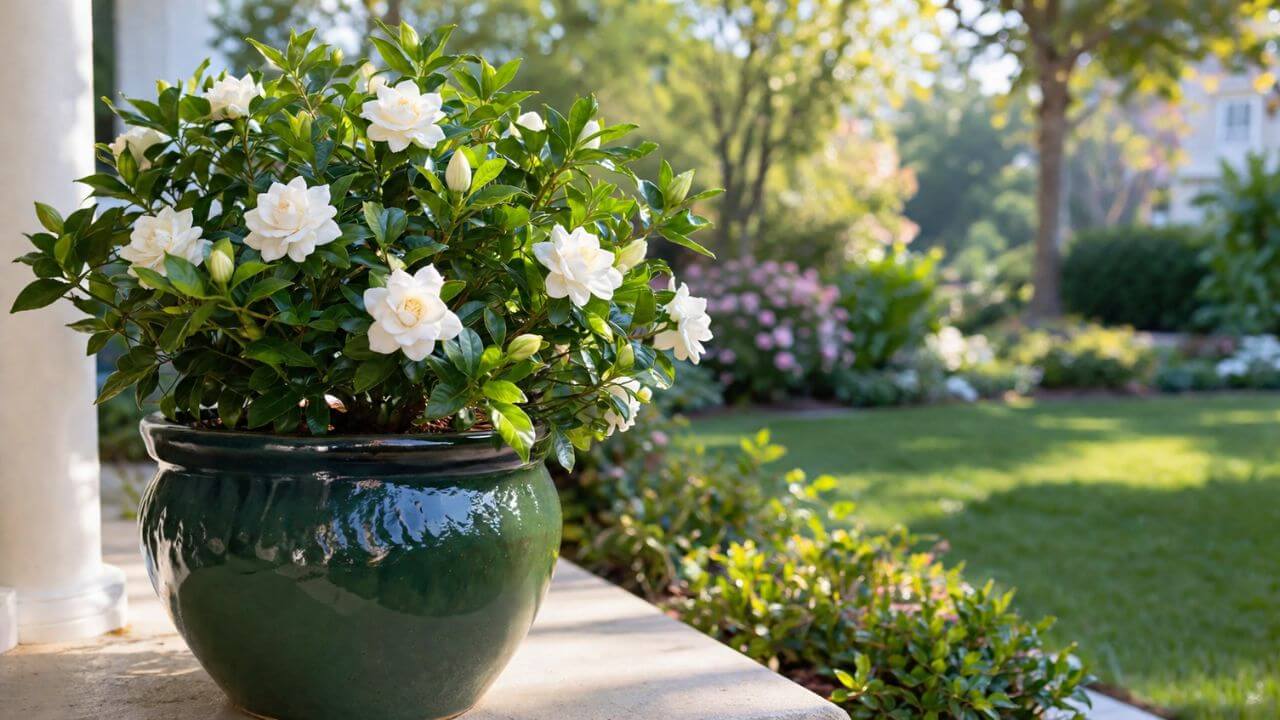
Use acidic potting soil, provide morning sun, and water consistently. Healthy potted gardenias reward you with glossy leaves and fragrant blooms.
Nothing is more frustrating than bringing home a beautiful gardenia only to see yellow leaves or dropped buds a few weeks later. The problem is rarely the plant. It’s usually the growing conditions.
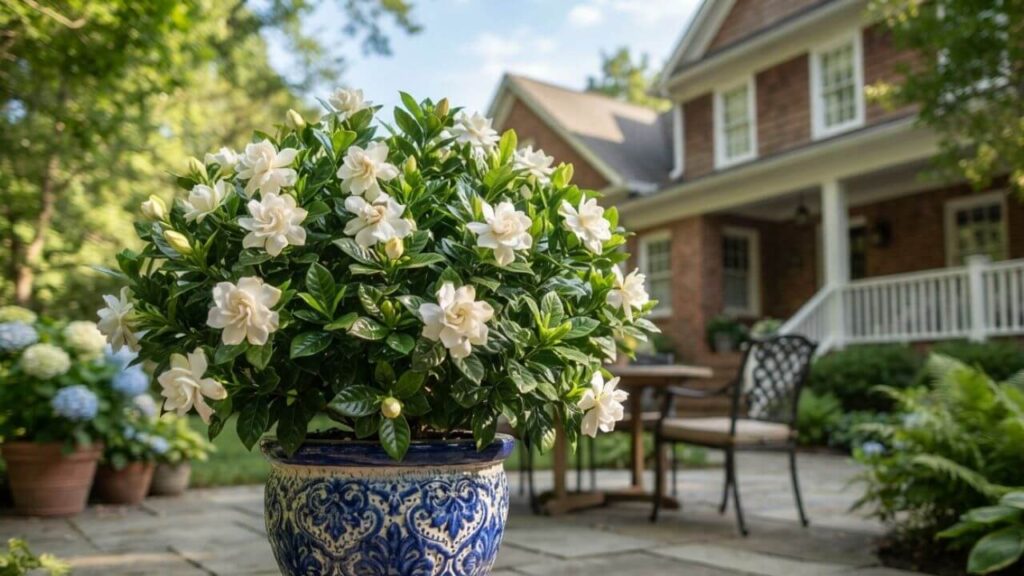
Growing Gardenias In Pots gives you more control over soil, watering, and temperature. Give your plant the conditions it needs, and it will reward you with glossy green leaves and fragrant white blooms season after season.
Why Grow Gardenias in Pots?
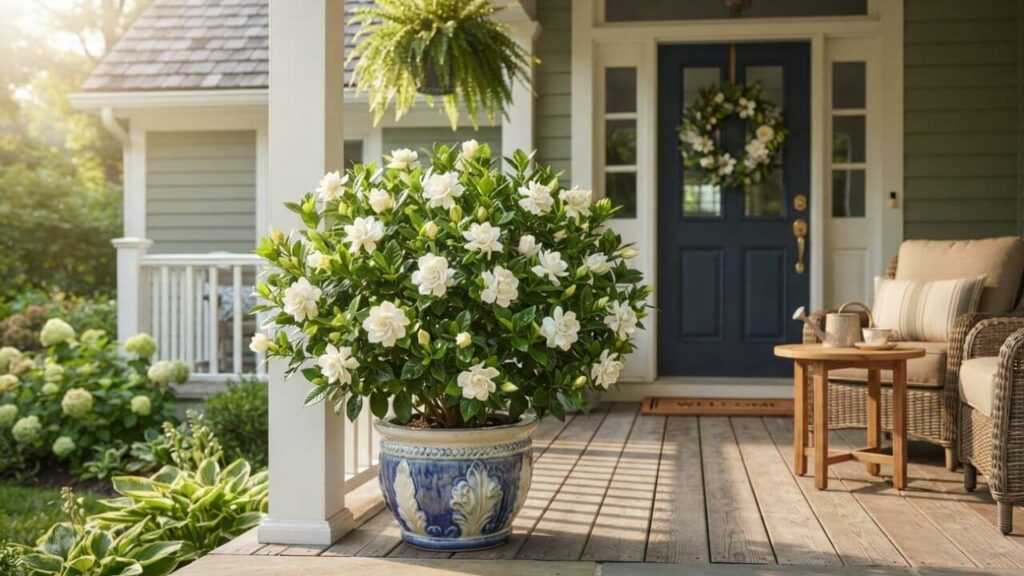
Gardenias have a reputation for being fussy, but containers solve many of the challenges gardeners face. Instead of trying to improve poor garden soil, you create the ideal growing environment from the start.
A container also gives you flexibility throughout the year. During summer, you can move the plant away from intense afternoon sun. In winter, you can protect it from freezing temperatures by moving it indoors or into a sheltered area. This makes container gardening a practical choice for homeowners across much of the United States.
Growing gardenias in containers is especially helpful if you:
- Have clay or alkaline soil
- Garden on a patio, deck, or balcony
- Live outside USDA Zones 8–11
- Want an easy-to-maintain flowering container plant
I’ve found that container-grown gardenias are also easier to monitor. Because they’re close to eye level, it’s much simpler to notice dry soil, yellow leaves, or insect problems before they become serious.
Best Gardenia Varieties for Containers
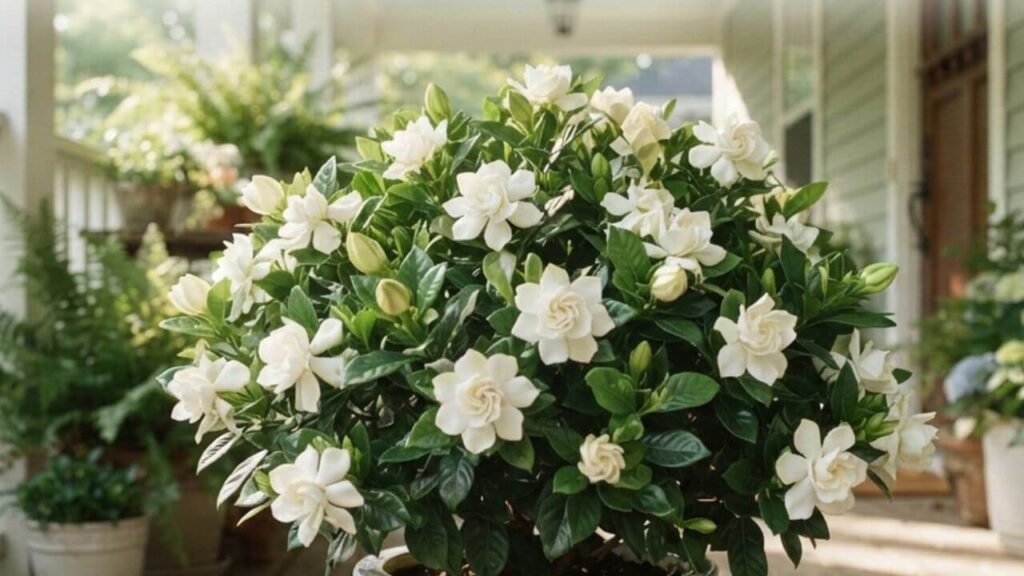
Not every gardenia is a good fit for container growing. Some varieties stay naturally compact, while others quickly outgrow even large planters.
Choosing the right variety now means less pruning, fewer repotting jobs, and a healthier plant over time.
Best Compact Varieties
If you’re growing gardenias on a patio or small porch, these cultivars are excellent choices:
| Variety | Best For |
| Buttons | Small containers and patios |
| Radicans | Low-growing planters and window boxes |
| Kleim’s Hardy | Cooler climates with light winter frost |
These varieties stay relatively compact while producing the same fragrant blooms as larger gardenias.
Best Larger Varieties
If you want a statement plant near your front entrance or on a large deck, consider:
- August Beauty – Long bloom season with large double flowers.
- Frostproof – Reliable flowering and better cold tolerance than many traditional varieties.
Choose a larger decorative container from the beginning to reduce the need for frequent repotting.
How to Choose a Healthy Plant
A healthy start makes future care much easier.
Before buying, inspect the plant carefully.
Choose one with:
- Dark green, glossy leaves
- Firm stems
- Several unopened flower buds
- No insects or sticky residue
- Healthy white roots if visible through the drainage holes
Avoid plants with yellow foliage or black leaf spots, as they may already be under stress.
Choosing the Right Pot
The container affects more than appearance. It influences root health, watering frequency, and drainage, all of which directly affect flowering.
Choose the Right Size
Start with a container that’s 2 to 4 inches wider than the nursery pot. This gives the roots room to grow without surrounding them with excess wet soil.
As a quick guide:
| Plant Size | Pot Size |
| 1-gallon plant | 12-inch pot |
| 2-gallon plant | 14–16-inch pot |
| Mature gardenia | 18–20-inch pot |
Avoid planting into an oversized container. Excess soil stays wet longer and increases the risk of root rot.
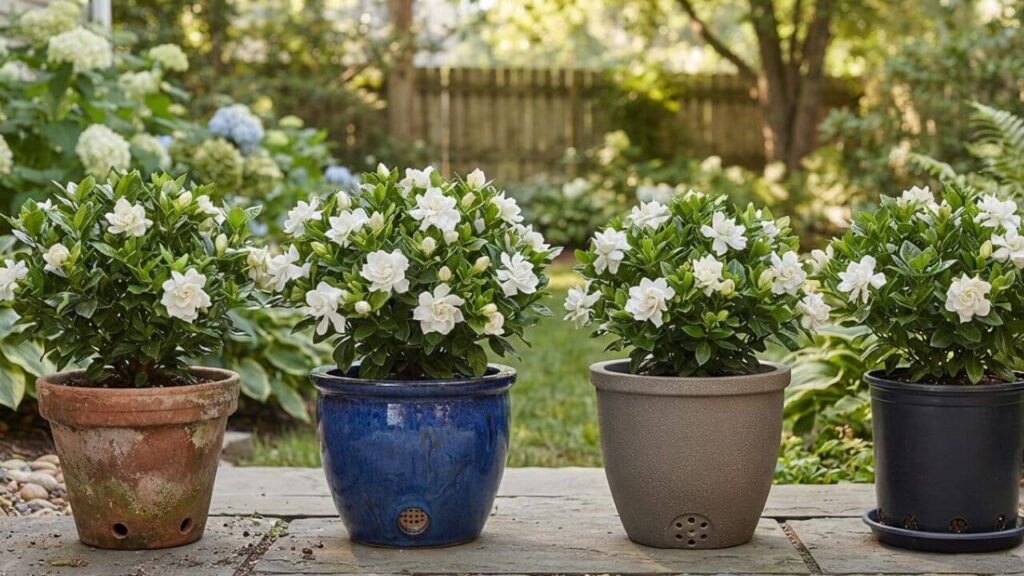
Best Pot Materials
Each material has advantages.
- Terracotta dries quickly and improves airflow around the roots.
- Glazed ceramic holds moisture longer and works well in warm climates.
- Resin or plastic is lightweight and easy to move.
- Concrete provides excellent stability for large plants but is difficult to relocate.
For most homeowners, glazed ceramic offers the best balance between durability and moisture retention.
Never Compromise on Drainage
Every container must have drainage holes.
Without them, water collects around the roots and reduces oxygen, creating perfect conditions for root rot.
If you like decorative cachepots, keep the gardenia inside a plastic nursery pot and remove it for watering. This simple trick combines good drainage with an attractive display.
Best Soil for Potted Gardenias
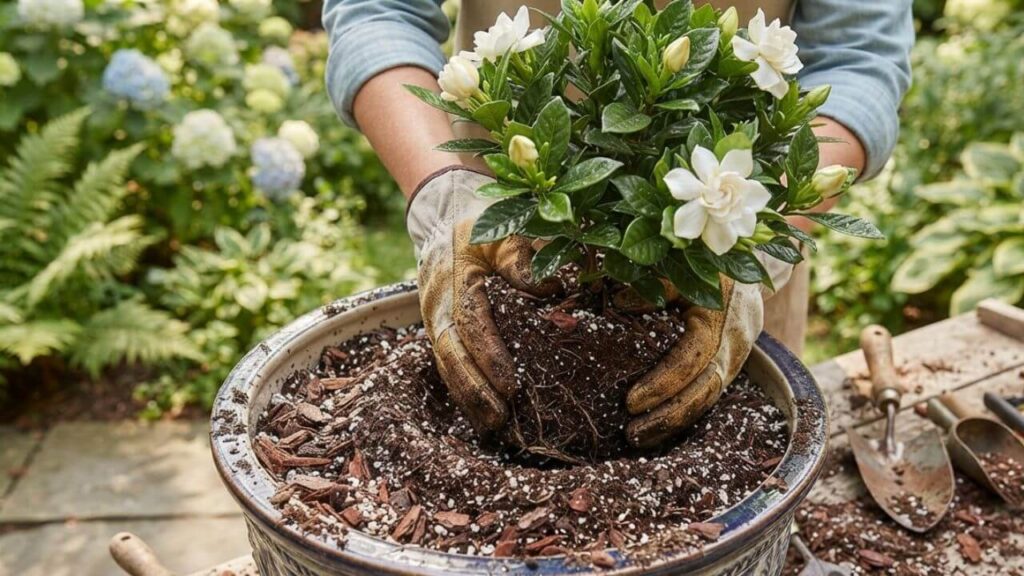
Healthy roots are the foundation of a healthy gardenia. Even the best fertilizer can’t fix poor soil, so choosing the right potting mix is one of the most important steps in growing gardenias in containers.
Gardenias prefer loose, well-draining soil that holds enough moisture for the roots without becoming waterlogged. They also need acidic soil to absorb nutrients properly. If the pH climbs too high, leaves can turn yellow even when you’re fertilizing regularly.
Build the Right Soil Mix
A quality commercial potting mix designed for acid-loving plants is the easiest option. If you’re mixing your own soil, aim for a blend that drains well while staying evenly moist.
A reliable mix includes:
| Ingredient | Purpose |
| Potting mix | Holds moisture and nutrients |
| Pine bark fines | Improves drainage and acidity |
| Perlite | Increases airflow around roots |
This combination stays loose longer than ordinary garden soil and reduces the chance of root rot.
Keep the Soil Slightly Acidic
Gardenias grow best in soil with a pH between 5.0 and 6.0.
If your tap water is naturally alkaline, test the soil once or twice a year. Over time, the pH can rise and make it harder for the plant to absorb iron. Yellow leaves with dark green veins are often the first warning sign.
A soil test is far more useful than guessing. It tells you whether the problem is nutrition, watering, or soil pH.
How to Grow Gardenias in Pots
Once you’ve chosen the right variety, container, and soil, planting is simple. Taking your time during this stage helps the roots establish quickly and reduces transplant shock.
Step 1: Prepare the Container
Cover the drainage holes with a piece of mesh or landscape fabric to keep the soil from washing out.
Add enough potting mix so the top of the root ball will sit about an inch below the rim of the container. Leaving this space makes watering much easier later.
Step 2: Remove the Plant
Slide the gardenia out of its nursery pot carefully.
If the roots are tightly wrapped around the root ball, loosen them gently with your fingers. This encourages the roots to spread into the new soil instead of continuing to circle.
Avoid pulling on the stems. Gardenias have brittle branches that snap more easily than many shrubs.
Step 3: Plant at the Correct Depth
Place the plant in the center of the pot.
The top of the root ball should be level with the surrounding soil. Planting too deeply traps moisture around the stem and increases the risk of rot.
Fill around the roots and gently firm the soil with your hands. Don’t pack it tightly because the roots need air as well as moisture.
Step 4: Water Thoroughly
Water slowly until excess water drains from the bottom of the container.
This settles the soil around the roots and removes hidden air pockets.
Wait about two weeks before applying fertilizer. Freshly transplanted roots need time to recover before they’re encouraged to produce new growth.
Essential Gardenia Care in Pots
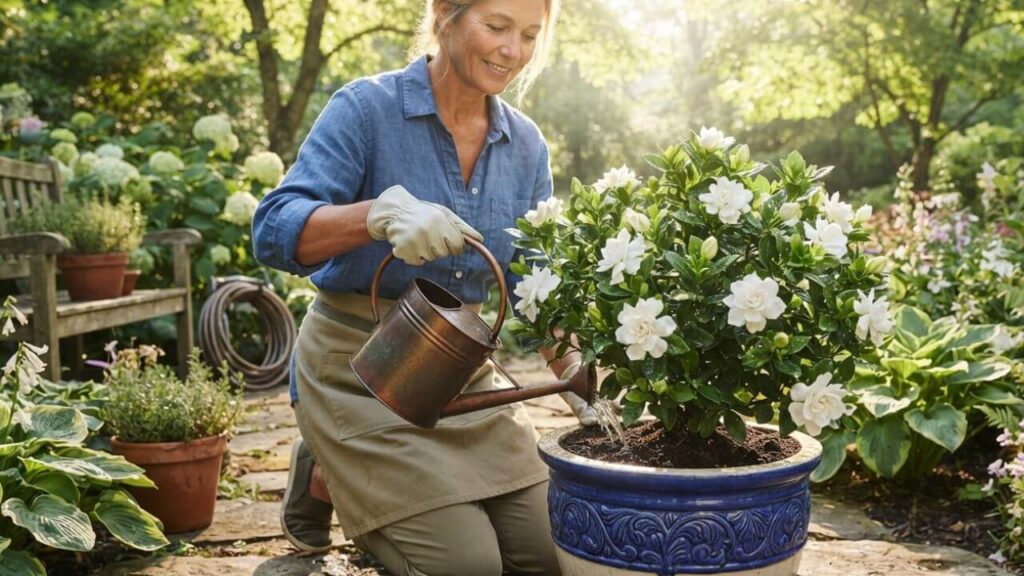
After planting, consistent care matters more than anything else. Gardenias don’t need constant attention, but they do respond best to a steady routine. Large swings in watering, temperature, or light are more likely to cause problems than an occasional missed feeding.
Watering Gardenias in Pots
One of the most common questions is how often to water gardenias in pots. The answer depends on the weather, container size, and season.
Instead of watering on a schedule, check the soil first. Push your finger about an inch into the potting mix. If it feels dry, it’s time to water.
For the best results:
- Water deeply until it drains from the bottom.
- Water early in the day so leaves dry before evening.
- Empty saucers after watering.
- Reduce watering during winter when growth slows.
During a hot summer, you may need to water every few days. In cooler weather, the same plant may only need water once a week.
Sunlight Requirements
Gardenias bloom best with four to six hours of direct morning sun.
In the southern United States, strong afternoon sun can scorch leaves during midsummer. A location with bright morning light and light afternoon shade usually provides the best balance.
If your plant produces plenty of leaves but very few flowers, inadequate sunlight is often the reason.
Fertilizing for Healthy Growth
Regular feeding helps support healthy foliage and flower production.
Use the best fertilizer for gardenias in pots, preferably one formulated for acid-loving plants. Apply it every four to six weeks from early spring through midsummer, following the label directions.
More fertilizer won’t produce more flowers. Overfeeding can damage roots and leave salt deposits in the soil, leading to brown leaf edges.
Temperature and Humidity
Gardenias prefer daytime temperatures between 65°F and 75°F with slightly cooler nights.
If you’re growing a gardenia in a pot indoors during winter, dry household air can become a challenge. A pebble tray or small humidifier helps maintain moisture around the plant without keeping the soil overly wet.
Keep the container away from heating vents, fireplaces, and cold drafts. Sudden temperature changes often cause flower buds to drop before they open.
How to Keep Gardenias Blooming
Healthy leaves don’t always mean you’ll get flowers. Gardenias set buds only when light, moisture, nutrients, and temperature stay consistent. If one of those factors changes suddenly, the plant may drop its buds before they open.
The easiest way to encourage more blooms is to avoid stressing the plant during the growing season. Once flower buds appear, try not to move the container unless you have to.
To keep your potted gardenia plant blooming:
- Give it 4–6 hours of morning sun each day.
- Keep the soil evenly moist, not wet.
- Feed with an acid-loving fertilizer from spring through midsummer.
- Remove faded flowers to keep the plant tidy.
- Prune only after the blooming season ends.
A healthy gardenia follows a natural cycle. It produces new growth in spring, sets buds, blooms through the warm months, and slows down as temperatures cool.
Common Problems and How to Fix Them
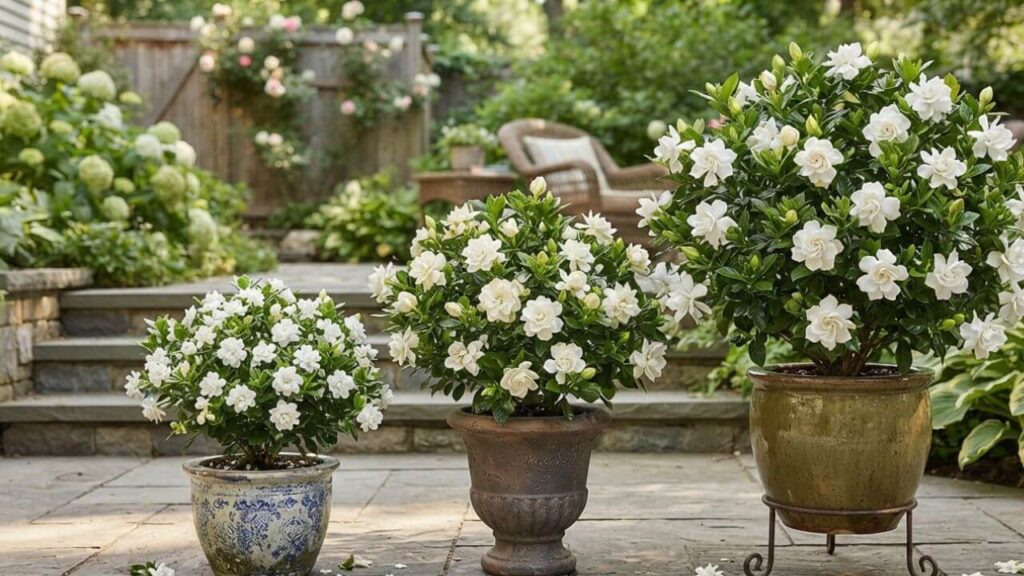
Even with good care, gardenias sometimes show signs of stress. The key is identifying the problem early instead of treating every issue with more fertilizer or extra water.
| Problem | Likely Cause | Solution |
| Yellow leaves | Overwatering, high soil pH, iron deficiency | Check drainage and test soil pH |
| Flower buds falling | Sudden temperature or moisture changes | Keep watering and temperature consistent |
| Brown leaf edges | Dry soil or fertilizer buildup | Water deeply and flush the soil |
| No flowers | Too little sunlight or improper pruning | Increase light and prune after blooming |
| Wilting | Dry soil or root damage | Check soil moisture before watering |
Yellow Leaves
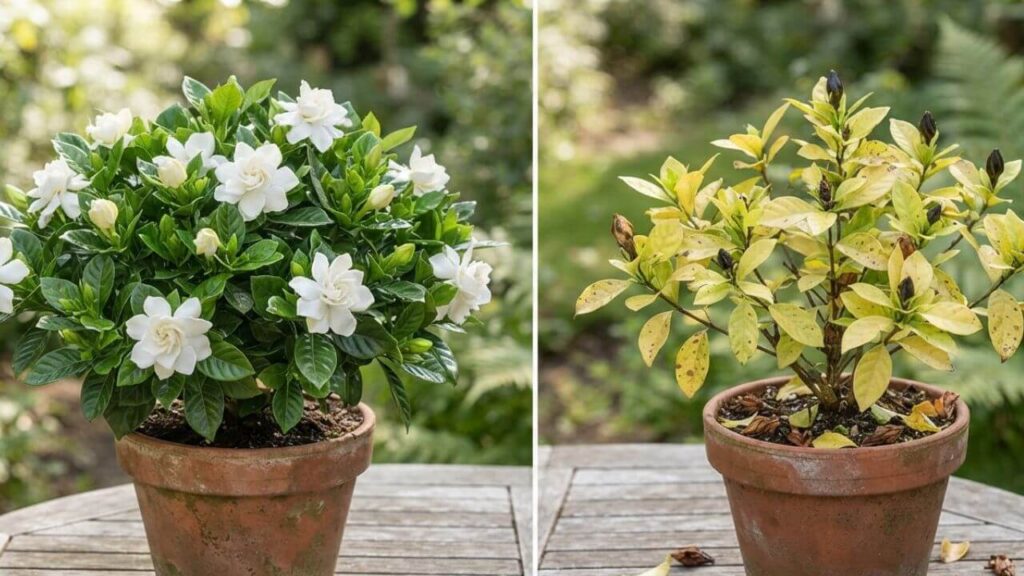
Yellow leaves are usually the first sign that something needs attention. If older leaves yellow gradually, that’s normal. If several leaves turn yellow at once, inspect the soil before doing anything else.
Wet soil points to overwatering, while dry soil means the roots need more moisture. If watering looks correct, test the soil pH. Gardenias can’t absorb iron efficiently in alkaline soil, even when nutrients are present.
Bud Drop
Gardenias dislike sudden changes.
Flower buds may fall because of:
- Inconsistent watering
- Hot, dry winds
- Moving the container
- Low humidity
- Cold nights
Keeping the plant in one location and watering consistently solves most bud drop problems.
Root Rot
Root rot develops when the roots stay wet for long periods.
Common signs include:
- Soft or black roots
- Yellow leaves
- Wilting despite wet soil
- Slow growth
Remove the plant from the pot, trim damaged roots with clean pruners, and repot it in fresh, well-draining soil. If more than half the roots are damaged, recovery may take several months.
Gardenia Pruning Tips
Pruning helps maintain a full, balanced shape and encourages healthy new growth. The best time to prune is right after flowering because next year’s buds begin forming later in the season.
Focus on removing:
- Dead branches
- Weak stems
- Crossing branches
- Spent flowers
Avoid heavy pruning in late summer or fall. Cutting at the wrong time removes developing flower buds and reduces next year’s blooms.
If your gardenia becomes leggy, shorten the longest branches by a few inches rather than cutting the entire plant back at once.
Repotting Gardenias
A healthy gardenia eventually fills its container with roots. Repotting gives those roots fresh soil and more space to grow.
Most plants need repotting every two to three years.
Signs it’s time include:
- Roots growing through drainage holes
- Water draining straight through the pot
- Slower growth than previous seasons
- Fewer flowers
Move the plant into a container that’s only one size larger. A pot that’s too large stays wet longer, increasing the risk of root rot.
After repotting, water thoroughly and place the plant in bright, indirect light for several days while it settles into its new container.
Seasonal Care
Gardenias need slightly different care as the seasons change.
Spring
This is the start of active growth.
- Begin regular fertilizing.
- Increase watering as temperatures rise.
- Watch for new flower buds.
- Check for insects on fresh growth.
Summer
Summer is when gardenias need the most attention.
Water whenever the top inch of soil dries out, especially during heat waves. If afternoon temperatures stay above 90°F, provide light shade to protect leaves and flowers.
Fall
As temperatures cool, reduce fertilizer and water less frequently.
This is also a good time to remove fallen leaves and clean around the container before winter.
Winter
In USDA Zones 8–11, most gardenias remain outdoors.
In colder regions, move containers indoors before the first hard freeze. Place them near a bright window away from heating vents and water only when the soil begins to dry.
Common Mistakes to Avoid
Most gardenia problems come from a few simple mistakes.
Avoid these common issues:
- Using garden soil instead of potting mix
- Planting in a pot without drainage holes
- Watering on a fixed schedule instead of checking the soil
- Applying too much fertilizer
- Pruning after new flower buds have formed
- Growing the plant in deep shade
Making one small adjustment is often enough to improve the plant’s health. Changing several things at once makes it harder to identify what actually solved the problem.
Frequently Asked Questions
Can gardenias stay in pots year-round?
Yes. Gardenias grow well in containers year-round. In colder climates, move the container indoors or to a sheltered location before freezing temperatures arrive.
How often should I water gardenias in pots?
Check the soil every few days. Water when the top inch feels dry instead of following a fixed schedule.
What is the best fertilizer for gardenias in pots?
Choose a fertilizer formulated for acid-loving plants and apply it every four to six weeks during the growing season.
Why are my gardenia leaves turning yellow?
Overwatering, alkaline soil, poor drainage, or iron deficiency are the most common causes. Check soil moisture and pH before adding fertilizer.
When should I repot my gardenia?
Repot every two to three years or when roots begin circling the pot or growing through the drainage holes.
Conclusion
Growing Gardenias In Pots is easier than many gardeners expect once you provide the right growing conditions. Start with a well-draining container, use acidic potting soil, and place the plant where it receives plenty of morning sun. Keep the soil evenly moist, feed regularly during the growing season, and prune after flowering to encourage healthy growth.
If your gardenia isn’t thriving, avoid making several changes at once. Check the soil, light, and watering routine first, then adjust one factor at a time. With a little patience and consistent care, your container-grown gardenia can reward you with glossy evergreen foliage and fragrant blooms for many seasons.

I enjoy sharing simple gardening ideas, lawn care tips, and honest product reviews that help make outdoor work easier. From home gardening guides to helpful tools and lawn care advice, I write easy-to-follow content to help readers create a healthier and better-looking outdoor space without wasting time or money.