
As an Amazon Associate, I earn from qualifying purchases.
Why is my grass turning brown? In most cases, the problem comes down to water stress, extreme heat, poor mowing, soil problems, or disease. Brown grass does not always mean the lawn is dead. It may be dormant and able to recover when conditions improve.
The first step is to look closely at the pattern. Is the whole lawn brown, or are there small brown patches? Does the grass pull out easily? Did the color change after mowing, heavy rain, or a hot spell? These clues can help you find the real cause instead of treating the wrong problem.
10 Common Causes of Brown Grass
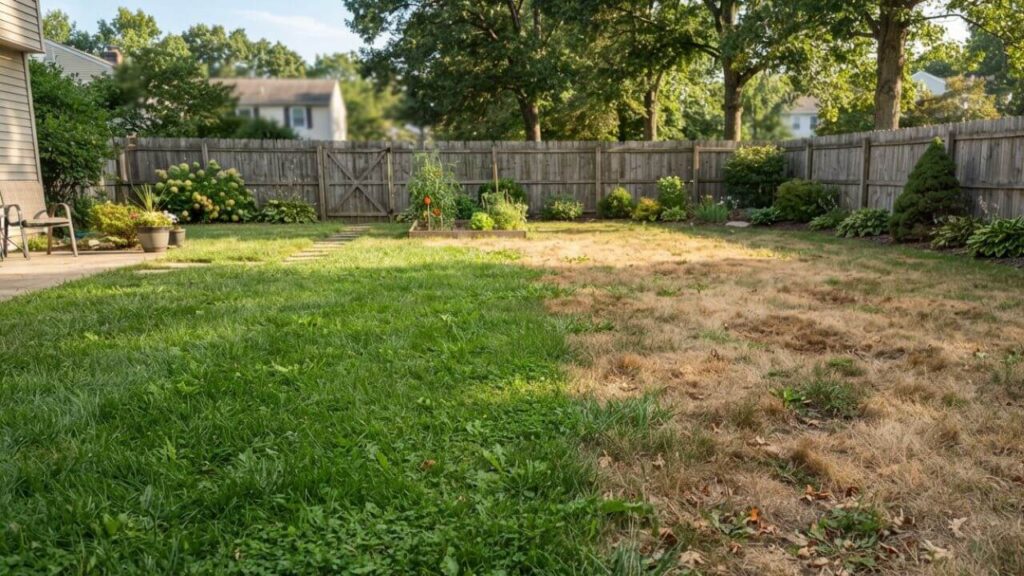
Brown grass can result from several problems at once. Your lawn may also react differently based on grass type, soil, weather, and local climate.
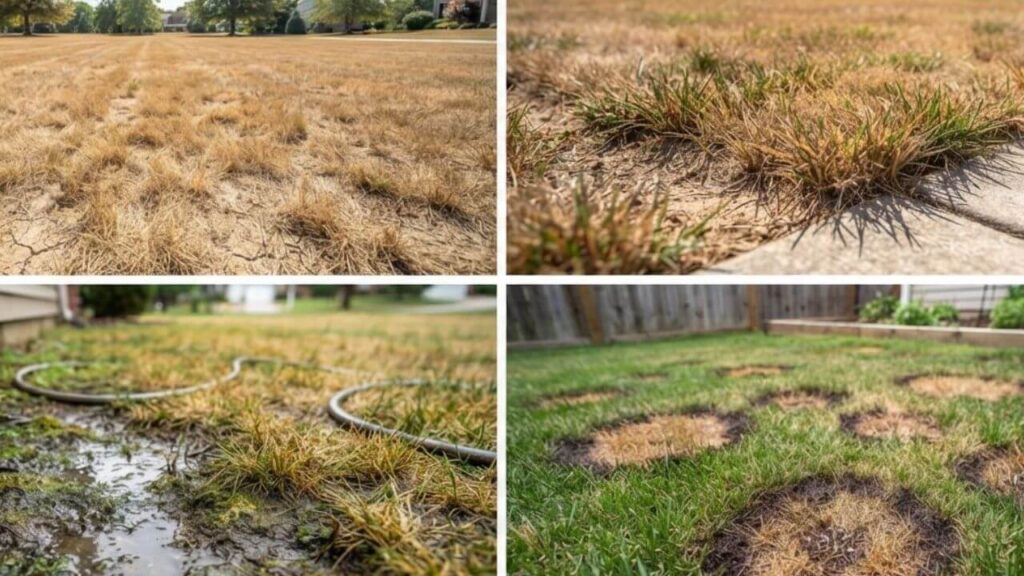
Here are the most common causes of brown lawns in U.S. yards.
1. Drought and Lack of Water
Drought is one of the most common reasons for grass turning brown in summer. During extended dry weather, grass loses moisture faster than the soil can replace it. The blades may turn dull green, then brown, as the plant enters a stress or dormant state.
A lawn turning brown from lack of water may still recover after proper irrigation. Check the soil before adding more water. Push a screwdriver or soil probe into the ground. If the soil feels dry several inches below the surface, your lawn may need a deep watering.
I recommend watering deeply rather than giving your lawn a light sprinkle every day. Deep watering encourages stronger roots and helps the soil hold moisture longer. Follow local watering restrictions, especially during drought conditions.
2. Too Much Water or Poor Drainage
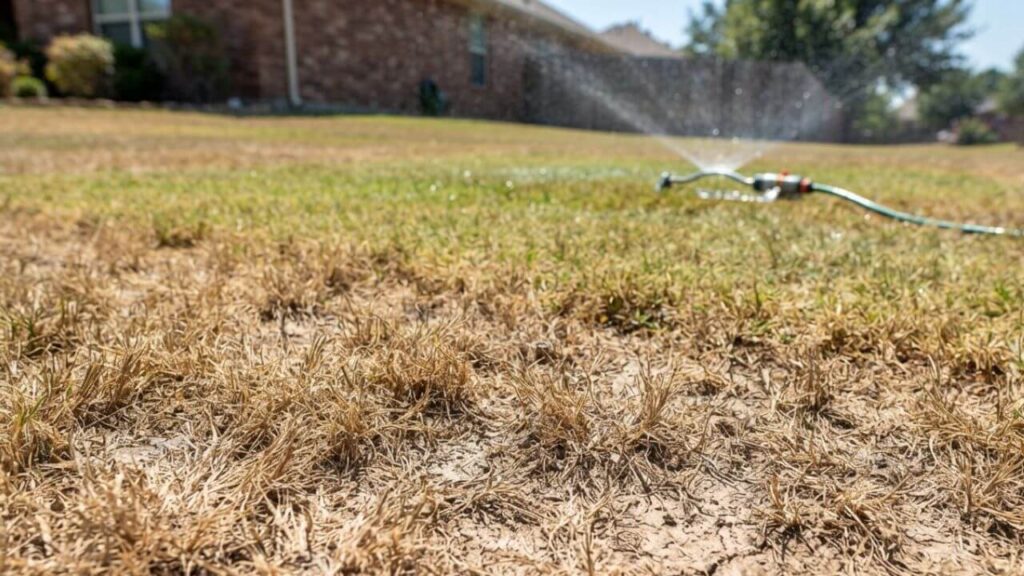
Brown grass from overwatering can look confusing because the lawn may appear dry even though the soil is wet. Excess water can reduce oxygen around the roots and create conditions that favor fungal diseases.
Check areas that stay wet after rain or irrigation. Heavy clay soil, compacted ground, and poor drainage can keep water around the roots for too long.
If grass is turning brown after rain, inspect the soil and drainage before adding more water. You may need to improve soil structure, reduce irrigation, or correct a drainage problem.
Avoid watering on a fixed schedule when the lawn already receives enough natural rainfall. Instead, check soil moisture and adjust your watering routine.
3. Heat Stress
Extreme temperatures can cause grass turning brown in summer, especially during heat waves. This problem becomes more severe when hot weather combines with drought, low humidity, or strong winds.
Cool-season grasses such as Kentucky bluegrass, tall fescue, and perennial ryegrass can struggle during intense summer heat. Warm-season grasses such as Bermuda, zoysia, and St. Augustine perform better in hot weather but can still turn brown under severe drought or other stress.
Mowing too short during a heat wave can make the problem worse. Taller grass provides more shade to the soil and protects the crown of the plant.
If your lawn is turning brown in hot weather, maintain proper mowing height and monitor soil moisture. Avoid heavy fertilizing during extreme heat unless a local lawn professional recommends it.
4. Mowing Too Short
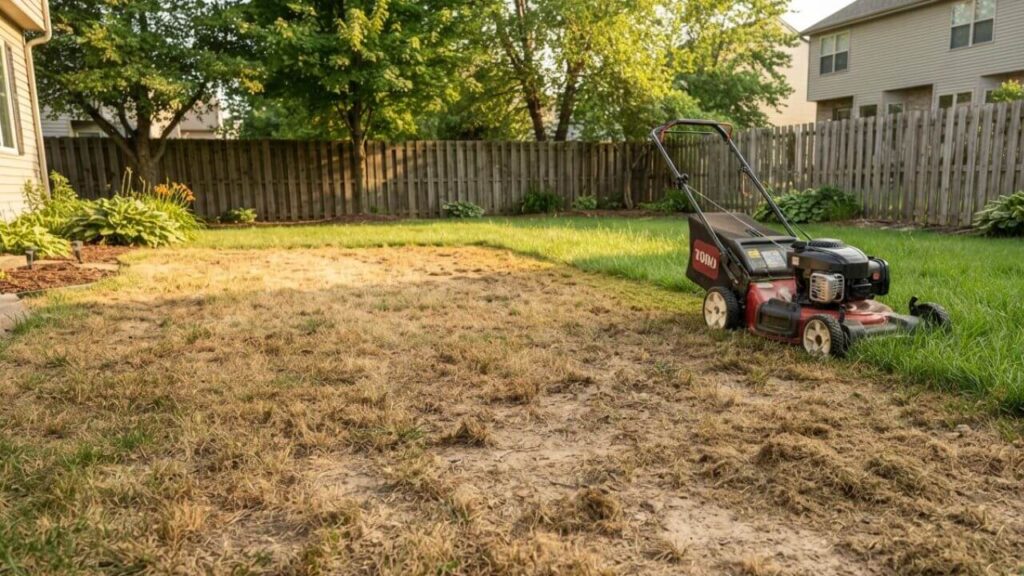
Grass turning brown after mowing can result from cutting too much of the blade at once. This mistake is common when homeowners let the lawn grow tall and then cut it very short.
Short mowing can expose the soil to more sunlight and increase moisture loss. It can also stress the grass, especially during hot or dry weather.
A good rule is to avoid removing more than one-third of the grass blade in a single mowing. Keep your mower blades sharp, too. A dull blade can tear the grass instead of making a clean cut.
If your lawn becomes brown after mowing, raise the mowing height and allow the grass to recover. Your ideal mowing height depends on the grass species, so identify your grass before making major changes.
5. Pet Urine
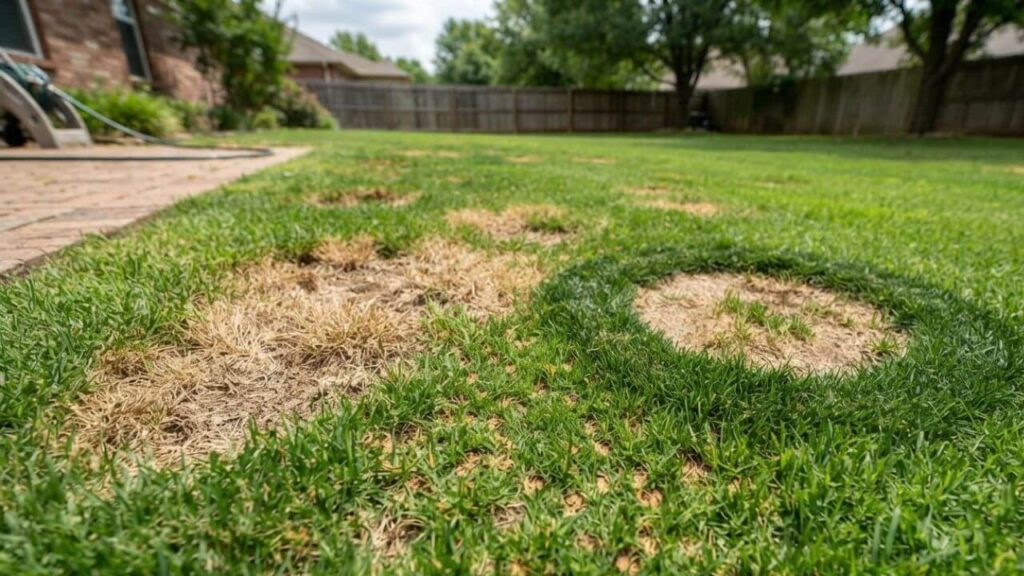
Brown grass from pet urine often appears as small, round or irregular patches. The center may look brown, while the surrounding grass can appear darker green.
Dog urine contains nitrogen and salts that can damage grass when concentrated in one small area. This problem is more noticeable when the same spot receives repeated use.
The simplest solution is to train pets to use different areas of the yard. You can also rinse the affected area with water soon after your dog urinates there. This helps dilute the concentrated urine.
Reseeding or repairing the area may be necessary if the grass has died. Choose a seed or sod type that matches the existing lawn for the best appearance.
6. Fertilizer Burn
Brown grass from fertilizer can appear suddenly after an application. Too much fertilizer can increase salt levels around the roots and damage the grass.
Spilled fertilizer may also create distinct brown or dead patches. These areas often match the shape of the spill or the path of a spreader.
If you suspect fertilizer burn, water the affected area deeply to help move excess salts below the root zone. Do this only when drainage is good and local water restrictions allow it.
Always follow the product label. More fertilizer does not mean faster growth. Applying the correct amount at the right time is safer for your lawn and the environment.
7. Lawn Disease
Fungal diseases can cause brown patches in lawn areas, especially during warm, humid, or wet conditions. Symptoms vary by grass type and disease.
Look for unusual patterns such as circular patches, thin areas, small spots on individual blades, or a gray or white fungal growth. Some diseases spread quickly, while others develop slowly.
Avoid treating every brown patch with fungicide. Many brown lawn problems are caused by drought, mowing, or watering issues. Fungicides also work best when you identify the disease correctly.
If you suspect disease, take clear photos and contact your local university extension service for help with identification. Correct diagnosis can save time and money.
8. Insects and Lawn Pests
Certain insects can damage grass roots and cause brown patches. White grubs, chinch bugs, and other turf pests may weaken or kill sections of lawn.
Brown areas caused by insects may expand over time. In some cases, the grass may lift easily because the roots have been damaged.
Do not automatically apply an insecticide just because your lawn is brown. First, inspect the grass and soil for signs of pests. Some insects are harmless or beneficial, and unnecessary pesticide use can harm helpful organisms.
If you find a serious infestation, identify the pest before choosing a treatment. Follow all product directions and keep children and pets away from treated areas as required by the label.
9. Compacted Soil
Compacted soil can prevent roots from getting enough air, water, and nutrients. This problem is common in lawns that receive heavy foot traffic or grow in dense clay soil.
You may notice that water runs off the surface instead of soaking into the ground. Grass may also grow thin and become brown during stressful weather.
Core aeration can help relieve compaction in many established lawns. The process removes small plugs of soil and creates channels for air, water, and roots.
For cool-season lawns, early fall is a good time for aeration in many regions. Warm-season grasses are often aerated during active growth. Timing should match your grass type and local climate.
10. Seasonal Dormancy
Sometimes brown grass is not dead grass. It is dormant.
Warm-season grasses such as Bermuda, zoysia, and St. Augustine may turn brown during winter in areas where temperatures drop below their active growth range. This is normal seasonal dormancy.
Cool-season grasses can also become dormant during severe summer heat and drought. The grass may stop growing until temperatures and moisture conditions improve.
Before replacing a brown lawn, check whether the crowns and roots are still alive. Pull gently on a small section of grass. If the plant remains firmly rooted, it may recover when conditions improve.
How to Tell What Is Causing Brown Patches in Lawn
The pattern of damage can provide valuable clues. Before treating your lawn, walk through the affected area and look for changes in shape, soil moisture, and grass health.
Use this quick guide to narrow down the cause:
| What You Notice | Possible Cause | What to Check |
|---|---|---|
| Whole lawn turns brown | Drought, heat, dormancy | Soil moisture and grass type |
| Round brown spots | Pet urine or disease | Spot pattern and blade symptoms |
| Brown grass after mowing | Mowing stress | Cutting height and blade sharpness |
| Brown patches after rain | Poor drainage or disease | Wet soil and drainage |
| Brown grass despite watering | Compaction, roots, disease | Soil and root health |
| Sudden brown areas | Fertilizer or chemical damage | Recent applications |
| Grass lifts easily | Insect damage | Roots and soil insects |
The biggest beginner mistake is treating the symptom instead of finding the cause. Watering a lawn with a fungal disease may make the problem worse. Applying fertilizer to drought-stressed grass can also create additional damage.
How to Fix Brown Grass and Revive a Brown Lawn
Once you identify the cause, focus on correcting the underlying problem. Healthy grass usually needs the right balance of water, sunlight, nutrients, mowing, and soil conditions.
Fix Your Watering Routine
If the lawn is brown from drought or underwatering, improve your irrigation routine. Water deeply enough to moisten the root zone, then allow the soil to dry slightly before watering again.
Early morning is a good time to water because it reduces evaporation and gives grass time to dry during the day. Avoid frequent shallow watering when possible.
A rain gauge or inexpensive soil moisture meter can help you avoid guessing. Your lawn’s water needs will change with rainfall, temperature, soil type, and grass species.
Adjust Your Mowing Height
Raise the mower deck if your grass is struggling during hot or dry weather. Taller blades can help shade the soil and reduce moisture loss.
Never remove more than one-third of the grass height in one mowing session. If the lawn has grown too tall, lower the height gradually over several mowing sessions.
Keep mower blades sharp. A clean cut reduces unnecessary stress and helps the lawn maintain a healthier appearance.
Improve Soil and Drainage
If your lawn stays wet or struggles to absorb water, inspect the soil. Compaction can prevent water from reaching the roots and can also limit oxygen movement.
Core aeration can improve water and air movement in compacted lawns. For persistent drainage problems, you may need to correct grading or improve soil structure.
Do not add a thick layer of soil over existing grass without a clear plan. Poorly applied topsoil can bury the grass and create additional drainage problems.
Repair Dead Areas
If the grass has completely died, you may need to reseed or replace the damaged section. Remove dead material and correct the original problem first.
For example, do not reseed a brown patch caused by poor drainage without fixing the drainage. The new grass will likely struggle in the same location.
Match the new seed or sod to your existing grass and climate. Water the repaired area carefully until the new grass becomes established.
How to Make Brown Grass Green Again
The best way to make brown grass green again is to correct the cause rather than simply adding water or fertilizer. Start by determining whether the grass is dormant, stressed, or actually dead.
Scratch a small brown area with your fingernail or gently inspect the crown. Living grass may show green tissue near the base, while completely dead plants will not recover without replacement.
If drought caused the problem, improve watering. If mowing caused it, raise the mowing height. If disease or pests caused the damage, identify the problem before applying treatment.
Give the lawn time to respond. Grass does not always turn green overnight after conditions improve. Healthy roots need time to produce new growth, especially after prolonged heat or drought.
Why Is My Grass Turning Brown Despite Watering?
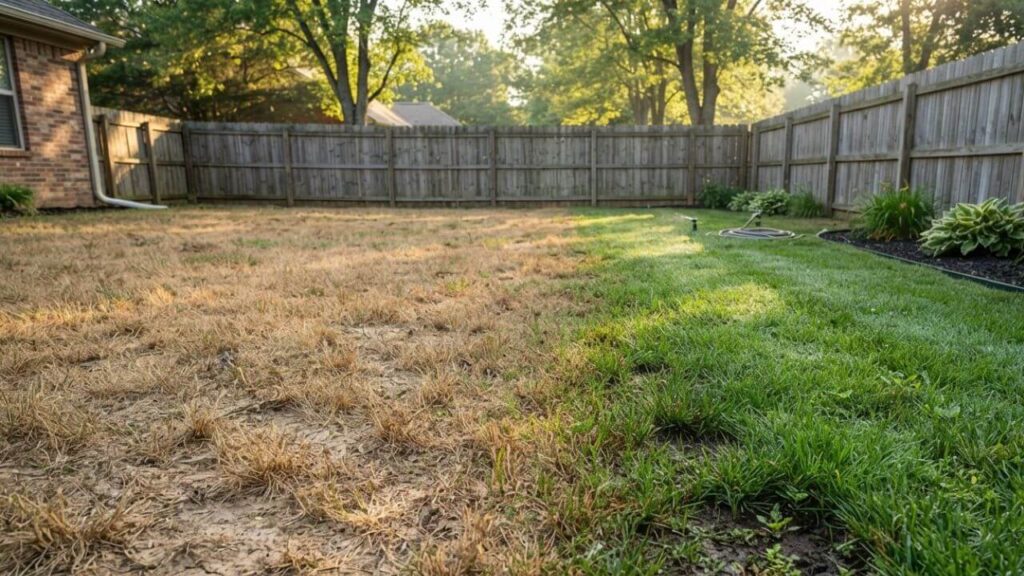
If your grass is turning brown despite watering, the problem may not be a lack of water. Several less obvious issues can prevent grass from recovering.
Compacted soil can stop water from reaching the roots. Poor drainage can also leave roots stressed even when the surface looks wet. A broken sprinkler or uneven irrigation system may leave some areas dry while others receive too much water.
Disease and insect damage can also cause brown grass despite regular watering. Another possibility is that your grass has entered seasonal dormancy.
Check the soil several inches deep instead of judging moisture from the surface. Also inspect the sprinkler coverage by placing small containers around the lawn during irrigation. This can reveal dry spots and uneven water distribution.
How to Fix Brown Patches in Lawn Without Making Things Worse
The safest approach is to diagnose the patch before applying products. Brown patches can have very different causes, and the wrong treatment may waste money or increase stress.
Start by checking the shape. Small circles may suggest pet urine or disease. Large irregular areas may point toward drought, irrigation problems, or environmental stress.
Next, inspect the soil and roots. Look for excessive moisture, dry soil, insects, or loose grass. Think about recent events, too. Did you apply fertilizer? Did temperatures suddenly rise? Did heavy rain occur?
Once you identify the likely cause, make one change at a time. This makes it easier to see what works and prevents you from overcorrecting the lawn.
Climate Considerations for U.S. Lawns
The cause of brown grass can vary widely across the United States. Your grass type and regional climate should guide your lawn care decisions.
In the Northeast and Midwest, cool-season grasses may struggle during hot, dry summers. They can also turn brown during winter dormancy.
In the South and Southeast, warm-season grasses grow actively during the warm months but may suffer from drought, heat, poor drainage, or fungal disease.
In the Southwest, extreme heat and limited rainfall make water management especially important. Local restrictions may also limit irrigation.
In the Pacific Northwest, summer drought can stress lawns even when the region receives heavy winter rainfall. Poor drainage and moss can also affect some lawns.
Always choose grass species and lawn practices suited to your local conditions. A lawn that works well in Minnesota may need a completely different care routine in Texas or Florida.
Common Mistakes That Make Brown Grass Worse
Avoid these common lawn care mistakes when trying to restore brown grass:
- Watering every day without checking soil moisture
- Cutting the grass too short
- Fertilizing drought-stressed grass
- Applying fungicide without identifying the disease
- Using insecticide without confirming a pest problem
- Ignoring compacted soil
- Overwatering areas that already drain poorly
- Reseeding before fixing the original cause
- Assuming every brown lawn is dead
- Ignoring local watering restrictions
In my experience, the best lawn recovery starts with observation. Spend a few minutes checking the soil, roots, mowing height, and damage pattern before reaching for a product.
FAQ Section
Why is my grass turning brown even though I water it?
Grass can turn brown despite watering because of compacted soil, poor drainage, uneven irrigation, disease, pests, or seasonal dormancy. Check the soil several inches below the surface and inspect the roots before adding more water.
How do I make brown grass green again?
First, identify why the grass turned brown. Correct watering problems, adjust mowing height, improve drainage, or address pests and disease as needed. If the grass is dormant, it may green up naturally when growing conditions improve.
Can brown grass come back to life?
Yes, brown grass can recover if the crowns and roots remain alive. Drought-stressed or dormant grass may turn green again after receiving suitable moisture and temperatures. Completely dead grass will need reseeding or replacement.
Why is my grass turning brown in summer?
Summer brown grass commonly results from drought, heat stress, underwatering, mowing too short, or disease. Cool-season grasses are especially vulnerable to hot, dry weather. Check soil moisture and avoid cutting the lawn too short.
Should I water brown grass every day?
Not necessarily. Daily watering can create shallow roots and may increase disease problems in some conditions. Water based on soil moisture, rainfall, grass type, and local weather. Deep, appropriate irrigation is usually better than frequent light watering.
Conclusion
If you are asking why is my grass turning brown, start by looking at the pattern instead of immediately adding water or fertilizer. Check the soil, roots, mowing height, recent weather, and signs of pests or disease.
For most homeowners, the best next step is simple. Identify whether the lawn is dry, overwatered, heat-stressed, dormant, or damaged by another problem. Then correct that specific issue and give the grass time to recover.
If the brown areas remain after you fix basic watering and mowing problems, take photos and contact your local university extension service for help. A correct diagnosis can save your lawn and prevent unnecessary treatments.

I enjoy sharing simple gardening ideas, lawn care tips, and honest product reviews that help make outdoor work easier. From home gardening guides to helpful tools and lawn care advice, I write easy-to-follow content to help readers create a healthier and better-looking outdoor space without wasting time or money.