As an Amazon Associate, I earn from qualifying purchases.
To grow cauliflower without curd discoloration, choose a variety suited to your USDA growing zone, plant during cool weather, maintain even soil moisture, provide balanced nutrients, and protect developing heads from direct sunlight by tying the outer leaves over them when needed.
Across the United States, cauliflower can be a rewarding crop in a home vegetable garden, but keeping its head clean and white takes careful timing. Gardeners in the Pacific Northwest, the Midwest, the Northeast, and the warmer southern states face different planting windows. The goal is the same: help the plant form a firm, compact curd before heat, dry soil, excess moisture, or pests damage its quality.
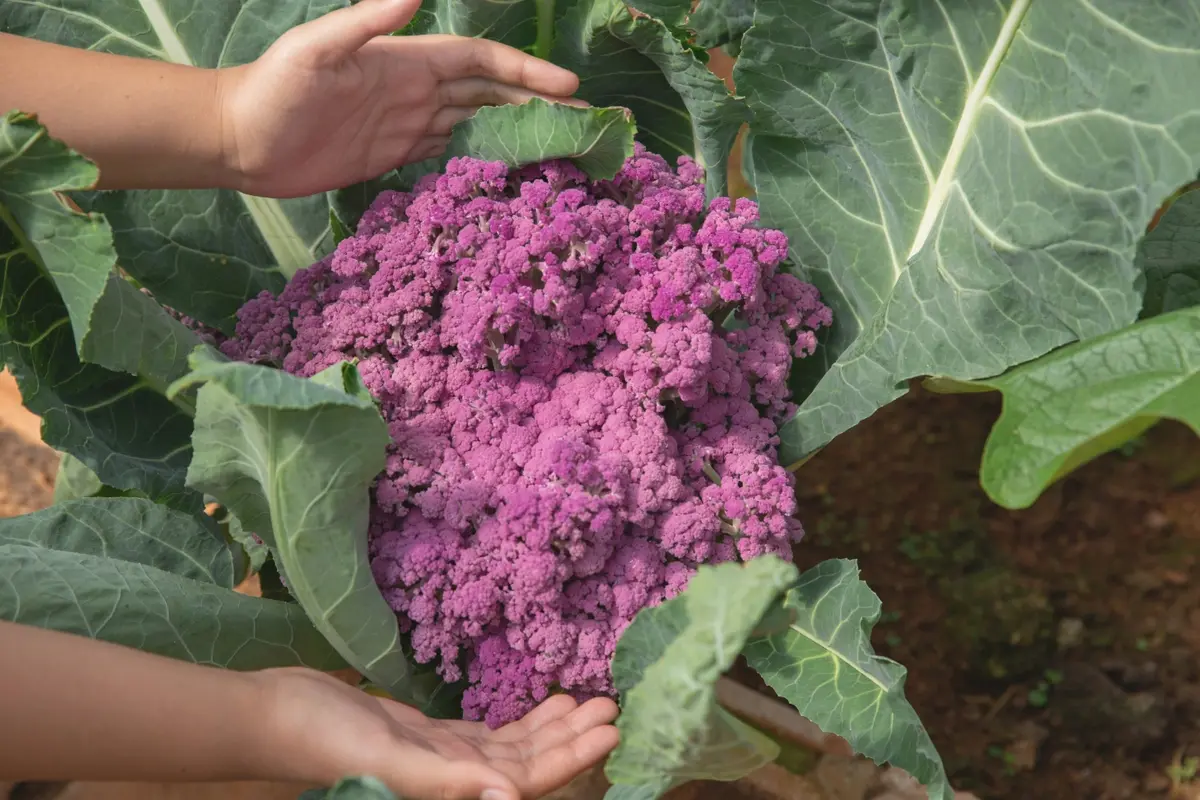
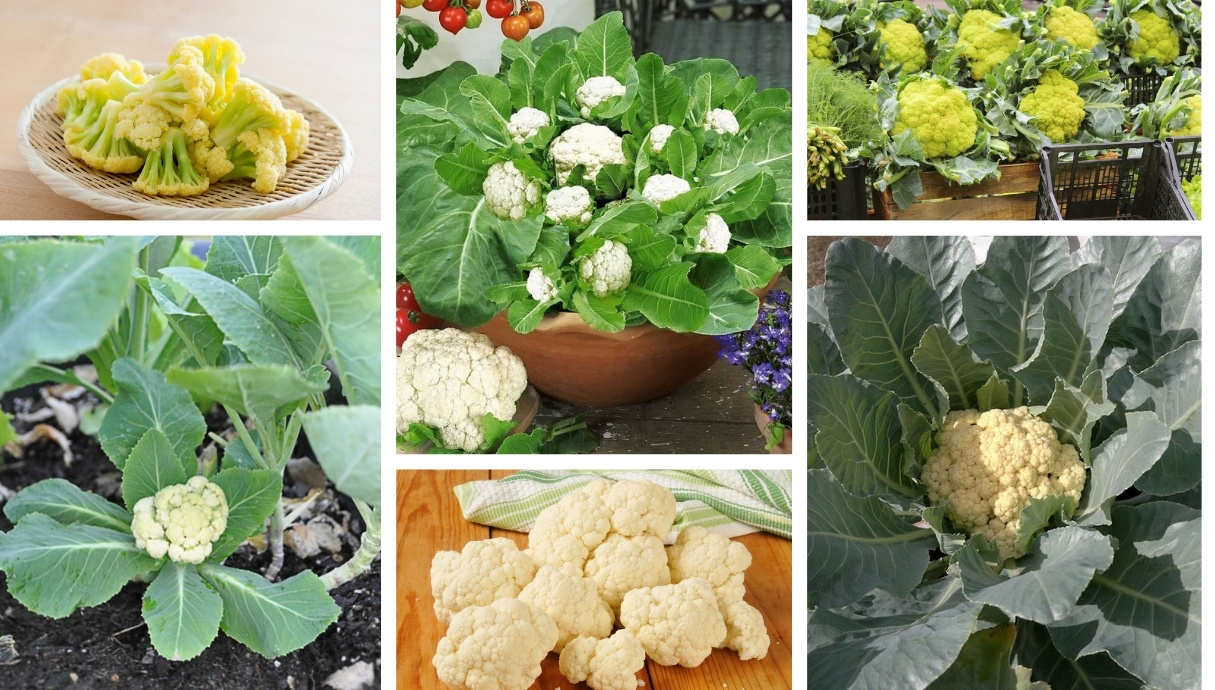
The curd is the edible cluster of tightly packed, immature flower buds that forms at the center of a cauliflower plant. A healthy curd is usually creamy white, although some varieties naturally develop pale green, orange, or purple heads. Unwanted yellowing, brown patches, pink or purple tinges, and fuzzy growth can signal different problems. Each symptom needs a different response, so the first step is to identify what is causing the change.
The most reliable approach starts before planting. Select suitable seeds, prepare fertile soil with good drainage, and establish a steady watering routine. As the curd develops, watch the weather and inspect the head often. Some discoloration can be prevented by covering the curd with its own leaves, while other problems call for better drainage, pest control, or earlier harvest.
Cauliflower curd discoloration is a change in the color or appearance of the edible head. The cause may be natural pigmentation, exposure to sunlight, heat stress, nutrient problems, physical damage, or disease. White cauliflower is especially prone to visible color changes because its pale surface shows small marks and blemishes.
A color change does not always mean the crop is unsafe or ruined. Slight yellowing from sunlight may affect appearance more than eating quality, while wet, soft, foul-smelling, or moldy tissue requires greater caution. The key is to distinguish a cosmetic change from damage that affects the curd’s texture and condition.
Before treating the plant, note where the discoloration appears, how quickly it develops, and whether the tissue remains firm. Sun-related yellowing often affects exposed surfaces. Brown patches may result from physical injury or disease, while slimy areas and fuzzy growth suggest decay or infection.
Source: insteading.com
Yellow or cream-colored areas
These may result from sunlight, normal variation, maturity, or heat. Compare the affected area with the variety’s normal head color and check whether the curd remains firm.
Brown spots or patches
Look for damaged tissue, water-soaked marks, pest injury, or signs of rot. Brown areas that expand or soften deserve prompt attention.
Pink or purple tinges
These can occur naturally in pigmented varieties or develop in response to environmental stress. Check the seed description and observe whether the color is uniform or limited to damaged areas.
Loose or grainy curds
Heat, delayed harvest, uneven growth, and variety traits can cause the head to lose its compact shape. Discoloration may occur alongside these changes, but the two symptoms do not always share a cause.
Cosmetic Changes Versus Signs of Rot
A firm curd with mild, dry yellowing may still be usable after the affected outer portion is trimmed. In contrast, a head with spreading soft brown tissue, slime, mold, or an unpleasant odor may be decaying. Do not taste questionable tissue to test it, and discard cauliflower with clear signs of rot rather than trying to save the affected sections.
Check firmness
A sound curd should feel firm and compact. Soft spots or watery tissue call for closer inspection.
Check the smell and surface
An unusual foul odor, slime, or visible mold is a reason to discard the affected head.
Choose the Right Variety and Planting Window
The best way to prevent curd discoloration is to help cauliflower mature under conditions it can tolerate. Cauliflower is a cool-season crop, and prolonged heat can cause poor curd formation, uneven growth, and premature maturity. A suitable planting date reduces the chance that the head will face extreme temperatures during its most sensitive stage.
Gardeners in much of the northern United States often grow cauliflower as a spring or fall crop. In areas with hot summers, a fall crop is often easier because seedlings can be started during summer and transplanted as the weather begins to cool. In mild coastal areas, winter production may also be possible, depending on the variety and local frost risk.
Check your local frost dates, regional extension guidance, and the seed packet’s days to maturity. Count backward from the expected harvest period, allowing time for seedling growth and transplant establishment. Days to maturity vary by variety and may be counted from transplanting rather than sowing, so read the packet carefully.
Source: homesteadandchill.com
Select a climate-suited variety
Look for varieties recommended for your region and the season in which you plan to grow them. Some tolerate temperature changes better than others, but no variety is immune to severe heat stress.
Use a spring planting window
Start seeds indoors according to the packet and transplant when plants are sturdy and local conditions are suitable. Allow enough time for curd development before warm weather arrives.
Consider a fall crop
In regions with hot summers, plan the crop so curd formation occurs as temperatures cool. Protect young transplants from intense summer heat while they establish.
Avoid unnecessary transplant stress
Harden seedlings gradually before moving them outdoors. Sudden changes in temperature, light, and water can slow growth and make uniform curd formation harder.
Plan for Your USDA Growing Zone
USDA hardiness zones describe average annual extreme minimum winter temperatures, but they do not provide a complete planting calendar for cauliflower. Summer heat, humidity, rainfall, day length, and the length of your cool season also matter. Use your zone as one planning clue, then check local planting calendars from a Cooperative Extension service.
For example, a gardener in Minnesota may have a short spring window and a useful fall season, while a gardener in Georgia may find fall growing more practical than spring growing. In parts of the Pacific Northwest, cool conditions may support a longer growing period, but heavy rain can increase the need for good drainage and disease monitoring.
Match the season to the expected harvest
Choose planting dates that keep the developing curd away from sustained heat and severe cold.
Check local forecasts
Use short-range forecasts to prepare for heat waves, heavy rain, and unexpected cold snaps during head development.
Prepare Fertile Soil With Good Drainage
Healthy roots help cauliflower absorb the water and nutrients needed to form a firm curd. Use fertile soil that drains well and holds enough moisture to support steady growth. Heavy, compacted soil can remain waterlogged after rain, while very sandy soil may dry too quickly unless it receives regular irrigation and organic matter.
Before planting, test the soil through a reliable laboratory or your local Cooperative Extension service. A soil test can guide pH adjustments and fertilizer choices. Cauliflower generally performs well in slightly acidic to neutral soil, commonly around pH 6.0 to 7.0, although local recommendations and disease risks can affect the preferred target.
Work finished compost into the bed when needed to improve soil structure and add organic matter. Avoid placing fresh manure directly around roots, as it can damage plants, contribute to excessive nutrient levels, or introduce food-safety risks. Do not assume that more fertilizer always produces a better head.
Source: Gardening Know How
Improve soil structure
Add mature compost where appropriate and avoid working wet soil, which can cause compaction. Raised beds can help where drainage is persistently poor.
Check the pH
Use test results to decide whether a pH adjustment is needed. Apply lime or other amendments at the recommended rate rather than guessing.
Provide adequate nutrients
Use a fertilizer suitable for vegetable gardens and follow the soil-test recommendation and product label. Too much nitrogen can encourage excessive leafy growth without solving other causes of poor curd quality.
Avoid standing water
Choose a site where rain drains away and where irrigation does not leave the root zone saturated for long periods.
Why Soil pH and Boron Matter
Cauliflower needs several nutrients in suitable amounts to form a healthy curd. Boron deficiency can contribute to hollow stems, brown internal areas, and other disorders, but these symptoms can overlap with damage from other causes. A discolored head alone is not enough to diagnose a boron problem.
Boron is required in small amounts, and the difference between too little and too much can be narrow. Do not add borax or a boron supplement without a reliable soil or tissue test and a clear recommendation. Excess boron can injure plants and make the soil unsuitable for sensitive crops.
Test before adding micronutrients
Ask a soil laboratory or Extension specialist whether a suspected deficiency warrants further testing.
Correct the underlying issue
If a deficiency is confirmed, use the recommended source and rate. Avoid repeated applications based only on the appearance of the curd.
Water Consistently During Curd Formation
Steady soil moisture helps cauliflower grow at a uniform rate. When the soil repeatedly dries out and then becomes saturated, the plant experiences stress that can reduce curd quality and make growth less predictable. Water management is especially important when the central head begins to form and expand.
Aim to keep the root zone evenly moist, not waterlogged. Many vegetable gardens need roughly 1 to 1.5 inches of total water per week from rainfall and irrigation, but the actual amount depends on soil type, temperature, wind, plant size, and local conditions. Check the soil before watering rather than following a fixed schedule without adjustment.
Water at the base of the plant when possible, preferably early in the day. A soaker hose or drip system can deliver water to the root zone while keeping the leaves and curd drier. This can reduce some disease risks, although it will not prevent every fungal or bacterial problem.
Source: ar.inspiredpencil.com
Check moisture below the surface
Feel the soil a few inches below the surface. If the root zone is drying, water deeply enough to moisten it without creating standing water.
Adjust for rain and heat
Reduce irrigation after substantial rainfall and check moisture more often during hot, windy periods.
Use mulch carefully
Apply a layer of clean organic mulch around established plants to slow evaporation and reduce temperature swings. Keep the mulch away from direct contact with the stem.
Prevent prolonged saturation
Improve drainage and avoid frequent shallow watering that leaves the surface wet while deeper roots remain dry.
What to Do After Heavy Rain
After a heavy storm, check whether water is pooling around the plants and whether the curd has been splashed with soil. Allow the bed to drain, remove debris that traps moisture against the head, and inspect the curd for new soft spots. Do not dig or cultivate saturated soil because this can damage roots and compact the bed.
If the soil stays wet for long periods, improve drainage before the next planting. Raised beds, better soil structure, and suitable bed placement may help more than changing the watering schedule alone.
Inspect exposed tissue
Look for soft brown spots, slime, or an unusual odor rather than assuming all discoloration comes from rain.
Resume balanced watering
Water again only when the root zone needs it. Avoid trying to compensate for wet soil by adding fertilizer.
Blanch White Cauliflower to Prevent Sun Yellowing
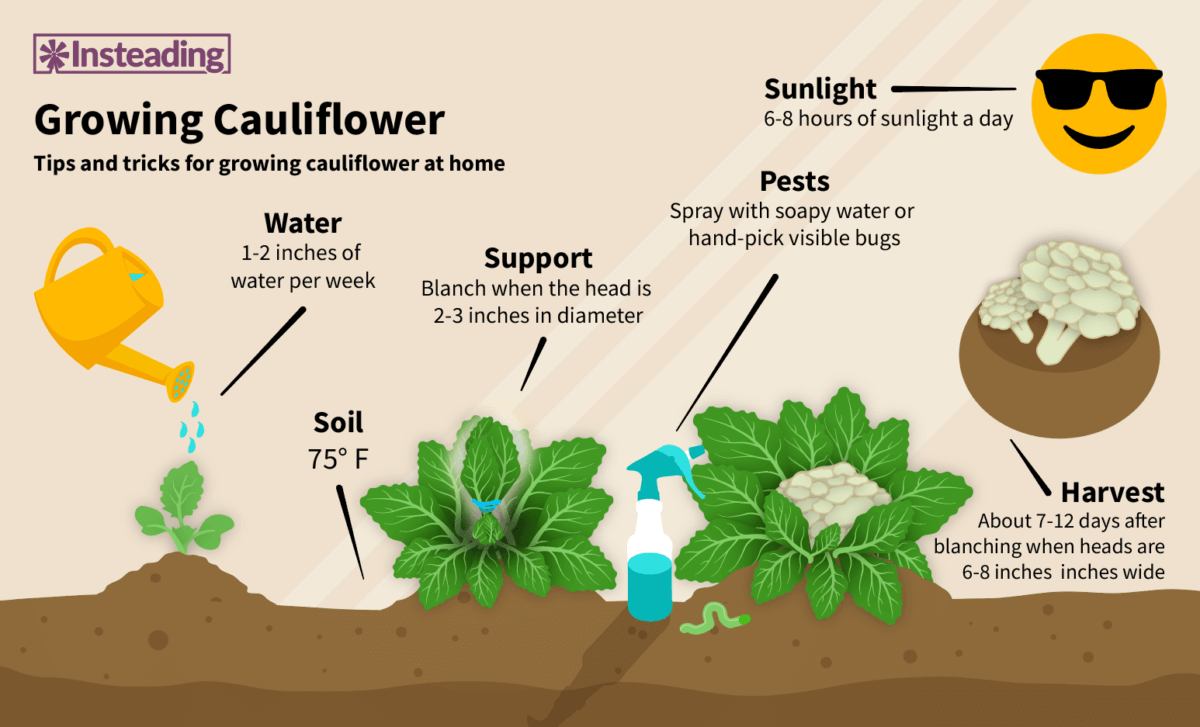
For traditional white cauliflower varieties that do not self-blanch, covering the developing curd with its own leaves is one of the most useful ways to protect its color. Sunlight can cause the exposed surface to become yellow or cream-colored. Leaf blanching limits direct light while allowing the curd to continue developing.
Blanching is a practical protection step, not a cure for every type of discoloration. It will not correct rot, a confirmed nutrient deficiency, or damage that has already affected the tissue. Some modern varieties have leaves that naturally cover the curd, so extra tying may not be necessary.
Begin checking the center of the plant regularly as the curd starts to appear. When the head is about 2 to 3 inches across and the outer leaves are large enough to cover it, assess whether the curd needs protection. The exact stage varies by variety and growing conditions.
Source: agriplanting.com
Select healthy outer leaves
Choose several large, undamaged leaves that can fold over the curd without breaking.
Cover the curd loosely
Bring the leaves together above the head and secure them with soft garden twine or a loose clip. Leave enough room for growth and air movement.
Keep the cover breathable
Avoid wrapping the head tightly in plastic or using materials that trap water. Poor airflow and prolonged moisture can encourage decay.
Inspect the head often
Check beneath the leaves every few days, especially after rain. Watch for pests, trapped moisture, and signs that the head is ready to harvest.
When Blanching Is Not Needed
Self-blanching varieties have leaves that curl naturally over the curd. If the head remains well covered, additional tying may offer little benefit. Colored cauliflower varieties are often grown for their natural purple, orange, or green pigmentation, so the aim is to maintain healthy tissue rather than force a white appearance.
If the outer leaves are too short or damaged to cover the head, temporary shade from a clean, breathable garden cover may help during strong sun. Secure the cover well and make sure it does not press against or trap moisture around the curd.
Follow the seed description
Check whether the cultivar is self-blanching and whether its expected mature color is white or naturally pigmented.
Avoid excessive shade
Protect the head from harsh direct sunlight without blocking the whole plant from the light it needs for healthy growth.
Manage Heat, Cold, and Sudden Weather Changes
Temperature stress can damage cauliflower quality even when the plants receive enough water and nutrients. Cauliflower generally grows best in cool conditions, and sustained warmth during curd formation can lead to loose heads, uneven development, or early maturity. Severe cold can also injure developing tissue, especially when plants have not been properly hardened or protected.
Use planting dates to prevent most temperature problems before they begin. During an unexpected warm spell, keep soil moisture steady and provide temporary shade if direct afternoon sun is intense. Shade should reduce heat stress without creating a damp, enclosed space around the head.
In regions with early freezes, monitor forecasts as harvest approaches. A light frost may not destroy every mature plant, but hard freezes can damage the curd. Follow regional Extension guidance for cold protection and harvest before a damaging freeze when practical.
Source: growinginthegarden.com
Watch the forecast
Pay special attention when the curd begins to develop and when the expected harvest date approaches.
Keep plants evenly watered
Adequate soil moisture helps reduce drought stress during hot weather, but it does not make cauliflower immune to heat.
Use temporary shade when needed
A breathable shade cloth can reduce direct afternoon exposure during short heat events. Remove or adjust it when conditions improve.
Protect plants before a hard freeze
Use suitable garden covers for short cold events or harvest mature heads before severe frost if the forecast and crop stage warrant it.
Why Timing Often Matters More Than Treatment
Once heat has caused a curd to become loose or grainy, better watering and shade may prevent further stress but cannot reliably restore the original compact texture. This is why choosing the correct planting window is often more effective than trying to correct a damaged head later.
If repeated crops develop poor curds in the same season, compare planting dates and weather records before buying additional fertilizers or sprays. A shift of a few weeks may place the next crop’s head development in a cooler period.
Record planting and harvest dates
Use a simple garden notebook to track variety, transplant date, first curd appearance, temperature events, and harvest quality.
Change one major factor at a time
Adjust planting time or variety first when weather stress is likely. This makes it easier to learn which change improves the next crop.
Prevent Pests and Diseases That Mark the Curd
Pests and diseases can cause discoloration that resembles sun damage or a nutrient problem. Cabbage worms, imported cabbageworms, cabbage loopers, and other caterpillars may feed on cauliflower leaves and sometimes reach the developing head. Their feeding can leave holes, frass, and damaged tissue that lowers the quality of the harvest.
Inspect the undersides of leaves and the folds around the curd at least several times a week. Remove visible caterpillars by hand when practical and use floating row covers to exclude many insect pests from young plants. Covers must be secured at the edges and removed when pollination or other crop needs make them unsuitable, although cauliflower is harvested before flowering in normal production.
Disease prevention starts with healthy transplants, suitable spacing, crop rotation, clean tools, and good drainage. Wet conditions can favor several diseases, but symptoms overlap and cannot always be identified from color alone. If the same problem appears across many plants, contact a local Cooperative Extension office for help with diagnosis.
Source: getbusygardening.com
Check for caterpillars
Look for chewed leaves, dark droppings, eggs, and small larvae. Remove pests by hand or use an appropriate control labeled for edible brassica crops.
Use row covers early
Install covers before pests reach the crop. Inspect underneath them and make sure they do not restrict plant growth.
Rotate crop families
Avoid planting cauliflower and related brassicas in the same bed year after year when disease or soilborne pests are a concern. A rotation of several years may help, depending on the problem.
Remove severely diseased plants
If plants show spreading rot or strong signs of disease, isolate the affected material and follow local guidance for disposal. Do not compost diseased plants when the pathogen may survive in the pile.
Use Pesticides Only When Needed
A pesticide is not a general cure for curd discoloration. First identify the pest or disease, then determine whether control is necessary. If you use a pesticide, select a product whose label specifically permits the crop and target pest, and follow all directions for protective equipment, application rates, harvest intervals, and re-entry periods.
Do not apply household cleaners, unapproved chemicals, or improvised mixtures to edible cauliflower. Such treatments may injure plants, leave unsafe residues, or fail to control the problem.
Identify the target
Confirm that an insect or disease is present before choosing a control method.
Follow the full label
The label determines legal use, crop suitability, application method, and the required interval before harvest.
Harvest at the Right Stage to Preserve Color
Harvest cauliflower while the curd is firm, compact, and close to the mature size described for the variety. Waiting too long can allow the surface to become loose, grainy, or uneven. Warm weather may speed these changes, so inspect mature heads more often as harvest approaches.
Use a clean, sharp knife to cut the stem below the curd, leaving some outer leaves around the head to protect it during handling. Avoid pressing hard on the curd or dropping it onto a hard surface, since bruising can create damaged areas that deteriorate during storage.
After harvest, move the heads out of direct sun and cool them promptly. Refrigerate cauliflower in suitable packaging that limits drying while avoiding trapped excess moisture. Keep it separate from dirty tools, soil, and damaged plant material.
Source: storage.googleapis.com
Check compactness
The individual buds should be tightly packed rather than spreading apart or showing open flower structures.
Harvest before decline
If the curd begins to loosen, yellow, or develop expanding blemishes, assess whether it is mature enough to cut.
Handle the head gently
Cut cleanly and avoid squeezing or scraping the surface during harvest and transport.
Cool the crop promptly
Keep harvested heads out of heat and refrigerate them without unnecessary delay to help preserve freshness.
Can Discolored Cauliflower Still Be Eaten?
Mild, dry yellowing on an otherwise firm, fresh head may be a quality issue rather than a sign of spoilage. You can trim minor superficial blemishes if the remaining tissue is sound and clean. The color alone cannot establish whether a head is safe, so assess the whole curd rather than relying on one sign.
Discard cauliflower with visible mold, slime, spreading soft rot, or an unpleasant odor. Cooking is not a reliable way to make spoiled produce safe. When the cause of an unusual internal brown area is uncertain, especially if the tissue is soft or wet, discard the affected head.
Minor dry surface changes
Inspect closely and trim small affected areas if the rest of the head remains firm, fresh, and free from signs of decay.
Soft or moldy tissue
Do not salvage a head with clear signs of spoilage by cutting away only the most visible patch.
Troubleshoot Cauliflower Curd Discoloration
When discoloration appears, begin with the simplest checks: look at the pattern of the color, feel the affected tissue, review recent weather, and check soil moisture. These observations can help narrow the likely cause before you change the growing conditions or apply a treatment.
Avoid making several changes at once. Adding fertilizer, spraying a pesticide, and changing irrigation together can introduce new problems without revealing the original cause. Match the response to the most likely cause and monitor whether the problem continues to spread.
Source: gloriousgarden.co.uk
Yellowing on the exposed top
Likely checks include direct sunlight, hot weather, and maturity. Cover the curd with leaves if the variety needs blanching and harvest when ready.
Brown, dry surface marks
Check for physical damage, sun exposure, and tissue that has dried out. Protect the remaining healthy curd and assess whether the head is still worth harvesting.
Soft, wet, or spreading brown areas
Suspect decay or disease, especially after prolonged wet weather. Avoid overhead watering where practical, improve drainage, and discard heads showing clear spoilage.
Hollow stems or internal brown areas
Consider nutrient imbalance, including possible boron deficiency, but confirm the cause with testing or local diagnostic help before applying a micronutrient.
Loose or grainy heads
Review planting dates, temperature history, maturity, and watering consistency. Adjust the next crop’s timing if heat stress or delayed harvest is likely.
A Simple Prevention Schedule
A short routine makes it easier to catch problems before the curd changes color. During early growth, focus on roots, leaf growth, and insect protection. Once the curd forms, inspect the center more frequently and pay closer attention to sunlight, moisture, and harvest timing.
Before planting
Check the local planting window, select a suitable variety, test soil if possible, and prepare a well-drained bed.
During early growth
Keep moisture steady, control weeds, inspect leaves for pests, and avoid unnecessary fertilizer applications.
When the curd first appears
Check whether outer leaves cover the head, review the forecast, and look for early color changes or insect damage.
Near harvest
Inspect heads frequently, cut compact curds promptly, and cool them soon after picking.
Frequently Asked Questions
Q
Why is my white cauliflower turning yellow?
The most common possibilities include direct sunlight, warm conditions, maturity, and natural variation. If the yellowing is mainly on the exposed surface and the curd remains firm, sun exposure may be responsible. Cover the developing head with its own leaves when the variety needs blanching, and harvest promptly once the curd is mature.
Q
Should I tie cauliflower leaves over the head?
Yes, when you grow a white variety that does not cover its own curd and the head is beginning to develop. Loosely gather healthy outer leaves over the curd and secure them without squeezing the growing head. Check underneath every few days to monitor growth, pests, moisture, and harvest readiness.
Q
Can too much fertilizer cause cauliflower discoloration?
Excess fertilizer can upset nutrient balance, damage roots, or encourage excessive leaf growth, but discoloration alone does not prove that fertilizer is the cause. Use a soil test and follow the recommended application rate. Avoid adding boron or other micronutrients unless a deficiency has been confirmed or a qualified local recommendation supports the treatment.
Q
Does cauliflower need full sun to form a white head?
Cauliflower needs enough light to support healthy plant growth, but its developing white curd can yellow when exposed to strong direct sunlight. Grow the plant in a suitable sunny location and protect the curd with outer leaves when needed. Do not shade the entire plant heavily just to keep the head white.
Q
What should I do if my cauliflower has brown spots?
Inspect the spots for firmness, moisture, spread, and odor. Small, dry marks may result from injury or exposure, while soft, wet, spreading areas can indicate decay or disease. Avoid unnecessary spraying, improve drainage where needed, and discard heads with clear signs of spoilage. Seek local diagnostic help if the problem spreads across several plants.
✦ Wrapping Up
Conclusion
Growing cauliflower with clean, well-colored curds begins with good timing and steady care. Choose a variety suited to your region, prepare fertile soil that drains well, and maintain even moisture as the plant develops. In areas where heat is a risk, schedule the crop so the curd matures during cooler weather.
For traditional white varieties, leaf blanching is a simple way to limit yellowing caused by sunlight. Keep checking the curd for pests, damaged tissue, and signs of rot, and harvest when it is firm and compact. If discoloration continues despite good care, use the pattern of symptoms, recent weather, and soil-test results to guide your next step rather than guessing at a treatment.
💡 Key Takeaway
Start with your local planting calendar and a suitable cauliflower variety. Test the soil if possible, water according to actual soil moisture, cover exposed white curds with healthy leaves, inspect plants regularly, and harvest promptly when the heads are firm and compact.
I enjoy sharing simple gardening ideas, lawn care tips, and honest product reviews that help make outdoor work easier. From home gardening guides to helpful tools and lawn care advice, I write easy-to-follow content to help readers create a healthier and better-looking outdoor space without wasting time or money.