As an Amazon Associate, I earn from qualifying purchases.
To save a poinsettia plant, check its soil and roots, remove damaged leaves, provide bright indirect light, and keep it away from cold drafts and hot air vents. Water only when the soil begins to dry, and always let excess water drain. With the right care, a struggling poinsettia can recover and grow again.
Across the United States, poinsettias bring bright red, pink, and white color into homes during the Christmas season. They often sit on dining tables, near sunny windows, or beside holiday decorations. But once the holidays pass, many of these plants start losing leaves, drooping, or looking weak. A plant that once looked full and bright may suddenly seem ready for the trash.
The good news is that a poinsettia does not have to die after Christmas. Many plants can live for years when their basic needs are met. The key is to find out what is causing the trouble before trying to fix it. Too much water, dry soil, poor light, cold air, and sudden temperature changes can all affect a poinsettia.
This guide explains how to save a poinsettia plant, even when it has lost many leaves or looks unhealthy. You will learn how to check its roots, fix watering problems, prune damaged stems, and provide the right growing conditions. You will also find out how to care for your plant through spring and summer if you want it to bloom again for another Christmas.
Before trying to save a poinsettia, look closely at its leaves, stems, and soil. Different problems can create similar symptoms. For example, both overwatering and underwatering can make leaves droop, but they need different fixes.
Poinsettias are tropical plants native to Mexico. They like warmth, good light, and soil that drains well. They do not respond well to freezing temperatures, sudden changes in their surroundings, or roots that stay wet for long periods.
A few lost leaves after the holidays do not always mean the plant is dying. Older leaves and colorful bracts can fade as the plant moves into a new growth stage. However, widespread yellowing, soft stems, a bad smell from the soil, or rapid leaf loss deserve attention.
Source: www.pinterest.com
Overwatering
Too much water can reduce oxygen around the roots and cause root rot. Yellow leaves, soft stems, and constantly wet soil are common warning signs.
Underwatering
Very dry soil can cause drooping, curled leaves, and dry edges. A badly dried plant may lose leaves even after it receives water.
Poor lighting
A dark corner can lead to weak growth and leaf loss. Poinsettias need bright natural light to stay healthy indoors.
Cold air
Cold drafts, chilly windows, and temperatures below 50 degrees Fahrenheit can damage leaves and bracts.
Excess heat
Hot air from fireplaces, furnaces, and heating vents can dry the plant and cause early leaf drop.
Pests and disease
Whiteflies, spider mites, and other pests can weaken foliage. Wet soil and poor airflow can also encourage root and stem problems.
How To Tell Whether A Poinsettia Is Still Alive
A poinsettia that has lost most of its leaves may still be alive. Check the stems before giving up on it. Healthy living stems are usually firm and have some green tissue beneath the outer surface.
You can gently scratch a small area of the stem with a clean fingernail. If the tissue underneath is green and moist, that part of the plant is likely alive. If it is brown, dry, and brittle, the stem may have died. Repeat the check on another stem before making a decision.
Also look at the base of the plant. Firm stems and roots offer a better chance of recovery than soft, dark, or mushy tissue. If the main stems and roots are completely dead, the plant is unlikely to recover.
Signs of life
Firm stems, green tissue beneath the bark, and small buds or new leaves are encouraging signs.
Warning signs
Blackened stems, a rotten smell, mushy roots, and tissue that is dry all the way through suggest severe damage.
How To Save A Poinsettia Plant Step By Step
The best way to save a poinsettia is to fix the problem that is harming it. Do not start by adding fertilizer or cutting away every damaged leaf. First, check the soil, roots, stems, and growing conditions.
Give the plant a little time to adjust after each major change. Moving it to a better spot and fixing its watering routine may be enough to help it recover. If the roots are damaged, more direct action may be needed.
Source: www.youtube.com > Shampy’s Garden
Step 1: Inspect the plant
Look for yellow leaves, dry edges, soft stems, pests, and signs of mold. Check the soil moisture and make sure the pot has drainage holes.
Step 2: Fix the watering problem
If the soil is dry, water it thoroughly and let excess water drain. If it is soggy, stop watering and check whether the roots are damaged.
Step 3: Improve the location
Move the poinsettia to a bright room with steady temperatures. Keep it away from cold drafts and direct hot air.
Step 4: Remove dead growth
Use clean pruning shears to remove dead leaves and stems. Keep healthy green stems and any new buds.
Step 5: Check the roots
If the plant continues to decline, gently remove it from the pot and inspect the roots for rot or severe damage.
Step 6: Allow recovery
Maintain a steady care routine. Avoid heavy pruning, frequent repotting, and fertilizer until the plant shows signs of healthy growth.
What To Do If Your Poinsettia Has Dry Soil
If the soil feels dry several inches below the surface, the plant may need water. Do not give it just a few drops. Water slowly and evenly until water runs through the drainage holes.
Allow the pot to drain completely before putting it back in its decorative cover. If the soil has become so dry that water runs down the sides without soaking in, water it slowly in two or three rounds. This gives the mix more time to absorb moisture.
Do not leave the plant sitting in a saucer full of water. Once the soil has absorbed enough moisture, let the extra water drain away.
Check the soil
Use your finger to check the soil instead of following a fixed watering schedule.
Watch the leaves
Healthy leaves should gradually regain a firmer appearance if dehydration was the main problem and the roots remain healthy.
What To Do If Your Poinsettia Has Root Rot
Root rot often develops when the soil stays wet for too long. The roots may turn brown or black, become soft, and develop an unpleasant smell. Affected roots cannot take up water and nutrients properly, so the plant may wilt even though the soil is wet.
Remove the plant from its pot carefully. Shake away loose soil and inspect the root system. Healthy roots are generally firm, while rotten roots are often soft and damaged.
Use clean scissors to remove badly rotten roots. Repot the plant in a clean container with drainage holes and fresh, well-draining potting mix. Do not use the old soggy soil again.
Water lightly after repotting, allowing excess moisture to drain. Give the plant bright indirect light and avoid adding fertilizer while the roots recover. If nearly all the roots have rotted, recovery may not be possible.
Use fresh potting mix
Choose a light indoor potting mix that holds some moisture but allows excess water to escape.
Choose the right pot
Use a container with drainage holes. Avoid moving the plant into a much larger pot because extra soil can stay wet for too long.
How To Water A Poinsettia The Right Way
Correct watering is one of the most important parts of poinsettia care. The roots need moisture to support healthy leaves and stems, but they also need air. Soil that stays soaked can damage the roots and make recovery much harder.
Check the soil before watering. If the top layer feels dry, check a little deeper. When the soil is beginning to dry, water thoroughly until it runs from the bottom of the pot. Let the container drain before returning it to its usual spot.
The exact watering schedule depends on the pot size, soil mix, room temperature, and amount of light. A small pot near a warm window may dry faster than a larger pot in a cooler room. This is why checking the soil works better than watering every few days without looking.
Source: storage.googleapis.com
Use room-temperature water
Water that is not extremely cold or hot helps avoid unnecessary temperature stress around the roots.
Remove decorative foil
Take off the foil or plastic cover before watering unless it has proper drainage openings. Decorative covers can trap excess water.
Empty the saucer
Pour away standing water after the pot has drained. Never allow the roots to sit in a pool of water.
Avoid constant misting as a substitute
Misting does not fix dry roots or poor watering. Focus on proper soil moisture and good room conditions.
How Often Should You Water A Poinsettia?
There is no single watering schedule that works for every poinsettia. Many indoor plants need water about once a week, but some need it more often. Small containers and warm rooms can cause the soil to dry quickly.
Check the soil every few days while learning how fast your plant dries. As the weather changes or the plant grows, its water needs may change too. Always let the soil condition guide your decision.
If the plant droops while the soil is wet, do not automatically add more water. Check the roots and drainage first. More water can make a root problem worse.
Dry soil
Water thoroughly when the soil has begun to dry and the container feels lighter.
Wet soil
Wait before watering again and make sure the pot can drain freely.
Give Your Poinsettia The Right Light And Temperature
A poinsettia needs a bright indoor location to recover and produce healthy leaves. Place it near a south-, east-, or west-facing window where it can receive plenty of natural light. Bright indirect light is a good choice for most indoor plants.
Avoid placing the leaves against cold window glass. In many US homes, winter windows can become much colder than the rest of the room. A little distance between the plant and the glass can help protect the leaves.
Poinsettias generally grow well at indoor temperatures around 65 to 70 degrees Fahrenheit. They can tolerate some variation, but sudden changes are stressful. Keep the plant away from exterior doors, fireplaces, heating vents, and air-conditioning outlets.
Source: epicgardening.com
Bright natural light
Choose a window that provides several hours of good daylight without exposing the plant to harsh conditions.
Stable room temperature
Aim for comfortable indoor temperatures and avoid placing the plant where hot and cold air meet.
Protection from cold
Keep the plant away from temperatures below 50 degrees Fahrenheit. Freezing exposure can cause severe damage.
Good air circulation
Provide normal room airflow without placing the plant directly in front of a strong fan or vent.
Can A Poinsettia Recover From Cold Damage?
A poinsettia exposed to cold air may develop drooping, darkened, or damaged leaves. Some leaves and colorful bracts may fall after the exposure. The extent of recovery depends on how long the plant stayed cold and whether its stems and roots remain alive.
Move the plant to a warm room with bright indirect light. Do not place it beside a heater to warm it quickly. Give it steady conditions and remove only tissue that is clearly dead.
Check the stems after a few days. If they remain firm and green beneath the outer surface, there may still be a chance of recovery. Dead stems will not grow back, but healthy lower sections may produce new shoots.
Move it indoors
Protect the plant from further cold exposure and sudden temperature changes.
Wait before heavy pruning
Allow damaged areas to become clear before cutting. This helps you avoid removing living growth.
How To Prune A Poinsettia Plant To Encourage New Growth
Pruning helps a poinsettia recover from damaged growth and develop a fuller shape. It is especially useful after the colorful bracts fade and the plant begins its next growth stage. However, do not remove healthy stems just because the plant looks smaller than it did during Christmas.
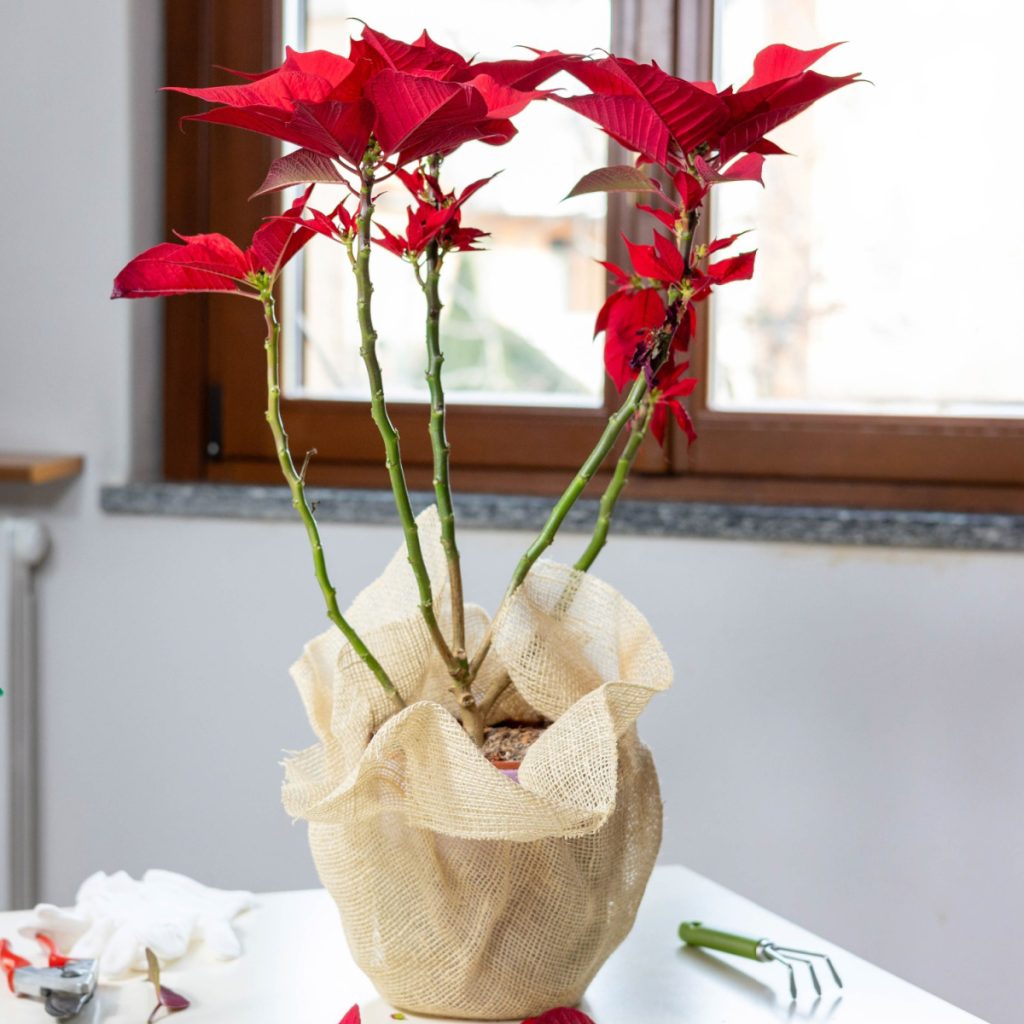
Start by removing dead leaves and dry stems. Use clean, sharp pruning shears to make neat cuts. If a stem is still green and firm, keep it unless it is badly damaged or growing in an unwanted direction.
For a plant you want to keep for another year, spring is a useful time for a stronger trim. Depending on the plant’s size and health, stems can be cut back to about 4 to 6 inches above the soil. Leave healthy buds or nodes where new shoots can develop.
Source: simplegardenlife.com
Remove dead leaves
Clear away yellow, brown, and dry leaves that no longer support the plant.
Trim damaged stems
Cut dead or broken stems back to healthy tissue using clean tools.
Keep healthy growth
Do not cut every green stem. Healthy growth gives the plant a better starting point for recovery.
Clean your tools
Wipe pruning tools before and after use to reduce the chance of spreading plant diseases.
When Is The Best Time To Prune A Poinsettia?
The best time for major pruning is generally spring, after the holiday bracts have faded and the plant is preparing for new growth. If the plant has a few dead leaves during winter, you can remove those without giving it a full trim.
During summer, pinch back growing tips if you want a compact, bushy plant. Leave several healthy leaves on each developing stem. Stop routine pinching around late summer so the plant has time to develop the growth needed for its seasonal color display.
Avoid heavy pruning when a plant is severely stressed. First correct problems with water, light, or roots. A weak plant needs time to recover before it can handle major trimming.
Winter
Remove dead leaves and damaged stems as needed.
Spring
Perform the main pruning after the holiday display fades and new growth is ready to develop.
Summer
Pinch growing tips to encourage branching and maintain a compact shape.
Should You Repot A Struggling Poinsettia?
Repotting can help when a poinsettia has damaged soil, poor drainage, or roots that have filled the container. It is not always the first step, though. A healthy plant in suitable soil may do better if you simply correct its watering and light conditions.
If you need to repot, choose a container with drainage holes that is only slightly larger than the current root ball. A pot that is too large can hold more water than the roots can use. This increases the chance of soggy soil and root damage.
Use a fresh, light potting mix made for indoor plants. Avoid heavy garden soil because it can become compact and hold too much water in a container. Set the plant at the same depth it was growing before and gently firm the mix around the roots.
Source: storage.googleapis.com
Choose a suitable container
Use a clean pot with open drainage holes and enough room for the existing roots.
Use fresh soil
Choose a well-draining indoor potting mix rather than soil taken directly from the garden.
Avoid excessive handling
Handle the root ball gently and remove only loose or rotten roots.
Allow time to adjust
Keep the plant in stable conditions after repotting and avoid adding fertilizer immediately.
Does A Poinsettia Need Fertilizer To Recover?
Fertilizer cannot repair rotten roots, fix poor drainage, or replace healthy growing conditions. Adding it to a severely stressed plant may cause more harm than good.
If your poinsettia is recovering and producing new leaves, you can begin feeding it with a balanced, water-soluble houseplant fertilizer. Follow the product label and avoid applying more than the recommended amount.
Plants kept only for their holiday display often do not need extra fertilizer while they are in bloom. Regular feeding becomes more useful when you decide to maintain the plant through the growing season.
Wait for active growth
Start feeding when the plant has healthy new growth and its roots are functioning well.
Follow the label
Use the recommended dilution and frequency for the fertilizer you choose.
How To Save A Poinsettia After Christmas
A poinsettia can remain a houseplant long after the holiday season ends. The red, pink, or white parts that look like flowers are actually colored leaves called bracts. The tiny yellow flowers are found in the center of these colorful leaves.
As the bracts fade, the plant may begin to lose leaves. This can be part of its natural growth cycle. Instead of throwing it away, decide whether you want to keep it as a green houseplant or try to make it produce colorful bracts again.
If you want to keep it, provide bright light, steady warmth, and careful watering. Once the plant starts growing actively in spring, you can prune it and begin a seasonal care routine. This gives it a chance to develop strong new branches.
Source: www.pinterest.com
Continue normal care
Keep the plant in a bright room and water when the soil begins to dry.
Remove fading growth
Clean away dead leaves and bracts without removing healthy stems.
Prune in spring
Cut back the plant when it is ready for new growth, leaving healthy buds on the stems.
Feed during active growth
Use a balanced houseplant fertilizer according to its label when the plant is actively growing.
Can You Keep A Poinsettia Outside During Summer?
Yes, you can move a poinsettia outdoors during warm weather in many parts of the United States. Wait until the danger of frost has passed and nighttime temperatures remain safely above 50 degrees Fahrenheit.
Do not move an indoor plant straight into strong outdoor sunlight. Start in a sheltered, partly shaded location and gradually increase its exposure over a week or two. Sudden changes in sunlight can scorch the leaves.
Choose a protected area with good airflow and access to bright light. Water regularly because outdoor containers may dry faster in warm weather. Check the soil more often during hot periods.
If you live in a hot region, protect the plant from intense afternoon sun. A location with morning light and afternoon shade may be more suitable than a spot exposed to strong sunlight all day.
Wait for warm weather
Do not move the plant outdoors while cold nights or frost are still possible.
Introduce sunlight slowly
Begin with partial shade and increase light exposure gradually.
Monitor water needs
Check the soil often because outdoor heat and wind can increase water loss.
Bring it indoors in fall
Move the plant inside before nighttime temperatures become too cold.
How To Get A Poinsettia To Turn Red Again
A healthy poinsettia can produce colorful bracts again, but it needs a special light schedule in fall. Poinsettias are short-day plants. This means long, uninterrupted nights help trigger the changes that produce their colorful bracts.
The process requires careful timing. The plant needs bright light during the day and complete darkness for at least 14 hours each night for several weeks. Even ordinary room lights can interrupt the dark period and delay color development.
For a Christmas display in the United States, many growers begin the darkness routine around late September or early October. The exact timing depends on the variety and the desired display date. Continue the routine for about 6 to 8 weeks or until the bracts show strong color.
Keep the plant in a bright location during the day. At night, move it to a dark closet or cover it with a light-proof box. Make sure the cover does not crush the leaves or trap excessive heat.
Source: farmhouseandblooms.com
Provide long nights
Give the plant at least 14 hours of complete darkness every night during the color-setting period.
Keep daytime light bright
Place the plant in a sunny indoor location during the remaining hours.
Maintain a steady routine
Repeat the light and darkness schedule every day without interruptions.
Watch for color
Continue the routine until the bracts begin to develop their expected color.
A Simple Poinsettia Reblooming Calendar
A seasonal calendar makes the process easier to manage. The following schedule is a general guide for a poinsettia kept in a typical US home. Local weather and the plant’s growth can affect the exact dates.
January to March
Keep the plant indoors with bright light. Continue checking the soil and remove dead leaves. Allow the colorful bracts to fade naturally.
April
Prune the plant when its seasonal display has faded and it is ready for new growth. Reduce watering if growth slows, but do not let living stems become severely dry.
May to June
Repot if needed, resume normal watering, and begin feeding during active growth. Move outdoors only when nighttime temperatures are warm enough.
July to August
Pinch growing tips to encourage branching and maintain a bushy shape. Stop pinching by late summer so the plant can develop its next display.
September
Bring the plant indoors before cold weather arrives. Place it near a bright window and prepare a dark location for the fall light schedule.
Late September to October
Begin providing at least 14 hours of uninterrupted darkness each night while giving the plant bright light during the day.
November to December
Continue normal care as the bracts develop color. Once the color is well established, the special darkness routine is no longer needed.
Common Mistakes That Can Prevent Poinsettia Recovery
Even a healthy poinsettia can struggle when its growing conditions change too often. A common mistake is trying several treatments at once without checking what the plant actually needs.
A simple routine is usually better. Check the soil, provide suitable light, protect the plant from temperature changes, and give it time to respond. Avoid adding extra water, fertilizer, or pruning just because the plant looks weak.
Source: storage.googleapis.com
Watering on a fixed schedule
Watering every Monday or every three days can lead to overwatering or underwatering. Check the soil before each watering.
Leaving the plant in decorative foil
A decorative cover without drainage can collect water around the roots. Remove it or make sure excess water can escape.
Placing it beside a heater
Direct hot air can dry the leaves and soil. Choose a spot with stable room conditions instead.
Using garden soil in a pot
Garden soil can become too compact for container growing. Use a suitable indoor potting mix.
Adding too much fertilizer
Extra fertilizer does not make a damaged plant recover faster. Follow the recommended amount and wait for healthy growth.
Cutting away healthy stems
Removing too much living growth can weaken a struggling plant. Prune only what needs to be removed.
Expecting instant recovery
A plant may need several weeks to show new growth. Keep conditions steady instead of changing its care every few days.
How Long Does It Take A Poinsettia To Recover?
Recovery time depends on the cause of the problem. A mildly wilted plant may improve within a few days after proper watering. A plant with root damage may take several weeks to show clear improvement, provided enough healthy roots remain.
New leaves are one of the best signs of recovery. Firm stems, stable foliage, and soil that dries at a normal rate are also encouraging. A severely damaged plant may never regain its original shape, but it can sometimes grow new branches from healthy sections.
Do not judge recovery by the colorful bracts alone. Those leaves may fade or fall even when the plant is healthy. Pay more attention to new green growth and the condition of the stems.
Early signs
The remaining leaves become firmer and the stems stay healthy.
Later signs
Small green buds appear and begin developing into new leaves.
Long-term signs
The plant develops stronger stems and a fuller shape.
How To Maintain A Healthy Poinsettia Indoors
Once your poinsettia begins recovering, the goal is to keep its growing conditions steady. You do not need an expensive setup or a complicated routine. A suitable window, a pot that drains, and regular soil checks can make a big difference.
Turn the pot occasionally so that different sides receive light. This can help the plant grow more evenly instead of leaning toward the window. Remove dead leaves when you notice them, and check the undersides of leaves for pests.
If you keep the plant year-round, pay attention to seasonal changes. Indoor air may become drier when heating systems run in winter, while summer heat can cause the soil to dry faster. Adjust your watering based on the actual soil condition rather than the calendar.
Source: storage.googleapis.com
Check for pests
Look beneath the leaves for whiteflies, spider mites, and other insects. Treat problems early with a suitable houseplant pest control method.
Keep leaves clean
Remove dust and dead plant material gently so the foliage stays in good condition.
Maintain drainage
Make sure water can escape freely after each watering.
Watch seasonal changes
Adjust the plant’s location and watering routine when indoor temperatures and daylight change.
Is A Poinsettia Safe Around Pets?
Poinsettias are often described as highly poisonous, but that common claim overstates their danger. Their milky sap can irritate the skin, and chewing the leaves may cause mild mouth or stomach irritation.
Keep the plant out of reach of pets and small children. Wear gloves if you have sensitive skin or need to cut several stems. Wash your hands after handling the plant, and avoid allowing anyone to eat its leaves.
If a pet eats part of the plant and develops symptoms, contact a veterinarian or an animal poison advice service for guidance. Do not assume that every plant-related reaction is harmless.
Keep the plant out of reach
Place it where curious pets and children cannot easily chew the leaves.
Handle the sap carefully
Wash exposed skin with soap and water after pruning or handling damaged stems.
Frequently Asked Questions
Q
Can You Save A Poinsettia With No Leaves?
Yes, a poinsettia with no leaves may still recover if its stems and roots are alive. Gently scratch a small part of a stem to check for green tissue underneath. If the stem is firm and green, keep the plant in bright indirect light and maintain suitable soil moisture.
Remove dead stems and avoid overwatering. New shoots may appear when growing conditions improve, although a plant with completely dead roots and stems cannot recover.
Q
Why Is My Poinsettia Dropping Green Leaves?
Green leaf drop can result from overwatering, underwatering, sudden temperature changes, poor light, or cold drafts. Check the soil first. If it is soggy, inspect drainage and roots. If it is very dry, water thoroughly and allow the pot to drain.
Also check whether the plant sits near a heater, air-conditioning vent, or cold window. Correcting the growing conditions is more useful than removing every affected leaf.
Q
Can A Dead-Looking Poinsettia Grow Back?
A poinsettia that looks dead may still have living stems or roots. Check beneath the outer stem tissue for green growth and look for firm roots. If some parts remain healthy, the plant may produce new shoots.
If all the stems are brittle and brown and the roots are completely rotten or dried out, recovery is unlikely. Give the plant a careful inspection before deciding to discard it.
Q
Should I Cut Back My Poinsettia After Christmas?
You do not need to cut back a healthy poinsettia immediately after Christmas. Continue normal care while its bracts remain attractive. Remove dead leaves and damaged stems as needed.
For a plant you want to grow through the year, spring is generally the better time for a stronger trim. Cut back the stems to encourage new branching while leaving healthy buds.
Q
Can I Save A Poinsettia That Has Been Overwatered?
Yes, if enough healthy roots and stems remain. Stop watering while the soil is wet and make sure the container has drainage holes. If the soil smells rotten or the roots are soft and dark, remove the plant and trim away damaged roots.
Repot it in fresh, well-draining potting mix. Give it bright indirect light and wait for the soil to begin drying before watering again. Severely damaged root systems may not recover.
Q
How Long Can A Poinsettia Live Indoors?
A poinsettia can live for several years indoors when its needs are met. Its colorful bracts may fade after the holiday season, but the plant can continue growing as a green houseplant.
Provide suitable light, warm temperatures, good drainage, and careful watering. If you want it to display colorful bracts again, follow a regular seasonal pruning and darkness routine.
Q
Why Is My Poinsettia Not Turning Red Again?
Poinsettias need long, uninterrupted nights to develop their colorful bracts. If the plant receives light from lamps or household lights during its required dark period, the color change may be delayed or prevented.
Give it at least 14 hours of complete darkness each night for around 6 to 8 weeks in fall. Provide bright light during the day and keep the schedule consistent.
✦ Wrapping Up
Conclusion
Learning how to save a poinsettia plant starts with understanding what is causing its decline. Yellow leaves, drooping stems, and falling bracts do not always mean the plant is dead. Sometimes, a small change in watering, light, or temperature is all it needs.
Start by checking the soil and roots. Remove dead growth, provide bright indirect light, and keep the plant away from cold drafts and direct heat. If root rot is present, remove damaged roots and use fresh, well-draining potting mix. Give the plant time to adjust instead of changing its care every day.
You can also keep a healthy poinsettia after Christmas and grow it through spring and summer. With regular pruning, suitable outdoor conditions, and a careful fall darkness routine, it may produce colorful bracts again for the next holiday season. Even if it does not bloom again, a healthy poinsettia can remain an attractive green houseplant.
💡 Key Takeaway
Check your poinsettia today. Feel the soil, inspect the stems, and make sure the pot drains properly. Move it to a bright, warm location, remove only dead growth, and follow a steady watering routine. These simple steps give your plant the best chance to recover and grow again.
I enjoy sharing simple gardening ideas, lawn care tips, and honest product reviews that help make outdoor work easier. From home gardening guides to helpful tools and lawn care advice, I write easy-to-follow content to help readers create a healthier and better-looking outdoor space without wasting time or money.