As an Amazon Associate, I earn from qualifying purchases.
The best plants for winter window boxes include dwarf evergreens, winterberry holly, ornamental cabbage, heuchera, pansies in mild climates, and trailing ivy. Choose plants that suit your USDA hardiness zone, available sunlight, and the amount of winter frost your window box will face.
Across the United States, winter can mean very different things for a home garden. A window box in Minnesota may face frozen soil and bitter winds, while one in coastal Georgia may stay green through most of the season. The right plants depend on your local winter weather, not just how pretty a plant looks at the garden center.
A well-planned winter window box can bring color, texture, and life to a bare porch or plain window. Evergreen branches keep their shape, colorful leaves brighten gray days, and berries add small pops of red or purple. You can create an attractive display without relying on flowers that cannot survive a hard freeze.
The key is to combine plants with similar needs and give their roots enough protection. Roots in a shallow window box are more exposed to cold than roots in the ground. With suitable plants, a sturdy container, and a little seasonal care, your display can remain attractive through much of the cold season.
The best winter window box plants are those that keep their shape, color, or foliage when temperatures drop. Hardy evergreens form a dependable base, while foliage plants and seasonal accents create variety. In very cold regions, foliage and branch arrangements may be more reliable than flowers.
Before choosing plants, check your USDA hardiness zone and the plant’s mature size. A compact shrub that grows slowly in a garden bed may still outgrow a narrow box over time. Annuals and perennials also respond differently to winter conditions, so a plant that survives in the ground may not survive in an exposed container.
Source: storage.googleapis.com
Dwarf spruce
Compact spruce varieties provide evergreen needles and a small, tree-like shape. Use a suitable dwarf cultivar and allow enough room for its roots and eventual growth.
Compact juniper
Junipers offer blue-green, gray-green, or deep green foliage, depending on the variety. Many tolerate cold and sun well, although their mature spread and the box’s drainage need careful attention.
Small arborvitae
Compact arborvitae varieties add upright green foliage. Choose a slow-growing form rather than a large landscape variety that will quickly become too big for the container.
Ornamental cabbage and kale
These cool-season plants develop rosettes with green, white, pink, or purple centers. Their color often becomes stronger in cool weather, but prolonged severe freezes can damage them.
Heuchera
Also called coral bells, heuchera offers leaves in burgundy, bronze, lime, and silver tones. It can provide useful foliage in many regions, but winter performance depends on the variety and the protection around its roots.
Pansies and violas
These flowering plants bring yellow, purple, blue, and white blooms to mild-winter window boxes. They may pause flowering or suffer damage during severe cold, especially when their roots freeze.
English ivy
Ivy can spill over a box and soften its edges. It is evergreen in many climates, but it can become invasive in some parts of the United States, so choose a suitable alternative where local guidance recommends avoiding it.
Winterberry holly branches
Branches bearing red berries provide a bright seasonal accent. Winterberry is a deciduous shrub, so it is usually more practical to use cut branches in a temporary display than to grow a full shrub in a narrow box.
Evergreens for Structure and Lasting Color
Evergreens are the backbone of many winter window boxes because they keep their foliage after deciduous plants lose their leaves. Their needles or small leaves create a steady green background for brighter seasonal accents. A single compact evergreen can also give the arrangement a focal point.
Choose a plant labeled for container use or one with a naturally compact growth habit. Dwarf conifers still need enough root space, and their hardiness in the ground does not guarantee that they will survive in a small exposed container. In regions with severe winters, consider using cut evergreen branches instead of a living shrub.
For a narrow box
Use a small upright evergreen or a few cut branches to add height without taking up the entire planting area.
For a sunny window
Consider compact juniper or a suitable dwarf spruce, provided the variety matches your climate and the container drains well.
For a shaded window
Use shade-tolerant foliage and cut evergreen boughs rather than choosing a sun-loving conifer that will struggle.
Plants for Bright Winter Color
Ornamental cabbage and kale are useful when you want a colorful display without depending on flowers. Their broad leaves form rounded shapes that work well between evergreen branches. In many climates, their foliage becomes more vivid as the weather cools.
Pansies and violas are better choices where winter temperatures remain relatively mild or where containers receive some shelter. They may bloom through much of a mild winter, but hard freezes can stop flowering and injure plants. Treat them as seasonal accents rather than guaranteed sources of color in every region.
Pink and purple
Pair purple violas with burgundy heuchera or blue-green evergreen foliage for a rich, cool-toned arrangement.
White and silver
Combine pale ornamental kale with silver foliage and dark green branches for a bright display on cloudy days.
Red and green
Use red-centered ornamental cabbage with evergreen branches and a few berry-bearing cut stems.
Choose Winter Plants for Your USDA Hardiness Zone
Your local winter climate should guide every plant choice. The USDA Plant Hardiness Zone Map groups areas by their average annual extreme minimum winter temperature. It is a useful starting point, but it does not account for every factor that affects a plant in a window box.
A container sits above the ground and exposes roots to cold from its sides and base. Wind, sudden temperature changes, wet soil, and the position of the window can all affect survival. A plant that thrives outdoors in a sheltered garden bed may struggle in a shallow box attached to an exposed wall.
Source: storage.googleapis.com
Cold northern regions
In places such as Minnesota, Wisconsin, and much of New England, use hardy cut evergreen branches, cones, and other durable natural materials for displays that must withstand prolonged freezing weather. Living plants need extra root protection.
Mid-Atlantic and central regions
In parts of Pennsylvania, Ohio, and the Mid-Atlantic, combine hardy evergreens with suitable ornamental kale or cabbage. Check local cold spells before relying on live flowering plants.
Southern states
In parts of Georgia, Alabama, and the Carolinas, pansies, violas, and ornamental kale may offer longer-lasting seasonal color where local winter conditions suit them.
Mild coastal climates
Where winter freezes are brief and uncommon, a broader mix of flowering annuals and evergreen foliage may work. Salt spray, wind, and local heat exposure can still affect plant choice.
Why Container Hardiness Is Different
Hardiness labels usually describe a plant’s ability to survive winter in the ground under suitable conditions. They do not promise the same result in a small planter. Soil in a container can freeze more deeply because it is exposed on several sides, and repeated thawing and freezing can damage roots.
For a living winter window box, choose plants rated for conditions colder than those you expect at the site when practical, then provide shelter and insulation. A larger, well-drained container usually gives roots more protection than a very narrow box. If your winters are harsh, cut branches and durable decorative materials may be the more dependable option.
Check the coldest conditions
Look beyond average winter temperatures and consider the occasional severe freeze that could harm exposed roots.
Check the exact cultivar
Plants sold under the same common name may have different mature sizes and cold tolerances.
Plan for wind
Strong wind can dry evergreen foliage even when the soil is cold, so exposed boxes may need shelter.
Match Plants to Sunlight and Window Exposure
The direction your window faces can change which winter plants perform well. A south-facing window in much of the United States often receives more direct sun, while a north-facing window tends to stay shaded. East- and west-facing windows fall between these patterns, though nearby buildings and trees can alter the light.
Cold-season sunlight can warm foliage and container surfaces during the day, followed by a sharp temperature drop at night. Wind can also pull moisture from evergreen leaves. Choose plants that tolerate the actual conditions at the window instead of relying on the direction alone.
Source: fity.club
Full sun
Compact junipers and many ornamental kale varieties can suit sunny sites if their roots remain healthy and the plants are hardy enough for the local climate.
Partial shade
Heuchera and selected compact evergreens can provide foliage in locations with some direct sun and some shade.
Full shade
Use suitable shade-tolerant foliage, cut evergreen boughs, and decorative branches. Do not expect sun-loving flowering plants to bloom well in deep shade.
Windy exposure
Favor compact plants with sturdy growth and avoid delicate stems or trailing foliage that can be whipped about by strong gusts.
What to Do With a North-Facing Window
A north-facing window box may receive little direct sunlight in winter. Choose foliage for texture and contrast instead of building the entire display around flowers. Cut evergreen branches, suitable shade-tolerant heuchera, and durable decorative accents can create a full look.
If you plant living evergreens, confirm that the selected variety tolerates the available light. Some conifers need more sun than a deeply shaded location can provide, even if they are cold hardy.
Use varied leaf textures
Combine fine evergreen needles with broader leaves and branching stems for contrast.
Keep colors simple
A mix of green, silver, and burgundy can look attractive even without flowers.
What to Do With a Sunny, Windy Window
A sunny window may warm plants during the day, while wind and freezing nights create extra stress. Choose plants that tolerate both conditions and check the soil during dry weather. Evergreen leaves can lose water even when cold temperatures slow root activity.
A sheltered position can help, but do not block drainage or cover the box with an airtight material. If the window is high above a walkway, make sure the container and brackets can safely support the weight of wet soil and plants.
Secure the container
Use sound brackets and fasteners rated for the installed box and its expected wet weight.
Avoid exposed tender flowers
Use flowers only when local winter conditions and the site’s protection support them.
How to Design a Balanced Winter Window Box
A good winter arrangement combines height, fullness, and movement. Think of the box as a small landscape: one element gives it a focal point, other plants fill the middle, and trailing material softens the front edge. You do not need many species to create a rich display.
For a living arrangement, group plants with similar light, moisture, and cold needs. Mixing a plant that likes evenly moist soil with one that prefers dry soil can make care harder. If your preferred plants have very different needs, use cut branches or separate containers to keep the display attractive without forcing incompatible plants together.
Source: storage.googleapis.com
Thriller
Use a compact upright evergreen, a tall ornamental grass suitable for your climate, or a group of vertical cut branches to create height.
Filler
Add ornamental cabbage, kale, heuchera, or other suitable foliage plants to fill open spaces and create broad areas of color.
Spiller
Use a suitable trailing evergreen or cut branches that drape over the front. Avoid plants known to spread invasively in your area.
A Simple Evergreen and Berry Arrangement
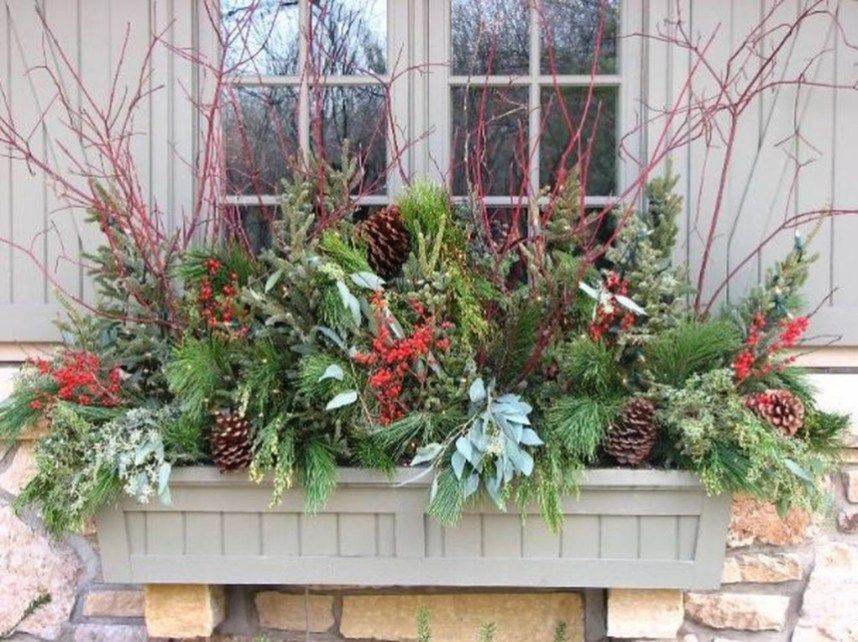
For a classic winter look, place one compact evergreen toward the center or one end of the box. Add evergreen branches along the back and tuck in cut winterberry stems for red accents. Pinecones can fill small gaps and add texture without needing water.
This design works especially well as a seasonal arrangement because the berry stems and boughs can be replaced as they fade. Check that any berries or plant parts are suitable for the household, especially where children or pets may reach the window box.
Back row
Place taller branches at the rear, leaving room for the window frame and avoiding blocked drainage.
Middle row
Add compact foliage plants or shorter evergreen sprigs to make the display look full.
Front edge
Let selected branches extend slightly over the rim while keeping the box’s drainage openings clear.
A Colorful Foliage Arrangement
If your winters are mild enough for living seasonal plants, pair ornamental kale with heuchera and a few violas. The kale provides broad rosettes, heuchera adds darker or brighter leaf color, and violas bring small flowers near the front. Keep the number of plants modest so each has room for roots and air movement.
For colder areas, keep the same color plan but use cut evergreen branches and durable decorative accents in place of tender live flowers. The visual effect can remain similar without asking unsuitable plants to survive conditions they cannot handle.
Choose a main color
Start with green, burgundy, silver, or purple and use one or two contrasting shades.
Repeat key materials
Repeat evergreen branches or a leaf color across the box to make the design feel connected.
Leave room to grow
Do not crowd young plants simply to fill every gap. Some seasonal plants will expand as conditions allow.
Prepare the Window Box Before Planting
A winter display starts with a sound container and well-drained soil. Water that stays around roots can cause damage, and a frozen, waterlogged root ball has little room to recover. Check the box before adding plants, especially if it has spent several seasons outdoors.
Choose a box made from a material suited to local weather. Wood, fiberglass, sturdy resin, and other materials behave differently in freezing conditions, so inspect the manufacturer’s guidance where available. Make sure the brackets, screws, and mounting surface can support the weight of the container, plants, and wet growing mix.
Source: storage.googleapis.com
Check drainage holes
Make sure excess water can escape freely. Do not seal the base or pack drainage holes with dense material.
Use suitable potting mix
Use a quality outdoor container mix rather than heavy garden soil, which can compact and drain poorly in a box.
Inspect the structure
Look for cracked material, loose fasteners, rust, rot, or brackets that have pulled away from the wall.
Allow enough root room
Choose a box with adequate depth and width for the selected plants instead of forcing large shrubs into a shallow space.
Should You Replace the Soil?
If the old mix is compacted, waterlogged, contaminated, or full of damaged roots, replace it before planting. Otherwise, you may be able to reuse some healthy mix after removing old plant debris and checking its texture. Fresh potting mix can improve drainage and make it easier to position plants.
Do not fill a window box with garden soil simply because it is available. Soil taken directly from a yard may be too dense for a container and can hold excess water. A container mix is designed to provide a more suitable balance of air and moisture.
Remove old roots
Clear away dead roots and leaves that could crowd the new planting.
Check moisture
Moisten dry mix before planting, but avoid saturating it until water pools in the box.
How Deep Should a Winter Window Box Be?
There is no single depth that suits every winter plant. Small seasonal flowers and shallow-rooted foliage can use less space than compact conifers or woody shrubs. Larger soil volumes also buffer root temperatures better than very small containers.
Check the expected mature size and container recommendations for each plant. If your box is shallow, choose smaller plants or use cut evergreen branches rather than planting a shrub that will quickly become root-bound.
For seasonal flowers
Follow the plant label’s container guidance and leave enough room for roots to spread.
For living dwarf evergreens
Use a deeper, sturdy box and confirm that the plant can remain there without outgrowing the available space.
Planting Steps for a Long-Lasting Winter Display
Plant your window box before the ground and container mix become difficult to work with, while local temperatures still suit the chosen plants. In mild climates, this may be in late fall. In colder regions, prepare the arrangement earlier or switch to a cut-branch display once severe freezes are near.
Set out the plants before removing them from their nursery pots. This lets you test the arrangement, check spacing, and avoid disturbing roots more than needed. Keep the finished display balanced and leave enough room for air to move between live plants.
Source: storage.googleapis.com
Step 1: Clean the box
Remove old plant debris and check the drainage holes, container walls, and mounting hardware.
Step 2: Add potting mix
Fill the box with suitable container mix, leaving space for the root balls and a small watering gap below the rim.
Step 3: Arrange the plants
Place upright plants toward the back, fuller plants in the middle, and trailing plants near the front.
Step 4: Set the root balls
Remove each plant from its pot carefully and set it at about the same depth it was growing before.
Step 5: Fill open spaces
Add mix around the roots and gently firm it without crushing the soil or packing it too tightly.
Step 6: Water as needed
Water thoroughly when the soil is not frozen, then allow excess water to drain away.
Step 7: Secure and inspect
Check that the box is stable and that no branch, leaf, or decoration blocks drainage or interferes with the window.
Using Cut Evergreen Branches Instead of Live Plants
Cut branches are a practical choice for homes with severe winters, shallow boxes, or little time for plant care. Fir, pine, cedar, and other suitable evergreen boughs can provide color and structure without relying on living roots. The best material depends on local availability, appearance, and how well the branches hold their needles.
Insert the cut ends firmly into the growing mix or a suitable floral support so the branches stay in place. Check the display after strong winds and replace branches that become brittle, lose their needles, or look faded. Keep branches and other natural materials clear of heat sources and do not use dry plant material near open flames.
Build the outline first
Place the largest boughs at the back and sides, then add shorter pieces toward the front.
Add seasonal accents
Use pinecones, suitable berry stems, or weather-resistant decorations to fill small gaps.
Check the mounting
Make sure wind cannot pull branches or decorations loose and create a falling hazard.
Winter Window Box Care and Troubleshooting
Winter window boxes usually need less attention than summer planters, but they should not be ignored. Cold weather slows growth and reduces water use, yet wind and bright winter sun can still dry evergreen foliage. Check the soil and the condition of the plants rather than following a fixed watering schedule.
Avoid fertilizing heavily during winter. Many plants grow slowly or become dormant, and extra fertilizer will not protect them from frost. Focus instead on drainage, moisture, stable mounting, and protection during extreme weather.
Source: storage.googleapis.com
Water during dry spells
When the mix is thawed and dry to the touch, water as needed and allow excess water to drain. Do not water frozen soil.
Check after storms
Look for loose brackets, broken stems, wind damage, and decorations that may fall.
Remove damaged material
Trim broken stems and remove decaying foliage when conditions allow, without disturbing frozen roots.
Protect exposed roots
Where appropriate, move portable boxes to a sheltered location or use a suitable insulating wrap around the container.
Why Are Evergreen Leaves Turning Brown?
Brown evergreen foliage can result from winter drying, cold injury, waterlogged roots, or a plant that is poorly suited to its location. Wind and sun can remove moisture from leaves while frozen soil limits the plant’s ability to replace it. Brown tips alone do not identify one exact cause.
Check the soil moisture, drainage, recent weather, and plant label before making changes. If the soil is frozen, do not try to correct the problem by adding large amounts of water. Protect the box from further wind exposure where possible and wait for conditions to improve before assessing the full extent of damage.
Dry soil during a thaw
Water slowly if the root zone is dry and drainage is working.
Wet soil for long periods
Check for blocked drainage and reduce excess moisture rather than adding more water.
Damage after a hard freeze
Wait until temperatures moderate before pruning heavily, since some foliage may recover or reveal the true extent of injury later.
Why Are Pansies Wilting or Losing Flowers?
Pansies and violas can wilt when their root zone is too dry, too wet, or frozen. Flowering may slow during very cold weather and resume when conditions improve. A short cold spell does not always mean the plant is dead.
Check whether the soil is frozen and whether water drains freely. If the plants are suited to your climate, protect them during severe weather and remove damaged flowers after conditions improve. If repeated freezes kill the plants, replace them with hardier foliage or use cut branches for the rest of the season.
Check the root zone
Assess moisture before watering and avoid disturbing frozen soil.
Check local hardiness
A plant sold as a cool-season flower may still be unsuitable for prolonged severe freezes in an exposed container.
How to Protect Window Boxes During Severe Cold
When an unusually cold spell is forecast, shelter portable boxes in a protected but suitable location. For fixed boxes, use a breathable insulating wrap around the outside of the container if the material and mounting allow it. Keep drainage holes open and do not wrap foliage in a way that traps moisture or breaks stems.
If the box is high above a walkway, avoid risky outdoor work in icy or windy conditions. Do not lean out of a window to adjust plants or secure decorations. Wait for safe conditions or ask a qualified professional to handle work at height.
Protect the container
Insulate the sides where practical, without covering drainage holes or placing the box under unsafe loads.
Reduce wind exposure
Use a sheltered location for portable boxes and remove loose decorations before strong winds arrive.
Avoid sudden indoor moves for tender plants
If you bring a living plant inside, account for its light needs and avoid leaving it in a dark, warm room for an extended period.
Common Winter Window Box Mistakes to Avoid
The most common mistake is choosing plants for their appearance without checking whether they can survive the local winter. A lush nursery display may have been grown under protected conditions and may not be ready for freezing wind. Plant labels and local growing guidance are more useful than appearance alone.
Another mistake is treating a winter box like a summer container. Plants often grow more slowly in cold weather, water use changes, and the container itself becomes more vulnerable to freeze damage. Simple adjustments can help keep the display healthy and reduce unnecessary replacement.
Source: storage.googleapis.com
Planting tender flowers in a hard-freeze climate
Choose plants suited to local conditions or use cut evergreen branches and other durable materials instead.
Overwatering in cold weather
Check the soil first. Cold, wet mix can stay saturated for too long and damage roots.
Using garden soil in a narrow box
Use a suitable container mix to support drainage and air around the roots.
Crowding too many plants together
Leave enough room for roots and mature foliage, even when the arrangement looks less full at first.
Ignoring the box’s weight
Wet soil, plants, and decorations can make a box heavy. Check the mounting system and the supporting wall before planting.
Using invasive trailing plants without checking
Check local invasive plant guidance before choosing ivy or other vigorous spreaders.
Assuming all berries are safe
Do not assume decorative berries or plant parts are edible or harmless to pets and children. Identify plants before bringing them within reach.
When a Living Window Box Is Not the Best Choice
A living window box may be difficult to maintain when winters bring prolonged deep freezes, when the container is too shallow for suitable plants, or when access for watering and inspection is unsafe. A decorative arrangement of cut branches can still provide winter color without the same root-care demands.
For high windows or old mounting systems, check the structural condition before adding any weight. If the box is loose, the wall is damaged, or safe access is difficult, repair the installation before planting. The best design is one that remains attractive without creating a falling-object hazard.
Use cut greenery for severe winters
Build a seasonal arrangement with suitable boughs, cones, and durable decorative materials.
Use portable containers when possible
A container that can be moved to a protected place may be easier to manage than a fixed box in an exposed location.
Frequently Asked Questions
Q
What are the best plants for winter window boxes in cold climates?
Hardy compact evergreens can work in suitable, well-insulated containers, but their roots face more cold stress than roots in the ground. For regions with prolonged freezing weather, cut pine, fir, cedar, and other suitable evergreen branches offer a dependable seasonal display. Ornamental cabbage and kale may tolerate cool weather but can still be damaged by severe freezes.
Q
Can flowers grow in window boxes during winter?
Yes, in climates where winter conditions suit the chosen flowers. Pansies and violas can bloom during mild weather, especially in parts of the southern United States and other areas with moderate winters. In regions with prolonged hard freezes, use hardy foliage or cut branches instead of relying on flowers to survive.
Q
How often should I water a winter window box?
There is no fixed schedule because watering needs depend on temperature, wind, sunlight, plant type, and container size. Check the potting mix during dry periods and water when the root zone is dry and the soil has thawed. Allow excess water to drain, and never water frozen soil simply because the foliage looks dry.
Q
Do I need to remove winter window boxes before a freeze?
Not always. A sturdy box with suitable plants can remain in place if it is installed safely and its contents can tolerate local conditions. Portable boxes may benefit from moving to a sheltered spot during severe cold, while fixed boxes may need container insulation and wind protection. Never lean out of a window or work at height in icy conditions to move or secure a box.
Q
Can I use artificial plants in winter window boxes?
Yes. Weather-resistant artificial greenery can provide color without watering or root protection, especially in very cold regions. Choose materials rated for outdoor use, secure them against wind, and inspect them for fading, brittleness, or loose pieces. Keep artificial greenery away from heat sources and open flames.
Q
Can I leave dwarf evergreens in a window box all year?
Sometimes, provided the variety is suited to the local climate and the container has enough space for its roots. Dwarf evergreens may eventually outgrow a small box, and container roots are more exposed to temperature swings than roots in the ground. Check the mature size, provide suitable drainage, and consider moving the plant to a larger container or garden bed when necessary.
Q
Which trailing plants work best in winter window boxes?
Suitable evergreen trailers can soften the edges of a winter display, but cold tolerance varies by species and region. English ivy remains green in many climates, yet it is invasive in some parts of the United States. Check local guidance and consider cut evergreen branches draped over the rim when a living trailer would not survive or is not appropriate.
✦ Wrapping Up
Conclusion
The best plants for winter window boxes are those that match your climate, light, and container conditions. Dwarf evergreens offer lasting structure, ornamental cabbage and kale add bold foliage, heuchera provides rich leaf color, and pansies or violas can bring flowers to mild-winter locations. In very cold areas, cut evergreen branches and berry stems may be more reliable than living plants.
A healthy display starts with good drainage, enough root space, and a secure box. Check soil moisture during dry spells, protect exposed containers during severe cold, and remove damaged material when conditions allow. Small, thoughtful choices can keep a window bright even when the rest of the garden is quiet.
💡 Key Takeaway
Before buying plants, check your USDA hardiness zone, measure the box, and note how much sun and wind it receives. Choose two or three compatible plants or build a cut-evergreen arrangement, then check drainage and mounting safety before planting.
I enjoy sharing simple gardening ideas, lawn care tips, and honest product reviews that help make outdoor work easier. From home gardening guides to helpful tools and lawn care advice, I write easy-to-follow content to help readers create a healthier and better-looking outdoor space without wasting time or money.