As an Amazon Associate, I earn from qualifying purchases.
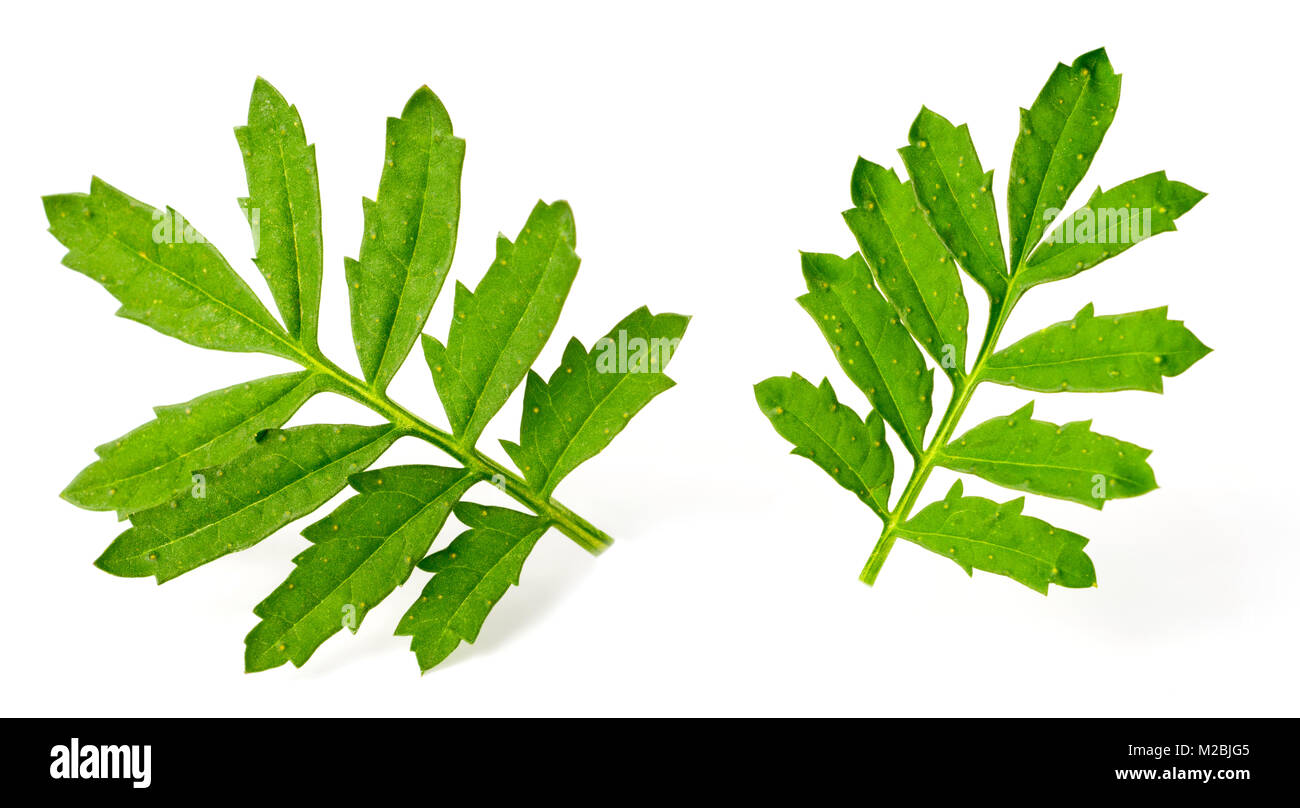
Marigold leaves are usually green, narrow, and divided into many small leaflets along a central stem. Most garden marigolds have feather-like foliage with toothed edges and a strong, herbal scent when crushed.
In American gardens, marigolds are common sights in summer flower beds, vegetable plots, porch planters, and window boxes. Their bright yellow, orange, gold, and red blooms often draw the eye first. Yet the leaves offer useful clues when you want to identify a plant before it flowers or check whether a young seedling is a marigold.
Most familiar garden marigolds belong to the Tagetes genus. Their leaves are generally divided rather than broad and smooth, giving the plant a fine, feathery look. Leaf size, shade, and the depth of the divisions vary by species and variety, so it helps to look at the whole plant instead of relying on one feature.
The most useful clues are the leaf arrangement, the shape of each leaflet, the color, and the scent. Healthy leaves are usually green and firm. Yellowing, spotting, curling, or a sudden loss of foliage may point to water stress, pests, disease, or other growing problems.
Marigold leaves usually look like small green feathers attached to a branching stem. Instead of one wide, solid blade, each leaf is divided into several narrow sections called leaflets. These leaflets sit along a central leaf stalk and give the foliage its finely cut appearance.
The leaves are commonly medium green to dark green, although the exact shade depends on the variety, light, water, and plant health. Some foliage looks soft and delicate, while other marigolds have broader leaflets and a fuller appearance. New growth is often smaller and lighter green than mature foliage.
Most garden marigolds have edges that look slightly jagged or toothed. If you look closely, you may see several small points along each leaflet. This detail helps distinguish many marigolds from plants with smooth, oval leaves, though it is not enough to identify a plant by itself.
The leaves usually grow in pairs or in a pattern that can look opposite along the stem, depending on the species and the part of the plant. As the plant grows, its branches carry more foliage, creating a dense green mound beneath the flowers.
Source: ar.inspiredpencil.com
Shape
Leaves are divided into narrow leaflets, often creating a feather-like or fern-like outline.
Color
Healthy foliage is usually green, with shades ranging from light green on new growth to deeper green on mature leaves.
Edges
Leaflet margins often have fine teeth or small pointed sections rather than a completely smooth outline.
Texture
Leaves are generally thin and flexible, although texture and firmness vary among species and growing conditions.
Scent
Many Tagetes varieties release a noticeable herbal or pungent smell when the foliage is gently rubbed.
Are Marigold Leaves Smooth or Jagged?
Marigold leaves are usually divided, and the small leaflets often have toothed or jagged edges. The full leaf can look soft and delicate from a distance, but its outline becomes more detailed when viewed closely. The teeth may be subtle on some varieties and more obvious on others.
Do not confuse a naturally toothed edge with damage. Pest feeding can leave irregular holes, missing sections, or ragged patches that cut through the leaflet rather than follow its normal edge. A healthy marigold leaf should have a consistent natural outline for its variety.
Normal edge
Small, repeated teeth appear along the leaflet margin in a fairly regular pattern.
Possible damage
Large holes, torn areas, or uneven missing sections may result from insects, slugs, or physical injury.
Do Marigold Leaves Have a Strong Smell?
Many common garden marigolds have aromatic foliage. When a leaf is gently rubbed, it may release a strong, green, herbal, or pungent scent. Some people find the smell sharp, while others barely notice it.
Scent varies among species and cultivars, so it should be treated as a supporting clue rather than a definitive test. Avoid tasting unidentified plants, and wash your hands after handling foliage if it irritates your skin.
How to Identify Marigold Leaves Before Flowers Appear
You can often recognize a young marigold by its true leaves before the first flower bud forms. Look for a divided leaf with narrow sections along a central stalk, then check whether the plant develops additional leaves with the same pattern. This is more reliable than judging a seedling by color alone.
A newly sprouted marigold first produces cotyledons, also called seed leaves. These early leaves are usually simpler and smaller than the plant’s later foliage. The familiar feathery shape becomes clearer as true leaves develop.
If the plant is still very small, avoid pulling it out just because it does not yet look like a mature marigold. Several garden seedlings begin with similar green seed leaves. Give the plant time to produce more foliage, and compare the leaf structure with a known marigold plant or a reliable seed packet description.
A close look at the stem can help, too. Many marigolds develop branching stems as they mature, with leaves emerging at intervals along the growth. Their overall form often becomes bushy, although height and branching depend on the variety and how the plant is grown.
Source: ar.inspiredpencil.com
Check the true leaves
Look for the first leaves with several narrow leaflets rather than relying only on the initial seed leaves.
Watch new growth
A marigold should develop more foliage with a similar divided structure as it grows.
Compare several features
Use leaf shape, stem growth, scent, seed packet information, and later flower traits together.
Allow time
Wait for additional true leaves if the seedling is too young to identify with confidence.
What Do Marigold Seedlings Look Like?
Marigold seedlings begin with a pair of small seed leaves that do not have the fully divided appearance of mature foliage. As true leaves emerge, the plant starts to show the narrow leaflets that make marigolds easier to recognize. The exact timing depends on warmth, moisture, light, and seed quality.
Healthy seedlings usually have upright stems and leaves that feel firm rather than limp. Pale, stretched seedlings may not receive enough light, while seedlings that remain wet for long periods may develop weak stems or root problems. These symptoms are growing clues, not proof of plant identity.
Early stage
Small, simple cotyledons appear first.
True-leaf stage
Divided foliage begins to form and makes identification easier.
Established seedling
More leaves and branching growth develop as the plant becomes stronger.
How Marigold Leaves Differ by Type
Not all marigold leaves look exactly alike. The plants most often grown in American gardens include African marigolds, French marigolds, and signet marigolds. These names refer to different groups within the Tagetes genus, and their foliage can vary in size, density, and fineness.
African marigolds, commonly associated with Tagetes erecta, often grow into larger plants with sturdy stems and substantial flower heads. Their leaves are divided into leaflets, but the overall foliage may appear broader or coarser than that of some smaller marigolds.
French marigolds, commonly associated with Tagetes patula, tend to form compact, branching plants. Their leaves are usually divided and may look fine or moderately toothed. Plant height and foliage density vary among cultivars.
Signet marigolds, often associated with Tagetes tenuifolia, usually have especially fine, delicate foliage. Their many small leaflets can make the plant look airy, almost like a miniature fern. This finer texture is a useful clue, though it should be considered alongside the plant’s growth habit and other traits.
Source: freepik.com
African marigold
Often has larger overall growth and substantial foliage that supports tall stems and large flower heads.
French marigold
Often forms a compact, bushy plant with divided green leaves and many branches.
Signet marigold
Usually has very fine, delicate leaflets and an airy appearance.
Which Marigold Has the Finest Leaves?
Signet marigolds often have the finest-looking foliage among these common garden types. Their leaves are divided into many small, narrow sections, which gives the plant a soft, lace-like look. French marigolds may also have fine foliage, but the appearance depends on the cultivar.
If you are choosing plants for a container or a flower border, leaf texture can help you create contrast. Fine foliage looks different beside broad-leaved plants, even when both plants have similar green coloring. This is a design choice rather than a reliable measure of plant health.
For fine texture
Look at signet marigolds and cultivars with narrow, numerous leaflets.
For fuller growth
Compare French and African marigolds by mature plant size and branching habit.
Marigold Leaves Compared With Similar Plants
Marigold leaves can be mistaken for the foliage of other garden plants, especially when the plants have not flowered. The safest way to compare them is to examine several traits at once: leaf division, leaflet edges, stem arrangement, scent, and the way new growth forms.
Cosmos seedlings can look somewhat similar to marigolds because some cosmos species also have finely divided leaves. Dill and fennel have narrow, feathery foliage too, but their leaves tend to look more threadlike. A young tomato plant has divided leaves as it matures, yet its leaflets often have a different outline and its stem and growth pattern are distinct.
Some weeds also produce divided foliage. A plant should not be identified as a marigold just because its leaves are green or finely cut. If the identity matters for a garden task, compare the plant with a known specimen or wait until additional features appear.
Source: ar.inspiredpencil.com
Marigold
Often has divided leaves with narrow leaflets, slightly toothed edges, and a noticeable herbal scent when rubbed.
Cosmos
May have fine, divided leaves, so leaf structure alone can be insufficient for early identification.
Dill or fennel
Usually has very narrow, threadlike leaf sections that create an especially airy appearance.
Tomato
Develops divided leaves, but the leaflets often have broader or more irregular outlines as the plant matures.
How Can You Tell a Marigold From a Weed?
Start by checking whether the plant matches the expected leaf pattern of a marigold. Then look at its stem, growth habit, and the location where it appeared. A seedling growing in a row of planted marigolds may be easier to identify than an unknown plant that appeared on its own, but location is not proof.
If you are unsure, leave the plant in place until more leaves develop, provided it is not crowding other plants or posing a known risk. You can also take a clear photo of the whole seedling and a close-up of a mature leaf for comparison. Avoid handling unknown plants excessively, and never eat them based on a visual guess.
Inspect the full plant
Compare stem shape, branching, leaf placement, and growth pattern instead of relying on a single leaf.
Look for repeated traits
Several new leaves with the same divided pattern provide stronger clues than one unusual or damaged leaf.
Confirm before removing
Use a trusted plant reference or local extension service when identification affects a valuable planting.
What Healthy Marigold Leaves Look Like
Healthy marigold leaves are generally green, firm, and well formed. New leaves should open as the plant grows, while older leaves may gradually become less vibrant. A small amount of variation between leaves is normal, especially as the plant develops in changing outdoor conditions.
Leaf color alone does not tell the whole story. A plant in strong light may look different from one growing in partial shade, and a container plant may dry out faster than a marigold planted in the ground. Check the soil, drainage, light, and recent weather before deciding that a leaf problem is caused by disease.
The foliage should also fit the plant’s variety. Fine, narrow leaflets are normal for signet marigolds, while other types may have a fuller appearance. Comparing a plant with its own healthy new growth is often more useful than comparing it with a different marigold cultivar.
Source: freepik.com
Even green color
Most leaves should have a reasonably consistent green shade, though new growth may be lighter.
Firm structure
Leaves should generally hold their shape rather than remain limp when the soil has suitable moisture.
Normal leaf pattern
The leaflets should match the plant’s usual divided shape rather than show widespread distortion.
Steady new growth
Growing tips should continue to produce leaves when temperature, light, water, and nutrition are suitable.
Can Marigold Leaves Be Light Green?
Yes. Young marigold leaves are often lighter green than mature leaves. A plant may also develop paler foliage under certain growing conditions, so one light-green leaf is not enough to diagnose a problem.
If most new leaves remain very pale, growth slows, or the leaves turn yellow, check the growing conditions. Excess water, poor drainage, root damage, unsuitable soil conditions, and nutrient issues can all affect leaf color. Do not add fertilizer automatically; first check whether the plant is receiving the right amount of water and light.
Normal new growth
Small, fresh leaves may be lighter than older foliage and usually deepen in color as they mature.
Possible stress
Persistent pale growth combined with slow development or other symptoms calls for a closer check of roots and growing conditions.
Why Are My Marigold Leaves Turning Yellow, Brown, or Curled?
Changes in marigold leaf color or shape can signal stress, but the symptom rarely points to one cause on its own. Yellowing may follow excess moisture, drought, root trouble, or a nutrient issue. Brown edges may result from drying soil, heat stress, or other damage, while curling can occur for several reasons.
Start with the simplest checks. Feel the soil a short distance below the surface, inspect the drainage holes in a container, and look at both the upper and lower sides of the leaves. Check whether the problem affects a few older leaves, the newest growth, or the entire plant. That pattern can help narrow the likely cause.
Do not treat every yellow leaf as a disease. An older leaf may fade naturally, and a plant can show temporary stress after a change in weather or watering. Look for spreading symptoms, spots, pests, stem damage, or repeated wilting before choosing a treatment.
Source: ar.inspiredpencil.com
Yellow leaves
Check soil moisture, drainage, root health, and whether the yellowing affects old or new leaves.
Brown edges
Check for dry soil, hot conditions, uneven watering, and leaf damage.
Curled leaves
Look for water stress, insects, heat, and distortion in new growth.
Spots or patches
Inspect the pattern, check whether spots spread, and avoid wetting foliage unnecessarily.
Holes or missing tissue
Look for chewing insects or slugs, especially on the undersides and edges of leaves.
What Causes Yellow Marigold Leaves?
Overwatering and poor drainage are common conditions to check when marigold leaves turn yellow. Roots need air as well as water, and soil that stays saturated can limit root function. Let the soil begin to dry between waterings, while avoiding prolonged drought.
If the soil is dry well below the surface and the plant is wilted, lack of water may be the issue. If the soil remains wet for days, check drainage and watering frequency instead. In garden beds, heavy soil and prolonged rain can also keep roots too wet.
Nutrient problems are another possibility, but they should not be diagnosed from color alone. Different nutrient issues can affect older and newer leaves in different ways. If moisture and drainage appear suitable, consider the soil history and use a soil test when a persistent problem needs a more reliable answer.
Check moisture first
Feel the soil before watering, rather than following a fixed schedule regardless of weather.
Check drainage
Make sure containers have open drainage holes and garden soil does not remain waterlogged.
Avoid blind feeding
Do not apply large amounts of fertilizer without evidence that nutrition is the problem.
What Causes Brown Spots or Holes in Marigold Leaves?
Brown spots can result from leaf diseases, environmental injury, or physical damage. Small, scattered spots that continue to spread deserve closer inspection, especially when foliage stays wet for long periods. Remove badly affected fallen leaves and water at the soil level when possible.
Holes and ragged edges are more consistent with chewing damage. Check the plant in the early morning or evening for insects and slugs, and inspect the undersides of leaves. Identify the pest before using a pesticide, and follow the product label if a treatment is needed.
Inspect the plant carefully and identify the organism responsible before taking action.
For spreading damage
Seek a local Cooperative Extension diagnosis if symptoms continue despite suitable care.
How to Keep Marigold Leaves Green and Healthy
Good marigold leaf health starts with suitable light, well-drained soil, and watering that matches the plant’s needs. Most common garden marigolds grow best in a sunny spot, although the ideal conditions depend on local heat and the cultivar. In much of the United States, full sun helps marigolds produce compact growth and abundant flowers.
Water the soil near the base of the plant instead of routinely soaking the foliage. Established marigolds can tolerate some short dry periods, but prolonged drought may cause wilting and leaf damage. Container plants often need more frequent checks because potting mix dries faster than garden soil, especially during hot, windy weather.
Choose soil that drains freely. In a pot, use a suitable potting mix and a container with drainage holes. In a garden bed, avoid planting where water collects after rain, since prolonged wetness can harm roots and contribute to yellow foliage.
Fertilizer should support growth without encouraging excessive leafy growth at the expense of flowers. Use a fertilizer only when it fits the soil and plant’s needs, and follow its label. More fertilizer is not automatically better, especially if the plant is already growing well.
Source: fity.club
Provide suitable sunlight
Choose a bright location that matches the variety and local heat conditions.
Water based on soil
Check moisture before watering and adjust for rainfall, temperature, container size, and plant growth.
Use well-drained soil
Prevent standing water around roots and use containers with working drainage holes.
Space plants sensibly
Allow enough room for air to move between mature plants, following the spacing guidance for the variety.
Inspect foliage often
Look for early changes in color, leaf shape, insect activity, and new growth.
Should You Remove Damaged Marigold Leaves?
Remove leaves that are dead, badly damaged, or clearly affected by a spreading problem when doing so will not strip most of the plant’s foliage. Use clean pruning scissors and discard diseased plant material rather than leaving it on the soil. A few mildly marked leaves may not need removal if the plant is otherwise growing well.
Do not remove every yellow leaf without checking the cause. If the problem comes from wet soil, drought, or another ongoing stress, pruning alone will not correct it. Fix the growing conditions first, then watch the new growth to see whether the plant recovers.
Remove
Dead leaves, badly damaged sections, and foliage with a suspected spreading disease.
Keep and monitor
Leaves with minor cosmetic damage when the plant remains vigorous and symptoms are not spreading.
Correct the cause
Adjust watering, drainage, light, or pest management rather than relying on pruning alone.
Frequently Asked Questions
Q
What shape are marigold leaves?
Most common garden marigold leaves are divided into narrow leaflets arranged along a central stalk. The leaflets often have small teeth along their edges, creating a feathery or fern-like shape. The exact outline varies by species and cultivar.
Q
Are marigold leaves always dark green?
No. Marigold leaves can range from light green to deep green. New leaves are often paler than mature foliage, and light, moisture, temperature, and nutrition can affect their color. Persistent yellowing or pale growth should prompt a check of the plant’s growing conditions.
Q
How can I identify a marigold plant without flowers?
Look for divided leaves with narrow leaflets, toothed edges, and a branching growth habit. Many varieties also have aromatic foliage when gently rubbed. Because some seedlings and weeds look similar, confirm the identity using several features or wait for more true leaves to appear.
Q
Do marigold leaves smell?
Many Tagetes marigolds have a noticeable herbal or pungent scent when their leaves are gently rubbed. The strength and character of the smell vary by type. Scent can help with identification, but it is not a reliable stand-alone test.
Q
Why are my marigold leaves turning yellow?
Yellow leaves can result from excess water, poor drainage, drought, root damage, nutrient problems, or natural aging. Check soil moisture and drainage first, then look for other symptoms such as spots, curling, or slow growth. Avoid adding fertilizer until you have a reason to suspect a nutrient issue.
Q
Can marigold leaves look like other garden plants?
Yes. Cosmos, dill, fennel, and some other plants can have finely divided foliage that resembles marigold leaves. Compare leaf shape, stem growth, arrangement, scent, and mature plant features before deciding what the plant is.
Q
Are marigold leaves safe to eat?
Do not eat leaves based only on a visual identification. Marigold species and varieties differ, and plants sold for ornamental use may have been treated with products not intended for edible crops. Confirm the exact species and whether the plant was grown for culinary use before considering any edible part.
✦ Wrapping Up
Conclusion
Marigold leaves are usually green, divided, and made up of narrow leaflets that create a feather-like appearance. Their slightly toothed edges, branching growth, and often strong herbal scent can help you recognize a plant even before the flowers open. African, French, and signet marigolds share these broad traits but differ in leaf size and texture.
Healthy foliage is generally firm and green, although new growth may be lighter than mature leaves. If the leaves turn yellow, develop brown spots, curl, or show holes, check the soil, drainage, weather, and possible pests before choosing a remedy. One symptom rarely proves a single cause.
For the clearest identification, examine several leaves and look at the whole plant. If it is a seedling, allow true leaves to develop and compare its features with a known marigold. This simple check can help you avoid confusing a marigold with a similar-looking garden plant.
💡 Key Takeaway
Look for green, divided leaves with narrow, often toothed leaflets. Check several leaves and the plant’s growth pattern, then inspect soil moisture and foliage condition if you notice yellowing, curling, spots, or holes.
I enjoy sharing simple gardening ideas, lawn care tips, and honest product reviews that help make outdoor work easier. From home gardening guides to helpful tools and lawn care advice, I write easy-to-follow content to help readers create a healthier and better-looking outdoor space without wasting time or money.