
As an Amazon Associate, I earn from qualifying purchases.
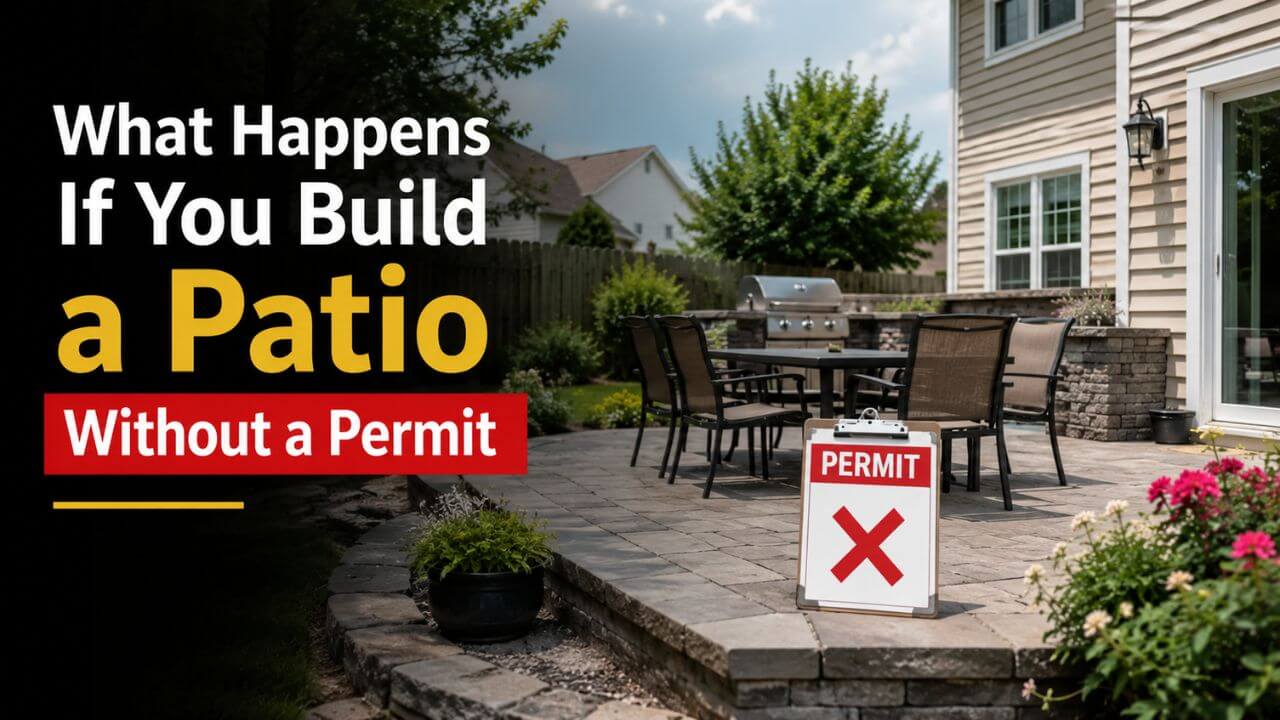
Building a patio without a permit can lead to fines, failed inspections, permit delays, and problems when selling your home. The risks depend on local building codes, patio size, and whether the structure affects zoning or safety rules.
Building a patio feels like a simple weekend project for many homeowners. That is why many people skip the permit process and start construction immediately.
The problem appears later. A patio that seemed harmless can create legal and financial headaches. Understanding what happens if you build a patio without a permit can save time, money, and stress.
Why Some Homeowners Skip Patio Permits
Most homeowners do not ignore permits on purpose.
Common reasons include:
- They believe small patios do not need permits.
- Contractors say permits are unnecessary.
- Permit fees seem expensive.
- The application process feels confusing.
- Neighbors built patios without permits.
| Reason | Result |
| Save money | Possible fines later |
| Save time | Permit delays later |
| Wrong advice | Code violations |
Do You Always Need a Permit for a Patio?
Not always.
Permit rules vary by city, county, and state. Some small ground-level patios qualify for exemptions. Others require permits because of drainage, setbacks, or zoning rules.
The following factors often determine permit requirements:
| Factor | May Require Permit |
| Patio size | Yes |
| Covered patio | Yes |
| Electrical work | Yes |
| Roof attachment | Yes |
The safest option is checking with your local building department before construction starts.
What Happens If You Build a Patio Without a Permit?
Several outcomes are possible. Some are minor. Others become expensive very quickly.
You May Receive a Fine
Local governments can issue fines for unpermitted construction.
The amount varies widely.
| Situation | Possible Result |
| First violation | Warning |
| Serious violation | Fine |
| Repeat violation | Larger penalties |
Some cities charge daily penalties until the issue is resolved.
You Could Receive a Stop Work Order
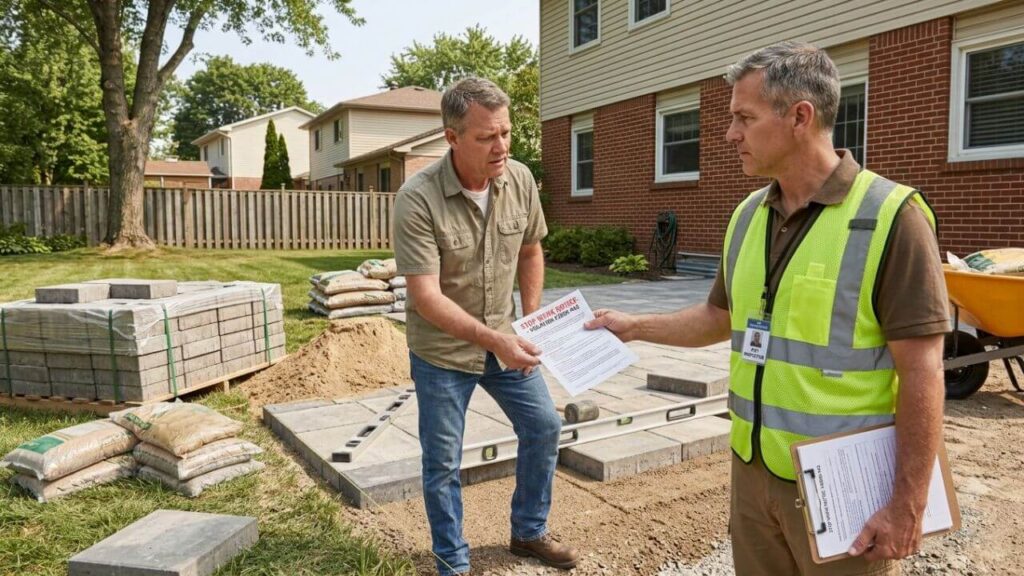
If inspectors discover the project during construction, they may issue a stop work order.
This forces all construction to stop immediately until permits are obtained and approved.
You May Need a Retroactive Permit
Many homeowners assume they can simply apply later.
Sometimes that works. Sometimes it does not.
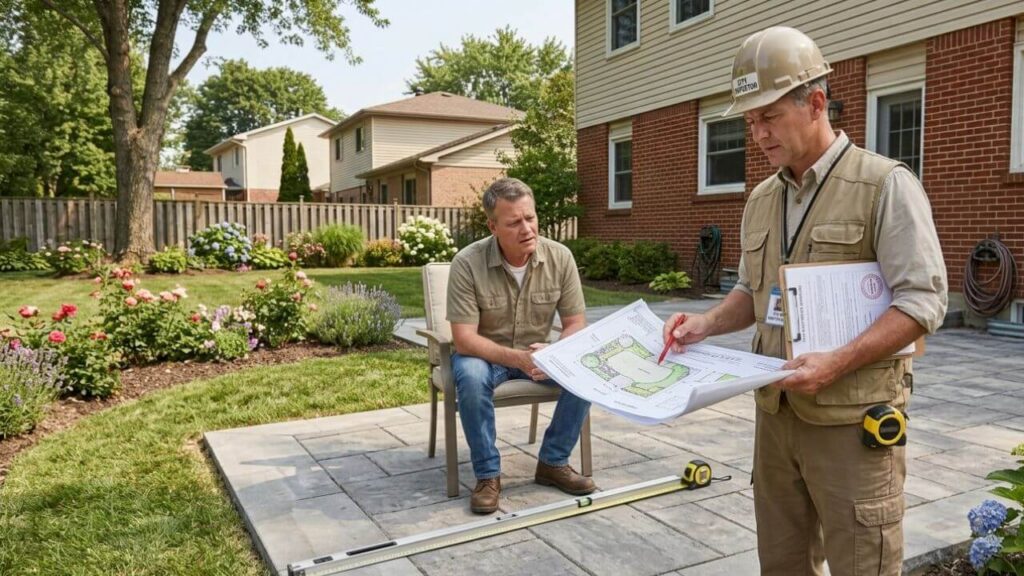
A retroactive permit often requires:
- Permit applications
- Inspection fees
- Site plans
- Engineering documents
- Additional corrections
Retroactive permits often cost more than regular permits.
Inspections Become More Difficult Later
Inspectors cannot verify work hidden beneath concrete or pavers.
That creates problems.
In some cases, inspectors require homeowners to expose parts of the project for inspection.
| Hidden Item | Possible Requirement |
| Footings | Excavation |
| Drainage systems | Exposure |
| Utility lines | Verification |
This can become expensive very quickly.
Selling Your Home Can Become More Complicated
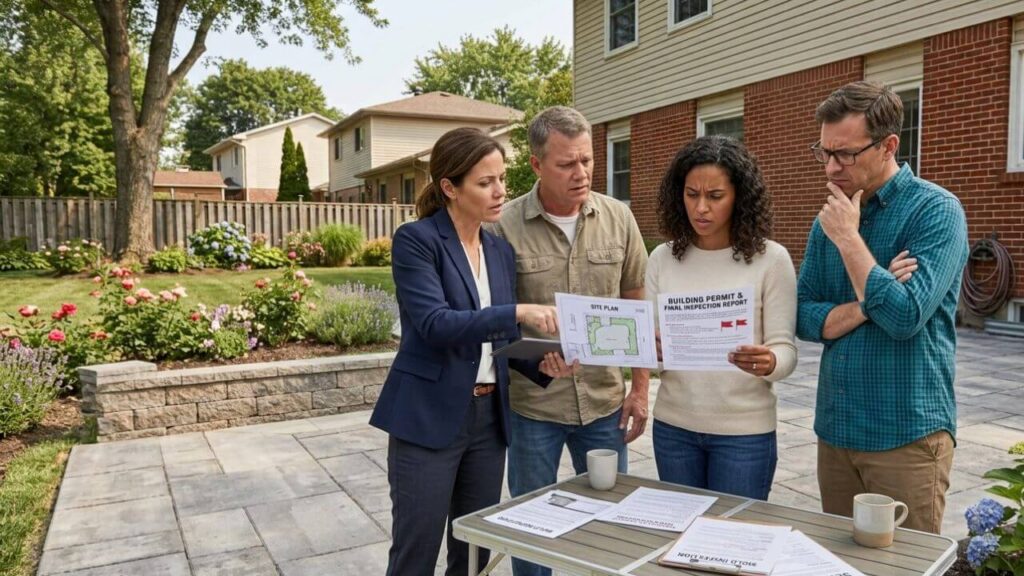
Many homeowners discover permit problems during home sales.
Buyers, inspectors, and lenders frequently review property records.
If the patio does not appear in local records, questions begin.
Possible issues include:
- Delayed closings
- Lower offers
- Repair requests
- Permit corrections before sale
| Home Sale Issue | Potential Impact |
| Missing permits | Buyer concern |
| Failed inspection | Closing delay |
| Code issues | Price reduction |
Insurance Claims May Become Difficult
Insurance companies investigate major claims carefully.
If storm damage, fire, or injuries involve an unpermitted structure, coverage questions may arise.
That does not automatically mean claims will be denied.
However, unpermitted construction can complicate the process.
HOA Rules Can Create Additional Problems
Homeowners associations sometimes require approval before construction begins.
Skipping HOA approval can lead to:
- Violation notices
- Fines
- Removal requests
- Legal disputes
HOA approval and city permits are often separate requirements.
Patio Permit Rules Vary Across the United States
Permit rules differ significantly by location.
| Region | Permit Requirements |
| Urban areas | More common |
| Rural areas | Sometimes simpler |
| HOA communities | Additional approvals |
Never assume your neighbor’s project follows the same rules as yours.
When Patios Usually Need Permits
Certain projects almost always require permits.
These include:
- Covered patios
- Elevated patios
- Patios with retaining walls
- Patios with electrical work
- Outdoor kitchens
- Attached structures
The larger and more complex the project becomes, the more likely permits are required.

What To Do If You Already Built Without a Permit
Do not panic.
Many homeowners solve the issue successfully.
Start with these steps:
- Contact the local building department.
- Ask about retroactive permits.
- Gather project information.
- Schedule inspections if required.
- Complete any corrections quickly.
Early action almost always produces better outcomes.
Common Mistakes Homeowners Make
Several mistakes appear repeatedly.
Avoid these:
- Assuming small patios never need permits.
- Trusting neighbor advice.
- Ignoring setback rules.
- Skipping HOA approval.
- Waiting until selling the house.
| Mistake | Better Approach |
| Guessing permit rules | Call local office |
| Ignoring setbacks | Verify zoning |
| Skipping paperwork | Keep records |
Expert Tips Before Starting a Patio Project
A few simple steps can prevent major problems later.
- Call your building department first.
- Ask for written requirements.
- Keep copies of approvals.
- Save contractor invoices.
- Photograph work during construction.
These habits make inspections and future sales much easier.
Frequently Asked Questions
Can you build a patio without a permit?
Sometimes yes. It depends on local rules, patio size, and project details.
What happens if inspectors find an unpermitted patio?
You may receive fines, permit requirements, or correction orders.
Can I get a permit after building a patio?
Yes. Many areas allow retroactive permits, although additional inspections may apply.
Do covered patios require permits?
In most locations, yes.
Will an unpermitted patio affect home value?
It can delay sales and create concerns for buyers.
Can HOA rules require patio approval?
Yes. Many communities require approval before construction begins.
Conclusion
Building a patio without a permit may seem like an easy shortcut. In reality, it can create expensive problems later.
The safest approach is simple. Spend a few minutes checking local rules before construction begins. A permit fee today is usually much cheaper than fines, delays, or corrections later.

I enjoy sharing simple gardening ideas, lawn care tips, and honest product reviews that help make outdoor work easier. From home gardening guides to helpful tools and lawn care advice, I write easy-to-follow content to help readers create a healthier and better-looking outdoor space without wasting time or money.