As an Amazon Associate, I earn from qualifying purchases.
Keep a poinsettia alive for years by giving it bright, indirect light, steady warmth, careful watering, well-drained soil, and regular pruning. To make its colorful bracts turn red again, give it long, uninterrupted nights each fall.
Across the United States, poinsettias brighten homes during Thanksgiving, Christmas, and the winter months. Many people treat them as short-lived holiday plants, but a healthy poinsettia can live for years with the right care. The trick is to keep it growing after the holidays instead of letting it dry out, sit in water, or face cold drafts near a door.
A poinsettia needs different care as the seasons change. In winter, it benefits from warmth and a sunny indoor spot. In spring, pruning can encourage fresh growth. During summer, it needs steady moisture and room to grow. In fall, a daily cycle of light and darkness helps the plant form its familiar colorful bracts again. You do not need a greenhouse, costly equipment, or advanced gardening skills to follow this cycle.
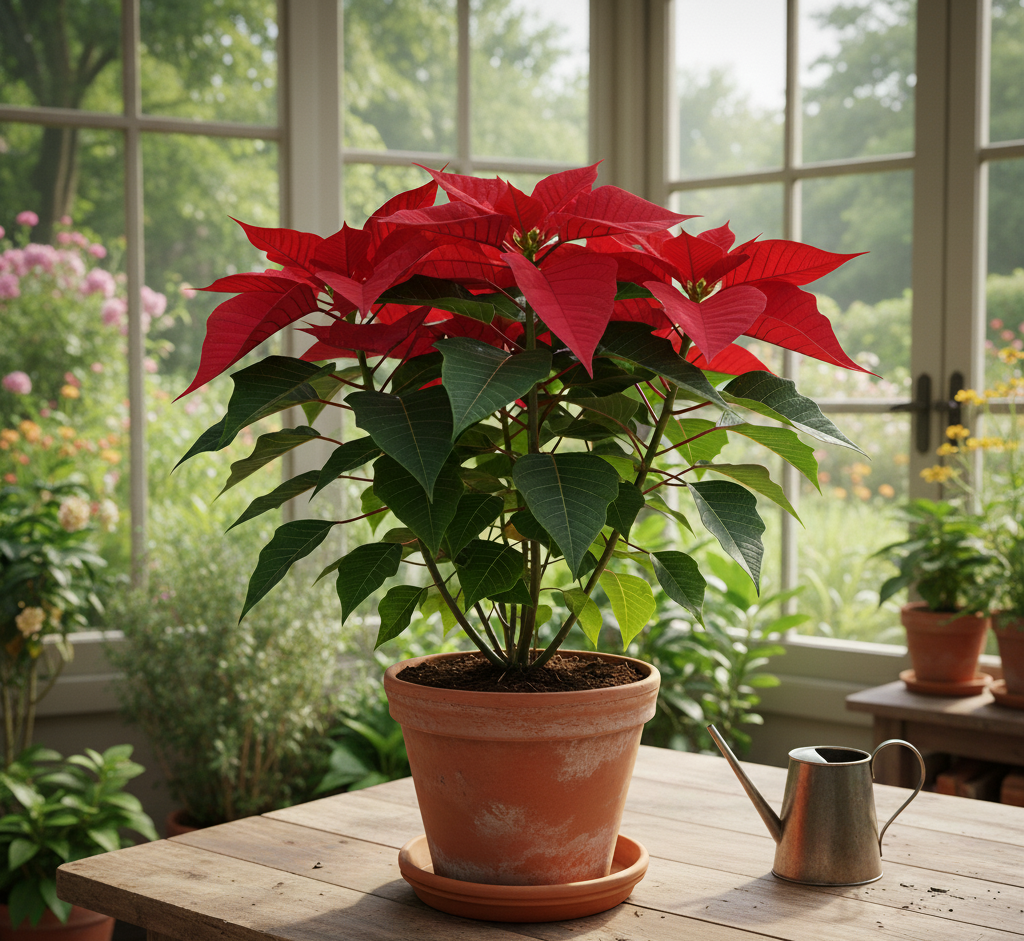
The red, pink, white, or cream parts that look like petals are actually modified leaves called bracts. The small yellow structures in the center are the true flowers. Keeping the plant alive and getting it to turn color again are related but separate goals. A poinsettia can remain healthy and green even when it does not produce bright holiday colors.
Yes. A poinsettia is a perennial shrub in its native range, not a plant that naturally dies after Christmas. In suitable tropical and subtropical climates, it can grow into a large shrub. Indoors in much of the United States, it can survive for several years as a potted houseplant if its needs are met.
The biggest challenge is the change in indoor conditions after the holidays. A poinsettia may leave a warm greenhouse with bright light and controlled watering, then spend winter in a dim room beside a heater. Its leaves may drop as it adjusts. That does not always mean the plant is dying, but widespread leaf loss can signal a problem that needs attention.
Keeping the plant alive does not guarantee that it will turn red again at Christmas. Color development depends on the length of the night, the amount of light during the day, plant health, and variety. Focus first on healthy roots and new leaves. Once the plant grows well, you can work toward another colorful display.
Source: plantnative.org
Living plant
A healthy poinsettia can continue growing from one year to the next when temperature, light, water, and root conditions remain suitable.
Holiday color
Red or other colored bracts develop in response to seasonal day length and long, uninterrupted nights.
Outdoor growth
In warm, frost-free parts of the United States, poinsettias may grow outdoors. In colder areas, bring them inside before temperatures become too low.
What a Healthy Poinsettia Looks Like
A healthy plant has firm stems, leaves that feel reasonably sturdy, and new growth during its active growing season. A few older leaves may turn yellow or fall as the plant adjusts, but repeated widespread leaf loss deserves a closer look. Check the soil and roots before changing several care habits at once.
Do not judge the plant only by its red bracts. As the flowering display fades, the bracts may turn green or drop while the plant continues to live. Fresh green growth in spring is a better sign of long-term health than the color of the holiday display.
Good signs
Firm stems, healthy roots, fresh leaves, and potting mix that drains freely.
Warning signs
Soft dark stems, sour-smelling soil, persistently wet roots, and rapid leaf loss may indicate root or stem problems.
Choose the Right Light and Indoor Location
Give your poinsettia bright, indirect light for most of the day. A bright east-facing window is often a good choice. A south- or west-facing window can also work if strong direct afternoon sun does not scorch the leaves or overheat the pot.
Light matters because the plant needs energy to make new leaves and maintain its stems. A dim corner may look attractive during the holidays, but it can lead to weak, stretched growth and gradual leaf loss. If the plant leans toward the window or develops long stems with wide gaps between leaves, it may need more light.
Keep the pot away from exterior doors that open often, drafty windows, air-conditioning vents, and strong heating outlets. Sudden changes in temperature and dry air can stress the plant. Rotate the pot a little every week or two so growth stays more even, especially if light comes from one side.
If natural light is weak during winter, move the plant closer to a bright window. A grow light can help when no suitable window is available, but it is not necessary for every home. Follow the light maker’s distance and timing guidance, and avoid placing a powerful lamp so close that it heats the foliage.
Source: gardeningknowhow.com
Best location
A bright room with filtered daylight, stable temperatures, and enough space for air to move around the foliage.
Too little light
Weak stems, sparse leaves, and growth that stretches toward the nearest window can point to poor light.
Too much harsh sun
Bleached patches, dry brown areas, or scorched leaves may mean the plant needs protection from intense direct sun.
How Much Light Does It Need Each Season?
During winter and spring, aim for a bright indoor position that supports steady growth. In summer, the plant can enjoy brighter conditions, but gradually adjust it if you move it outdoors. Sudden exposure to strong sun can damage leaves that developed indoors.
When fall color development begins, normal daytime light still matters. The plant needs a healthy day of light as well as a long, dark night. Do not leave it in darkness all day in an attempt to force color; that can weaken growth rather than create a healthy holiday plant.
Daytime
Provide bright natural light or suitable grow-light exposure while the plant is actively growing.
Nighttime in fall
Keep the plant in complete darkness during its planned long-night period so room lights do not interrupt the cycle.
Water Your Poinsettia Without Drowning the Roots
Water when the upper layer of potting mix feels dry, rather than following a strict daily schedule. How often you need to water depends on pot size, soil, indoor temperature, light, humidity, and plant size. A small pot in a warm room may dry much faster than a large pot in a cool room.
When it is time to water, moisten the root ball thoroughly and let excess water drain away. Empty the saucer or decorative outer pot after watering. Roots need both moisture and oxygen, and standing water can deprive them of air and encourage root rot.
Many holiday poinsettias arrive in foil sleeves or decorative containers without obvious drainage. Remove the sleeve or check whether the inner pot has holes before watering. If you want to keep the decorative cover, lift the nursery pot out, water it over a sink, allow it to drain, and then return it to the cover.
Avoid tiny, frequent splashes that wet only the soil surface. They may leave the center or lower part of the root ball dry. At the same time, do not pour more water into already saturated soil. Check the mix with a finger and learn how quickly your plant dries in its own spot.
Source: theherbprof.com
Check first
Feel the top inch of potting mix. If it is still damp, wait and check again later.
Water well
Add water evenly until some flows through the drainage holes, then let the pot drain fully.
Empty the saucer
Do not leave the bottom of the pot sitting in water after the roots have taken up enough moisture.
How to Tell Whether Watering Is the Problem
Dry, crisp leaves and very light potting mix can indicate that the plant needs water. Yellow leaves and a heavy, wet pot may indicate too much water, poor drainage, or damaged roots. Because these symptoms can overlap, check the soil before deciding what to do.
If the soil has dried out completely and pulled away from the pot edges, water slowly in stages so the mix can absorb moisture. If water runs straight through without wetting the root ball, a brief soak of the pot in water may help rehydrate the mix. Remove it afterward and let it drain fully.
If the soil stays wet for many days, stop watering until the upper layer begins to dry. Check for blocked drainage holes and remove standing water. If stems become soft or the roots smell rotten, the plant may have root damage and may not recover.
Dry soil and limp leaves
Check whether the root ball is dry, then water thoroughly and drain the pot.
Wet soil and yellow leaves
Improve drainage, reduce watering, and inspect the roots if the plant keeps declining.
Leaf drop after a move
Check temperature, drafts, and light before assuming water is the only cause.
Keep Temperatures Steady Throughout the Year
Poinsettias do best in a warm room with little temperature change. A practical indoor target during active growth is about 65 to 75 degrees Fahrenheit. They may tolerate modest variation, but cold drafts, frosty air, and hot blasts from heating vents can trigger stress and leaf drop.
Protect the plant when bringing it home from a store during cold weather. Even a short trip in freezing conditions can damage exposed leaves and stems. Wrap the plant for transport when temperatures are low, and do not leave it in a cold vehicle while running errands.
During summer, keep an eye on plants placed near hot windows or outdoors on a patio. High heat combined with dry soil can cause wilting, while a dark, hot enclosure can stress the foliage. A sheltered spot with bright light and airflow is usually better than a sealed, overheated porch.
If you live in a region with cold winters, treat your poinsettia as an indoor plant for most or all of the year. In warm, frost-free areas, it may grow outdoors, but local heat, rain, wind, and seasonal temperatures still affect its care. Move container plants inside before cold weather threatens them.
Source: ruralsprout.com
Avoid cold drafts
Keep the plant away from open winter windows and frequently used exterior doors.
Avoid hot air
Do not place the pot directly over a radiator or beside a strong heating vent.
Acclimate gradually
When moving the plant outdoors for summer, introduce brighter light and outdoor conditions over several days.
Repot Only When the Plant Needs More Room
A poinsettia does not need a larger pot every year. Repot when roots fill the current container, water runs through too quickly because the root ball is crowded, or the old mix has broken down and no longer drains well. A pot that is too large can hold excess moisture around a small root system.
Choose a container with drainage holes and only a modest increase in size. A pot about one or two inches wider than the current one is often enough when the roots need more room. Use a fresh, well-draining potting mix made for indoor containers rather than dense garden soil.
Spring is a practical time to repot a healthy plant as new growth begins. Ease the plant from its container and inspect the roots. Healthy roots are generally firm; damaged roots may look dark, feel mushy, or smell unpleasant. Trim only clearly dead or rotten roots with clean tools, and avoid disturbing healthy roots more than necessary.
Set the plant at roughly the same depth it grew before. Fill around the roots without packing the mix tightly, then water enough to settle the soil and let the pot drain. Keep the plant in bright, indirect light while it adjusts. Do not combine repotting with severe pruning, heavy feeding, and a major location change unless there is a clear reason.
Source: i.pinimg.com
Use a draining mix
Choose a loose potting mix that holds some moisture but allows excess water and air to move through.
Match pot size to roots
A modestly larger container is safer than moving a small root ball into a very large pot.
Keep drainage open
Make sure the container has working holes and that no decorative sleeve traps water around the roots.
Should You Reuse the Original Holiday Pot?
You can keep using the original pot if it has drainage holes, enough room for the roots, and potting mix that drains properly. Many holiday plants come in lightweight nursery pots that work well for a time. The decorative wrapper is not a substitute for drainage.
If the plant remains healthy and roots are not crowded, there is no need to repot just because the holidays have ended. Check its condition in spring and make the decision based on the root system and soil rather than the calendar alone.
Keep the pot
Reuse it if the roots fit, drainage works, and the pot is clean and intact.
Repot the plant
Move it when roots are crowded, the mix has deteriorated, or drainage problems cannot be corrected.
Prune Your Poinsettia for Fuller Growth
Pruning helps an older poinsettia grow into a fuller, more compact plant. After the holiday display fades and the plant begins its spring growth cycle, cut back long or weak stems with clean, sharp pruning shears. Leave a few healthy nodes on each stem so new shoots can develop.
A poinsettia may look bare after pruning, but healthy roots and stems can support new growth. Keep it in a bright, warm spot and water according to the soil’s condition. Do not feed a severely stressed plant heavily in an attempt to force new leaves.
As fresh shoots develop in late spring and summer, pinch the growing tips to encourage branching. Pinching means removing the soft tip of a shoot with clean fingers or shears. More branches can produce a fuller plant, though each growing tip may also form a flowering shoot later in the season.
Stop pinching by late summer, commonly around late August or early September in much of the United States, if you want holiday color. The exact timing depends on your climate, cultivar, and the time needed for bract development. Late pruning can remove developing shoots and delay the display.
Source: i.ytimg.com
Spring
Prune leggy stems after the display fades and the plant is ready to resume active growth.
Early to midsummer
Pinch new tips as needed to encourage branching and a balanced shape.
Late summer
Stop routine pinching in time for the plant to develop shoots and prepare for fall color.
What If the Poinsettia Has Lost Most of Its Leaves?
Do not discard the plant just because it looks bare. Check whether the stems remain firm and whether the roots are healthy. If the stems are green beneath a small, gentle scratch and the roots are firm rather than mushy, the plant may still be alive.
Remove dead material and correct any clear watering or light problems. Wait for signs of active growth before adding fertilizer. If every stem is dry and brittle, the roots are rotten, or the main stem has become soft and dark, recovery is less likely.
Firm stems
Keep the plant under suitable care and watch for new buds or leaves.
Soft, rotting stems
Remove the plant if rot is extensive, and clean tools and the growing area before using them again.
Feed the Plant During Active Growth
Fertilizer can help a poinsettia maintain healthy leaves and stems, but it cannot fix poor light, rotten roots, or incorrect watering. Use a balanced, water-soluble houseplant fertilizer according to its label once the plant resumes active growth after the holiday period. The correct amount depends on the product’s formulation and dilution instructions.
Do not fertilize a plant whose roots are waterlogged or badly dried out. First correct the growing conditions and allow the plant to recover. Feeding a stressed root system can add more stress rather than improve growth.
During spring and summer, follow a consistent feeding schedule suited to the fertilizer and potting mix. Some products are designed for more frequent use at a diluted rate, while others are applied less often. Do not combine products or increase the dose to make the plant grow faster.
Reduce or stop routine feeding when growth slows in low-light winter conditions. Resume when new growth starts. Fresh potting mix may also contain nutrients, so account for any fertilizer already present and follow the mix and fertilizer labels.
Source: plantnative.org
Feed growing plants
Apply fertilizer when the poinsettia is actively producing new leaves and shoots.
Follow the label
Use the stated dilution and frequency rather than guessing or applying extra for faster growth.
Do not overfeed
Excess fertilizer can harm roots and cause leaf-edge damage or salt buildup in the potting mix.
Follow a Year-Round Poinsettia Care Calendar
A seasonal routine makes long-term poinsettia care easier because it matches the plant’s changing growth needs. You do not need to perform every task on a fixed date. Use new growth, soil moisture, temperature, and the plant’s overall health to guide your work.
The calendar below is a general guide for a typical U.S. home. Local climate, indoor heating, natural daylight, and plant variety can change the timing. In warm regions, outdoor growth may be possible for longer, while colder regions require more indoor protection.
Source: northparkflorist.net
December through February
Keep the plant warm, give it bright light, and check soil moisture regularly. Remove decorative covers that trap water.
March through April
As the display fades and new growth begins, prune long stems. Repot only if the roots or potting mix need attention.
May through July
Encourage leafy growth with bright light, suitable watering, and measured fertilizer. Pinch new tips if a bushier plant is desired.
August through September
Stop pinching in time for the fall color cycle. Prepare a location where you can control the plant’s nightly darkness.
Late September through November
Provide long, uninterrupted nights and bright days to encourage colorful bracts. Check the plant each day for pests and water needs.
A Simple Weekly Care Check
Once a week, check the top layer of soil, inspect the undersides of leaves, and look for new growth or damage. Check more often during hot, bright weather, when a small pot may dry quickly. In a cool room or during slow growth, the plant may need water less often.
Turn the pot slightly if growth leans toward a window. Remove fallen leaves from the soil surface and empty any standing water from the saucer. These small checks help you spot problems before the plant suffers widespread damage.
Soil
Check moisture before watering and confirm that excess water can escape.
Leaves
Look for yellowing, spots, webbing, tiny insects, and unusual leaf drop.
Stems
Check for firm growth, healthy buds, and signs of soft or dark areas.
How to Make a Poinsettia Turn Red Again
To encourage red bracts again, give the poinsettia long, uninterrupted nights each fall. Poinsettias are short-day plants, which means their flowering and bract-color cycle responds to long nights and shorter days. A bright day followed by a sufficiently long period of darkness helps start the seasonal process.
For a home-grown plant, a common approach is to provide about 14 to 16 hours of complete darkness every night for roughly eight to ten weeks, beginning in late September or early October for a display near the end of the year. Timing varies by variety and conditions, so this is a practical guideline rather than a guarantee of a particular date.
A spare room or a light-proof cover can help create the dark period. If you use a cover, make sure it does not press against the leaves or trap excess heat and moisture. Remove it each morning so the plant receives bright daytime light and good airflow.
Even brief exposure to room lighting during the dark period may disrupt the response, especially when it happens repeatedly. Avoid placing the plant where lamps, televisions, hallway lights, or outdoor security lights shine on it at night. A regular schedule is easier to maintain than an improvised routine that changes from day to day.
Color development takes time. The bracts may gradually change shade rather than turning bright red overnight. A healthy plant with green leaves but no red bracts may simply need a more consistent dark period, although light, temperature, and variety can also affect the final result.
Source: koala.sh
Start in early fall
Begin the dark-period routine early enough to allow several weeks for the plant’s seasonal response.
Keep nights consistent
Provide the same long, dark period each night without interruptions from indoor lighting.
Maintain daytime care
Continue suitable watering, bright light, warmth, and pest checks while bracts develop.
Why Is My Poinsettia Still Green?
If the plant stays green in fall, first check the length and quality of its dark period. A room that looks dark to you may still receive enough light from a lamp or nearby window to interrupt the cycle. Use a truly dark room or a suitable light-proof cover and keep the schedule steady.
Next, check whether the plant is healthy enough to respond. Severe root damage, poor light during the day, pests, or heavy pruning late in summer can delay or weaken the display. Correct the main problem and give the plant time rather than adding more fertilizer or leaving it in darkness around the clock.
Some varieties produce different shades, including pink, cream, or marbled bracts. A plant that does not turn red may still be healthy and may naturally display another color. The aim is to support the variety’s normal seasonal response, not to force every poinsettia into the same shade.
Check the dark period
Make sure the plant receives long nights without repeated exposure to household lights.
Check plant health
Look for healthy roots, suitable daytime light, and steady growth before changing the flowering routine.
Allow enough time
Continue the routine for several weeks; do not expect an immediate color change.
Prevent Pests and Common Poinsettia Problems
Inspect your poinsettia often because pests are easier to manage when their numbers are low. Check leaf undersides, tender shoots, and the points where leaves join stems. New plants can bring pests indoors, so keep them separate from other houseplants until you have checked them.
Whiteflies are small, pale insects that may flutter up when the foliage is disturbed. Spider mites can cause fine speckling and, in heavier infestations, delicate webbing. Mealybugs look like small white cottony patches, while aphids often gather on tender new growth.
If you find pests, isolate the plant and identify the problem before choosing a treatment. A gentle rinse may remove some insects, and wiping affected areas can help with small infestations. If you use an insecticidal soap or another labeled product, follow its directions, test a small area when appropriate, and keep treated foliage away from children and pets until the label permits contact.
Leaf problems are not always caused by insects. Yellow leaves can result from wet roots, low light, cold drafts, or natural aging. Brown edges may reflect dry soil, heat stress, or fertilizer buildup. Treat the cause you can verify rather than applying several products at once.
Source: northparkflorist.net
Yellow leaves
Check soil moisture, drainage, temperature, and light. A few older leaves may fall naturally, but rapid widespread yellowing needs attention.
Brown or crisp edges
Check for dry roots, strong heat, harsh direct sun, and excess fertilizer salts.
Sticky leaves or white insects
Inspect for sap-feeding pests and isolate the plant if an infestation is present.
Soft stems or a bad soil smell
Suspect rot, stop adding water to saturated soil, and inspect drainage and root health.
Is a Poinsettia Safe Around Children and Pets?
Poinsettias are often described as highly poisonous, but that description overstates their usual toxicity. The milky sap can irritate skin, and chewing the leaves may cause mouth irritation or stomach upset. The plant is still not meant to be eaten, and individual reactions can vary.
Keep the plant out of reach of young children and pets, especially if they tend to chew leaves. Wear gloves when pruning if your skin is sensitive to plant sap, and wash your hands afterward. If a child or pet eats part of the plant and develops symptoms, contact a suitable poison-information service, medical professional, or veterinarian for advice.
Prevent chewing
Place the plant where children and pets cannot easily reach the foliage or fallen leaves.
Avoid sap contact
Use care when pruning and wash skin that comes into contact with the milky sap.
Common Mistakes That Shorten a Poinsettia’s Life
Most long-term poinsettia problems come from a few preventable mistakes. The plant is often watered on a fixed schedule, kept in a dark display spot, or left in a decorative wrapper that holds water. Small changes to these habits can make a bigger difference than buying extra plant-care products.
Another common mistake is treating every dropped leaf as proof that the plant is dead. A poinsettia can lose leaves after a change in temperature or light and still recover if its stems and roots remain healthy. On the other hand, waiting too long to address rotting roots or a pest outbreak can make recovery much harder.
Avoid drastic care changes when the cause is unclear. Check one factor at a time, beginning with soil moisture and drainage, then light and temperature, then pests and root health. This approach helps you avoid making a stressed plant worse by watering it more, fertilizing it heavily, and moving it repeatedly.
Source: theherbprof.com
Watering by the calendar
Water according to soil moisture and drainage rather than assuming the plant needs water every day or every week.
Leaving water in the cover pot
Drain the nursery pot after watering so roots do not remain submerged.
Keeping it in a dark corner
Choose a brighter location for healthy growth, reserving complete darkness for the planned fall night cycle.
Pruning too late
Late pinching or heavy pruning can remove growth that would otherwise help produce the next display.
Overfeeding a weak plant
Correct water, light, and root problems before using fertilizer to support new growth.
Discarding it too soon
Check stem and root condition before deciding that a leafless poinsettia cannot recover.
Frequently Asked Questions
Q
How long can a potted poinsettia live?
A potted poinsettia can live for several years when it receives suitable light, warmth, water, drainage, and seasonal care. Its life span depends on plant health and growing conditions. It may lose its holiday bracts and some leaves without dying.
Q
Can I keep my poinsettia alive all year indoors?
Yes. Keep it in bright, indirect light, maintain a warm room, water when the upper soil layer begins to dry, and empty the saucer after watering. Prune it in spring if it becomes leggy, and feed it during active growth according to the fertilizer label.
Q
Why is my poinsettia dropping green leaves?
Green leaf drop can result from cold drafts, sudden temperature changes, poor light, dry soil, waterlogged roots, or normal adjustment after purchase. Check the soil first, then review the plant’s location and inspect the roots and foliage for signs of damage or pests.
Q
When should I start putting my poinsettia in the dark?
For a holiday display, many home growers begin a long-night routine in late September or early October. Provide about 14 to 16 hours of uninterrupted darkness each night for roughly eight to ten weeks, with bright light during the day. Adjust the timing if your variety or desired display date requires a different schedule.
Q
Can I plant my poinsettia outside after Christmas?
You can move it outdoors when local conditions are warm enough and the risk of cold damage has passed. Acclimate it gradually to outdoor light, protect it from harsh sun and wind, and bring it inside before cold weather threatens. In frost-prone areas, growing it in a container that can be moved indoors is usually the more practical choice.
Q
Should I cut back a poinsettia after Christmas?
Wait until the colorful display fades and the plant is ready to resume active growth. In spring, cut back long or weak stems with clean shears, leaving healthy nodes for new shoots. Pinch the tips of fresh growth during summer if you want a fuller shape, then stop pinching in time for fall color development.
Q
Does a poinsettia need fertilizer in winter?
A poinsettia that is growing slowly in low winter light usually needs less fertilizer than one producing fresh leaves in spring and summer. Follow the fertilizer label and resume regular feeding when active growth begins. Never use extra fertilizer to try to correct leaf drop caused by poor watering or root damage.
✦ Wrapping Up
Conclusion
Keeping a poinsettia alive for years is possible when you treat it as a long-term houseplant rather than a temporary holiday decoration. Give it bright, indirect light, steady warmth, well-drained soil, and water based on the mix’s moisture. Prune it as needed, feed it during active growth, and inspect it often for pests or root trouble.
The main seasonal challenge is the return of its colorful bracts. Healthy summer growth prepares the plant for fall, while long, uninterrupted nights help trigger the seasonal display. With a consistent routine, a poinsettia can remain part of your home long after its first Christmas and may produce fresh color in later years.
💡 Key Takeaway
Start with three checks today: feel the top inch of soil, confirm that the pot drains freely, and move the plant to a bright spot away from drafts. In spring, plan any needed pruning or repotting. In fall, prepare a consistent long-night routine if you want the plant to color up again.
I enjoy sharing simple gardening ideas, lawn care tips, and honest product reviews that help make outdoor work easier. From home gardening guides to helpful tools and lawn care advice, I write easy-to-follow content to help readers create a healthier and better-looking outdoor space without wasting time or money.