As an Amazon Associate, I earn from qualifying purchases.
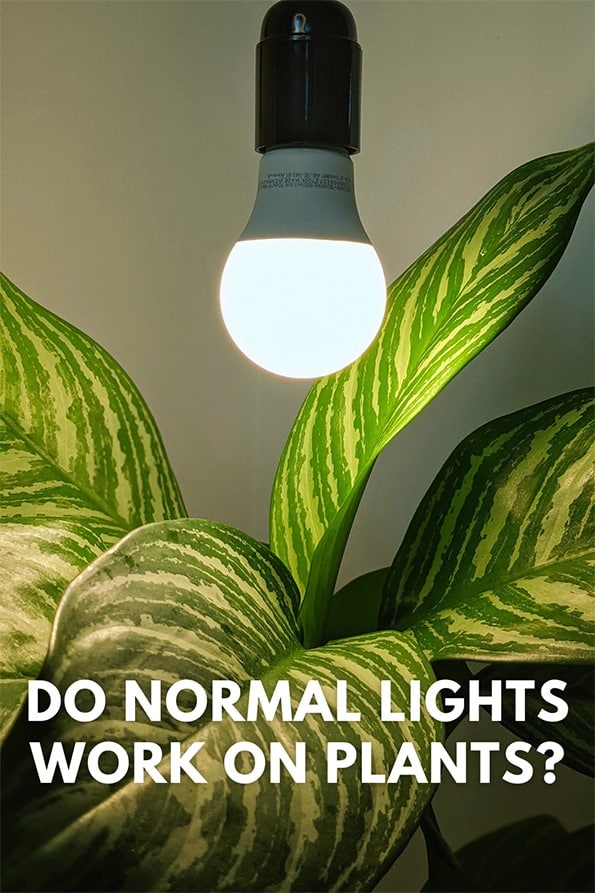
Yes, you can use a normal LED light to grow plants indoors. A standard white LED bulb can support many houseplants and young seedlings if it provides enough light for enough hours. However, a regular room light may not provide the strength or coverage needed for plants that produce flowers, fruit, or large harvests.
Across the United States, indoor gardeners often face the same problem each winter. Short days, cloudy skies, and cold weather can leave houseplants near windows without enough light. A desk lamp or a spare LED bulb may seem like an easy fix, and it can help when you choose the right bulb and place it well.
The key is not whether a bulb says LED or grow light. Plants need enough usable light to make food through photosynthesis. The bulb’s brightness, color spectrum, distance from the leaves, and daily operating time all affect how well it works.
A normal white LED bulb is often a useful starting point for leafy houseplants, herbs, and seedlings. It may fall short for sun-loving plants such as tomatoes, peppers, and citrus trees. This guide explains how to choose a bulb, set it up safely, and tell whether your plants are getting enough light.
Yes. Normal LED bulbs can support indoor plant growth because white LEDs emit visible light that plants can use for photosynthesis. You do not always need a special grow lamp to keep a houseplant healthy or raise a tray of young seedlings.
The main limitation is light output at the leaves. A bulb that lights an entire bedroom may spread its light too widely to provide enough intensity for a plant sitting several feet below it. The same bulb can be more useful when placed closer to a small plant, provided it does not create excess heat or another safety problem.
Think of light as food for a plant. A little light may keep a shade-tolerant plant alive, but steady growth usually needs a larger daily supply. A brighter bulb, a suitable distance, and a consistent schedule can help a normal LED lamp provide that supply.
A regular LED bulb is not automatically equal to a grow light with the same wattage. The two products may differ in light distribution, output, spectrum, and intended coverage. The result depends on the exact bulb and the plant, not simply on the product name.
Source: growlightinfo.com
Good uses
Supplementing window light for many foliage houseplants, growing some leafy herbs, and starting seedlings when the lamp supplies enough usable light.
More difficult uses
Growing tomatoes, peppers, flowering plants, or sun-loving crops from start to harvest under a weak household bulb.
Main decision
Check the light reaching the plant and its growth response instead of relying on the bulb’s appearance or advertised wattage alone.
Which Plants Can Grow Under Normal LED Bulbs?
Many common foliage houseplants can benefit from a normal LED bulb when natural window light is limited. Plants such as pothos, heartleaf philodendron, snake plants, and some dracaenas often tolerate lower indoor light than flowering or fruiting crops. They still need adequate light to maintain healthy growth.
Leafy herbs such as mint and parsley may also grow under household LEDs if the light is strong enough. Basil usually needs brighter conditions to stay compact and produce plenty of leaves. Seedlings can use white LED light too, but light-loving vegetable seedlings need more than a dim decorative lamp.
Plants that need full sun are harder to grow well with a single ordinary bulb. Tomatoes, peppers, cucumbers, and many flowering annuals often need intense light over a broad canopy. For these plants, a dedicated grow light or a strong, well-designed lighting setup is usually the more reliable option.
Low-light foliage plants
Often suitable for supplemental household LED lighting, although low-light tolerance does not mean that a plant can thrive in darkness.
Herbs and seedlings
Can grow under white LEDs when light intensity, daily exposure, and watering are appropriate for the species.
Fruiting vegetables
Usually need stronger light and more even coverage than one standard room bulb can provide.
How Normal LED Lights Help Plants Grow
Plants use light energy to turn water and carbon dioxide into sugars through photosynthesis. Those sugars help plants build leaves, stems, roots, flowers, and fruit. If a plant receives too little usable light, it cannot make enough energy to support the growth you expect.
White LED bulbs usually produce a mixture of visible wavelengths that includes blue and green light and often a larger red component. Chlorophyll absorbs red and blue light well, while other pigments and leaf structures also use parts of the visible spectrum. This is one reason ordinary white LEDs can support plant growth even though they were designed for homes rather than gardens.
Plants also respond to light as a signal. The color and timing of light can affect leaf development, stem growth, and flowering. Still, a special spectrum cannot make up for a severe shortage of total light. A weak purple or red-blue bulb is not automatically better than a sufficiently bright white LED.
The useful question is how much plant-usable light reaches the leaves over the course of a day. A bulb may look bright to your eyes yet provide little light at the plant if it is far away. This is why placement and output matter as much as the bulb’s color.
Source: homeminimalisite.com
Blue wavelengths
Help regulate normal leaf development and compact growth. Blue light is part of the spectrum plants use for photosynthesis.
Red wavelengths
Support photosynthesis and play a role in plant development, including flowering responses in many species.
White light
Combines multiple visible wavelengths and can work well for everyday indoor growing when intensity is sufficient.
Total light exposure
Depends on intensity and duration. A longer schedule may help a plant receiving moderate light, but it cannot always compensate for a very weak lamp.
Does a Plant Need a Special Light Spectrum?
No, not for every indoor growing task. Most standard white LED bulbs emit a broad visible spectrum that plants can use. A grow light may be designed to deliver a stronger or more even supply of useful wavelengths, but the word grow is not a guarantee of better results.
For foliage plants and simple seed-starting tasks, a good white LED can be a practical choice. For commercial growing, indoor fruit production, or plants with high light needs, a purpose-built fixture can make it easier to provide the required intensity and coverage.
Avoid choosing a lamp only because its light looks pink, purple, blue, or red. Human color perception is not a reliable measure of how much usable light reaches the leaves. If technical specifications are available, look for PPFD measurements at the intended distance and the fixture’s coverage information.
A useful specification
PPFD measures the number of photosynthetically active photons reaching a square meter each second, commonly expressed in micromoles per square meter per second.
Another useful specification
Daily light integral, or DLI, measures the total amount of photosynthetically active light received per square meter over a day.
How to Choose a Normal LED Bulb for Indoor Plants
Choose a bulb based on its output, light color, beam spread, and intended growing area. You do not need to buy the most expensive bulb for a small houseplant, but a low-output decorative bulb may not provide enough light for steady growth.
Start with a standard white LED bulb that has a clear brightness rating and a suitable fixture. A color temperature around 4000K to 6500K is often a practical range for foliage growth and seedlings, but color temperature alone does not tell you how much light the plant receives. A warm-white bulb can also support photosynthesis if its output is adequate.
Wattage tells you how much electrical power a bulb uses, not how much usable light reaches the plant. A 10-watt LED can differ from another 10-watt bulb in efficiency, beam angle, and output. Check the package for lumens, manufacturer specifications, and any plant-light data rather than using wattage as the only guide.
For one small plant, a single bulb may be enough if it can be positioned close to the leaves. For several plants, a broader fixture or more than one lamp may provide better coverage. Aim for even illumination across the whole plant rather than a bright spot on one leaf and deep shade everywhere else.
Source: artofit.org
Brightness
Higher lumen output can be useful, but lumens are weighted for human vision. They do not directly measure plant-usable light.
Color temperature
A white bulb around 4000K to 6500K is a reasonable starting point for many foliage plants and seedlings, subject to intensity and plant needs.
Beam angle
A focused beam may concentrate light on one plant, while a wider beam can spread light across a shelf. The actual result depends on the fixture and distance.
Dimmability and timer support
These features can help you manage exposure, but check compatibility before connecting a dimmable bulb to a dimmer or automated control.
Warm White or Cool White: Which Is Better?
Both warm-white and cool-white LEDs can support plant growth. Warm-white bulbs often look yellowish and commonly have a lower color temperature, while cool-white bulbs look more neutral or blue-white. Neither appearance alone tells you whether a bulb provides enough usable light.
A cool-white bulb can be a sensible starting point for leafy growth and seedlings, while warm-white bulbs can also work well. If both bulbs deliver similar useful light at the leaves, their color-temperature labels alone do not establish which will produce better growth.
If you already own a bright white household LED, try it before buying a new lamp. Watch the plant’s growth and adjust the distance or exposure time if needed. Replace the bulb only when the existing setup cannot provide adequate light or coverage.
For foliage plants
A suitable white LED with enough output is generally more important than choosing warm white or cool white.
For seedlings
Choose a bright, evenly distributed source that can stay at an appropriate distance as the plants grow.
How Far Should a Normal LED Light Be From Plants?
The correct distance depends on the bulb’s output, its beam angle, the plant’s light needs, and the heat produced by the fixture. A household bulb placed several feet above a plant may provide too little light, while a brighter bulb placed too close can cause heat stress or uneven exposure.
For a modest household LED bulb, a starting distance of roughly 6 to 12 inches from the upper leaves may be worth testing for a small plant. This is only a starting point, not a universal rule. Some bulbs need to be farther away, and some low-output bulbs may not provide enough light even when placed nearby.
Keep the lamp secure and make sure the plant does not touch the bulb or a hot fixture. Follow the manufacturer’s clearance instructions, especially when the lamp sits in an enclosed shade or near plastic pots, curtains, and other materials. LED bulbs often release less heat than comparable older incandescent bulbs, but their drivers and fixtures can still become hot.
Check the plant after several days and again over the next few weeks. If the stems stretch toward the lamp or new leaves become small and pale, the plant may need more light. If leaves develop bleached patches, dry edges, or unusual curling, review the distance, temperature, watering, and other possible causes before moving the lamp closer or farther away.
Source: www.pinterest.com
Small foliage plants
Try a stable position close enough to provide useful light while leaving safe clearance around the leaves and fixture.
Seedling trays
Aim for even light across the tray and adjust the height as seedlings grow. A single narrow bulb may leave the tray edges too dim.
Large plants
Consider a broader fixture or several light sources so that lower and outer leaves receive light as well.
How Can You Tell Whether the Light Is Too Weak?
A plant that receives too little light may develop long, thin stems and unusually wide gaps between leaves. New growth may be smaller than usual, and the plant may lean strongly toward a window or lamp. These signs are often called stretching or etiolation.
Slow growth can also suggest low light, but it is not proof on its own. Cool temperatures, poor roots, pests, nutrient issues, and incorrect watering can all slow growth. Check the soil moisture, root health, and growing conditions before deciding that the bulb is the only problem.
When the light seems weak, move the plant gradually into a brighter position or adjust the lamp if the fixture allows it. Give the plant time to respond. Existing stretched stems will not always become compact again, but new growth can show whether the change is helping.
Likely low-light signs
Long, weak stems, leaning growth, sparse leaves, and reduced growth compared with the plant’s usual pattern.
Possible excess-light or heat signs
Bleached areas, scorched patches, or curled leaves may indicate stress, but check temperature, watering, and pests before drawing a conclusion.
How Many Hours Should You Leave an LED Light On?
Many indoor foliage plants can benefit from roughly 10 to 14 hours of supplemental LED light per day when natural light is limited. This is a practical starting range rather than a fixed rule. The correct schedule depends on the species, the strength of the lamp, and the amount of daylight the plant already receives.
Plants need a daily dark period as well as light. Leaving a household bulb on around the clock is not a sound default because plant growth and normal biological rhythms respond to day and night cycles. A timer can make the schedule consistent and reduce the risk of forgetting to switch the light off.
If your plant receives several hours of bright window light, it may need less supplemental lighting than a plant in a dim room. Conversely, a seedling under a weak lamp may still stretch even when the bulb stays on for many hours. Increase useful light at the leaves rather than extending the day indefinitely.
For a simple setup, choose a consistent daytime schedule that fits your plant’s needs. For example, a houseplant in a dim room might receive supplemental light during the morning and afternoon, while natural daylight continues to contribute through a nearby window. Observe growth and adjust the schedule as the seasons change.
Source: theweather.net
Low-light foliage plants
Often benefit from supplemental lighting during part of the day when the room is dim, while retaining a daily dark period.
Leafy herbs and seedlings
May need a longer daily lighting period than shade-tolerant houseplants, depending on light intensity and species.
Flowering and fruiting plants
Have species-specific light and sometimes day-length requirements. Use growing guidance for the exact crop rather than assuming every plant needs the same schedule.
Can You Use a Desk Lamp or Floor Lamp?
Yes, if the lamp is stable, the bulb is suitable for the fixture, and the light reaches the plant at a useful intensity. A desk lamp is convenient for one small plant or a few seedlings because its position can often be adjusted. A floor lamp may work for a taller plant, but its shade can block or spread light in ways that reduce the amount reaching the leaves.
Check the lamp’s maximum permitted wattage and bulb type before installing an LED. Do not use a bulb in an enclosed fixture unless the bulb is rated for that use. Keep cords dry, prevent pots from tipping onto the lamp, and avoid unstable arrangements that could fall.
A lamp with an adjustable arm can help you aim the light, but the brightest point should not be the only part of the plant receiving illumination. Turn or reposition the plant when appropriate so its growth stays balanced.
Desk lamp
Useful for one small plant when the lamp can be positioned safely and the bulb supplies enough light.
Floor lamp
Can supplement light for a taller plant, although a standard shade may limit coverage.
Ceiling light
Often sits too far from the plant to provide strong supplemental light unless its output and placement are suitable.
Normal LED Bulbs vs. Dedicated Grow Lights
Normal LEDs are often cheaper and easier to find because they are designed for everyday lighting. They make sense when you want to supplement a window or support a small number of low-light plants. If you already own a suitable bulb, using it first can be a sensible way to see whether your plants need more light.
Dedicated grow lights are designed for plant-growing tasks. Many provide published PPFD data, coverage guidance, adjustable output, or a fixture shape that spreads light across a plant shelf. Those features can make it easier to meet the needs of seedlings and sun-loving plants, especially when several plants share one growing area.
The best choice depends on what you are growing and how much light the setup needs to provide. A grow light is not automatically necessary for every houseplant, and a normal LED is not automatically sufficient for every crop. Compare the light delivered to the canopy, the size of the growing area, energy use, and safe mounting options.
Source: gardeneros.com
Normal LED bulb
Convenient for a small area, commonly easy to replace, and suitable for supplemental lighting when output and placement are adequate.
Dedicated grow light
Often easier to use for seedlings, high-light plants, broad shelves, and growing projects that require measured light levels.
Cost comparison
Consider the cost of the bulb or fixture, electricity, useful coverage, and whether the setup actually supports the plant’s needs.
When Is a Grow Light Worth It?
A dedicated grow light becomes more useful when ordinary household lighting cannot keep plants compact and healthy. This is common when raising vegetable seedlings in winter, growing herbs far from a window, or trying to produce flowers and fruit indoors.
It may also be worth considering when you have many pots on one shelf. Several household bulbs can create uneven lighting and require more sockets and cables. A fixture designed for a shelf may provide broader coverage with a simpler setup.
Before buying anything, identify the problem. If only one plant sits in a dim corner, moving it closer to a window or using an existing suitable LED may solve the issue. If an entire shelf is consistently dim, a fixture with documented coverage and light output may be the better long-term choice.
Consider a grow light for seedlings
Especially when seedlings become tall and weak despite a consistent lighting schedule.
Consider a grow light for fruiting crops
When the crop needs high light intensity for sustained flowering and fruit production.
Keep a normal LED for simple tasks
When a small plant grows well and the current bulb supplies adequate light without unsafe heat or placement.
How to Set Up a Normal LED Light for Indoor Plants
You can set up a basic household LED growing area with a suitable bulb, a stable lamp, and a place where the plant can receive consistent light. Start small and make changes based on the plant’s response. A simple setup is easier to assess than several bulbs placed at different heights and schedules.
Choose a location that stays at a fairly stable temperature and is easy to keep dry. A shelf near a window can work well because the plant receives natural daylight as well as supplemental light. Keep the lamp and any electrical connections away from splashes, damp soil, and water trays.
Position the lamp according to its output and the manufacturer’s instructions. If you are unsure how strong the light is, begin with a cautious placement and observe the plant. Avoid placing the bulb against leaves or surrounding it with materials that trap heat.
Use a timer if you want a consistent daily schedule. Record the lighting hours and check the plant weekly. If growth becomes stretched, increase the light reaching the leaves by adjusting the position or using a stronger source, while avoiding abrupt changes that could stress the plant.
Source: storage.googleapis.com
Step 1: Identify the plant
Find out whether it is a low-light foliage plant, a leafy herb, a seedling, or a high-light flowering or fruiting crop.
Step 2: Check the bulb
Review brightness, color temperature, fixture compatibility, enclosed-fixture restrictions, and any available plant-light specifications.
Step 3: Position the lamp
Aim for useful, even light across the leaves while maintaining safe clearance and a stable mounting arrangement.
Step 4: Set the schedule
Use a consistent daytime lighting period suited to the plant and the amount of natural light it receives.
Step 5: Watch new growth
Check stem length, leaf color, growth rate, and the plant’s overall shape. Change one factor at a time so you can see what helps.
How to Measure Whether the Light Is Strong Enough
A PPFD meter can measure the amount of photosynthetically active light reaching a particular point on the plant. Take readings at leaf height and across several positions in the growing area. The results help reveal whether the center is bright while the edges remain dim.
A phone light-meter app may help compare one position with another, but it usually measures light in a way designed for human vision rather than plant photosynthesis. Treat its readings as rough comparisons, not as precise PPFD measurements. The same caution applies to using a camera or your eyes to judge brightness.
For a more useful assessment, compare the measured light with guidance for the plant species and growth stage. If a lamp maker publishes PPFD values, check the distance and area used for those measurements. A value measured close to the bulb should not be treated as the value across an entire shelf.
PPFD
Useful for assessing instantaneous light reaching the plant canopy when measured at the actual growing distance.
DLI
Useful for understanding total daily light exposure and comparing a lighting schedule with crop guidance.
Visual observation
Helpful for spotting trends in growth, but not a direct measurement of light intensity.
Common Problems When Growing Plants Under Household LEDs
If a plant struggles under a normal LED bulb, do not assume that the bulb itself is defective. The plant may need more light, a different distance, a better daily schedule, or a change in watering. Checking the most likely causes in order can save money and prevent unnecessary changes.
Start by looking at new growth. The newest leaves and stems often show whether the plant is adjusting to its conditions. Also check the soil, drainage, temperature, and roots because lighting is only one part of indoor plant care.
Change one factor at a time and give the plant a reasonable period to respond. Moving the lamp, changing the schedule, and adding fertilizer all at once makes it harder to determine which change helped. Fertilizer will not fix a light shortage and may worsen problems if the plant is already stressed.
Source: homeminimalisite.com
Long, thin stems
Often indicate insufficient light. Increase useful light at the leaves, check the distance, and confirm that the lamp covers the whole plant.
Yellow leaves
Can result from low light, overwatering, underwatering, nutrient problems, or normal leaf aging. Check soil moisture and the pattern of affected leaves before changing the light.
Brown or bleached patches
May reflect light or heat stress, but sun exposure, dry air, watering problems, and disease can produce similar symptoms.
No new growth
May indicate low light, but also check the season, temperature, root condition, and whether the plant is naturally growing slowly.
Uneven growth
May mean the lamp illuminates only one side. Reposition the fixture or rotate the plant when appropriate.
Can Normal LED Lights Burn Plant Leaves?
Yes, a plant can suffer damage from excessive light or heat, although ordinary household LEDs often produce less radiant heat than incandescent bulbs. The actual risk depends on the fixture, bulb design, distance, and local temperature around the leaves.
Bleached areas, dry patches, and curled leaves can indicate stress, but they do not prove that the LED caused it. Check whether the plant sits against a hot bulb, receives strong direct sun through glass, or has dry soil. Inspect for pests and disease if the damage spreads despite changing the lighting.
Keep the fixture within its stated operating conditions and leave enough space for air to move around it. If leaves become unusually warm or damaged near the lamp, increase the distance and reassess the setup. Do not use a bulb in an enclosed fixture unless it is rated for that application.
Keep a safe clearance
Follow the lamp and bulb instructions instead of relying on a single distance that supposedly works for every LED.
Avoid trapped heat
Do not cover the lamp or place flammable materials around it to direct the light.
Does More Light Always Mean Faster Growth?
No. Plants have different light needs, and more light is useful only within the limits that suit the species and growing conditions. A shade-tolerant plant may not need the same intensity as a tomato seedling.
Growth also depends on water, nutrients, temperature, air movement, root space, and the plant’s stage of development. Once light is adequate, adding more may produce little benefit if another factor limits growth. Very intense light can also stress plants that are not adapted to it.
Aim for enough light to support healthy growth, not the brightest setup you can create. Observe the plant and use species-specific growing guidance when you need a more exact target.
Start with plant needs
Use the plant species and growth stage to guide light intensity and daily exposure.
Change gradually
Increase light in steps when moving a plant from a dim room to a much brighter setup.
Electricity Use and Safe Indoor Lighting
A normal LED bulb generally uses less electricity than an incandescent bulb that produces a similar amount of visible light. The actual cost depends on the bulb’s wattage, the number of hours it runs, and your electricity rate. A simple calculation can help you estimate the cost before setting up a daily schedule.
For example, a 10-watt LED running for 12 hours per day uses 120 watt-hours, or 0.12 kilowatt-hours, each day. Over 30 days, that is 3.6 kilowatt-hours. If your electricity rate is $0.20 per kilowatt-hour, the estimated energy cost would be $0.72 for the month, excluding any other equipment.
Use the bulb’s actual power rating for the calculation rather than assuming that its advertised incandescent equivalent is the amount of electricity it uses. If you use several bulbs, add their wattage together. A dedicated fixture with greater power use may still be more effective for a large growing area, so compare cost with the amount of useful light delivered.
Electrical safety matters around plants because watering cans, wet leaves, and drainage trays can bring moisture close to lamps and outlets. Keep electrical connections away from water, use suitable equipment, and avoid overloaded outlets or damaged cords. Unplug the lamp before changing bulbs or adjusting electrical parts.
Source: www.pinterest.com
Estimate daily use
Multiply watts by hours of use, then divide by 1,000 to convert watt-hours into kilowatt-hours.
Estimate monthly cost
Multiply daily kilowatt-hours by the number of days and your electricity price per kilowatt-hour.
Keep the setup dry
Prevent water from reaching sockets, plugs, switches, and other electrical connections.
Use compatible equipment
Follow the fixture’s wattage and bulb requirements, and use only products rated for their intended environment.
A Simple Electricity Cost Example
Suppose you use one 15-watt LED for 10 hours each day. The daily energy use is 15 watts multiplied by 10 hours, divided by 1,000, which equals 0.15 kilowatt-hours.
Over 30 days, the bulb uses 4.5 kilowatt-hours. At a hypothetical electricity rate of $0.18 per kilowatt-hour, the monthly cost is $0.81. Your actual cost will vary by utility rate, bulb power, and operating time.
This estimate covers the bulb alone. It does not include a fan, timer, or other equipment. Even so, the calculation makes it easier to compare different schedules and decide whether a stronger light is worth its added energy use.
Formula
Monthly cost = (watts × hours per day × days ÷ 1,000) × electricity rate per kilowatt-hour.
Frequently Asked Questions
Q
Can I use a regular LED bulb instead of a grow light?
Yes. A regular white LED bulb can support many houseplants, herbs, and seedlings when it provides enough usable light at the leaves. A dedicated grow light may be more effective for high-light plants, fruiting vegetables, and larger growing areas because it can offer stronger output and more even coverage.
Q
What color LED light is best for indoor plants?
White LEDs in a range such as 4000K to 6500K are a practical starting point for many foliage plants and seedlings. Warm-white LEDs can work too. Light intensity, spectrum, distance, and daily exposure matter more than color temperature alone.
Q
Can I grow tomatoes under normal LED lights?
It is possible, but one ordinary household bulb often provides too little light for strong tomato growth and fruit production. Tomatoes need substantial light across the plant canopy. A dedicated grow light with suitable output and coverage is generally a more reliable choice for growing tomatoes indoors from seedlings through harvest.
Q
How long should I leave a normal LED light on for plants?
Many foliage plants can benefit from around 10 to 14 hours of supplemental light when natural light is limited, but the ideal schedule varies by species and intensity. Seedlings and herbs may have different needs. Use a timer if helpful and provide a daily dark period rather than leaving the lamp on all day and night.
Q
Can I use a phone app to measure light for plants?
A phone app can help compare brighter and dimmer locations, but its reading is usually based on human-visible light rather than a direct measurement of photosynthetic light. Treat the result as an estimate. A suitable PPFD meter gives more relevant information about the light reaching the plant canopy.
Q
Will a normal LED bulb keep indoor plants alive in a room without windows?
It can, provided the bulb delivers enough usable light for the plant and stays on for a suitable daily period. A dim ceiling light may not provide enough light, even if the room looks bright to people. Choose a bulb and fixture that can illuminate the leaves effectively, and monitor new growth for signs of stretching or decline.
Q
Can I leave an LED grow bulb on for 24 hours?
A 24-hour lighting schedule is not a good default for ordinary houseplants or seedlings. Many plants benefit from a daily dark period, and some species respond to day length as part of their growth cycle. Follow guidance for the plant you are growing and use a consistent schedule suited to its needs.
✦ Wrapping Up
Conclusion
You can use a normal LED light to grow plants indoors, and you may not need to buy a dedicated grow light for every plant. A suitable white LED can support many foliage plants, herbs, and seedlings when it provides enough usable light at a safe distance for a suitable number of hours each day.
The main limitation is light delivery. A bulb can look bright in a room but still provide too little light at the leaves, especially when it sits far above a plant or must cover a wide shelf. For tomatoes, peppers, and other high-light crops, a dedicated grow light is often a more dependable option.
Start with the bulb you have if it is compatible with the lamp and safe to use. Set a consistent schedule, watch new growth, and check watering and temperature before blaming every problem on light. If the plant remains stretched or weak, increase the light reaching its leaves or choose a fixture designed for the growing area.
💡 Key Takeaway
Choose a suitable white LED, position it safely near the plant, provide a consistent daily lighting period with a dark break, and check new growth over the next few weeks. If the plant keeps stretching or fails to thrive, reassess light intensity and coverage before buying a stronger lamp.
I enjoy sharing simple gardening ideas, lawn care tips, and honest product reviews that help make outdoor work easier. From home gardening guides to helpful tools and lawn care advice, I write easy-to-follow content to help readers create a healthier and better-looking outdoor space without wasting time or money.