As an Amazon Associate, I earn from qualifying purchases.
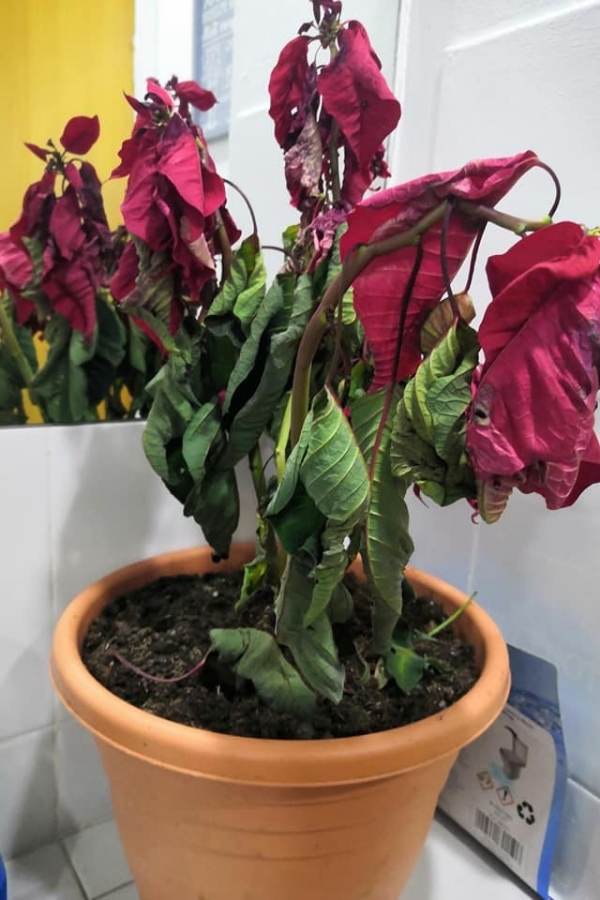
Your poinsettia may be dying because of too much or too little water, cold drafts, poor drainage, sudden temperature changes, or insufficient light. Check the soil, roots, leaves, and growing conditions before changing your care routine.
Across the United States, poinsettias brighten homes during the Thanksgiving, Christmas, and winter holiday seasons. These colorful plants often arrive from garden centers, grocery stores, and nurseries in full display. Yet a plant that looks healthy in the store can begin to droop, lose leaves, or develop brown edges after a few days indoors.
The good news is that falling leaves do not always mean a poinsettia is beyond saving. A plant with firm stems and healthy roots may recover after its growing conditions improve. The first step is to find out whether the problem comes from watering, temperature, light, drainage, or natural aging.
Avoid treating every symptom in the same way. Yellow leaves can point to several problems, while wilted leaves may develop in soil that is either dry or waterlogged. Check the soil before watering, inspect the drainage holes, and look for signs of cold injury or damaged roots. These simple checks can help you choose the right fix without adding more stress to the plant.
1. Check These Things First When Your Poinsettia Looks Unhealthy
Start with the soil rather than the leaves. Feel the top inch of potting mix and check whether the pot feels unusually light or heavy. Dry mix and a light pot suggest a need for water, while persistently wet mix and a heavy pot may point to poor drainage or root trouble.
Next, check the container. Many holiday poinsettias come wrapped in decorative foil or placed inside a waterproof sleeve. Water can collect inside these coverings, leaving the roots wet even when the top of the soil looks dry.
Look at the stems and roots if the plant continues to decline. Firm stems and pale, firm roots are encouraging signs. Soft, dark stems, mushy roots, or a sour smell from the pot suggest more serious damage.
Finally, consider recent changes. A poinsettia carried through cold outdoor air, placed beside a drafty door, or moved from a bright store to a dim room may react by dropping leaves. Think about what changed just before the symptoms appeared.
Source: gardenforindoor.com
Dry soil and drooping leaves
Water thoroughly if the root zone is dry and the pot drains freely. Allow excess water to escape.
Wet soil and yellow leaves
Pause watering while you check drainage and root health. Do not add more water just because the leaves look wilted.
Leaf drop after moving the plant
Check for cold exposure, temperature swings, and reduced light. Keep the plant in a stable location.
Black, soft, or foul-smelling roots
Suspect root damage. Remove the plant from standing water and inspect whether healthy roots remain.
A quick symptom guide
Use the table below to narrow down the likely cause. These signs are clues, not a final diagnosis, because several problems can produce similar symptoms.
Yellow lower leaves
Possible causes include overly wet soil, poor drainage, low light, or normal aging of older leaves.
Crispy brown edges
Dry soil, hot air, low humidity, or cold injury may be responsible. Check the plant’s recent environment.
Sudden leaf drop
Cold drafts, sharp temperature changes, watering stress, or a major change in light can trigger leaf loss.
Soft stems and collapsing growth
Severe water stress or stem and root decay may be involved. Inspect the base and root system promptly.
2. Overwatering Can Cause Root Rot
Overwatering is a common reason poinsettias decline indoors. The problem is not simply that the plant receives water too often. The deeper issue is that soil that stays saturated can deprive roots of oxygen and create conditions that favor root decay.
A poinsettia with damaged roots may wilt even though its soil is wet. Its roots can no longer take up water effectively, so adding more water makes the problem worse. Yellowing leaves, leaf drop, slow growth, and soft roots may appear as the damage progresses.
Check whether water can leave the bottom of the pot. If the plant sits in foil, a decorative outer pot, or a saucer filled with water, empty the excess. Never leave the nursery pot standing in collected water for long periods.
If the soil is wet but the roots remain firm and healthy, allow the mix to dry somewhat before watering again. If the roots are mushy or dark and the mix smells sour, the plant may need fresh, well-draining potting mix and a clean pot with drainage holes.
Source: getbusygardening.com
What to do
Remove standing water, open any blocked drainage route, and stop watering until the moisture level calls for it. If root rot is present, trim only clearly dead roots with clean tools and repot into fresh, well-draining mix.
What to avoid
Do not add fertilizer, repeatedly flush already waterlogged soil, or place the plant in a larger pot filled with wet mix. These actions can add stress instead of solving the root problem.
How often should you water a poinsettia?
There is no single watering schedule that works for every home. A poinsettia in a warm, bright room may use water faster than one in a cool, dim room. Pot size, soil type, plant size, and indoor humidity also affect how quickly the mix dries.
Check the soil regularly and water when the upper layer begins to dry. When watering, moisten the root ball thoroughly and let all excess water drain away. Check again later rather than following a fixed calendar.
Small pots
These can dry faster, so check them more often without assuming they need water every day.
Cool rooms
Water may remain in the soil longer when the plant uses less moisture. Avoid watering again while the root zone remains wet.
3. Underwatering Can Make Leaves Wilt and Curl
A poinsettia can also wilt because its soil has become too dry. When the root ball dries out, the plant cannot replace the water lost through its leaves. Leaves may droop, curl inward, become crisp, or fall off.
Do not rely on the soil surface alone. Peat-based potting mixes can pull away from the sides of a pot when very dry, allowing water to run down the edges instead of soaking into the root ball. The top may look damp after watering even when the center remains dry.
If the mix is dry, water it slowly and evenly until the entire root ball is moist and water drains from the bottom. If water runs straight through a very dry root ball, let the pot absorb water from below for a short period, then remove it and allow it to drain fully. Do not leave it soaking unattended.
A mildly wilted plant may begin to look better after the root zone is rehydrated. Severely dry leaves may not recover, even when the roots survive. Focus on new growth and the firmness of the stems rather than expecting every damaged leaf to return to normal.
Source: gardenerspath.com
Check before watering
Feel the mix below the surface and lift the pot to judge whether it is unusually light.
Rehydrate slowly
Apply water evenly and allow time for a dry root ball to absorb it instead of pouring a large amount onto one spot.
Prevent another dry spell
Check moisture more often in warm rooms or near bright windows, where the pot may dry more quickly.
Why watering by the calendar often fails
Watering every Sunday, for example, may leave one plant too wet and another too dry. Indoor conditions change with heating, sunlight, room temperature, and seasonal shifts. Checking the soil gives you a better guide than the day of the week.
4. Cold Drafts and Sudden Temperature Changes Can Damage Poinsettias
Poinsettias are sensitive to cold exposure. During the US holiday season, a plant may be damaged while traveling from a store to a car, sitting in a cold vehicle, or standing beside a drafty entrance. Even after it reaches a warm home, cold injury may become visible as drooping, discoloration, or leaf drop.
Cold windows, exterior doors, air leaks, and unheated porches can expose a poinsettia to chilly air. Heating vents can cause a different problem by directing hot, dry air onto the leaves. Sudden shifts between these conditions may stress the plant.
Move the poinsettia to a stable indoor location away from cold drafts and direct blasts of heat. A comfortable room temperature around 65 to 75 degrees Fahrenheit is generally suitable for ordinary indoor care, although the plant should not be placed where temperatures swing sharply.
Damaged leaves may continue to fall after you correct the temperature. That does not automatically mean the plant is still getting worse. Keep the remaining healthy foliage, monitor the stems, and avoid repeated moves while the plant adjusts.
Source: i.pinimg.com
Choose a stable location
Place the plant in a room with steady temperatures, away from exterior doors and cold, drafty windows.
Protect it during transport
Cover the plant during cold-weather trips from the store and move it into a warm indoor space promptly.
Avoid heating vents
Keep leaves out of direct hot airflow, which can dry them and increase moisture loss.
Can a poinsettia recover from cold damage?
Recovery depends on how much tissue was damaged. A plant with firm stems and a living root system may produce fresh growth after conditions stabilize. If the main stems have become soft, dark, and dead down to the base, the outlook is much worse.
Wait until the extent of the damage becomes clear before cutting back healthy stems. Remove dead leaves that fall easily, but do not prune living growth simply because the plant has dropped some foliage.
5. Too Little Light Can Weaken Your Poinsettia
Poinsettias need bright light to maintain healthy foliage and support new growth. A plant placed in a dim hallway, dark corner, or room with very little natural light may gradually lose leaves and look weak. Low light can also slow water use, which means the soil stays wet longer.
Place the plant near a bright window where it receives plenty of indirect light. Some gentle morning sun may be suitable, depending on the window and climate, but intense direct sun through hot glass can overheat the foliage. Turn the pot occasionally if one side receives much more light than the other.
If natural light is limited during winter, a suitable grow light can help. Follow the light’s instructions for distance and duration, since output varies by fixture. More light is not always better if it causes leaf heat or rapid drying.
Avoid moving a stressed plant repeatedly between dark rooms and intense sun. A stable, bright location is more useful than frequent changes intended to force quick recovery.
Source: thisismygarden.com
Look for light-related clues
Weak growth, a plant leaning toward a window, and prolonged wet soil may point to inadequate light, although other causes should also be checked.
Keep the plant near a bright window
Choose a location with good daylight and enough distance from cold glass to avoid chilling the foliage.
Watch for heat stress
If leaves become scorched or the pot dries unusually fast in strong sun, shift the plant to gentler light.
Does a poinsettia need direct sunlight?
Bright, indirect light is a useful starting point for most indoor poinsettias. The amount of direct sun a plant can tolerate depends on the season, window direction, glass temperature, and how gradually it has adjusted. Watch the leaves and soil instead of assuming every sunny window provides the same conditions.
6. Poor Drainage and Decorative Wrappers Can Trap Water
A poinsettia may decline even when you water carefully if its pot cannot drain. Some plants are sold in thin nursery pots placed inside decorative containers or foil sleeves. These covers can hide standing water and prevent the root zone from getting enough air.
After watering, check that water flows freely from the drainage holes. If the plant sits inside a waterproof cover, remove the inner pot before watering when practical, let it drain, and then return it to the empty cover. Empty any water that collects beneath the pot.
Do not confuse a decorative outer container with a suitable growing pot. A container without drainage can be used as a cover, but the plant should remain in an inner pot that allows excess water to escape. If you repot, choose a container with drainage holes and only a modest increase in size when needed.
Drainage is especially important when a poinsettia is already stressed. Fresh potting mix that holds some moisture while allowing air into the root zone can support recovery better than dense, compacted soil that stays saturated.
Source: gardentabs.com
Inspect the bottom of the pot
Make sure drainage holes are present and open, with no standing water trapped beneath the root ball.
Use an inner nursery pot when needed
Keep the growing pot separate from a decorative cover so excess water can be removed easily.
Avoid oversized pots
A very large pot can hold more wet mix than the roots can use, slowing drying and increasing the risk of root trouble.
7. Yellow Leaves, Brown Spots, and Curling Need Different Checks
Leaf color can help you narrow down a poinsettia problem, but it rarely identifies the cause on its own. Yellowing may follow excess moisture, low light, root injury, or natural aging. Brown edges can develop when roots cannot supply enough water, while spots may have several causes.
Inspect the pattern of damage. If older leaves yellow first and the soil stays wet, check drainage and roots. If leaf edges are dry and crisp while the pot is light, underwatering may be more likely. If damage appears soon after a cold trip, consider cold injury.
Brown or black spots that spread, especially when leaves remain wet or the plant is crowded, may indicate a disease or other leaf problem. Remove badly affected fallen material, avoid wetting the foliage when watering, and provide gentle airflow without placing the plant in a draft.
Pests can also weaken a poinsettia. Look beneath leaves and along stems for tiny insects, fine webbing, sticky residue, or small pale speckles. Isolate a plant with suspected pests from nearby houseplants and identify the pest before choosing a treatment.
Source: gardenforindoor.com
Yellow leaves
Check soil moisture, drainage, light, and whether only a few older leaves are affected.
Brown, crispy edges
Check for dry roots, hot air, and cold injury before adding water or increasing humidity.
Spots that spread
Keep foliage dry, remove badly damaged material, and inspect the plant for signs of pests or disease.
Tiny insects or webbing
Separate the plant from other plants and confirm the pest before applying a suitable labeled treatment.
Should you remove damaged leaves?
Remove leaves that are fully dead, badly decayed, or likely to fall into the pot. Use clean scissors if a leaf needs to be cut. Keep partly green leaves when possible because they can still support the plant while it recovers.
Pruning will not fix wet soil, cold exposure, or pests by itself. Correct the underlying cause first, then remove damaged tissue as needed.
8. How to Revive a Dying Poinsettia Step by Step
The best way to revive a poinsettia is to correct the cause of stress rather than trying several treatments at once. Changing the watering, light, temperature, soil, and fertilizer all on the same day can make it harder to tell what is helping. Start with the most likely problem and make only the changes the plant needs.
Before you begin, prepare a spot with stable temperatures and bright, indirect light. Have clean scissors available if you need to remove dead material. If repotting becomes necessary, use a clean pot with drainage holes and fresh, well-draining potting mix.
Source: ruralsprout.com
Step 1: Check the soil
Feel the mix below the surface. Water thoroughly if it is dry; if it is saturated, investigate drainage and root health before adding more water.
Step 2: Check the roots if needed
If the plant remains wilted in wet soil, gently inspect the root ball. Healthy roots are generally firm, while decaying roots are often dark, soft, or foul-smelling.
Step 3: Fix the location
Move the plant away from cold drafts, exterior doors, and direct hot airflow. Provide bright, indirect light.
Step 4: Restore proper drainage
Empty the outer cover and saucer. If root rot or compacted, unsuitable soil is present, repot only as needed into fresh mix and a draining container.
Step 5: Remove dead material
Trim fully dead leaves and clearly dead stems with clean tools. Leave firm, living stems and healthy foliage in place.
Step 6: Monitor recovery
Check soil moisture and leaf condition over the following days. Look for stable stems and new growth rather than expecting damaged leaves to turn green again.
How to tell whether recovery is working
A recovering poinsettia may stop losing leaves, maintain firm stems, and begin producing new growth when conditions are favorable. These changes can take time, and the speed depends on how much of the root system and stem tissue remains healthy.
If the plant continues to collapse despite correcting the moisture and temperature problems, inspect the roots again. Extensive root decay, a dead main stem, or ongoing disease can make recovery unlikely. Repeated watering or fertilizer applications will not restore dead tissue.
9. Should You Repot or Fertilize a Dying Poinsettia?
Repotting is useful when the plant has damaged roots, unsuitable soil, or a container that prevents proper drainage. It is not a routine cure for every poinsettia with yellow leaves. If the roots look healthy and the soil drains well, correcting the watering or location may be enough.
When repotting is needed, choose a clean container with drainage holes and fresh potting mix that drains freely while retaining some moisture. Remove loose, clearly decayed roots with clean tools, but avoid tearing apart healthy roots unnecessarily. Water according to the moisture of the new mix and allow excess water to drain.
Do not use fertilizer as an emergency treatment. Fertilizer cannot repair dead roots or reverse cold injury, and a high concentration of nutrients can place additional stress on damaged roots. Wait until the plant is stable and producing new growth before considering a balanced houseplant fertilizer at the label rate.
If the poinsettia is still in its holiday display, avoid unnecessary repotting simply because the container looks small. Many plants can remain in their nursery pots for a time if drainage and watering are managed well.
Source: getbusygardening.com
Repot when there is a clear reason
Use fresh mix if the root zone is decayed, the soil structure has failed, or the current container cannot drain.
Wait before feeding
Resume fertilizer only after the plant has stabilized and active growth has returned.
Do not over-prune
Keep living stems and leaves whenever possible so the plant can continue to make energy.
10. How to Prevent Your Poinsettia From Dying Again
Once your poinsettia stabilizes, keep its care routine simple. Give it a bright spot, steady indoor temperatures, and a pot that drains freely. Check the soil before watering, and avoid leaving water in decorative covers or saucers.
When bringing a new poinsettia home, protect it from cold air during transport. Choose a plant with firm stems and mostly healthy foliage, and inspect it for pests before placing it near other houseplants. Avoid plants that have been left outdoors in cold weather or appear badly wilted at the point of purchase.
Keep the plant away from repeated temperature swings and direct blasts from heaters or air conditioners. If you open windows during mild weather, check that cold air does not flow straight onto the foliage. Seasonal changes in indoor heating and daylight may also change how quickly the pot dries.
A poinsettia can sometimes be kept beyond the holiday season. After the colorful bracts fade, green growth may continue if the plant receives suitable care. Retaining its red, pink, or white bracts for a later holiday season requires a separate light and darkness routine, so do not confuse the normal fading of old bracts with a dying root system.
Check the pot regularly and water when the mix begins to dry, adjusting for room conditions.
Keep the environment stable
Choose bright, indirect light and avoid cold drafts or direct hot airflow.
Check drainage every time you water
Make sure excess water leaves the pot and never sits around the roots.
Watch for new problems early
Check leaves and stems for new discoloration, pests, or unusual soft spots before the damage spreads.
Is leaf drop always a sign that the plant is dying?
No. A poinsettia may lose a few older leaves as it adjusts to a new location or moves through seasonal changes. A small amount of leaf loss is less concerning when the stems remain firm and the rest of the plant looks stable.
Rapid leaf loss, widespread yellowing, persistent wilting, or soft stems deserve closer attention. Check the soil and recent environmental changes instead of assuming the plant simply needs more water.
11. When Is a Poinsettia Too Far Gone to Save?
A poinsettia may be beyond recovery when its main stems are dead, the root system has extensively decayed, or the entire plant has collapsed and no living tissue remains. However, leaf loss alone is not enough to make that judgment. Some plants retain healthy stems and roots even after much of the foliage has fallen.
Inspect the base of the plant and, if necessary, the roots. Firm stems and living roots suggest that recovery may still be possible. If all stems are dry and brittle or soft and blackened, and the roots are largely mushy or dead, replacing the plant may be more practical than continued treatment.
If you suspect a spreading disease or serious pest problem, keep the plant separate from other houseplants while you assess it. Dispose of severely diseased material in accordance with local waste guidance, and clean tools and the work area before using them on other plants.
Poinsettias produce a milky sap when cut. It can irritate skin and eyes, and people with sensitive skin may react more strongly. Wear gloves when pruning if needed, avoid touching your face, and wash exposed skin after handling the plant.
Source: i.pinimg.com
Signs recovery may be possible
Some firm stems remain, the roots are mostly healthy, and the decline stops after care conditions improve.
Signs recovery is unlikely
The main stems are dead throughout, the roots have extensive decay, or no living tissue remains.
Keep safety in mind
Avoid contact between the plant’s milky sap and eyes or irritated skin, and keep plant material away from children and pets that may chew it.
Frequently Asked Questions
Q
Why is my poinsettia dying even though I water it?
The plant may be getting too much water, or its roots may be damaged and unable to absorb moisture. Check whether the soil is wet, whether the pot drains freely, and whether the roots are firm. If the mix is dry, water thoroughly; if it is saturated, correct the drainage problem before watering again.
Q
Can I save a poinsettia that has lost all its leaves?
Possibly. Check whether the stems are still firm and whether the roots are alive and healthy. If living tissue remains, stable temperatures, suitable light, and correct watering may support new growth. If the stems and roots are dead throughout, recovery is unlikely.
Q
Should I cut back a dying poinsettia?
Remove fully dead leaves and clearly dead stems with clean tools, but keep healthy green growth. Wait until you understand the cause of the decline before doing heavy pruning. Cutting back the plant will not fix overwatering, cold damage, or root disease by itself.
Q
Why are my poinsettia leaves turning yellow and falling off?
Yellow leaves and leaf drop can result from overwatering, poor drainage, underwatering, low light, cold drafts, or normal aging. Check the soil moisture first, then review the plant’s location and root condition. The pattern of symptoms and the recent care history help narrow down the cause.
Q
How long does it take a dying poinsettia to recover?
Recovery time depends on the severity of the damage and whether the roots and stems remain healthy. A plant affected by mild underwatering may improve after its root ball is rehydrated, while root damage or cold injury may take much longer. Watch for stable stems, reduced leaf loss, and new growth rather than expecting damaged leaves to heal.
Q
Can a poinsettia survive outside after winter?
Poinsettias are tropical plants that are sensitive to cold and frost. In warm parts of the United States, they may grow outdoors when temperatures remain suitable, but in colder regions they are generally better kept indoors or moved outside only when conditions are reliably warm. Acclimate an indoor plant gradually and bring it back inside before cold weather returns.
Q
Are poinsettias poisonous to cats and dogs?
Poinsettias are generally considered less toxic than their reputation suggests, but chewing the leaves or stems can cause mouth irritation, drooling, vomiting, or stomach upset. Keep the plant out of reach of pets and children. Contact a veterinarian or poison-control service if a pet eats a significant amount or develops concerning symptoms.
✦ Wrapping Up
Conclusion
If you are wondering why your poinsettia is dying, start by checking its soil, roots, drainage, light, and temperature. Too much water and too little water can cause similar symptoms, so watering without checking may make the problem worse. Cold drafts, low light, and trapped water can also cause leaves to droop, yellow, or fall.
Move the plant to a stable spot with bright, indirect light, remove standing water, and adjust watering to the actual moisture in the pot. Repot only when drainage or root health makes it necessary, and hold off on fertilizer until the plant begins to recover. Firm stems and healthy roots offer hope, even when some leaves have fallen.
💡 Key Takeaway
Today, feel the soil below the surface, empty any standing water, inspect the stems, and move your poinsettia away from drafts and direct heat. Correct the problem you find first, then monitor the plant for stable growth and fresh leaves.
I enjoy sharing simple gardening ideas, lawn care tips, and honest product reviews that help make outdoor work easier. From home gardening guides to helpful tools and lawn care advice, I write easy-to-follow content to help readers create a healthier and better-looking outdoor space without wasting time or money.