As an Amazon Associate, I earn from qualifying purchases.
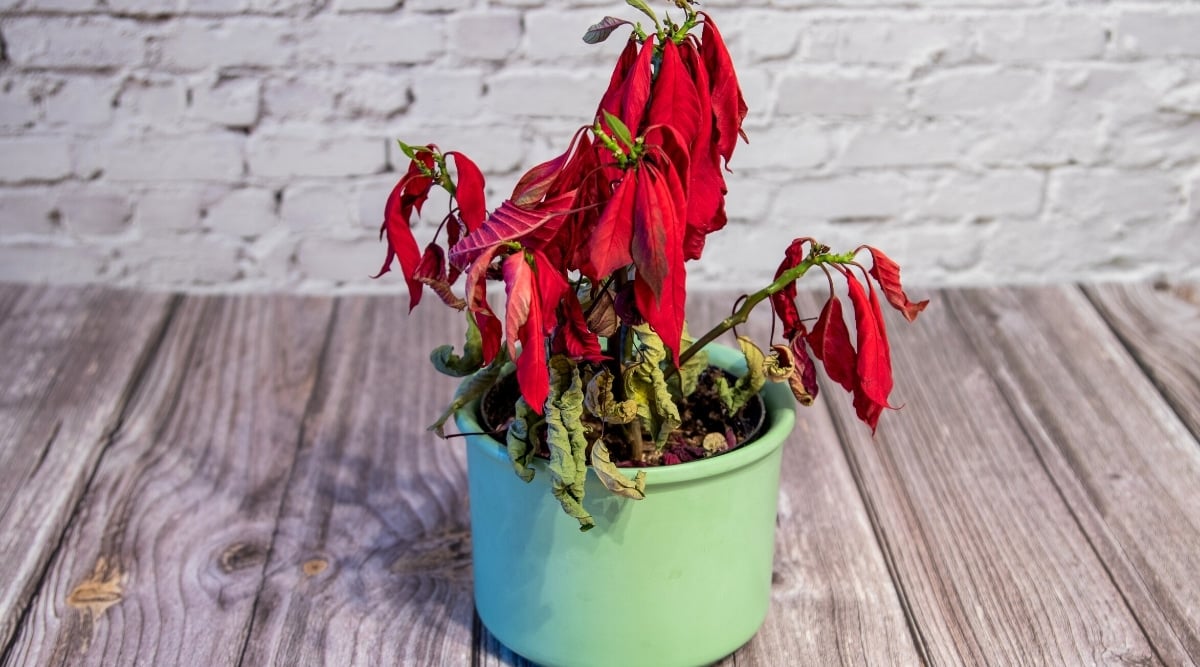
A poinsettia usually wilts because its roots cannot supply enough water to its leaves. Dry soil, waterlogged roots, sudden temperature changes, and cold drafts are common causes. Check the soil and pot drainage before adding more water.
Across the United States, poinsettias are popular holiday plants in homes, offices, and shops. They often arrive looking full and bright, but drooping leaves can appear soon after the plant moves indoors. A warm room, a cold trip from the store, or a pot wrapped in decorative foil can change how well the plant takes up water.
The best way to answer the question, why is my poinsettia wilting, is to inspect the plant before trying a fix. Feel the soil, check the drainage holes, look at the leaves, and consider recent changes in temperature or sunlight. These simple checks can help you tell the difference between thirst and root trouble, which need very different care.
Start with the soil rather than the leaves. A poinsettia can droop when it lacks water, but it can also wilt when excess water damages its roots. Adding water without checking can make an already wet root system worse.
Push a finger about an inch into the potting mix. If the mix feels dry, the plant may need water. If it feels wet, heavy, or muddy, check the drainage holes and the condition of the roots before watering again.
Next, look at the leaves and stems. Soft, drooping leaves with dry soil often point to thirst. Yellow leaves, wet soil, and a sour smell suggest root stress, although no single symptom proves the cause. Also consider whether the plant was recently moved, exposed to cold, or placed near a heater.
Source: picturethisai.com
Dry soil and limp leaves
Underwatering is a likely cause. Water the root ball thoroughly and allow excess water to escape.
Wet soil and drooping leaves
The roots may lack oxygen or be damaged by excess moisture. Pause watering and inspect drainage.
Sudden drooping after moving the plant
Cold exposure, hot air, or a sharp change in light may be stressing the plant.
Yellow leaves and dark stems
Root or stem damage may be present. Check for persistent wetness, soft tissue, and signs of decay.
A Quick Diagnostic Check
Lift the pot if you can do so safely. A very light pot with dry mix often needs water, while a heavy pot that stays wet for days may have poor drainage or a root problem. Compare the weight over time rather than relying on one check.
Look underneath the pot for drainage holes and remove any standing water from the saucer or outer container. If the soil is wet and the plant keeps declining, slide the root ball out gently when practical and check whether the roots are firm or mushy.
Firm roots
Firm roots are more encouraging than soft, collapsing roots. Root color varies with the potting mix and root age, so texture and smell also matter.
Soft, dark, or foul-smelling roots
These signs raise concern about root rot. Severely damaged roots may not recover even after watering is corrected.
1. Underwatering Can Make Leaves Droop Fast
A poinsettia wilts when its leaves lose water faster than the roots can replace it. If the potting mix becomes too dry, the plant cannot take up enough moisture to keep its stems and leaves firm. Indoor heating can speed up moisture loss during the winter.
Check whether the soil has pulled away from the sides of the pot or feels dry below the surface. The top may look dry while the lower mix still holds water, so check more than one spot when possible. A dry, lightweight pot and limp foliage together make underwatering more likely.
If the soil is dry, water slowly and evenly until water runs from the drainage holes. Very dry potting mix can sometimes resist water at first, allowing water to run down the sides without wetting the root ball. In that case, apply water in stages and check that the center of the mix becomes moist.
Source: epicgardening.com
Water the whole root ball
Pour water over the soil surface, moving around the pot so the roots receive moisture across the container.
Let the pot drain
Empty the saucer after watering. The roots need both moisture and access to air.
Watch for recovery
Leaves may regain firmness within several hours if dry soil was the main problem. Severe drying can cause lasting damage.
How Often Should You Water a Poinsettia?
There is no reliable fixed schedule for every poinsettia. Pot size, room temperature, light, root growth, and potting mix all affect how quickly the soil dries. A small plant near a warm window may need water sooner than a larger plant in a cooler room.
Check the soil every few days at first, then adjust based on what you find. Water when the upper layer begins to dry, rather than waiting until the whole root ball becomes bone-dry. Reduce watering when the plant uses less water, but do not leave it standing in a dry root ball for long periods.
Warm, bright room
The mix may dry faster, so check it more often.
Cooler room or low light
Water use may slow, making frequent watering more likely to cause trouble.
2. Overwatering and Root Rot Can Cause Wilting
Overwatering is one of the most confusing reasons a poinsettia wilts. The potting mix may contain plenty of water, but roots that stay too wet can lose access to the air they need. Damaged roots then struggle to supply water to the leaves, creating symptoms that look like thirst.
Look for a mix that stays wet for many days, yellowing lower leaves, a pot that feels unusually heavy, or a sour odor from the soil. These clues do not confirm root rot on their own, but they make a drainage problem more likely. Soft roots that break apart easily provide stronger evidence of damage.
Stop adding water while the mix is still wet. Remove standing water from the saucer, check that the drainage holes are open, and allow excess moisture to escape. Do not place the plant in direct, harsh sun to dry it quickly, because that can add more stress.
Source: cafeplanta.com
How to Help a Poinsettia With Suspected Root Rot
If the plant continues to decline and the mix stays saturated, inspect the root ball gently. If many roots are mushy or the soil smells rotten, move the plant into a clean pot with drainage holes and fresh, well-draining potting mix if enough healthy roots remain. Use clean tools and remove only clearly dead or mushy roots.
Choose a pot that fits the remaining root system rather than a much larger container. A pot that holds too much unused wet mix can slow drying and increase the risk of further damage. Water the new mix lightly enough to settle it around the roots, then let excess water drain.
Recovery is not guaranteed when most of the roots or the main stem have rotted. If the base is soft, dark, or collapsing, the plant may be too damaged to save. Avoid repeatedly disturbing the roots in an attempt to force recovery.
Use a clean pot
Wash a reused container before planting, and make sure it has open drainage holes.
Choose a draining mix
Use a suitable indoor potting mix that holds some moisture but does not remain waterlogged.
Skip fertilizer during recovery
Do not feed a severely stressed plant until it has resumed healthy growth.
Why Decorative Foil Causes Problems
Holiday poinsettias often come wrapped in shiny foil or placed inside a decorative sleeve. These coverings can trap water if the inner pot cannot drain freely. Water may collect at the bottom even when the top of the soil appears normal.
Remove the foil before watering or make sure the inner pot drains freely and all excess water can be discarded. If you want to keep the decorative cover, take the nursery pot out for watering and return it only after it has finished draining.
Check the bottom
Look for trapped water in the sleeve, cachepot, or saucer.
Never leave roots submerged
Empty collected water promptly after each watering.
3. Cold Drafts and Sudden Temperature Changes
Poinsettias are tropical plants and do not cope well with cold exposure. A plant placed near a drafty window, an exterior door, or a cold car during transport may droop or drop leaves. Cold injury can be more severe than ordinary temporary wilting, especially if the leaves or stems become damaged.
Keep the plant in a comfortably warm indoor room, away from cold glass and sudden blasts of outdoor air. A practical target is about 65 to 70 degrees Fahrenheit for many indoor settings, with protection from sharp temperature swings. Avoid placing the pot beside a fireplace, radiator, or heating vent, where hot, dry air can also stress the foliage.
If the plant has just come in from the cold, move it to a stable indoor spot and avoid drastic changes. Check the soil before watering because cold-stressed roots may take up water more slowly. Damaged leaves may fall even after the plant is moved, so judge recovery by the condition of the stems and any new growth.
Source: positivebloom.com
Where Should a Poinsettia Sit Indoors?
Choose a bright place with indirect light and steady temperatures. A window can work well if the leaves do not touch cold glass and the plant is shielded from drafts. If a window becomes very cold at night, move the pot a short distance into the room.
Avoid exterior doors
Frequent cold air from opening doors can stress the plant.
Avoid heating vents
Direct hot air can dry the foliage and potting mix unevenly.
Keep conditions steady
A stable room is usually better than moving the plant repeatedly between warm and cold spots.
4. Too Much Direct Sun or Too Little Light
Light affects how quickly a poinsettia uses water and how well it maintains healthy growth. Bright, indirect light is usually a good fit indoors. Very strong direct sun through glass may overheat the leaves, while a dark corner can slow growth and reduce water use.
If the plant sits in direct afternoon sun and the leaves droop during the warmest part of the day, move it a little farther from the window or use filtered light. If the plant stays in a dim hallway or far from windows, move it to a brighter position gradually. Do not use direct, intense sunlight as a quick way to dry wet soil.
Watch the plant after changing its location. The goal is steady light without hot leaf surfaces, cold drafts, or large temperature swings. Keep watering based on soil moisture because a brighter location can make the mix dry more quickly.
Source: gardenforindoor.com
Signs of excessive sun
Leaves may look scorched, faded, or dry at the edges, especially after intense exposure.
Signs of low light
Growth may weaken, and the soil may stay wet longer because the plant uses less water.
5. Low Humidity and Dry Indoor Air
Indoor air can become dry during the heating season in many American homes. Dry air may increase moisture loss from leaves, especially when the plant also sits near a heat source. Still, low humidity alone is not the first cause to assume when a poinsettia wilts.
Check the soil and temperature before changing humidity. If the potting mix is dry, water it properly. If the mix is moist and the plant sits in a stream of hot air, move it away from the vent or heater.
A room humidifier can help if the air is consistently very dry, but it should be used according to its instructions and kept clean. Avoid leaving the foliage wet for long periods or crowding the plant in a poorly ventilated space. Those conditions can encourage disease.
Source: preview.redd.it
Should You Mist a Wilting Poinsettia?
Misting is not a reliable fix for a wilted poinsettia. It adds little lasting moisture to the room and does not correct dry roots, waterlogged soil, or damaged stems. Focus on root-zone moisture and stable indoor conditions first.
Better option
Move the plant away from hot, dry airflow and consider a clean room humidifier if needed.
6. Transplant Shock and Changes in the Growing Environment
A poinsettia may wilt after you bring it home, repot it, or move it to a different room. Changes in temperature, light, airflow, and soil moisture can disrupt the balance between water loss from the leaves and water uptake by the roots. A plant that looked healthy in a greenhouse or store may need time to adjust to indoor conditions.
Avoid repotting a newly purchased plant just because a few leaves droop. First check whether the nursery pot drains and whether the soil is too wet or dry. Repot only when there is a clear need, such as severe drainage trouble, damaged mix, or roots that have outgrown the container.
After repotting, keep the plant in bright, indirect light and maintain steady warmth. Do not repeatedly move it, overwater it, or apply fertilizer in an effort to speed up recovery. Give the roots time to settle and watch for new growth.
Source: koala.sh
When Repotting Is Worthwhile
Repotting can help when a container has no drainage or the growing mix has broken down and stays wet for too long. Use a pot with drainage holes and a well-draining indoor potting mix. Choose a container only modestly larger than the root ball so the mix does not remain wet around unused space.
Repot when drainage is faulty
A container that traps water can keep the roots short of air.
Avoid needless root disturbance
A healthy root ball is best left alone if the existing pot and mix are working well.
7. Pests and Disease May Be Behind the Wilting
If the soil moisture, drainage, temperature, and light all seem suitable, inspect the plant for pests or disease. Whiteflies, spider mites, and other sap-feeding pests can weaken foliage. Tiny insects, fine webbing, sticky residue, or pale speckling may provide clues.
Check the undersides of leaves, the stems, and the places where leaves meet the stems. Isolate a suspect plant from nearby houseplants while you identify the problem. Use a product labeled for the pest and for indoor ornamental plants only when needed, following all label directions.
Disease can also affect roots, stems, or leaves. Persistent wet soil, spreading dark lesions, soft stems, and rapid decline warrant closer inspection. Do not assume every wilted plant has an infection, and avoid applying pesticides or fungicides without a reasonable diagnosis.
Source: preview.redd.it
How to Respond to Possible Pest Damage
Start by checking the plant carefully and separating it from other plants if insects are present. Remove badly damaged fallen leaves and keep the growing area clean. If you use an insecticidal soap or another treatment, verify that the label covers the pest and poinsettias, and test according to the label before treating the entire plant.
Inspect before treating
Look for actual insects or clear feeding signs instead of spraying based on wilting alone.
Follow the label
Use only permitted products and keep children and pets away as directed on the label.
How to Revive a Wilting Poinsettia Step by Step
The right recovery plan depends on what the first checks reveal. Do not water, repot, fertilize, and move the plant all at once. Make the smallest change that addresses the likely cause, then watch the response.
Source: koala.sh
Step 1: Check the Potting Mix
Feel the upper inch of soil and check deeper if possible. If the mix is dry, water thoroughly and let it drain. If it is wet, wait before watering again and investigate the drainage.
Step 2: Fix Drainage
Make sure the pot has working drainage holes and remove collected water from the saucer or outer container. If the plant is in a decorative sleeve, take the nursery pot out while watering and let it drain fully before replacing it.
Step 3: Stabilize the Location
Place the poinsettia in bright, indirect light in a comfortably warm room. Keep it away from cold windows, exterior doors, heaters, and strong drafts. Avoid frequent moves while the plant recovers.
Step 4: Inspect for Damage
Look for soft stems, yellowing leaves, pests, or a foul odor from the mix. If the roots are severely damaged, repot only if enough healthy roots remain. Remove fallen or dead plant material and clean any tools used.
Step 5: Give the Plant Time
Check the plant over the next day or two for firmer leaves and a stable stem. A mildly wilted plant may improve within hours after correct watering, but cold injury and root rot can take longer to assess. Do not keep adding water because the leaves have not recovered right away.
Common Poinsettia Care Mistakes to Avoid
A wilting poinsettia often gets worse when several fixes are tried at once. Correct the main problem before adding new steps. This helps avoid turning a simple watering issue into a root problem.
Source: epicgardening.com
Watering by the calendar
A fixed daily or weekly schedule ignores changes in room temperature, light, pot size, and soil moisture.
Adding water to every wilted plant
Wet soil and drooping leaves may indicate damaged roots, not a lack of water.
Leaving the pot in a full saucer
Standing water can keep roots too wet and reduce access to air.
Using fertilizer as a rescue treatment
Fertilizer cannot repair damaged roots and may add stress when the plant is already struggling.
Cutting off every drooping leaf
Drooping leaves may still recover. Remove leaves that are dead, badly damaged, or fallen, but avoid unnecessary pruning.
Ignoring sudden temperature changes
Cold drafts and hot airflow can cause stress even when the watering routine seems correct.
How to Prevent Poinsettia Wilting in the Future
Good prevention starts with a plant that has healthy foliage, firm stems, and no obvious pest signs. When buying a poinsettia in the United States, choose one that has been protected from cold weather and is not sitting in waterlogged soil. During transport, wrap it against cold air and take it indoors promptly.
At home, give the plant bright, indirect light and a stable room temperature. Check soil moisture regularly, but water only when the upper layer begins to dry. Drainage matters as much as watering frequency because healthy roots need both moisture and air.
Keep the plant away from vents and drafty doors, and check the pot after watering. If you use a decorative cover, make sure it cannot trap water. These small habits help prevent many of the common causes of wilting and leaf drop.
Source: picturethisai.com
A Simple Weekly Care Routine
A brief weekly check is useful, but the soil may need checking more often in a warm room. Look at the leaves, feel the soil, lift the pot if helpful, and empty any standing water. Adjust care when the room or season changes rather than following a rigid schedule.
Check moisture
Feel the soil before watering.
Check drainage
Make sure water can leave the pot freely.
Check the location
Keep the plant away from cold drafts and direct hot airflow.
Check for pests
Inspect leaf undersides and stems for insects or unusual marks.
Frequently Asked Questions
Q
Can a wilted poinsettia recover?
Yes, a poinsettia can recover if the roots and stems are still healthy and the cause is corrected early. A plant that wilts from dry soil may improve within hours after proper watering. Recovery is less likely when most roots are rotten or the main stem has collapsed.
Q
Should I water my poinsettia if its leaves are drooping?
Check the soil first. If the mix is dry, water thoroughly and let excess water drain away. If the mix is wet, do not add more water until you have checked drainage and considered root damage.
Q
Why is my poinsettia wilting even though the soil is wet?
Wet soil with drooping leaves may mean that the roots lack oxygen or have been damaged by excess moisture. Check for blocked drainage holes, trapped water, yellow leaves, soft roots, or a sour smell. Let the pot drain and repot into fresh, well-draining mix if severe root damage is present and enough healthy roots remain.
Q
How long does it take a poinsettia to perk up after watering?
If dry soil is the main cause and the roots are healthy, the leaves may begin to firm up within several hours. A badly dehydrated plant may take longer, and some leaves may not recover. If the plant stays wilted despite moist soil, investigate root damage, temperature stress, or disease instead of watering again.
Q
Should I remove wilted or yellow poinsettia leaves?
Leave drooping leaves in place briefly if they may still recover. Remove leaves that have fallen, turned fully brown, or become badly damaged. Yellow leaves often signal stress, so correct the underlying cause rather than relying on leaf removal alone.
Q
Why is my poinsettia wilting after I brought it home?
The plant may have experienced cold exposure during transport or a sudden change in temperature, light, and airflow. It may also have dry soil or trapped water in a decorative sleeve. Check moisture and drainage, place the plant in a warm spot with bright, indirect light, and avoid repeated moves.
Q
Can I save a poinsettia with root rot?
Sometimes. If some roots and the main stem remain healthy, removing clearly rotten roots and using fresh, well-draining mix may help. If most roots have collapsed or the stem base is soft and decaying, recovery is unlikely.
✦ Wrapping Up
Conclusion
A wilting poinsettia is usually reacting to a problem with water uptake, root health, or its growing environment. Dry soil can mean the plant needs a thorough drink, while wet soil can point to poor drainage and damaged roots. Cold drafts, hot air, poor light, pests, and recent moves can also cause drooping leaves.
Start with the soil, check the pot, and look for signs of root or stem damage. Correct one likely cause at a time, then give the plant stable warmth and bright, indirect light. A plant with healthy roots may recover, but severe rot or cold injury can leave lasting damage.
💡 Key Takeaway
Before watering your poinsettia again, feel the soil about an inch below the surface and check that the pot drains freely. Water only if the mix is dry, empty standing water, and keep the plant away from cold drafts and hot vents.
I enjoy sharing simple gardening ideas, lawn care tips, and honest product reviews that help make outdoor work easier. From home gardening guides to helpful tools and lawn care advice, I write easy-to-follow content to help readers create a healthier and better-looking outdoor space without wasting time or money.