As an Amazon Associate, I earn from qualifying purchases.
The best indoor plants for offices include pothos, snake plants, ZZ plants, spider plants, peace lilies, and Chinese evergreens. Choose based on available light, watering needs, desk space, and pet safety.
Across the United States, office spaces range from sunny home offices in California to windowless rooms in New York high-rises and shared work areas in Texas. A good office plant should suit the space you have, not the workspace you wish you had. Some plants thrive near a bright window, while others can cope with lower indoor light and a busy workday.
The best choice also depends on how much care you can give it. If meetings fill your calendar, a ZZ plant or snake plant may suit you better than a plant that needs frequent watering. If you want a leafy desk plant, pothos and spider plants are worth considering. No plant thrives in complete darkness, and even tough plants need suitable light, a pot with drainage, and the right amount of water.
This guide compares useful office plants by their light needs, care demands, size, and key drawbacks. It also covers office heating and air conditioning, shared work areas, pets, and simple ways to avoid common plant-care problems. The aim is to help you choose greenery that fits your real workspace and remains manageable over time.
The best office plant is one that fits your light, space, and care routine. The options below cover common needs, from a small desk plant to a tall floor plant. Light descriptions refer to typical indoor growing conditions, so the exact spot and season can change how well a plant grows.
Before buying, check the plant label for its botanical name and care needs. Common names can refer to more than one species, and some plants sold under similar names have different growth habits or safety concerns.
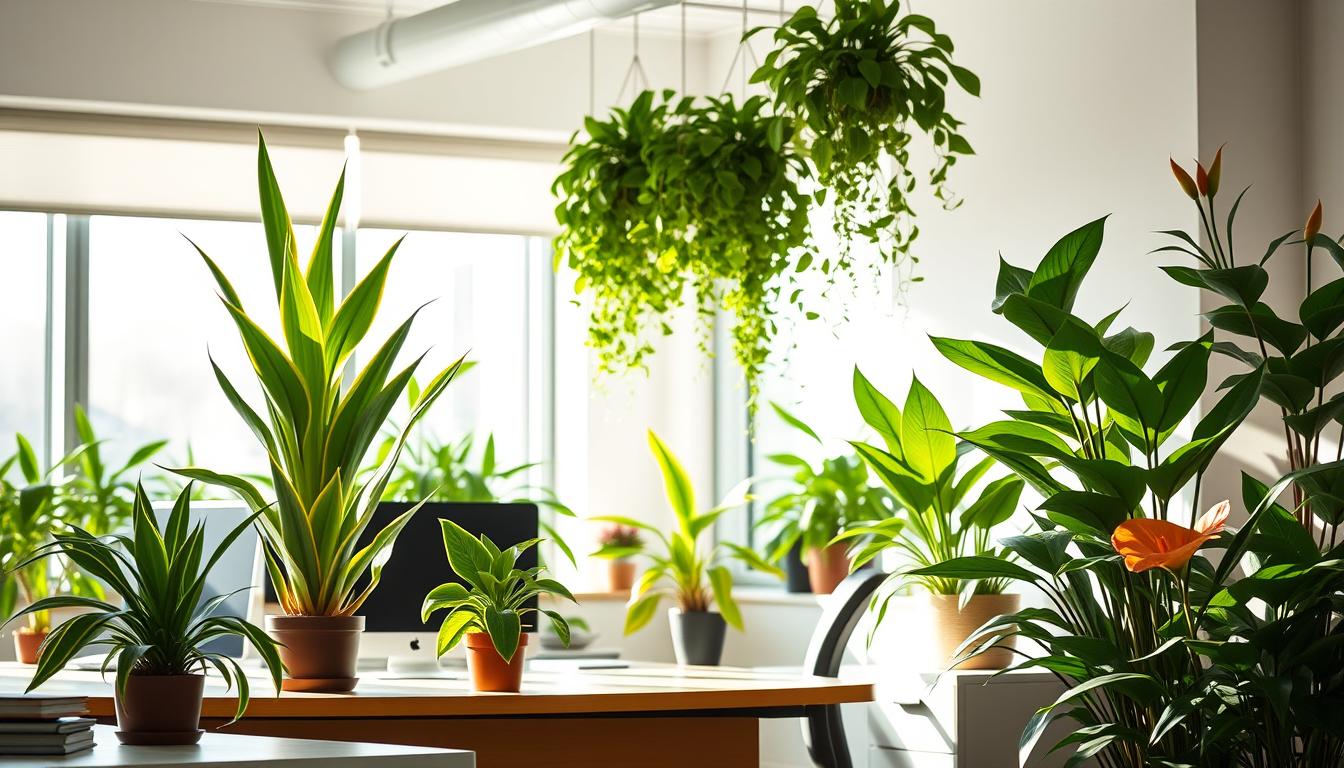
Source: adontoday.my
1. Pothos
Best for shelves and desks that need trailing greenery. Pothos grows long vines with heart-shaped leaves and adapts to a range of indoor conditions. It does best in medium to bright indirect light but can tolerate lower light, though growth may slow. Let the top layer of potting mix dry before watering. Its vines may need trimming, and the plant is toxic if chewed by cats or dogs.
2. Snake Plant
Best for people who often forget to water. Snake plants have upright, firm leaves and take up little floor space. They tolerate low to bright indirect light, with growth usually better in brighter conditions. Let the potting mix dry out well between waterings. Overwatering is a common cause of trouble, and the plant is toxic if eaten by pets.
3. ZZ Plant
Best for busy offices and people new to plants. The ZZ plant has glossy, upright leaves and thick underground rhizomes that store water. It tolerates low indoor light and needs infrequent watering. Allow the soil to dry well before watering again. It grows slowly, and all parts can cause irritation or illness if chewed, so keep it away from pets and children.
4. Spider Plant
Best for a bright desk or hanging planter. Spider plants form arching leaves and may produce small plantlets on long stems. They prefer bright, indirect light but can adapt to moderate light. Water when the upper layer of soil starts to dry. Their spreading shape needs room, and brown leaf tips can occur when water quality, moisture, or other growing conditions are unsuitable.
5. Peace Lily
Best for a leafy display with occasional flowers. Peace lilies have broad green leaves and can produce white flower-like structures called spathes. They prefer moderate to bright indirect light and evenly moist, but not waterlogged, soil. They may droop when thirsty, but repeated wilting is not a good care strategy. Peace lilies are toxic to pets and can irritate the mouth if chewed.
6. Chinese Evergreen
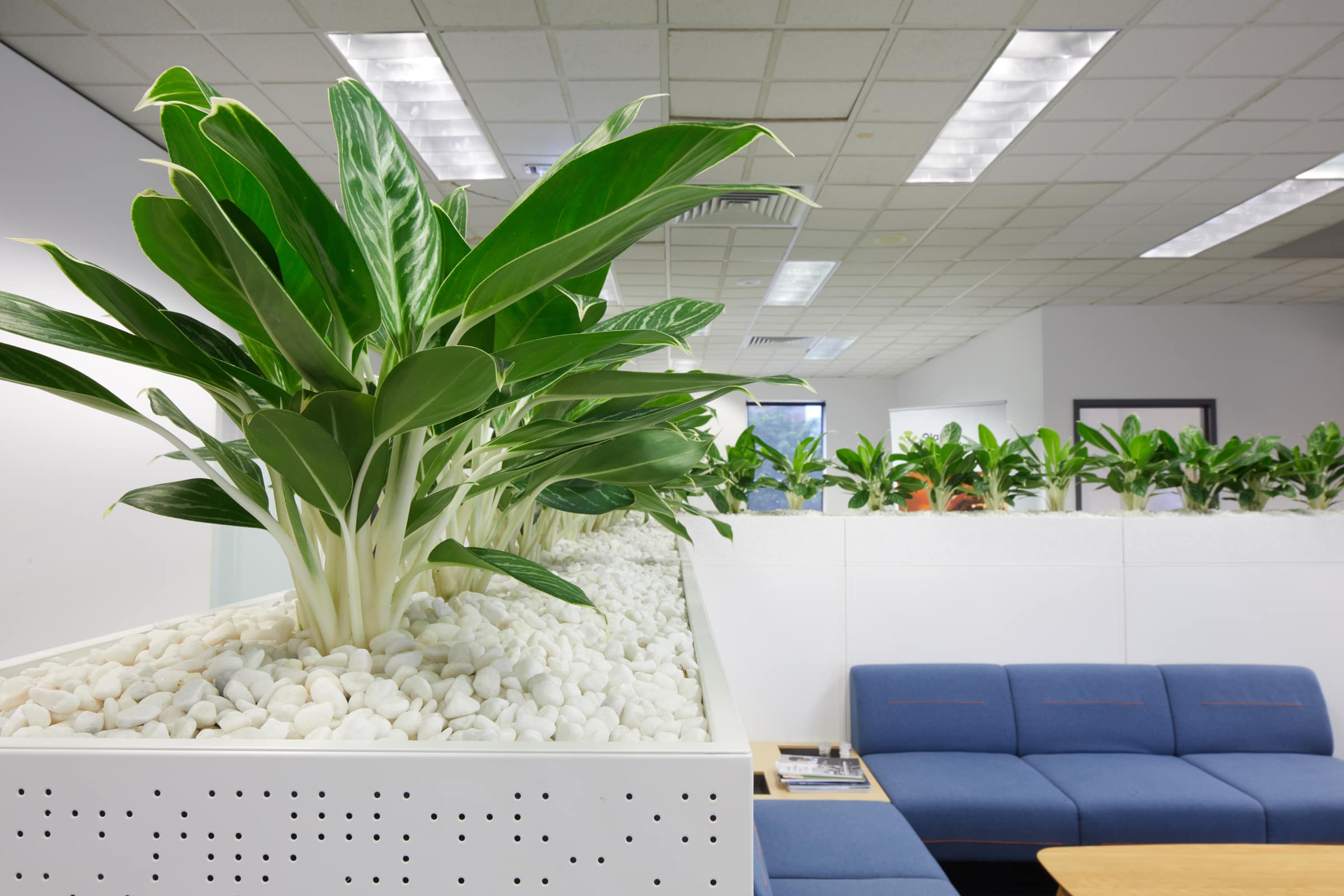
Best for adding patterned foliage to an office corner. Chinese evergreens come in several leaf colors and patterns, depending on the variety. Many grow well in medium or lower indirect light, although colored varieties may need brighter conditions to maintain their markings. Water after the top layer of soil dries. These plants are toxic if ingested, so they are not a good choice where pets may chew the leaves.
7. Dracaena
Best for a taller plant with a narrow footprint. Many dracaena varieties grow upright and work well beside a desk or in an office corner. They generally prefer indirect light and soil that partly dries between waterings. Avoid keeping the roots constantly wet. Size varies by variety, so check its expected height before purchase. Dracaena is toxic to cats and dogs.
8. Parlor Palm
Best for a softer, tropical look in moderate indoor light. This compact palm has fine, arching fronds and often grows slowly. Keep it in indirect light and water when the top layer of potting mix begins to dry. It does not need constant soaking, and poor drainage can harm its roots. Check the label because plants sold as palms can belong to different species with different care and safety profiles.
9. Cast Iron Plant
Best for a quiet corner with limited natural light. Cast iron plants have broad, dark green leaves and are known for tolerating less-than-ideal indoor conditions. They grow slowly and prefer well-draining soil. Let the upper soil layer dry before watering. They still need some usable light and should not be placed in a completely dark room. Their size makes them more suitable for a floor or side table than a crowded desk.
10. Aloe Vera
Best for a sunny office windowsill. Aloe vera has thick, water-storing leaves and needs bright light, often including some direct sun after gradual adjustment. Allow the soil to dry fully or nearly fully between waterings, and use a fast-draining mix. It is a poor fit for a dim cubicle. Aloe vera can also be harmful to cats and dogs if eaten, so keep it out of reach.
Which Office Plant Is Best for Beginners?
For a beginner, a ZZ plant or snake plant is often the simplest starting point. Both store water and can cope with some variation in indoor conditions. Their biggest care risk is often too much water, not too little.
Choose pothos if you prefer a trailing plant and have a shelf with suitable light. If your office is bright and you want a plant with a more delicate shape, a spider plant is another practical option. Start with one plant, learn how quickly its soil dries, and add more only when its care feels easy.
Lowest routine effort
ZZ plant or snake plant, provided the spot has usable light and the pot drains well.
Best trailing shape
Pothos on a shelf or in a hanging planter, away from pets that may chew it.
Best compact foliage
Spider plant or parlor palm, if the available light suits the species.
Best Plants for Small Office Desks
Small desks need plants that stay compact or can be placed above the work surface. A young snake plant, a small ZZ plant, or a trimmed pothos can add greenery without taking over the space. Choose a stable pot with a saucer to protect papers, keyboards, and desk finishes.
Avoid large planters near keyboards or in spots where a trailing vine can catch on cables. If your desk is narrow, place the plant on a nearby shelf instead. A plant should make the work area more pleasant, not reduce space for a laptop, notes, or safe movement.
For a tight footprint
Use a small snake plant or young ZZ plant in a pot sized to its root system.
For vertical space
Use pothos on a stable shelf, with its vines kept clear of screens and cables.
How to Choose the Right Plant for Your Office
Start by checking the growing conditions, not by choosing the plant with the prettiest leaves. Light, room temperature, watering access, and available space have more impact on long-term success than a decorative pot or a popular trend. A plant suited to its spot usually needs less troubleshooting.
Observe the area at different times of day. A window can provide strong light in the morning and little light later, while a cubicle several feet from that window may receive far less. Artificial office lighting may help people see and work, but it does not always provide enough suitable light for plant growth.
Source: www.youtube.com, Plant and Planting
Check natural light
Bright indirect light means strong daylight without harsh direct sun for long periods. Medium light is more subdued. Low light is a dim but still lit location. For a room with no windows, consider a suitable plant light on a timer rather than assuming a shade-tolerant plant can live in darkness.
Consider the room temperature
Most common tropical foliage plants prefer stable indoor temperatures. Keep them away from hot air vents, radiators, cold drafts, and glass that becomes very cold. If the office is shut down over weekends or holidays, consider how much the temperature may change.
Match the plant to your routine
If you travel often or cannot water regularly, choose a plant that tolerates the soil drying between waterings. If plant care is part of your daily routine, you may prefer a plant that needs more frequent checks. Do not choose a thirsty plant simply because its care label says it is easy.
Plan for mature size
A small plant may grow into a wide or tall one. Check its expected size and growth rate before placing it near a monitor, shared walkway, or office door. Pruning can control some growth, but it cannot make every large species suitable for a small desk.
Best Indoor Plants for Low-Light Offices
Snake plants, ZZ plants, cast iron plants, and many Chinese evergreens are common options for offices with limited daylight. These plants can tolerate less light than sun-loving choices, but they still need enough light to stay healthy. Growth may slow, and the soil may take longer to dry in a dim room.
Water less often when growth is slow, but use the soil as your guide rather than following a fixed calendar. If new leaves become weak, growth stops for a long period, or the plant steadily loses leaves, reassess the light and root conditions. A plant light may help when the room receives very little daylight.
Good candidates
ZZ plant, snake plant, cast iron plant, and suitable Chinese evergreen varieties.
Avoid
Aloe vera and other plants that need strong light, unless you have a bright window or a suitable grow light.
Are There Plants for a Windowless Office?
No living plant can thrive indefinitely without light suitable for photosynthesis. A ZZ plant may survive longer than many other houseplants in dim conditions, but survival is not the same as healthy growth. Standard ceiling lights may not deliver enough useful light, especially if they are switched off outside work hours.
For a windowless office, use a plant light designed for growing plants and follow the manufacturer’s distance and timing guidance. If that is not practical, a realistic alternative is to rotate plants between the office and a brighter location, where permitted, or use high-quality artificial greenery.
Practical approach
Choose a shade-tolerant plant and add suitable supplemental light when daylight is inadequate.
Avoid this mistake
Do not keep a plant in a dark room and expect occasional watering to replace the light it needs.
Office Plant Comparison: Light, Water, and Space
Use this table to narrow your choices before you shop. Watering frequency is not a fixed number of days because pot size, soil mix, temperature, light, and airflow all affect how quickly the roots use water. Check the soil each time instead of treating the table as a watering schedule.
Source: advanceplants.com.au
Pothos
Light: low to bright indirect. Water: when the upper soil layer dries. Space: compact pot with room for trailing vines. Main trade-off: easy growth, but toxic if chewed.
Snake plant
Light: low to bright indirect. Water: after the soil dries well. Space: narrow desk or floor footprint. Main trade-off: low routine care, but excess water can cause root rot.
ZZ plant
Light: low to bright indirect. Water: infrequently, after the mix dries well. Space: small to medium floor or desk pot. Main trade-off: slow, steady growth, but toxic if eaten.
Spider plant
Light: medium to bright indirect. Water: when the upper soil starts to dry. Space: desk, shelf, or hanging planter. Main trade-off: produces arching leaves and plantlets, but can spread outward.
Peace lily
Light: medium to bright indirect. Water: keep lightly and evenly moist without waterlogging. Space: medium pot. Main trade-off: lush foliage, but it needs closer moisture checks and is toxic if chewed.
Chinese evergreen
Light: low to medium indirect, depending on variety. Water: after the top layer dries. Space: desk, side table, or floor. Main trade-off: varied leaf patterns, but ingestion is a safety concern.
Dracaena
Light: medium indirect, with some varieties tolerating lower light. Water: allow part of the mix to dry. Space: floor or side table. Main trade-off: upright form, but mature size and pet toxicity matter.
Parlor palm
Light: low to medium indirect. Water: when the upper soil layer begins to dry. Space: desk or floor, depending on size. Main trade-off: fine tropical fronds, but it can suffer in waterlogged soil.
Cast iron plant
Light: low to medium indirect. Water: when the upper layer dries. Space: floor or side table. Main trade-off: slow growth and a sturdy look, but it still needs usable light.
Aloe vera
Light: bright light, often with some direct sun. Water: let the soil dry fully or nearly fully. Space: bright windowsill. Main trade-off: stores water in its leaves, but it is not suited to dim offices and can harm pets.
Which Plants Need the Least Water?
Snake plants and ZZ plants are strong choices when you want to water less often. Their water-storing tissues help them cope with periods of dry soil. However, a small pot in a warm, bright spot may dry faster than a large pot in a cool, dim room.
Always check the mix before watering. If the soil is still wet several inches down, wait and check again later. If the pot feels very light and the soil is dry, water thoroughly and let the excess drain away.
Water based on soil
Use a finger or a suitable moisture check to judge the root zone rather than relying only on the calendar.
Drain after watering
Empty the saucer or outer pot so the roots do not sit in standing water.
How to Care for Office Plants
Office plants need a simple, repeatable care routine. Start with a pot that has drainage holes, a suitable indoor potting mix, and a location with enough light. These basics prevent many of the problems that new plant owners mistake for a need for fertilizer or more water.
Office conditions can be different from home conditions. Air conditioning may dry leaves and soil faster, while low light may slow water use. Long weekends, holiday closures, and travel can also change how often someone checks the plants.
Source: growingroots.com
1. Use a pot with drainage
Choose a pot with holes and place it on a waterproof saucer. Decorative outer pots are fine if you remove the inner pot to drain or empty standing water after watering.
2. Check the soil before watering
Test the upper soil layer and, for plants that prefer a dry mix, check deeper into the pot. Water thoroughly when needed, then let excess water escape. Do not give every plant the same amount on the same day.
3. Wipe dust from leaves
Dust can build up on broad leaves in offices. Gently wipe them with a soft, damp cloth when needed. Avoid harsh cleaners or leaf-shine products unless the plant’s care guidance specifically supports their use.
4. Rotate when useful
If a plant leans toward a window, turn the pot a little from time to time. Avoid sudden moves from deep shade into strong sun, which can scorch leaves.
5. Feed lightly during active growth
Use a fertilizer suitable for indoor foliage plants and follow its label. Plants in low light or slow growth may need little or no fertilizer during that period. Too much fertilizer can damage roots and leave salt deposits on the soil.
6. Inspect for pests
Check leaf undersides, stems, and new growth for small insects, webbing, sticky residue, or unusual spots. Separate an affected plant from others while you identify the problem. Use a treatment labeled for the plant and indoor setting, and follow all directions.
How Often Should You Water Office Plants?
There is no reliable watering interval that fits every office plant. A snake plant in a dim room may go much longer between waterings than a peace lily in a warm spot with brighter light. Pot size, root growth, soil type, and season also affect how quickly moisture is lost.
Check plants on a regular day, but water only when the soil and plant’s needs call for it. If the soil remains wet for many days, check the drainage, pot size, and light. If it dries very quickly, check whether the pot is too small, the room is very warm, or the plant needs a different position.
Signs of too much water
Persistently wet soil, yellowing leaves, soft stems, and a sour smell from the mix can signal root trouble.
Signs of too little water
Dry soil, a very light pot, drooping leaves, and dry leaf edges can suggest a lack of water, though other problems may cause similar symptoms.
What to Do When Office Plant Leaves Turn Yellow
Yellow leaves can result from overwatering, underwatering, poor light, natural aging, pests, or root problems. Do not assume the plant needs fertilizer just because a leaf has changed color. Check the soil moisture and drainage first, then look at the light and the rest of the plant.
Remove fully dead leaves with clean scissors. If the plant continues to decline, inspect the roots if doing so is practical. Healthy roots are usually firm, while damaged roots may be dark and soft. Trim damaged roots with clean tools and repot in fresh, suitable mix only when the root condition supports that step.
Wet soil and yellow leaves
Pause watering and check drainage. Move the plant to suitable light, but do not place it in harsh direct sun to force faster drying.
Dry soil and drooping leaves
Water thoroughly if the plant’s needs and soil dryness support it, then allow the pot to drain.
Spots, webbing, or sticky leaves
Inspect for pests or disease and isolate the plant while you choose a suitable response.
Are Office Plants Good for Productivity and Air Quality?
Office plants can make a workspace feel more welcoming and bring a visible connection to nature into a room dominated by screens and hard surfaces. Some people enjoy caring for a plant during a short break, and greenery can soften the look of a desk or shared area. These are practical reasons to add plants without making claims that every worker will feel or perform the same way.
Claims about plants removing indoor air pollution need more care. Research on plants in sealed laboratory settings does not automatically show that a few potted plants can clean the air in a typical office with ventilation, furniture, and ongoing sources of pollutants. Do not rely on houseplants to replace outdoor-air ventilation, suitable filtration, or the removal of pollutant sources.
For a healthier workspace, use plants as one part of a comfortable environment. Keep them free of moldy soil and standing water, clean fallen leaves, and avoid strong fragrances if coworkers are sensitive to them. If the office has persistent air-quality concerns, ask building management to review ventilation and investigate the source rather than buying more plants.
Source: xua.eerstkoffie.org
A visual benefit
Green leaves can add color and texture to a plain workspace without taking up much room.
A simple care break
Checking soil or wiping leaves can offer a brief change of focus, though this is not a guaranteed productivity boost.
A limit to air-cleaning claims
Ordinary potted plants should not be treated as a substitute for good ventilation or air filtration.
How Many Plants Should You Put in an Office?
There is no universal number of plants that makes an office healthier or more productive. Start with one or two plants that fit the available light and space. If they remain healthy and do not create extra work, add more where they will not obstruct walkways, work tools, or shared surfaces.
In a shared office, agree on who will water and inspect the plants. One person may assume another person is responsible, leading to either neglect or overwatering. A simple care note can prevent both problems.
For one desk
Start with one small pot or a single plant on a nearby shelf.
For a shared office
Choose a few plants with similar light needs and assign a clear care routine.
Office Plant Safety, Pets, and Shared Workspaces
Before bringing a plant into an office, check whether it is safe for the people and animals who use that space. This matters in home offices where cats and dogs may chew leaves, and in shared offices where children, visitors, or coworkers may touch plants. A plant’s appearance alone does not tell you whether it is safe to eat.
Pothos, snake plants, ZZ plants, peace lilies, Chinese evergreens, dracaena, and aloe vera can be harmful if ingested by cats or dogs. The type and severity of effects vary by plant and amount eaten. Keep these plants out of reach, or choose a verified pet-safer alternative when animals can access the area.
For offices with pets, a spider plant or a true parlor palm may be a more suitable starting point, but confirm the botanical identity before buying. Common names are not always reliable. Even a plant considered nontoxic can cause stomach upset if an animal eats a large amount, and potting mix, fertilizer, and standing water also need attention.
Source: www.pinterest.com
Check the exact species
Confirm the botanical name and consult a reliable pet-toxicity reference before placing a plant where animals can reach it.
Keep pots stable
Use heavy, steady planters where possible, and avoid placing hanging vines or tall pots where they can fall or snag cables.
Avoid shared-space hazards
Keep leaves, spilled water, fertilizer, and tools away from food areas, electrical equipment, and walkways.
Respond to possible ingestion
If a pet chews a potentially toxic plant, contact a veterinarian or animal poison service promptly. Do not induce vomiting unless a qualified professional tells you to do so.
What About Mold, Gnats, and Allergies?
Persistently wet potting mix can support fungus gnats and may encourage mold on the soil surface. Let the mix dry to the level appropriate for the plant, remove dead leaves, and avoid leaving water in saucers. Do not allow a plant to dry so far that it harms a species that needs steady moisture.
If coworkers report irritation or sensitivity, consider moving the plant or replacing it with a lower-maintenance option. Strongly scented flowers may not suit a shared office, and damp soil can become a nuisance when drainage is poor. If a person has a serious or ongoing reaction, workplace management or a qualified health professional can help assess the concern.
For fungus gnats
Check moisture, clear decaying material, and use an appropriate indoor plant treatment if needed.
For mold on the soil
Improve care and airflow, remove affected surface debris, and assess whether the mix stays wet too long.
For sensitive coworkers
Ask before placing scented plants or many pots in shared rooms, and keep the space clean.
Common Office Plant Mistakes to Avoid
Most office plant problems start with a mismatch between the plant and its surroundings. A shade-tolerant plant may still struggle in a windowless room, and a drought-tolerant plant can still suffer when watered too often. Fix the growing conditions before adding products or changing several care steps at once.
A small, steady routine is often more useful than constant adjustment. Make one change, observe the plant, and give it time to respond unless there is an urgent problem such as severe root rot or a pest outbreak.
Source: adontoday.my
Watering every plant on the same day
Different plants use water at different rates. Check each pot and water only when its soil condition and plant type call for it.
Assuming low light means no light
All living plants need suitable light. Use a plant light or choose artificial greenery if the office is truly dark.
Choosing a pot without drainage
Standing water can deprive roots of oxygen. Use a pot with holes and empty the saucer or decorative outer pot after watering.
Placing plants beside vents
Hot or cold airflow can stress foliage and change soil moisture. Move plants to a more stable location.
Buying based only on appearance
Check mature size, light needs, pet safety, and watering needs before deciding. A beautiful plant that does not suit the room is unlikely to stay beautiful.
Using fertilizer to fix every problem
Yellow leaves and slow growth can result from poor light, wet roots, or pests. Diagnose the cause before adding fertilizer.
A Simple First-Week Setup Plan
During the first week, place the plant where it will receive the right light and remain safe from vents or knocks. Read its care label, check the pot drainage, and note whether the soil is wet or dry when you bring it home. Avoid repotting immediately unless the current pot or soil presents a clear problem.
Check the plant again after a few days, then adjust watering only if the soil and plant condition call for it. Keep a short note of when you water and how the plant responds. This gives you a useful starting point without turning plant care into another full-time task.
Day one
Choose the location, confirm light needs, and check the drainage holes.
During the week
Inspect the soil and leaves, and keep the plant away from disruptive airflow.
At the end of the week
Review its condition and change one factor if needed, rather than watering or feeding automatically.
Frequently Asked Questions
Q
What is the best indoor plant for an office desk?
A small snake plant, ZZ plant, or pothos is a practical choice for many desks. Snake plants and ZZ plants have upright growth, while pothos can trail from a shelf. Choose based on the available light, desk space, and whether pets can reach the plant.
Q
Which office plants can survive low light?
ZZ plants, snake plants, cast iron plants, and many Chinese evergreens can tolerate lower indoor light. They still need suitable light to stay healthy, and growth may slow in dim rooms. A windowless office may need a plant light.
Q
What is the easiest office plant to maintain?
ZZ plants and snake plants are among the easiest common office plants to maintain because they tolerate periods of dry soil and some lower-light conditions. They still need a suitable location and a pot that drains well. Avoid frequent watering when the soil remains wet.
Q
Can office plants improve indoor air quality?
Plants can make an office feel more welcoming, but ordinary potted plants have not been shown to replace ventilation or air filtration in typical occupied buildings. For indoor air concerns, address pollutant sources and maintain appropriate ventilation rather than relying on plants alone.
Q
Which office plants are safer for cats and dogs?
Spider plants and true parlor palms are commonly listed as safer choices for cats and dogs. Confirm the exact botanical name because common names can be misleading. Keep fertilizer, potting mix, and standing water out of reach, and contact a veterinarian if a pet eats a potentially toxic plant.
Q
Can I keep plants in an office with no windows?
Only if the plants receive enough suitable light from another source. Shade-tolerant plants may cope with dim conditions, but they cannot grow indefinitely without light for photosynthesis. A suitable plant light or artificial greenery is a more realistic option for a room with no usable daylight.
Q
How often should I water office plants?
Watering frequency depends on the species, pot size, soil, light, temperature, and season. Check the soil before watering instead of following a fixed weekly schedule. Water thoroughly when needed, allow excess water to drain, and avoid leaving the roots in standing water.
✦ Wrapping Up
Conclusion
The best indoor plants for offices are the ones that suit the space and the person caring for them. Pothos and spider plants add leafy detail, snake plants and ZZ plants suit busy schedules, and peace lilies or Chinese evergreens offer fuller foliage when their care needs can be met. Bright offices can also support light-loving choices such as aloe vera.
Before choosing a plant, check the light, available space, drainage, and safety needs of everyone who uses the office. Start small, observe how quickly the soil dries, and change the setup when the plant shows a clear need. A little planning helps office greenery stay attractive without creating extra work.
💡 Key Takeaway
For an easy first choice, select a small ZZ plant or snake plant for a spot with usable indirect light. Check its soil before watering, use a pot with drainage, and confirm pet safety before bringing it into your workspace.
I enjoy sharing simple gardening ideas, lawn care tips, and honest product reviews that help make outdoor work easier. From home gardening guides to helpful tools and lawn care advice, I write easy-to-follow content to help readers create a healthier and better-looking outdoor space without wasting time or money.