
As an Amazon Associate, I earn from qualifying purchases.
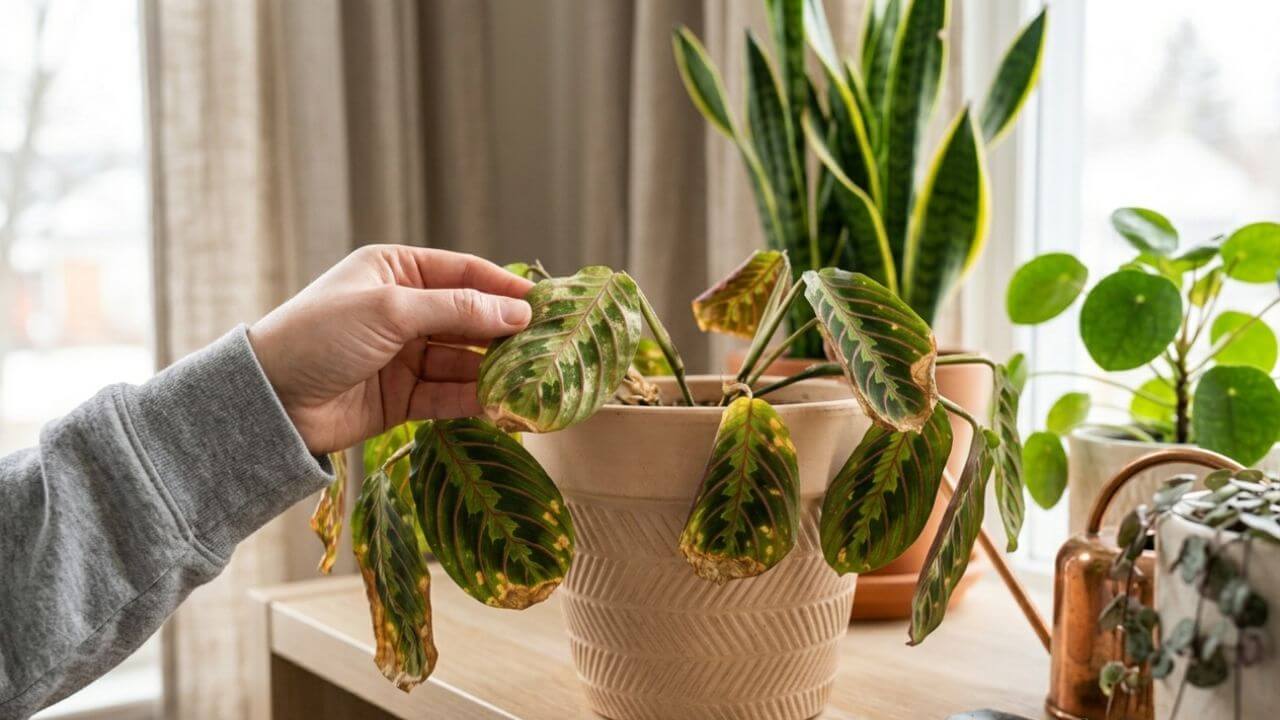
Most prayer plant problems come from water, light, humidity, and pests.
If your Maranta is curling, crisping, or sitting still, you are not alone. I’ve grown and rescued dozens, and I know how fast prayer plant problems can snowball. This guide breaks down the real reasons behind each symptom and shows you clear, tested fixes that work at home.
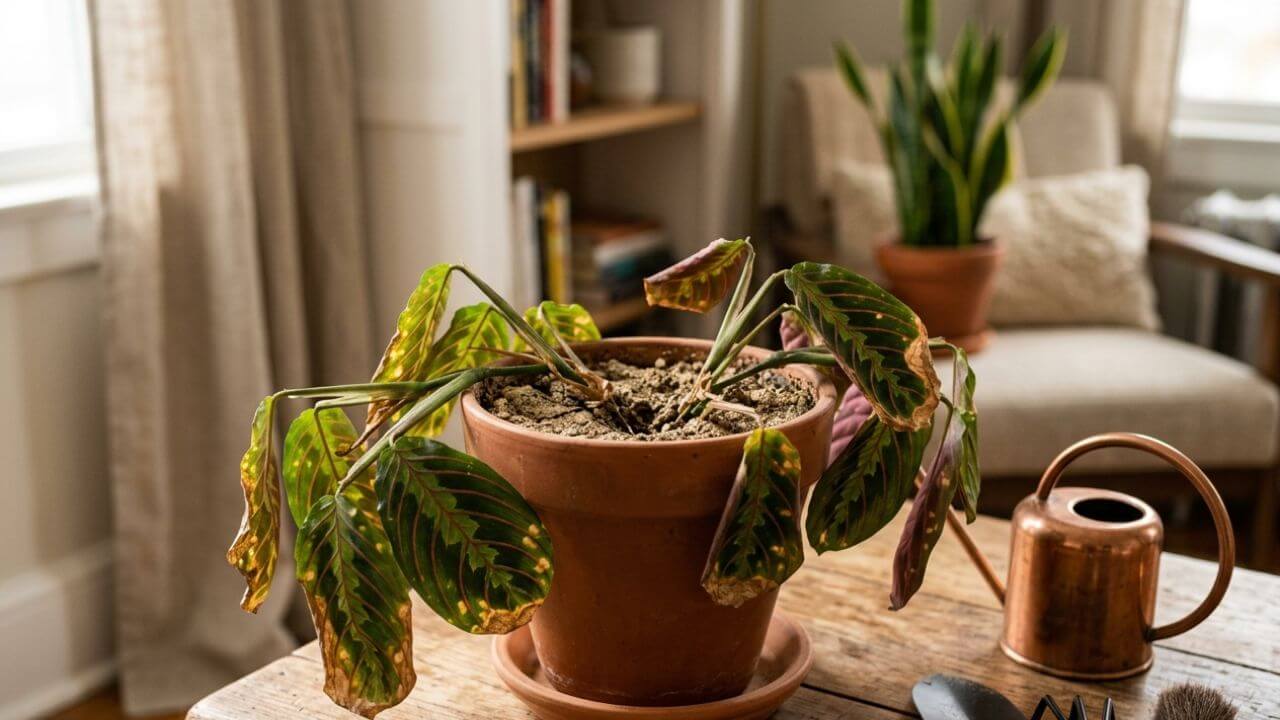
What makes prayer plants tricky?
Prayer plants (Maranta leuconeura) are drama queens in the best way. When care slips, they speak up fast with curled leaves, brown tips, or leaf drop. Most prayer plant problems trace back to four levers you control: water, light, humidity, and pests.
Key traits to keep in mind:
- Thin, soft leaves lose water fast and burn with harsh sun.
- Fine roots suffocate in soggy soil but dry out in hot, moving air.
- Leaves fold up at night (nyctinasty). Limp folding in daytime means stress.
- They like steady warmth, gentle light, and moist—not wet—soil.
When you meet these needs, prayer plant problems fade. When you miss one, the plant reacts within days.

Source: reddit.com
Quick diagnosis guide: symptoms, causes, fixes
Use this cheat sheet to spot the issue fast.
- Curling leaves
- Cause: Underwatering, low humidity, too much light, or cold drafts.
- Fix: Water fully, raise humidity to 50–60%, move to bright, indirect light, keep 65–80°F.
- Brown crispy tips or edges
- Cause: Low humidity, salt buildup, tap water with chlorine/fluoride, or wind from vents.
- Fix: Use filtered or dechlorinated water, flush soil monthly, boost humidity, soften airflow.
- Yellow leaves
- Cause: Overwatering, poor drainage, or root rot.
- Fix: Let the top inch dry before watering, use airy soil, check roots, prune rot, repot if needed.
- Pale leaves with green veins (chlorosis)
- Cause: High pH water or soil, nutrient lockout.
- Fix: Use rain or filtered water, light monthly feed, ensure soil pH near 6–6.5.
- Brown spots with yellow halos
- Cause: Leaf spot fungi or bacterial blotch, often from wet leaves and stagnant air.
- Fix: Remove affected leaves, water soil only, give airflow, sterilize shears, avoid leaf wetting.
- Webbing or specks under leaves
- Cause: Spider mites, often in dry rooms.
- Fix: Rinse, then treat with insecticidal soap or neem. Repeat weekly until clear.
- No new growth for months
- Cause: Low light, cool temps, or depleted soil.
- Fix: Brighter indirect light, 70–80°F, repot in fresh mix, light feeding.
These patterns cover 90% of prayer plant problems I see in homes and greenhouses.
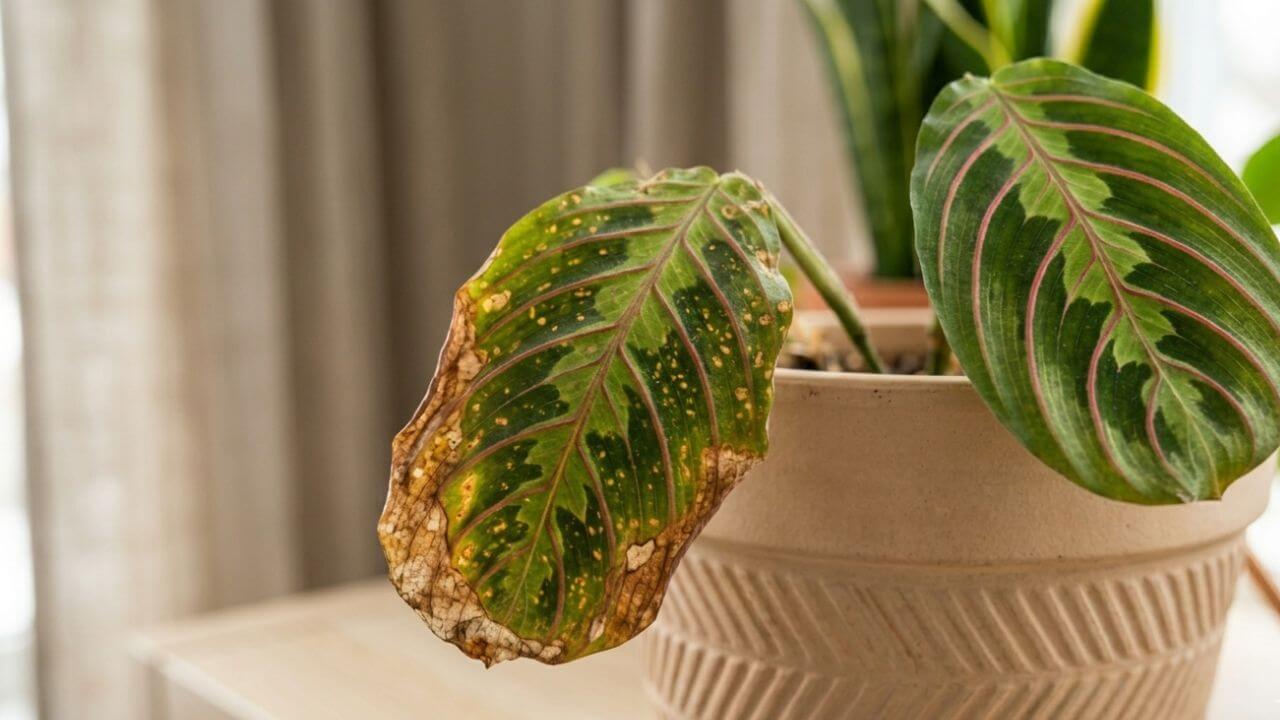
Watering mistakes and how to fix them
Prayer plants like even moisture. Not wet feet. Not bone dry. Most prayer plant problems start at the sink.
How to water the right way:
- Check the top inch. If it is dry, water. If it is damp, wait.
- Water until it drains from the bottom. Then empty the saucer.
- In warm months, you may water 1–2 times a week. In cool months, less.
- Use room-temperature rain, distilled, or filtered water if your tap is harsh.
What overwatering looks like:
- Yellow leaves, limp stems, sour smell in soil.
- Wet soil that stays heavy for days.
What to do:
- Slide the plant out. Healthy roots are white and firm. Brown mush means rot.
- Trim rot with sterile scissors. Repot in fresh, airy mix. Water less often.
What underwatering looks like:
- Leaves curl tight, edges crisp, pot feels very light.
- Soil pulls from the pot sides.
What to do:
- Bottom water to rehydrate the root ball. Soak the pot in a bowl for 20–30 minutes. Drain well.
Personal note: I once lost half a plant by trusting a moisture meter alone. Now I poke a finger into the soil and lift the pot. Learn the weight of a well-watered pot. It never lies.
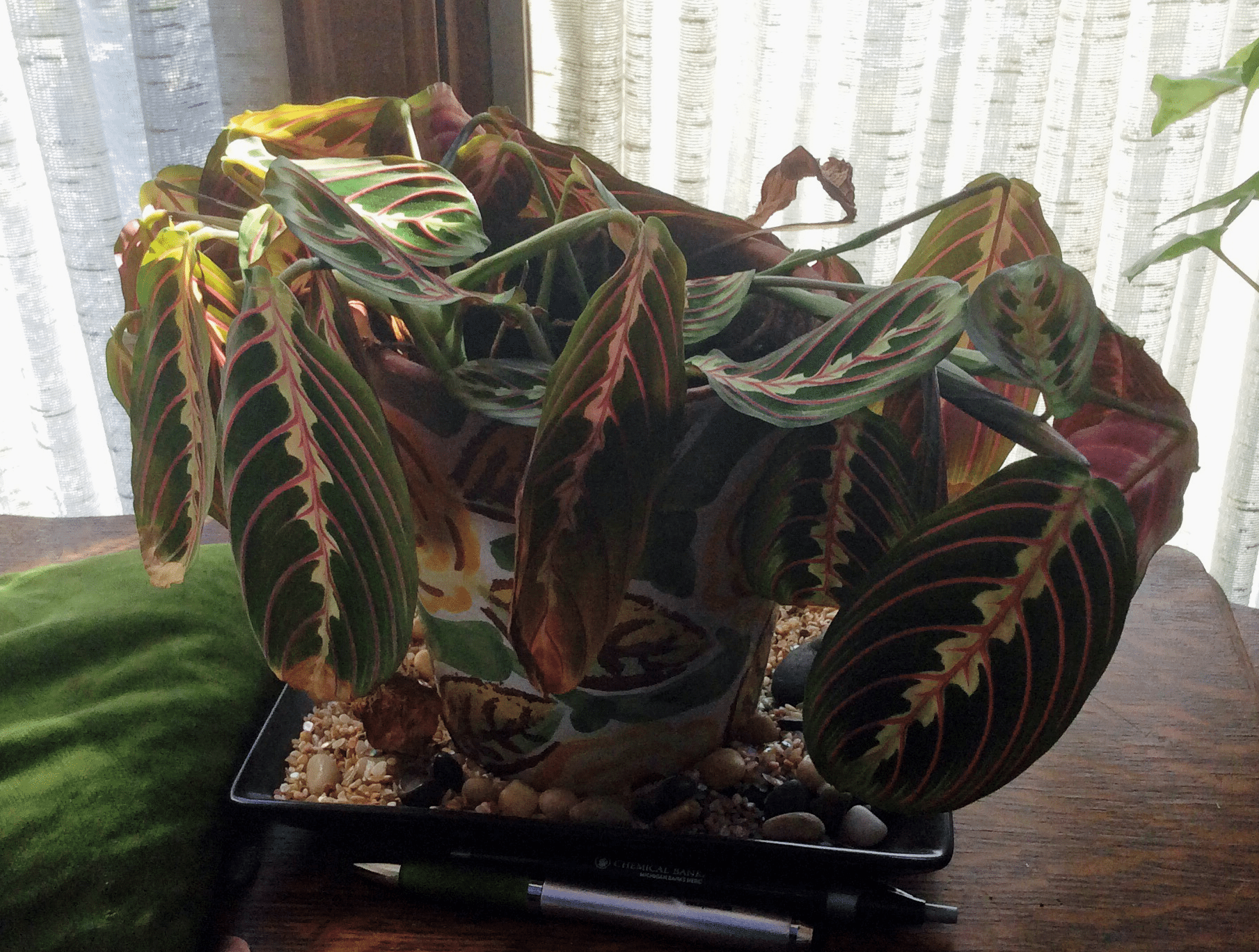
Source: gardeningknowhow.com
Light and humidity for healthy Maranta
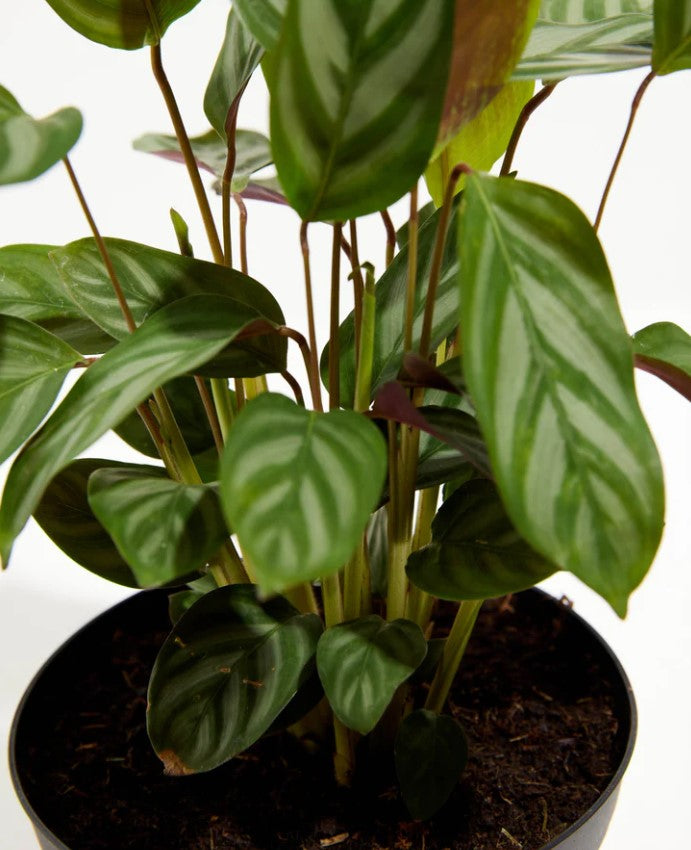
Prayer plants thrive in bright, indirect light. Think of daylight bouncing off a white wall. Direct sun burns leaves fast.
Aim for:
- Light: East window or a few feet back from a bright south window with a sheer curtain.
- Humidity: 50–60%. In very dry homes, go to 60–70%.
- Temperature: 65–80°F. Avoid cold drafts and heat vents.
Ways to raise humidity:
- Run a small room humidifier near the plant.
- Group plants to create a moist microclimate.
- Place the pot on a pebble tray with water below the pot base.
Avoid misting as your only fix. It helps for minutes. It can also trigger leaf spots if droplets sit in low airflow. Stable room humidity beats quick sprays every time.
Source: livelyroot.com
Soil, potting, and fertilizer
Soil is your plant’s life support. The wrong mix fuels many prayer plant problems, from root rot to stunted growth.
Use an airy mix:
- 40% high-quality potting soil
- 30% perlite or pumice
- 20% fine bark or coco chips
- 10% worm castings for gentle nutrition
Pot tips:
- Use a pot with drainage holes. Always.
- Size up only 1–2 inches when repotting.
- Repot every 12–18 months to refresh mix.
Feeding:
- Use a balanced, gentle liquid fertilizer at one-quarter strength, monthly in spring and summer.
- Skip feeding in deep winter if growth slows.
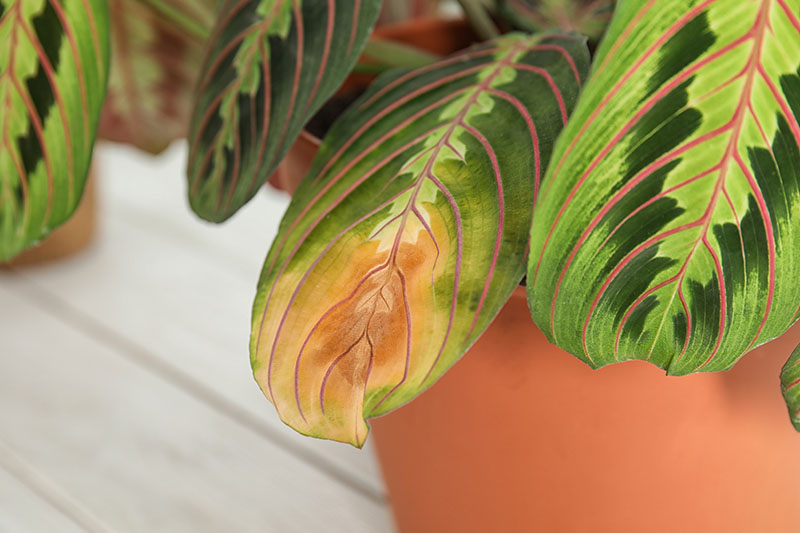
- Flush the soil with plain water every 6–8 weeks to prevent salt buildup, which causes brown tips.
If leaves pale despite feeding, check water pH and salts. Hard, alkaline water can block nutrients even when you fertilize.
Source: gardenerspath.com
Pests and diseases
Dry rooms and dusty leaves invite trouble. Many prayer plant problems come from tiny pests you can barely see.
Common pests:
- Spider mites: Fine webbing, sand-like dots, stippled leaves. Thrive in dry air.
- Thrips: Slender insects, silvery streaks, deformed new growth.
- Mealybugs: White cotton clumps in nodes and roots.
- Fungus gnats: Harmless adults, but larvae feed on wet roots.
Integrated fix plan:
- Quarantine new plants for two weeks.
- Shower leaves with lukewarm water to knock off pests.
- Use insecticidal soap or neem oil every 7–10 days, 3–4 rounds. Cover leaf undersides.
- Wipe leaves between treatments to remove eggs and residue.
- For gnats, let soil dry slightly more, add sticky traps, and drench once with a 1:4 hydrogen peroxide to water mix to target larvae.
Disease basics:
- Leaf spot loves wet leaves and stale air. Remove spotted leaves, water soil only, and increase airflow.
- Root rot comes from soggy soil. Fix the watering rhythm and repot into airy mix.
I track pest care on a calendar. Miss one round, and mites bounce back. Consistency wins.
Source: gardeningknowhow.com
Seasonal care and sleeping leaves
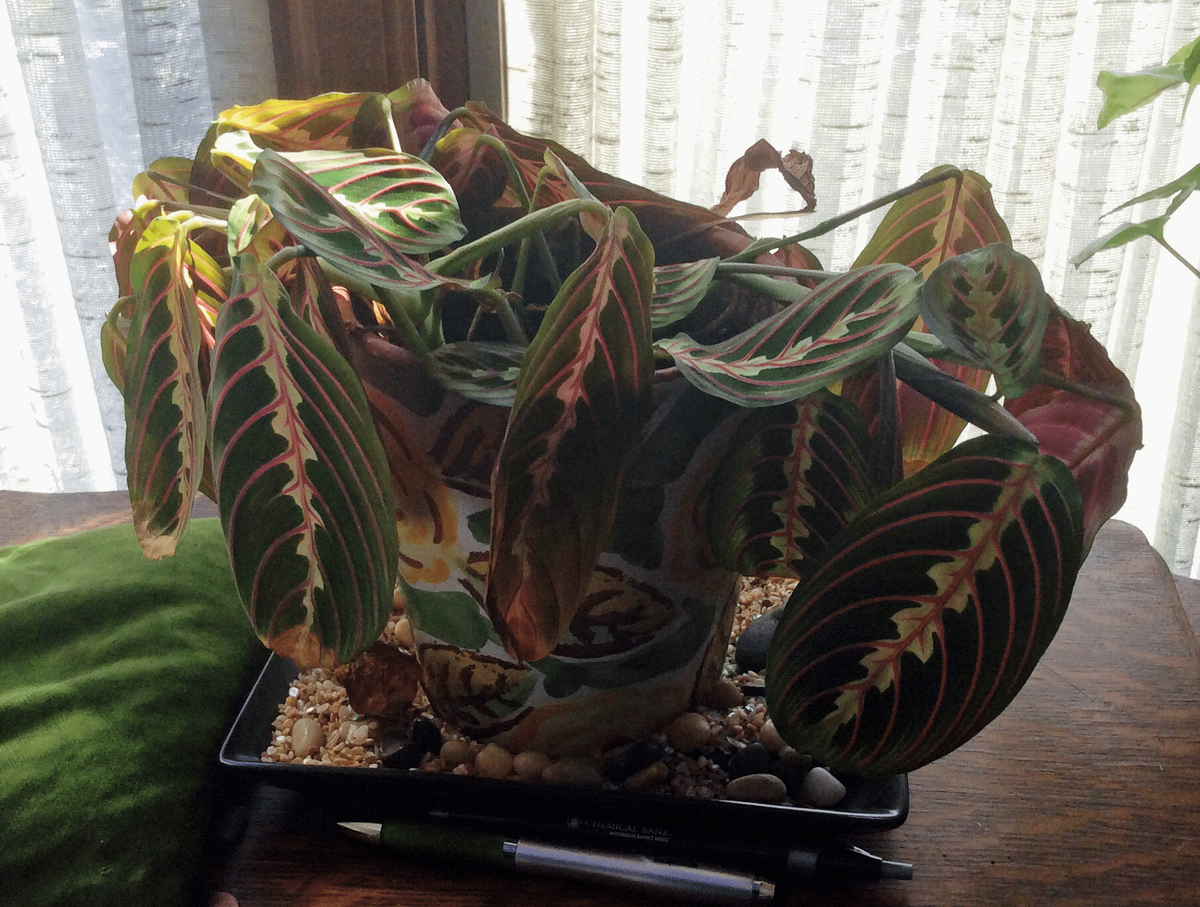
Prayer plants fold leaves at dusk. That is normal sleep mode. If they droop mid-day, they are stressed.
Seasonal notes:
- Winter: Less light and dry heat. Move closer to bright windows. Boost humidity. Water less often.
- Summer: Faster growth and faster drying. Shield from direct sun, watch for spider mites.
- Moves and repots: Some leaf drop is normal. Keep light gentle and humidity steady to help them settle.
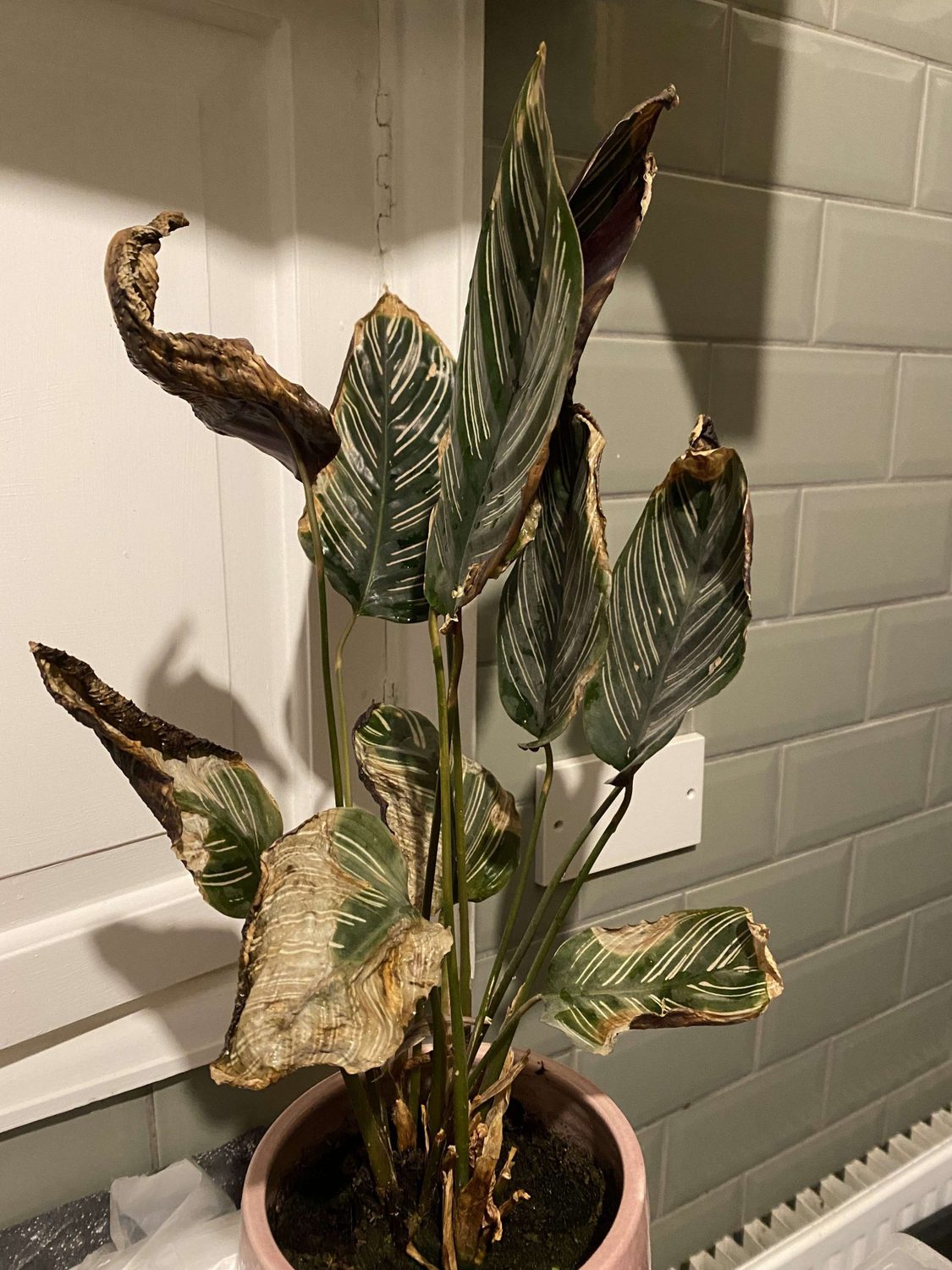
Cold snaps can trigger sudden curling and blotches. If this happens, trim the worst leaves and hold steady on care. New growth should look clean.
Source: gardenerspath.com
Propagation and rehab: bringing a prayer plant back
You can rescue a sad Maranta or start fresh from a cutting. This also reduces the sting of severe prayer plant problems.
Propagation steps:
- Take a cutting with at least one node and a leaf.
- Root in water or damp sphagnum at 70–80°F with bright, indirect light.
- Change water weekly or keep moss just moist.
- Pot up when roots reach 1–2 inches.
Rehab plan for a stressed plant:
- Triage roots. Trim rot. Refresh soil with an airy mix.
- Place in bright, indirect light and high humidity.
- Water lightly, then wait until the top inch is dry.
- Remove only the worst leaves so the plant can still photosynthesize.
From my bench: I revived a crispy, mite-riddled prayer plant by pruning to healthy nodes, washing leaves, and keeping humidity near 65%. New leaves arrived in four weeks. The key was steady light and zero overwatering.
Source: reddit.com
Prevention checklist
Stop prayer plant problems before they start with a simple routine.
Weekly:
- Check soil moisture with your finger.
- Inspect leaf undersides for pests.
- Dust leaves with a soft, damp cloth.
Monthly:
- Flush soil with plain water.
- Feed lightly in spring and summer.
- Rotate the pot for even light.
Always:
- Use pots with drainage.
- Keep humidity above 50%.
- Avoid direct sun and cold drafts.
- Quarantine new plants for two weeks.
This tiny system keeps most prayer plant problems off your radar.
Frequently Asked Questions of prayer plant problems
Why are my prayer plant leaves curling even after watering?
The plant may be reacting to low humidity, too much light, or cold air. Raise humidity, soften light, and keep the room near 70–75°F.
How do I know if my prayer plant has root rot?
Roots will look brown and mushy with a sour smell. Trim damaged roots, repot in airy mix, and reduce watering frequency.
Do prayer plants like tap water?
Some do, but many react to chlorine, fluoride, or high salts with brown tips. Use filtered, distilled, or rainwater for best results.
Can I cut off brown or damaged leaves?
Yes, remove them with sterile scissors. This helps the plant send energy to new, healthy growth.
How much light do prayer plants need?
They need bright, indirect light. An east window or a few feet back from a bright window with a sheer curtain is ideal.
Conclusion
When you match water, light, humidity, and soil to what Maranta wants, most prayer plant problems melt away. Use the diagnosis list, tweak one lever at a time, and give changes a couple of weeks to show. Small, steady steps beat big swings.
Ready to grow a happy prayer plant? Pick one fix from this guide and try it today. If this helped, subscribe for more plant care tips or share your own success in the comments.
Last Updated on July 31, 2026 by Saad Abdullah

I enjoy sharing simple gardening ideas, lawn care tips, and honest product reviews that help make outdoor work easier. From home gardening guides to helpful tools and lawn care advice, I write easy-to-follow content to help readers create a healthier and better-looking outdoor space without wasting time or money.